Beef Tallow Skin Care: Best Products and What to Look for Before You Buy
Beef tallow skin care can act as a rich emollient and help slow moisture loss, but research does not show that it is better than established moisturizers or that it treats acne, eczema, or wrinkles. If you still want to try it, prioritize a complete ingredient list, no added fragrance, responsible packaging, and a formula suited to your skin—not the boldest marketing claims.
Table of Contents
Quick Verdict: Who Should Consider Beef Tallow Skin Care?
Beef tallow skin care may appeal to someone who wants a concentrated, animal-derived balm for dry hands, elbows, feet, or other rough body areas. Its thick texture can soften the surface and provide an occlusive layer that reduces water evaporation.
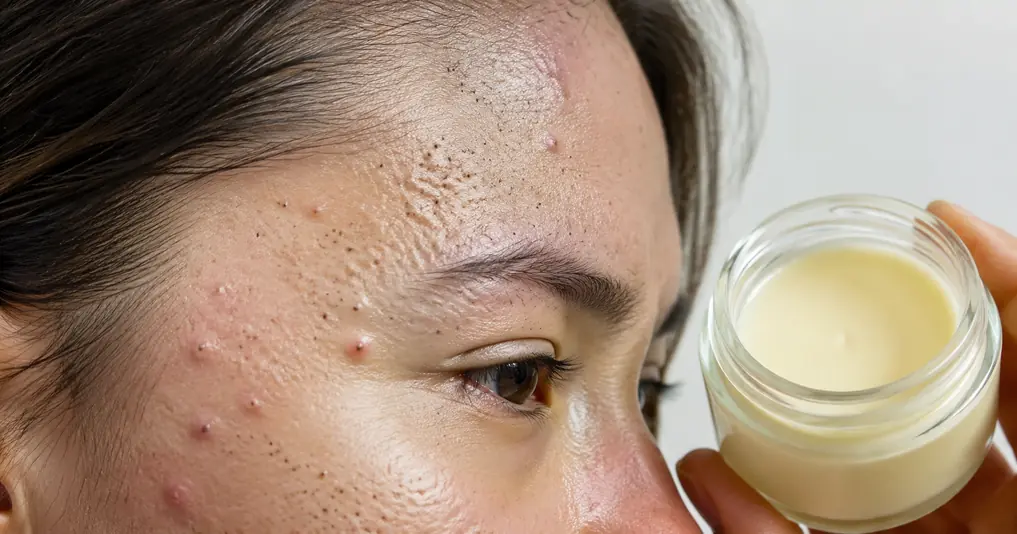
It is a less predictable facial choice if you have oily skin or frequent acne. The American Academy of Dermatology generally advises acne-prone users to look for products labeled oil-free or noncomedogenic. None of these beef tallow skin care selections currently provides evidence that the finished formula was independently tested as noncomedogenic.
You may also want to skip tallow if you avoid animal-derived products, require halal or kosher certification, or have sensitivities to olive oil, botanical extracts, honey, or beeswax. “Grass-fed,” “natural,” and “small batch” can describe sourcing or manufacturing, but they do not prove that a balm is safer or more effective.
What Does Tallow Do in a Skin-Care Formula?
Tallow is rendered fat, usually obtained from cattle. It contains triglycerides made from fatty acids such as oleic, palmitic, and stearic acid. In beef tallow skin care, the fat mainly behaves as an emollient, which softens rough skin, and an occlusive, which helps slow water loss.
That is not the same as supplying water to dehydrated skin. Most tallow balms are anhydrous. A conventional cream may combine water with humectants such as glycerin, barrier-supporting ingredients such as ceramides, emollients, and an occlusive. A beef tallow skin care balm can seal in moisture, but it is not automatically a complete moisturizer.
A 2024 scoping review found substantial gaps in research on topical tallow in humans. The included evidence mixed laboratory, animal, formulation, and comparative studies, and the safety findings were inconsistent. A 2025 analysis likewise found that social-media claims about acne, eczema, and psoriasis commonly lacked adequate evidence.
The reasonable claim is that a well-formulated tallow balm may moisturize dry skin. Current research does not establish it as an acne treatment, retinoid substitute, collagen booster, sunscreen, “natural Botox,” or cure for a skin condition.
How These Products Were Selected
The beef tallow skin care products below were chosen by reviewing current manufacturer pages, not through personal use or laboratory testing. Selection favored:
- A complete, easy-to-find ingredient list
- An unscented formula without listed essential oils
- Clear directions, size, manufacturer details, and storage guidance
- Meaningful formula differences for comparison
- A small single-jar option instead of requiring a bundle
Placement on this list does not prove superior results. Manufacturer descriptions and customer reviews are not substitutes for independent clinical trials, and product formulas, prices, or availability can change.
Beef Tallow Skin Care Products at a Glance
| Product | Listed formula | Best fit | Main caution |
|---|---|---|---|
| Toups and Co Tallow Balm – Unscented | Grass-fed tallow, organic olive oil | Shopper wanting the shortest ingredient list | No verified finished-product noncomedogenic testing identified |
| Aspen Kay Naturals Tallow Balm Moisturizer – Unscented | Tallow, olive oil, chamomile, calendula, yarrow | Shopper who prefers added botanical extracts | More ingredients create more potential sensitivity points |
| Ancestral Cosmetics Unscented Tallow & Honey Balm | Tallow, olive oil, beeswax, raw honey | Shopper specifically seeking honey and beeswax | Avoid with bee-product allergy; heavier formula; not halal according to the brand |
These beef tallow skin care products are conditional picks for people already exploring tallow. None is presented as the best moisturizer for acne-prone facial skin.
1. Toups and Co Tallow Balm – Unscented: Best Minimalist Formula
Toups and Co lists only grass-fed tallow and organic olive oil. That makes this beef tallow skin care option easy to evaluate and removes the essential oils found in many scented balms. It comes in 2- and 4-ounce glass jars, and the brand directs users to store it in a cool, dry location away from heat.
Why it stands out: A two-ingredient formula minimizes variables. If irritation or congestion develops, there are only two listed ingredients to consider. No added fragrance or essential oils also removes one common sensitivity source.
What to consider: Minimal does not mean allergy-proof or noncomedogenic. Olive oil can feel heavy, and the manufacturer provides no independent finished-formula pore-clogging data. Use dry, clean fingers or a spatula so water and debris do not enter the jar.
This pick makes the most sense for dry body areas or for a cautious patch test—not as a first-line facial moisturizer for someone already developing clogged pores.
2. Aspen Kay Naturals Tallow Balm Moisturizer – Unscented: Best Botanical Option
Aspen Kay Naturals lists grass-fed beef tallow, organic olive oil, and organic extracts of chamomile, calendula, and yarrow. The 2-ounce balm is described as free from added fragrance, dyes, and fillers. The manufacturer also provides sensible directions to use a pea-sized amount, apply it to slightly damp skin, patch-test first, and discontinue it if irritation occurs.
Among the selected beef tallow skin care products, this formula suits a shopper who specifically values botanical extracts. Applying a small amount to damp skin is logical because an oily balm can then help trap some of that surface water.
The additional botanicals are not automatically an advantage, however. Plant extracts can trigger irritation or allergic contact dermatitis in susceptible people. “Unscented” also should not be read as “incapable of causing a reaction.” If your skin is highly reactive, the simpler Toups formula leaves fewer ingredients to assess.
The product is marketed for face and body, but that does not establish acne compatibility. Anyone with persistent facial acne should prioritize a noncomedogenic moisturizer and review the separate guide on whether beef tallow is good for acne.
3. Ancestral Cosmetics Unscented Tallow & Honey Balm: Best Honey-and-Beeswax Formula
Ancestral Cosmetics lists Irish beef tallow, extra-virgin olive oil, beeswax, and raw honey. Unlike the brand’s Original balm, this unscented version does not list essential oils. The product comes in a 60-milliliter, or approximately 2-ounce, jar and should be stored in a cool, dry place away from direct sunlight.
This beef tallow skin care product is the most distinct of the three. Beeswax adds another occlusive component and helps give the balm structure. Honey changes the formula further, but the presence of honey should not be interpreted as proof that the finished balm treats acne, infection, or wounds.
Best fit: A buyer who intentionally wants an unscented balm containing both tallow and bee-derived ingredients.
Reasons to skip it: Do not choose it if you have a honey, beeswax, or other bee-product allergy. It is not vegan, and the manufacturer states that its tallow is not halal. Its richer combination of tallow, olive oil, and beeswax may also be a poor match for oily or congestion-prone facial skin.
Customer testimonials about acne, eczema, wrinkles, or other conditions cannot establish effectiveness. Judge this as a cosmetic moisturizer, not a medical treatment.
Beef Tallow Skin Care Buying Checklist
The strongest beef tallow skin care decision comes from reading the entire label and matching the formula to your needs.
Read the Complete Ingredient List
Do not rely on a front label that highlights only “grass-fed tallow” or “raw honey.” Cosmetic ingredients sold at retail in the United States generally must be declared, usually in descending order of predominance until ingredients present at 1% or less.
A responsible beef tallow skin care label names every oil, wax, essential oil, botanical, fragrance ingredient, antioxidant, and preservative. Pause when the list is incomplete. Each added ingredient creates another possible sensitivity source.
Understand Fragrance-Free Versus Unscented
For sensitive skin, fragrance-free is usually more informative than “unscented.” An unscented product can contain ingredients that mask the smell of its raw materials. Check the ingredient list for fragrance, parfum, essential oils, and aromatic plant extracts rather than trusting the product name alone.
The three beef tallow skin care picks above currently publish formulas without listed essential oils. That does not guarantee tolerance. Tallow, olive oil, honey, beeswax, or botanical extracts can still cause an individual reaction.
Determine Whether the Formula Contains Water
A completely waterless tallow-and-oil balm is less hospitable to microbial growth than a water-containing cream, but it is not immune to contamination. Wet fingers, bathroom humidity, dirty applicators, or poor manufacturing can introduce water and microorganisms.
A lotion or cream containing water needs an appropriate preservation strategy. “Preservative-free” is not automatically safer, particularly when water or water-based extracts appear in the formula. Avoid buying when the manufacturer cannot explain the ingredient list, shelf life, storage conditions, or safety testing.
Inspect the Packaging and Seller
Before buying beef tallow skin care, look for:
- A sealed container without leakage or damage
- A batch or lot code when available
- The manufacturer or distributor’s identity and contact information
- Clear net weight, directions, precautions, and storage guidance
- A realistic shelf-life or period-after-opening statement
- A return policy and reputable authorized seller
Tubes and pumps reduce repeated finger contact, but most tallow balms come in jars. With a jar, keep the lid closed, use dry hands or a clean spatula, and never add water to soften the balm.
Treat Sourcing Language as Sourcing Language
“Grass-fed,” “grass-finished,” “pasture-raised,” “regeneratively raised,” “organic,” and “handmade” may matter to your values. They do not establish that the finished beef tallow skin care product hydrates better, causes fewer breakouts, or treats disease.
FDA does not define “natural” for cosmetic labeling, and natural ingredients are not automatically safe or hypoallergenic. If certification matters, look for the certifying organization and the precise scope of the certification. Do not assume that grass-fed also means organic, cruelty-free, halal, or kosher.
Calculate the Real Value
When comparing beef tallow skin care prices, calculate cost per ounce and include shipping, taxes, return terms, and automatic subscriptions. A concentrated formula does not make a multipack a smart first purchase.
Buy the smallest available jar initially. You need enough time to evaluate tolerability, smell, texture, and storage stability before committing to several containers. Reviews can reveal recurring packaging complaints, but review volume alone does not prove product quality.
Beef Tallow Skin Care Claims That Should Make You Pause
Be skeptical when beef tallow skin care is advertised with any of these claims:
- “Cures acne,” “heals eczema,” or “treats psoriasis”
- “Nature’s Botox,” “natural retinol,” or a proven collagen booster
- “Chemical-free,” since every cosmetic ingredient is made of chemicals
- “Edible-grade, so it is safe for every face”
- “Cannot clog pores” without relevant finished-product testing
- “Replaces sunscreen” without an FDA-compliant sunscreen drug label
- “FDA-approved cosmetic,” because ordinary cosmetics are not preapproved like drugs
Cosmetic companies are responsible for product safety and truthful labeling. FDA can act against adulterated or misbranded cosmetics, but it does not routinely approve ordinary cosmetic formulas before they reach the market. A professional-looking website is therefore not proof of clinical testing.
Can Beef Tallow Skin Care Cause Acne?
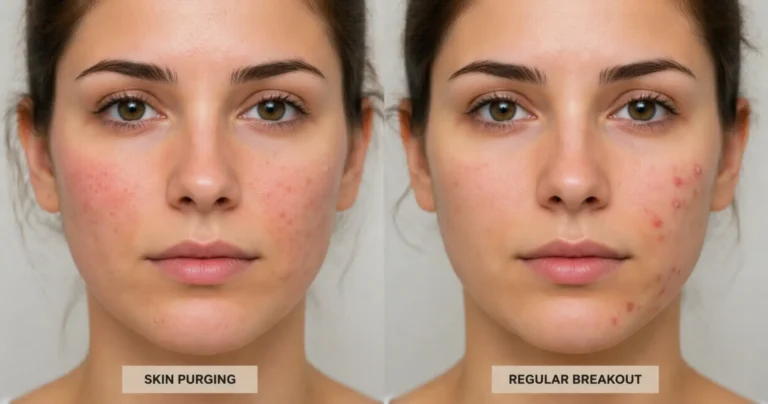
Yes, beef tallow skin care may contribute to clogged pores or breakouts in some people because it is rich and occlusive, although controlled human research on finished tallow formulas is limited. Risk depends on the full formula and individual skin. If you already have oily, comedonal, or inflammatory acne, a labeled noncomedogenic moisturizer is usually the more predictable choice.
No “comedogenicity rating” can guarantee how your skin will react. The carrier oils, waxes, amount applied, climate, other products, and your acne tendency all matter. A balm that works on dry hands may be too heavy for the forehead, nose, or chin.
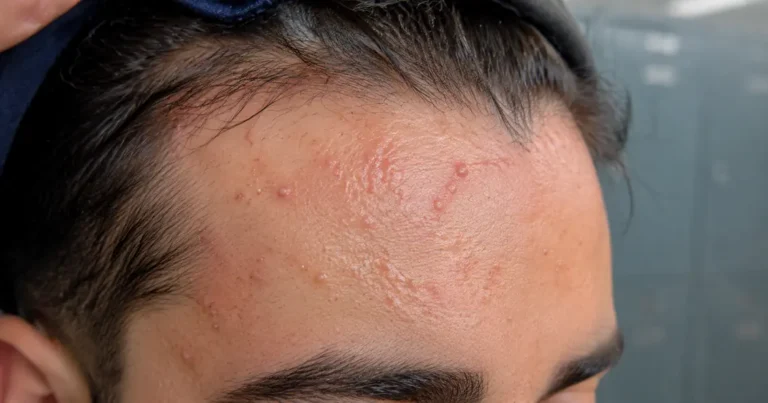
If new whiteheads, blackheads, or inflamed pimples repeatedly appear after introducing tallow, stop using it on the face and return to a simple routine. The detailed guide on tallow and acne explains better-supported moisturizer alternatives. If clogged pores remain a concern, the related article on salicylic acid and acne treatment explains where that ingredient may fit.
How to Patch-Test Beef Tallow Skin Care
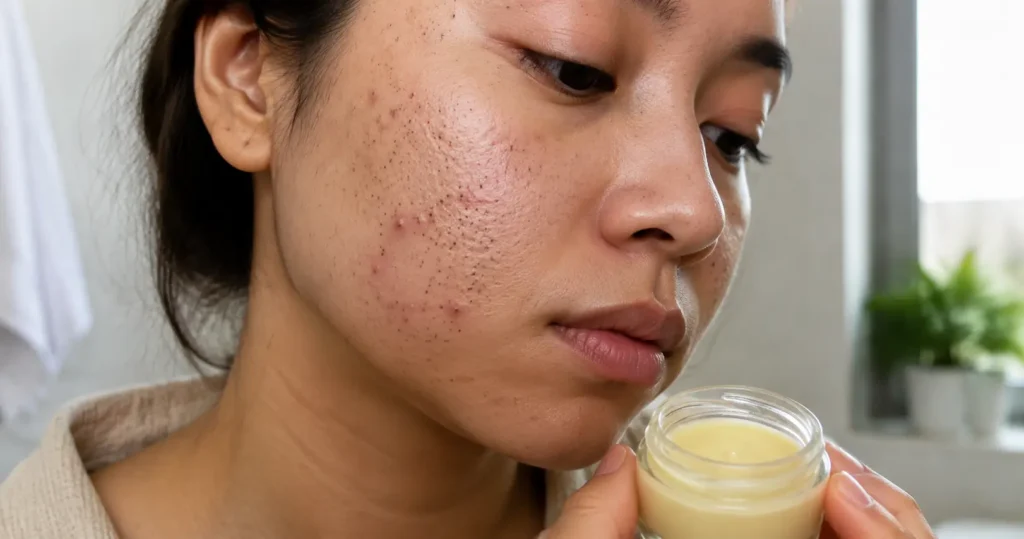
Patch testing can help reveal irritation or allergy, but it cannot reliably predict whether a product will clog facial pores. The AAD recommends applying a new skin-care product to a quarter-sized test area twice daily for seven to ten days.
- Choose a spot such as the underside of your arm where the product will not be rubbed or washed away.
- Apply the same amount and leave it on for the same time you would during normal use.
- Stop for redness, itching, swelling, burning, blistering, or a rash.
- If the test area remains clear, try a tiny amount on one limited area rather than covering your entire face.
- Introduce no other new product at the same time.
- Monitor for congestion or pimples over the next few weeks.
Use a small amount of beef tallow skin care on slightly damp skin rather than applying a thick greasy layer. Do not put a cosmetic balm on open, draining, infected, or severely inflamed skin unless a qualified clinician has advised you to do so.
When Beef Tallow Skin Care Is Not the Best Choice
A standard moisturizer is usually the better buy when you need more than an optional occlusive balm. Consider a fragrance-free, noncomedogenic cream, lotion, or gel instead when:
- Your face is oily or frequently develops clogged pores
- You are treating active acne with drying ingredients
- You want humectants such as glycerin or hyaluronic acid
- You want barrier-supporting ingredients such as ceramides
- You have a history of reactions to animal products, olive oil, honey, beeswax, or botanicals
- You need treatment for acne, eczema, rosacea, pigmentation, or wrinkles
- You avoid animal-derived ingredients for ethical or religious reasons
Beef tallow skin care is one moisturizer format, not a required step. A widely available, well-preserved, noncomedogenic moisturizer may be less trendy but more suitable for daily facial use.
Frequently Asked Questions
Does grass-fed tallow make a skin-care product more effective?
There is not enough clinical evidence to conclude that grass-fed tallow moisturizes human skin better or causes fewer breakouts than other tallow. The description may be relevant to sourcing preferences, but it is not a performance guarantee. Evaluate the finished formula, ingredient transparency, packaging, safety information, and your skin type.
Is fragrance-free tallow the same as unscented tallow?
Not necessarily. “Fragrance-free” generally indicates that fragrance ingredients were not intentionally added, while “unscented” can mean odor-masking ingredients were used. Read the complete list for fragrance, parfum, essential oils, and aromatic extracts. Even a genuinely fragrance-free formula can cause a reaction to another ingredient.
Does a waterless tallow balm need preservatives?
An anhydrous balm may not require the same preservation system as a water-based cream, but the finished product still needs to remain safe during manufacturing and use. Contamination can occur through wet fingers, dirty tools, or poor storage. A formula containing water requires appropriate microbial protection; “preservative-free” is not automatically safer.
Can beef tallow skin care clog pores?
It can for some users. Beef tallow skin care is rich and occlusive, and the complete formula may include other heavy oils or waxes. Direct controlled evidence remains limited, so no brand can guarantee that every acne-prone person will tolerate it. Patch-test for irritation and introduce it to a small facial area while monitoring for congestion.
How should tallow balm be stored, and when should it be discarded?
Store beef tallow skin care products according to the label in a cool, dry place away from heat, sunlight, and water. Use clean, dry hands or a spatula. Discard a balm with mold, a rancid odor, unexpected discoloration, persistent separation, or a major texture change not explained by temperature.
The Bottom Line
The best beef tallow skin care purchase is not the jar with the biggest health promises. Choose through ingredient transparency, fragrance status, allergies, packaging, sourcing preferences, value, and realistic expectations. Toups offers the simplest formula, Aspen Kay adds botanical extracts, and Ancestral Cosmetics adds honey and beeswax. If you proceed, buy the smallest jar and patch-test first. If you have acne-prone facial skin, a fragrance-free, noncomedogenic moisturizer is generally the safer starting point.
This article is educational and does not provide a diagnosis or replace care from a qualified health professional. Seek professional advice for severe, painful, rapidly worsening, or scarring acne, persistent dermatitis, or an uncertain skin condition.
References:
- Cureus — Tallow, Rendered Animal Fat, and Its Biocompatibility With Skin: A Scoping Review
- PubMed — Beef Tallow-Based Skincare Claims in Social Media: A Cross-Sectional Analysis
- American Academy of Dermatology — How to Pick the Right Moisturizer for Your Skin
- American Academy of Dermatology — How to Test Skin Care Products
- U.S. Food and Drug Administration — Small Businesses and Homemade Cosmetics: Fact Sheet
- U.S. Food and Drug Administration — Summary of Cosmetics Labeling Requirements
- Toups and Co Organics — Tallow Balm: Unscented
- Aspen Kay Naturals — Tallow Balm Moisturizer: Unscented
- Ancestral Cosmetics — Unscented Tallow & Honey Balm
- Ancestral Cosmetics — Original Tallow & Honey Balm