Liquid Pimple Patch: Best Invisible Spot Treatments for Active Blemishes
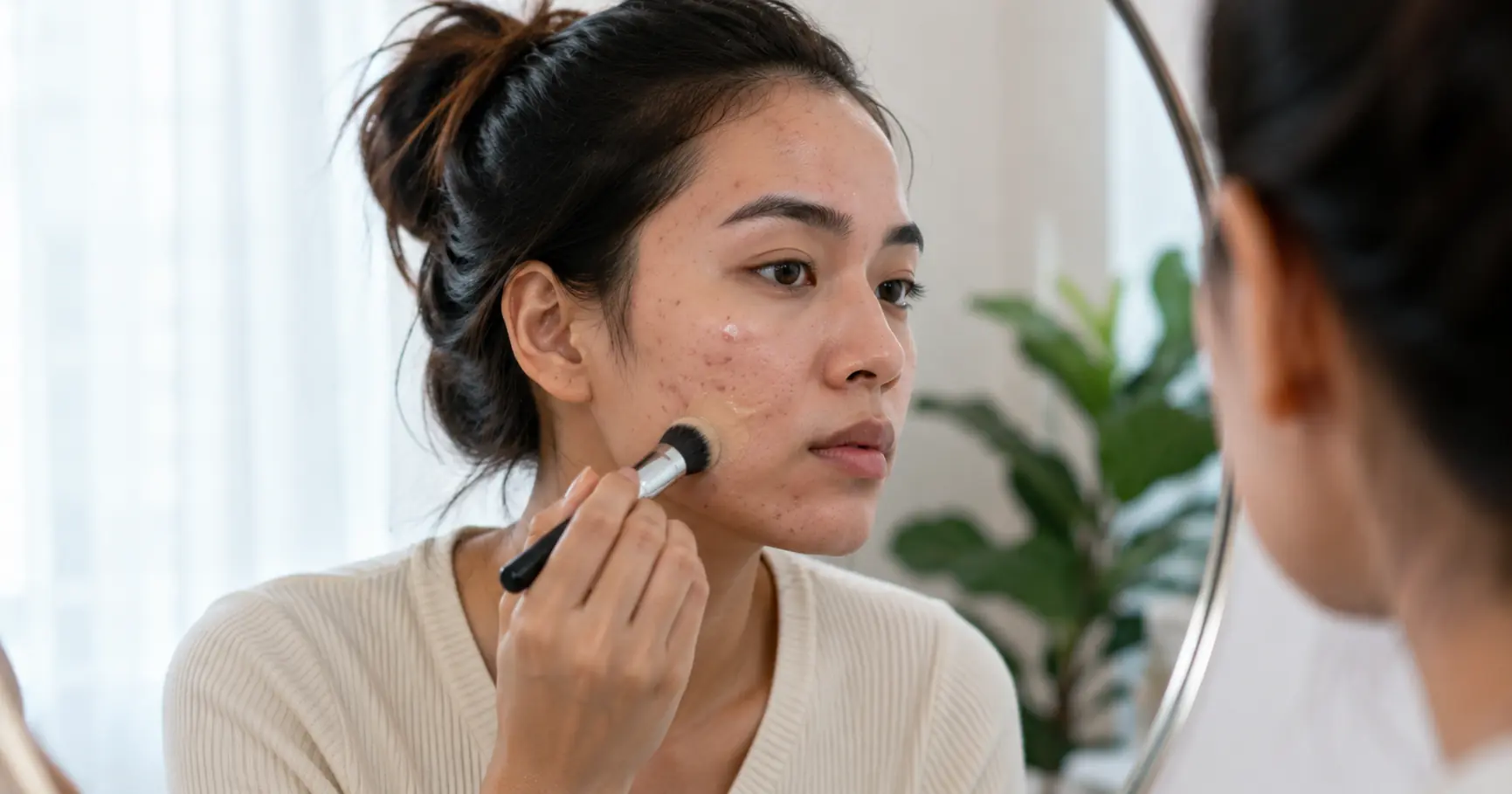
A liquid pimple patch is a clear spot treatment that dries into a thin film or “second skin” over a blemish. Some formulas also contain an over-the-counter acne medicine, while others mainly create a barrier against touching and makeup. The best choice depends on whether you have a clogged pore, an inflamed bump, or a surfaced whitehead.
A liquid pimple patch is appealing when you want something less noticeable than a sticker. However, the name does not guarantee fluid absorption or overnight clearing. The five options below were selected by their labels, practical use, and current US availability—not personal testing or paid placement.
Table of Contents
What Is a Liquid Pimple Patch?
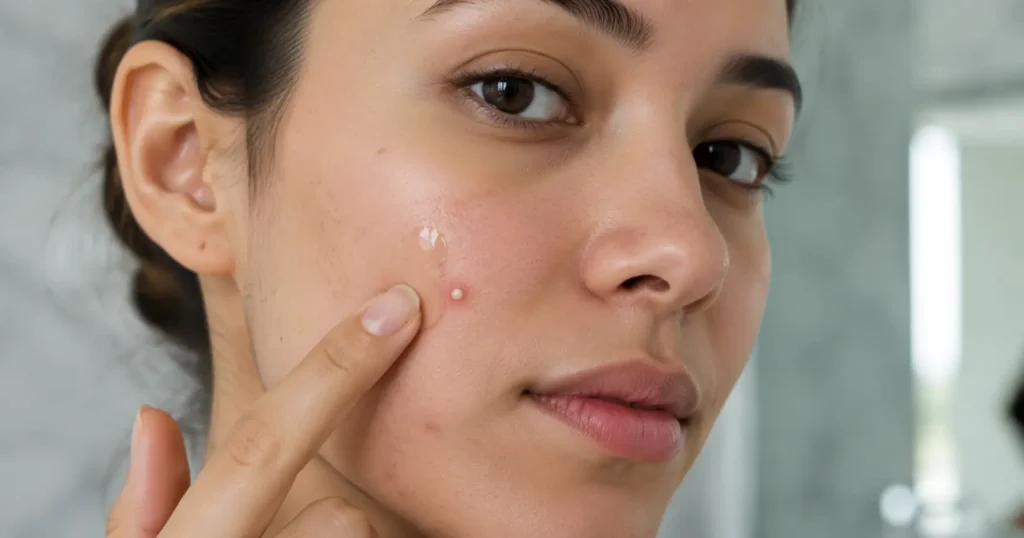
A liquid pimple patch is a liquid, gel, or lightweight serum applied directly to a blemish. It dries clear and may form a flexible film. A medicated version can deliver an active such as salicylic acid or sulfur; a nonmedicated version mainly shields the spot. Unlike hydrocolloid stickers, most liquid films do not absorb visible pus.
Products use the term in three ways:
- A true liquid-to-film barrier dries into a distinct layer that you wash or peel away.
- A film-forming medicated treatment holds an acne active on the spot but may feel more like a clear serum.
- A transparent hydrocolloid patch is a premade sticker, not a liquid, and is better at absorbing moisture from a surfaced blemish.
Knowing which liquid pimple patch you are buying matters more than the word “patch” on the package.
The 5 Best Invisible Spot Treatments at a Glance
Prices and stock can change. The amounts below were listed by US brand or major retailer pages when this article was prepared.
| Product | Main function | Best suited to | Format | Listed price |
|---|---|---|---|---|
| Kiehl’s Truly Targeted Acne-Clearing Pimple Patch | 2% salicylic acid treatment | Small pimples, whiteheads, and clogged pores | Clear medicated film | $30 for 0.5 fl oz |
| Hero Cosmetics Mighty Shield | Protective daytime barrier | A visible spot you want to shield under makeup or sunscreen | Peelable clear film | $14.99 |
| Dermalogica Deep Acne Invisible Liquid Patch | 5% sulfur treatment | Inflamed blemishes when you prefer sulfur | Invisible medicated film | $36 for 0.5 oz |
| Murad Deep Relief Acne Treatment | 2% salicylic acid treatment | An early tender bump or localized clogged area | Clear film-forming serum | $48 for 1 fl oz |
| Hero Mighty Patch Invisible+ | Fluid absorption and protection | A surfaced or draining whitehead | Ultra-thin hydrocolloid sticker | $17.99 for 39 patches |
These products are not interchangeable. A salicylic acid liquid pimple patch may help a clogged pore, while a plain barrier can reduce touching without treating the pore itself. Hydrocolloid works best when there is fluid near the surface.
1. Best Overall: Kiehl’s Truly Targeted Acne-Clearing Pimple Patch
Kiehl’s acne spot treatment contains 2% salicylic acid, the highest concentration permitted for a single-active-ingredient OTC salicylic acid acne product under the FDA monograph. Salicylic acid helps exfoliate inside clogged pores, making this option most relevant to small pimples, whiteheads, and congestion near the surface.
The formula also includes niacinamide and licorice-derived dipotassium glycyrrhizate. Kiehl’s says the liquid pimple patch dries matte and can sit under sunscreen or makeup. Its quick size- and redness-reduction figures come from company testing, not a published head-to-head trial showing that it outperforms other spot treatments.
Potential drawback: This liquid pimple patch also contains gluconolactone and glycolic acid. Using it with a retinoid, exfoliating toner, scrub, or another salicylic acid product may increase dryness and stinging. The price is also high for a targeted treatment.
2. Best Clear Protective Film: Hero Cosmetics Mighty Shield
Mighty Shield is the clearest example of a barrier-first liquid pimple patch. It uses quick-drying ethyl alcohol and polyurethane to form a peelable, water-resistant layer. The manufacturer directs users to apply a thin coat, let it dry for about a minute, and then add makeup or sunscreen.
There is no labeled acne medication in this formula. That is not necessarily a flaw: it may suit someone whose main goal is to discourage touching or keep makeup from sitting directly on a blemish.
Potential drawback: Because alcohol helps it dry quickly, it may sting dry, irritated, or recently picked skin. A protective barrier is not the same as acne treatment, and it will not unclog a pore or absorb fluid like hydrocolloid.
3. Best Sulfur Option: Dermalogica Deep Acne Invisible Liquid Patch
This liquid pimple patch uses 5% sulfur, an FDA-permitted concentration for an OTC topical acne active. Sulfur can help reduce oil and treat acne, although it may be drying. The formula also contains niacinamide and creates a film that the brand describes as invisible.
This liquid pimple patch is an alternative for someone who does not want more salicylic acid in an exfoliant-heavy routine.
Potential drawback: The ingredient list includes camphor and several aromatic plant oils, including lavender, geranium, citrus, clary, and rosemary oils. These are not necessary for an acne medicine to work and may irritate reactive skin. A cooling sensation is not proof that inflammation is resolving.
4. Best for an Early Tender Bump: Murad Deep Relief Acne Treatment
Murad’s formula contains 2% salicylic acid and a polymer that dries into a clear film. It is sold as a treatment for deep, uncomfortable blemishes and comes in a larger one-ounce bottle than the other medicated liquid options in this list.
The manufacturer reports results from a small 33-participant, eight-week consumer study. Those results are product-specific company data and do not establish that the treatment is superior to standard salicylic acid gels. More importantly, a topical liquid pimple patch has limited reach when inflammation sits deep below the skin.
This may be reasonable at the first sign of a localized bump, but repeated nodules or cysts deserve a dermatologist’s evaluation. Deep acne can scar, and a spot treatment should not delay more appropriate care.
Potential drawback: It is the most expensive option here. Salicylic acid can also cause dryness, peeling, or burning, particularly when combined with other acne medicines.
5. Best Hydrocolloid Alternative: Hero Mighty Patch Invisible+
This is not a liquid pimple patch. It is included because an ultra-thin hydrocolloid sticker may be the better invisible treatment for a whitehead that has clearly reached the surface or is already draining. Hydrocolloid absorbs moisture and creates a barrier that reduces picking.
Invisible+ contains no salicylic acid, sulfur, or benzoyl peroxide. The manufacturer recommends applying it to clean, dry skin and leaving it for at least six hours. The patch becomes opaque as it absorbs fluid.
Evidence specifically studying hydrocolloid patches for acne is limited. One small randomized pilot study reported improvement in mild-to-moderate inflammatory acne, but larger independent trials are needed. Hydrocolloid is unlikely to do much for a closed blackhead or a deep, intact nodule with no fluid near the surface.
Potential drawback: A sticker has fixed dimensions and may show at the edges, especially under makeup or on a curved part of the face.
Which Spot Treatment Matches Your Blemish?
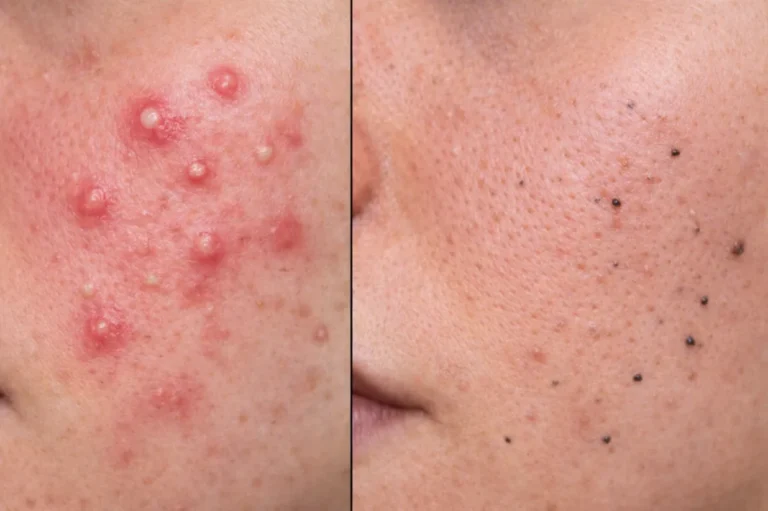
Closed Comedones and Small Whiteheads
A salicylic acid liquid pimple patch may help because salicylic acid exfoliates and opens clogged pores. It is more logical for a closed comedone or small whitehead than a barrier-only film. Still, treating only the bumps you can see will not prevent every new clogged pore.
Red, Inflamed Surface Pimples
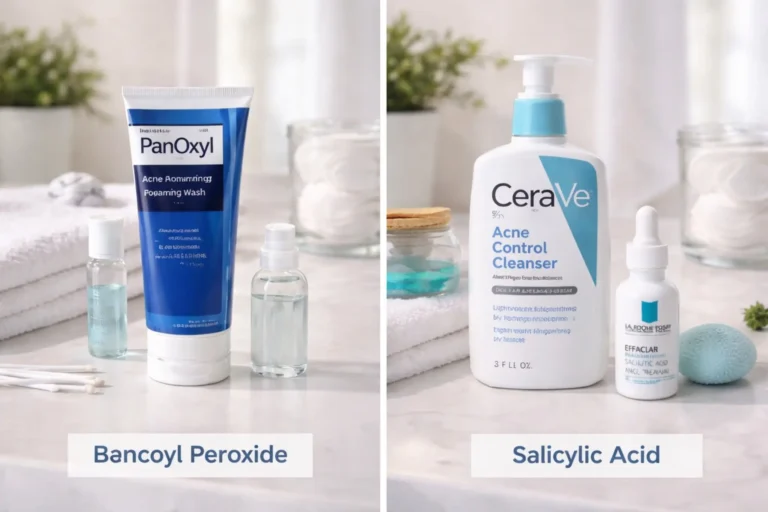
Salicylic acid and sulfur are OTC options, but benzoyl peroxide has a particularly useful role in mild inflammatory pimples because it reduces acne-related bacteria. Clear benzoyl peroxide gels are not usually marketed as liquid patches, yet the evidence for the active ingredient may matter more than the format.
Do not stack benzoyl peroxide, sulfur, salicylic acid, a retinoid, and exfoliating acids on the same spot. More treatment can mean more inflammation, dryness, and a greater chance of a lingering dark mark.
Surfaced or Draining Whiteheads
For a blemish with moisture at the surface, hydrocolloid is often the more practical choice. It can absorb fluid while limiting contact with fingers. Apply it only to clean, dry skin, and do not put it over a medicated liquid unless both product labels allow that combination.
Do not intentionally pop a pimple to make a patch “work.” Squeezing can push inflammation deeper and increase the likelihood of infection, discoloration, and scarring.
Deep, Painful Pimples
Deep nodules and cysts form beneath the skin, where a surface film has limited reach. The American Academy of Dermatology recommends avoiding squeezing and notes that topical ingredients are more effective once a pimple is nearer the surface. A warm, damp compress may help a single deep bump move toward the surface.
See a dermatologist if you develop multiple deep lesions, significant pain, scars, or bumps that do not resolve. No liquid pimple patch should be promoted as a substitute for medical care in that situation.
Liquid Pimple Patch vs. Hydrocolloid Patch
| Feature | Liquid film | Hydrocolloid sticker |
|---|---|---|
| Coverage | Customizable around different shapes | Fixed size and shape |
| Visibility | Often very clear after drying | Clear but may show at the edge |
| Acne medicine | May contain salicylic acid or sulfur | Often drug-free |
| Fluid absorption | Usually little or none | Designed to absorb surface fluid |
| Best stage | Intact surface blemish or spot needing a barrier | Surfaced, moist, or draining whitehead |
| Makeup | Some formulas allow layering | Makeup may catch around the edge |
| Removal | Washes away or peels, depending on label | Peels off as one sticker |
A liquid pimple patch is not universally better than hydrocolloid. Choose according to what the blemish needs—not which package makes the fastest promise.
What to Look for Before You Buy
Check the Drug Facts
If a liquid pimple patch claims to treat acne, look for a Drug Facts panel and the active ingredient. Salicylic acid, benzoyl peroxide, and sulfur work differently. The FDA OTC acne monograph permits salicylic acid at 0.5% to 2%, benzoyl peroxide at 2.5% to 10%, and sulfur at 3% to 10% in single-active products.
Ingredients such as niacinamide, glycerin, centella, and licorice extract may support the formula, but they do not turn a barrier film into an OTC acne medicine. Phrases such as “clean,” “natural,” or “dermatologist tested” also do not predict whether your skin will tolerate the product.
Consider the Full Formula
Scan for fragrance, essential oils, and high amounts of quick-drying alcohol if your skin is sensitive or already irritated. Film-forming polymers can pill when applied too thickly. If you frequently react to skincare, test a small affected area as directed before using the product more broadly.
Compare Real Value
A liquid pimple patch bottle may provide more applications than a sticker sheet if you use a thin layer. Consider size, price, expiration, and how often you get isolated blemishes. For occasional surfaced whiteheads, hydrocolloid may be more economical.
How to Apply a Liquid Pimple Patch
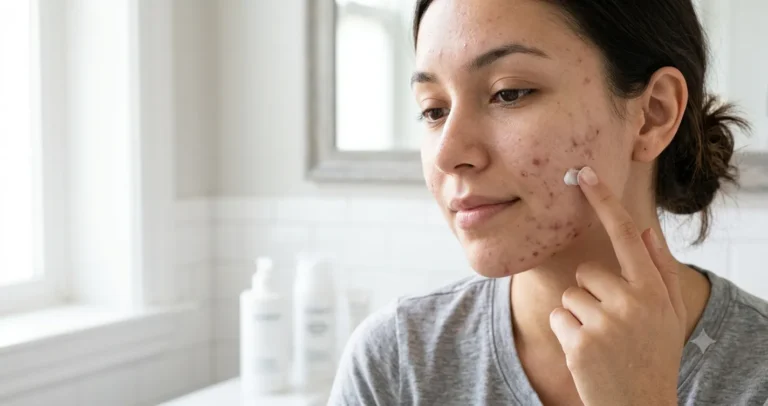
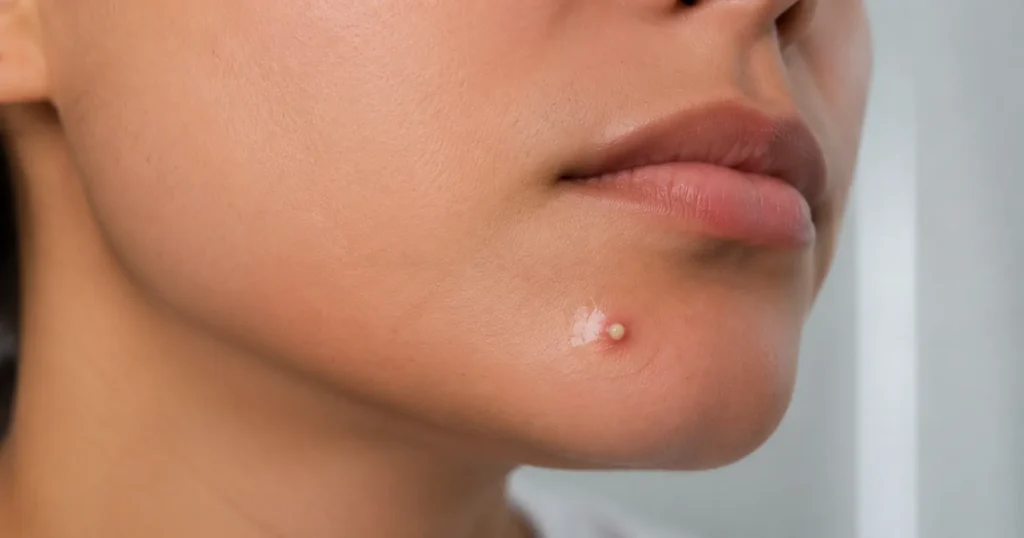
Product directions differ, so follow the label. A typical routine is:
- Wash your hands, then cleanse the affected skin gently.
- Let the area dry. Water, oil, and heavy moisturizer can stop a film from setting.
- Apply a thin layer directly over and, if directed, slightly around the blemish.
- Allow it to dry fully without rubbing or adding another coat.
- Layer sunscreen or makeup only if permitted by the product instructions.
- Use the labeled frequency. Reduce use if bothersome dryness or peeling develops.
Keep acne products away from the eyes, lips, inside the nose, and other mucous membranes. Do not stop or rearrange a prescription acne routine without asking the prescribing clinician.
How to Remove It Without Irritating Your Skin
You usually do not need a special pimple patch remover. A washable liquid pimple patch should come away with the cleanser or water specified on its label. A peelable film should be lifted gently from an edge rather than scraped with a nail.
If it sticks, soften it according to the directions instead of pulling hard. Stop if removal makes the area raw or painful. Hydrocolloid stickers should also be peeled slowly, especially from dry or sensitive skin.
Side Effects and Safety
The most common problems are dryness, peeling, redness, itching, burning, and contact dermatitis. Irritation is more likely when you use more than one topical acne medicine on the same area. Adding extra product does not speed clearing.
The FDA has also warned that OTC topical acne products can rarely cause serious allergic reactions. Stop using the product and seek emergency care for throat tightness, difficulty breathing, faintness, or swelling of the eyes, face, lips, or tongue. Hives or widespread itching also call for stopping the product and obtaining medical advice.
If you are pregnant, trying to become pregnant, or breastfeeding, ask your obstetrician or dermatologist before using a medicated liquid pimple patch. Do not rely solely on a retailer’s “pregnancy safe” label because the whole formula, amount used, body area, and your medical history matter.
What Results Should You Expect?
A clear film can protect a blemish and make picking less convenient. A correctly chosen acne active may reduce a surface lesion, but no spot treatment guarantees overnight clearing. Manufacturer timelines apply only to the tested product and study conditions; they should not be treated as universal outcomes.
Spot treatment also misses the pores where the next breakout is forming. For recurring acne, dermatologists often recommend applying the appropriate acne medicine in a thin layer across the acne-prone area, depending on the medication and its label. A liquid pimple patch is best viewed as a targeted tool inside a consistent routine.
Common Mistakes to Avoid
- Applying a thick coat that stays tacky or pills.
- Putting the film on damp, oily, or heavily moisturized skin.
- Covering it with makeup before it has dried.
- Layering several medicated spot treatments.
- Using a liquid barrier when a fluid-absorbing hydrocolloid patch fits better.
- Treating a deep cyst as if it were a surface whitehead.
- Picking the pimple before applying the product.
- Assuming “invisible” also means nonirritating.
Frequently Asked Questions
Does a liquid pimple patch work better than acne gel?
Not automatically. A liquid pimple patch may add a clear barrier or hold medication on one spot, but an acne gel with an appropriate active can work just as well or better. Compare the active ingredient, concentration, blemish type, and tolerability rather than the product name.
How long should you leave a liquid patch on?
Follow the specific label. Some formulas are worn through the day and removed during evening cleansing; others are used morning and night without peeling. Leaving a medicated film on longer than directed can increase irritation without improving results.
Can you wear one under makeup and sunscreen?
Some products are designed for this, but they must dry completely first. Pat or dab the next layer rather than dragging it across the film. If sunscreen or makeup causes the patch to pill or lift, remove it and reapply according to the label instead of layering more product.
Is a liquid or hydrocolloid patch better for a whitehead?
It depends on the stage. Salicylic acid may suit a small closed whitehead because it helps unclog the pore. Once a whitehead is surfaced or draining, hydrocolloid is usually better positioned to absorb fluid and protect the area from picking.
Can you use a liquid pimple patch during pregnancy?
Ask your obstetrician or dermatologist about the exact product. Liquid patches vary widely: some are nonmedicated barriers, while others contain salicylic acid, sulfur, essential oils, or additional exfoliants. A marketing statement cannot account for your health history or the rest of your routine.
Choosing the Right Invisible Spot Treatment
Choose a liquid pimple patch by function. Salicylic acid makes sense for selected clogged pores, sulfur offers another medicated option, and a plain film mainly provides protection. For a moist, surfaced whitehead, an ultra-thin hydrocolloid sticker may be more useful.
Start with one suitable treatment, follow its label, and give irritated skin a break instead of adding more actives. See a dermatologist for deep, painful, widespread, recurring, or scarring acne.
This article is for educational purposes and is not a diagnosis or a substitute for care from a qualified healthcare professional.
References:
- American Academy of Dermatology Association. “How to treat a deep, painful pimple at home.”
- American Academy of Dermatology Association. “Adult acne treatment dermatologists recommend.”
- U.S. Food and Drug Administration. “Topical Acne Drug Products for Over-the-Counter Human Use.”
- U.S. Food and Drug Administration. “Other Review(s), NDA 214510: serious hypersensitivity evidence involving topical acne products.”
- Chao CM, et al. “The effects of acne dressings on inflammatory acne.” Journal of Cosmetic Science, 2006.
- Kiehl’s. “Truly Targeted Acne-Clearing Pimple Patch with Salicylic Acid.”
- Hero Cosmetics. “Mighty Shield.”
- Dermalogica via Ulta Beauty. “Deep Acne Invisible Liquid Patch.”
- Murad. “Deep Relief Acne Treatment.”
- Hero Cosmetics. “Mighty Patch Invisible+.”