Foundation for Breakout Prone Skin | Acne-Safe Makeup Options
Finding makeup that covers breakouts without making them worse can feel confusing. You want your skin to look smoother, but you also do not want clogged pores, new pimples, irritation, or foundation that settles into texture by lunchtime.
The right foundation for breakout prone skin should give coverage without feeling heavy, greasy, or hard to remove. It should also work with your skincare routine, not fight against it. Makeup cannot replace acne care, but the right formula and habits can help your skin look calmer while you manage breakouts.
The best foundation for breakout prone skin is usually lightweight, non-comedogenic, comfortable, and easy to wash off at night. It may be oil-free if your skin is oily, or hydrating if acne treatments make your skin dry. Good makeup works best when paired with gentle skincare for acne.
Table of Contents
What Does Breakout-Prone Skin Need From Foundation?
Breakout-prone skin needs balance. You may want coverage for pimples, redness, and post-acne marks, but too much heavy makeup can make skin feel coated. The goal is not to hide your skin under a thick mask. The goal is to even out the look of your skin while keeping your pores and skin barrier in mind.
A good foundation for breakout prone skin should feel breathable. That does not mean it has to be sheer. Some full-coverage formulas can work well if they are thin, flexible, and non-greasy. The problem is usually not coverage itself. The problem is heavy buildup, pore-clogging texture, poor removal, or dirty tools.
Breakout-prone skin may also be irritated. Active pimples, peeling from acne treatments, redness, or dryness can make foundation sting or cling to rough areas. If your makeup burns when applied, your skin barrier may need support before you focus on coverage.
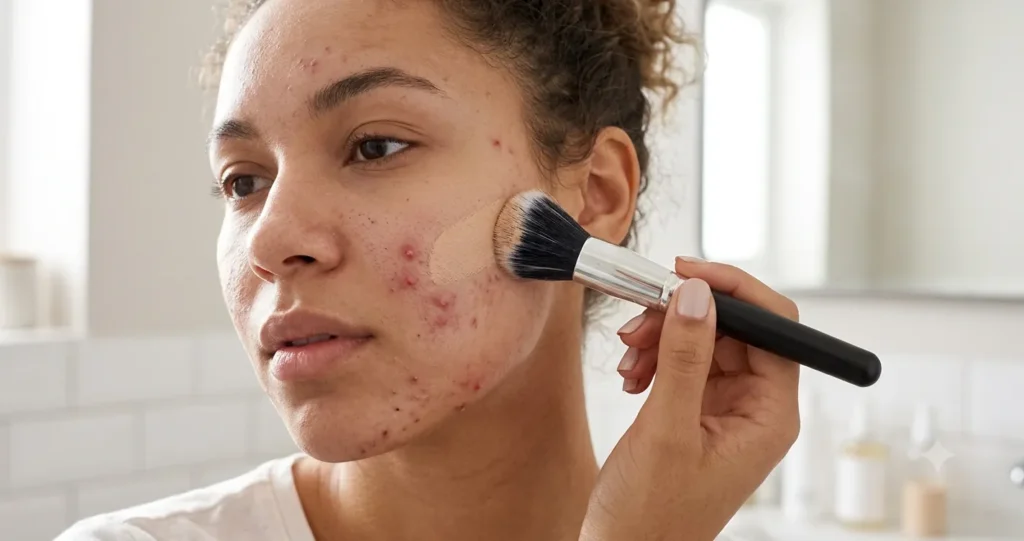
What Makes a Foundation Acne-Safe?
An acne-safe foundation is not one magic product. It is a formula that lowers the chance of clogging, irritation, and buildup. It should match your skin type and be easy to remove without harsh scrubbing.
Non-Comedogenic Formulas
The word non-comedogenic means a product is designed not to clog pores. This can be helpful when choosing foundation for breakout prone skin, especially if you often get whiteheads, blackheads, or small clogged bumps.
Still, non-comedogenic does not mean a product is guaranteed to never cause breakouts. Everyone’s skin reacts differently. A formula that works for one person may not work for another, especially if your skin is sensitive or already irritated.
Oil-Free and Lightweight Textures
If your skin gets oily quickly, an oil-free or soft-matte foundation may help. These formulas can reduce shine and feel less slippery on acne-prone areas. They may also wear better on the forehead, nose, and chin.
But oil-free is not always required. Some people with dry acne-prone skin need a little hydration. The best foundation for breakout prone skin depends on whether your skin is oily, dry, sensitive, or combination.
Fragrance-Free or Low-Irritation Options
Fragrance can be a problem for some acne-prone skin, especially when the skin is inflamed or treated with strong acne products. If your foundation often makes your face sting, itch, or look red, consider a fragrance-free formula.
Simple formulas are often easier to test. This is especially true if you use prescription acne treatment, retinoids, benzoyl peroxide, or exfoliating acids.
Easy Removal at Night
Long-wear makeup can be useful, but it still needs to come off fully. Foundation left on overnight can mix with oil, sweat, dead skin, and pollution. This may increase clogged pores and irritation.
A good foundation for breakout prone skin should not require aggressive scrubbing to remove. If you have to rub hard, your skin may become more inflamed.
🔥 The 3 products dermatologists actually recommend (and yes, they work):
Stop guessing and start with what’s proven. La Roche-Posay Effaclar Duo(+) targets breakouts fast, Paula’s Choice 2% BHA Liquid Exfoliant keeps pores clear with daily use, and Hero Cosmetics Mighty Patch is the overnight fix everyone swears by. ✅ No prescription needed ✅ Affordable ✅ Backed by real clinical evidence.
Ingredients to Look For in Foundation for Breakout Prone Skin
Ingredients matter, but the whole formula matters more. One good ingredient cannot save a heavy, greasy foundation that your skin hates. Still, some ingredients may be helpful for acne-prone skin.
Salicylic Acid Foundation
A salicylic acid foundation may be useful for some people with oily skin, clogged pores, or mild breakouts. Salicylic acid is often used in skin products for acne because it can help loosen dead skin buildup inside pores.
That said, makeup with salicylic acid is still makeup. It should not replace your cleanser, treatment, moisturizer, or sunscreen. If you already use salicylic acid in your routine, adding more through foundation may be too much and could cause dryness or peeling.
Soothing Ingredients
Some foundations include soothing ingredients like niacinamide, aloe, panthenol, or similar comfort-supporting ingredients. These may help the formula feel better on irritated skin.
They do not cure acne, but they can make makeup more comfortable. If your skin is red or dry from acne products, a calming formula may look smoother than a harsh matte one.
Mineral-Based Options
Some people like mineral foundation because it can feel lightweight and simple. Powder mineral makeup may be helpful for oily or sensitive skin, depending on the formula.
However, mineral does not automatically mean perfect. Some powders can look dry or cakey over flaky acne-treated skin. You still need to patch test and remove it properly.
Hydrating but Non-Heavy Ingredients
Acne treatments can make skin dry, tight, or flaky. If that happens, foundation may crack or cling to patches. Hydrating ingredients can help makeup sit better.
The key is to choose hydration without a greasy feel. A balanced foundation for breakout prone skin should make the skin look smoother without leaving a thick film.
Ingredients and Formula Types to Avoid
Some ingredients and textures are more likely to cause trouble for acne-prone skin. This does not mean everyone must avoid the same things, but it gives you a smart place to start.
Heavy oils, thick balms, and greasy textures may worsen clogged pores for some people. If a foundation feels slippery, sticky, or hard to wash off, it may not be the best daily choice.
Strong fragrance and irritating additives can also be a problem. If your skin burns, itches, or develops rash-like bumps after using a product, stop using it and simplify your routine.
Very thick stage-style coverage can look beautiful for photos, but it may be too much for daily wear. Heavy layers can trap sweat and oil, especially if you wear makeup for many hours.
Expired makeup is another risk. Old foundation, dirty sponges, and unwashed brushes can collect bacteria and product buildup. Even the best foundation for breakout prone skin can cause problems if applied with dirty tools.
Foundation Types for Acne-Prone Skin
Different foundation types can work for different needs. There is no single best option for everyone.
Liquid Foundation
Liquid foundation gives flexible coverage. It can be sheer, medium, or full coverage depending on the formula. Many people prefer liquid foundation for breakout prone skin because it is easier to blend around pimples and marks.
Look for lightweight, non-comedogenic formulas. If you are oily, choose oil-control or soft-matte. If you are dry, choose hydrating but not greasy.
Powder Foundation
Powder foundation may help oily skin because it can reduce shine. It is often quick and easy for daily wear.
The downside is that powder can cling to dry patches, peeling skin, or raised pimples. If you use drying acne treatments, powder may make texture look more obvious.
Mineral Foundation
Mineral foundation can feel light and simple. It may be a good option for people who dislike liquid formulas or want a softer finish.
Apply it in thin layers. Too much powder can sit on top of bumps and draw attention to texture.
Tinted Moisturizer or Skin Tint
A tinted moisturizer or skin tint may work if you only want light coverage. These products can even out tone without fully covering the skin.
This can be a good choice for everyday wear, especially if your breakouts are mild or you prefer a natural look.
Full-Coverage Foundation
Full coverage can be helpful for visible pimples, red marks, and brown post-acne marks. The trick is to apply it carefully.
A full-coverage foundation for breakout prone skin should be used in thin layers. You can cover the whole face lightly, then spot conceal only where needed.
Foundation for Breakout Prone Skin by Skin Type
Your skin type should guide your choice. A foundation that works well for oily acne-prone skin may look terrible on dry acne-prone skin.
Oily Breakout-Prone Skin
If your skin becomes shiny fast, look for oil-free, matte, or soft-matte formulas. These can help control shine without adding a greasy layer.
Avoid very rich, dewy foundations if they seem to clog your pores. A breathable matte foundation for breakout prone skin may last longer and feel cleaner.
Dry Breakout-Prone Skin
Dry acne-prone skin needs comfort. Look for hydrating, non-comedogenic formulas that do not cling to flakes.
Avoid very powdery products if your skin is peeling. A lightweight liquid foundation may look smoother.
Sensitive Breakout-Prone Skin
Sensitive skin needs a simple approach. Choose fragrance-free formulas when possible and patch test before wearing a new foundation all day.
If your skin reacts often, avoid changing too many products at the same time. This makes it easier to find the trigger.
Combination Breakout-Prone Skin
Combination skin may need different prep in different areas. You can use a light moisturizer on dry cheeks and a mattifying primer only on the oily T-zone.
The best foundation for breakout prone skin for combination skin is usually flexible, not too matte and not too dewy.
How to Apply Foundation Without Making Acne Worse
Application matters as much as the product. A good formula can still cause problems if you apply too much, rub too hard, or use dirty tools.
Prep With Gentle Skincare for Acne
Start with clean skin. Use a gentle cleanser, then apply lightweight moisturizer. In the morning, use sunscreen before makeup.
Good skincare for acne helps foundation look better. If your skin is dry or irritated, makeup will not sit smoothly. Avoid applying foundation over burning, raw, or untreated peeling skin.
Use Clean Tools
Clean brushes, sponges, and hands are important. Dirty makeup tools can hold oil, bacteria, old foundation, and dead skin.
Wash brushes regularly and replace sponges often. If you use fingers, wash your hands first.
Apply Thin Layers
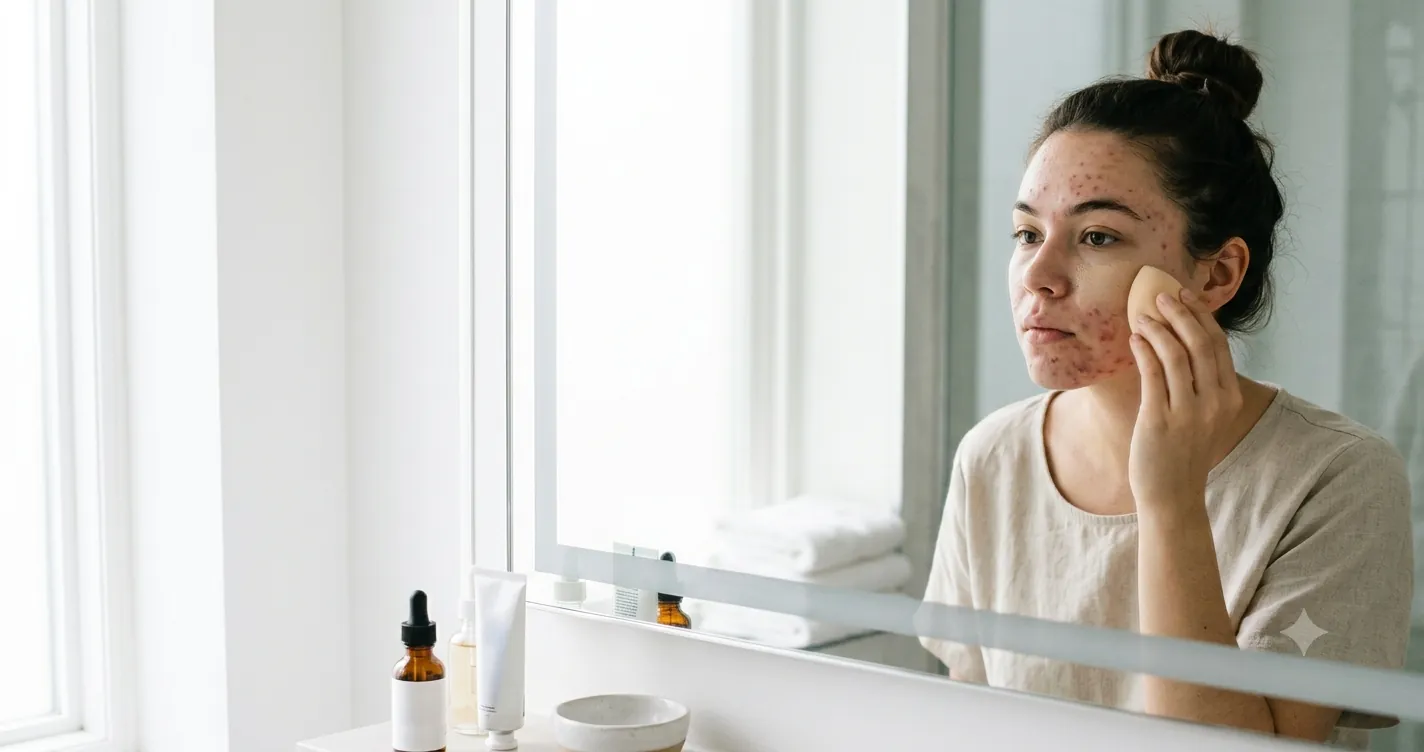
Thin layers look more natural and feel lighter. Apply a small amount of foundation, blend gently, then add more only where needed.
This is one of the best ways to use foundation for breakout prone skin without creating heavy buildup. Spot concealing can give better results than applying a thick layer everywhere.
Avoid Rubbing Active Pimples
Active pimples are inflamed. Rubbing them can make redness worse and may disturb healing.
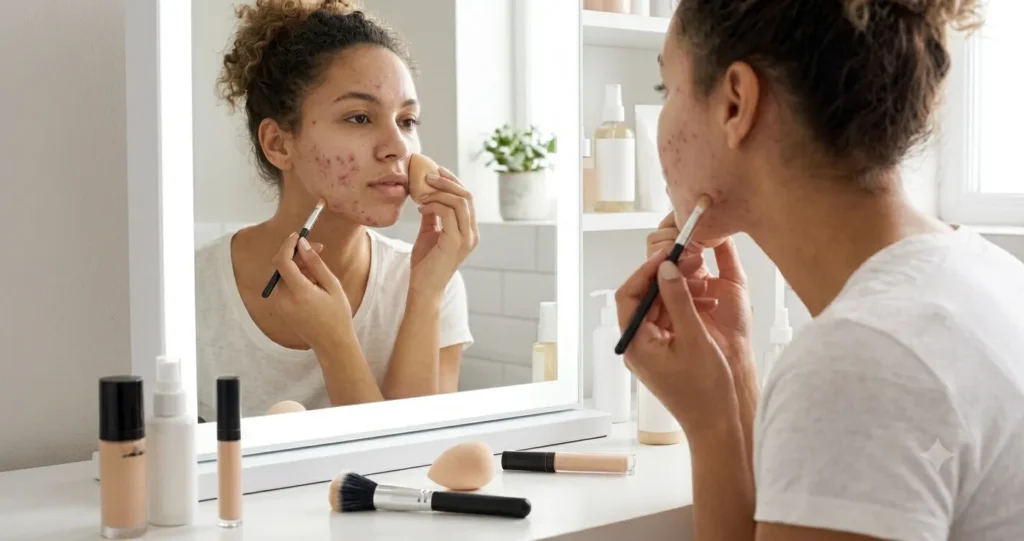
Use gentle tapping or pressing motions around breakouts. A sponge, clean fingertip, or small brush can help place product without dragging the skin.
How to Cover Pimples and Post-Acne Marks Naturally
Covering acne is partly about color and partly about texture. Red pimples, brown marks, and raised bumps need different strategies.
For redness, a foundation with the right undertone can help even the skin. For brown marks, you may need a small amount of concealer that matches your skin tone closely. For raised pimples, too much product can make them look bigger.
Apply foundation first. Then use a small brush to add concealer only where extra coverage is needed. Let it sit for a moment, then tap the edges to blend.
If your skin is oily, set lightly with powder. Do not pack on too much powder over active pimples. Heavy powder can turn smooth coverage into a cakey patch.
Foundation and Acne Treatment: How They Work Together
Makeup can cover acne, but it does not treat the main cause. A foundation for breakout prone skin should support your routine, not replace it.
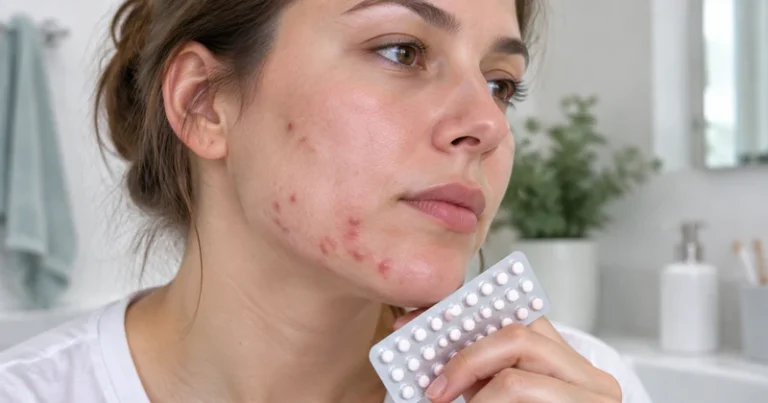
You still need the right skin products for acne, such as a gentle cleanser, treatment, moisturizer, and sunscreen. Your acne treatment may include salicylic acid, benzoyl peroxide, retinoids, or prescription products depending on your skin.
Some people search for clinique acne treatment while also looking for makeup that will not cause breakouts. This makes sense because many shoppers compare an acne system with foundation options. The key is to understand the difference. Treatment products are meant to manage acne. Foundation is mainly for coverage.
An acne system may include cleanser, treatment, and moisturizer. Makeup should come after skincare, not replace it. Also, too many acne products under foundation can cause peeling, pilling, burning, or uneven texture.
Should You Use Salicylic Acid Foundation?
A salicylic acid foundation may be worth considering if you have oily skin, small clogged pores, and mild breakouts. It may be helpful for people who already know their skin tolerates salicylic acid.
But it is not right for everyone. If your skin is dry, sensitive, or already using retinoids, exfoliating acids, or prescription acne products, a salicylic acid foundation may cause irritation.
Treatment makeup is not always better. Sometimes the best foundation for breakout prone skin is a gentle, non-medicated formula that does not interfere with your acne routine. If your acne treatment is already active enough, your makeup can simply provide coverage.
🔥 The 3 products dermatologists actually recommend (and yes, they work):
Stop guessing and start with what’s proven. La Roche-Posay Effaclar Duo(+) targets breakouts fast, Paula’s Choice 2% BHA Liquid Exfoliant keeps pores clear with daily use, and Hero Cosmetics Mighty Patch is the overnight fix everyone swears by. ✅ No prescription needed ✅ Affordable ✅ Backed by real clinical evidence.
How to Remove Foundation From Breakout-Prone Skin
Removing makeup well is one of the most important steps for acne-prone skin. Even acne-safe foundation can become a problem if it stays on overnight.
If you wear long-wear foundation or sunscreen, gentle double cleansing may help. The first cleanse removes makeup, sunscreen, and oil. The second cleanse cleans the skin. Use gentle products and avoid harsh scrubbing.
Do not sleep in makeup. Leftover foundation can trap oil, sweat, and debris. It can also make your skin feel rough and congested the next day.
After cleansing, moisturize if your skin feels dry. Acne care works better when your skin barrier is not stripped.
Common Mistakes With Foundation for Breakout Prone Skin
The first mistake is choosing coverage over formula. A foundation may cover every mark, but if it clogs your pores or irritates your skin, it is not worth daily use.
Another mistake is skipping moisturizer. Dry acne-prone skin can make foundation crack, cling, or look patchy. Moisturizer can help your makeup sit more smoothly.
Using dirty sponges is also common. A sponge that sits damp in a makeup bag can collect buildup. Clean tools are part of acne-safe makeup.
Layering too many active products under makeup is another issue. If you use strong acne treatments, acids, mattifying primers, and long-wear foundation all together, your skin may feel tight or irritated.
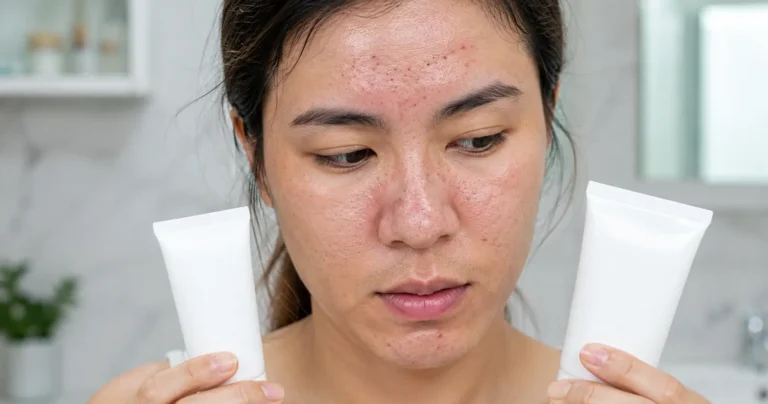
Finally, many people forget to patch test. Before using a new foundation for breakout prone skin every day, test it on a small area for a few days if you can.
When Makeup May Be Making Breakouts Worse
Sometimes foundation is part of the problem. You may notice breakouts in the same areas where makeup sits, such as the cheeks, chin, or forehead. You may also see more clogged pores after wearing a new formula.
Itching, burning, rash-like bumps, or sudden texture changes can also be warning signs. If this happens, stop the suspected product and simplify your routine.
Go back to basics: cleanser, moisturizer, sunscreen, and any acne treatment you already know your skin tolerates. Reintroduce products slowly. If breakouts are severe or do not improve, see a dermatologist.
When to See a Dermatologist
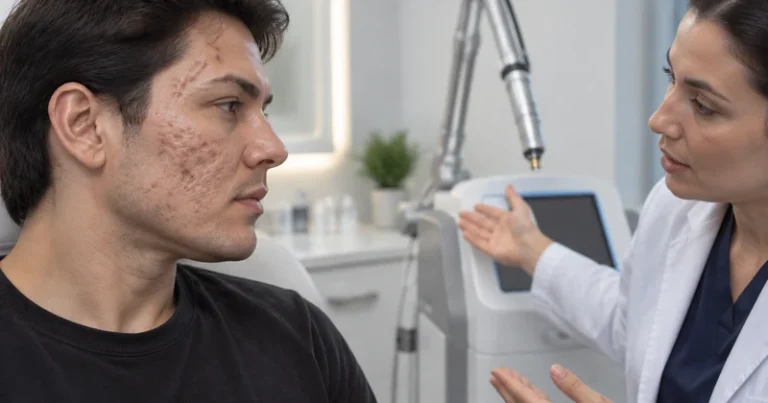
See a dermatologist if you have painful cystic acne, acne that leaves scars, or breakouts that keep getting worse despite careful product choices. You should also get help if your skin burns easily, reacts to many products, or develops rash-like bumps after makeup.
A dermatologist can help you decide which skin products for acne are right for you. They can also guide you on safe makeup use during prescription treatment.
If you are using strong acne medication, ask what foundation and removal routine is safest. Your skin may need extra barrier support while it heals.
Final Thoughts on Foundation for Breakout Prone Skin
The right foundation for breakout prone skin should balance coverage, comfort, and pore-friendly wear. Look for formulas that match your skin type, feel lightweight, and remove easily at night.
Remember that makeup is only one part of the routine. Clean tools, gentle cleansing, moisturizer, sunscreen, and steady acne care all matter. A good foundation can help you feel more confident, but healthy skin habits help prevent the cycle of covering breakouts while accidentally making them worse.
Start with a simple formula, apply thin layers, keep your tools clean, and remove makeup every night. If your acne keeps worsening or leaves scars, get professional guidance instead of guessing through more products.
FAQ
1. What is the best foundation for breakout prone skin?
The best foundation for breakout prone skin is usually non-comedogenic, lightweight, comfortable, and easy to remove. Oily skin may prefer oil-free or soft-matte formulas, while dry acne-prone skin may need hydrating non-comedogenic makeup. The right choice depends on your skin type and acne routine.
2. Can foundation make acne worse?
Yes, foundation can make acne worse if it clogs pores, irritates the skin, is not removed properly, or is applied with dirty tools. If breakouts appear after switching makeup, stop the product and simplify your routine. Choose acne-safe formulas and remove makeup before sleeping.
3. Is salicylic acid foundation good for acne-prone skin?
A salicylic acid foundation may help some oily or clogged skin types, but it is not right for everyone. If you already use acne treatments, adding salicylic acid in makeup may cause dryness or irritation. A gentle non-medicated foundation may be better for sensitive skin.
4. Should I wear foundation while using acne treatment?
You can wear foundation while using acne treatment if your skin tolerates it. Choose a gentle foundation for breakout prone skin, apply thin layers, and remove it carefully at night. If your treatment causes peeling or burning, focus on repairing your skin barrier before wearing heavy makeup.
5. How do I stop foundation from clogging my pores?
Use non-comedogenic foundation, apply thin layers, clean your brushes and sponges, avoid sleeping in makeup, and remove long-wear products fully. Pair makeup with gentle skincare for acne and avoid layering too many active products under foundation.