Best Moisturizer for Acne Prone Skin: Top Picks by Skin Type
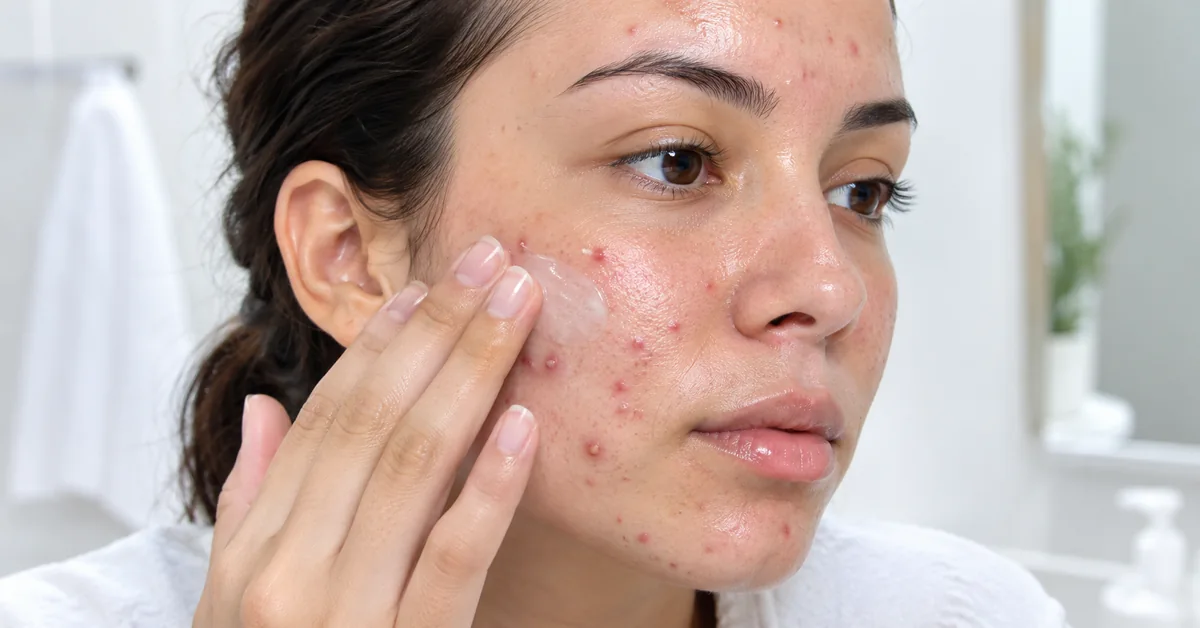
Choosing the best moisturizer for acne prone skin is less about finding one universally “safe” cream and more about matching texture, ingredients, and finish to what your skin actually needs. Oily skin may prefer a lightweight gel-cream, while sensitive or treatment-irritated skin may do better with a simpler lotion that supports the skin barrier without adding more acne actives.
The short answer: acne-prone skin still needs hydration. A moisturizer can help reduce dryness and irritation from common acne treatments, and a product labeled non-comedogenic or oil-free is a sensible place to start. When choosing the best moisturizer for acne prone skin, the right formula should feel comfortable enough to use consistently without making your routine unnecessarily complicated.
Table of Contents
Best Moisturizer for Acne Prone Skin: Quick Picks
| Skin need | Product | Why it fits |
|---|---|---|
| Oily / combination | CeraVe Oil Control Moisturizing Gel-Cream | Lightweight gel-cream, oil-control focus, matte finish |
| Sensitive / dry or irritated | Vanicream Daily Facial Moisturizer | Glycerin, squalane, hyaluronic acid, and five ceramides |
| Very oily / matte preference | La Roche-Posay Toleriane Double Repair Matte | Oil-free, non-comedogenic moisturizer with niacinamide and ceramide-3 |
These picks are intentionally different. The goal is not to give you a long list of similar moisturizers, but to help you identify which formula best matches your skin type, acne routine, and tolerance.
Why Acne-Prone Skin Still Needs Moisturizer
Acne-prone skin can feel oily and still be dehydrated or irritated. Oil and water are not the same thing. Sebum is an oily substance made by the skin, while hydration refers to water in the outer layers of the skin.
This matters because common acne treatments can cause dryness, tightness, flaking, or irritation. Benzoyl peroxide, salicylic acid, adapalene, tretinoin, and isotretinoin can all make moisturizing more important for some people.
The best moisturizer for acne prone skin will not treat acne by itself, but it can make an acne routine easier to tolerate. If your skin becomes so dry or irritated that you keep stopping treatment, a suitable moisturizer may help you stay more consistent.
Skipping moisturizer simply because your skin is oily can also be unhelpful if the rest of your routine is overly drying. The better approach is usually to choose a texture that fits your skin rather than avoiding moisturizer altogether.
How We Chose the Best Moisturizer for Acne Prone Skin
We evaluated each product using practical criteria rather than ratings, popularity, or marketing claims alone.
The main criteria were:
- Non-comedogenic or acne-friendly labeling
- Texture and finish
- Suitability for oily, combination, sensitive, or treatment-dried skin
- Fragrance profile
- Barrier-supportive ingredients
- Presence of humectants such as glycerin or hyaluronic acid
- Compatibility with common acne routines
- Current U.S. availability
- Price and value
- Meaningful differences from the other picks
No moisturizer can guarantee that every person will remain breakout-free. “Non-comedogenic” is useful guidance, not a promise that a product will work perfectly for every individual.
Best Moisturizer for Oily Acne-Prone Skin: CeraVe Oil Control Moisturizing Gel-Cream
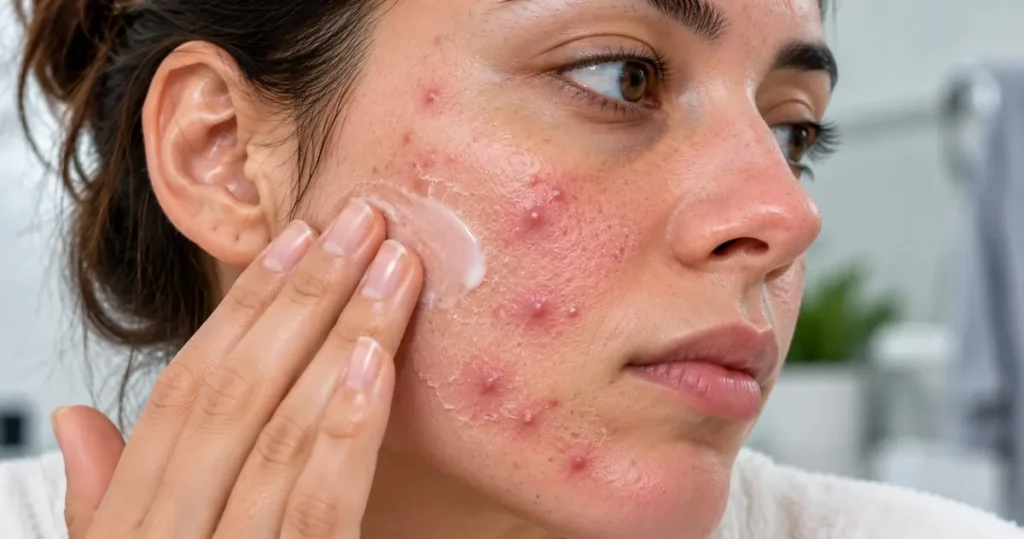
CeraVe Oil Control Moisturizing Gel-Cream is the strongest fit here for someone whose main concern is excess shine but who still wants daily hydration. The current official formula is designed for combination to oily skin and is described as oil-free, non-comedogenic, fragrance-free, and suitable for acne-prone skin.
The formula contains ceramides, hyaluronic acid, niacinamide, glycerin, and silica-based oil-absorbing technology. CeraVe currently lists the product at $19.99 on its U.S. website.
For someone seeking the best moisturizer for acne prone skin with a lighter feel, the gel-cream texture is an advantage if traditional creams feel too heavy or greasy. It dries down with a more matte finish and is designed to help control excess oil without making moisturizer feel like another thick layer.
Best for: oily or combination skin, daytime use, and people who prefer a lighter matte finish.
Main limitation: if your skin is already very dry, peeling, or irritated from acne treatment, an oil-control moisturizer may feel less comfortable than a more barrier-focused lotion.
Want hydration without adding more shine? 💧
CeraVe Oil Control Moisturizing Gel-Cream is a lightweight choice for oily and combination skin.
✅ Oil-free and non-comedogenic
✅ Ceramides, hyaluronic acid, and niacinamide
✅ Lightweight matte gel-cream texture
If your skin is already very dry or peeling, a less mattifying option may be more comfortable.
👉 Check the latest price on Amazon
Best Moisturizer for Sensitive Acne-Prone Skin: Vanicream Daily Facial Moisturizer
Vanicream Daily Facial Moisturizer is the better fit of these three for people whose acne-prone skin is also sensitive, dry, or irritated by treatment.
Its current official ingredient list includes squalane, glycerin, hyaluronic acid, and five ceramides. Vanicream describes the formula as non-comedogenic, non-greasy, and free of botanical extracts and essential oils.
That makes it a practical best moisturizer for acne prone skin candidate when your priority is straightforward hydration without adding salicylic acid, benzoyl peroxide, exfoliating acids, or essential oils to an already active acne routine.
The texture is richer than a watery gel but still designed as a lightweight facial lotion. Someone using adapalene, tretinoin, benzoyl peroxide, or another drying treatment may find this type of formula more comfortable than a strongly mattifying product.
Best for: sensitive acne-prone skin, dryness, treatment-related irritation, and people who prefer a simple barrier-supportive moisturizer.
Main limitation: very oily skin may prefer a lighter gel or a stronger matte finish.
Does acne treatment leave your skin tight or irritated? 🌿
Vanicream Daily Facial Moisturizer focuses on uncomplicated hydration and barrier support.
✅ Five ceramides plus hyaluronic acid
✅ Non-comedogenic and non-greasy
✅ No botanical extracts or essential oils
Its lotion texture may feel richer than a gel if your skin is extremely oily.
👉 Check the latest price on Amazon
Best Matte Moisturizer for Acne Prone Skin: La Roche-Posay Toleriane Double Repair Matte
La Roche-Posay Toleriane Double Repair Matte is another strong option for oily and combination skin, especially if reducing shine is a priority.
The current U.S. formula is oil-free, non-comedogenic, and fragrance-free. It contains glycerin, niacinamide, ceramide-3, and La Roche-Posay thermal water. The brand currently lists the non-SPF version at $24.99 on its U.S. website.
As a best moisturizer for acne prone skin contender, this product is much more clearly positioned around oily skin and matte finish than Vanicream. Compared with CeraVe Oil Control Gel-Cream, the decision may come down to texture preference, price, and which formula feels better on your skin.
Best for: oily skin, combination skin, shine control, and people who want a matte daily moisturizer.
Main limitation: if acne medication has left your skin very dry or flaky, the matte focus may be less comfortable than a more emollient moisturizer.
Want hydration without the greasy finish? ✨
La Roche-Posay Toleriane Double Repair Matte is designed for oily skin that still needs daily moisture.
✅ Oil-free and non-comedogenic
✅ Niacinamide plus ceramide-3
✅ Lightweight matte finish
If your skin is dry or heavily irritated, a richer moisturizer may feel better.
👉 Check the latest price on Amazon
Best Moisturizer for Acne Prone Skin by Skin Type
The best moisturizer for acne prone skin depends heavily on how your skin behaves before and after the rest of your routine.
Oily Skin
If your face becomes shiny quickly, a lightweight gel or gel-cream may feel more comfortable than a rich cream. Look for non-comedogenic formulas and avoid choosing a product solely because it promises to “dry out” oily skin.
CeraVe Oil Control Gel-Cream and La Roche-Posay Toleriane Double Repair Matte both make more sense for this profile than a heavy occlusive cream.
Dry Acne-Prone Skin
Dry acne-prone skin often needs more than a watery gel. A lotion containing humectants and barrier-supporting lipids may help reduce tightness and flaking.
Vanicream Daily Facial Moisturizer is the strongest fit among these three if dryness or treatment irritation is a bigger problem than shine.
Combination Skin
Combination skin can be oily through the forehead, nose, and chin while feeling normal or dry elsewhere. A lightweight lotion or gel-cream is often easier to balance than an extremely mattifying or very rich formula.
Your choice may also change with the season or with changes in acne treatment.
Sensitive or Irritated Skin
When skin is stinging, flaky, or easily irritated, more “active” ingredients are not necessarily better. A moisturizer can be most useful when it simply hydrates and supports the barrier without adding another exfoliating or acne-fighting step.
If irritation is persistent, painful, swollen, blistering, or worsening, stop experimenting with products and seek medical advice.
Skin Using Adapalene, Tretinoin, Benzoyl Peroxide, or Salicylic Acid
If your acne treatment is drying your skin, the best moisturizer for acne prone skin may be the one that improves comfort without adding another strong active ingredient.
That can mean choosing a gentle moisturizer with glycerin, ceramides, hyaluronic acid, or squalane rather than another medicated “acne moisturizer.”
What Does Non-Comedogenic Actually Mean?
“Non-comedogenic” generally means the product is formulated to be unlikely to clog pores. The American Academy of Dermatology recommends looking for terms such as non-comedogenic, oil-free, or won’t clog pores when choosing skincare for acne-prone skin.
But even the best moisturizer for acne prone skin can be a poor individual fit, so the label is not a guarantee. Skin response varies, and a product that works well for one acne-prone person can still feel heavy, irritating, or breakout-prone for another.
It is also risky to judge a finished moisturizer solely by seeing one ingredient on an online “comedogenic” list. Formulation, concentration, ingredient interactions, and how the final product behaves all matter.
If you want to investigate a formula more closely, use our pore clogging checker as a starting point rather than treating one flagged ingredient as automatic proof that a product will cause acne.
Ingredients to Look for in an Acne-Friendly Moisturizer
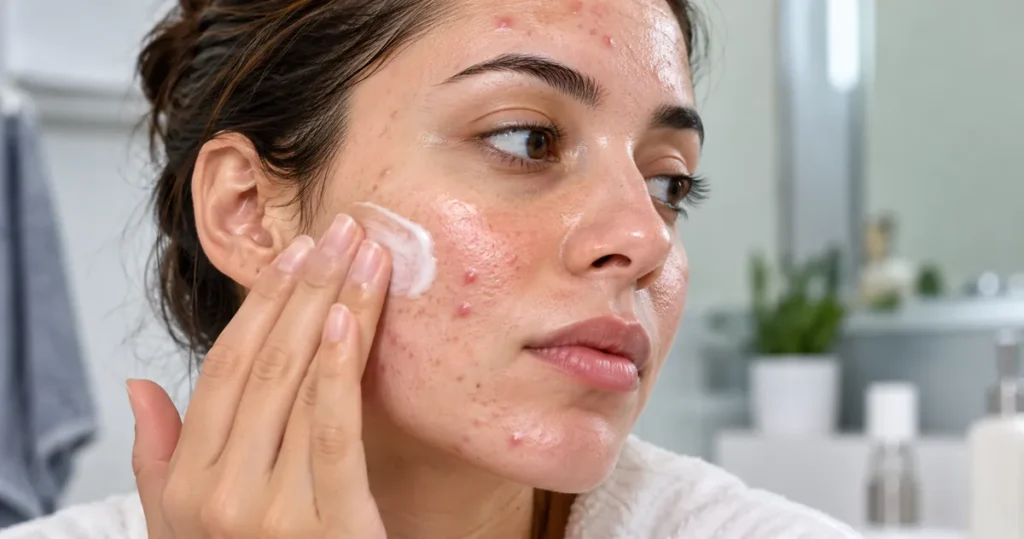
You do not need every trendy ingredient in one formula. A moisturizer only needs to do its job well enough for your skin.
Glycerin
Glycerin is a humectant, meaning it helps attract and hold water in the outer skin layers. It appears in many simple moisturizers because hydration is its main job.
Hyaluronic Acid
Hyaluronic acid is another humectant used to support hydration. It does not treat acne directly, but it can be useful in lightweight moisturizers for skin that feels dehydrated.
Ceramides
Ceramides are lipids naturally present in the skin barrier. Moisturizers containing ceramides can be useful when acne treatment has left skin dry or uncomfortable.
Niacinamide
Niacinamide is a form of vitamin B3 used in many moisturizers. It can support barrier function and may help calm skin, but it is not mandatory for a good acne-friendly moisturizer.
Squalane
Squalane is an emollient that helps soften the skin. Vanicream Daily Facial Moisturizer includes squalane alongside glycerin, hyaluronic acid, and ceramides.
The best moisturizer for acne prone skin does not need all five of these ingredients. Formula fit matters more than collecting the longest ingredient list.
Gel vs Lotion vs Cream for Acne-Prone Skin
When choosing the best moisturizer for acne prone skin, texture can make as much practical difference as the ingredient list.
Gel: usually light and fast-absorbing. Often appealing for very oily skin or humid weather.
Gel-cream: adds more body than a pure gel while still feeling lighter than many traditional creams.
Lotion: a useful middle ground for combination, sensitive, or mildly dry skin.
Cream: richer and often more useful when the skin barrier is very dry, flaky, or irritated.
The richest formula is not automatically better for dry acne-prone skin, and the lightest formula is not automatically better for oily skin. Comfort, tolerance, and the rest of your routine matter.
Can Moisturizer Cause Breakouts?
Yes, a moisturizer can be a poor fit for your skin, but not every new blemish means the product is “purging” your skin.
A moisturizer without an acne-active ingredient generally should not be expected to create true purging. If bumps start appearing after a new moisturizer, possibilities include simple acne fluctuation, irritation, occlusion, or sensitivity to part of the formula.
Watch for patterns such as:
- New clogged bumps in areas where you normally break out
- Burning or stinging
- Persistent redness
- Itching
- A rash-like pattern
- Swelling
If you are unsure whether a new reaction is acne, irritation, or purging, see our guide to purging versus irritation.
How to Use Moisturizer With Acne Treatment
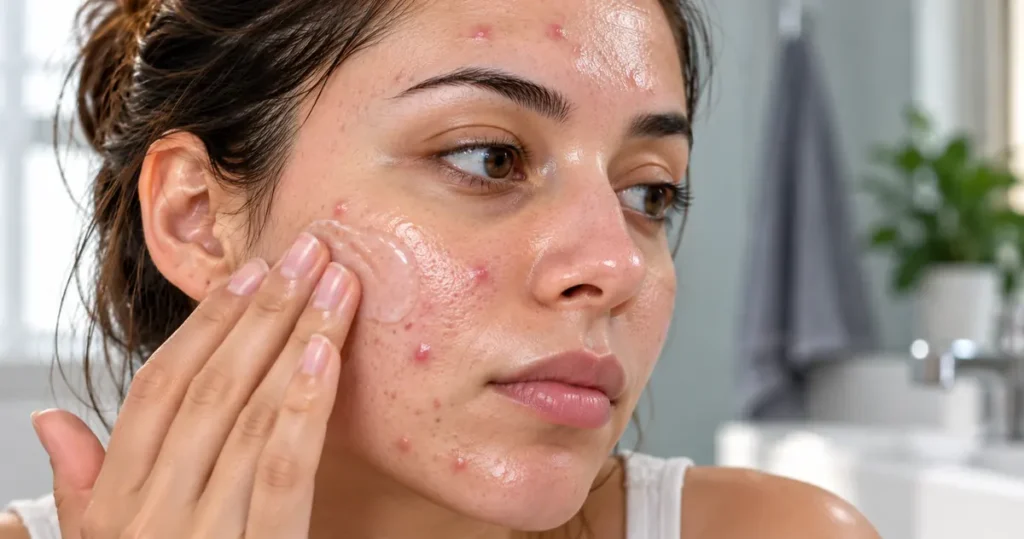
The best moisturizer for acne prone skin should fit into a simple routine that is easier to troubleshoot than a crowded one.
A typical order may look like:
- Cleanse gently.
- Apply your acne treatment as directed.
- Apply moisturizer according to the treatment and product instructions.
- Use broad-spectrum sunscreen during the day.
Some people use moisturizer before a retinoid to reduce irritation; others use it afterward. Prescription instructions and dermatologist guidance should take priority over a generic layering rule.
If you are choosing between common OTC acne actives, our guide to benzoyl peroxide vs salicylic acid can help clarify what each ingredient is actually doing.
Common Moisturizer Mistakes With Acne-Prone Skin
Skipping Moisturizer Because Your Skin Is Oily
Oily skin can still become dehydrated or irritated, especially when acne treatments are involved.
Choosing a Product Only Because It Says “For Acne”
A moisturizer does not need salicylic acid or another acne active to be useful. Sometimes the best role for moisturizer is simply hydration and barrier support.
Treating “Non-Comedogenic” as a Guarantee
The label is useful, but individual tolerance still matters.
Rejecting a Product Because One Ingredient Is Flagged Online
A single ingredient does not reliably predict how the final formula will behave on your skin.
Switching Products Every Few Days
Frequent changes make it difficult to know what is helping or causing irritation.
Assuming Every New Bump Is Purging
Most plain moisturizers do not create the accelerated cell turnover associated with classic purging.
Frequently Asked Questions
What Is the Best Moisturizer for Oily Acne-Prone Skin?
A lightweight, non-comedogenic gel or gel-cream is often a practical starting point. Among the products compared here, CeraVe Oil Control Moisturizing Gel-Cream and La Roche-Posay Toleriane Double Repair Matte are the strongest fits for oily or combination skin.
Should Acne-Prone Skin Use Moisturizer Every Day?
Many people with acne benefit from daily moisturizer, especially when using treatments that cause dryness or irritation. The important part is choosing a formula that fits your skin type and feels comfortable enough to use consistently.
Can Moisturizer Make Acne Worse?
It can if a particular formula is too heavy, irritating, or simply does not agree with your skin. Choosing non-comedogenic products can lower the risk, but no label guarantees that every individual will tolerate a moisturizer.
Is Gel Moisturizer Better for Acne-Prone Skin?
Not always. Gel textures often feel better on oily skin, while a lotion or cream may be more helpful for dry or treatment-irritated skin. Texture should match your skin rather than a universal acne rule.
What Is the Best Moisturizer for Acne Prone Skin While Using Adapalene?
The best moisturizer for acne prone skin while using adapalene is usually a gentle, non-comedogenic formula that helps reduce dryness and irritation without unnecessarily adding another strong acne active. Ceramides, glycerin, hyaluronic acid, or squalane can all be useful depending on the formula and your skin type.
Conclusion
The best moisturizer for acne prone skin is not automatically the lightest, most expensive, or most heavily marketed product. Choose according to oiliness, dryness, sensitivity, acne-treatment irritation, and the texture you can comfortably use every day.
For oily or combination skin, CeraVe Oil Control Moisturizing Gel-Cream is the strongest all-around match in this shortlist. Vanicream Daily Facial Moisturizer makes more sense when sensitivity or dryness is the priority, while La Roche-Posay Toleriane Double Repair Matte is a useful alternative when shine control matters most.
If a moisturizer repeatedly causes burning, rash-like irritation, or persistent breakouts, stop forcing it to work. The right product should make your acne routine easier to tolerate, not more complicated.
This article is for educational purposes only and is not a diagnosis or a substitute for care from a qualified healthcare professional.