Itchy Acne: Why Your Breakout Itches and What It Means
When your breakout itches, it gets your attention
A regular pimple can be annoying. An itchy breakout feels different. It can make you want to scratch, change products, or wonder if something more than acne is going on. That instinct is not wrong. While some acne treatments can make skin sting, peel, or itch, a truly itchy cluster of bumps can be a clue that you are dealing with irritation, folliculitis, or what many people call fungal acne.
Table of Contents
Why itch can be a clue that something other than standard acne may be going on
Classic acne usually involves a mix of blackheads, whiteheads, inflamed pimples, and sometimes deeper cysts. Fungal acne, which is actually a type of folliculitis, tends to look more uniform and is often itchy. That does not mean every itchy bump is fungal acne, but itch is one reason dermatologists think beyond standard acne when a breakout is not behaving the usual way.
What you’ll learn in this article
Below, you will learn what itchy acne usually means, what is fungal acne, how pityrosporum folliculitis differs from ordinary acne, what can trigger it, how to clear fungal acne safely, and when it is smart to stop guessing and see a dermatologist.
🔥 The 3 products dermatologists actually recommend (and yes, they work):
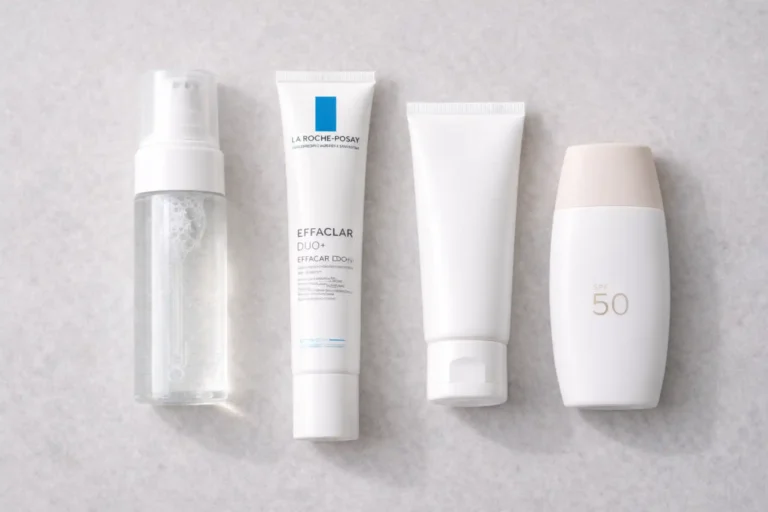
Stop guessing and start with what’s proven. La Roche-Posay Effaclar Duo(+) targets breakouts fast, Paula’s Choice 2% BHA Liquid Exfoliant keeps pores clear with daily use, and Hero Cosmetics Mighty Patch is the overnight fix everyone swears by. ✅ No prescription needed ✅ Affordable ✅ Backed by real clinical evidence.
What Does Itchy Acne Usually Mean?
Why Does Acne Itch? Common Causes of Itchy Acne
Sometimes the acne itself is not the main reason for the itch. Your skin may be reacting to the products you are using, especially if your routine includes benzoyl peroxide, salicylic acid, adapalene, tretinoin, or several strong products at once. These can cause redness, dryness, scaling, and irritation, which many people experience as itching.
Can Skin Irritation Cause Itchy Acne?
If your skin feels tight, flaky, shiny in a dry way, or stings when you apply even a gentle moisturizer, irritation is high on the list. This often happens when you start a new acne treatment too quickly, use too much of it, or stack exfoliating acids with retinoids and spot treatments. In that situation, the itching may come from a damaged skin barrier rather than from the breakout itself.
Can Sweat, Heat, or Friction Cause Itchy Acne?
Itchy acne can also show up when sweat, damp skin, and friction irritate hair follicles. Tight workout clothes, sports gear, backpack straps, shaving, and hot, humid weather can all make acne-like bumps feel worse or trigger folliculitis. This is one reason people sometimes notice a flare after the gym, during summer, or on the chest, shoulders, and back.
What Is Fungal Acne and How Is It Linked to Itchy Acne?
What Is Fungal Acne?
What is fungal acne? It is not true acne in the usual sense. The term most people use, “fungal acne,” usually refers to Malassezia folliculitis, a condition in which yeast that normally lives on the skin grows too much and affects the hair follicles. The result can look like acne, but the cause is different.
Why Fungal Acne Is Also Called Pityrosporum Folliculitis
You may also see it called pityrosporum folliculitis. Older and newer medical terms are both used, but they point to the same general problem: an overgrowth of Malassezia yeast within the follicle. So when you read about pityrosporum folliculitis, you are reading about the condition many people call fungal acne.
Why Fungal Acne Is Different From Traditional Acne
Traditional acne starts with clogged pores, oil, inflammation, and bacteria-related changes. Fungal acne is a follicle-based yeast problem. That distinction matters because acne medicine and fungal acne treatment are not the same. In fact, some people can have both conditions at the same time, which is one reason self-diagnosis gets messy fast.
What Type of Acne Is Itchy? Itchy Acne vs Fungal Acne
What Type of Acne Is Itchy? Signs of Regular Acne
Regular acne usually shows variety. You may see blackheads, whiteheads, papules, pustules, and sometimes painful deeper bumps. The spots can be different sizes and at different stages. Itch is possible if the skin is irritated, but it is not the feature that usually stands out most.
Signs of Itchy Pimples That May Be Fungal Acne
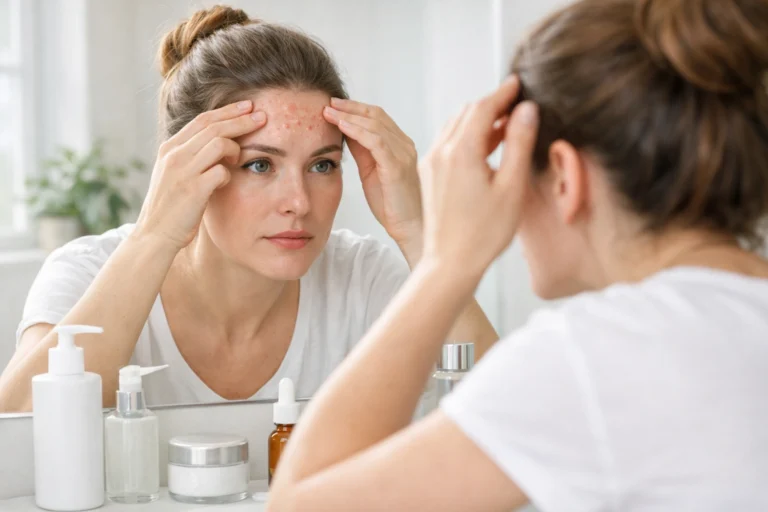
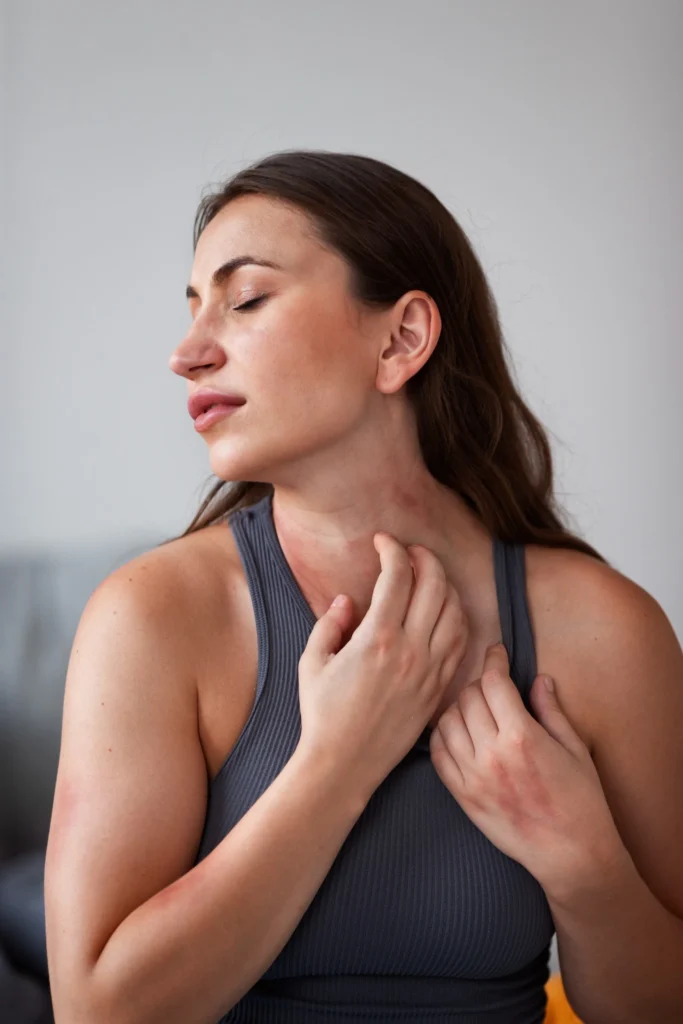
Fungal acne tends to show up as many small bumps that look very similar to each other. They are often itchy, may form in clusters, and often involve the forehead, hairline, chest, shoulders, upper back, neck, and upper arms. Another clue is the absence of comedones, meaning you usually do not see classic blackheads and whiteheads the way you do with ordinary acne.
Itchy Pimples on Face and Body: Where Fungal Acne Often Shows Up
The face can be involved, especially the forehead and hairline, but fungal acne often favors oilier, sweat-prone areas of the upper body. If you have an itchy, uniform breakout on your chest, back, shoulders, or along the hairline after sweating or in humid weather, fungal acne becomes more likely.
Itchy Acne vs Fungal Acne: A Simple Comparison
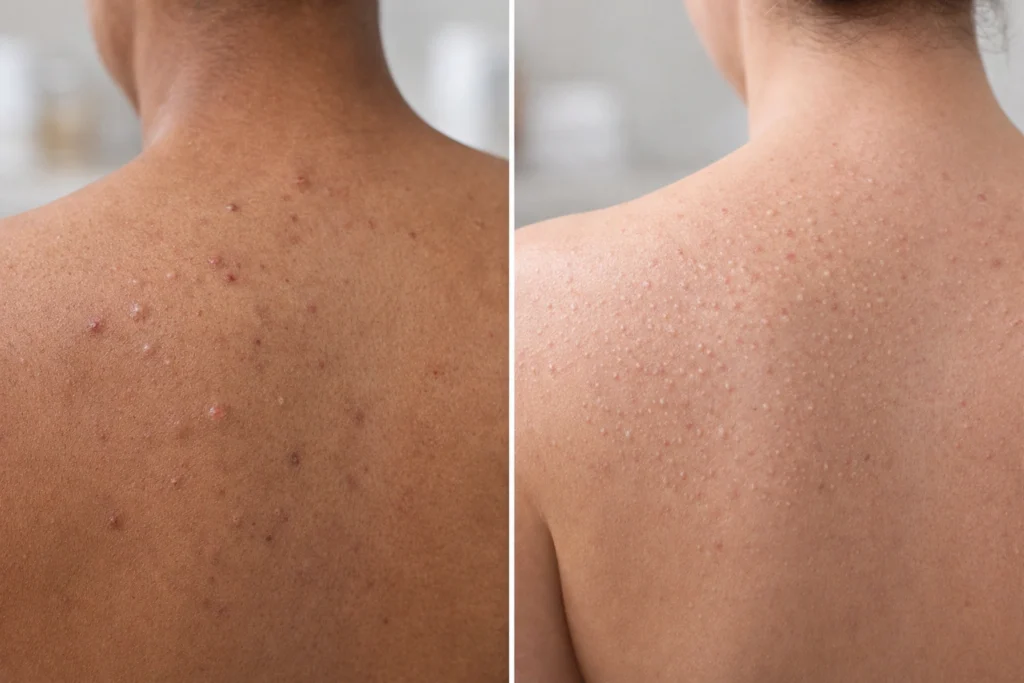
| Feature | Regular acne | Fungal acne |
|---|---|---|
| Main cause | Clogged pores, oil, inflammation | Yeast overgrowth in hair follicles |
| Itch | Not usually the main symptom | Often itchy |
| Bump pattern | Mixed sizes and types | Small, similar-looking bumps |
| Blackheads and whiteheads | Common | Usually absent |
| Common areas | Face, jawline, chest, back | Forehead, hairline, chest, shoulders, upper back, neck |
| Response to antibiotics | May improve | May worsen or fail to improve |
| Best next step | Acne-focused care | Antifungal evaluation and treatment |
What Can Cause Itchy Acne or Make It Worse?
Can Sweat and Humidity Cause Itchy Pimples?
Malassezia thrives in conditions many people already know too well: heat, humidity, sweat, and occlusion. Tight clothing, trapped sweat, oily emollients, and some oily sunscreens can create the kind of environment that helps yeast overgrow inside follicles. That is why fungal acne often flares in hot weather, after exercise, or under tight straps and clothing.
Can Antibiotics Cause Itchy Acne? Other Factors That May Play a Role
Antibiotics can sometimes be part of the story. They may reduce the bacteria that normally share space on your skin, allowing yeast to overgrow more easily. People with oily skin, heavy sweating, seborrheic dermatitis, steroid use, or immune system issues may also be more prone to pityrosporum folliculitis.
Why Itchy Pimples Flare Up After Workouts or in Hot Weather
A sweaty workout outfit that stays on for hours is almost a perfect setup for itchy follicle irritation. Add friction from seams, sports bras, straps, or gear, and the skin barrier becomes even more stressed. That does not guarantee fungal acne, but it helps explain why a breakout may look and feel different in summer or after repeated sweaty exercise.
How to Clear Itchy Acne Safely
Why the Right Treatment for Itchy Acne Depends on the Cause
How to clear fungal acne starts with one basic rule: do not assume every breakout needs harsher acne products. If the bumps are actually fungal acne, piling on stronger acne medication may only make your skin more irritated while doing little for the yeast. The right treatment depends on whether you are dealing with acne, pityrosporum folliculitis, another kind of folliculitis, or a mix of conditions.
What fungal acne treatment may involve
If you are searching for fungal acne treatment, the usual medical options are antifungal products, not standard acne antibiotics alone. Depending on severity and location, a clinician may recommend topical antifungal creams, ketoconazole products, selenium sulfide shampoo used on affected areas, or prescription oral antifungal medication. Oral treatment can be helpful because the yeast sits in the follicle, where surface products may not always reach well enough. Because oral antifungals can have side effects, including stomach upset and possible liver concerns, they should be used under medical guidance.
Skin care habits that may help prevent repeat flares
Simple habits matter more than most people expect. Shower after workouts. Change out of sweaty clothes quickly. Choose loose, breathable fabrics when possible. Wash bathing suits after use and let them dry fully. Be careful with heavy, oily skin and hair products around the forehead, chest, and back. Use noncomedogenic products when you can, and keep your routine simple enough that you can tell what is helping and what is not.
What not to do when you suspect fungal acne
Do not scrub your skin hard. Do not keep adding new acids, masks, and spot treatments every few days. Do not pick at the bumps. And do not stay on acne antibiotics forever if the rash is itchy, uniform, and not improving. Those patterns deserve a reassessment, because treating the wrong condition for months is one of the most common reasons people stay stuck.
🔥 The 3 products dermatologists actually recommend (and yes, they work):
Stop guessing and start with what’s proven. La Roche-Posay Effaclar Duo(+) targets breakouts fast, Paula’s Choice 2% BHA Liquid Exfoliant keeps pores clear with daily use, and Hero Cosmetics Mighty Patch is the overnight fix everyone swears by. ✅ No prescription needed ✅ Affordable ✅ Backed by real clinical evidence.
When itchy acne is probably not fungal acne
Signs of irritation from strong acne products
If your skin is peeling, burning, red, and sensitive to almost everything, irritation may be the bigger problem. This is especially likely if the itch started soon after you introduced a new treatment, increased the strength, or began using several active ingredients at once. In those cases, calming the routine down may matter more than adding another “fix.”
When folliculitis, dermatitis, or another skin condition may be involved
Bacterial folliculitis can also create acne-like breakouts, and dermatologists note that folliculitis may be itchy or painful. Malassezia folliculitis is one type, but it is not the only one. Dermatitis and other rashes can also mimic acne, especially when the skin feels more itchy than oily. That is why the pattern, location, symptoms, and treatment history all matter.
Why self-diagnosing can be tricky
The hard truth is that fungal acne gets overused online as a label for almost any rough, itchy breakout. Sometimes that guess is right. Sometimes it is irritation, shaving-related folliculitis, steroid acne, bacterial folliculitis, or ordinary acne that has been overtreated. A photo online cannot reliably sort all of that out.
When to see a dermatologist
Red flags that deserve professional evaluation
You should get medical help if the breakout is spreading quickly, becoming painful, leaving marks, showing signs of infection, or lasting despite a reasonable skin care trial. It is also worth booking an appointment if the itch is intense, the rash keeps returning, or you are not sure whether the bumps are acne at all.
When over-the-counter care is not enough
Over-the-counter products can help mild acne and may help some people bridge the gap while they wait for care, but persistent or unusual breakouts often need a real diagnosis. That is especially true if you have already tried acne products for weeks and the bumps remain uniform, itchy, and stubborn.
How a doctor may confirm whether it is acne, pityrosporum folliculitis, or something else
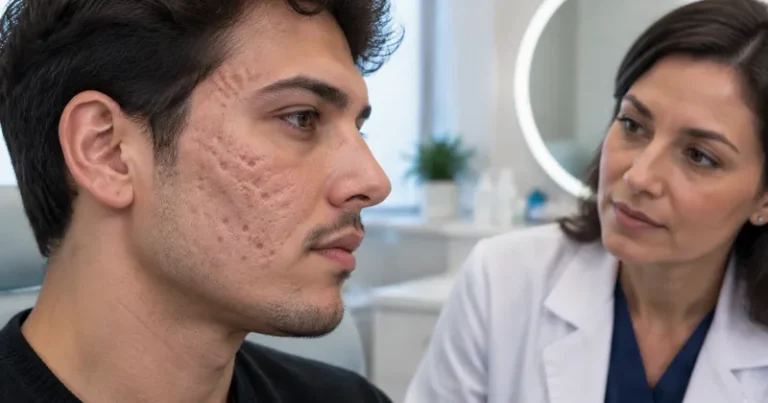
A dermatologist may diagnose fungal acne by looking closely at the pattern of the bumps, asking what treatments you have used, and sometimes taking a skin sample to examine under a microscope. Some clinicians also use a Wood’s lamp. The goal is not just to name the rash. It is to avoid treating the wrong problem.
Everyday skin care tips for itchy breakouts
How to keep your routine simple and gentle
Start with a gentle cleanser twice a day and after heavy sweating. Use lukewarm water, not hot water. Add one treatment step at a time instead of rotating through several. If your skin feels dry or tight, use a light moisturizer. Acne-prone skin still needs moisture, especially when you use benzoyl peroxide, salicylic acid, or retinoids.
Product habits that may reduce irritation
Choose products labeled noncomedogenic or water-based when possible. Avoid harsh scrubs, rough cleansing tools, greasy hair products that sit on the forehead, and anything that repeatedly makes your skin sting. Creams are often less irritating than gels or ointments for acne-prone skin. Sunscreen matters too, especially if you are using acne treatment that makes your skin more sensitive.
Shower, exercise, and clothing habits that may help
Small changes can make a real difference. Shower after workouts. Do not stay in sweaty clothes. Wash hats, pillowcases, and exercise gear regularly. Wear looser clothing when it is hot and humid. If shaving seems to trigger bumps, back off for a while or change your technique. These steps are not glamorous, but they can reduce repeated follicle irritation.
Internal linking opportunities
A guide on acne vs folliculitis
You may also want to read our guide on acne vs folliculitis if you are trying to tell the difference between pimples, shaving bumps, and infection-like breakouts.
A beginner-friendly article on building a gentle acne skin care routine
If your skin feels overworked, our article on building a gentle acne skin care routine can help you reset without giving up on treatment completely.
A treatment-focused article on how to handle body acne
If your bumps are mainly on your chest, shoulders, or back, our body acne guide can help you choose products and daily habits that make those areas easier to manage.
Final takeaway
A reassuring summary that helps the reader know the next best step
Itchy acne is not something to ignore, but it is also not a reason to panic. Sometimes it means your skin is irritated. Sometimes it points to folliculitis. And sometimes it really does fit fungal acne, also called pityrosporum folliculitis. The clues that matter most are itch, uniform bumps, body location, and how your skin responds to treatment.
A natural call to action encouraging the reader to keep learning or get expert help if symptoms continue
If your breakout is itchy, stubborn, or keeps coming back, do not keep guessing forever. Read more about acne-safe skin care, compare your symptoms with our acne vs folliculitis guide, and consider seeing a dermatologist for a clear answer and a treatment plan that actually fits your skin. This article is for education only and is not a diagnosis or a substitute for personal medical advice.
FAQ:
Can itchy acne be normal?
It can happen, but itch is not the feature people usually notice most with standard acne. Often, the itch comes from irritated, dry skin or from another condition that looks like acne.
How do I know if my itchy acne is fungal acne?
Fungal acne usually causes small, similar-looking itchy bumps, often on the forehead, hairline, chest, shoulders, or upper back. It usually does not have classic blackheads and may not improve with regular acne treatment.
What is fungal acne exactly?
Fungal acne is the common name for Malassezia or pityrosporum folliculitis. It is caused by yeast overgrowth in hair follicles, not by the same process that causes typical acne.
How to clear fungal acne safely?
The safest approach is to get the right diagnosis first. Fungal acne treatment may include antifungal creams, washes, shampoos, or prescription medication, along with habits like showering after workouts and avoiding heavy oily products on breakout-prone areas.
When should I see a doctor for itchy acne?
See a doctor if the bumps are very itchy, painful, spreading, leaving marks, or not improving with a simple routine. It is also a good idea if you are not sure whether you have acne, fungal acne, or another skin condition.