Topical Retinoids Acne Scars: Benefits, Results, and What to Know
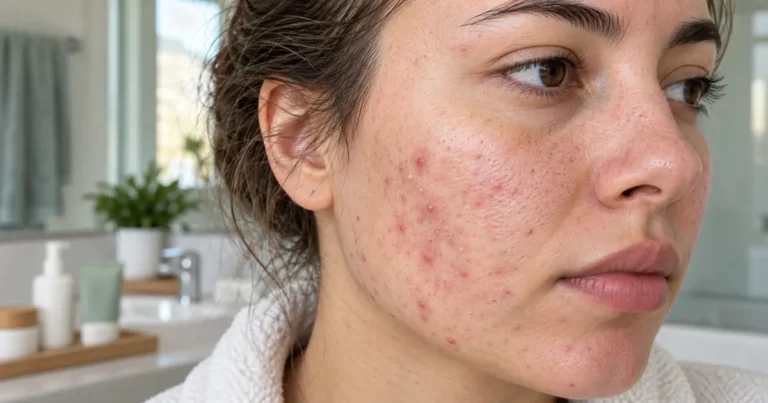
When acne finally starts to settle down, many people expect their skin to go back to normal. Instead, they are left with dark marks, red areas, uneven texture, or shallow dents that seem to hang on much longer than the breakout itself. That is usually when interest in topical retinoids acne scars treatment starts.
You may have heard that retinoids are one of the best ingredients for acne-prone skin. That is true, but they are not magic. They can help with certain acne-related marks and mild textural changes, yet they do not replace in-office treatments for every kind of scar. The real value of topical retinoids acne scars care is that it can improve tone, support skin renewal, and help prevent future breakouts that may leave new marks behind.
If you want the short answer, topical retinoids acne scars treatment can help fade post-acne discoloration, smooth mild roughness, and support gradual skin renewal. It usually does much more for flat marks and mild texture than for deep pitted scars, raised scars, or scars that are tethered below the surface.
Table of Contents
Do Topical Retinoids Help Acne Scars?
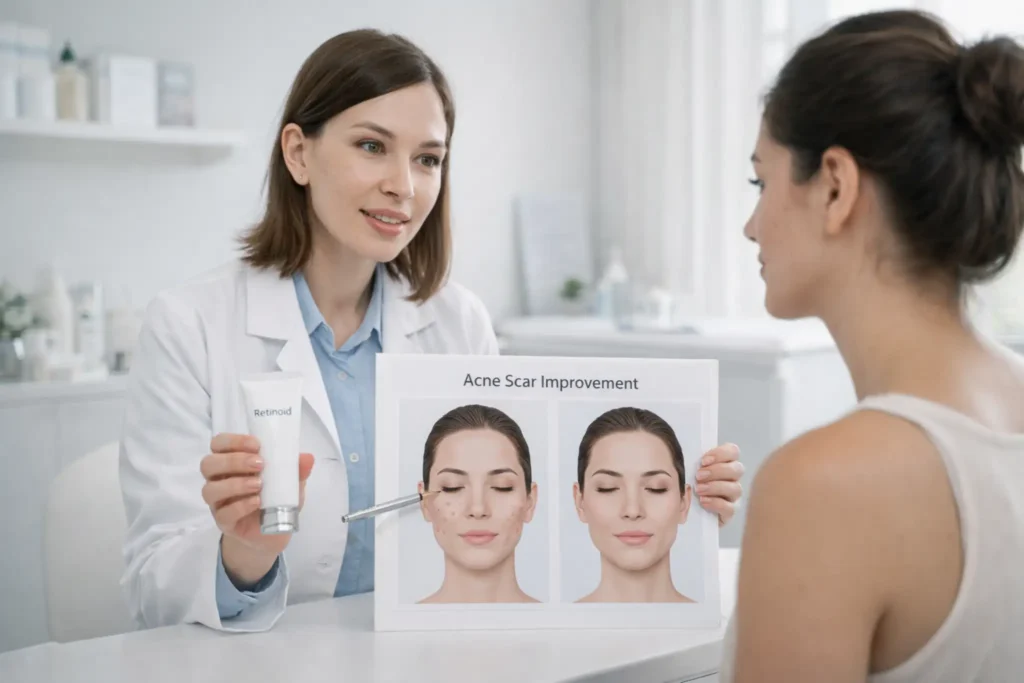
Yes, but the type of scar matters. Topical retinoids acne scars care is most useful when acne leaves behind dark spots, red marks, dullness, or mild uneven texture. Retinoids help skin turn over more normally and can improve acne itself, which matters because fewer breakouts often means fewer new marks and less chance of future scarring.
Where people get disappointed is when they expect a cream to fill in deep ice pick scars or release rolling scars that pull downward under the skin. That is not what retinoids do. Even the best topical treatment acne scars routine has limits when real structural damage is present.
So the honest answer is this: topical retinoids acne scars treatment is worth trying if your scarring is mild, your main issue is post-acne marks, or you also want help controlling ongoing acne. It is less likely to give dramatic results if your scars are deep and clearly indented.
What Are Topical Retinoids?
Retinoids are vitamin A–related medications used on the skin. They are widely used for acne because they help keep pores from clogging and improve the way skin cells shed. Some also help reduce inflammation and support healthier skin renewal over time.
When people talk about topical retinoids acne scars treatment, they are usually referring to products such as:
- Adapalene
- Tretinoin
- Tazarotene
- Trifarotene
These are not exactly the same as basic cosmetic retinol. Retinol is a gentler over-the-counter ingredient that still belongs to the retinoid family, but true prescription retinoids and adapalene tend to be stronger and better studied for acne treatment.
That is one reason topical retinoids acne scars routines are often recommended early. They are not just cosmetic brighteners. They are real acne medicines that can also improve the aftermath acne leaves behind.
How Topical Retinoids May Help Acne Scars
There are a few reasons topical retinoids acne scars treatment gets so much attention.
They speed up skin renewal
Retinoids help normalize cell turnover. In simpler terms, they encourage old surface cells to shed more regularly and make room for newer skin. That can help dull, uneven skin look fresher over time.
They help with post-acne marks
A lot of what people call scars are really leftover red or brown marks after a breakout. These are often much more responsive to acne scars topical care than true pitted scars. Because retinoids improve turnover and can help acne clear more effectively, they may gradually help these marks fade.
They may support mild texture improvement
Very mild atrophic scarring can sometimes look softer with long-term retinoid use. This is partly because retinoids support skin remodeling and partly because they improve the overall look and feel of the skin surface. The change is usually subtle, not dramatic.
They help prevent new scars
One of the strongest arguments for topical retinoids acne scars treatment is prevention. If retinoids help reduce breakouts, clogged pores, and inflammation, they may also lower the chance of fresh acne leaving new marks behind. That is especially important if you are still breaking out while trying to treat old scars.
Which Types of Acne Scars Respond Best to Retinoids?
Not all scars behave the same way, and this is where expectations often need a reset.
Best response: flat dark or red marks
If your “scars” are mostly flat spots left after acne, topical retinoids acne scars care may help more than you think. These marks are often caused by leftover pigment or redness, not permanent structural damage.
Moderate response: mild shallow atrophic scars
If you have very mild boxcar or rolling scars, retinoids may help smooth the overall look of the skin a bit. The improvement tends to be gradual and limited, but it can still be worthwhile.
Weak response: deep pitted scars
Deep ice pick scars, deeper boxcar scars, and tethered rolling scars usually need office-based treatment. Retinoids may still improve tone and help the surrounding skin look healthier, but they rarely change the scar enough on their own.
Variable response: raised scars
Raised scars do not usually respond to topical retinoids acne scars treatment the same way flat marks do. These often need a more targeted plan, sometimes including injections or other dermatologist-guided care. The American Academy of Dermatology notes that home treatment exists, but getting the best acne-scar results often requires knowing the scar type and matching it to the right treatment.
Common Types of Topical Retinoids for Acne Scars
Adapalene
Adapalene is often the easiest starting point. It is a retinoid used for acne and is available over the counter in 0.1% gel form in the United States. Many people find it easier to tolerate than older retinoids, which makes it a practical first step in topical retinoids acne scars routines.
Tretinoin
Tretinoin is a classic prescription retinoid. It comes in different forms, including creams, gels, and lotions. Tretinoin is often chosen when someone wants a stronger acne treatment and is willing to work through an adjustment period. MedlinePlus notes that it is usually applied once daily at bedtime and that acne may appear worse early on before improvement begins.
Tazarotene
Tazarotene is another prescription retinoid and is often considered stronger, but it may also be more irritating. It can be useful in the right case, though it is not always the most beginner-friendly starting point.
Retinol
Retinol is milder than the prescription options above. It can still play a role in a routine, especially for sensitive beginners, but when people search for topical retinoids acne scars treatment, they are often looking for results stronger than what a standard low-strength cosmetic retinol can deliver.
Topical Retinoids Acne Scars: Benefits You Can Realistically Expect
A good topical retinoids acne scars routine can offer several realistic benefits if you use it consistently and keep expectations grounded.
More even-looking skin tone
This is often the first noticeable improvement. Red and brown post-acne marks may slowly soften, especially if you pair the retinoid with daily sunscreen.
Smoother skin overall
Even when scars do not disappear, your skin may feel less rough and look more refined. This can make scars stand out less.
Fewer breakouts
This matters more than people think. One reason topical retinoids acne scars care works so well in real life is that it addresses the cause of future marks too. Treating acne and scars at the same time is often more useful than chasing scar creams while breakouts continue.
Long-term support
Unlike a topical acne scar filler, which mostly blurs texture temporarily, retinoids work gradually beneath the surface through repeated use. That is why they are often included in discussions of the best topical creams for acne scars and long-term acne maintenance.
What Retinoids Cannot Do
This part matters just as much as the benefits.
Topical retinoids acne scars treatment does not fill deep pits the way a filler might. It does not cut scar bands under rolling scars. It does not give instant results, and it does not replace laser treatment, microneedling, subcision, or other in-office methods when scars are more advanced. The AAD’s acne-scar guidance specifically notes that getting the best results often requires individualized treatment based on scar type.
So if you have been hoping that a tube of tretinoin will erase years of deep pitted scars, that is probably not realistic. What it can do is improve the overall quality of your skin and make a broader scar plan work better.
How to Start Using Retinoids for Acne Scars Safely
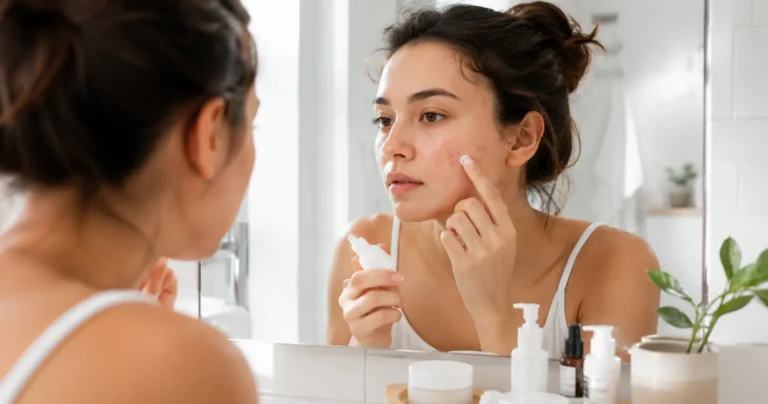
The safest topical retinoids acne scars routine is usually the one that starts slower than you think you need.
Start a few nights a week
AAD patient guidance commonly advises beginning every second or third night, then building toward nightly use if your skin tolerates it. That slower start helps reduce peeling and burning.
Use a small amount
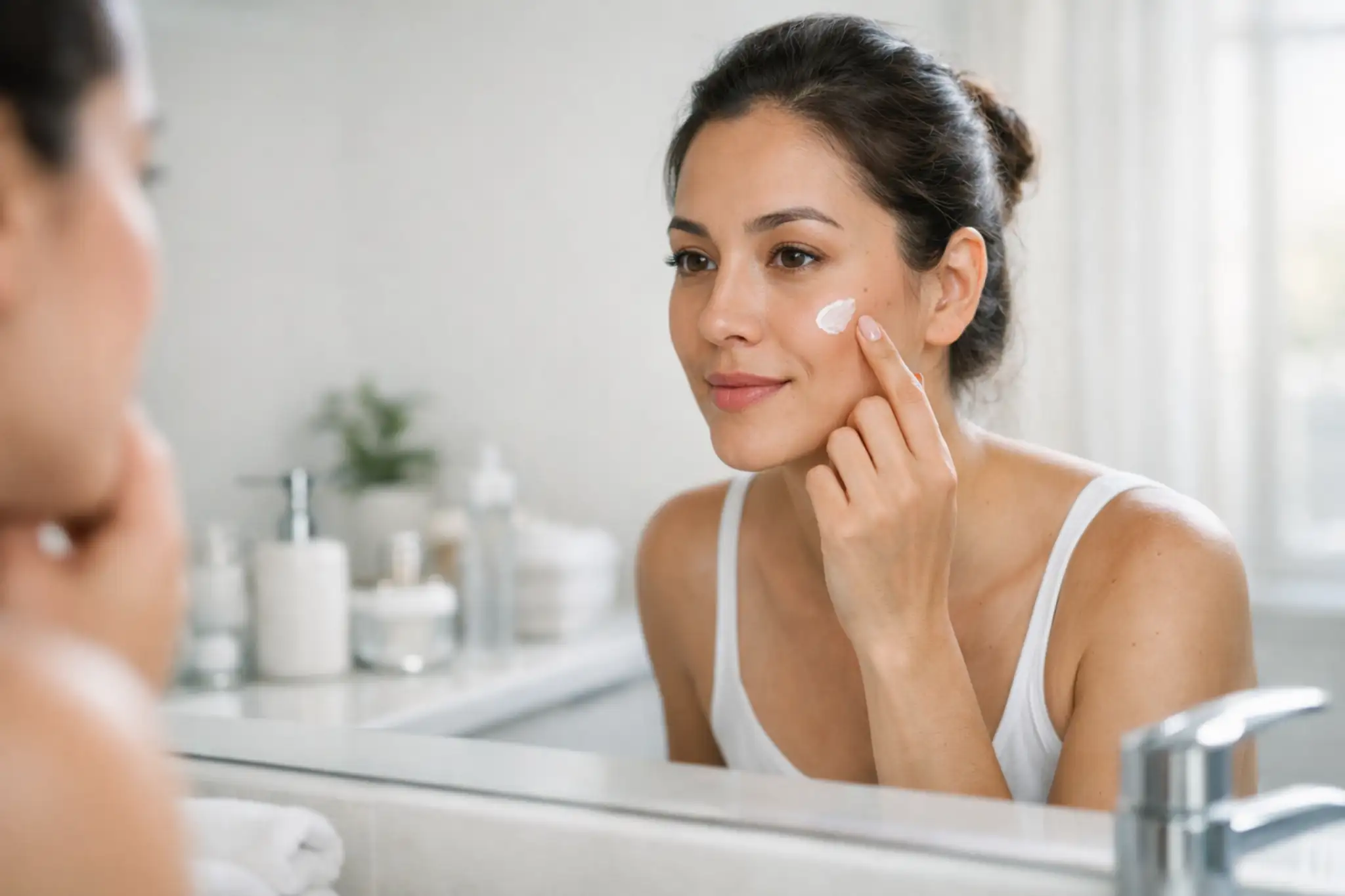
You do not need a thick layer. A pea-sized amount is usually enough for the full face.
Apply at night
Retinoids are generally used in the evening. Some sources also recommend applying them after washing and drying the skin, rather than onto a wet face, to help limit irritation.
Moisturize generously
A plain moisturizer can make a huge difference. Some people do well with the sandwich method, which means moisturizer first, then retinoid, then another layer of moisturizer.
Wear sunscreen every day
Retinoids can increase sun sensitivity, and unprotected sun can make post-acne marks look worse. Broad-spectrum sunscreen is not optional if you want better results.
Best Routine to Pair With Topical Retinoids for Acne Scars
A strong routine does not need to be complicated.
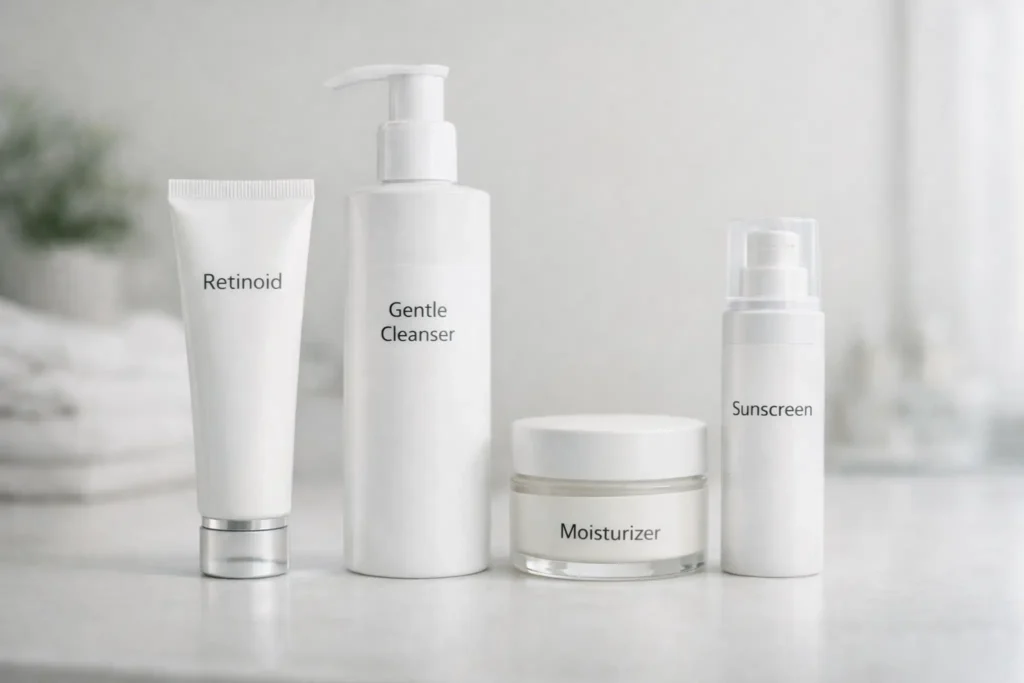
Morning
- Gentle cleanser
- Moisturizer
- Broad-spectrum sunscreen
You can add niacinamide, azelaic acid, or vitamin C in the morning if your skin handles it well, but you do not need all three.
Evening
- Gentle cleanser
- Topical retinoids acne scars treatment
- Moisturizer
That is enough for many people. If you are new to retinoids, simple is better.
What not to mix too aggressively at first
Try to be careful with:
- harsh scrubs
- strong exfoliating acids
- multiple acne actives layered together
- drying toners
- frequent home peels
Retinoids already do a lot. Too many strong add-ons can inflame your skin and keep marks around longer.
Side Effects and What to Do About Them
The adjustment phase is one reason people quit topical retinoids acne scars care too soon.
Common side effects include:
- dryness
- flaking
- tightness
- mild redness
- stinging
These are common, especially in the first few weeks. MedlinePlus notes that tretinoin can temporarily make acne look worse early on before improvement starts, and more visible improvement may take weeks to months.
Purging versus irritation
Some people call early breakouts purging, but not every reaction is purging. If you have peeling, burning, shiny irritated skin, or stinging every time you apply moisturizer, that sounds more like irritation than helpful adjustment.
How to calm things down
- Reduce how often you use the retinoid
- Apply moisturizer before and after
- Stop using other harsh actives for a while
- Make sure your cleanser is gentle
- Restart slowly instead of pushing through severe irritation
How Long Do Topical Retinoids Take to Work on Acne Scars?
This is the question almost everyone asks. The answer is slower than most people want.
You may notice some early change in acne and skin texture within several weeks, but visible improvement in post-acne marks and overall tone often takes a few months. MedlinePlus says acne improvement with tretinoin may begin in 2 to 3 weeks and sometimes longer than 6 weeks, while fuller improvement in other skin concerns can take several months.
For topical retinoids acne scars treatment specifically:
- dark or red marks may begin fading in a couple of months
- mild texture improvement often takes longer
- deep scars may show little change from retinoids alone
That is why consistency matters more than chasing fast results. If you switch products every two weeks, you may never know what actually works.
Mistakes That Slow Down Results
A lot of failed topical retinoids acne scars routines fail for avoidable reasons.
Using too much product
More is not better. It usually just means more irritation.
Skipping sunscreen
If you are trying to fade marks without sun protection, you are making the process harder.
Starting too fast
Nightly use from day one can overwhelm the skin barrier.
Mixing too many actives
It is tempting to combine retinoids, acids, peels, scrubs, and spot treatments all at once. That often backfires.
Judging deep scars by retinoid results alone
A retinoid can still be useful even if your deeper scars eventually need a procedure. Do not assume the product has no value just because it did not erase a structural scar.
Who Should Be Careful With Topical Retinoids?
Topical retinoids acne scars treatment is not ideal for everyone without extra caution.
If you have eczema-prone or very reactive skin, you may need a much slower approach. DermNet also notes that topical retinoids can worsen eczema because of their drying effect and can cause photosensitivity.
Pregnancy is another important caution. The AAD’s public guidance says most experts recommend stopping adapalene during pregnancy, and similar caution is often used with other topical retinoids unless a clinician specifically advises otherwise.
If you are pregnant, trying to become pregnant, or unsure what is safe for you, it is better to ask your doctor before starting topical retinoids acne scars treatment.
Are Retinoids the Best Topical Treatment for Acne Scars?
Sometimes yes, but not always.
If your acne is still active and you also have leftover marks, topical retinoids acne scars treatment is often one of the smartest first choices because it addresses both problems at once. That is a big reason retinoids are so often included among the best topical creams for acne scars.
But if your main issue is only dark marks and your skin cannot tolerate retinoids well, azelaic acid or other gentler pigment-focused ingredients may be more practical. If your main issue is deep pitting, a retinoid may still help the skin overall, but it is probably not the full answer.
So the best way to think about topical retinoids acne scars care is this: it is often a foundation treatment, not always the entire treatment plan.
When to See a Dermatologist About Acne Scars
It may be time to get professional help if:
- your scars are deep or widespread
- you still have moderate or severe acne
- your scars are raised
- over-the-counter treatment is not helping
- irritation keeps stopping you from using retinoids
- you want faster or more dramatic improvement
AAD guidance on acne scars emphasizes that the best results often depend on knowing exactly which scar type you have and choosing treatment accordingly. Procedures such as microneedling, chemical peels, lasers, fillers, or subcision may be part of that plan.
Conclusion
Topical retinoids acne scars treatment is popular for a reason. It can help treat active acne, support skin renewal, fade leftover marks, and improve mild uneven texture over time. That makes it one of the most useful long-term options in acne scars topical care.
The key is to expect progress, not perfection. Topical retinoids acne scars routines usually do best when you start slowly, protect your skin barrier, wear sunscreen every day, and give the process enough time. If your scars are deep or your skin is not improving, do not keep guessing forever. A dermatologist can help you decide whether to keep building around retinoids or move toward treatments that do more for the kind of scarring you actually have.
FAQ
1. Do topical retinoids acne scars treatments work better than retinol?
Usually, yes. True retinoids such as adapalene or tretinoin are generally stronger and better studied for acne than standard cosmetic retinol. Retinol can still help some people, but topical retinoids acne scars products are often the more effective option when you want clearer acne-prone skin and gradual scar support.
2. How long should you use a retinoid before judging results?
Give it time. Many people need at least 8 to 12 weeks to judge early results, and longer for post-acne marks or mild texture changes. Topical retinoids acne scars treatment is usually a slow-build approach, not a fast fix.
3. Can you use retinoids if you still have active acne?
Yes, and that is actually one of the biggest advantages. Topical retinoids acne scars care can help with active acne and the marks acne leaves behind, which may reduce the risk of new scars forming over time.
4. Are retinoids one of the best topical creams for acne scars?
They are often among the best topical creams for acne scars when the concern is post-acne discoloration, mild uneven texture, or ongoing breakouts. They are less effective as a stand-alone treatment for deep pitted scars or thick raised scars.
5. What should you do if retinoids irritate your skin?
Use them less often, add more moisturizer, stop harsh exfoliants, and restart slowly. If your skin keeps burning, peeling heavily, or getting worse, pause the product and talk with a dermatologist about a gentler plan.