Salicylic Acid vs Glycolic Acid: Blackheads, Dark Marks or Both?
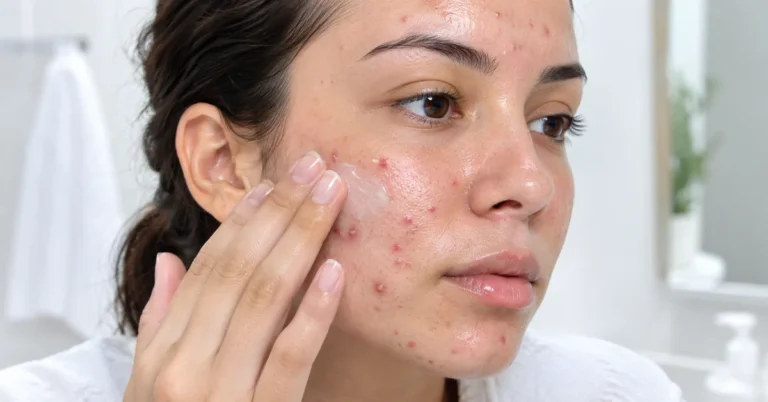
Blackheads and dark marks can show up on the same face, but they are not the same problem. If you are comparing salicylic acid vs glycolic acid, the useful question is not which acid is stronger. It is which one matches your main concern—and whether your current routine can tolerate another exfoliant.
Quick answer: Salicylic acid is generally the more targeted choice for blackheads and whiteheads because it helps clear clogged follicles and is an evidence-supported acne treatment. Glycolic acid mainly exfoliates the skin’s surface and may help uneven texture or some post-acne discoloration. Neither treats every kind of acne or removes deep scars. Product format and irritation risk matter as much as the ingredient name.
Use this comparison to choose one sensible starting approach rather than assuming you need both.
Table of Contents
salicylic acid vs glycolic acid: How They Work Differently
Both are exfoliating acids, but salicylic acid vs glycolic acid is not just a contest between two percentages. They act somewhat differently and have different strengths in the available evidence.
Salicylic acid: particularly relevant to clogged pores
Salicylic acid is often called a BHA in skincare. It is oil-soluble and helps loosen the buildup of skin cells associated with comedones—the plugged follicles behind blackheads and whiteheads. The American Academy of Dermatology (AAD) includes topical salicylic acid among recommended acne therapies, although the strength of that recommendation is conditional.
For salicylic acid vs glycolic acid decisions involving oily skin, actual clogged pores matter more than shine alone. That does not mean a salicylic acid product prevents all pimples. Inflamed papules, pustules, and deeper acne may require other treatments. Nor does “oil-soluble” mean the product can dissolve all the oil in your pores overnight.
Glycolic acid: principally a surface exfoliant
Glycolic acid is an AHA, or alpha hydroxy acid. In skincare, it loosens bonds involved in shedding surface skin cells, which can help skin feel smoother and make uneven-looking tone less noticeable. It may have a role in acne care, but a cosmetic glycolic toner is not equivalent to an established acne medication.
In salicylic acid vs glycolic acid comparisons focused on roughness, the AHA may be more relevant when clogged pores are not the central complaint. Because glycolic acid works by exfoliation, a stronger-feeling product is not necessarily a better one. Irritation can undermine the appearance improvements you are seeking, especially if your skin tends to develop discoloration after inflammation.
| Comparison | Salicylic acid | Glycolic acid |
|---|---|---|
| Common label category | BHA | AHA |
| More direct fit | Blackheads and whiteheads | Rough texture and some uneven tone |
| Typical formats | Medicated cleanser, leave-on liquid or gel | Toner, serum, cream |
| Evidence distinction | Acne-treatment guidance supports salicylic acid | Surface exfoliation; claims vary by formulation and concern |
| Main limitations | Dryness, stinging, peeling | Irritation and increased sensitivity to sunlight |
salicylic acid vs glycolic acid for Blackheads and Active Acne
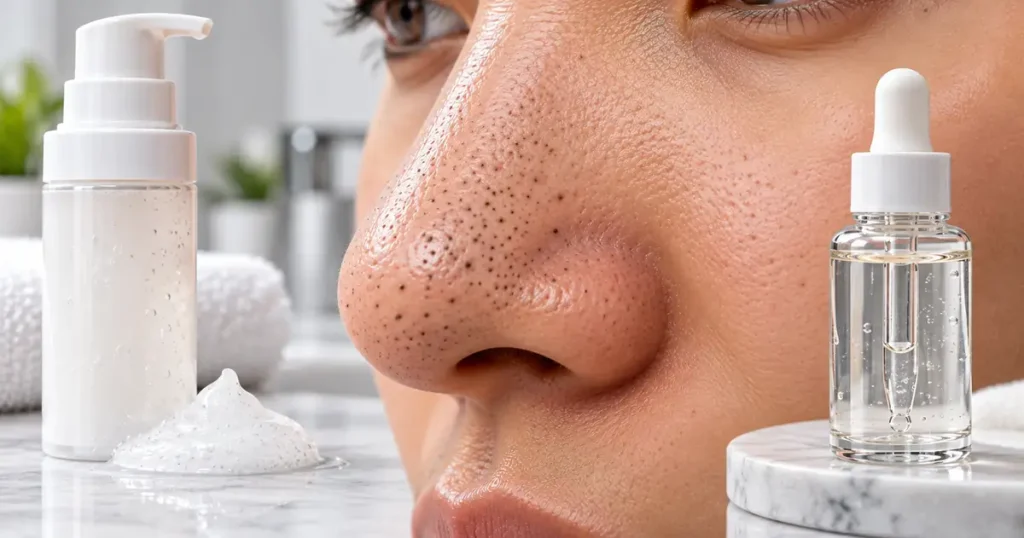
For blackheads, salicylic acid is usually the more directly relevant first option. An open comedone is a follicle blocked with sebum and skin cells; its dark color is not simply dirt to scrub off. Salicylic acid can help with that congestion. Glycolic acid may smooth the surface, but it is not automatically the better targeted treatment for a clogged pore.
Closed comedones, commonly called whiteheads, also involve plugged follicles. For salicylic acid vs glycolic acid when whiteheads dominate, the BHA has a clearer acne-treatment role. If these dominate your acne, a suitably labeled salicylic acid acne product may be worth considering. Our deeper guide explains how salicylic acid helps clogged pores without requiring you to compare every acid on the market.
What about inflamed acne? Both acids can be irritating, and neither should be treated as the universal solution for red, painful pimples. Other evidence-supported treatments, including benzoyl peroxide or topical retinoids, may be more appropriate depending on the breakout pattern. Deep nodules, cysts, or scarring acne warrant professional evaluation instead of increasingly aggressive exfoliation.
⭐ Leave-on BHA option: Paula’s Choice Skin Perfecting 2% BHA Liquid Exfoliant
Want an exfoliating liquid focused on recurring pore congestion rather than general surface smoothing? Paula’s Choice Skin Perfecting 2% BHA Liquid Exfoliant contains 2% salicylic acid in a leave-on formula, and the manufacturer lists a 4 fl oz full-size option. It is a relevant alternative for readers weighing a dedicated BHA step against a medicated cleanser.
Why consider it: A disclosed salicylic acid concentration, leave-on application format, and clear manufacturer directions. Trade-off: Longer skin contact may add dryness or stinging, particularly alongside other acne treatments. The brand advises people with salicylate allergy to consult a physician before use. No independent superiority over another product is implied.
👀 See Paula’s Choice & Check Price on Amazon ➜
salicylic acid vs glycolic acid for Dark Marks and Texture
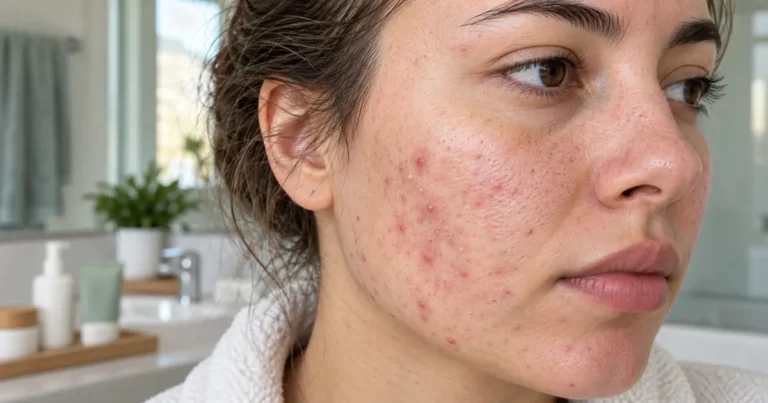
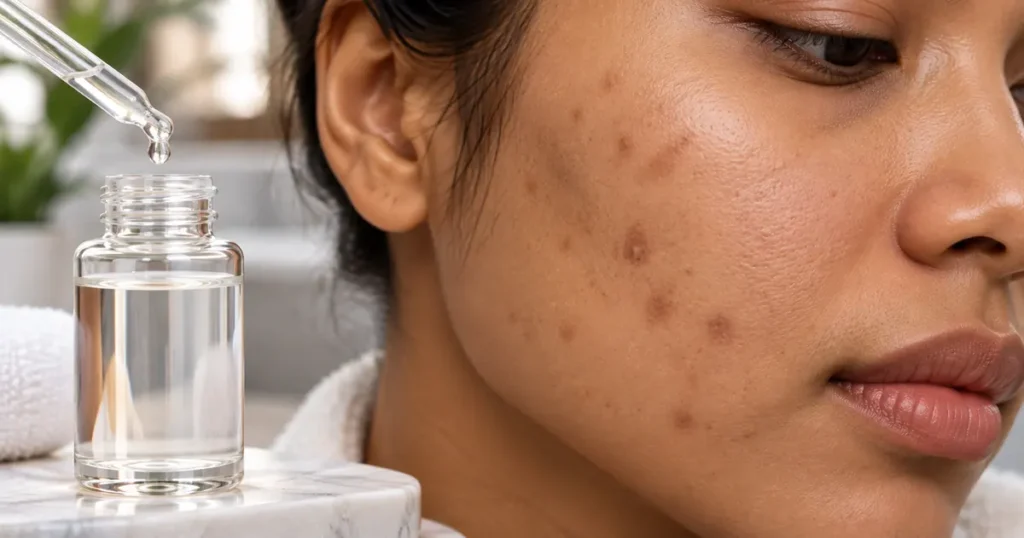
The phrase acne marks covers different problems. Flat brown or gray-brown patches left after inflammation are often post-inflammatory hyperpigmentation (PIH). Flat pink or reddish marks may reflect persistent redness after inflammation. Neither should be casually grouped with scars that change the contour of the skin. For salicylic acid vs glycolic acid decisions about red marks, neither acid should be assumed to treat the underlying redness.
Glycolic acid is commonly considered for rough texture and uneven-looking tone because of its surface exfoliating effect. There is also research on clinician-applied glycolic peels, but those findings cannot be copied onto an ordinary home-use toner. How much a specific cosmetic product improves pigmentation depends on its complete formulation and your skin’s response; results are not guaranteed.
Salicylic acid may also help the appearance of some marks indirectly by managing the acne that creates new inflammation. If you are choosing salicylic acid vs glycolic acid for both active breakouts and dark patches, controlling new acne and protecting your skin from sunlight may be more important than adding two acids at once.
True indented or raised acne scars are different: neither standard leave-on exfoliant rebuilds lost tissue or flattens raised scar tissue. See our explanation of the difference between acne marks and scars before purchasing a product that promises to erase pits.
⭐ Surface-texture option: The Ordinary Glycolic Acid 7% Exfoliating Toner
If your primary interest is surface texture and uneven-looking tone rather than blackheads, The Ordinary Glycolic Acid 7% Exfoliating Toner is a clearly identified leave-on AHA option. The manufacturer specifies 7% glycolic acid and describes evening use, with instructions not to rinse it off.
Why consider it: A disclosed acid concentration and clearly published use instructions. Trade-off: The manufacturer says not to use it on sensitive, peeling, or compromised skin, and warns that AHAs may increase sunburn risk. It is not a treatment for indented scars or proof that glycolic acid will fade your specific marks.
⭐ View The Ordinary & Check Current Price ➜
Rinse-Off vs Leave-On: Why Product Format Matters
A cleanser and a toner containing the same acid do not create the same exposure. A rinse-off salicylic acid wash stays on the skin for a shorter period, while a leave-on BHA liquid remains until the next cleansing. A salicylic acid vs glycolic acid comparison that ignores product contact time can mislead shoppers. Contact time is one factor in both potential benefit and irritation, but a wash-off format does not guarantee gentleness, and a leave-on format is not automatically more effective for everyone.
Glycolic acid is often sold as a leave-on toner or serum. Read whether the label intends rinsing, which areas to avoid, and how often to use it. Concentration and the product’s pH, other ingredients, and delivery system can change how an acid behaves. A 7% glycolic formula and a 2% salicylic formula cannot be ranked simply by comparing the numbers.
For a practical salicylic acid vs glycolic acid purchase, ask whether you want one medicated cleansing step or a separate leave-on treatment—and whether you already use an exfoliating cleanser, retinoid, or acne medication.
👀 Rinse-off BHA option: CeraVe Acne Control Cleanser, 2% Salicylic Acid
Prefer a medicated cleansing step over another leave-on acid? CeraVe Acne Control Cleanser contains 2% salicylic acid in a gel-to-foam wash, with niacinamide, three essential ceramides, and oil-absorbing clay listed by the brand. The verified Amazon US page identifies an 8 oz option.
Why consider it: It combines cleansing with a disclosed acne-active concentration, making it a different format from the Paula’s Choice liquid. Trade-off: It still can dry or irritate skin, and rinsing it off does not ensure the same experience or results as a leave-on treatment. Use it according to the label, rather than adding it automatically to another BHA routine.
🔥 See CeraVe Acne Control Cleanser & Check Price ➜
How to Compare Strength and Protect Sensitive Skin
When comparing salicylic acid vs glycolic acid, higher concentration is not a reliable shortcut to better results. Acid type, pH, formulation, contact time, and the rest of your routine all matter. The FDA cautions that AHAs can increase sun sensitivity, and it advises sun protection and careful label use for BHA products too.
Check every active ingredient you already use. Retinoids, benzoyl peroxide, acid toners, medicated cleansing pads, and scrubs can together make a routine too irritating. Someone using prescription acne medication should follow their clinician’s instructions before adding a new exfoliant; there is no universal schedule that makes every combination safe. For a more specific explanation, see our guide to combining benzoyl peroxide with salicylic acid.
For a cautious decision, select one new acid-containing product at a time, follow its directions, and avoid exceeding its labeled frequency. Consider testing a new skincare product on a small area before wider use. Persistent burning, marked redness, swelling, or peeling calls for stopping the suspected cosmetic and seeking advice when appropriate—not attempting to “push through.”
Daytime broad-spectrum SPF 30 or higher sunscreen, shade, and protective clothing are sensible, especially when trying to prevent post-acne marks from becoming more noticeable. Follow the AHA sun warning during use and for a week afterward. Avoid unsupervised high-strength chemical peels: the FDA warns of serious burns and scarring. If pregnant, breastfeeding, or unsure about a prescription routine, discuss the exact product with an appropriate healthcare professional.
Should You Use Salicylic Acid and Glycolic Acid Together?
Some finished products are formulated with more than one exfoliant. That is different from independently layering two leave-on acids, and the existence of a combination product does not prove that you personally need both. The three products compared above are alternatives, not a three-step regimen.
If blackheads and brown marks coexist, start by deciding whether new acne or old discoloration is causing more trouble. You may get more value from treating the active acne consistently and preventing further irritation than from buying multiple exfoliants. Inflammation itself can contribute to persistent dark marks, especially on skin prone to PIH.
The best choice in salicylic acid vs glycolic acid is sometimes neither: irritated or peeling skin may need a simpler routine, while deep or scarring acne requires more than an exfoliating product.
Which Acid Should You Choose? A Practical Buying Decision
| Main concern | More relevant starting consideration |
|---|---|
| Blackheads, whiteheads | A suitably labeled salicylic acid acne product |
| Oily skin with pore congestion | Salicylic acid, with formula and tolerance in mind |
| Rough surface texture | Glycolic acid may be reasonable |
| Flat brown post-acne marks | Pigmentation-focused care; glycolic acid is one possible option |
| Flat red or pink marks | Do not assume either acid directly addresses their cause |
| Deep, painful pimples | Appropriate acne treatment and possible dermatologist care |
| Indented or raised scars | Scar-specific professional evaluation |
| Stinging, peeling, sensitized skin | Hold off on adding exfoliation |
Do not buy a product solely because its advertised percentage is higher. Compare its intended use, the exact product label, whether it stays on or rinses off, and whether it duplicates an active already in your routine.
Frequently Asked Questions
1. Is glycolic acid stronger than salicylic acid?
In a salicylic acid vs glycolic acid comparison, “stronger” has no single useful meaning. It cannot be established from the names or percentages alone. Glycolic and salicylic acids behave differently, and pH, concentration, formula, contact time, and skin tolerance affect their impact. A higher percentage does not prove superior results.
2. Can salicylic acid fade dark spots left after acne?
Possibly, but its strongest everyday role is treating clogged pores and some acne. Helping prevent new breakouts may also prevent new marks. Flat pigment changes often need sun protection and sometimes other treatments; deep acne scars are a different issue.
3. Can I use glycolic acid if I already use a retinoid?
This may increase dryness, peeling, and irritation. Do not adopt a generic layering schedule when you use a prescribed retinoid. Follow your treatment instructions and ask your clinician whether an exfoliant adds any necessary benefit.
4. Is a salicylic acid cleanser enough for blackheads?
For some people with mild comedonal acne, an appropriate cleanser may be a useful starting point. Others need a different treatment plan. Judge it against the product’s directions, skin tolerance, and the severity of clogged pores rather than assuming a leave-on product is mandatory.
5. How long should I wait before deciding an acid isn’t helping?
Timelines vary with the product and goal. Acne changes may take several weeks, while uneven pigmentation can take longer; do not expect an overnight transformation. Follow the label and seek assessment sooner for worsening, painful, or scarring acne or a significant reaction.
Conclusion
Salicylic acid vs glycolic acid is ultimately a comparison of needs, not a competition to find the harshest exfoliant. Salicylic acid is the more direct option for blackheads and whiteheads; glycolic acid may suit surface texture or some flat dark marks. Choose one relevant format, respect your current treatments, and prioritize tolerability and sun protection over extra layers.
This article is educational and does not diagnose skin conditions or replace advice from a qualified healthcare professional.
References
- American Academy of Dermatology — Acne Clinical Guideline
- American Academy of Dermatology — Acne Scars: Signs and Symptoms
- American Academy of Dermatology — How to Safely Exfoliate at Home
- U.S. Food and Drug Administration — Alpha Hydroxy Acids
- U.S. Food and Drug Administration — Beta Hydroxy Acids
- U.S. Food and Drug Administration — Warning Against Chemical Peel Products Without Professional Supervision
- Paula’s Choice — Skin Perfecting 2% BHA Liquid Exfoliant
- The Ordinary — Glycolic Acid 7% Exfoliating Toner
- CeraVe — Acne Control Cleanser