Acne Scar Treatment Near Me: How to Find the Right Specialist
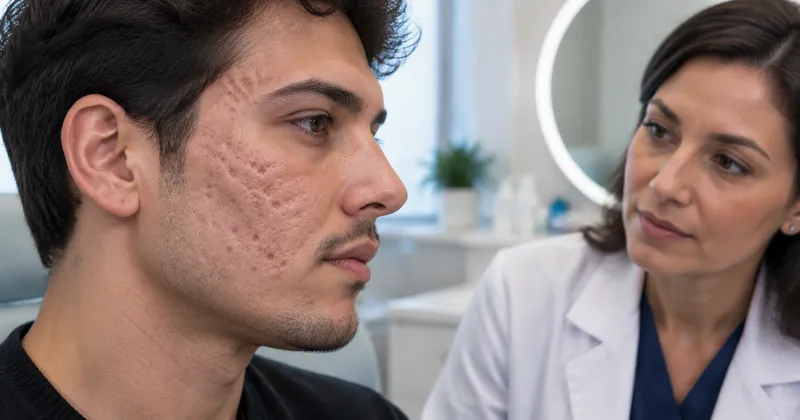
Searching for acne scar treatment near me usually means you are ready to move from research toward a consultation. The challenge is not just finding a nearby clinic. It is figuring out who is qualified to assess your scars, whether the treatment being advertised fits your skin, and what to ask before you pay.
The closest clinic is not automatically the best choice. Acne scars can be depressed, raised, or mixed, and flat red or brown post-acne marks are not the same as true structural scars. A good consultation starts by identifying the concern before anyone recommends laser, microneedling, subcision, filler, a peel, or another procedure.
The American Academy of Dermatology (AAD) recommends individualized acne-scar treatment because scar type, skin tone, number of scars, budget, and other factors can change the plan. If active acne is still causing new scars, controlling those breakouts may come first.
Table of Contents
Acne Scar Treatment Near Me: Start With the Specialist, Not the Machine
If you are looking for acne scar treatment near me, start by finding a qualified professional who regularly evaluates and treats acne scars. Do not choose a procedure only because a clinic advertises a particular laser or package. The right approach depends on your scar pattern, skin tone, medical history, goals, downtime tolerance, and risk profile.
AAD guidance lists several professional options for depressed scars, including laser resurfacing, microneedling, fillers, radiofrequency, chemical peels, and scar surgery. Raised scars require a different approach. A clinic that offers only one procedure may still be appropriate, but you should understand why that procedure is being recommended for your scars.
First, Make Sure You Are Looking for Treatment of a True Acne Scar
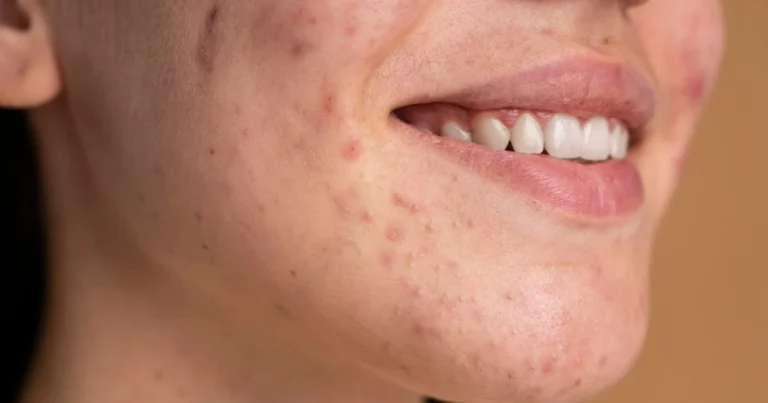
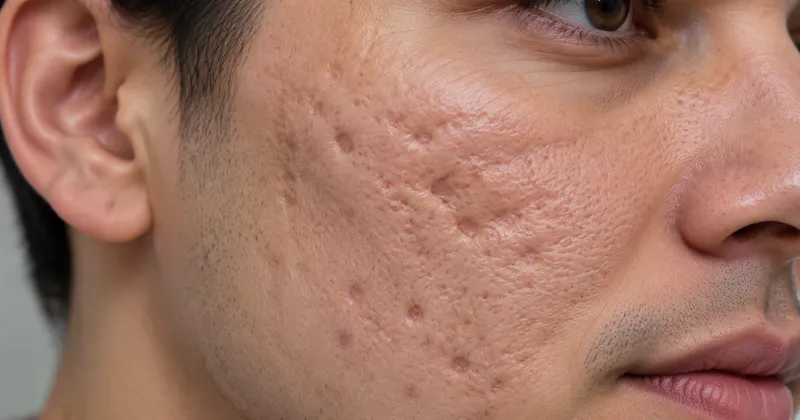
Depressed, or atrophic, scars sit below the surrounding skin. Common patterns include ice-pick scars, boxcar scars, and rolling scars. Raised scars, including hypertrophic scars and keloids, behave differently and may need a different treatment strategy.
Flat red, pink, brown, or purple areas left after acne may instead be post-inflammatory color changes. They can be noticeable, but they are not the same structural problem as a dented or raised scar.
That distinction matters before you pay for a procedure. If you are unsure what you have, see our guide to professional treatment options for different acne scar types. How to Get Rid of Acne Scars: Best Treatments That Actually Help
What Type of Specialist Treats Acne Scars?
For a medical evaluation, a board-certified dermatologist is a strong starting point. Dermatologists are physicians who diagnose and treat skin conditions and may also perform cosmetic and procedural scar treatments. The AAD explains that board certification reflects specialty training and a dermatology board examination.
You can use the AAD’s Find a Dermatologist tool to search by ZIP code, city, state, condition, or procedure. AAD Find a Dermatologist
A dermatologic surgeon may be especially relevant when you are considering procedural scar treatment. The American Society for Dermatologic Surgery (ASDS) has a directory that can be filtered by acne-scar treatments and procedures such as laser therapy or subcision.
Cosmetic dermatology practices and medical aesthetic clinics can also offer scar procedures. Training and supervision vary, so ask who evaluates your skin and who actually performs the procedure.
For more detail, read what a dermatologist can do for acne scars. Dermatologist on Acne Scars: 11 Best Treatments Explained
How to Find Qualified Acne Scar Specialists Near You
Start with professional directories, then evaluate the actual clinician rather than relying on the clinic name or device brand.
Look for evidence that the provider regularly treats acne scars and can explain different scar patterns, more than one treatment category, skin-tone considerations, and who performs each procedure.
When practical, comparing two consultations can be useful if the first plan is expensive, aggressive, or hard to understand. You are not looking for identical recommendations. You are looking for clear reasoning about what scars are being treated, what improvement is realistic, why a procedure was chosen, and what the main risks and costs are.
8 Things to Check Before Booking Acne Scar Treatment
- Credentials: Verify the clinician’s professional qualifications and board certification when relevant.
- Acne-scar experience: Ask how often they treat scars similar to yours.
- Experience with your skin tone: This is especially important for procedures with pigment-change risk.
- Treatment options: The provider should explain why the proposed procedure fits your scar pattern.
- Assessment before treatment: Avoid plans based only on a package or online advertisement.
- Who performs the procedure: Ask about the training and supervision of the person doing the treatment.
- Benefits and risks: You should hear what the procedure may improve and what it cannot guarantee.
- Follow-up: Know whom to contact if you develop an unexpected reaction or complication.
Why Your Skin Tone Matters When Choosing a Provider
People across skin tones can receive acne-scar treatment, but procedure choice and settings may need to differ.
AAD guidance notes that darker skin is more prone to burns and dark marks after some laser treatments and recommends working with a dermatologist experienced in treating darker skin with lasers. This does not mean darker skin automatically rules out laser treatment. It means provider experience, device choice, settings, and aftercare deserve careful attention.
Ask how often the provider treats patients with your skin tone, what pigment changes are possible, how the risk is reduced, and what the plan is if hyperpigmentation or hypopigmentation develops.
Treatments a Specialist May Discuss
The goal of a consultation is to match treatment to the scar, not to choose the “strongest” procedure.
- Microneedling may be used for selected depressed scars and stimulates collagen remodeling.
- Laser resurfacing can make selected scars less noticeable, but different laser types have different recovery periods and risks.
- Subcision or scar surgery may be considered when certain depressed scars are tethered to deeper tissue.
- Fillers can lift selected depressed scars; some require maintenance.
- Chemical procedures can help selected concerns but are not a universal fix for deep pitted scars.
- Combination treatment may be appropriate when several scar patterns are present.
AAD specifically cautions that laser can make scars less noticeable but cannot make every scar disappear.
For a broader overview, see professional treatment options for different acne scar types. How to Get Rid of Acne Scars: Best Treatments That Actually Help
If You Want Laser Treatment, Ask These Questions First
“Laser” is not one single treatment. Before booking, ask:
- What laser or energy device are you recommending?
- Why does it fit my scar type?
- Who will perform it?
- What experience do you have with my skin tone?
- What are the main risks and expected downtime?
- How many sessions might be needed?
- Could microneedling, subcision, filler, or another approach be a better first step?
- What happens if I develop a complication?
AAD guidance stresses that laser results depend substantially on the skill of the person performing the procedure and recommends a medical consultation before treatment.
If laser is the option you are considering, read our guide to realistic laser scar results and recovery. Acne Scar Laser Treatment Before After: Real Results Guide
What Should Happen During an Acne Scar Consultation?
A useful consultation should give you more than a sales quote.
AAD guidance says a dermatologist examines scar type and location and considers factors such as scar number, skin tone, budget, goals, and other individual circumstances before developing a treatment plan.
Expect discussion of your scar pattern, active acne, current and past treatments, relevant medical history, previous procedures, skin-tone concerns, desired result, downtime, alternatives, risks, aftercare, and cost.
If active acne is still producing new scars, the plan may begin with controlling acne rather than immediately resurfacing existing scars.
Questions to Bring to Your Consultation
Ask:
- What scar types do I have?
- Which scars is this treatment meant to improve?
- Why are you recommending this procedure?
- What level of improvement is realistic?
- How many treatments might I need?
- What downtime should I plan for?
- What risks matter for my skin tone and medical history?
- Who will perform the procedure?
- What is included in the price?
- What follow-up care is included?
- What happens if I have a complication?
- Should active acne be controlled first?
A provider should be able to explain the plan in plain language. If the only answer is that a device is “the best laser,” ask for more detail.
How to Compare Acne Scar Treatment Near Me Costs
There is no single price that applies to every clinic or scar pattern. Cost can vary with the procedure, treatment area, number of sessions, provider, geographic market, numbing or anesthesia, follow-up, aftercare, and combination treatments.
Compare the expected total treatment cost, not just the advertised cost of one session. Ask what is included, how many sessions are anticipated, and whether consultation, follow-up, or aftercare carries additional fees.
If you are specifically considering laser, our guide to what affects the price of acne scar laser treatment explains the main cost factors in more detail. Laser Surgery for Acne Scars Price: What Affects the Cost?
Does Insurance Cover Acne Scar Treatment?
Many acne-scar procedures are considered cosmetic and are commonly paid out of pocket, but coverage can vary by insurer, plan, treatment, and medical circumstances.
Do not assume that a visit or procedure is covered—or automatically excluded. Ask the clinic how it bills the visit, then verify coverage directly with your insurance company. AAD guidance on selecting a dermatologist also recommends checking with your insurer when coverage is uncertain.
How Much Improvement Should a Clinic Promise?
A professional should discuss improvement, limitations, and uncertainty rather than guarantee perfect skin.
AAD states that laser treatment can make scars less noticeable but cannot make a scar disappear. Other acne-scar procedures also have limits, and results vary with scar type, skin tone, treatment choice, healing response, and other factors.
Be cautious with promises such as:
- “100% scar removal.”
- “Permanent flawless skin.”
- “One session works for everyone.”
- “Guaranteed results.”
Before-and-After Photos Are Useful, but They Are Not Proof of Your Result
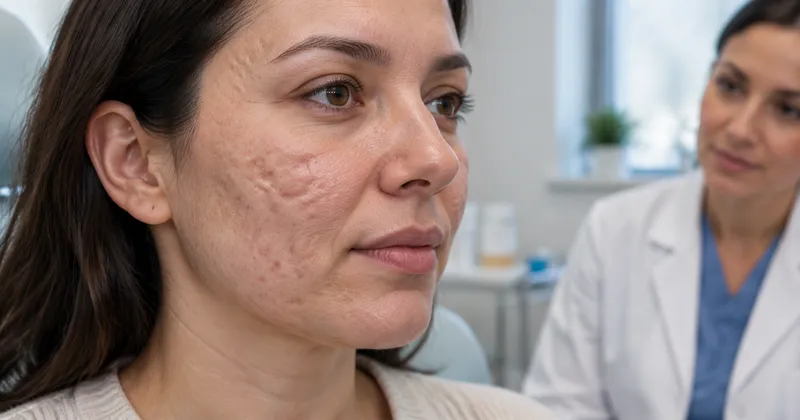
Before-and-after photos can help you understand the kind of change a provider has achieved, but they cannot predict your result.
Look for similar lighting and camera angles. Ask how many treatments the patient received, whether treatments were combined, and whether the person had a similar scar pattern and skin tone.
Marketing photos are one piece of information, not a substitute for an evaluation.
Red Flags When Choosing an Acne Scar Clinic
Consider getting another opinion if a clinic:
- Promises treatment before examining your skin.
- Guarantees complete scar removal.
- Pressures you to buy a package immediately.
- Cannot explain who performs the procedure.
- Does not discuss risks or downtime.
- Cannot explain why the procedure fits your scars.
- Dismisses skin-tone or pigment-change concerns.
- Gives no clear follow-up plan.
- Claims one device is best for every scar type.
AAD specifically advises against proceeding with laser scar treatment when treatment is promised before a medical consultation.
A Simple Booking Checklist
Before paying, confirm that:
- Your scar type has been assessed.
- The provider’s credentials are clear.
- Relevant acne-scar and skin-tone experience has been discussed.
- Active acne has been considered.
- You understand why the procedure was chosen.
- Expected improvement is realistic.
- Risks and downtime are clear.
- Total estimated cost is understood.
- Follow-up care is explained.
If several of those points are still vague, you may not have enough information to book.
When to See a Dermatologist Before Any Cosmetic Clinic
A dermatologist is especially useful when you have ongoing severe acne, new scars still forming, raised or keloid-like scars, uncertainty about the diagnosis, a history of unusual scarring, a prior procedure complication, or significant pigment-change concerns.
AAD guidance also recommends medical consultation before laser treatment because your skin, scar characteristics, overall health, medications, and other factors can affect treatment safety.
Frequently Asked Questions
How do I find acne scar treatment near me from a qualified specialist?
Start with a professional directory such as the AAD’s Find a Dermatologist or the ASDS Find a Dermatologic Surgeon tool. Then verify credentials, acne-scar experience, experience with your skin tone, who performs the procedure, and whether a proper consultation happens before treatment is sold.
Should I see a dermatologist or a med spa for acne scars?
A board-certified dermatologist can diagnose scar type, assess active acne and medical factors, and recommend medical or procedural treatment. Some medical spas offer scar procedures, but training and supervision vary. Ask exactly who evaluates you, who performs the procedure, what their credentials are, and how complications are handled.
How do I know whether laser or microneedling is better for my scars?
There is no universal winner. The better option depends on scar type, depth, skin tone, medical history, goals, downtime tolerance, and other factors. Some people need a combination plan. A qualified clinician should explain why the recommended method fits the scars being treated.
How much does professional acne scar treatment usually cost?
There is no reliable universal price because costs vary by procedure, treatment area, number of sessions, location, provider, aftercare, and combination treatments. Ask for the expected total plan cost, not only the advertised per-session price, and verify what the quote includes.
Can a specialist completely remove acne scars?
Usually, the realistic goal is to make scars less noticeable rather than promise complete removal. Some scars may improve substantially, but results vary. AAD guidance specifically notes that laser treatment cannot make a scar disappear, so be cautious with providers who guarantee perfect or scar-free skin.
The Bottom Line
When you search for acne scar treatment near me, do not choose a clinic only because it is close, cheap, or advertising the newest device. Start with a qualified professional who examines your scars, considers your skin tone and active acne, and explains why a specific treatment makes sense.
Compare the treatment rationale, realistic improvement, risks, downtime, total cost, and follow-up—not just the machine name. The AAD and ASDS provider directories can give you a practical place to begin your local search.
This article is for educational purposes only. It does not diagnose acne scars or determine which procedure is appropriate for you. A qualified healthcare professional can evaluate your skin and discuss options based on your individual circumstances.
References:
- American Academy of Dermatology — Acne scars: Consultation and treatment. AAD acne scar treatment guidance
- American Academy of Dermatology — 10 things to know before having laser treatment for your scar. AAD laser scar guidance
- American Academy of Dermatology — 10 tips for clearing acne in darker skin tones. AAD skin-of-color guidance
- American Academy of Dermatology — How to select a dermatologist. AAD dermatologist selection guidance
- American Academy of Dermatology — Find a Dermatologist. AAD provider directory
- American Society for Dermatologic Surgery — Laser Therapy for Acne Scars. ASDS acne scar laser guidance
- American Society for Dermatologic Surgery — Find a Dermatologic Surgeon. ASDS provider directory