Cystic Acne Causes: Why Deep, Painful Breakouts Happen
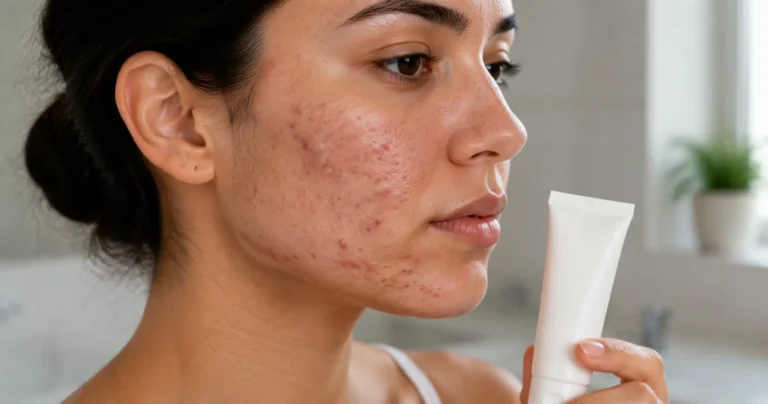
A painful lump develops beneath your skin, stays sore for days, and never behaves like an ordinary whitehead. When this keeps happening, understanding cystic acne causes becomes more important than simply looking for a stronger spot treatment.
Deep acne develops when a clogged pore becomes intensely inflamed below the skin’s surface. Hormones and genetics can make some people more susceptible, while medications, friction, certain products, diet patterns, and stress may contribute or worsen existing acne.
It is also important to know that cystic acne is not caused by having dirty skin, and one food or skincare mistake rarely explains recurrent deep breakouts on its own.
Table of Contents
Cystic Acne Causes: The Short Answer
Deep nodular or cystic acne develops from the same basic processes involved in other acne: excess sebum, buildup inside the follicle, acne-related bacteria, and inflammation. Hormonal activity and genetics can increase susceptibility. Certain medications can contribute, while factors such as stress, friction, humidity, picking, and some dietary patterns may worsen acne rather than act as the sole root cause.
What Is Cystic Acne?
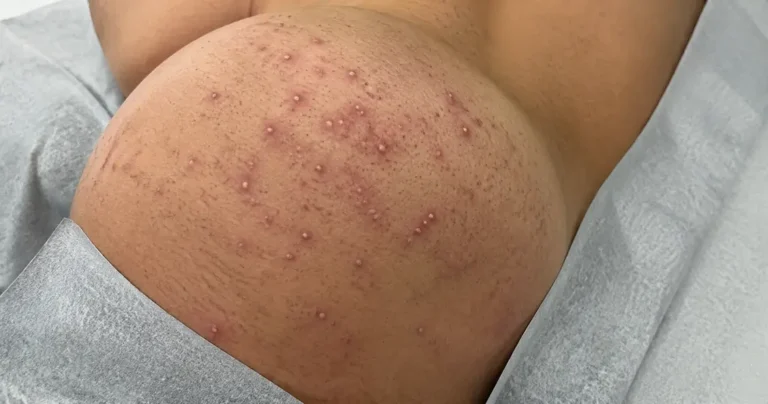
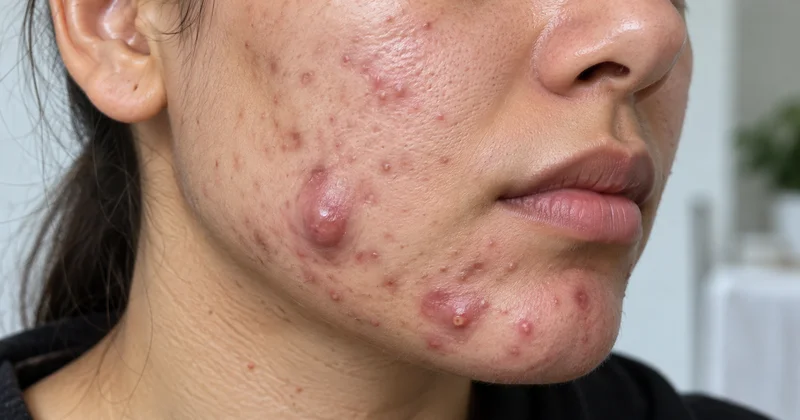
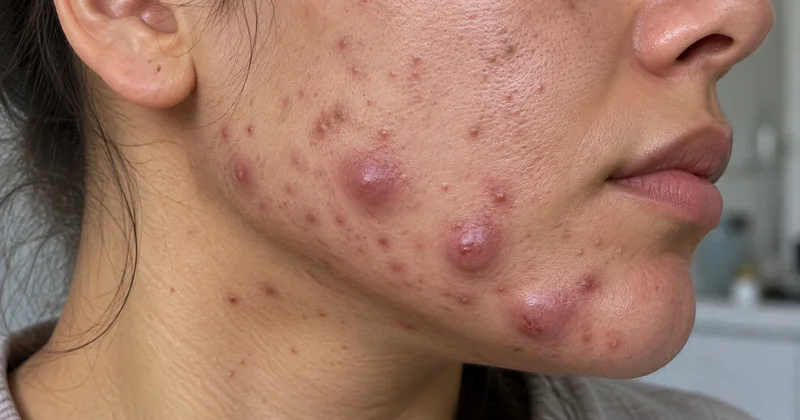
Cystic acne refers to severe inflammatory breakouts that develop deep within the skin.
These lesions are often:
- Large.
- Tender or painful.
- Swollen.
- Slow to clear.
- More likely to leave scars than superficial acne.
They commonly appear on areas with many oil glands, including the:
- Face.
- Jawline.
- Neck.
- Chest.
- Shoulders.
- Upper back.
You may sometimes feel a deep lump before much is visible on the surface.
Cyst vs. nodule
The terms are often used interchangeably online, but dermatology terminology distinguishes them.
An acne nodule is a deep, painful, solid lesion.
An acne cyst also develops deep in the skin but contains pus.
Because it is impossible to confidently determine what is inside every deep bump by looking at it at home, dermatologists sometimes use broader terms such as severe nodular acne when discussing this pattern.
The practical point is the same: recurrent, deep, painful acne deserves more attention than an occasional superficial pimple.
How Cystic Acne Forms Under the Skin
Acne does not begin because dirt somehow becomes trapped deep inside your face.
The process starts within a hair follicle and its associated oil gland.
1. The skin produces sebum
Sebum is the natural oil produced by sebaceous glands.
Your skin needs some sebum, but higher production can make pore blockage more likely in acne-prone skin.
2. Skin cells accumulate inside the follicle
Dead skin cells normally shed.
In acne-prone follicles, oil and retained skin cells can build up and form a plug.
This can eventually appear as a whitehead or blackhead.
3. Acne-related bacteria become involved
Cutibacterium acnes normally lives on skin.
Inside a clogged, oil-rich follicle, bacterial activity can contribute to the inflammatory process.
This is not the same as saying acne happens because your face is dirty or because you failed to wash bacteria away.
4. Inflammation increases
As the pore becomes more inflamed, swelling and tenderness develop.
When that inflammatory process extends deeper into the skin, a nodule or cyst can form.
This explains why acne under skin can hurt even before there is an obvious bump to see.
Why Do Some Pimples Become Deep and Painful?
A blackhead or whitehead stays relatively close to the surface.
A deep acne lesion involves inflammation farther beneath the surface.
That depth matters.
A deep lesion can:
- Feel firm or swollen.
- Hurt when touched.
- Remain noticeable for longer.
- Affect surrounding tissue.
- Leave discoloration after healing.
- Carry a greater risk of permanent scarring.
Trying to squeeze something this deep usually does not solve the underlying blockage. Instead, additional pressure and inflammation can make the area more irritated and increase the risk of a lasting mark or scar.
Hormonal Cystic Acne Causes
Hormonal activity is one of the most important contributors to deep acne.
The main hormones involved are androgens.
Androgens can stimulate sebaceous glands and increase oil production. More oil does not automatically mean acne will occur, but in someone already susceptible to clogged pores and inflammation, it can make breakouts more likely.
Puberty
Androgen levels rise during puberty in people of all sexes.
Sebaceous glands become more active, which helps explain why acne commonly begins during the teenage years.
Menstrual-cycle-related flares
Some people notice acne worsening predictably around their menstrual cycle.
These breakouts can be deep and tender, often around the lower face.
That pattern can suggest hormonal influence, but the location alone does not prove the cause.
You can read more about why deep chin and jawline breakouts can have a hormonal pattern if your acne repeatedly concentrates in that area.
Pregnancy and later hormonal changes
Acne can change during:
- Pregnancy.
- Postpartum hormonal shifts.
- Perimenopause.
- Menopause.
The response is highly individual. Some people’s skin improves during a hormonal transition, while others experience new or worsening acne.
Starting or stopping hormonal contraception
Changes in hormonal contraception can also change acne patterns.
Some contraceptive methods can help acne, while others may have a different effect in some users. Acne can also return after stopping a method that had been suppressing hormone-related breakouts.
Testosterone and other hormone exposure
Testosterone therapy and other androgenic hormone exposure can increase acne in susceptible people.
If severe acne develops after a medication or hormone change, tell the prescribing clinician rather than stopping treatment on your own.
Can PCOS Cause Cystic Acne?
Polycystic ovary syndrome, or PCOS, can be associated with persistent or severe acne because increased androgen activity is one feature of the condition.
But acne by itself does not diagnose PCOS.
Other features that may make a hormonal evaluation worth discussing include:
- Irregular menstrual periods.
- Skipped periods.
- Increased facial or body hair.
- Persistent adult acne that responds poorly to usual treatment.
- Fertility concerns.
- Other symptoms your clinician considers relevant.
Having one of these symptoms does not automatically mean you have PCOS either.
Diagnosis requires a broader medical assessment.
Genetics and Family History
Family history also matters.
If close relatives developed significant acne, you may have a greater tendency to develop it yourself.
Genetics can affect several features involved in acne, including:
- Oil production.
- Inflammatory response.
- Follicular behavior.
- How severely acne develops.
This is another reason one person may use a particular moisturizer, experience stress, or eat a certain food without developing severe acne while another person has repeated deep breakouts.
The trigger is only one part of the picture. The underlying susceptibility matters too.
Medications That Can Contribute to Deep Acne
Certain medications can cause or worsen acne in some people.
Examples include:
- Corticosteroids.
- Lithium.
- Some medications containing hormones.
- Testosterone or other androgenic exposure.
Medication-related eruptions may not always look exactly like someone’s usual acne.
If deep acne appeared soon after starting or changing a prescription, make a note of the timeline and discuss it with the prescriber.
Do not abruptly stop a medically necessary medication because you suspect it is affecting your skin.
There may be safer ways to manage the acne or consider alternatives.
Can Skincare Products Cause Cystic Acne?
A skincare product does not create your underlying tendency to develop acne, but some products can aggravate acne-prone skin.
This can happen when a formula is too occlusive for your skin or when a product repeatedly contacts an acne-prone area.
Possible contributors include:
- Heavy face products.
- Greasy hair products touching the forehead, neck, or back.
- Thick makeup that does not work well for your skin.
- Multiple layers of leave-on products.
Avoid relying on long online lists that label individual ingredients universally “pore-clogging.”
The way a complete formula behaves on your skin matters more than one ingredient name in isolation.
Friction, Sweat, and Occlusion Can Make Acne Worse
Repeated friction and trapped heat can aggravate acne.
Examples include:
- Sports helmets.
- Chin straps.
- Shoulder pads.
- Tight collars.
- Backpacks.
- Tight workout clothing.
- Repeated mask friction.
Sweat itself is not the root cause of cystic acne.
But sweat combined with friction, heat, product residue, and prolonged occlusion can create an environment that worsens acne in susceptible areas.
This is particularly relevant for chest, shoulder, and back acne.
Can Stress Cause Cystic Acne?
Stress is not considered the root cause of acne, but it can worsen acne that already exists.
Many people notice more severe breakouts during periods of:
- School pressure.
- Work stress.
- Poor sleep.
- Emotional stress.
- Major life changes.
Stress can influence hormones and oil-gland activity, and it may also change behaviors. Someone under stress may sleep poorly, touch or pick their skin more often, skip their routine, or eat differently.
So stress deserves attention as an aggravating factor without turning it into the explanation for every painful breakout.
Does Diet Cause Cystic Acne?
There is no single food proven to cause cystic acne in everyone.
Research does suggest that diet may influence acne in some people.
High-glycemic foods
Some studies suggest that dietary patterns that repeatedly raise blood glucose quickly may be associated with worse acne.
Examples can include diets high in:
- Sugary drinks.
- Refined carbohydrates.
- Certain highly processed foods.
This does not mean one dessert produces a cyst the next morning.
Cow’s milk
Observational studies have also found an association between cow’s milk consumption and acne in some populations.
An association does not prove that milk directly causes cystic acne, and not everyone who consumes dairy develops breakouts.
If you suspect a consistent relationship, our guide to what research says about dairy and breakouts looks at that evidence in more detail.
Avoid cutting large food groups out of your diet based solely on one breakout.
Poor Hygiene Does Not Cause Cystic Acne
Scrubbing harder will not scrub away the biological processes behind deep acne.
In fact, over-washing and aggressive scrubbing can irritate the skin.
Common misconceptions include:
“Acne means your face is dirty.”
False. Acne begins within follicles and involves oil, skin-cell buildup, bacteria, and inflammation.
“Blackheads are trapped dirt.”
False. The dark color comes from material in an open pore being exposed to air, not from poor cleanliness.
“If I wash more often, deep acne will disappear.”
Not necessarily. Gentle skincare is generally more useful than repeatedly stripping or scrubbing acne-prone skin.
Can Picking Cause Cystic Acne?
Picking does not create your underlying acne tendency.
It can, however, make an existing deep lesion considerably worse.
Squeezing a painful nodule or cyst can:
- Increase inflammation.
- Damage surrounding skin.
- Increase post-acne discoloration.
- Increase the chance of scarring.
- Make healing take longer.
Deep lesions are particularly poor candidates for home extraction because the inflammation is located beneath the surface.
Why Cystic Acne Causes More Scarring
Deep acne affects more tissue than a superficial clogged pore.
When strong inflammation occurs below the surface, the surrounding skin can be damaged. During healing, the body may produce too little or too much collagen.
This can leave:
- Depressed scars.
- Raised scars.
- Uneven texture.
The deeper and more inflamed the acne, the greater the concern for scarring.
Picking can increase that risk even further.
If scars are already forming, read more about why preventing new deep breakouts matters when treating acne scars.
Managing active severe acne and preventing new scars is generally more important than focusing only on old scars while new deep lesions continue to form.
Does the Location of Cystic Acne Tell You the Cause?
Location can provide clues, but it cannot prove the cause.
Chin and jawline
Recurring deep lower-face acne is commonly associated with hormonal patterns, especially when it follows a menstrual cycle.
But not every jawline lesion is hormonal.
Products, friction, and other acne mechanisms still apply.
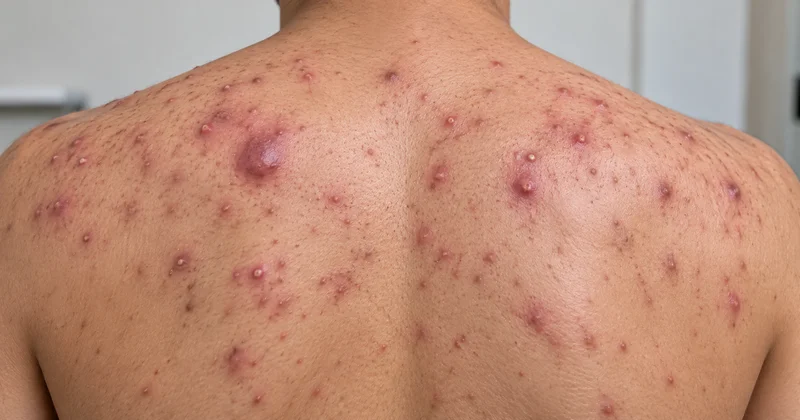
Chest and back
These areas contain many sebaceous glands and can develop severe acne.
Friction, tight clothing, sweat, and sports equipment can make body acne worse.
Forehead and hairline
Hair products, hats, helmets, and oil buildup may contribute.
The problem with “face mapping” is when location gets turned into a diagnosis.
A pimple on one part of your face cannot reliably tell you which internal organ or hormone is “imbalanced.”
A Simple Cystic Acne Causes Checklist
If deep breakouts keep returning, look for patterns rather than one-time coincidences.
Ask yourself:
- When did the deep acne begin?
- Does it flare in a predictable monthly pattern?
- Do close relatives have severe acne?
- Did I recently start, stop, or change a medication?
- Did hormonal contraception change?
- Did I begin testosterone or another hormone treatment?
- Are new hair, makeup, or skincare products involved?
- Is friction repeatedly affecting the same area?
- Have major diet or supplement habits changed?
- Is the acne already leaving scars?
For people who menstruate, persistent acne combined with irregular periods or increased facial/body hair is also worth discussing with a healthcare professional.
You do not need to solve the entire cause yourself before asking for help.
How to Treat Cystic Acne: Why the Cause Matters
Treatment is not the main focus of this article, but deep acne deserves a short treatment reality check.
Acne involves several processes at once, so effective treatment may need to address:
- Clogged follicles.
- Inflammation.
- Acne-related bacteria.
- Oil production.
- Hormonal influence when relevant.
Evidence-supported acne treatments include topical retinoids and benzoyl peroxide, along with prescription options selected according to acne severity and the individual.
For appropriate patients, dermatologists may also use:
- Hormonal therapies.
- Oral antibiotics.
- Isotretinoin.
- Other prescription approaches.
Recurrent nodules and cysts often require more than a random spot treatment.
Trying increasingly harsh cleansers or repeatedly changing products can delay effective treatment while scarring continues.
When to See a Dermatologist for Deep Acne Under the Skin
Consider seeing a dermatologist earlier rather than later if you have:
- Repeated nodules or cysts.
- Deep, painful lesions.
- Scars developing.
- Significant chest or back acne.
- Rapidly worsening acne.
- Acne that is not improving with appropriate OTC treatment.
- Sudden severe adult acne.
- Possible hormonal symptoms.
- A breakout that looks unusual for you.
- Uncertainty about whether the bumps are actually acne.
Severe acne is treatable, and earlier control can help reduce the chance of additional scars.
Frequently Asked Questions
What are the most common cystic acne causes?
The main biological factors are excess oil, follicular buildup, acne-related bacteria, and deep inflammation. Hormonal activity and genetics can increase susceptibility, while certain medications can contribute. Stress, friction, picking, some products, and dietary patterns may worsen acne but are not necessarily the underlying cause.
Is cystic acne always hormonal?
No. Hormones can be a major driver, especially with recurring jawline breakouts or cycle-related flares, but cystic acne is multifactorial. Genetics, pore blockage, inflammation, medications, and aggravating factors can all matter.
Can stress cause cystic acne?
Stress is better described as something that can worsen existing acne rather than the sole root cause. If your acne becomes more severe during stressful periods, stress may be one part of the pattern, but other acne mechanisms are still involved.
Does dairy cause cystic acne?
Some observational research links cow’s milk consumption with acne, but that does not establish milk as a universal cause of cystic acne. Individual responses vary, and restricting dairy unnecessarily may not help. Look for a repeatable pattern rather than blaming one meal.
Why do I get painful acne under the skin?
Painful acne under the skin usually means inflammation is occurring deeper than it does with a whitehead or blackhead. Nodules are deep solid lesions, while cysts contain pus. Recurrent deep lesions carry a higher scarring risk and are a good reason to consider dermatologist care.
The Bottom Line
Understanding cystic acne causes means separating the biology that creates acne from factors that merely make it worse.
Deep acne develops when clogged follicles become intensely inflamed beneath the skin. Hormones and genetics can strongly influence who develops it, while medications and other factors may contribute. Stress, diet, friction, and products can aggravate acne without being the only explanation.
Do not blame poor hygiene, scrub aggressively, or repeatedly squeeze painful underground bumps.
If cysts or nodules keep returning, hurt significantly, or are beginning to leave scars, getting appropriate treatment early is more useful than spending months trying to identify one perfect trigger.
This article is for educational purposes only. It does not diagnose cystic acne, PCOS, hormonal disorders, or another skin condition and is not a substitute for individualized care from a qualified healthcare professional.
References:
- NIH / National Institute of Arthritis and Musculoskeletal and Skin Diseases — Acne: Types, Causes, & Risk Factors
Used to verify the core acne mechanism, nodular/cystic terminology, hormonal and genetic risk factors, medication-related acne, and factors that may worsen acne. - American Academy of Dermatology — Acne: Signs and Symptoms
Used to verify the distinction between deep acne nodules and cysts and why these lesions can be painful. - American Academy of Dermatology — What Can Clear Severe Acne?
Used for severe-acne, deep-lesion, professional-treatment, and scarring guidance. - American Academy of Dermatology — Acne: Who Gets and Causes
Used to verify genetic susceptibility, stress as an aggravating factor, and common acne triggers. - American Academy of Dermatology — Adult Acne
Used for adult hormonal patterns, birth-control changes, stress, family history, and skincare-product context. - NICHD — What Are the Symptoms of PCOS?
Used to verify that PCOS can involve irregular periods, excess hair growth, and severe, late-onset, or persistent acne while avoiding diagnosis based on acne alone. - American Academy of Dermatology — Can the Right Diet Get Rid of Acne?
Used to verify the limited evidence concerning high-glycemic diets, cow’s milk, and acne. - American Academy of Dermatology — Acne Scars: Causes
Used to verify the greater scarring risk from deep nodules and cysts and the additional risk from picking or squeezing acne.