Does Alcohol Cause Acne? What the Evidence Actually Shows
You have a few drinks, wake up the next day, and notice new pimples or an existing breakout looking worse. It is easy to wonder: does alcohol cause acne?
Current research does not prove that drinking alcohol directly causes acne. Some observational studies have found associations between alcohol use and acne or acne severity, while others have found little or no relationship.
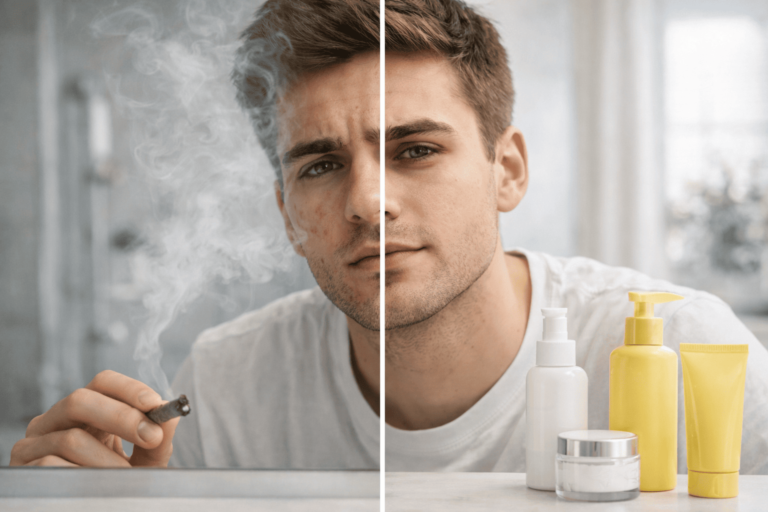
Alcohol may still be part of your personal breakout pattern. Drinking often happens alongside other changes—less sleep, sugary mixers, different foods, skipped skincare, or more stress—that can make it difficult to identify one cause.
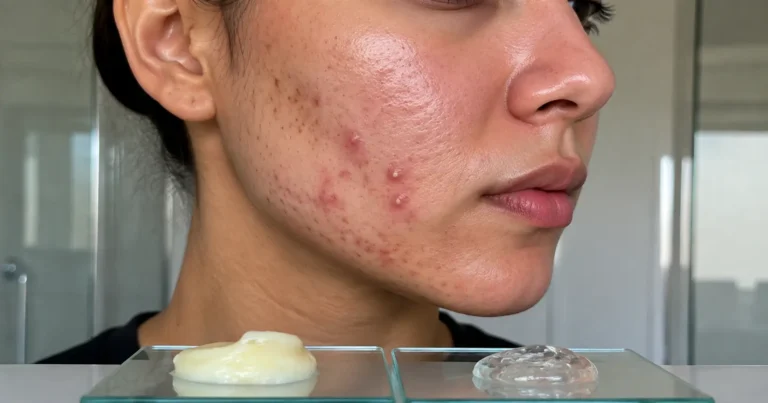
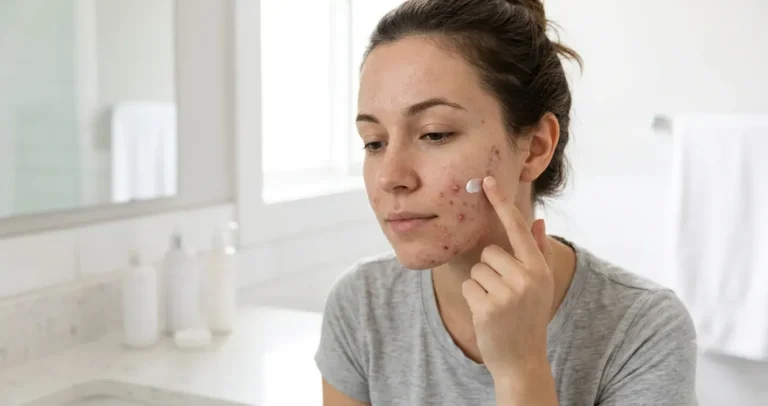
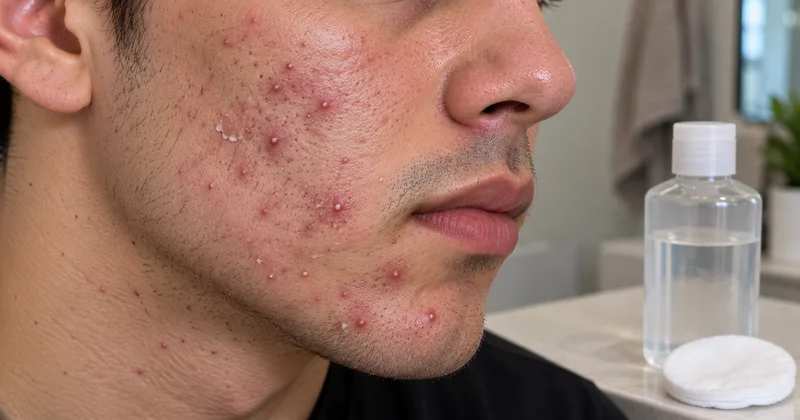
There is also an important distinction between drinking alcohol and putting rubbing alcohol on pimples. Drinking has an uncertain relationship with acne; rubbing alcohol can directly irritate acne-prone skin and is not a recommended acne treatment.
Table of Contents
Does Alcohol Cause Acne? The Short Answer
Alcohol is not an established direct cause of acne. Research is mixed, and most available studies are observational, which means they can find associations without proving that alcohol created the breakouts.
If you repeatedly notice acne worsening after drinking, the pattern is worth tracking. Just consider alcohol alongside sleep, diet, sugary mixers, skincare habits, hormones, and other potential triggers.
What Actually Causes Acne?
To understand where alcohol fits, it helps to understand what causes acne in the first place.
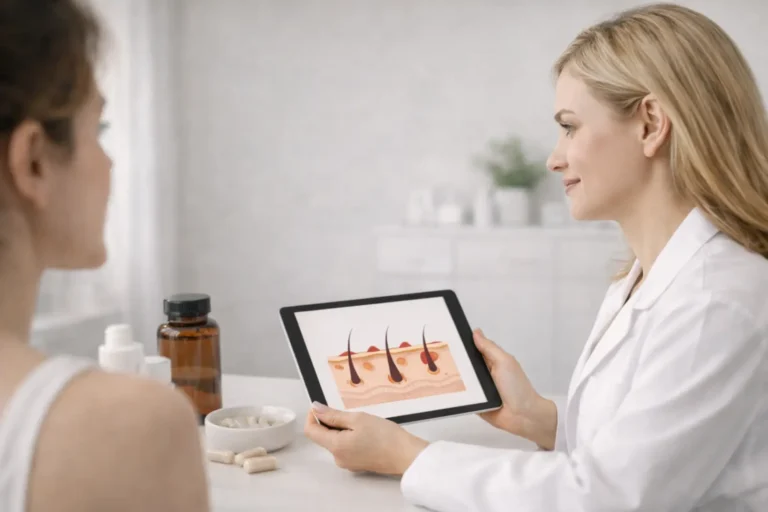
Acne begins inside hair follicles.
Several processes can contribute:
- Excess production of sebum, the skin’s natural oil.
- Buildup of skin cells inside the follicle.
- Growth and activity of acne-related bacteria within clogged follicles.
- Inflammation.
- Hormonal influences.
- Genetic susceptibility.
When a clogged follicle becomes inflamed, it can develop into a pimple. Deeper inflammation can produce painful nodules or cyst-like lesions.
Alcohol is not currently considered one of these core established acne mechanisms.
That does not mean lifestyle never matters. Stress, lack of sleep, certain foods, irritating skincare, friction, and other factors can worsen acne in susceptible people.
What Does Research Say About Alcohol and Acne?
The evidence is inconsistent.
Some studies have found an association
Several observational studies have reported that people who drink alcohol may be more likely to have acne or may report differences in acne severity.
Other research has identified alcohol as one of several lifestyle factors associated with acne.
These findings make alcohol reasonable to study further.
They do not prove causation.
Other studies have found little or no relationship
Other populations have shown no meaningful association between drinking and acne.
In research examining adult acne, some studies have found very similar acne rates between people with different levels of alcohol consumption.
That inconsistency matters.
If alcohol were a strong, direct acne trigger in everyone, we would expect the evidence to be much more consistent.
Why observational studies cannot settle the question
People who drink alcohol may differ from people who do not in many other ways.
Researchers may need to account for differences in:
- Diet.
- Smoking.
- Sleep.
- Stress.
- Age.
- Hormonal factors.
- Skincare.
- Social habits.
- Frequency and amount of drinking.
Alcohol intake is also often self-reported, which can make precise comparisons difficult.
So a study finding more acne among drinkers does not automatically mean:
Alcohol → acne.
Can Alcohol Make Existing Acne Worse?
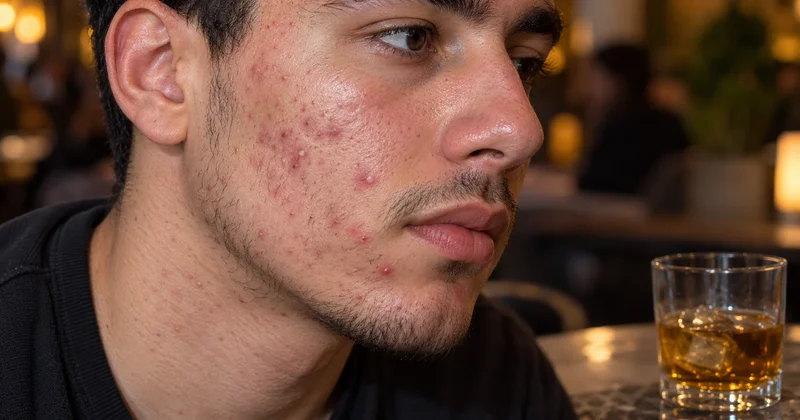
Possibly for some people, but there is no evidence that this happens universally.
Acne is an inflammatory skin condition, and alcohol can influence inflammatory pathways elsewhere in the body. That gives researchers plausible reasons to investigate a connection.
But biological plausibility is not the same as proof.
If your acne repeatedly gets worse around occasions when you drink, that pattern may be personally useful even if research cannot tell us that alcohol directly causes acne for everyone.
The key is to look at the entire pattern rather than one evening.
Alcohol, Inflammation, and Acne
Alcohol can affect inflammatory and immune processes.
Research into alcohol-related skin disease has proposed several possible mechanisms involving:
- Inflammatory signaling.
- Oxidative stress.
- Changes in blood vessels.
- Effects on the microbiome.
These mechanisms are relevant to several skin conditions.
However, we do not have strong evidence showing that one of these mechanisms reliably turns alcohol consumption into acne.
Avoid claims such as:
Alcohol “fills the skin with toxins.”
or:
Your liver cannot process the alcohol, so toxins come out through your pores.
That is not how established acne biology works.
Does Alcohol Cause Acne Through Dehydration?
Alcohol can contribute to fluid loss, particularly with higher intake, but dehydration has not been established as the mechanism by which alcohol causes acne.
A popular explanation online says:
- Alcohol dehydrates the skin.
- The skin becomes dry.
- Oil glands “compensate” by producing excessive oil.
- The extra oil causes pimples.
That chain is often presented as fact, but direct clinical evidence supporting it as an alcohol-to-acne mechanism is lacking.
Your skin may feel drier or look less hydrated after drinking, but that does not prove dehydration created your acne.
Drinking water is sensible for general hydration. It should not be marketed as a way to prevent or cure “alcohol acne.”
Sugary Cocktails and Acne: Alcohol May Not Be the Only Variable
Sometimes the drink contains more than alcohol.
Cocktails may also contain:
- Soda.
- Syrups.
- Sweetened juice.
- Energy drinks.
- Other high-sugar mixers.
Research into diet and acne has found a more consistent relationship between high-glycemic dietary patterns and acne than it has between alcohol itself and acne.
That still does not mean one sweet cocktail produces a pimple the following morning.
Diet studies generally look at broader eating patterns, not one isolated drink.
The important point is that if you drink a sugary cocktail and then experience a breakout, alcohol is not the only variable.
You can read more about how diet patterns and sugary foods may influence breakouts.
Does Poor Sleep After Drinking Affect Breakouts?
Sleep can add another layer to the problem.
Alcohol may disrupt sleep quality, particularly later in the night.
Acne research and dermatology guidance suggest that insufficient sleep can be associated with worsening acne in some people.
That does not mean one poor night of sleep automatically creates a new pimple.
But if nights involving alcohol regularly include:
- Less sleep.
- Later bedtimes.
- Increased stress.
- Different foods.
- Missed skincare.
then the entire pattern may matter more than the drink itself.
Skipping Skincare After Drinking Can Confuse the Picture
Another common factor is what happens after the drinking stops.
You may:
- Sleep in makeup.
- Leave sunscreen on overnight.
- Forget to wash your face.
- Pick at existing pimples.
- Apply a harsh “quick fix” the next morning.
- Skip an established acne treatment.
None of these proves why a particular pimple appeared.
But they demonstrate why it can be difficult to isolate alcohol as the cause of a post-drinking breakout.
Beer vs. Wine vs. Liquor: Which Is Worse for Acne?
There is not enough reliable evidence to rank beer, wine, and liquor according to acne risk.
Claims such as:
- “Vodka is acne-safe.”
- “Red wine causes cystic acne.”
- “Beer is the worst alcohol for your skin.”
go beyond the available acne evidence.
Different drinks can introduce other variables.
A mixed drink may contain substantial sugar. Beer has different ingredients from spirits. Wine can trigger noticeable flushing in some people, particularly those with rosacea.
But none of these differences gives us a scientifically established ranking of alcoholic beverages from best to worst for acne.
Alcohol Flushing Is Not the Same as Acne
Your face becoming red after drinking does not necessarily mean you have developed acne.
Alcohol can widen blood vessels close to the skin and produce flushing.
This can create:
- Warmth.
- Red cheeks.
- Facial redness.
Alcohol is also a well-recognized trigger for flushing in many people with rosacea.
Rosacea can sometimes produce red papules and pustules that resemble acne, which makes the distinction confusing.
However, rosacea and acne are different conditions.
If drinking repeatedly causes flushing, burning, persistent redness, or acne-like bumps that do not behave like your usual pimples, a dermatologist can help determine what you are actually dealing with.
Can Alcohol Cause Spots the Next Day?
Seeing a pimple the morning after drinking does not mean the lesion formed entirely overnight because of alcohol.
Acne development begins within the follicle before the final bump becomes obvious on the surface.
The timing may make alcohol seem responsible because that is the most memorable recent event.
But the same night may also have included:
- Poor sleep.
- Sugary food.
- Makeup left on longer.
- Stress.
- Menstrual-cycle timing.
- Different skincare.
- More face touching.
One morning is therefore weak evidence.
A repeated pattern is more informative.
Does Alcohol Help With Acne?
No evidence supports drinking alcohol as an acne treatment.
Alcohol consumption does not:
- Disinfect your pores from inside your body.
- Kill enough acne-related bacteria to treat acne.
- Replace benzoyl peroxide.
- Replace topical retinoids.
- Remove clogged pores.
- “Detox” acne-prone skin.
If someone tells you alcohol helps acne because it kills bacteria, they may be confusing drinking alcohol with the disinfecting properties of certain alcohols used on surfaces or in medical settings.
Neither idea makes alcohol consumption an acne therapy.
Should You Put Rubbing Alcohol on Pimples?
No.
Rubbing alcohol can make a pimple feel temporarily dry or less oily, but that does not mean it is treating the core acne process.
It can:
- Strip oil from the surface.
- Sting.
- Dry the skin.
- Damage an already irritated skin barrier.
- Increase redness and discomfort.
Dermatologists recommend gentle skincare for acne-prone skin and specifically advise avoiding rubbing alcohol and harsh astringents that dry and irritate the skin.
Do not put rubbing alcohol on a pimple you have already squeezed or picked. Damaged skin is especially easy to irritate.
Alcohol on Pimples vs. Evidence-Supported Acne Ingredients
If your goal is to treat acne, there are better-supported choices.
| Approach | What to Know |
|---|---|
| Rubbing alcohol | Dries and irritates skin; not a recommended acne treatment |
| Salicylic acid | Helps unclog pores and exfoliate inside the follicle |
| Benzoyl peroxide | Evidence-supported acne ingredient that reduces acne-associated bacteria |
| Adapalene | Topical retinoid that helps prevent clogged pores and treats acne over time |
For clogged pores and pimples, read more about an evidence-supported option for clogged pores.
Do not use all of these treatments together without considering irritation. More active ingredients do not automatically produce faster results.
Alcoholism and Skin Conditions: What Chronic Heavy Alcohol Use Can Affect
The Secondary Keyword alcoholism and skin conditions is commonly searched, but chronic heavy alcohol use or alcohol use disorder are generally more appropriate terms when discussing health.
Long-term heavy drinking can affect the skin in ways that extend far beyond acne.
Documented associations include:
- Facial flushing and enlarged superficial blood vessels.
- Rosacea flares.
- Psoriasis.
- Certain forms of dermatitis.
- Increased susceptibility to some skin infections.
- Skin changes related to nutritional deficiencies or liver disease.
These effects depend on the individual and the amount and duration of alcohol exposure.
Acne itself should not be treated as a diagnostic sign of alcohol use disorder.
Someone can have acne and never drink alcohol, and someone who drinks heavily may not have acne.
Does Cutting Back on Alcohol Clear Acne?
Not necessarily.
If alcohol is not contributing to your acne, removing it may make little difference to your breakouts.
But if you consistently notice worsening around drinking occasions, reducing your intake can help simplify the pattern you are trying to understand.
The important part is to keep other variables reasonably stable.
If you stop drinking but simultaneously:
- Change your entire diet.
- Start retinol.
- Buy a new cleanser.
- Stop wearing makeup.
- Begin a supplement.
and then your skin improves, you still will not know which change mattered.
There is no scientifically established number of alcohol-free days after which “alcohol acne” must disappear.
How to Track Whether Alcohol Is Affecting Your Breakouts
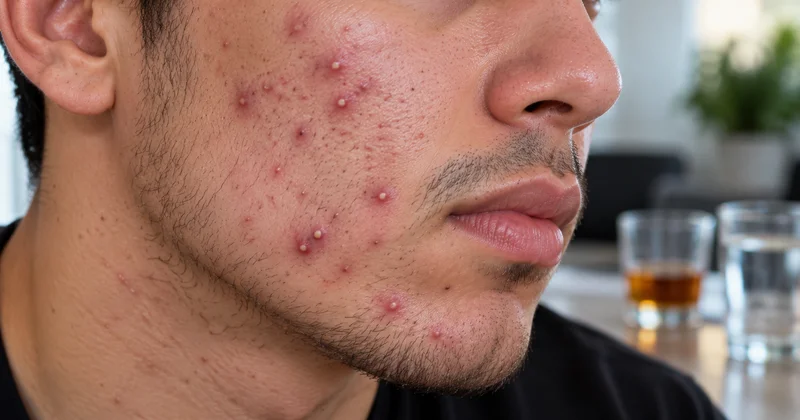
You do not need an elaborate spreadsheet.
Try a simple record.
1. Note when you drink
Record the date and general drinking occasion.
2. Note what else came with it
For example:
- Sugary mixer.
- Late meal.
- Poor sleep.
- Makeup worn overnight.
- High stress.
3. Keep skincare relatively stable
Changing your products constantly makes patterns much harder to identify.
4. Consider hormonal timing
If your breakouts tend to occur around the same menstrual-cycle phase, that may be more informative than the fact that you happened to drink on one of those days.
You can compare these possibilities with other common triggers behind recurring chin breakouts.
5. Look for repetition
One breakout after one night out is not enough to establish a pattern.
Repeated observations are more useful.
Do not deliberately increase alcohol intake or repeatedly expose yourself to something that makes you unwell just to test an acne theory.
What to Do if You Break Out After Drinking
Avoid trying to “undo” the night with aggressive skincare.
Instead:
- Wash with a gentle cleanser.
- Use your normal moisturizer.
- Apply sunscreen during the day.
- Continue an established acne treatment if it is appropriate and tolerated.
- Avoid squeezing pimples.
- Avoid rubbing alcohol.
- Avoid adding several new products at once.
Hydrate normally for general health, but do not expect extra water to erase a breakout.
Your skin usually benefits more from consistency than from a dramatic post-drinking “detox” routine.
When to See a Dermatologist
A lifestyle trigger investigation should not delay treatment for significant acne.
Consider seeing a dermatologist if you have:
- Deep or painful breakouts.
- Nodules or cysts.
- Acne that is leaving scars.
- Rapidly worsening acne.
- Significant chest or back acne.
- Persistent adult acne.
- Acne that is not improving with appropriate OTC treatment.
- Facial redness or acne-like bumps that might actually be rosacea.
- Uncertainty about the diagnosis.
A dermatologist can help treat the acne even if the exact contribution of alcohol remains uncertain.
Frequently Asked Questions
Does alcohol cause acne or just make it worse?
Current evidence does not prove that alcohol directly causes acne. Some observational studies have found associations between alcohol use and acne or severity, while others have not. Drinking may still coincide with factors such as poor sleep, sugary mixers, stress, and disrupted skincare that can worsen existing acne.
Can alcohol cause spots the next day?
A pimple you notice the next morning did not necessarily develop entirely because of the alcohol you drank the night before. Acne lesions develop over time. If breakouts repeatedly follow drinking occasions, track the pattern along with sleep, diet, hormones, and skincare rather than relying on one event.
Is beer or wine worse for acne?
There is not enough acne-specific research to reliably rank beer, wine, liquor, or other alcoholic beverages. Wine may trigger facial flushing in some people, and sweet mixed drinks introduce additional dietary factors, but neither fact proves one type of alcohol causes more acne.
Does alcohol help with acne if I put it on pimples?
No. Drinking alcohol is not an acne treatment, and rubbing alcohol should not be used as a pimple treatment. It can dry, sting, and irritate acne-prone skin. Evidence-supported ingredients such as salicylic acid, benzoyl peroxide, and adapalene are more appropriate options when suitable.
Will quitting alcohol clear my acne?
Not necessarily. Acne has several possible drivers, so removing alcohol will not automatically clear it. If drinking consistently coincides with flares, reducing or avoiding it while keeping other variables stable may help you understand your personal pattern.
The Bottom Line
So, does alcohol cause acne? Current research does not prove a direct cause-and-effect relationship.
Some studies find an association, while others do not. Drinking can also occur alongside less sleep, sweet mixers, altered food choices, stress, and skipped skincare, making one culprit difficult to identify.
If you notice a repeatable pattern, track it rather than relying on a single breakout.
And do not use rubbing alcohol to treat pimples. It can irritate acne-prone skin without treating the underlying acne mechanisms.
Keep your skincare gentle and consistent, use evidence-supported acne treatments when appropriate, and see a dermatologist if your acne is deep, painful, scarring, persistent, or difficult to identify.
This article is for educational purposes only. It does not diagnose acne, rosacea, alcohol-related skin disease, or another medical condition and is not a substitute for individualized care from a qualified healthcare professional.
References:
- NIH / NIAMS — Acne: Types, Causes, & Risk Factors
Used to verify the core biological mechanisms behind acne and distinguish established causes from factors that may worsen existing acne. - American Academy of Dermatology — Acne: Who Gets and Causes
Used for established acne causes and aggravating factors including hormones, stress, sleep, genetics, and skincare. - Clinical, Cosmetic and Investigational Dermatology — Advances in Relationship Between Alcohol Consumption and Skin Diseases
Used to verify that studies on alcohol and acne have produced inconsistent findings and that current evidence does not establish a simple direct causal relationship. - JAAD International — Diet and Acne: A Systematic Review
Used for the broader evidence connecting high-glycemic dietary patterns with acne when discussing sweet cocktail mixers separately from alcohol. - American Academy of Dermatology — Acne: Tips for Managing
Used to verify dermatologist recommendations for gentle, alcohol-free skincare and avoiding irritating products. - American Academy of Dermatology — 10 Skin Care Habits That Can Worsen Acne
Specifically supports avoiding rubbing alcohol and other products that unnecessarily dry or irritate acne-prone skin. - DermNet — Cutaneous Adverse Effects of Alcohol
Used for alcohol-related flushing, rosacea, psoriasis, dermatitis, infections, and other skin effects associated particularly with chronic excessive alcohol use. - DermNet — Rosacea: Symptoms, Causes, and Management
Used to distinguish alcohol-related facial flushing and rosacea from ordinary acne.