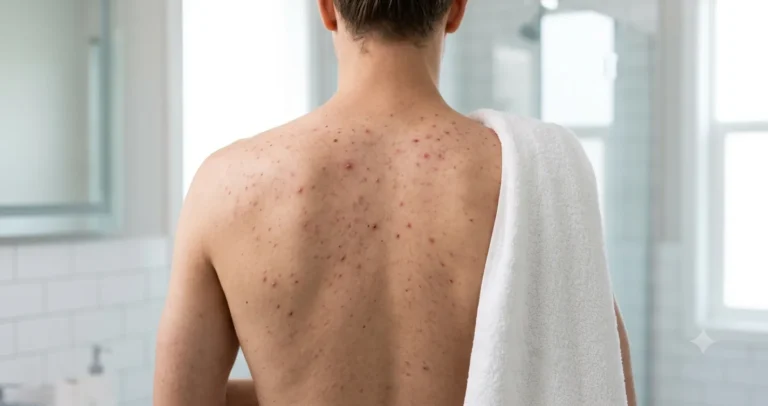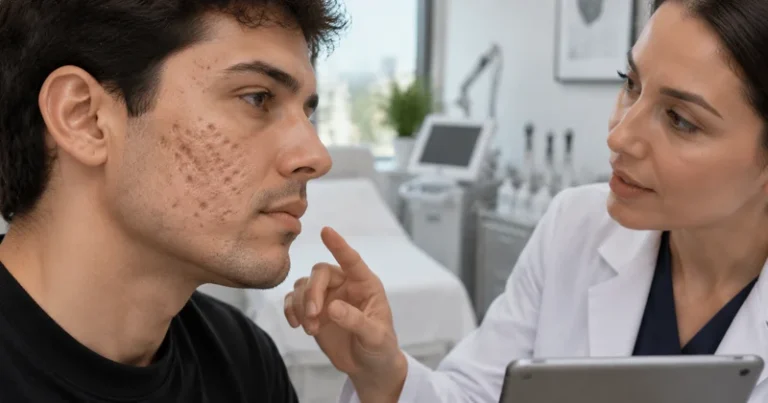
Butt Acne Causes: What Triggers Breakouts and How to Treat Them
Bumps on the buttocks can keep returning even when you shower regularly and use acne products. Understanding butt acne causes begins with an important correction: “butt acne” is a casual description, not one medical diagnosis. Several disorders can create pimples in this area, and treating the wrong one may increase irritation or delay appropriate care.
The short answer: Most butt pimples are caused by inflamed hair follicles, keratin plugs, ingrown hairs, or boils rather than true acne. Sweat, friction, tight clothing, prolonged sitting, hair removal, and certain infections can contribute. Recurrent deep lumps, drainage, tunnels, or scarring may indicate hidradenitis suppurativa and should be evaluated professionally.
Table of Contents
Is Butt Acne Really Acne?
Usually, no. True acne vulgaris can affect the buttocks, but folliculitis, keratosis pilaris, and boils are more common explanations. All involve the skin around follicles, which is why they can look similar from a distance.
The pattern provides useful clues. Blackheads and whiteheads suggest acne. Small itchy or tender pustules centered on hairs fit folliculitis. Numerous rough, dry bumps may be keratosis pilaris. One enlarging, hot, painful lump is more consistent with a boil. Those distinctions are essential when sorting through butt acne causes because each condition needs a different response.
Appearance alone is not always enough. A clinician may consider symptoms, timing, friction, water exposure, hair removal, and recurrence. A draining lesion may sometimes be tested for infection.
Butt Acne Causes: Six Common Possibilities
1. Folliculitis
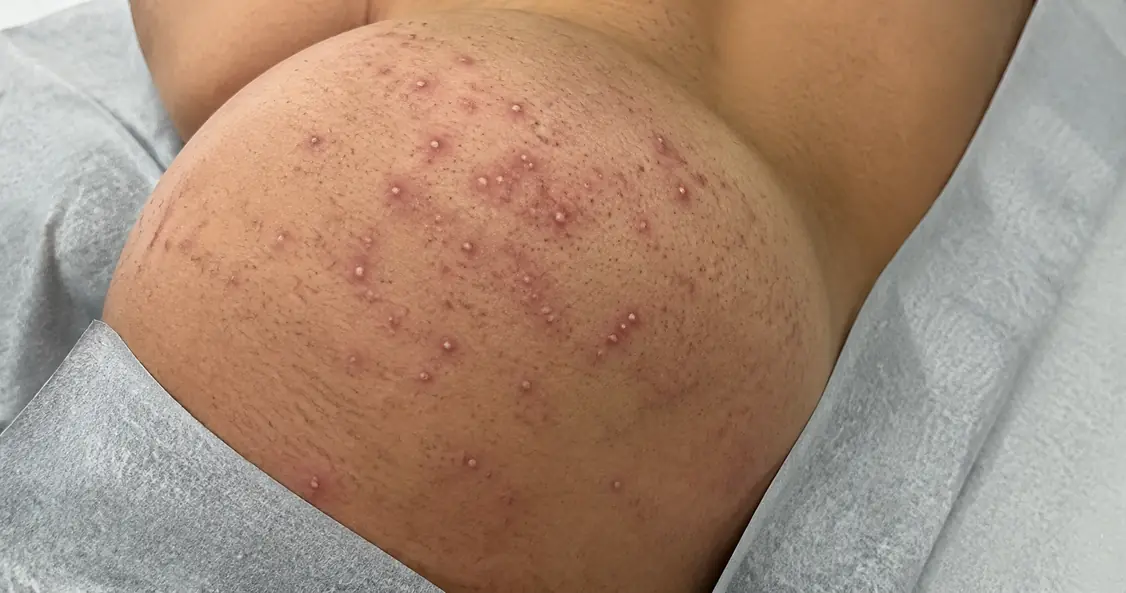
Folliculitis means inflammation of one or more hair follicles. It can result from irritation, friction, occlusion, bacteria, yeast, or less common causes. On the buttocks, it often looks like clusters of small bumps or pustules that may itch, burn, or feel sore.
Folliculitis leads the list of butt acne causes because the area experiences pressure, sweat, and rubbing. Bacterial folliculitis is commonly associated with Staphylococcus aureus, but not every inflamed follicle is infected. Leftover antibiotics are not a universal solution.
2. Keratosis Pilaris
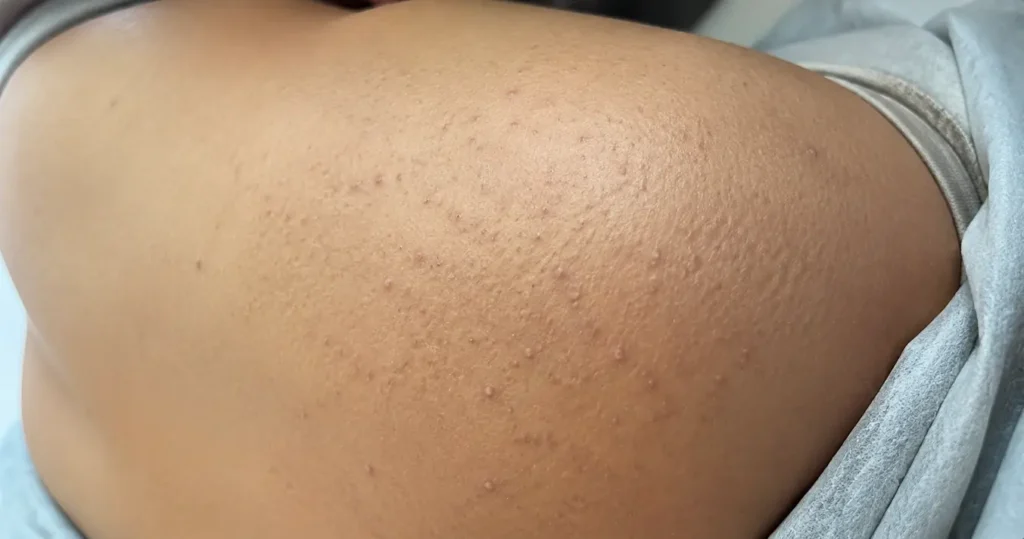
Keratosis pilaris, or KP, develops when keratin accumulates near follicular openings. The result is many small, firm bumps with a dry or sandpaper-like texture. They are typically skin-colored, pink, red, brown, or gray depending on skin tone and inflammation.
KP is among the common butt acne causes even though it is neither acne nor an infection. It is usually harmless, may fluctuate with dry weather, and can look more inflamed after aggressive scrubbing.
3. Ingrown Hairs
An ingrown hair forms when a hair curves back into the skin instead of growing outward. Shaving, waxing, tweezing, or very close hair removal can contribute. The bump may itch or hurt, and a hair may be visible beneath the surface. Infection can make it larger, more painful, or pus-filled.
Hair removal history helps distinguish ingrown hairs from other butt acne causes. Thick, coarse, or curly hair is more likely to curve back, but anyone can develop one. Picking can introduce bacteria and leave a scar or dark mark.
4. Boils and Carbuncles
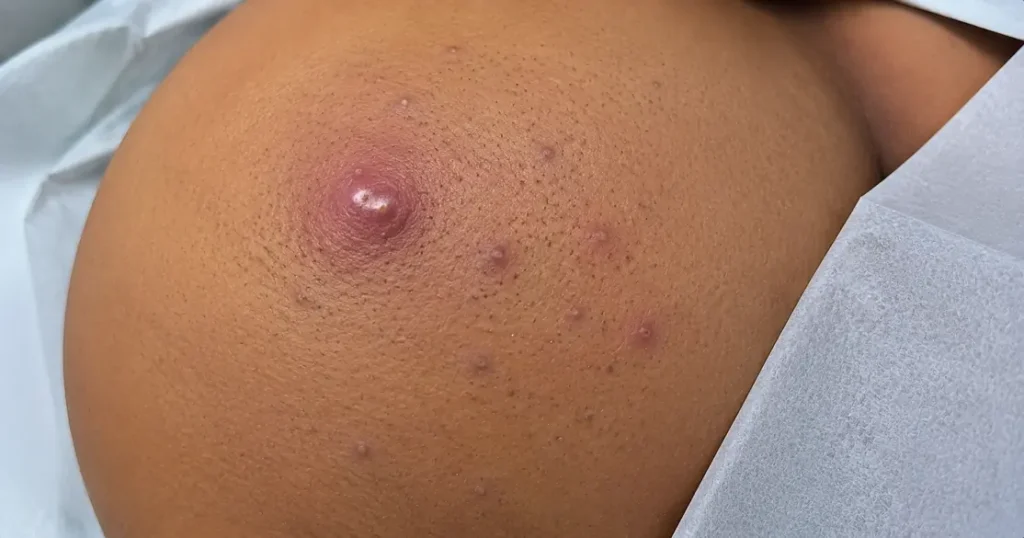
A boil, also called a furuncle, is a deeper infection involving a hair follicle and nearby tissue. It generally begins as one tender, swollen lump that becomes warm, painful, and filled with pus. A connected group of boils is called a carbuncle.
Boils belong among butt acne causes because they can resemble large pimples. A boil may enlarge and require professional drainage. Squeezing, puncturing, or cutting it can spread bacteria.
5. True Acne Vulgaris
True acne develops when oil and dead skin cells obstruct follicles, followed by inflammation. It usually produces a varied mixture of blackheads, whiteheads, papules, and pustules; deeper nodules are possible. Acne limited only to the buttocks is less typical, but it can occur.
Among butt acne causes, this is the category most likely to respond to a conventional pore-clearing acne routine. However, an isolated itchy rash, rough KP texture, or single painful abscess should not automatically be treated with several acne actives.
6. Hidradenitis Suppurativa
Hidradenitis suppurativa (HS) is a chronic inflammatory disease involving hair follicles. It can affect the buttocks, groin, underarms, and other areas where skin rubs together. Warning signs include recurring deep painful nodules, abscesses, slow-healing sores, drainage, paired blackheads, tunnels under the skin, and scarring.
HS is an important butt acne cause to recognize early because it needs dedicated care. It is not caused by poor hygiene or simply a series of ordinary boils. Popping lesions can worsen tissue damage.
Triggers That Make Butt Bumps More Likely
Different butt acne causes describe what is happening; a trigger helps explain why it flared. Several exposures can overlap.
Friction, Pressure, and Prolonged Sitting
Cycling, tight seams, compression clothing, and repeated rubbing can irritate follicles. Long periods of sitting can also keep heat, perspiration, and fabric pressed against the buttocks. Pressure alone is not a complete explanation, but it can amplify several butt acne causes, particularly irritant folliculitis and HS.
Use properly fitted equipment, take movement breaks, and change clothing that repeatedly rubs one spot. These adjustments should preserve rather than prevent useful activity.
Sweat, Heat, and Damp Clothing
Sweat is not dirt, but prolonged moisture under tight or nonbreathable fabric can encourage irritation and microbial growth. Workout clothes, uniforms, wet bathing suits, and hot weather commonly combine moisture with occlusion.
When reviewing butt acne causes after exercise, consider how long damp fabric stayed against the skin. Change when practical, shower gently, and let clothing and equipment dry before reuse.
Shaving and Waxing
Close shaving can injure the follicular opening, while waxing and tweezing can inflame the follicle as the hair is removed. A dull or dirty razor, repeated passes, shaving against growth, and dry shaving may further increase irritation.
If hair removal appears connected to butt acne causes, pause until bumps settle. When resuming, use a clean sharp or guarded blade, shaving gel, minimal passes, and the direction of growth. Avoid waxing inflamed or HS-prone skin.
Hot Tubs and Improperly Maintained Pools
Hot tub folliculitis results from exposure to Pseudomonas aeruginosa in contaminated warm water. Round, itchy bumps may appear one or two days later and can be most noticeable beneath a bathing suit, including across the buttocks.
Recent hot-tub exposure is a distinctive addition to the list of butt acne causes. Many uncomplicated cases clear within one or two weeks, but persistent symptoms, worsening illness, or fever needs medical advice. Remove the bathing suit, shower, and wash the suit after water exposure; a hot tub cannot be judged safe by appearance alone.
Heavy Products and Contact Reactions
Greasy body creams or oils may trap heat and moisture around follicles. Fragrances, preservatives, laundry products, and fabric dyes can instead cause contact dermatitis, which may look bumpy but tends to itch, scale, or form patches rather than isolated follicular pustules.
A new product can be relevant to butt acne causes without proving an allergy. Stop a cosmetic causing obvious irritation, but avoid replacing the entire routine at once. Seek help for persistent reactions.
Picking and Scratching
For several butt acne causes, squeezing does not remove the underlying problem. It can rupture inflamed tissue, spread bacteria, prolong healing, and leave post-inflammatory discoloration or a scar. Scratching itchy folliculitis can also create breaks in the skin that develop a secondary infection.
How to Tell the Main Conditions Apart
When comparing butt acne causes, use this table as a decision aid, not a diagnosis.
| Possible condition | Typical pattern | Common sensation | Useful clue | Reasonable next step |
|---|---|---|---|---|
| Folliculitis | Small bumps or pustules around hairs | Itchy, burning, or tender | Rash-like cluster; friction or infection may contribute | Reduce irritation; seek care if extensive or persistent |
| Keratosis pilaris | Numerous rough, firm bumps | Usually little discomfort | Dry, sandpaper-like texture without pus | Gentle moisturizing and gradual chemical exfoliation |
| Ingrown hair | One or several bumps after hair removal | Itchy or painful | Hair may be trapped under skin | Pause hair removal; do not pick |
| Boil | Enlarging deep lump, often pus-filled | Warm and painful | Usually deeper than a pimple | Warm compress; get care if large or worsening |
| Acne vulgaris | Mixed blackheads, whiteheads, and pimples | Variable tenderness | Comedones are present | Consistent acne treatment if the diagnosis fits |
| Hidradenitis suppurativa | Recurrent nodules, sores, or abscesses | Often painful | Drainage, tunnels, paired blackheads, scars | Early dermatology evaluation |
The table shows why treatment must match the condition. Benzoyl peroxide may help selected acne or bacterial follicular bumps, but it will not drain a boil, cure HS, or instantly smooth KP.
How to Treat Butt Acne Safely
Safe care for butt acne causes begins with the least irritating measures. Wear breathable clothing when practical, change damp garments, cleanse gently, and avoid picking. Wash towels, workout clothes, bathing suits, and frequently used gear regularly.
For Mild Follicular Pimples
A rinse-off benzoyl peroxide wash may help mild acne or bacteria-associated follicular bumps. Start cautiously and follow the label because it can cause dryness, burning, or peeling. Rinse thoroughly, and remember that benzoyl peroxide can bleach towels, underwear, and other fabric.
Because butt acne causes are varied, stop if irritation becomes significant and seek advice if the bumps are deep, widespread, or worsening. Store benzoyl peroxide according to its package directions and do not leave it in a hot car or another high-temperature location. Do not apply it to open sores or assume that stronger percentages work faster.
For Rough Keratosis Pilaris Bumps
A moisturizer containing lactic acid, salicylic acid, or urea may gradually soften keratin and improve texture. Apply only as directed, begin less often if your skin is sensitive, and use a plain moisturizer if dryness develops.
KP commonly returns when treatment stops, so the goal is control rather than a permanent cure. One of the biggest mistakes related to these butt acne causes is using a rough scrub or stiff brush to sand away the bumps. Repeated abrasion can increase inflammation and discoloration.
For Ingrown Hairs
Pause close shaving or waxing and allow the hair to grow outward. A clean warm compress can soothe the area. Do not dig into the skin with a needle or tweezers, especially when the hair is not already visible at the surface.
Seek medical help for increasing pain, spreading discoloration, pus, or recurrent scarring. A clinician may address infection or inflammation and discuss a safer long-term hair-removal approach.
For a Boil
Apply a clean, comfortably warm compress for about 10 minutes several times during the day. Heat may ease pain and encourage natural drainage. Keep the area clean and covered if it opens, wash your hands after touching the dressing, and do not share towels.
Do not squeeze or lance the lump. A large, rapidly growing, very painful, or persistent boil may need professional drainage, and antibiotics are appropriate only in selected cases. A boil near the anus or genitals also deserves professional assessment.
For Confirmed Acne Vulgaris
If comedones and mixed acne lesions confirm that acne is involved, salicylic acid, benzoyl peroxide, or a topical retinoid such as adapalene may be considered. Introduce one active at a time and follow its label. Give a tolerated acne routine about six to eight weeks before judging early progress rather than switching every few days.
This approach applies only to acne-related butt acne causes. Topical retinoids should not be used during pregnancy unless a qualified clinician specifically advises otherwise. If you are pregnant, planning pregnancy, or breastfeeding, discuss benzoyl peroxide, salicylic acid, retinoids, and other medicated products with your obstetrician or dermatologist.
For Recurrent Deep Lumps or Suspected HS
HS should be assessed early. Treatment may combine individualized skin care, prescription medication, procedures, wound care, and management of factors that worsen flares. There is no single over-the-counter product that is suitable for every stage.
Avoid scrubbing, waxing active areas, or squeezing lesions. HS can occur in people of any body size and is not evidence of unclean skin. Early care can reduce symptoms and help prevent progression and additional scarring.
How Long Do Butt Bumps Take to Clear?
The timeline depends on the cause. Mild irritant folliculitis may improve within days after the trigger is removed. Hot tub folliculitis and many uncomplicated ingrown hairs often settle within one to two weeks. Acne usually needs at least six to eight weeks of consistent care, while keratosis pilaris often requires ongoing maintenance.
Because butt acne causes have different timelines, those estimates do not apply to every bump. A deep boil may need drainage, and HS can be chronic. If a presumed pimple enlarges or fails to improve, revisit the diagnosis.
Common Treatment Mistakes
Many problems occur when all butt acne causes are treated as clogged pores. Avoid these common mistakes:
- Scrubbing inflamed skin with abrasive gloves, brushes, or gritty body polish.
- Starting benzoyl peroxide, salicylic acid, and a retinoid on the same day.
- Applying leftover antibiotic or steroid cream without knowing the diagnosis.
- Popping pustules, digging out ingrown hairs, or attempting to drain boils.
- Wearing the same damp workout clothing or bathing suit for hours.
- Continuing a product despite burning, swelling, blistering, or worsening pain.
- Assuming recurrent draining nodules are ordinary pimples.
Preventing Future Butt Breakouts and Dark Marks
Preventing different butt acne causes works best when your approach matches the pattern. Reduce repeated friction and prolonged moisture, use clean hair-removal tools, avoid shaving active lesions, and choose breathable clothing when possible. A gentle routine performed consistently is more useful than repeatedly changing strong treatments.
Post-inflammatory marks can remain after a bump heals. Depending on skin tone, they may look pink, red, purple, gray, or brown. Preventing new inflammation and leaving lesions alone are the safest starting points. Treatment for stubborn discoloration should wait until active butt acne causes are controlled, because irritating inflamed skin can create additional marks.
When to See a Dermatologist or Other Healthcare Professional
Arrange an examination when bumps repeatedly return, cover a large area, do not improve with appropriate care, or leave significant scarring or discoloration. Deep pain, rapid enlargement, substantial pus, increasing warmth, spreading redness, or fever may indicate an infection needing prompt treatment.
Recurring abscesses, tunnels, slow-healing sores, drainage, and limited movement raise concern for HS. Grouped blisters, ulcers, or bumps close to the genitals or anus after a possible exposure also warrant evaluation because the most common butt acne causes are not sexually transmitted, but some infections can resemble pimples.
Frequently Asked Questions
Is Butt Acne Usually Real Acne?
No. Folliculitis, keratosis pilaris, ingrown hairs, and boils are more common possibilities. True acne is more likely when you see a mixture of blackheads, whiteheads, and inflamed pimples. Identifying the pattern matters because products made to unclog pores will not treat every condition.
Can Sitting for Long Periods Cause Butt Acne?
Sitting can contribute through pressure, friction, heat, and trapped perspiration, but it is rarely the only explanation. Among butt acne causes, prolonged sitting is best considered an aggravating factor. Movement breaks, dry breathable clothing, and reducing repeated pressure may help when the pattern follows seated activities.
Does Benzoyl Peroxide Help Butt Acne?
It may help mild acne and some bacteria-associated follicular pimples. It will not treat KP, release an ingrown hair, drain a boil, or diagnose HS. Start cautiously, follow the label, rinse well, and protect fabrics from bleaching. Stop and seek advice if irritation is severe or the bumps worsen.
How Long Does It Take to Get Rid of Butt Pimples?
Some mild follicular irritation improves in days, while hot tub folliculitis and uncomplicated ingrown hairs often improve within one to two weeks. Acne generally takes several weeks of consistent treatment. Persistent rough KP may need ongoing care, and deep or recurring lesions need a professional diagnosis rather than a fixed deadline.
When Should I Worry About a Pimple on My Butt?
Seek care for a bump that rapidly enlarges, becomes severely painful, produces substantial drainage, or occurs with fever or spreading redness. Repeated deep lumps, tunnels, slow-healing sores, or scars may indicate hidradenitis suppurativa. A lesion near the anus or genitals, or one that looks blister-like, also deserves evaluation.
Conclusion
The central lesson about butt acne causes is that similar-looking bumps can come from very different conditions. Folliculitis, KP, ingrown hairs, boils, acne, and HS should not all be treated with the same cleanser or cream.
Start with gentle care and one change that fits the likely trigger. If a bump is deep, painful, draining, recurrent, or difficult to identify, choose professional evaluation instead of adding stronger products or trying to pop it.
This article is educational and is not a diagnosis or a substitute for care from a qualified healthcare professional.
References:
- Cleveland Clinic. “Butt Acne: Causes, Treatment and Prevention.” Cleveland Clinic
- Mayo Clinic. “Folliculitis: Symptoms and Causes.” Mayo Clinic
- American Academy of Dermatology. “Acne: Diagnosis and Treatment.” AAD
- Cleveland Clinic. “Hot Tub Folliculitis: Rash, Symptoms, Causes and Treatment.” Cleveland Clinic
- Mayo Clinic. “Hidradenitis Suppurativa: Symptoms and Causes.” Mayo Clinic
- American Academy of Dermatology. “FAQs: Benzene in Acne Products Containing Benzoyl Peroxide.” AAD
- American Academy of Dermatology. “Is Any Acne Treatment Safe to Use During Pregnancy?” AAD