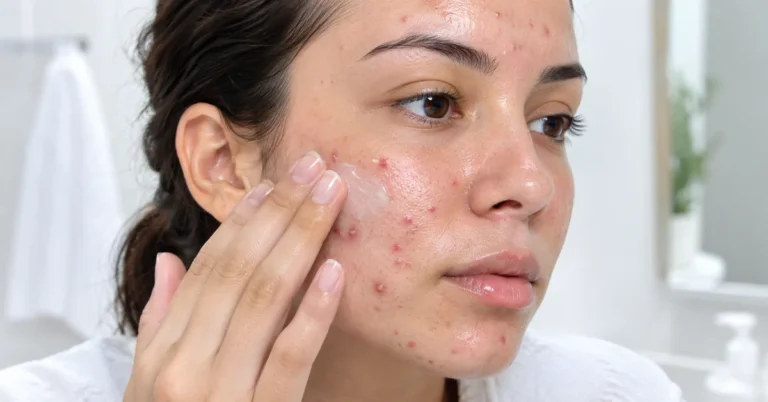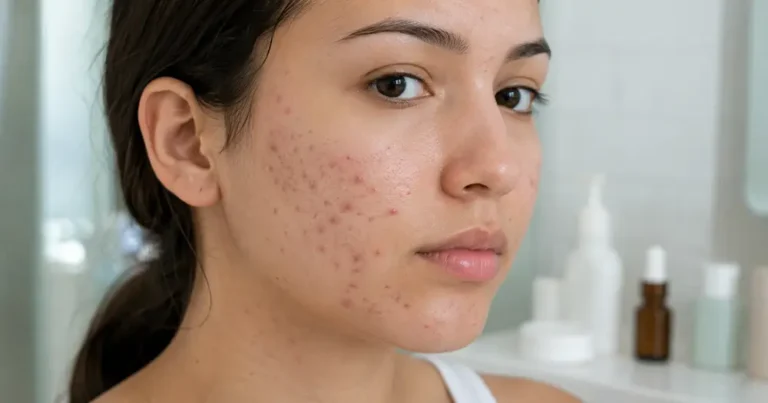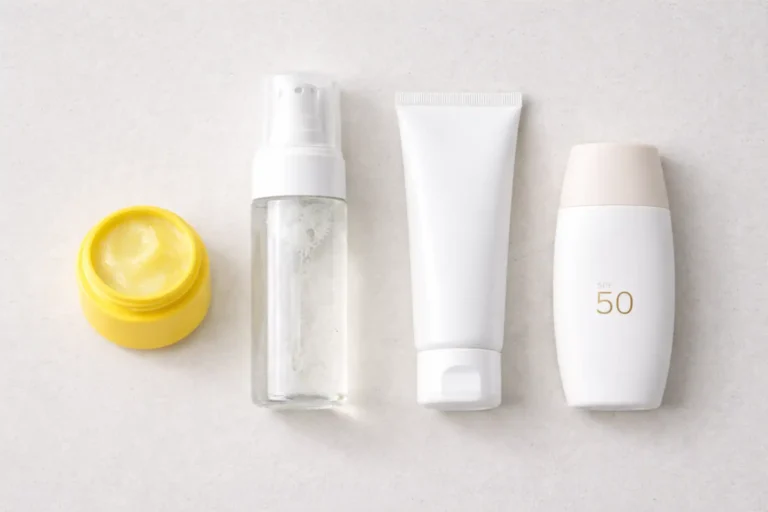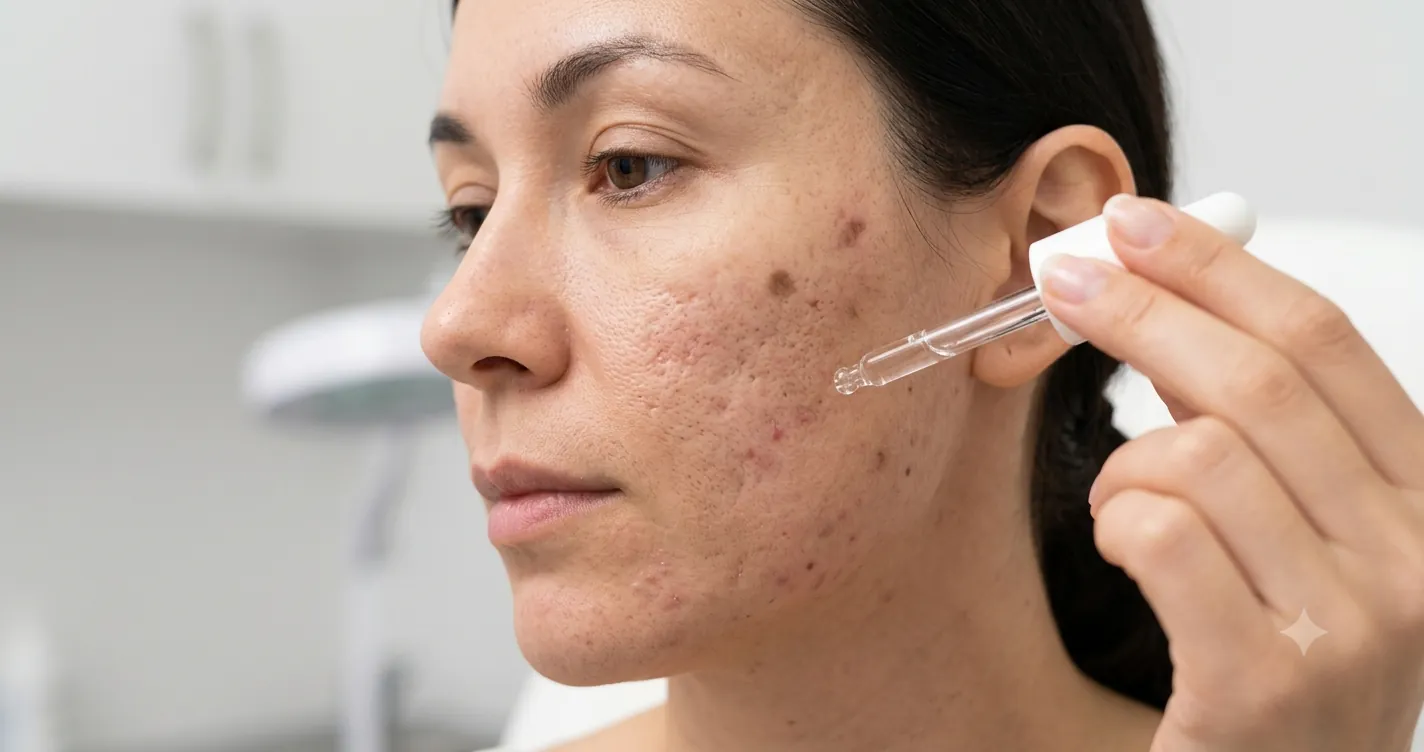
he best products for acne scars depend on what you are trying to improve. Flat brown marks may respond to sunscreen, azelaic acid, or a retinoid, while silicone can help some raised scars. However, skin-care products rarely correct indented ice-pick, boxcar, or rolling scars; those usually need dermatologist-performed procedures. Start by identifying the concern before buying a treatment.
Table of Contents
First, Determine Whether You Have a Scar or a Mark
People often call every spot left by a breakout a “pimple scar,” but color changes and true scars differ. That distinction determines which of the best products for acne scars may help.
| What you see | What it may be | What products can realistically do |
|---|---|---|
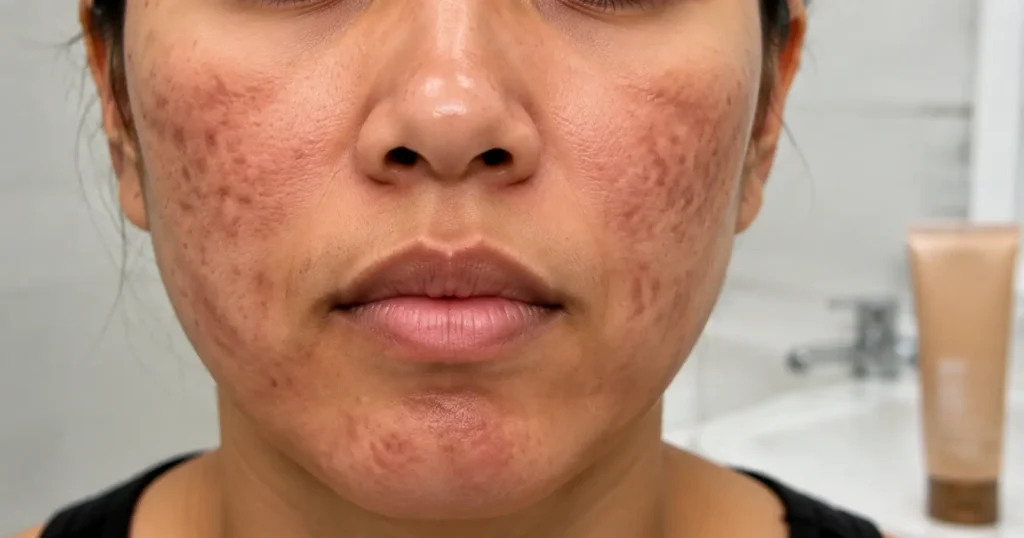
| Flat brown, tan, or blue-gray areas | Post-inflammatory hyperpigmentation (PIH) | Sunscreen and certain topical ingredients may gradually fade excess pigment |
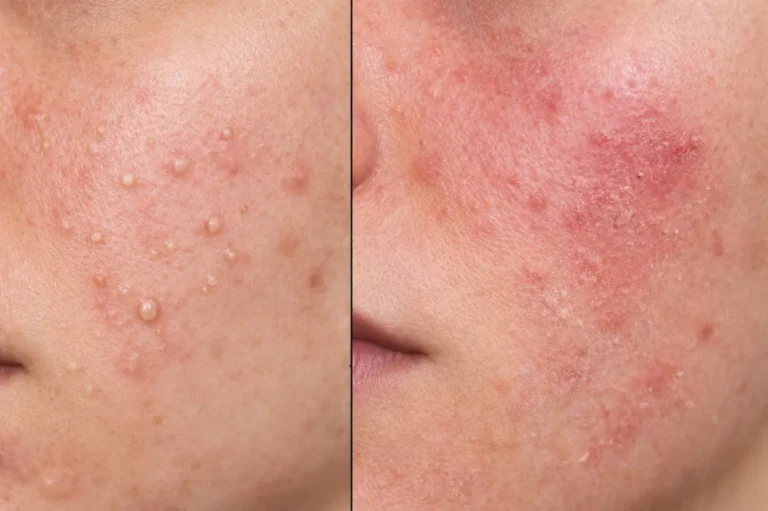
| Flat pink, red, or purple areas | Post-inflammatory erythema (PIE), lingering blood-vessel changes after inflammation | Gentle care and sun protection support healing, but pigment-lightening products may not address the redness directly |
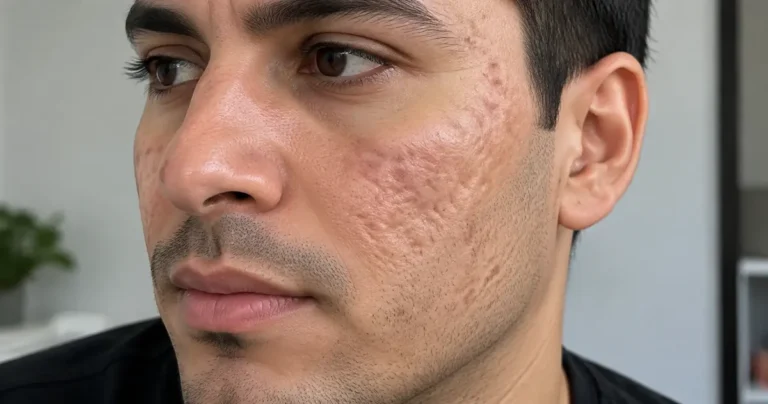
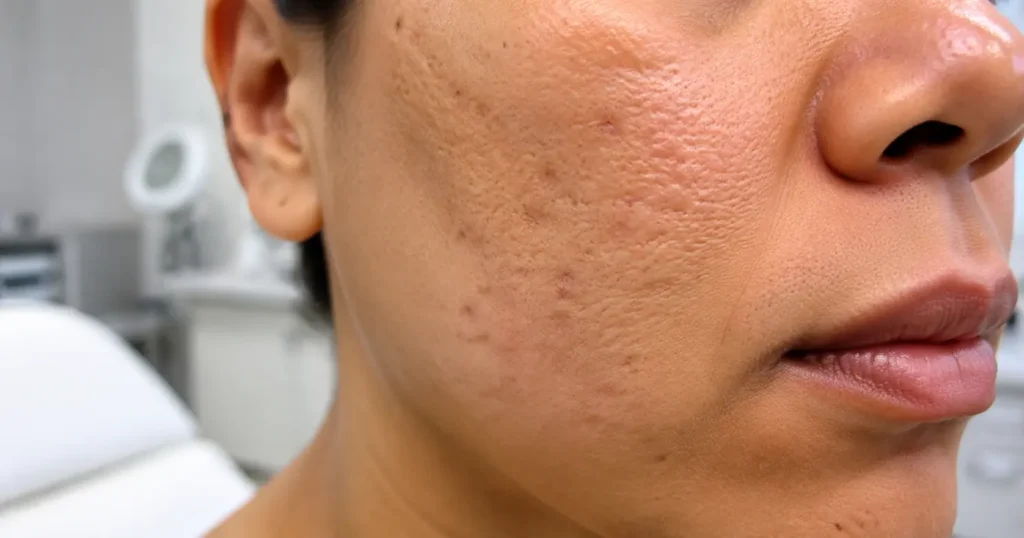
| Small deep holes, sharply edged depressions, or broad wavy dips | Atrophic scars: ice-pick, boxcar, or rolling scars | Products may improve surface dryness or color but usually cannot rebuild enough collagen to level the depressions |
| Firm bumps that stay within or extend beyond the original blemish | Hypertrophic scars or keloids | Silicone may soften or flatten some raised scars over months; growing or symptomatic scars need professional assessment |
PIH and PIE are flat post-acne marks, not permanent collagen changes. They often improve with time. True scars alter texture because healing produced too little or too much collagen. When comparing the best products for acne scars, check the area in side lighting: color on a level surface suggests a mark, while a shadow from a dip or bump suggests a scar. A dermatologist can confirm an unclear or mixed pattern.
What the Best Products for Acne Scars Can—and Cannot—Do
The best products for acne scars have a defined job. They may prevent new breakouts, limit additional scarring, protect dark marks from ultraviolet and visible light, support gradual fading, or manage a raised scar. They should not be marketed as universal erasers.
The best products for acne scars cannot release fibrous bands, lift a deep pit, or precisely remodel deeper collagen. Even prescription retinoids are not substitutes for procedures when texture loss is moderate or deep. Topicals can still help accompanying discoloration and active acne.
Silicone gel or sheets may reduce the thickness or discomfort of raised scars, although evidence is uncertain for some outcomes and months of use may be required.
Best Products for Acne Scars by Concern
The following best products for acne scars were selected for their ingredients, labeling, tolerability, and fit for a specific concern—not because the costliest choice is superior. No product guarantees results.
| Product | Best fit | Main limitation |
|---|---|---|
| EltaMD UV Clear Tinted Broad-Spectrum SPF 46 | Daily protection for flat dark marks | Does not fill indented scars; limited tint choices |
| The Ordinary Azelaic Acid Suspension 10% | Budget-friendly care for uneven tone and acne-prone skin | Cosmetic 10% formula has less direct evidence than prescription strengths |
| CeraVe Resurfacing Retinol Serum | Gradual care for marks and mild surface roughness | Retinol percentage is not disclosed; not appropriate during pregnancy |
| Differin Gel 0.1% | Treating active acne to reduce future marks and scars | Not an FDA-approved scar-removal product |
| ScarAway silicone gel or clear sheets | Closed, raised acne scars | Not useful for pitted scars or flat discoloration |
1. EltaMD UV Clear Tinted Broad-Spectrum SPF 46: Best for Protecting Dark Marks
Daily sunscreen is the foundation of a routine using the best products for acne scars when “scars” actually means PIH. Ultraviolet exposure can deepen pigment, and visible light can also worsen hyperpigmentation, particularly in darker skin tones. The American Academy of Dermatology recommends a tinted, broad-spectrum sunscreen with SPF 30 or higher and iron oxide for dark spots.
Among the best products for acne scars, EltaMD UV Clear Tinted SPF 46 combines zinc oxide and octinoxate for broad-spectrum protection; its tint contains iron oxides. It is noncomedogenic and comes in tinted and deeper-tinted versions, though two tint choices cannot match every complexion.
This supports prevention and fading; it does not treat pits. UV Clear is not labeled water-resistant, so choose a suitable water-resistant sunscreen for swimming or sweating. Apply generously and reapply at least every two hours outdoors.
2. The Ordinary Azelaic Acid Suspension 10%: Best Budget Pick for Flat Marks
Azelaic acid earns a place among the best products for acne scars because it can address both acne and post-inflammatory dark marks. It helps normalize clogged pores, reduces acne-related inflammation, and interferes with excess pigment production. This makes it especially practical when new blemishes and older brown marks appear together.
The Ordinary’s formula contains 10% azelaic acid in a silicone-based, noncomedogenic suspension. In this list of best products for acne scars, it is the budget pick. Use a thin layer and let it settle before applying another product.
Studies and clinical recommendations often involve prescription strengths, so those results cannot automatically be assigned to this cosmetic 10% formula. If sensitive, start a few nights weekly and increase only if comfortable. Reduce use for stinging, dryness, or peeling, and avoid layering several strong acids or retinoids if irritation develops.
3. CeraVe Resurfacing Retinol Serum: Best Gentle Retinol Option for Marks
CeraVe Resurfacing Retinol Serum is one of the best products for acne scars for shoppers seeking cosmetic retinol for marks and uneven texture. It also contains niacinamide, licorice-root extract, and ceramides and is labeled noncomedogenic and free of added fragrance.
As one of the best products for acne scars on this list, this serum may gradually improve discoloration and mild surface roughness. CeraVe does not disclose the retinol percentage, and cosmetic retinol is not equivalent to prescription tretinoin or adapalene. It will not lift deep scars.
Use a pea-size amount for the face at night, initially two or three times weekly, and moisturize. Increase slowly; irritation can prolong PIH. Retinoids are generally avoided during pregnancy, so ask a qualified clinician for a pregnancy-compatible plan.
4. Differin Gel 0.1%: Best for Preventing New Acne-Related Scars
Sometimes the best products for acne scars are the ones that stop new lesions from forming. Differin Gel contains adapalene 0.1%, an over-the-counter topical retinoid approved to treat acne. It helps prevent clogged pores and treats inflammatory and noninflammatory breakouts, reducing opportunities for new marks and scars.
Among the best products for acne scars, Differin is a prevention choice—not a direct scar eraser. A study suggesting atrophic-scar improvement examined adapalene 0.3%, not over-the-counter 0.1% gel. Choose it for ongoing acne, not an old isolated scar.
Following the label, spread a thin layer across the acne-prone area rather than spot-treating pimples. Dryness, burning, and peeling can occur. Keep the routine gentle, use sunscreen, do not add another retinoid, and avoid adapalene during pregnancy unless a qualified clinician advises otherwise.
5. ScarAway Silicone Gel or Clear Sheets: Best for Raised Scars
For a firm, elevated scar, silicone may be among the best products for acne scars. ScarAway sells silicone gel and clear sheets intended for raised hypertrophic and keloid scars. Gel can suit curved or hair-bearing areas; sheets provide coverage when they stay in place.
Among the best products for acne scars, silicone is supported as an option for raised scars, but certainty about the benefit is limited. ScarAway is not proven superior to every other medical-grade silicone product. Follow the label; daily use for months may be needed.
Use silicone only on closed, healed skin, and stop for a rash or skin breakdown. It cannot lift pitted scars or fade PIH. See a dermatologist if a raised scar expands beyond the original pimple, becomes painful or itchy, or limits movement.
How to Choose Without Buying an Entire Shelf
The best products for acne scars should match your single highest-priority concern. Buying several actives at once makes irritation more likely and makes it difficult to tell which product is helping.
- For flat brown marks: Begin with tinted broad-spectrum sunscreen. Add azelaic acid if you want one treatment active.
- For flat red or purple marks: Prioritize gentle care and sun protection. Persistent redness may need professional evaluation.
- For active acne plus marks: Choose an evidence-supported acne active such as adapalene, then add other products only after your skin adjusts.
- For a closed raised scar: Consider silicone gel or sheets and monitor the scar for growth or symptoms.
- For indented texture: Save money on “scar removal” creams and ask a dermatologist which procedure matches the scar pattern.
Your choice among the best products for acne scars should reflect sensitivity, pregnancy, eczema, prescriptions, budget, and consistency. If two products do the same job, start with one. A simple routine used regularly is easier to assess.
A Practical Morning and Evening Routine
You do not need all the best products for acne scars together. This routine is a general framework.
Morning
- Wash with a gentle cleanser, or rinse if twice-daily cleansing causes dryness.
- Apply azelaic acid if you tolerate it in the morning.
- Use a fragrance-free, noncomedogenic moisturizer as needed.
- Finish with tinted broad-spectrum sunscreen and reapply outdoors.
Evening
- Remove sunscreen and cleanse gently.
- Use cosmetic retinol or adapalene—not both. Start two or three nights weekly.
- Apply moisturizer to reduce dryness.
- Place silicone only on a fully healed raised scar, following its instructions.
If your skin is reactive, do not introduce azelaic acid and a retinoid together. Add one of the best products for acne scars, allow an adjustment period, and then decide whether a second has a clear purpose. Stop the suspected product for persistent dermatitis, swelling, or blistering and seek advice as appropriate.
Preventing New Scars Matters More Than Chasing Old Ones
Even the best products for acne scars cannot fully undo collagen damage. Controlling acne early is therefore part of scar care. Avoid squeezing or picking lesions, since manipulation can increase inflammation, delay healing, and raise the chance of discoloration and scarring.
Choose noncomedogenic skin care, avoid scrubbing, and match treatment to the acne. Salicylic acid helps clogged pores, benzoyl peroxide targets acne-causing bacteria and inflammation, and adapalene treats several lesion types. Too many actives may damage the skin barrier.
See a dermatologist for painful nodules or cysts, rapidly worsening acne, new scarring, significant distress, an uncertain diagnosis, or no improvement after roughly two to three months of appropriate over-the-counter care.
Products and DIY Methods to Skip
The label “scar corrector” does not make a formula one of the best products for acne scars. Be cautious with these options:
- Unapproved over-the-counter hydroquinone: The FDA says nonprescription hydroquinone lighteners are not approved in the United States. Prescription hydroquinone remains available. Avoid products with undeclared ingredients or mercury.
- Lemon juice, baking soda, and toothpaste: These do not remodel acne scars and can irritate skin, causing more redness or discoloration.
- Strong home chemical peels: Poorly controlled acids can cause burns and pigment changes.
- At-home microneedling over active acne: This may worsen inflammation, injure skin, or contribute to infection.
- Universal scar oils: Oil may reduce dryness, but it does not rebuild deep atrophic scars and can aggravate some breakouts.
- Aggressive active layering: Retinoids, exfoliating acids, abrasive scrubs, and strong spot treatments used together often create irritation rather than faster progress.
When judging the best products for acne scars, follow label patch-test directions and buy from reputable sellers. Ingredient lists matter more than dramatic marketing.
When Indented Acne Scars Need Procedures
The best products for acne scars can support care, but atrophic scars usually respond more to procedures selected for their shape and depth. Mixed scars may need combined approaches.
- Ice-pick scars: Options include punch excision or TCA CROSS.
- Boxcar scars: Options may include resurfacing, microneedling, punch elevation, or scar surgery.
- Rolling scars: Subcision may release tethering bands; fillers or energy treatments may be added.
Skin tone, active acne, keloid tendency, medications, downtime, and budget affect the plan. Some energy procedures carry a greater pigment-change risk in darker skin when selection, settings, or aftercare are inappropriate. Choose a board-certified dermatologist experienced with your skin tone. For laser types, sessions, risks, and costs, review the related guide to laser treatment for acne scars.
How Long Should You Give a Product?
Most of the best products for acne scars work gradually. Sunscreen prevents setbacks immediately but does not erase existing pigment overnight. Acne treatments commonly need several weeks before a clear trend appears, while discoloration may take months to fade. Silicone for a raised scar generally requires consistent daily use for months.
Take a photo in the same natural light every four weeks for a reliable comparison. Stop sooner for significant irritation, swelling, blistering, hives, or worsening symptoms.
If flat marks do not improve after several months of consistent care, a dermatologist can reassess them and discuss prescriptions. Do not keep escalating acids or scrubs. Get indented or raised scars assessed before repeatedly buying topicals.
Safety Notes Before Starting
The best products for acne scars are not automatically safe for every person. Read the full label, consider other active ingredients in your routine, and introduce one change at a time.
Avoid topical retinoids during pregnancy unless your own qualified clinician has provided different guidance. If breastfeeding, ask where a product may be applied and prevent an infant from contacting treated skin. People with eczema, rosacea, a damaged skin barrier, or a history of severe allergic reactions may need a gentler plan.
Seek urgent care for trouble breathing, facial or throat swelling, faintness, or a rapidly spreading severe reaction. For persistent but nonurgent irritation, stop the new product and contact a clinician. Severe, painful, cystic, or scarring acne deserves medical evaluation rather than repeated trial-and-error shopping.
Frequently Asked Questions
Can skin-care products completely remove acne scars?
No. Even the best products for acne scars rarely remove true scars completely. Products can fade flat discoloration, prevent new acne, or help manage some raised scars. Indented scars reflect collagen loss beneath the surface and usually require procedures such as subcision, microneedling, laser resurfacing, fillers, or scar surgery for meaningful textural improvement.
How can I tell whether I have acne scars or dark spots?
Run a clean finger gently across the area and look at it in angled light. A flat area that differs only in color is more likely a post-inflammatory mark. A dip, pit, wave, or firm bump suggests a true scar. This check is not a diagnosis; a dermatologist can distinguish mixed or unclear changes.
Which ingredient is most useful for dark post-acne marks?
There is no single winner for everyone. Tinted broad-spectrum sunscreen with iron oxide is the foundation because it limits ultraviolet- and visible-light darkening. Azelaic acid and retinoids can support fading while also treating acne. The right choice depends on sensitivity, pregnancy status, current treatments, and whether new breakouts are still occurring.
Do silicone scar sheets work on pitted acne scars?
No. Silicone sheets are intended for raised hypertrophic or keloid scars, not depressions caused by collagen loss. A sheet cannot lift an ice-pick, boxcar, or rolling scar. A dermatologist can match pitted scars with procedures based on depth, edges, location, skin tone, and whether tethering is present.
How long do acne scar products take to show results?
Expect months rather than days. Acne prevention may show a trend after several weeks, post-acne pigment often fades over several months, and silicone needs consistent use over months. Deep or tethered scars will not flatten simply with more time on a topical product. Photograph progress monthly and reassess if irritation or no meaningful change occurs.
The Bottom Line
The best products for acne scars are targeted tools, not universal removers. Protect flat marks with tinted sunscreen, choose azelaic acid or a retinoid for an appropriate acne-and-discoloration goal, and reserve silicone for closed raised scars. If texture is indented, invest in a dermatologist’s assessment before buying another cream. Your next step should be identifying the scar or mark type, then choosing one product with a realistic job.
This article is for educational purposes and does not provide a diagnosis or replace care from a qualified health professional.
References:
- American Academy of Dermatology — Acne scars: Signs and symptoms
- American Academy of Dermatology — Acne scars: Treatment
- American Academy of Dermatology — How to fade dark spots in darker skin tones
- American Academy of Dermatology — Scars: Treatment and causes
- American Academy of Dermatology — Acne: Diagnosis and treatment
- American Academy of Dermatology — Is any acne treatment safe to use during pregnancy?
- US Food and Drug Administration — Skin Product Safety: What You Need to Know About Skin-Lightening Products
- Cochrane — Silicone gel sheeting for treating hypertrophic scars
- PubMed — Adapalene 0.3% Gel Shows Efficacy for the Treatment of Atrophic Acne Scars
- EltaMD — UV Clear Tinted Broad-Spectrum SPF 46
- The Ordinary — Azelaic Acid Suspension 10%
- CeraVe — Resurfacing Retinol Serum
- Differin — Differin Gel 0.1%
- ScarAway — Silicone Clear Scar Sheets