Can You Use Benzoyl Peroxide With Salicylic Acid? How to Use Them Safely
If you are wondering Can You Use Benzoyl Peroxide With Salicylic Acid, the useful answer is more nuanced than a simple yes or no. Both are established acne ingredients, but they work differently and can both dry or irritate skin. The main question is whether using both adds something your acne actually needs without making your routine too harsh.
Quick answer: Benzoyl peroxide and salicylic acid can both have a place in an acne treatment plan, especially when acne includes both clogged pores and inflamed pimples. However, that does not mean you should automatically layer separate products on the same area at the same time. Introduce acne actives deliberately, follow each product’s label, and simplify the routine if irritation develops.
Table of Contents
Can You Use Benzoyl Peroxide With Salicylic Acid in the Same Acne Routine?
Yes, but “same routine” can mean different things: separate times of day, alternate days, or two products in one session. Those approaches do not create the same exposure or irritation.
The American Academy of Dermatology recommends both benzoyl peroxide and salicylic acid as topical acne therapies. Its current acne guideline also supports using topical therapies with different mechanisms when appropriate. That supports the idea that more than one mechanism can be useful in an acne plan, but it is not a blanket instruction to layer every active ingredient together.
Mayo Clinic’s salicylic acid guidance is more cautious about same-area use: using salicylic acid on the same affected area with other topical acne or peeling agents, including benzoyl peroxide, can cause severe irritation unless a doctor directs otherwise. Can You Use Benzoyl Peroxide With Salicylic Acid at different times instead? That may reduce direct overlap, but the product labels and your total irritation load still matter.
If you are still deciding which active better matches your breakouts, see Beyond Breakouts’ benzoyl peroxide vs salicylic acid guide for the full ingredient comparison.
How Benzoyl Peroxide and Salicylic Acid Work Differently
Benzoyl peroxide reduces acne-associated bacteria and inflammation, making it especially useful for inflammatory acne. The AAD strongly recommends it in its acne guideline.
Salicylic acid exfoliates and helps unclog follicles, making it particularly useful for blackheads, whiteheads, and recurring congestion. The AAD also recommends it as a topical option.
| Ingredient | Main role | Often a good match for | Common limitation |
|---|---|---|---|
| Benzoyl peroxide | Reduces acne-associated bacteria and inflammation | Red inflamed papules and pustules | Dryness, peeling, stinging, fabric bleaching |
| Salicylic acid | Exfoliates and helps unclog follicles | Blackheads, whiteheads, clogged pores | Dryness, stinging, peeling |
This distinction is important because the answer to Can You Use Benzoyl Peroxide With Salicylic Acid should start with the acne pattern you are trying to treat. If one ingredient already addresses the main problem, adding the second may add irritation without adding much practical benefit.
If you are still deciding which active makes more sense for your breakouts, our guide to benzoyl peroxide vs salicylic acid compares the two by acne type, how they work, available strengths, irritation risk, and product format. That deeper comparison can help you choose a starting ingredient before deciding whether your routine genuinely needs both.
For a deeper explanation of the pore-clearing ingredient, see Beyond Breakouts’ guide to how salicylic acid fits into acne treatment.
Can You Use Benzoyl Peroxide With Salicylic Acid at the Same Time?
It is possible for both ingredients to appear in one broader treatment plan, but using separate benzoyl peroxide and salicylic acid products on the same area at the same time can substantially increase dryness and irritation. For over-the-counter self-care, there is usually no advantage in assuming that same-session layering is necessary.
The safer way to think about Can You Use Benzoyl Peroxide With Salicylic Acid is to separate compatibility from tolerability. Two ingredients can both be useful for acne while still being too irritating for your skin when used together in a particular format, concentration, or frequency.
A rinse-off salicylic acid cleanser followed later by a leave-on benzoyl peroxide treatment is also different from stacking two leave-on products. Contact time matters. So does concentration, how often each product is used, and whether your routine already contains adapalene, tretinoin, glycolic acid, or another potentially irritating treatment.
Why More Acne Actives Can Backfire
An overly aggressive routine can cause:
- Persistent dryness
- Redness or discoloration from irritation
- Peeling or flaking
- Burning or stinging
- Tenderness
- Cracking of the skin barrier
Irritation is not proof that the treatment is “working harder.” It can make a routine difficult to continue and can make it harder to tell which product is causing the problem.
Check the Format, Not Just the Ingredient Name
A medicated cleanser is rinsed away. A leave-on gel, cream, liquid, or serum remains on the skin much longer. That difference can matter as much as the number printed on the package.
Before combining anything, check the Drug Facts or active ingredient label on every acne product in your routine. Can You Use Benzoyl Peroxide With Salicylic Acid when one is rinse-off and one is leave-on? Sometimes that setup is easier to tolerate than two leave-on products, but it still depends on the labels, frequency, and the rest of the routine.
Can You Use Benzoyl Peroxide With Salicylic Acid If You Have Mixed Acne?
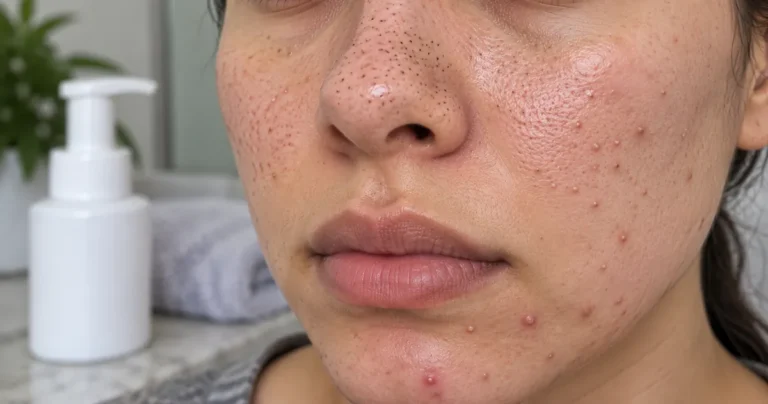
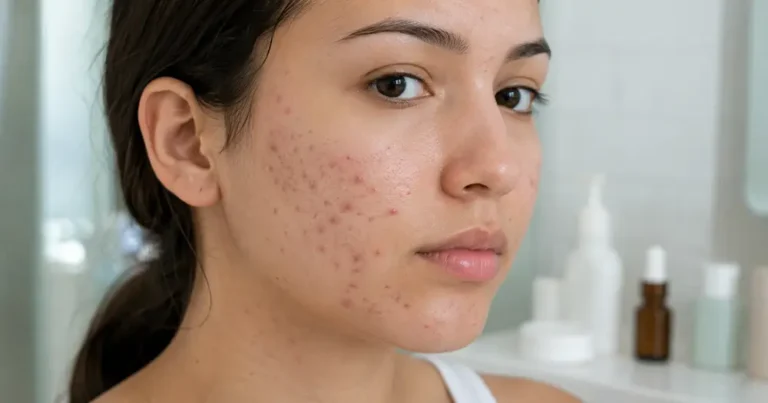
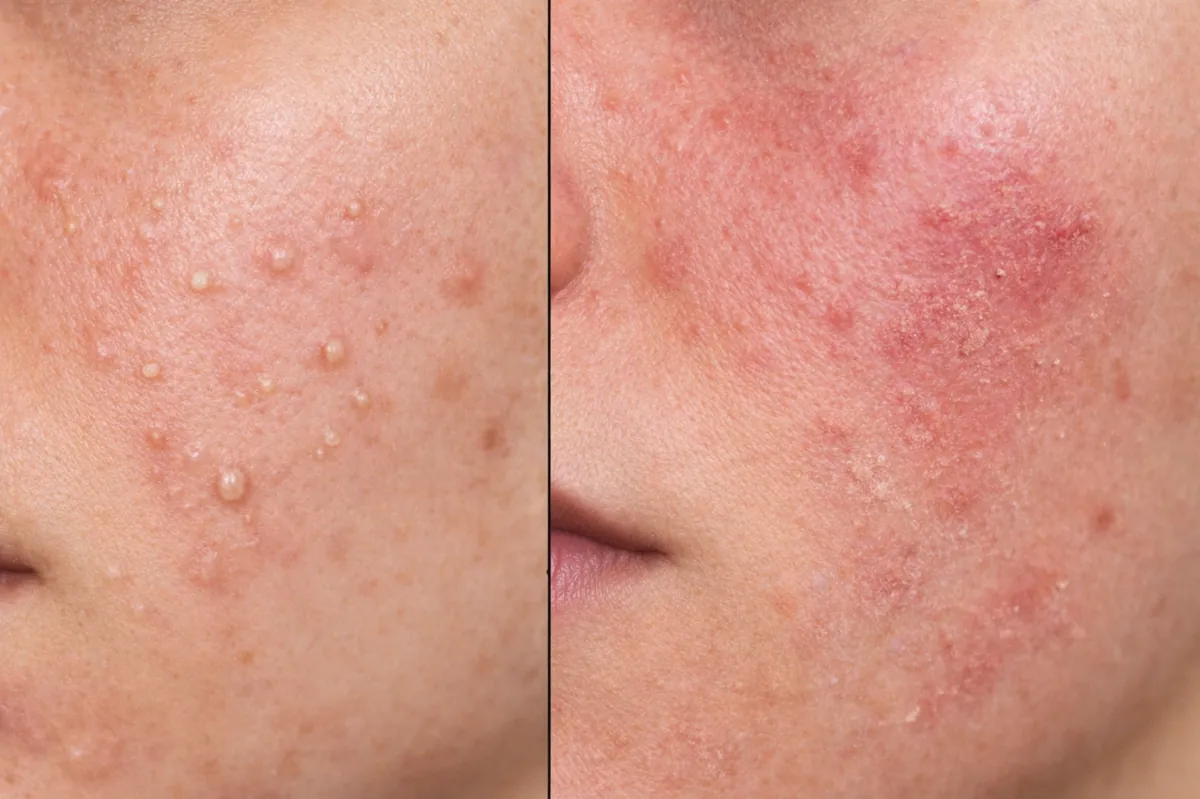
Mixed acne can make two mechanisms more reasonable because clogged pores and red inflamed pimples do not respond to exactly the same treatment approach.
That still does not mean everyone with mixed acne needs both immediately. AAD patient guidance recommends choosing an active that matches the acne and giving it time to work before adding more products.
For mild acne dominated by blackheads and whiteheads, salicylic acid may be enough to start. For mild inflammatory pimples, benzoyl peroxide may be the more direct first choice. If acne is mixed, persistent, or more inflamed, a second mechanism can sometimes make sense.
So Can You Use Benzoyl Peroxide With Salicylic Acid when you have both clogged pores and inflamed spots? Potentially, yes. The useful goal is not to use as many acne ingredients as possible. It is to use the fewest effective steps that your skin can tolerate consistently.
A Safer Way to Build a Benzoyl Peroxide and Salicylic Acid Routine
There is no single schedule that fits every product or every person. Can You Use Benzoyl Peroxide With Salicylic Acid without irritation? There is no guarantee, which is why building the routine in stages is more useful than copying a fixed schedule.
1. Decide Whether You Actually Need Both
Look at the dominant acne pattern rather than the popularity of the ingredients.
If blackheads, whiteheads, and congestion are the main concern, salicylic acid may be a logical starting point. If red inflammatory pimples are the main problem, benzoyl peroxide may be more relevant. If you have both, there may be a reason to use two different mechanisms.
This step matters because Can You Use Benzoyl Peroxide With Salicylic Acid is not the same question as “Do I need both?”
2. Audit Every Active Ingredient You Already Use
Read the labels on cleansers, toners, serums, spot treatments, and acne kits. A product that seems like “just a cleanser” or “just a toner” may already contain a medicated active.
A simpler routine also makes it easier to know what is helping. Beyond Breakouts’ guide to building a simpler acne treatment system explains why a multi-step kit is not automatically more effective than a focused routine.
3. Introduce One Active at a Time
Starting several treatments at once makes it difficult to identify the cause if irritation develops. Introducing one active first gives a clearer picture of tolerance.
The AAD’s adult acne guidance recommends beginning with an acne-fighting active that matches the type of acne and using it consistently as directed rather than immediately adding additional products.
4. If Both Are Needed, Reduce Unnecessary Overlap
General routine patterns can include using the ingredients in separate routines or on alternate days, depending on the individual product directions and skin tolerance. Another reasonable option is simply choosing one active if the second is not clearly solving a different problem.
Do not treat an online schedule as more important than the Drug Facts label, a prescription instruction, or advice from your clinician. If a product specifically tells you not to combine it with another acne treatment, follow that direction.
5. Support the Skin Barrier
A gentle cleanser and a noncomedogenic moisturizer can make acne treatment easier to tolerate. During the day, broad-spectrum SPF 30 or higher sunscreen is useful, particularly when skin is irritated or prone to post-inflammatory discoloration.
Avoid adding scrubs, harsh cleansing brushes, strong exfoliating acids, or multiple masks simply because acne has not cleared immediately.
Signs Your Routine Is Too Irritating
If you are asking Can You Use Benzoyl Peroxide With Salicylic Acid because your current routine is already causing burning or peeling, the more important question may be whether the routine needs to be simplified.
Can You Use Benzoyl Peroxide With Salicylic Acid every day? Not automatically. Mild dryness can occur with either ingredient, but persistent burning, marked redness, heavy peeling, cracking, significant tenderness, swelling, hives, or a spreading rash should not be treated as normal “purging.”
Mayo Clinic warns that over-the-counter acne products can rarely trigger serious allergic reactions. Seek urgent medical help for symptoms such as trouble breathing, swelling of the face, lips, tongue, or throat, or feeling faint.
If irritation is substantial or does not settle after simplifying the routine, stop experimenting and speak with a qualified healthcare professional.
What Strengths Are Available Over the Counter?
Under the current U.S. FDA OTC acne monograph, benzoyl peroxide is permitted in acne drug products at 2.5% to 10%, while salicylic acid is permitted at 0.5% to 2%.
These are allowed concentration ranges, not a recommendation to choose the highest number. Higher strength does not automatically mean faster or better clearing, and tolerance varies by product format and by person.
For benzoyl peroxide specifically, AAD patient guidance suggests that people starting OTC treatment can often begin with 2.5% to reduce the chance of dry, irritated skin rather than jumping directly to a 10% product.
What If You Also Use Adapalene, Tretinoin, or Another Acne Active?
Once another active acne medication enters the routine, Can You Use Benzoyl Peroxide With Salicylic Acid becomes a more individualized question.
Adapalene and prescription retinoids can already cause dryness, stinging, and peeling, especially when first introduced. Adding two more potentially irritating actives can turn a sensible acne routine into an unnecessarily complicated one.
If you use a prescription acne medication, follow the prescriber’s instructions before adding over-the-counter acids or benzoyl peroxide. Do not independently rearrange or stop a prescription treatment because a generic skincare routine online uses different timing.
When to Stop Experimenting With OTC Acne Actives
Over-the-counter treatment has limits. Deep, painful nodules or cysts, acne that is leaving scars, extensive inflammation, or acne that does not improve with an appropriate OTC routine deserves professional care.
The AAD specifically recommends dermatologist care for large, painful pimples that sit deep in the skin or acne that scars. Nodules and cysts are more likely to leave permanent scars and generally need stronger treatment than a salicylic acid and benzoyl peroxide routine can provide.
If you keep adding products because nothing seems to work, adding a third or fourth active is not automatically the right next step.
Frequently Asked Questions
Can I use salicylic acid in the morning and benzoyl peroxide at night?
That is one way some routines separate the ingredients, but it is not a universal schedule. Check both labels, consider the rest of your routine, and watch for cumulative dryness or irritation. If either product is prescription-strength or another prescription acne medication is involved, follow your clinician’s instructions instead.
Can I alternate benzoyl peroxide and salicylic acid on different days?
Alternating days can reduce same-session overlap and may be easier to tolerate for some people. The best frequency depends on the specific products and their directions. Start conservatively rather than assuming daily use of both is necessary.
Can You Use Benzoyl Peroxide With Salicylic Acid on sensitive skin?
Sensitive, dry, eczema-prone, or already irritated skin deserves extra caution. Starting with one ingredient that best matches the acne pattern is usually easier to assess. If the first treatment is working, there may be no reason to add the second simply because both are popular acne ingredients.
Should I use benzoyl peroxide or salicylic acid first?
Match the first treatment to the dominant acne type. Salicylic acid is especially useful for blackheads, whiteheads, and clogged pores, while benzoyl peroxide is particularly useful for inflammatory pimples. If you are unsure what type of acne you have, a dermatologist can help choose a treatment strategy.
Can I use benzoyl peroxide, salicylic acid, and adapalene together?
Using several active acne treatments can substantially increase dryness, stinging, peeling, and irritation. A complex regimen may be appropriate in some cases, but it should not be assembled by simply layering every effective ingredient. Follow product labels and any clinician instructions, and get professional guidance if you are unsure how to combine treatments.
Conclusion
The answer to Can You Use Benzoyl Peroxide With Salicylic Acid is that both ingredients can belong in an acne treatment plan, but they do not need to be layered together for the routine to be effective.
Start by identifying what type of acne you are treating, audit the active ingredients already in your routine, and add treatments deliberately rather than all at once. If your skin becomes persistently irritated—or your acne is deep, painful, scarring, or resistant to appropriate OTC care—professional treatment is a better next step than adding more actives.
Medical disclaimer: This article is for educational purposes only. It does not provide a diagnosis or individualized treatment plan and is not a substitute for care from a qualified healthcare professional.
References:
- American Academy of Dermatology — Acne clinical guideline. AAD Acne Clinical Guideline
- American Academy of Dermatology — Adult acne treatment dermatologists recommend. AAD Adult Acne Treatment Guidance
- Mayo Clinic — Salicylic acid (topical route). Mayo Clinic Salicylic Acid Guidance
- Mayo Clinic — Benzoyl peroxide (topical route). Mayo Clinic Benzoyl Peroxide Guidance