How to clear fungal acne with the right skincare and treatment steps
If your breakouts are small, stubborn, and weirdly itchy, it can feel like nothing in your skincare routine is working. That is often the case when the problem is not regular acne at all. Learning how to clear fungal acne starts with understanding what it is, what triggers it, and why the usual acne products may make it worse instead of better.
This guide walks you through simple, practical steps you can use to calm your skin, choose better products, and know when it is time to get medical help.
Table of Contents
Why these small, itchy bumps can be so frustrating
Most people treat every breakout like regular acne. They reach for benzoyl peroxide, spot treatments, scrubs, or strong exfoliants. But fungal acne does not behave like typical acne, so those products often miss the real problem.
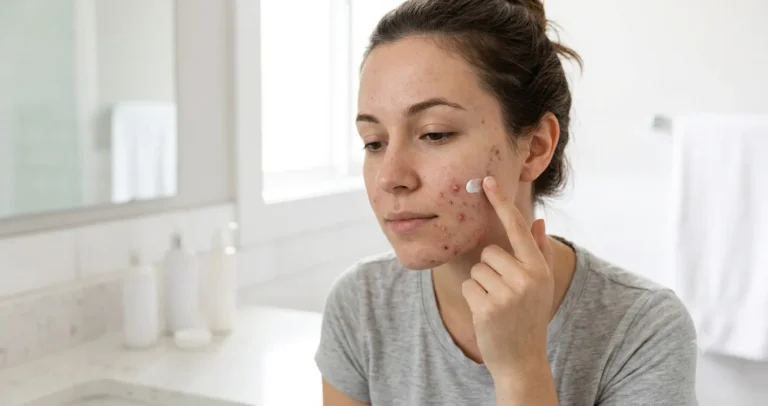
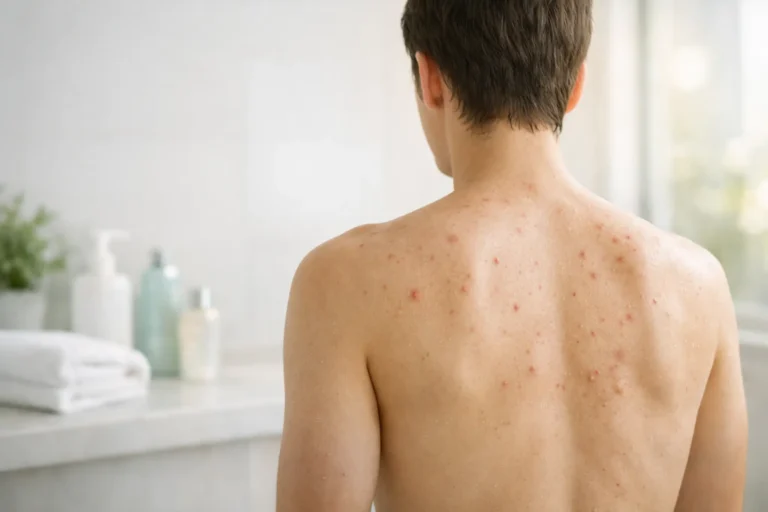
That can leave you stuck with tiny bumps that keep coming back, especially on your forehead, chest, back, or shoulders. The bumps often look very similar to each other, show up in groups, and may feel itchy or irritated, especially when you sweat.
The good news is that this kind of breakout usually improves when you use the right approach. Once you stop feeding the problem and start using the right skincare and treatment steps, your skin may begin to settle down.
What is fungal acne?
Fungal acne is a common nickname, but it is not true acne in the usual sense. The medical term is pityrosporum folliculitis, also called Malassezia folliculitis. It happens when a type of yeast that naturally lives on the skin grows too much inside hair follicles.
That overgrowth can trigger small inflamed bumps that look like acne. Because the bumps sit around hair follicles, they often appear in areas where sweat, heat, and oil build up.
This is why the question what is fungal acne matters so much. If you think you have regular acne, you may keep using acne treatments that do little for yeast-related bumps. Fungal acne needs a different strategy.
🔥 The 3 products dermatologists actually recommend (and yes, they work):
Stop guessing and start with what’s proven. La Roche-Posay Effaclar Duo(+) targets breakouts fast, Paula’s Choice 2% BHA Liquid Exfoliant keeps pores clear with daily use, and Hero Cosmetics Mighty Patch is the overnight fix everyone swears by. ✅ No prescription needed ✅ Affordable ✅ Backed by real clinical evidence.
How to tell if it may be fungal acne
Fungal acne can look a lot like other skin problems, so it is easy to confuse it with regular acne, heat rash, or irritation. Still, there are a few clues that can point you in the right direction.
Common signs
You may be dealing with fungal acne if you notice:
- Small bumps that are all about the same size
- Clusters of bumps instead of a few random pimples
- Itchy acne that gets worse with heat or sweat
- Breakouts that do not improve with regular acne products
- Bumps showing up quickly in an area rather than one at a time
These bumps may be skin-colored, pink, or slightly red. They do not always form classic whiteheads or blackheads.
Where it usually shows up
Fungal acne often appears on:
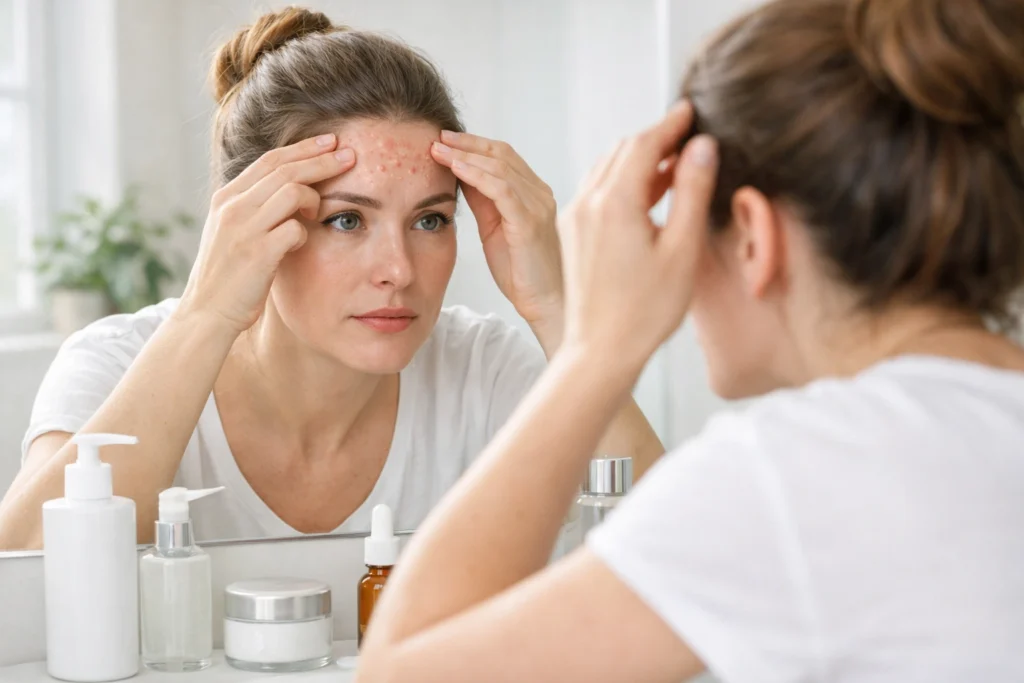
- Forehead
- Hairline
- Upper back
- Chest
- Shoulders
- Sometimes the neck or jawline
These are areas where sweat and oil can collect, especially under hats, sports bras, tight shirts, or backpacks.
How it looks different from regular acne
Regular acne often includes a mix of blackheads, whiteheads, deeper pimples, and inflamed spots of different sizes. Fungal acne is usually more uniform. The bumps tend to look similar and can feel rough or itchy.
Still, self-diagnosis has limits. Not every itchy breakout is fungal acne, and not every forehead bump is caused by yeast.
Why self-diagnosis can be tricky
Some skin conditions overlap. Perioral dermatitis, folliculitis from bacteria, acne cosmetica, heat rash, and irritation from products can all look somewhat similar. That is why it is smart to treat your skin gently and get professional help if nothing improves.
What causes fungal acne to flare up
Fungal acne develops when the skin environment shifts in a way that helps yeast overgrow. Several triggers can create those conditions.
Sweat, heat, and humidity
Warm, damp skin gives yeast an easier place to grow. That is why fungal acne often gets worse in summer, after workouts, or in humid climates.
Tight clothing and friction
Anything that traps sweat and heat against your skin can add to the problem. Common examples include:
- Tight workout clothes
- Non-breathable fabrics
- Hats and helmets
- Sports bras
- Backpack straps
Friction can also irritate the skin and make bumps more noticeable.
Oily products and ingredients
Some heavy skincare and haircare products can make fungal acne harder to clear. Rich creams, oily leave-in products, and thick styling products may sit on the skin and create a more buildup-prone environment.
Antibiotic use
A long course of oral or topical antibiotics can change the balance of organisms on the skin. In some people, that may reduce bacteria while allowing yeast to overgrow more easily.
Weakened skin barrier and other triggers
Overwashing, harsh exfoliation, strong acne treatments, and product overload can all stress your skin barrier. A damaged barrier does not directly cause fungal acne, but irritated skin can become harder to manage overall.
Other possible triggers include oily scalp conditions, sweating without cleansing afterward, and using several layers of heavy products at once.
How to clear fungal acne with the right skincare and treatment steps
If you want to know how to clear fungal acne, focus on a simple routine that reduces triggers, supports your skin barrier, and uses ingredients that target yeast.
Step 1: Simplify your routine
Start by cutting your routine down to the basics. A long list of serums, oils, masks, and actives can make it harder to figure out what is helping and what is making things worse.
Keep only:
- A gentle cleanser
- A lightweight moisturizer
- A sunscreen if the area is exposed to the sun
- One treatment approach at a time
This gives your skin a better chance to calm down.
Step 2: Cleanse gently, especially after sweating
Wash with a mild cleanser once or twice a day. If you work out or sweat heavily, rinse or cleanse your skin soon after. Letting sweat sit on your skin for hours can keep the area warm and damp.
Avoid harsh scrubs, rough washcloths, and aggressive cleansing brushes. They can irritate the follicles and leave your skin more inflamed.
Step 3: Use fungal acne treatment options that target yeast
This is the most important difference between regular acne care and fungal acne treatment. Products that help reduce yeast may be more useful than standard acne treatments alone.
Some people use antifungal washes or treatments on affected areas. In mild cases, a dandruff shampoo with an antifungal ingredient is sometimes used as a short-contact wash on the skin if tolerated. It is usually applied, left on briefly, and rinsed off. Because these products can be drying or irritating, patch testing and careful use matter.
If the bumps are widespread, severe, or keep returning, a dermatologist may prescribe a stronger topical or oral antifungal treatment.
Step 4: Choose a lightweight moisturizer
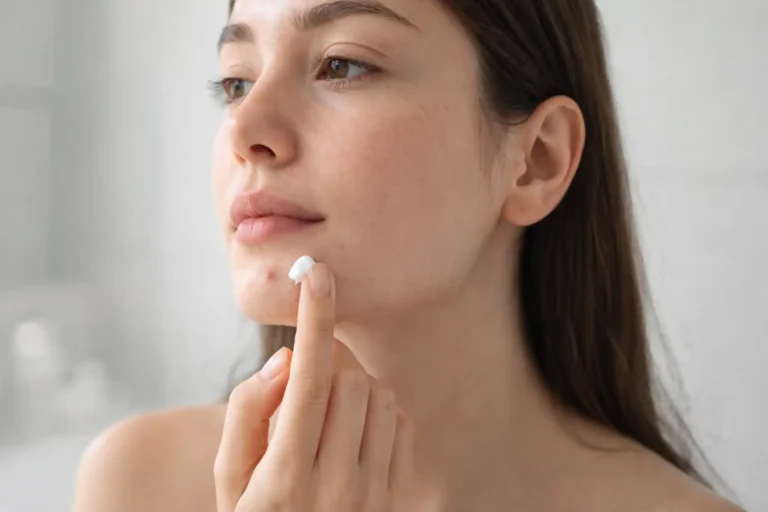
Many people with breakouts skip moisturizer, but dry, irritated skin can become even more reactive. A light, simple moisturizer can help support the skin barrier without feeling greasy.
Look for formulas that feel breathable and do not leave a thick film on the skin. Gel-cream or lotion textures often work better than very rich creams for fungal acne-prone skin.
Step 5: Be patient and track your progress
Skin does not clear overnight. Take clear photos once a week in the same lighting so you can judge real progress. Watch for less itch, fewer new bumps, and smoother texture over time.
Try not to switch products every few days. If you make too many changes at once, it becomes hard to tell what is helping.
Best skincare ingredients and products to look for
A smart routine does not need to be complicated. It just needs to support your skin while avoiding common triggers.
Gentle cleansers
Choose a cleanser that:
- Removes sweat, sunscreen, and buildup
- Rinses clean
- Does not leave a heavy residue
- Does not sting or over-dry your skin
Fragrance-free formulas are often easier for irritated skin to handle.
Lightweight moisturizers
A good moisturizer for fungal acne-prone skin should feel light and simple. Look for products that absorb well and help reduce tightness without feeling greasy.
Helpful antifungal ingredients
In fungal acne treatment, ingredients that reduce yeast are often more useful than classic acne ingredients alone. These may be found in certain medicated washes or prescription treatments.
That does not mean every antifungal product belongs in every routine. Stronger is not always better. The goal is to reduce overgrowth without wrecking your skin barrier.
When dandruff shampoos may help
Because the same yeast can play a role in dandruff and pityrosporum folliculitis, some people use dandruff shampoos on affected skin. This can be useful for the hairline, forehead, chest, or back in some cases.
A short-contact approach tends to be more practical than leaving the product on for long periods. But if your skin burns, peels, or gets redder, stop and talk with a dermatologist.
Sunscreens that feel light
If you get fungal acne on your face, sunscreen still matters. Choose a lightweight lotion, fluid, or gel texture that does not feel thick or greasy. A sunscreen you can tolerate every day is better than one that feels so heavy that you stop using it.
Ingredients and product types that may make fungal acne worse
Product choice can make a real difference. While not every person reacts the same way, some formulas are more likely to create problems.
Heavy oils and rich creams
Very rich products can increase buildup and feel suffocating on already congested skin. If your bumps worsen after using thick creams or heavy facial oils, step back and simplify.
Hair products that transfer to the skin
Pomades, serums, leave-in conditioners, and oily scalp products can move from your hair onto your forehead, neck, chest, and back. If you keep getting bumps near the hairline or upper back, your hair routine may be part of the issue.
Too many harsh acne products
Salicylic acid, benzoyl peroxide, retinoids, and exfoliating acids all have their place, but piling them on can backfire. Overdoing treatment can dry and inflame your skin without fixing the yeast problem.
Why more treatment is not always better
When skin gets irritated, every bump starts to look worse. Redness increases. Texture feels rougher. You may assume the condition is getting more severe when part of the problem is barrier damage from over-treating.
🔥 The 3 products dermatologists actually recommend (and yes, they work):
Stop guessing and start with what’s proven. La Roche-Posay Effaclar Duo(+) targets breakouts fast, Paula’s Choice 2% BHA Liquid Exfoliant keeps pores clear with daily use, and Hero Cosmetics Mighty Patch is the overnight fix everyone swears by. ✅ No prescription needed ✅ Affordable ✅ Backed by real clinical evidence.
A simple sample routine for fungal acne-prone skin
A basic routine is often the easiest place to start.
Morning routine
- Wash with a gentle cleanser or rinse with lukewarm water if your skin is dry and not oily in the morning.
- Apply a lightweight moisturizer if needed.
- Use a light sunscreen on exposed skin.
Night routine
- Cleanse to remove sweat, sunscreen, oil, and buildup.
- Use your chosen fungal acne treatment step if appropriate.
- Follow with a light moisturizer.
Gym, summer, and post-sweat care tips
- Shower or cleanse soon after workouts
- Change out of sweaty clothes quickly
- Choose breathable fabrics when possible
- Wash hats, pillowcases, and workout gear often
- Keep heavy hair products away from your forehead and back
These practical habits matter more than people think.
How long fungal acne treatment may take to work
Most people want immediate results, but skin usually needs time. Mild cases may start improving within a couple of weeks when the trigger is removed and the right treatment is used. More stubborn cases may take longer.
Signs your skin may be improving
You may notice:
- Less itching
- Fewer fresh bumps
- Smoother texture
- Less redness after sweating
- Shorter flare-ups
Signs your routine may be making it worse
Pay attention if you notice:
- More burning or stinging
- Dry, flaky, tight skin
- New widespread bumps after using thick products
- No change after a reasonable trial period
- Frequent relapses after brief improvement
If you are stuck in that cycle, it may be time for a professional evaluation.
When to see a dermatologist
Sometimes home care is not enough, and that is okay.
See a dermatologist if:
- The bumps are very itchy, painful, or spreading
- You are not sure whether it is fungal acne
- Over-the-counter care has not helped after several weeks
- The condition keeps coming back
- You also have scalp flaking, severe redness, or signs of skin infection
A dermatologist can look more closely at whether you have pityrosporum folliculitis, regular acne, bacterial folliculitis, dermatitis, or another skin issue. If needed, they may prescribe a stronger fungal acne treatment.
Fungal acne vs regular acne: a quick comparison
The right diagnosis changes the treatment plan. Here is a simple side-by-side look.
| Feature | Fungal acne | Regular acne |
|---|---|---|
| Main cause | Yeast overgrowth in hair follicles | Oil, clogged pores, inflammation, bacteria |
| Usual appearance | Small uniform bumps in clusters | Mixed blemishes of different sizes |
| Itching | Common | Less common |
| Blackheads and whiteheads | Usually absent or minimal | Common |
| Common areas | Forehead, chest, back, shoulders | Face, jawline, chest, back |
| Common triggers | Heat, sweat, humidity, occlusive products | Hormones, oil, clogged pores, genetics |
| Helpful treatment | Antifungal-focused care | Traditional acne care |
Common mistakes that slow down recovery
A few habits can keep fungal acne hanging on longer than it should.
Treating it only like regular acne
If the problem is yeast-related, standard acne products may not do enough on their own.
Switching products too often
It is tempting to try a new product every few days. But constant changes make it harder to see patterns and easier to irritate your skin.
Ignoring sweat, fabrics, and scalp products
Sometimes the biggest trigger is not your face wash. It is your sweaty workout shirt, your leave-in conditioner, or the fact that you sit in damp clothes for hours.
Picking or scrubbing the bumps
Picking makes inflammation worse and may leave dark marks behind. Scrubbing can irritate the follicles and damage the skin barrier.
Internal linking opportunities to strengthen the topic
If you are building a skincare routine around healing, a few related topics can help you make smarter choices.
A guide on how to build a gentle skincare routine can help you strip away extra steps and focus on what your skin actually needs.
An article about repairing a damaged skin barrier is useful if your skin feels tight, stings easily, or looks worse from too many actives.
A post on choosing the right sunscreen for acne-prone skin can help you protect your skin without using formulas that feel heavy or greasy.
Final thoughts on how to clear fungal acne
Figuring out how to clear fungal acne can take some trial and error, but it usually gets easier once you stop treating it like standard acne. Start simple. Reduce sweat and buildup. Choose lightweight products. Use a targeted treatment approach carefully. Give your skin time to respond.
If your bumps keep coming back or you are not sure what you are dealing with, getting help from a dermatologist can save you a lot of frustration. For more skincare guidance, explore related articles on gentle routines, skin barrier repair, and sunscreen choices for breakout-prone skin.
FAQ:
1. What is fungal acne and why does it look like regular acne?
Fungal acne is a common name for pityrosporum folliculitis, a condition caused by yeast overgrowth in hair follicles. It can look like regular acne because it creates small bumps, but it is usually itchier and the bumps often look very similar to one another.
2. How do you know if you have fungal acne or regular acne?
Fungal acne often shows up as clusters of small, uniform, itchy bumps, especially on the forehead, chest, back, and shoulders. Regular acne usually includes a mix of blackheads, whiteheads, and inflamed pimples of different sizes. A dermatologist can help confirm the difference.
3. How to clear fungal acne if regular acne products are not working?
If regular acne products are not helping, simplify your routine, cleanse gently, avoid heavy products, and consider a fungal acne treatment that targets yeast. If the condition does not improve after a few weeks, see a dermatologist for a more precise treatment plan.
4. Can sweating make fungal acne worse?
Yes, sweat, heat, and humidity can make fungal acne worse because they create a warm, damp environment that helps yeast grow more easily. Cleansing after workouts and changing out of sweaty clothes quickly may help reduce flare-ups.
5. How long does fungal acne treatment take to work?
Some people notice improvement within a couple of weeks, especially if the trigger is removed early. More stubborn cases can take longer. If your skin is not improving or keeps flaring up, a dermatologist may recommend stronger treatment options.