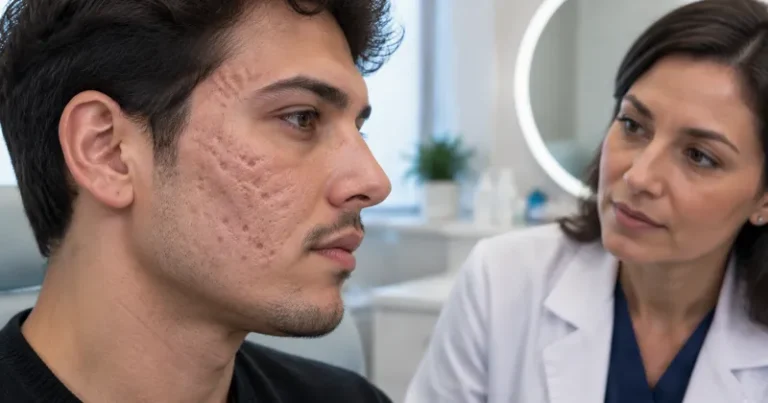
Back acne treatment: learn the causes, symptoms, and best ways to clear breakouts
Back breakouts can feel extra frustrating because they are hard to see, hard to reach, and slow to calm down. You may do all the usual skin care steps and still wonder why your shoulders, upper back, or chest keep breaking out. The good news is that the right back acne treatment can work very well when you match it to the cause and stay consistent long enough to see results.
A solid back acne treatment usually starts with a gentle shower routine, an acne-fighting wash such as benzoyl peroxide or salicylic acid, less friction from tight clothing, and patience. Mild or moderate breakouts often improve with over-the-counter care, while deep, painful, or scarring acne usually needs a dermatologist.
Table of Contents
What is back acne?
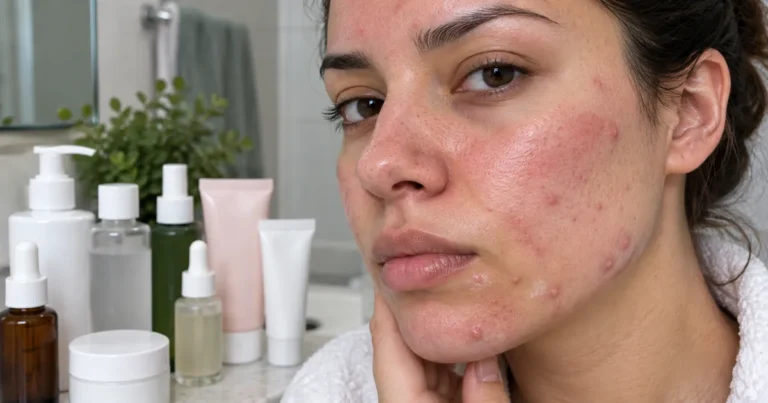
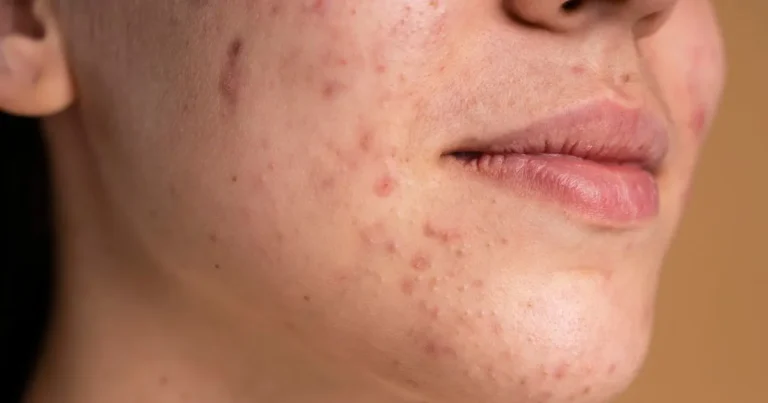
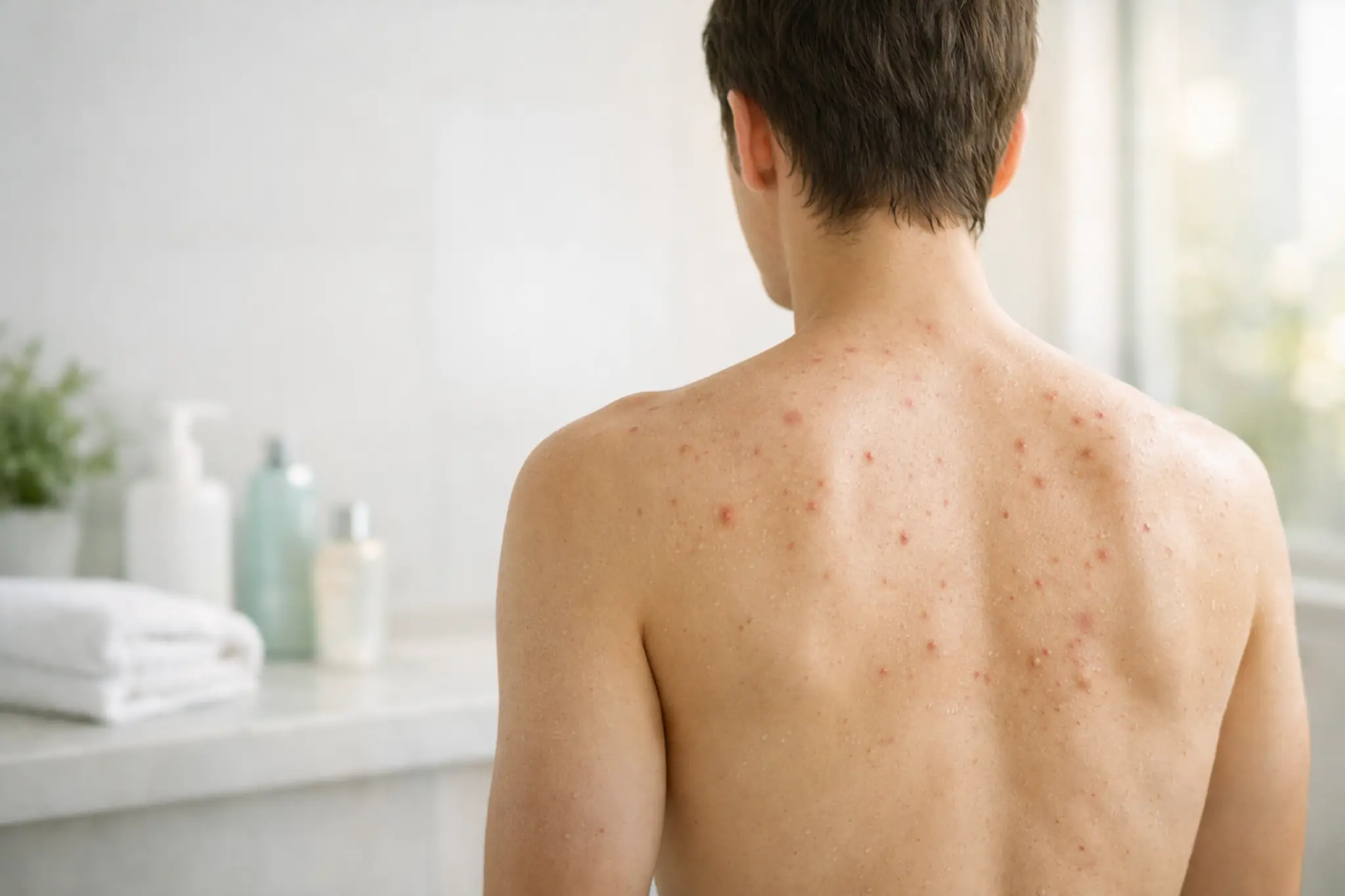
Back acne is acne that shows up on the upper back, shoulders, and sometimes the chest. It can look like small rough bumps, whiteheads, blackheads, red pimples, or deeper tender lumps. In more stubborn cases, it can leave dark marks or scars after the bumps flatten out.
This area breaks out for a simple reason: your back has lots of hair follicles and oil glands. When oil, dead skin cells, and inflammation build up in those follicles, you can get the same acne process that happens on the face, just on thicker skin that may need a slightly different back acne treatment approach.
Why does back acne happen?
At the root of acne is a clogged follicle. Oil and dead skin cells collect inside the pore, and inflammation follows. That process can lead to whiteheads, blackheads, inflamed pimples, or deeper cyst-like bumps.
Hormones also matter. That is one reason teenagers often break out, but adults can too. Some women notice flares around their menstrual cycle, and some people simply have acne-prone skin because of genetics, oil production, or how strongly their skin reacts to inflammation.
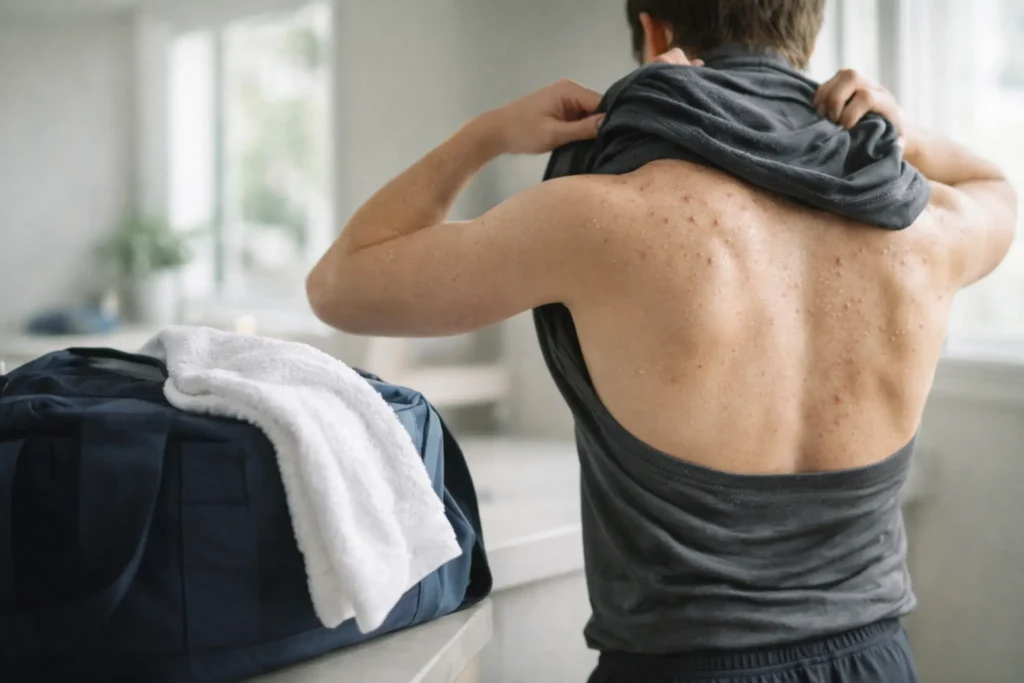
Your daily habits can push breakouts further. Sweat, trapped heat, friction, oily hair products, and pore-clogging skin products can all make a back acne treatment plan work harder. When those triggers show up every day, acne keeps getting re-created even if you are already treating it.
🔥 The 3 products dermatologists actually recommend (and yes, they work):
Stop guessing and start with what’s proven. La Roche-Posay Effaclar Duo(+) targets breakouts fast, Paula’s Choice 2% BHA Liquid Exfoliant keeps pores clear with daily use, and Hero Cosmetics Mighty Patch is the overnight fix everyone swears by. ✅ No prescription needed ✅ Affordable ✅ Backed by real clinical evidence.
What causes zits on back in everyday life?
A lot of people ask, “why do I have back acne when I wash every day?” The answer is often not poor hygiene. It is usually a mix of sweat, oil, friction, and blocked pores, especially when the skin stays warm and covered for hours.
Common daily triggers include:
- Tight workout tops, sports bras, shapewear, and synthetic fabrics that trap heat
- Backpacks, straps, or equipment rubbing the same spot again and again
- Sitting in sweaty clothes after exercise
- Shampoo, conditioner, leave-in products, pomades, or body lotions that leave oily residue
- Harsh scrubbing, picking, and squeezing that irritate the skin instead of helping it
This is also why some people break out on the chest at the same time. If you have been asking why is my chest breaking out, the answer may be the same combination of sweat, friction, and pore-clogging products touching both areas. A good back acne treatment plan often improves chest breakouts too.
Signs and symptoms of back acne
Back acne can show up in different forms, and the type matters because it changes what kind of back acne treatment makes sense. Mild acne may be mostly small clogged pores and scattered pimples. More inflamed acne brings tender red bumps and pus-filled spots. Severe acne may involve nodules or cysts that sit deeper in the skin and hurt.
You might notice:
- Tiny rough bumps you feel before you clearly see them
- Whiteheads and blackheads
- Red pimples or pustules
- Painful deeper bumps
- Dark marks after healing
- Early scars or uneven texture if the acne has lasted a while
The earlier you start a steady back acne treatment routine, the lower your risk of marks and scarring. Acne that goes untreated for a long time is more likely to leave longer-lasting texture changes.
Back acne or something else?
Not every pimple-like rash on your back is acne. That is important, because the wrong back acne treatment may do very little if you are dealing with something else.
Back acne vs folliculitis
Folliculitis is inflammation or infection of the hair follicles. It can look like a sudden acne breakout, but the bumps may be itchier, more uniform, or surrounded by a small red ring. It can happen when follicles get damaged by rubbing, shaving, blockage, or germs.
Back acne vs heat rash
Heat rash is usually more directly linked to overheating and trapped sweat. It may sting or itch and often shows up fast in hot, humid conditions. Acne tends to linger longer, recur in the same pattern, and form true comedones like whiteheads or blackheads.
Back acne vs fungal acne
People often use the term “fungal acne” for a yeast-related folliculitis. Those bumps are usually very similar in size and can be quite itchy. If your “acne” is unusually itchy, comes on suddenly, or does not improve with a regular back acne treatment plan, you may need an accurate diagnosis before changing products again.
Back acne treatment options that really help
A strong back acne treatment routine does not need to be complicated. It needs to target clogged pores, excess oil, inflammation, and the daily triggers that keep causing new bumps.
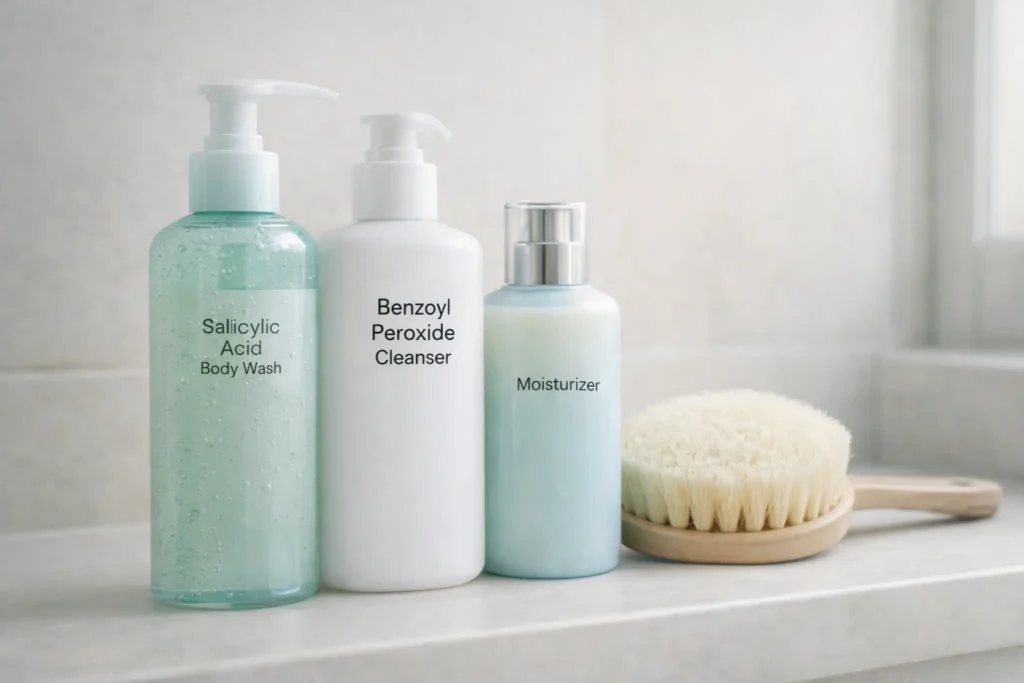
Salicylic acid body wash
Salicylic acid helps unclog pores and exfoliate the skin. It can work especially well for rough bumps, small pimples, and acne mechanica linked to sweat and friction. This is often a good starting point if your acne is mild and your skin is sensitive.
Benzoyl peroxide wash or cleanser
Benzoyl peroxide is one of the best-studied acne ingredients. It helps reduce acne-causing bacteria and can be very useful in a back acne treatment routine for inflamed pimples. The American Academy of Dermatology notes that a benzoyl peroxide wash can help mild to moderate back acne, and leaving it on for two to five minutes before rinsing may help it work better on thicker back skin.
Adapalene and retinoid-based options
If clogged pores are a major issue, adapalene can be helpful because retinoids unclog pores and reduce oiliness. These treatments often work best when used consistently and spread over the acne-prone area, not just dabbed on visible spots.
Azelaic acid and other helpful options
Azelaic acid can help open clogged pores, reduce inflammation, and improve the dark spots left after acne. It is a nice option if you want a gentler addition to a back acne treatment plan or need help with both active breakouts and leftover marks.
Moisturizer that does not clog pores
A lot of acne treatments dry the skin. That dryness can backfire by irritating your skin and leading to more oil production. A light moisturizer labeled oil-free, non-comedogenic, or won’t clog pores can make your back acne treatment routine easier to tolerate.
How to get rid of back pimples at home
If you want to know how to get rid of back pimples without overcomplicating things, keep it simple.
Morning routine
Use a gentle cleanser in the shower. If you are not using an acne wash in the morning, keep this step mild and non-abrasive. Afterward, wear breathable clothing, especially if you will sweat later.
After workouts
This step matters more than many people realize. Shower as soon as you can after sweating, and change out of damp clothes quickly. If you cannot shower right away, at least switch into dry loose clothing so heat and friction do not stay trapped against your skin.
Evening routine
Use your active back acne treatment product in the shower or after it, depending on the product directions. If you use a benzoyl peroxide wash, let it sit briefly before rinsing. If you use a leave-on retinoid or gel, apply a thin layer across the acne-prone zones, not just on a few pimples.
Hard-to-reach areas
A lotion applicator can help if you cannot easily reach the middle of your back. That can make a big difference because back acne treatment only works where it actually gets applied.
How to remove a pimples safely without making skin worse
If you have ever searched how to remove a pimples, the safest answer is usually not to squeeze them yourself. Popping often pushes material deeper into the skin, increases inflammation, and raises the risk of infection, pain, dark marks, and scars.
A better home approach is to keep using your back acne treatment, avoid picking, and let inflamed bumps settle. If you get a single large painful cyst or nodule, that is a good reason to see a dermatologist, because doctors can sometimes treat deep lesions safely in ways that lower the risk of scarring.
When over-the-counter back acne treatment is enough
Over-the-counter back acne treatment is often enough when you have mild to moderate acne with whiteheads, blackheads, and pimples that are not deep or very painful. It is also more likely to work when the breakouts are fairly recent and you can remove obvious triggers like tight gym clothes or oily product residue.
The hard part is patience. Acne products need time. You may see some improvement in about four to six weeks, but fuller clearing often takes two to three months or longer. Swapping products too quickly can irritate the skin and set you back.
When you may need prescription treatment
You should think about stronger back acne treatment if your acne is deep, painful, widespread, leaving marks, or simply not improving with consistent nonprescription care. A dermatologist may prescribe stronger topical medicine, oral antibiotics for a limited time, hormonal treatment in some women, or isotretinoin for severe nodular acne.
Prescription care can also matter if your acne affects your mood, confidence, or daily life. And if breakouts started suddenly after a new medication, that is another reason to get professional advice instead of just adding more products on your own.
🔥 The 3 products dermatologists actually recommend (and yes, they work):
Stop guessing and start with what’s proven. La Roche-Posay Effaclar Duo(+) targets breakouts fast, Paula’s Choice 2% BHA Liquid Exfoliant keeps pores clear with daily use, and Hero Cosmetics Mighty Patch is the overnight fix everyone swears by. ✅ No prescription needed ✅ Affordable ✅ Backed by real clinical evidence.
Can the same causes affect your chest too?
Yes. If you are dealing with both areas, one back acne treatment routine may help both your back and chest because the triggers often overlap. Sweat, tight fabric, sports gear, and oily product residue do not always stay in one place.
So if you keep wondering why is my chest breaking out, look at the full pattern. Are you working out in tight clothes, using rich body products, or leaving conditioner on your skin? Chest and back acne together often point to a body-acne routine issue, not two separate problems.
Common mistakes that slow down healing
A back acne treatment plan can fail even when the products are decent. The most common mistakes are routine problems, not lack of effort.
Mistakes to avoid
- Scrubbing hard with brushes, loofahs, or rough exfoliants
- Trying a new product every few days
- Putting treatment only on visible bumps instead of the whole acne-prone area
- Wearing sweaty clothing too long
- Using oily hair products or letting conditioner sit on your back
- Picking and squeezing lesions
- Quitting treatment too early because you wanted instant results
A gentle, boring routine is usually better than an aggressive one. That is especially true on the back, where irritated skin can be slow to recover.
How to prevent back acne from coming back
Prevention is a big part of back acne treatment, because acne is not just about clearing today’s bumps. It is also about preventing tomorrow’s.
Helpful long-term habits include:
- Shower after exercise or heavy sweating
- Choose loose, breathable, moisture-wicking clothes
- Wash sports bras, gym shirts, and bedding regularly
- Use hair and skin products that are non-comedogenic
- Keep oily products off the back and shoulders when possible
- Continue maintenance treatment if a product is clearly helping
If you stop everything the minute your skin improves, you may see new breakouts return. Acne-prone skin usually does better with a simple maintenance version of the same back acne treatment routine.
Back acne treatment for different skin types
The best back acne treatment is not exactly the same for everyone.
Oily skin
You may tolerate benzoyl peroxide, salicylic acid, or adapalene more easily, but you still need a moisturizer if irritation shows up.
Sensitive skin
Start slower. A salicylic acid wash or azelaic acid product may be easier to tolerate than a strong leave-on routine right away. Use fewer actives at once.
Dry but acne-prone skin
A gentle cleanser plus acne treatment plus light moisturizer is usually better than doubling down on harsh exfoliation. Dry, irritated skin can still break out.
Teen skin vs adult skin
Teens often break out because of strong oil production, while adults may notice longer-lasting acne with hormonal flares or medication triggers. Either way, a steady back acne treatment routine still matters more than random spot-treating.
How long does back acne treatment take to work?
This is one of the biggest questions around back acne treatment, and the honest answer is: longer than most people want. You may notice small improvement in four to six weeks if the routine fits your skin. More visible clearing often takes two to three months, and some people need longer.
That does not mean you should keep a bad routine forever. It means you should give a sensible routine enough time before deciding it failed. If you are getting worse, getting scars, or seeing zero change after a fair trial, it is time to step up your care.
When should you see a dermatologist?
See a dermatologist if your back acne treatment at home is not working, if your acne is painful or deep, if it is leaving scars or dark marks, or if you think it may not be acne at all. You also should get help if breakouts affect your self-esteem, mood, or willingness to wear certain clothes or do normal activities.
You should also get medical advice before using certain treatments if you are pregnant, trying to become pregnant, or have other health concerns. Some acne medicines are not appropriate in those situations, so the safest back acne treatment plan may need to be adjusted.
Conclusion
A good back acne treatment plan is usually simple: reduce friction, shower after sweating, use proven acne ingredients consistently, and avoid picking or product-hopping. Mild acne often improves with over-the-counter care, but deeper or stubborn breakouts deserve a professional plan before they leave lasting marks.
If your current routine is not getting you anywhere, do not assume you have to live with it. Start with one steady back acne treatment routine, give it enough time to work, and reach out to a dermatologist if the bumps are painful, persistent, or scarring.
FAQ:
FAQ
What is the best back acne treatment for mild breakouts?
For mild breakouts, the best back acne treatment is often an over-the-counter wash with salicylic acid or benzoyl peroxide, plus showering after sweating and avoiding tight, heat-trapping clothes. A light non-comedogenic moisturizer can help if treatment dries your skin.
How long does it take to get rid of back pimples?
Most back acne treatment routines need at least four to six weeks before you can judge early improvement, and full clearing often takes two to three months or longer. Switching products too fast can irritate your skin and slow progress.
Why do I have back acne even if I shower every day?
Daily showers help, but they do not remove every trigger. Friction from clothes or backpacks, sweat, oily hair products, and acne-prone skin can all keep causing breakouts. That is why many people need a targeted back acne treatment rather than cleansing alone.
Can back acne treatment also help chest acne?
Yes. If your chest and back breakouts share the same triggers, the same back acne treatment routine may help both areas. Sweat, heat, friction, and residue from skin or hair products often affect the chest and back together.
When should I see a dermatologist for back acne?
You should see a dermatologist if your back acne treatment is not helping after a fair trial, or if you have deep, painful bumps, scarring, dark marks, sudden severe acne, or pimple-like bumps that may be something other than acne.