Laser Resurfacing Acne Scarring: CO2 vs Er, Results, Risks & Recovery
If you are comparing procedures for depressed acne scars, laser resurfacing acne scarring treatments can improve uneven texture, but they do not erase every scar. The right approach depends on scar type, skin tone, treatment intensity, downtime tolerance, and whether another procedure—such as subcision or TCA CROSS—would better address part of the problem.
Direct answer: Laser resurfacing can make selected atrophic acne scars less noticeable by removing controlled amounts of damaged surface skin, heating deeper tissue, or both. CO2 lasers are often more aggressive, while erbium-based options may involve less thermal injury or shorter recovery in some settings. Neither is automatically best for everyone.
Table of Contents
How Laser Resurfacing Acne Scarring Treatment Works
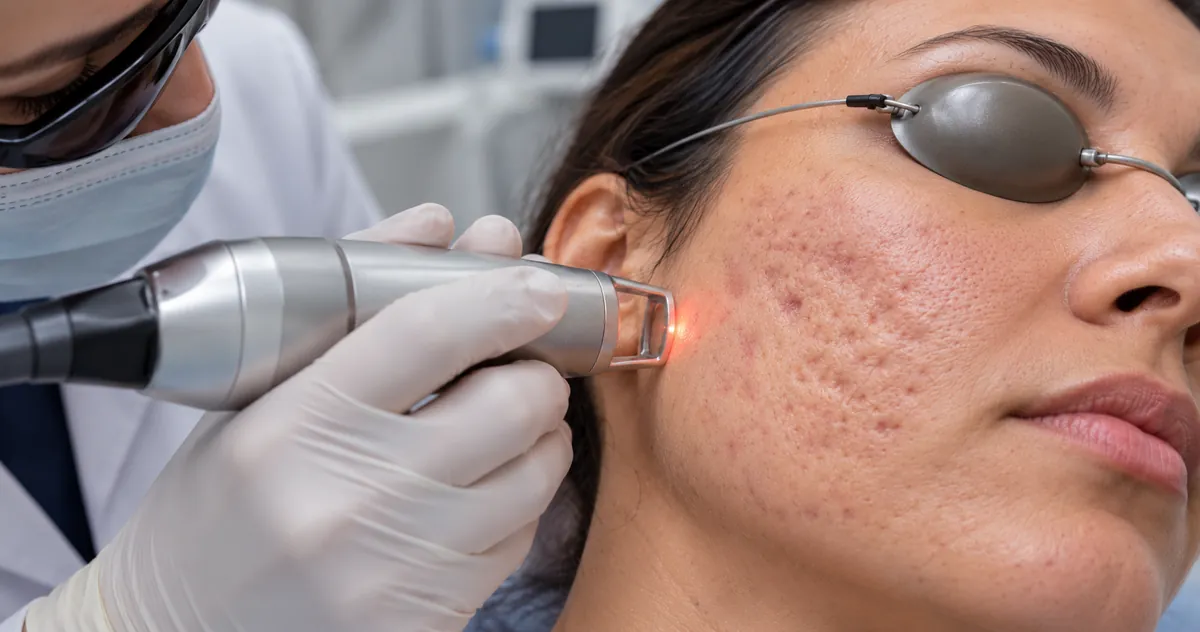
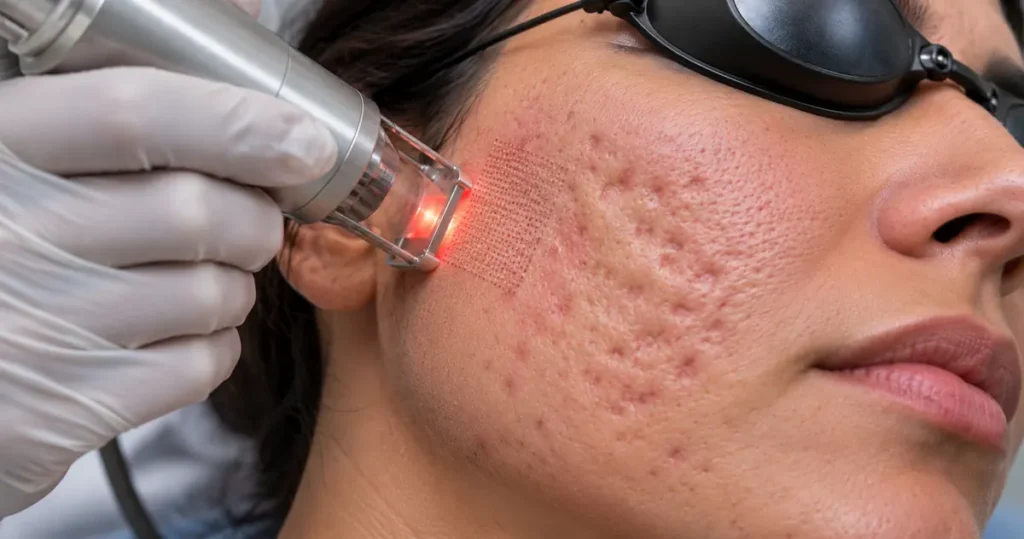
Laser resurfacing creates a controlled injury that triggers skin repair and collagen remodeling. In acne-scar treatment, the goal is usually to soften sharp scar edges, improve surface irregularity, and make depressed areas blend more smoothly with the surrounding skin.
Ablative resurfacing removes part of the skin surface while heating deeper tissue. Nonablative resurfacing heats tissue without removing the outer layer in the same way. Both approaches can also be delivered fractionally, meaning the device treats microscopic columns rather than the entire surface uniformly.
That distinction matters because fractional does not automatically mean nonablative. Fractional CO2 is an ablative fractional treatment, while some erbium-glass lasers are nonablative fractional devices. A clinician should be able to tell you exactly which device is being used and what kind of tissue effect it creates.
For laser resurfacing acne scarring, this is more useful than simply asking for “the strongest laser.” Treatment depth, density, pulse settings, scar pattern, skin tone, and operator skill all affect the result and recovery.
Acne Scars Are Not the Same as Post-Acne Marks
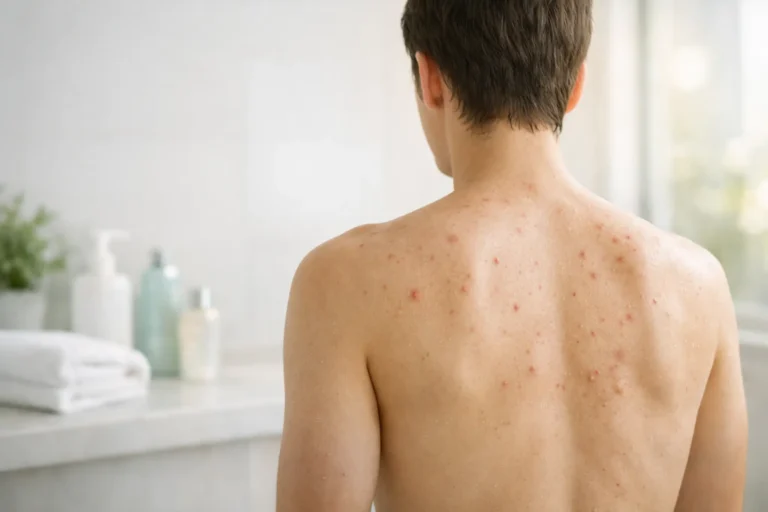
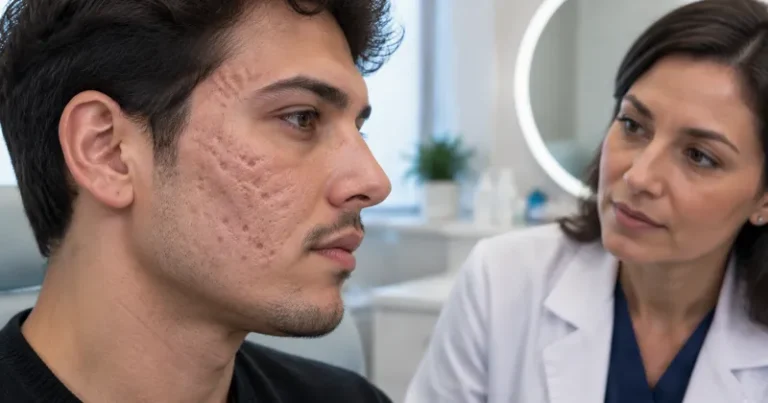
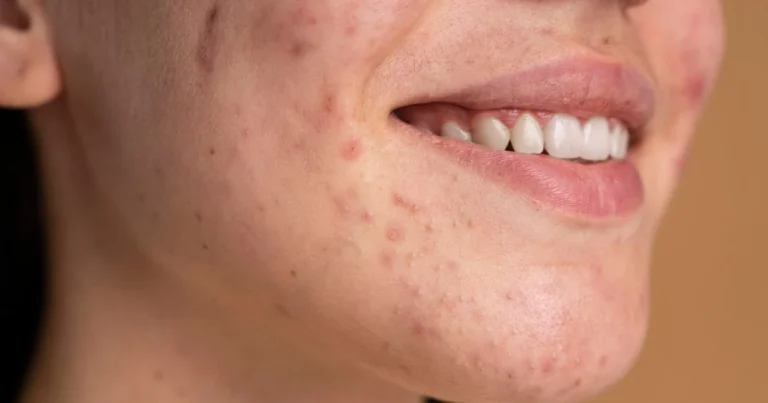
True acne scars change the structure or contour of the skin. The American Academy of Dermatology describes depressed acne scars as ice-pick, rolling, or boxcar scars. Flat discoloration that remains after acne clears is not necessarily a true scar.
That difference is important. A person whose main concern is discoloration may need a very different plan from someone with deep pits or tethered depressions. Before paying for resurfacing, make sure the problem being treated is actually textural scarring.
Which Acne Scars Can Laser Resurfacing Help?
Laser resurfacing is most often discussed for atrophic, or depressed, acne scars. Even within that group, scar shape matters.
Rolling Scars
Rolling scars are broad, shallow depressions that can create a wavy surface. Resurfacing may improve the texture around them, but some rolling scars are pulled downward by fibrous bands under the skin.
When tethering is significant, subcision may need to be considered before or alongside resurfacing rather than expecting a laser to correct the underlying attachment by itself.
Boxcar Scars
Boxcar scars are round or oval depressions with more defined edges. Shallow boxcar scars may respond better to resurfacing than very deep boxcar scars.
Deeper scars may need a more targeted procedure or combination approach because treating only the surrounding surface may not sufficiently lift the deepest depression.
Ice-Pick Scars
Ice-pick scars are narrow and deep. Laser can sometimes improve surrounding texture, but deep ice-pick scars are often less suited to laser alone.
Procedures such as TCA CROSS or punch techniques may be discussed because they target individual deep scars more directly.
Raised Scars and Keloids
Raised scars behave differently from atrophic scars. They form from excess collagen rather than too little support beneath the skin.
Lasers can have a role in selected raised scars, but treatment strategies differ substantially. This guide focuses mainly on depressed acne scarring.
Laser Resurfacing Acne Scarring: CO2 vs Er
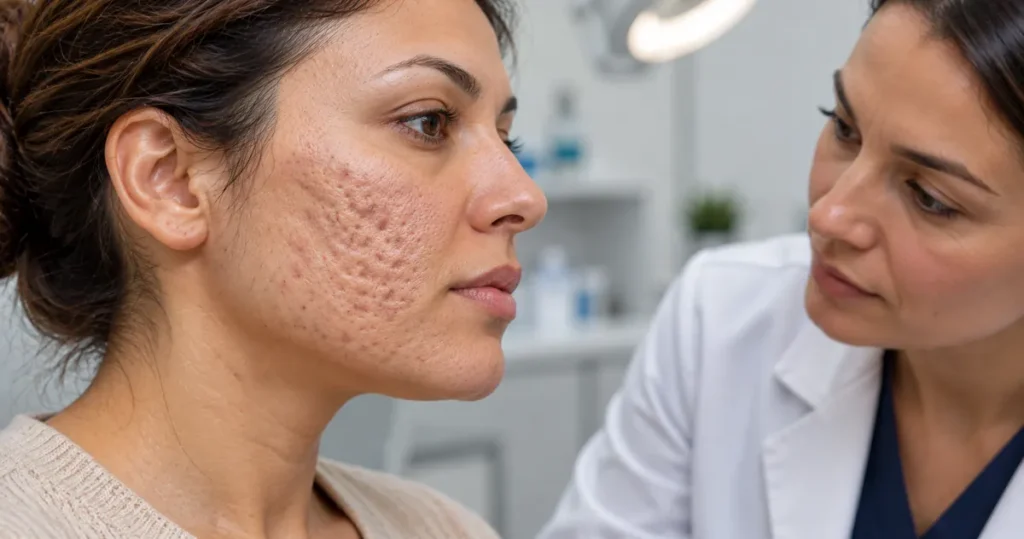
When people compare laser resurfacing acne scarring procedures, CO2 and Er are two names that come up often. They are both used in resurfacing, but they do not behave identically.
A 2026 systematic review and meta-analysis compared fractional CO2 with erbium-based fractional lasers for atrophic acne scars. The pooled data showed a stronger clinical-response signal for fractional CO2, but CO2 was also associated with greater treatment-related pain and longer downtime. The evidence included only five studies and 130 analyzed participants, so the findings should not be interpreted as proof that CO2 is universally superior.
Fractional CO2 Laser
Fractional CO2 is an ablative fractional treatment. It creates microscopic zones of ablation and thermal injury while leaving intervening skin untreated.
For selected atrophic scars, that can produce meaningful remodeling. The trade-off is that stronger treatment can also mean more redness, swelling, discomfort, peeling or crusting, and more recovery time.
CO2 may be reasonable when a clinician wants a more intensive resurfacing effect and the patient can accept the recovery involved. It is not automatically the best option for every scar pattern or skin tone.
Er Laser
Er is also used for ablative resurfacing. Its 2,940-nm wavelength is strongly absorbed by water, allowing relatively precise ablation with less residual thermal injury than traditional CO2 resurfacing under comparable conditions.
That characteristic can make Er useful when controlled ablation with less surrounding heat is desirable. But treatment settings and technique still matter, and it should not be described as risk-free or universally better.
What About Erbium-Glass Lasers?
This is where terminology can become confusing. Some “erbium” devices are not Er ablative lasers at all. Erbium-glass systems can be nonablative fractional lasers.
The 2026 meta-analysis grouped both Er and erbium-glass systems under the broader category of erbium-based fractional lasers, another reason not to assume that every erbium treatment behaves identically.
If a clinic simply says “erbium laser,” ask for the exact device or wavelength, whether it is ablative or nonablative, whether it is fractional, and why that setup is appropriate for your scar pattern.
Laser Resurfacing Acne Scarring Results: What Can You Realistically Expect?
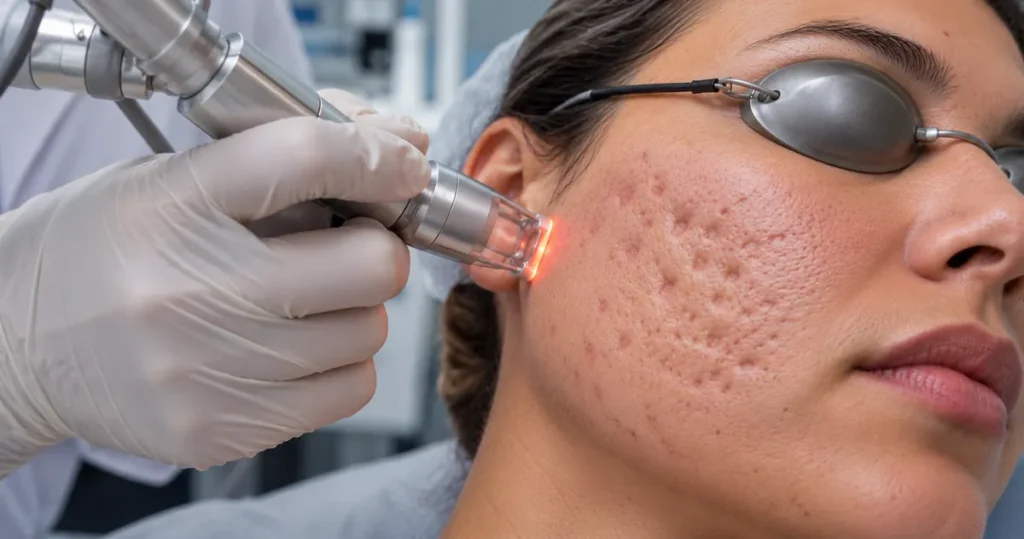
The goal of laser resurfacing acne scarring treatment is improvement, not complete scar removal. AAD guidance emphasizes that acne-scar treatment is individualized and different scar types often need different approaches.
Results depend on:
- Scar type and depth
- How much skin is treated
- Laser type and treatment settings
- Whether scars are tethered
- Skin tone and pigment response
- Number of sessions
- Individual healing
- Whether another procedure is combined with the laser
You may see smoother texture and softer scar edges as healing progresses, but early swelling can temporarily make depressions appear shallower. Collagen remodeling continues after the visible surface has healed, so the final result should not be judged immediately after treatment.
For a more detailed look at this part of the process, see what laser acne-scar results can realistically look like.
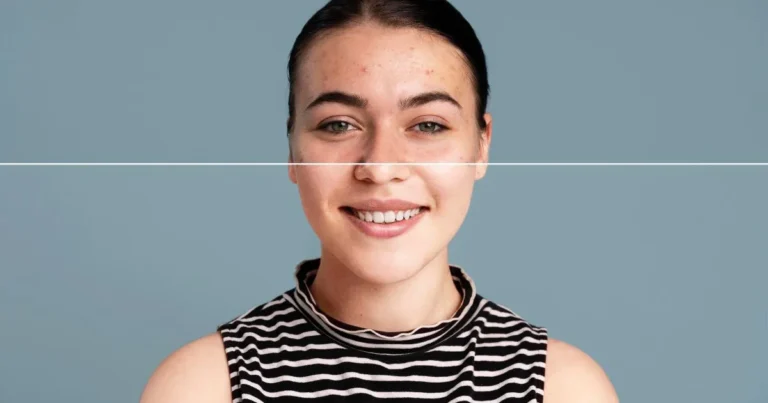
When evaluating laser resurfacing acne scarring results, a dramatic social-media before-and-after photo is not enough to predict your outcome. Lighting, angle, swelling, filters, timing, scar type, skin tone, and additional procedures can all change what a photo appears to show.
Laser Resurfacing Acne Scarring Risks and Recovery
Recovery from laser resurfacing acne scarring treatment varies widely. A light nonablative procedure is very different from aggressive ablative resurfacing.
Possible effects can include redness, swelling, itching, burning or tenderness, dryness, peeling, and crusting. Complications can include infection, acne flares, milia, prolonged inflammation, pigment changes, and additional scarring.
Mayo Clinic notes that side effects are generally more substantial with ablative resurfacing than with nonablative approaches. Fractional treatment can reduce recovery compared with full-field resurfacing, but it does not eliminate risk.
Skin Tone and Post-Inflammatory Hyperpigmentation
Skin tone deserves a separate discussion. The AAD states that lasers can be used on all skin types while also warning that darker skin is more prone to burns and dark marks after laser procedures.
That does not mean darker skin should automatically be excluded from laser resurfacing. It means treatment selection, device settings, pre-treatment planning, sun protection, and provider experience become especially important.
If you have medium to deep skin, ask how often the clinician treats acne scars in people with a similar skin tone, what pigment changes they see with the proposed procedure, and how they would manage post-inflammatory hyperpigmentation if it occurs.
How Long Does Recovery Take?
There is no single recovery timeline for every laser.
Mayo Clinic reports that after ablative resurfacing, new skin generally covers the treated area in about 7 to 10 days, while full recovery can take at least a month. Nonablative resurfacing usually involves substantially less downtime.
Those figures are general guidance, not a prediction for every patient. Device type, treatment depth, treatment area, settings, and individual healing all matter.
Your treating clinician should give you a recovery estimate for the exact procedure being recommended.
Who Is a Good Candidate for Laser Resurfacing Acne Scarring?
A good candidate for laser resurfacing acne scarring usually has established acne scars, realistic expectations, and a scar pattern that resurfacing can reasonably improve.
Important factors include:
- Whether active acne is controlled
- Scar type and depth
- Skin tone
- History of abnormal scarring or pigment changes
- Current medications and skincare products
- Recent sun exposure or tanning
- Ability to follow aftercare and sun-protection instructions
- Willingness to accept the expected recovery
AAD guidance states that when active breakouts are present, acne treatment commonly comes before scar treatment to help prevent additional scars from developing.
Who May Need Another Approach First?
Laser may not be the first or only step if you have deeply tethered rolling scars, narrow and deep ice-pick scars, raised scars, significant active acne, or medical factors that change procedural safety.
Mixed scar patterns are common. One person may need subcision for tethered rolling scars, TCA CROSS for deep pits, and laser resurfacing to improve broader surface texture.
That is why scar treatment is often a plan rather than a single procedure. AAD also describes acne-scar care as individualized and notes that combinations of treatments may be used.
For the wider treatment picture, see other professional treatments for acne scars.
Laser Resurfacing vs Other Acne-Scar Treatments
Laser is only one tool in acne-scar treatment.
Microneedling creates controlled needle injuries that stimulate remodeling and can be useful for selected depressed scars. The AAD notes that microneedling can be performed across skin tones.
Radiofrequency microneedling combines needling with radiofrequency energy and may be considered for textural scarring.
Subcision releases fibrous bands beneath tethered scars and can be particularly relevant for rolling scars.
TCA CROSS uses focal application of high-concentration trichloroacetic acid and is commonly discussed for narrow, deep ice-pick scars.
Fillers can add volume beneath selected depressed scars.
Punch techniques can be considered for some deep, sharply defined scars.
The useful question is not “Which procedure is strongest?” It is “Which part of my scar pattern is each procedure trying to correct?”
How to Choose Between CO2 and Er Laser Resurfacing
Choosing between CO2 and Er should be a clinical decision, not a contest between device names.
Use this framework:
- Identify the scar pattern. Rolling, boxcar, ice-pick, and mixed scars do not respond identically.
- Ask whether scars are tethered. Resurfacing alone may not release the underlying pull.
- Discuss skin tone and pigment risk. This may influence the device, settings, and aftercare.
- Decide how much downtime you can accept. More aggressive treatment can require more recovery.
- Ask what evidence supports the proposed approach. Current comparative evidence suggests trade-offs rather than one universal winner.
- Ask whether combination treatment makes more sense. One procedure does not need to address every scar.
For laser resurfacing acne scarring, the better plan is the one matched to your scar architecture and risk profile—not automatically the machine that sounds most powerful.
If price is part of the decision, see what affects the price of acne-scar laser treatment.
What to Ask Before Booking Laser Resurfacing
Before committing to treatment, ask:
- What exact laser or wavelength will be used?
- Is it ablative or nonablative?
- Is the treatment fractional?
- Which scars are being targeted?
- Do any scars need subcision, TCA CROSS, filler, or another procedure first?
- What downtime should you expect with these settings?
- Which risks are most relevant to your skin tone?
- How many sessions are being recommended, and why?
- What will aftercare involve?
- Who will perform the procedure?
- How much experience does that person have treating similar acne scars and skin tones?
- What level of improvement is realistic?
For laser resurfacing acne scarring, provider skill matters. The AAD advises consulting a board-certified dermatologist before laser treatment and notes that the skill of the person performing the procedure has an important effect on safety and outcome.
Before choosing a clinic, you can also review how to evaluate a laser scar provider.
Frequently Asked Questions
Does Laser Resurfacing Completely Remove Acne Scars?
No. Laser resurfacing can make scars less noticeable, smooth some irregular texture, and soften the edges of depressed scars, but it does not guarantee complete removal.
Laser resurfacing acne scarring treatment is better understood as scar revision. The amount of improvement depends on scar type, depth, skin characteristics, device, settings, and whether another procedure is needed.
How Many Laser Resurfacing Sessions Are Usually Needed for Acne Scars?
There is no universal number.
Some ablative procedures may be performed less frequently, while nonablative or fractional approaches can involve a series of treatments. AAD notes that some lasers require more sessions than others.
Your clinician should explain why a specific number of sessions is being recommended for your scars rather than relying on a standard package.
Is CO2 or Er Better for Acne Scars?
Neither is automatically better for everyone.
A 2026 meta-analysis found a stronger clinical-response signal for fractional CO2 compared with erbium-based fractional lasers, while CO2 was also associated with greater pain and longer downtime. Because the evidence involved a small, heterogeneous set of studies, treatment should balance likely benefit with recovery, scar type, skin characteristics, and clinician experience.
Is Laser Resurfacing Acne Scarring Treatment Safe for Darker Skin?
It can be used in darker skin, but pigment changes and burns deserve careful consideration.
AAD guidance states that darker skin is more prone to burns and dark marks after laser procedures and recommends working with a dermatologist who has experience treating darker skin with lasers.
Device choice, settings, treatment intensity, sun protection, and follow-up all matter.
Can Laser Resurfacing Help Ice-Pick Acne Scars?
It may improve some surrounding texture, but deep ice-pick scars frequently need a more targeted approach.
Techniques such as TCA CROSS or punch procedures may be considered, sometimes with resurfacing used afterward to improve broader texture. If most of your scars are narrow and deep, ask whether laser alone is likely to address the main problem.
Conclusion
Laser resurfacing acne scarring treatment can improve selected atrophic scars, but the right decision is not simply “CO2 or Er.” Scar type, tethering, skin tone, treatment intensity, recovery tolerance, and the possible need for combination procedures all matter.
The most useful next step is a consultation with a qualified dermatologist who can identify your scar pattern and explain why a specific device and treatment plan fit it. Aim for realistic improvement and a clear safety plan rather than a promise of complete scar removal.
This article is for educational purposes only and is not a diagnosis or a substitute for care from a qualified healthcare professional.
References:
- American Academy of Dermatology — Acne Scars: Consultation and Treatment
- American Academy of Dermatology — Acne Scars: Signs and Symptoms
- American Academy of Dermatology — Skin Conditions That Lasers Can Treat
- Mayo Clinic — Laser Resurfacing
- Song et al. — Comparative Efficacy and Safety of Fractional CO2 and Erbium-Based Fractional Lasers for Atrophic Acne Scars: A Systematic Review and Meta-Analysis
- Practical Aspects of Acne Scar Management: ASAP 2024