Ashwagandha and Acne: What to Know About Benefits, Breakouts, and Skin Health
If you have been trying to figure out the connection between ashwagandha and acne, you are not alone. A lot of people start taking ashwagandha for stress, sleep, or general wellness and then begin watching their skin more closely. Some feel like their face looks calmer. Others notice new breakouts and wonder whether the supplement is part of the problem.
The tricky part is that ashwagandha and acne do not always connect in the same way for every person. Your skin reacts to hormones, stress, products, sleep, and genetics all at once. That means a supplement can seem helpful for one person and frustrating for another.
Direct answer: The link between ashwagandha and acne can go in more than one direction. Some people may notice calmer skin if stress improves, while others may notice breakouts after starting the supplement. Ashwagandha is not a proven acne cure, and it is not a guaranteed acne trigger either. Your skin response depends on the person, the product, and the full routine around it.
Table of Contents
What Is Ashwagandha?
Ashwagandha is an herbal supplement that is commonly used for stress support, sleep, and general balance. You can find it in capsules, powders, gummies, and mixed wellness formulas. Some products are simple and contain very few ingredients. Others include added herbs, sweeteners, flavoring, or other compounds.
That variety matters when you are thinking about ashwagandha and acne. Two people may both say they take ashwagandha, but they may actually be taking very different products. One person may be using a plain capsule. Another may be using a flavored blend with a long ingredient list. If skin changes show up, the full formula matters just as much as the herb itself.
People also talk about ashwagandha and acne because ashwagandha is linked to stress, sleep, and internal balance. Since those same areas can affect skin, it makes sense that people begin wondering whether the supplement is helping or hurting their breakouts.
How Acne Actually Develops
To understand ashwagandha and acne, it helps to look at how acne forms in the first place. Acne develops when pores become clogged with oil and dead skin cells. Once the pore is blocked, inflammation can build, and bacteria can make the breakout worse. That is how you end up with whiteheads, blackheads, red bumps, or deeper painful pimples.
Hormones also matter. They can increase oil production and make pores more likely to clog. Stress can play a role too, especially for people whose acne tends to flare during difficult weeks. On top of that, skin care products, sweat, friction, family history, and overall skin type can all shape what happens.
That is why ashwagandha and acne can be hard to interpret. Acne is almost never about one single cause. A new breakout might show up after you start a supplement, but the supplement may not be the only factor in the picture.
Why People Search Ashwagandha and Acne
Most people search ashwagandha and acne for one of two reasons. They either think the supplement is making them break out, or they hope it might help because stress seems to affect their skin.
You might notice new chin pimples a week after starting it. You might feel like your forehead is oilier than usual. Or you may have read about ashwagandha benefits for skin and wondered if the supplement could support a calmer, healthier-looking face.
The online conversation makes this more confusing. One person says ashwagandha helped their skin. Another says it triggered a breakout. A third says nothing changed at all. That mixed feedback is exactly why the topic of ashwagandha and acne needs a careful, balanced discussion instead of a dramatic yes-or-no answer.
Can Ashwagandha Cause Acne?
This is one of the biggest questions behind ashwagandha and acne. The honest answer is that can ashwagandha cause acne does not have a universal answer.
Some people may notice more breakouts after starting it. That does not mean ashwagandha causes acne in everyone. It means some people may be more sensitive to changes that happen around the same time they begin taking it.
Possible reasons include:
- Hormonal sensitivity
- Acne-prone or oily skin
- Formula differences between products
- Added ingredients in gummies or blends
- Stress or cycle changes happening at the same time
- Starting several supplements at once
So yes, when people ask about ashwagandha and acne, it is reasonable to say the supplement may be linked to breakouts in some users. But that is not the same as saying it always causes acne.
Does Ashwagandha Cause Acne or Is Timing Misleading?
Timing can make ashwagandha and acne feel more certain than they really are. If you start a supplement and your skin gets worse soon after, it is natural to connect the two. Sometimes that connection is correct. Sometimes it is only part of the story.
Think about what else was happening when the breakouts began. Did your menstrual cycle shift? Were you under heavy stress? Did you start a new skin care product, sunscreen, or makeup product? Did you change your diet, workout supplements, or sleep schedule?
This is where the question does ashwagandha cause acne becomes more complicated. A breakout after starting a supplement does not automatically prove the supplement caused it. But it also should not be dismissed if the timing is clear and the pattern repeats.
The best way to think about ashwagandha and acne is through patterns, not assumptions. One bad skin day is not enough evidence. A repeated cycle of starting the supplement, breaking out, stopping it, and improving is much more useful.
Could Ashwagandha Help Acne in Some People?
Yes, in some cases it might help indirectly. That is why ashwagandha and acne can feel so confusing.
If your acne tends to get worse when you are stressed, sleep-deprived, or emotionally drained, anything that helps you feel more balanced may also help your skin look calmer. That is probably the most realistic reason some people ask does ashwagandha help acne and feel like the answer is yes.
But that does not mean ashwagandha is a standard acne treatment. It does not replace a good skin care routine or medical treatment when acne is persistent. If your acne is driven mainly by clogged pores, hormones, inflammation, or products that do not suit your skin, a supplement alone is unlikely to solve it.
So when you look at ashwagandha and acne, it is fair to say some people may notice indirect improvement, especially if stress is a major trigger. But it should not be treated as a guaranteed acne fix.
Ashwagandha Benefits for Skin: What Is Realistic?
A lot of articles oversell ashwagandha benefits for skin, so it helps to keep expectations grounded. Realistic benefits are usually indirect, not dramatic.
Possible indirect skin-related benefits may include:
- Calmer-looking skin during stressful periods
- Less stress-related picking or over-treating
- Better sleep, which can improve your overall appearance
- More routine consistency because you feel steadier
- A less tired, less run-down look
That said, ashwagandha and acne should not be framed like a beauty miracle. Ashwagandha is not a proven brightening treatment. It is not a replacement for acne care. It is not a guaranteed solution for pigmentation, redness, or chronic skin problems.
The most honest view of ashwagandha benefits for skin is that some people may notice supportive changes around the edges, while others may notice nothing at all. And for some people, the conversation about ashwagandha and acne is more about breakouts than benefits.
What Types of Breakouts or Skin Changes Might Show Up?
If you are trying to understand ashwagandha and acne, pay attention to what your skin is actually doing. The pattern matters.
Some people describe:
- Chin and jawline breakouts
- More clogged pores on the forehead
- Increased oiliness
- Small inflamed pimples around the mouth
- Chest, shoulder, or back acne
In many cases, these look like normal acne patterns rather than something unusual. That is one reason ashwagandha and acne can be hard to sort out. The breakouts do not always look different enough to clearly point to a supplement.
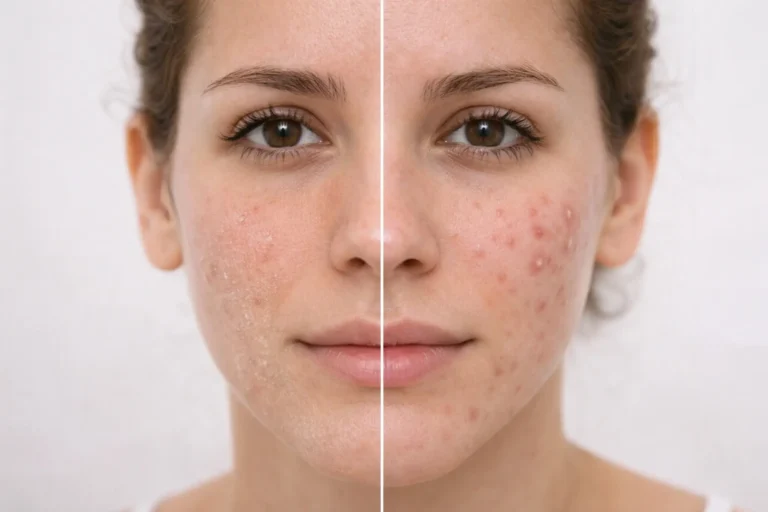
It is also important to separate acne from irritation. Pimples, blackheads, whiteheads, and inflamed bumps suggest acne. Redness, stinging, itching, or rough rash-like patches may point more toward irritation or sensitivity. Swelling, hives, or strong itching suggest a reaction that goes beyond typical acne and should be taken more seriously.
Who May Be More Sensitive to Ashwagandha and Acne Changes?
Some people may be more likely to notice a connection between ashwagandha and acne than others.
You may be more sensitive if you:
- Already have hormonal acne
- Tend to break out along the chin and jawline
- Have oily or acne-prone skin
- React easily to supplements or herbal blends
- Started multiple new products at once
- Are going through a stressful life phase
- Have cycle-related breakouts
- Use pore-clogging skin care or makeup
If your skin is already reactive, even a small change may show up clearly. That is why the topic of ashwagandha and acne often feels more urgent for people who already have a history of breakouts.
How Long Does It Take to Notice Skin Changes?
There is no exact rule, but when people notice a possible link between ashwagandha and acne, the changes often appear within several days to a few weeks. A single pimple the next morning is usually not enough to prove anything.
A more convincing pattern looks like this:
- You start the supplement
- Your skin changes within one to four weeks
- Breakouts continue without another obvious reason
- Your skin improves after you stop
- The same issue returns if you restart
That kind of repeat pattern is one of the strongest clues in the ashwagandha and acne conversation. Without it, you may just be looking at normal acne ups and downs.
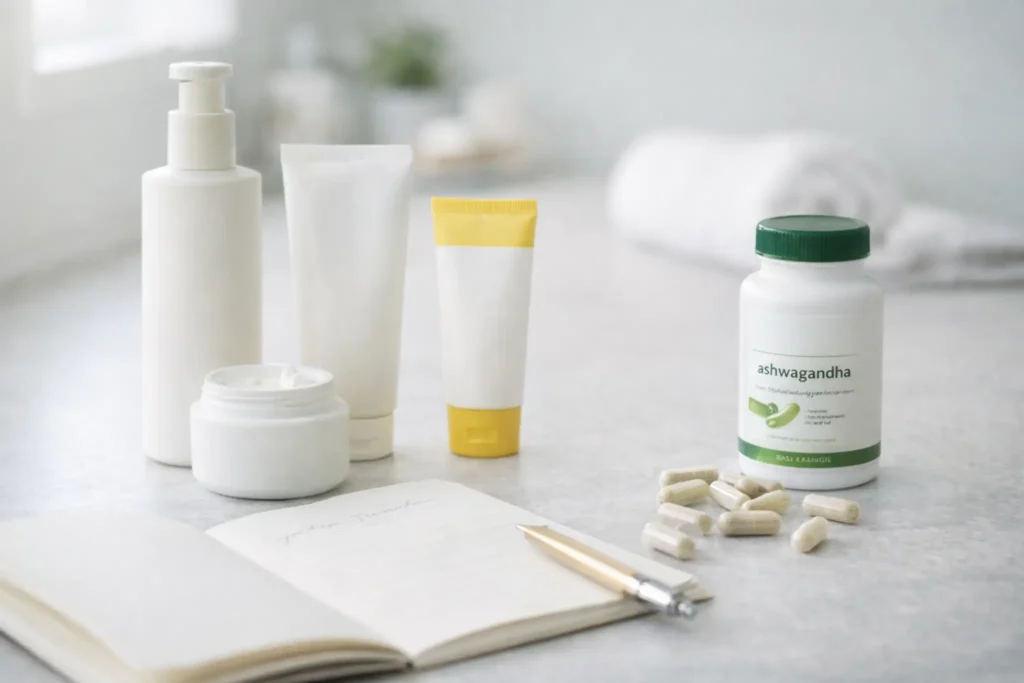
Tracking helps a lot here. Write down:
- The brand
- The dose
- The start date
- Where the breakouts appear
- Other new products or supplements
- Changes in stress, sleep, or cycle timing
That simple record can make ashwagandha and acne much easier to understand.
How to Tell If Ashwagandha Is Really Affecting Your Skin
If you suspect a link between ashwagandha and acne, try to approach it like a small experiment instead of a panic response.
Pause the supplement and observe
If the timing seems suspicious, stop taking it for a while and watch what your skin does. Do not change five other things at the same time.
Check the full ingredient list
Look beyond the word ashwagandha. Is it a plain capsule, or is it a blend with sweeteners, flavoring, or other herbs? Sometimes the problem behind ashwagandha and acne is really about the full product.
Keep the rest of your routine stable
Use the same cleanser, moisturizer, sunscreen, and makeup if you can. Stability makes patterns easier to see.
Notice whether your skin improves after stopping
Acne does not disappear overnight, but a few weeks can give you useful information.
Watch what happens if you reintroduce it
This only makes sense if the reaction was mild. If you had a severe skin reaction, rash, swelling, or other concerning symptoms, do not test it again on your own. But for milder cases, a repeat breakout after reintroducing the product can make the connection clearer.
A quick checklist for ashwagandha and acne:
- Did the breakout start soon after beginning the supplement?
- Was the product new or more complex than your usual one?
- Did anything else change at the same time?
- Did your skin calm down after stopping?
- Did the same pattern return when you tried it again?
What to Do If You Think Ashwagandha Is Making Acne Worse
If ashwagandha and acne seem connected for your skin, keep your response simple.
First, pause the supplement. That gives you the best chance of seeing whether your skin improves.
Second, simplify your skin care routine. Use a gentle cleanser, a light non-comedogenic moisturizer, and sunscreen. Try not to pile on strong acids, scrubs, masks, and spot treatments all at once.
Third, avoid picking. When you are frustrated by a breakout, it is easy to make it worse by squeezing or over-treating.
Fourth, give your skin time. Even if the supplement is contributing, acne usually takes time to settle. The answer to ashwagandha and acne rarely shows up in one or two days.
If you still want to use ashwagandha later, wait until your skin is steady again. Then, if appropriate, try a simpler product with fewer extra ingredients and watch your skin carefully.
Supportive Habits That Matter Alongside the Supplement
Even when you are focused on ashwagandha and acne, the basics still matter more than most people think.
Gentle cleansing
Wash your face gently once or twice a day. Overwashing can irritate acne-prone skin and make breakouts harder to manage.
Moisturizing properly
Many people with acne skip moisturizer because they are afraid of making things worse. But dry, irritated skin can become more reactive. A light, non-comedogenic moisturizer usually helps more than it hurts.
Sunscreen use
Daily sunscreen matters, especially if your breakouts leave dark marks behind. It helps protect healing skin and keeps leftover spots from getting more noticeable.
Sleep and stress support
This is one of the biggest reasons ashwagandha and acne gets so much attention. If your sleep improves and stress comes down, your skin may look calmer overall, even if the supplement is not acting like a direct acne treatment.
Hydration and routine consistency
Drinking enough water and sticking to a simple routine will not magically cure acne, but they do make your skin easier to manage. Consistency almost always helps more than constant product changes.
Common Mistakes People Make
A lot of confusion around ashwagandha and acne comes from avoidable mistakes.
One mistake is assuming ashwagandha is always the cause. Another is assuming it cannot possibly be the cause because it is “natural.” Both ideas can lead you in the wrong direction.
Another common mistake is assuming the supplement will automatically help acne because it helps stress. Stress support can matter, but acne is more complex than that.
Ignoring extra ingredients is another big one. A gummy, powder, or wellness blend may affect your skin differently than a plain capsule. If you only focus on the herb name, you may miss the real trigger.
People also often confuse acne with rash or irritation. If your skin is itchy, burning, swollen, or covered in small red patches rather than pimples, that may not fit the usual ashwagandha and acne pattern.
Finally, changing too many things at once makes everything harder to solve. If you stop the supplement, switch skin care, change makeup, and start a new diet in the same week, you will not know what actually helped.
When to Stop and Seek Medical Advice
Sometimes the issue is mild and easy to monitor. Other times, you should get help sooner.
Stop the supplement and seek medical advice if you notice:
- Severe or painful breakouts
- Deep cystic acne
- Swelling, itching, or hives
- Rash instead of pimples
- Digestive side effects along with skin changes
- Dizziness or feeling unwell
- Rapid worsening that feels unusual for your skin
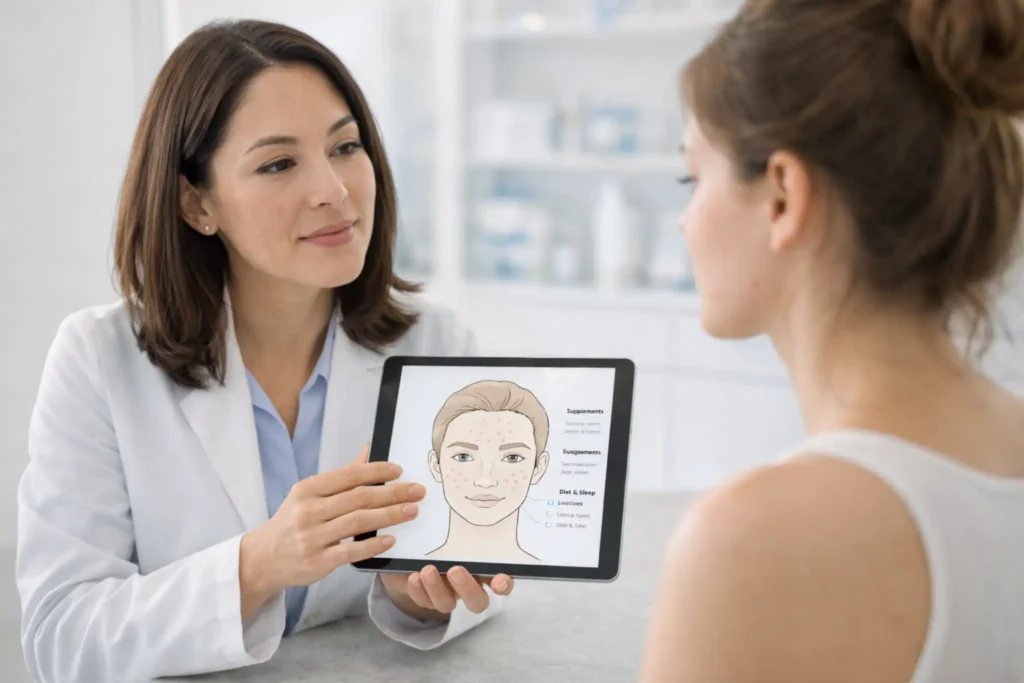
You should also see a dermatologist if your acne is scarring, leaving dark marks, affecting your confidence, or not improving with basic care. A stubborn breakout is still a real skin problem, even if it started around a supplement.
The same goes if you are taking other medications or have health conditions that make supplement use more complicated. In that case, it is smarter to get professional guidance than to keep guessing about ashwagandha and acne on your own.
Final Verdict on Ashwagandha and Acne
So what is the real answer on ashwagandha and acne? The most honest answer is that both benefits and breakouts are possible, depending on the person.
Some people may notice calmer-looking skin if stress improves and their overall routine becomes steadier. Others may notice that breakouts get worse after starting the supplement, especially if they have acne-prone skin, hormonal sensitivity, or a product formula that does not suit them.
That means ashwagandha and acne should be approached with observation instead of hype. Do not assume it will fix your skin. Do not assume every breakout is definitely caused by it either. Look at the timing, the product, the rest of your routine, and the pattern your skin is showing you.
Conclusion
If you are trying to make sense of ashwagandha and acne, start with the basics. Check the ingredient list, keep your routine simple, and pay attention to timing. Some people may tolerate ashwagandha well, while others may find that their skin does better without it. Your best guide is not a dramatic claim online. It is the repeated pattern you see in your own skin. If the breakouts are severe, persistent, or confusing, get support from a dermatologist or clinician so you can move forward with a clear plan.
FAQ:
1. Can ashwagandha and acne be connected even if the supplement helps stress?
Yes. The connection between ashwagandha and acne can still be negative for your skin even if the supplement helps your mood or sleep. A product can feel helpful in one part of your routine and still not suit your skin.
2. How do I know if ashwagandha is causing my breakouts?
The best clue is a pattern. If ashwagandha and acne seem connected, look for breakouts that begin after starting it, improve after stopping, and return if you try it again. Also check whether other things changed at the same time.
3. Can ashwagandha and acne be linked through hormones?
Possibly. Hormones play a major role in acne, especially if you tend to break out along the chin and jawline. That is one reason some people believe ashwagandha and acne may be connected, although the response is not the same for everyone.
4. Should I stop ashwagandha if my skin gets worse?
If you strongly suspect a link between ashwagandha and acne, pausing the supplement for a while is a reasonable step. Keep the rest of your routine stable so you can see whether your skin improves. If the reaction is severe or includes symptoms beyond acne, get medical advice.
5. Is ashwagandha good or bad for acne-prone skin?
It can be either neutral, helpful, or frustrating depending on the person. For some people, ashwagandha and acne may not connect at all. For others, stress support may help a little. And for others, breakouts may become more noticeable. Acne-prone skin usually needs careful tracking and a simple routine to figure out what is really going on.