Acne Scar Laser Treatment Before After: What Results Can Look Like
Acne may fade, but the marks it leaves behind can stay in the mirror much longer. If you have textured scars that make your skin look uneven, it makes sense to wonder whether laser treatment can really help and what kind of change is realistic.
Most people searching for acne scar laser treatment before after photos are not looking for perfection. They want an honest picture of how much smoother their skin might look, how long it takes, how painful it is, and whether the cost is worth it.
Direct answer: Acne scar laser treatment before after results often show smoother texture, softer scar edges, and skin that looks more even over time. The biggest changes usually happen gradually after healing, not overnight. Your final result depends on the type of scars you have, your skin tone, the laser used, the number of sessions, and how well you follow aftercare.
Table of Contents
What is acne scar laser treatment?
Laser treatment for acne scars is an in-office procedure that uses focused light energy to resurface skin and trigger new collagen production. In simple terms, the laser creates controlled injury in or on the skin so your body repairs the area with fresher, smoother-looking tissue. Lasers can improve scars, but they usually do not erase them completely.
That point matters because many acne scar laser treatment before after images online can create the wrong expectation. Real improvement is common, but complete removal is not the standard promise. A good dermatologist usually talks about softening scars, reducing depth, and improving overall skin texture instead of making your skin look like scars never existed.
Why people look for acne scar laser treatment before after photos
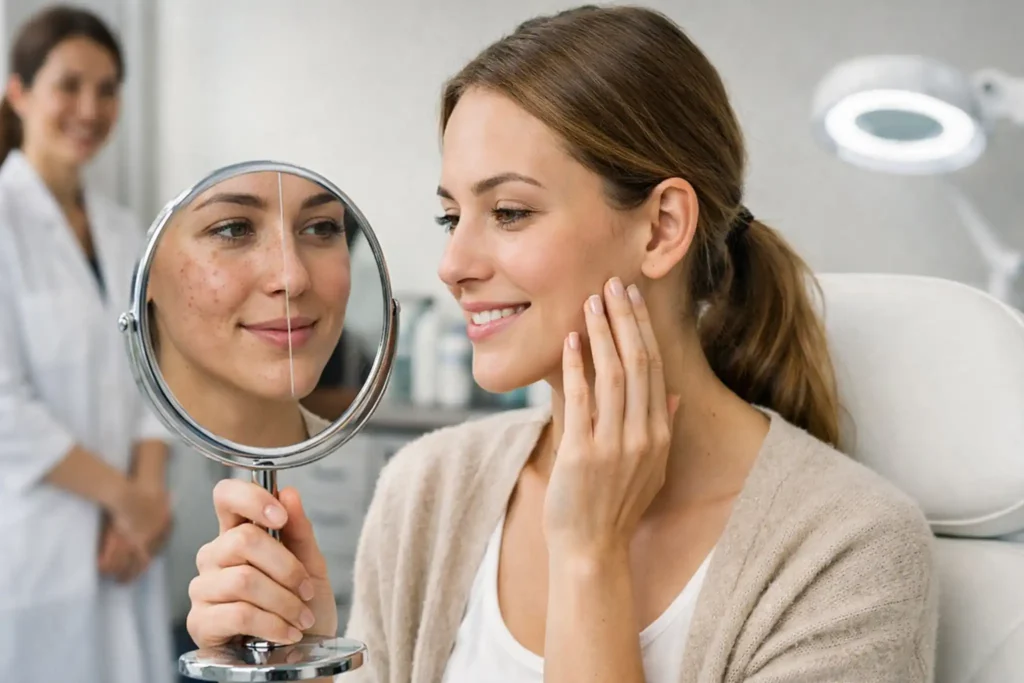
Before-and-after photos are helpful because they can show how much texture can change. They may reveal that rolling scars look shallower, boxcar scars have softer edges, and the skin reflects light more evenly after treatment. In some cases, makeup also sits better on the skin because the surface becomes smoother.
But acne scar laser treatment before after photos also have limits. Lighting, angles, swelling, filters, and even camera quality can change what you think you are seeing. Photos also cannot show how many sessions it took, how much downtime the person had, or whether they needed a combination plan instead of laser alone. That is why a consultation matters more than a photo gallery.
Which acne scars respond best to laser treatment?
Not all scars behave the same way. The better you understand your scar type, the more realistic your expectations will be.
Rolling scars
Rolling scars have sloped edges and create a wavy look in the skin. These often respond fairly well to laser resurfacing, especially when collagen remodeling helps smooth the surface. If fibrous bands are pulling the skin down, though, laser may work better after subcision.
Boxcar scars
Boxcar scars are wider depressions with sharper borders. Shallow boxcar scars can improve nicely with laser for scars, while deeper ones may need more than one treatment type.
Ice pick scars
Ice pick scars are narrow and deep. They are usually the hardest type to improve with laser alone. Many dermatologists combine laser treatment with other procedures, such as punch techniques or TCA CROSS, to target these deeper pits.
Post-acne marks are not the same as true scars
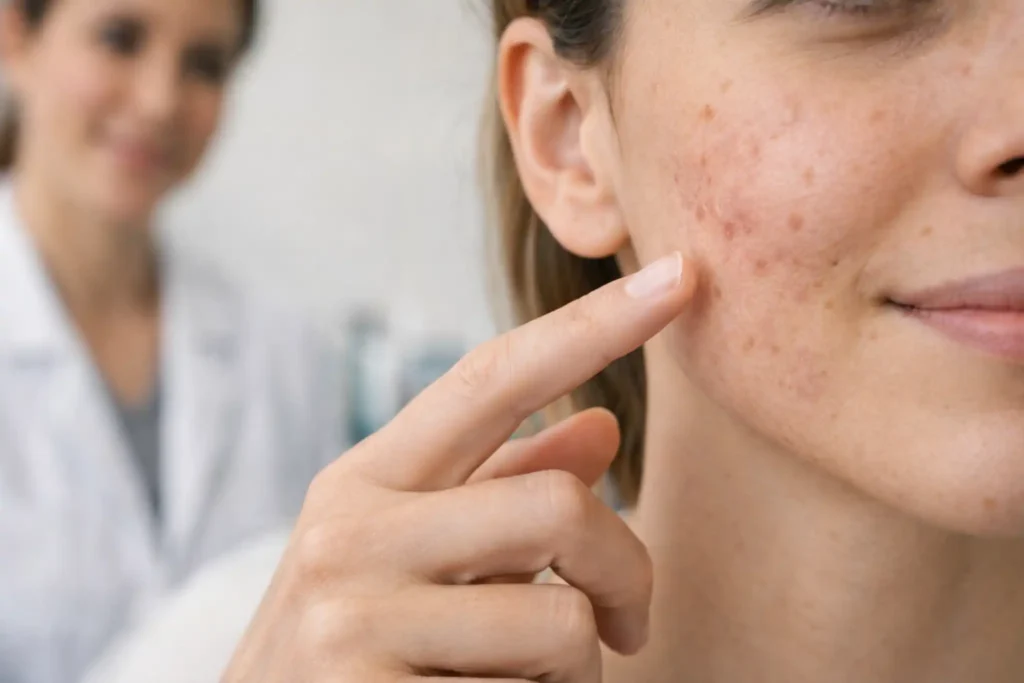
This is one of the biggest points of confusion in acne scar laser treatment before after searches. Flat red, brown, or purple marks after acne are often not true scars. They may be post-inflammatory hyperpigmentation or post-inflammatory erythema. Those marks can fade over time and may respond to very different treatments than indented or raised scars. A person who only has color changes may not need the same kind of laser treatment for scars as someone with deep textural damage.
Common types of laser treatment for acne scars
When you compare acne scar laser treatment before after results, the type of laser matters a lot.
Ablative lasers
Ablative lasers remove thin layers of skin and heat deeper tissue at the same time. This group includes CO2 and erbium lasers. They are often used for stronger resurfacing and may produce more noticeable results for moderate scarring, but they usually come with more downtime. CO2 resurfacing may involve up to about two weeks of recovery, while erbium recovery is often shorter.
Non-ablative lasers
Non-ablative lasers heat the skin without removing the surface in the same way. They are often gentler, with less downtime, but the improvement tends to be slower and may require a series of sessions. These treatments can still help scars by stimulating collagen beneath the surface.
Fractional laser treatments
Fractional laser technology treats tiny columns of skin instead of the whole surface at once. That leaves surrounding skin untreated, which helps the area heal faster. Fractional approaches are common in laser treatment for acne scars because they can balance improvement and recovery time better than fully ablative treatments for many patients.
Is acne scar removal laser surgery the same as laser treatment?
Many people use the phrase acne scar removal laser surgery, but most laser scar procedures are not surgery in the traditional sense. They are usually office-based dermatology procedures done with numbing, careful skin prep, and aftercare instructions. In some cases, a scar plan may include minor surgical methods, but the laser portion itself is commonly done without the kind of operating room experience people imagine when they hear “surgery.”
Acne scar laser treatment before after: what realistic results look like
This is the part most readers care about. So what can acne scar laser treatment before after results really look like in real life?
After one session
You may notice smoother-looking skin once the early redness settles. Some shallow scars can look softer, and your skin may reflect light better. But if your scars are deep, one session rarely transforms them in a dramatic way.
After two to three sessions
This is where many people start seeing more meaningful texture change. Rolling and shallow boxcar scars may look less obvious. The skin may look more even, and the edges of depressed scars may appear less harsh.
After a full series
A full treatment series often leads to the most satisfying acne scar laser treatment before after changes. The skin can look smoother overall, scars may appear shallower, and the area may feel less rough. Still, the realistic goal is improvement, not perfectly poreless skin.
How long does it take to see final results?
One reason acne scar laser treatment before after timelines feel confusing is that the real result develops in stages. Early swelling can temporarily make scars look better, then the skin may look rough or red during healing, and only later do you get a clearer view of true improvement.
Collagen remodeling continues for weeks to months after treatment. Non-ablative laser improvement can take several months to fully show up, and even ablative resurfacing does not reveal its final result the moment the skin re-epithelializes. Patience matters here.
Factors that affect your before and after result
Scar depth and scar type
Shallow rolling scars usually improve more easily than deep ice pick scars. Mixed scarring is also common, which means your result may be uneven if some scars respond better than others.
Skin tone and sensitivity
People with darker skin tones may have a higher risk of long-term pigment changes after laser resurfacing. That does not mean laser is off limits, but it does mean provider choice and settings matter even more.
Active acne or inflammation
If you still have active breakouts, many doctors prefer to control the acne first. Ongoing inflammation can interfere with scar treatment planning and may increase the risk of new scarring while you are trying to improve old scars.
The skill of the provider
This is a major factor in acne scar laser treatment before after outcomes. The American Academy of Dermatology notes that results depend heavily on the skill of the person doing the procedure. Good treatment is not just about the machine. It is about picking the right candidate, the right settings, and the right aftercare.
Your aftercare
Sun exposure, picking, over-exfoliating, or using irritating products too soon can make healing harder and hurt your result. Aftercare is part of the treatment, not an optional extra.
What to expect before treatment
A proper consultation should come first. Your dermatologist should examine your skin, identify the type of scars you have, review your skin tone and medical history, and talk honestly about what is realistic. The AAD specifically warns against anyone promising laser treatment without a medical consultation first.
Useful questions to ask include:
- Am I a good candidate for laser treatment for acne scars?
- Which laser are you recommending, and why?
- How many sessions might I need?
- What downtime should I expect?
- What side effects are most likely for my skin tone?
- Will I need a combination plan with other procedures?
In the weeks before treatment, you may be told to avoid heavy sun exposure and tanning. Some patients are also asked to stop certain irritating products or photosensitizing medications, and people with a history of herpes may need preventive antiviral medicine. Follow the instructions from your own clinician rather than copying someone else’s prep routine online.
What happens during the procedure?
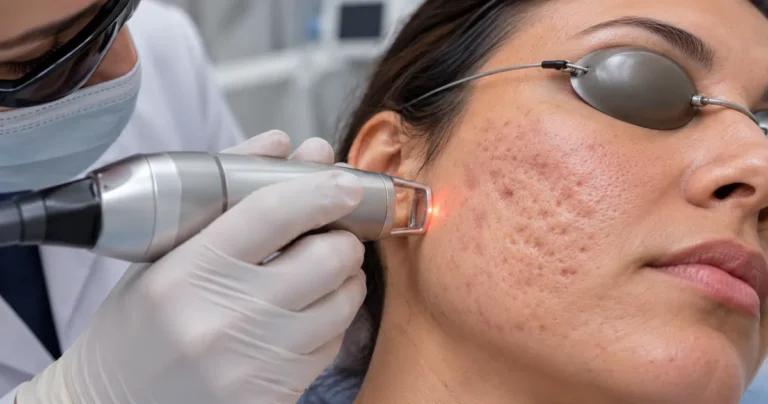
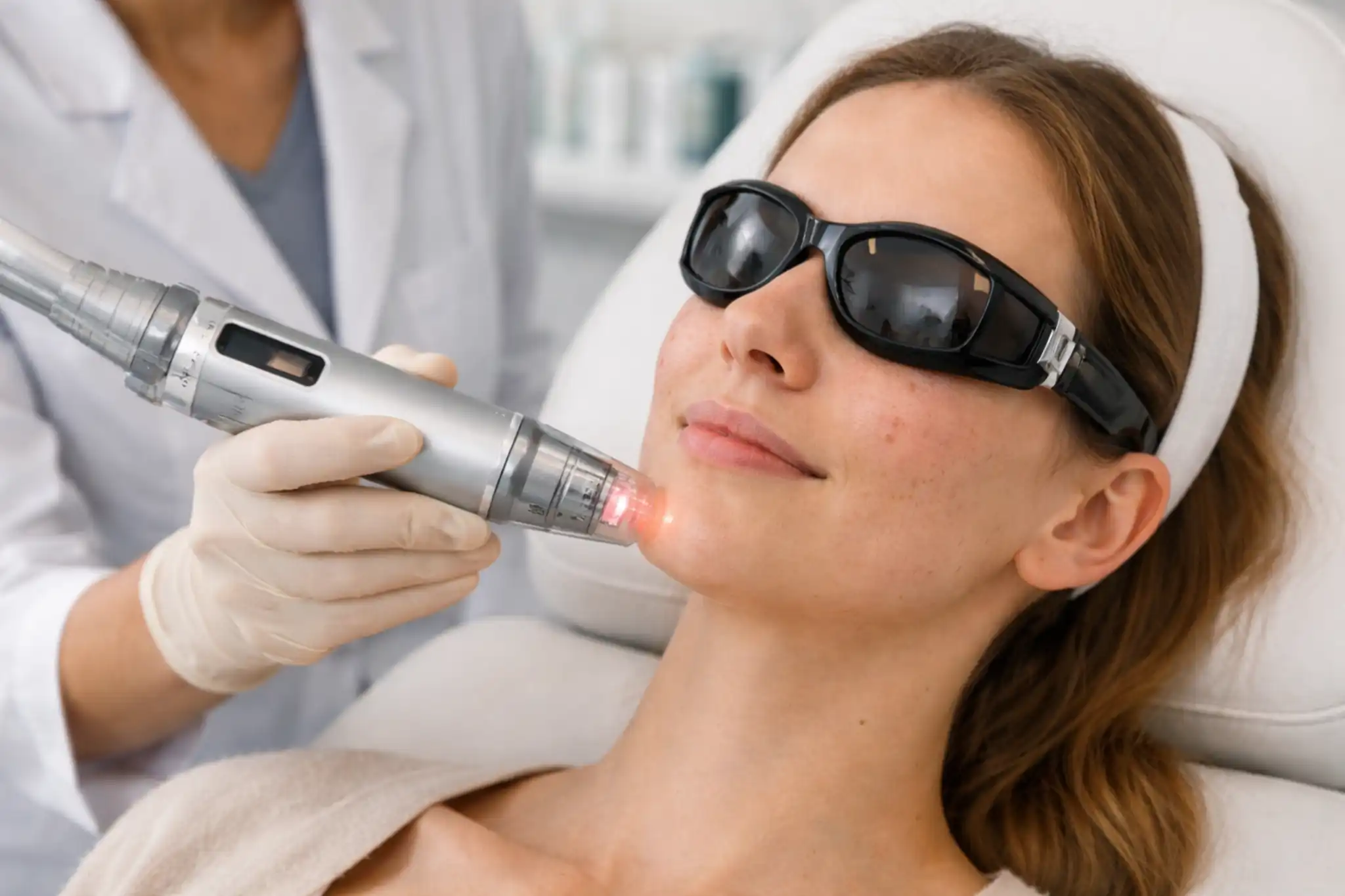
Most acne scar laser treatment before after journeys start with a clean, structured office visit. The skin is cleansed, the treatment area is numbed, and eye protection is used. Then the dermatologist passes the laser over the area in a controlled pattern. Afterward, soothing ointments, dressings, or cooling measures may be used depending on the type of laser.
Does it hurt? It can be uncomfortable, but the experience varies. Non-ablative treatments are often described as more tolerable, especially with topical anesthetic. Stronger ablative resurfacing usually feels more intense and may require more support during the procedure.
Recovery timeline: day by day and week by week
First 24 to 72 hours
Your skin may feel warm, tight, red, swollen, and sensitive. This early phase is normal for many laser treatments, especially resurfacing procedures.
First week
Peeling, dryness, crusting, or a sandpapery texture can show up depending on the laser used. You may need to clean the area gently and apply ointment to prevent scabbing. Fractional and non-ablative treatments often involve less downtime than aggressive ablative resurfacing.
Weeks 2 to 6
The skin usually calms down more during this stage. Redness fades gradually, and the surface can begin to look fresher. You may notice early acne scar laser treatment before after differences here, but they are not always the final result.
Months 2 to 6
This is when collagen remodeling becomes more obvious. Many patients see that scars continue to soften and blend more into the surrounding skin over time. Redness from laser resurfacing can also take months to fully fade in some cases.
Side effects and risks you should know
Common short-term effects include redness, swelling, sensitivity, and peeling. Less common but important risks include infection, milia, prolonged redness, scarring, and changes in skin color. Pigment changes may be especially important to discuss if you have brown or Black skin.
You should be extra cautious if you have:
- A darker skin tone
- Recent tanning or heavy sun exposure
- Active acne flare-ups
- A history of keloids or unusual scarring
- A history of cold sores in the treatment area
- Medical conditions or medications that affect healing
These issues do not always rule out treatment, but they should shape the plan. Safe acne scar laser treatment before after results depend on choosing the right patient and the right settings, not just the right device.
Acne marks laser treatment cost: what affects the price?
There is no single national price for acne marks laser treatment cost because clinics vary so much. The final number usually depends on the type of laser, the number of sessions, the size of the area, the provider’s experience, and where the clinic is located. A full-face ablative resurfacing session usually costs more than a lighter fractional or non-ablative treatment, and deep scarring often requires more than one visit.
The cheapest option is not always the best value. When you compare acne scar laser treatment before after outcomes, poor technique can cost more in the long run if you end up with weak results, prolonged redness, or pigment problems. Experience matters.
Laser treatment vs other acne scar treatments
Laser is helpful, but it is not the only answer.
- Microneedling: Often used for mild to moderate textural scarring and collagen stimulation.
- Chemical peels: More useful for surface issues and pigment, though some peels can support scar improvement.
- Subcision: Especially helpful for rolling scars tethered under the skin.
- Fillers: Can lift certain depressed scars, though results may be temporary.
- TCA CROSS: Often used for deep ice pick scars.
- Minor surgery: Some scars improve most with punch excision or related methods.
In real practice, the best acne scar laser treatment before after result often comes from combination treatment. That is one reason online comparisons can be misleading. A “laser result” may actually reflect laser plus subcision, fillers, or careful skin care between sessions.
How to get better results from laser for scars
If you want the strongest acne scar laser treatment before after improvement possible, focus on the basics:
- Follow aftercare exactly as instructed
- Use broad-spectrum sunscreen every day
- Avoid tanning before and after treatment
- Do not pick peeling skin or scabs
- Restart strong skincare only when your clinician says it is safe
- Keep active acne under control
- Finish the number of sessions recommended for your scar type
These steps sound simple, but they strongly influence healing and final texture.
Common mistakes that can hurt results
A few mistakes show up again and again in disappointing acne scar laser treatment before after stories.
The first is expecting one session to fix deep scars. The second is choosing treatment based only on social media photos. The third is ignoring downtime and going back to harsh exfoliants too soon. Another common problem is failing to ask whether the provider has experience treating your skin tone safely. All of those issues can lead to weaker results or harder healing.
When to talk to a dermatologist
It is smart to get professional help if you are not sure whether you have acne scars or only dark marks, if your scars are deep or widespread, if you still have active acne, or if you have skin of color and want a careful plan. A dermatologist can tell you whether laser treatment for scars makes sense or whether another option should come first.
Conclusion
The most honest way to think about acne scar laser treatment before after results is this: laser can make a real difference, but the change is usually gradual and depends on the kind of scars you have. The best outcomes often mean smoother texture, softer edges, and skin that looks more even, not flawless skin.
If you are considering acne scar laser treatment before after options, the smartest next step is not chasing the most dramatic photo online. It is booking a consultation with a qualified dermatologist who can tell you what is realistic for your own skin and build a plan that fits your scar type, skin tone, and recovery goals.
FAQ
How many sessions are usually needed for acne scar laser treatment?
It depends on the depth and type of your scars, the laser used, and how much improvement you want. Mild scarring may improve after one to three sessions, while deeper scars often need several treatments or a combination plan. When you compare acne scar laser treatment before after results, remember that one session is rarely enough for deeper textural scars.
Are acne scar laser treatment before after results permanent?
The improvement in scar texture can last because the treated scar itself has changed. But your skin will still age over time, and new breakouts can create new marks or scars. That means your acne scar laser treatment before after result can be long-lasting, but it is not a guarantee against future skin changes.
Does laser treatment help acne marks and dark spots too?
Sometimes, yes. Some lasers can help uneven pigment, but flat dark marks are not the same as indented scars. If your main concern is color rather than texture, your treatment plan may be different from someone seeking acne scar laser treatment before after improvement for true scars.
What is the difference between acne scar removal laser surgery and regular laser treatment?
Most of the time, acne scar removal laser surgery is just a loose way of describing office-based laser treatment. Traditional scar surgery usually involves cutting or releasing scar tissue, while laser treatment resurfaces skin or stimulates collagen. Some people need both, but they are not the same thing.
How much does acne marks laser treatment cost compared with other scar treatments?
Cost varies widely based on the laser type, the clinic, the provider, the size of the treatment area, and the number of sessions needed. In general, stronger laser resurfacing can cost more upfront than treatments like microneedling, but your total cost depends on how many visits you need and whether combination treatment is required for the best acne scar laser treatment before after result.