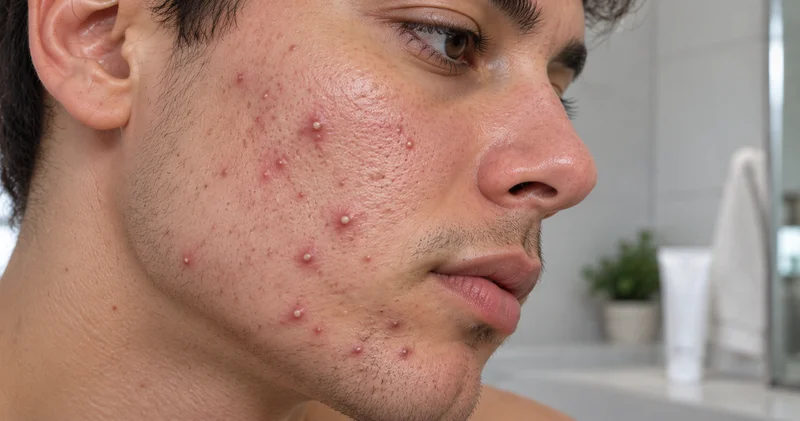
Does Niacinamide Cause Purging? Why Your Breakout May Be Something Else
You start a niacinamide serum because it is supposed to support acne-prone skin. Then new bumps appear, and someone tells you not to worry because your skin is “purging.” So, does niacinamide cause purging?
Usually, no. Niacinamide is not generally expected to cause the kind of early acne worsening recognized with some retinoid treatments.
If your skin changes after starting a niacinamide product, irritation, another active ingredient, the rest of the formula, or an ordinary acne flare may be more likely explanations.
The most useful first step is to identify what is actually in the product—and what else changed in your routine—before deciding that worsening skin is a normal purge.
Table of Contents
Does Niacinamide Cause Purging? The Short Answer
Niacinamide alone is not generally considered a purging ingredient. It is used mainly for anti-inflammatory, barrier-supportive, and sebum-related benefits rather than as a retinoid-like treatment that commonly produces apparent early acne worsening.
New bumps after niacinamide deserve investigation, but they should not automatically be labeled a purge.
What Does “Skin Purging” Actually Mean?
“Purging” is a common skincare term rather than a precise medical diagnosis.
People usually use it to describe an apparent temporary worsening of acne after starting certain treatments.
Topical retinoids provide one of the clearest medically documented examples. Tretinoin labeling acknowledges that inflammatory acne lesions can appear worse during the early weeks of therapy as previously unseen lesions become visible. Adapalene labeling also recognizes apparent early worsening.
That is very different from the idea that your skin is “detoxing.”
Purging does not mean:
- Toxins are leaving your pores.
- Burning proves a product is working.
- Every new pimple after skincare is beneficial.
- You should continue through any level of irritation.
- Every active ingredient needs a purge phase.
The actual active ingredient matters.
Which Acne Treatments Can Cause Early Worsening?
Different acne treatments behave differently.
Adapalene
Adapalene is a topical retinoid used to treat acne.
Its labeling recognizes that acne can appear worse during the early weeks because previously unseen lesions may become visible before overall improvement occurs.
This makes early treatment worsening plausible when someone has recently introduced adapalene.
But adapalene can also irritate the skin.
Redness, scaling, dryness, stinging, and burning are skin-tolerance problems and should not simply be lumped together under the word “purging.”
Tretinoin
Tretinoin is another topical retinoid.
Current prescribing information similarly recognizes an apparent worsening of inflammatory lesions during the early weeks of treatment.
Tretinoin may also cause:
- Dryness.
- Peeling.
- Redness.
- Warmth.
- Stinging.
- Irritation.
An early acne flare and irritation can occur at the same time, but they are not the same process.
If irritation becomes difficult to tolerate, follow the medication instructions and speak with the clinician managing your treatment rather than assuming more irritation means better results.
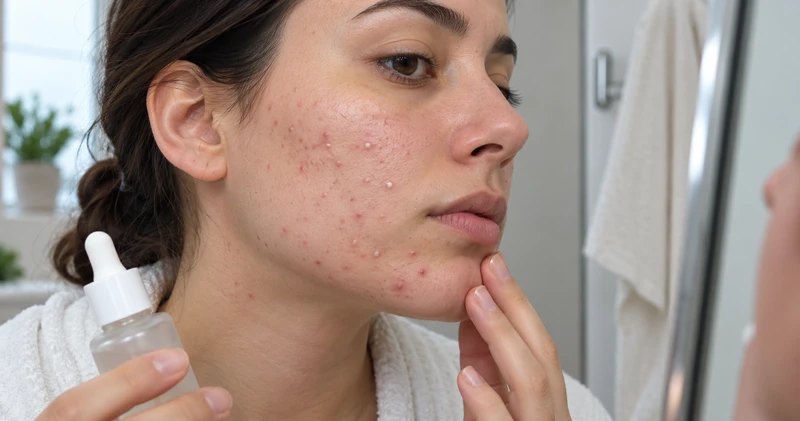
Exfoliating acids
Ingredients such as salicylic acid help remove dead skin cells and keep pores clearer.
Some people notice changes in clogged pores after starting exfoliating products, but it is too simplistic to say that everyone using an AHA or BHA will purge.
Exfoliating acids can also irritate skin, especially when combined with other strong active ingredients.
If salicylic acid is part of your routine, our guide to how salicylic acid works inside clogged pores explains its role and irritation risks in more detail.
Why Niacinamide Is Different
Niacinamide, also known as nicotinamide, is a form of vitamin B3 commonly used in skincare.
It has been studied for several effects relevant to acne-prone skin, including:
- Anti-inflammatory activity.
- Skin-barrier support.
- Sebum-related effects.
- Supportive use in acne routines.
Topical niacinamide has also been evaluated directly in acne studies.
What it is not known for is a predictable retinoid-like period in which inflammatory acne should become noticeably worse before getting better.
That distinction is important.
If a niacinamide serum makes your skin worse, immediately saying “that means it is working” can cause you to overlook irritation or another trigger.
Niacinamide Purging vs. Breakout vs. Irritation
These patterns can help you think through what is happening, but they cannot diagnose your skin.
| Feature | Early Treatment Worsening | Ordinary Breakout | Irritation |
|---|---|---|---|
| Typical trigger | Certain acne treatments, especially retinoids | Hormones, products, friction, stress and other acne factors | Product or routine irritation |
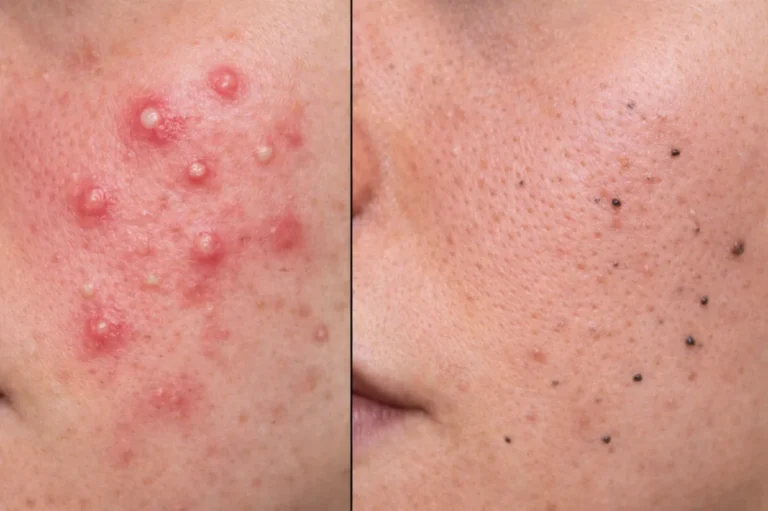
| Acne lesions | Yes | Yes | Tiny acne-like bumps may occur |
| Blackheads/whiteheads | May be present | Common | Not a defining feature |
| Burning/stinging | Not the defining feature | Usually absent | Common |
| Significant itching | Not typical | Usually limited | More suggestive |
| Diffuse redness | May coexist with treatment irritation | Less typical | Common |
| Dryness/peeling | Can occur from treatment irritation | Not typical of acne itself | Common |
| Most useful clue | Actual active ingredient | Normal acne pattern and triggers | Barrier-type symptoms |
More than one problem can happen at once.
For example, someone starting a retinoid may experience early acne worsening and significant dryness at the same time.
The dryness does not become a healthy part of the purge simply because acne also worsened.
If Niacinamide Does Not Purge, Why Am I Breaking Out?
A breakout after niacinamide can still be real.
The question is what caused it.
Possibilities include:
- Another active ingredient.
- Irritation.
- Another ingredient in the complete formula.
- Several new skincare products.
- Existing acne worsening naturally.
- Hormonal changes.
- Stress.
- Friction.
- Hair or makeup products.
- Changes in medication or skincare habits.
If the timing makes niacinamide suspicious, investigate the product. Just remember that timing alone does not identify the exact cause.
Check the Ingredients Before Calling It a Niacinamide Purge
The name on the front of the bottle does not tell you everything inside it.
A “niacinamide serum” can contain multiple active ingredients.
Niacinamide plus a retinoid
Suppose you introduce a niacinamide serum at roughly the same time you begin adapalene.
A few weeks later, your acne looks worse.
The adapalene deserves much more attention as a possible reason for early treatment worsening because that effect is documented with retinoids.
Niacinamide plus salicylic acid
Some formulas combine niacinamide with salicylic acid.
The exfoliating ingredient may influence clogged pores, and either the acid or the overall formula may irritate sensitive skin.
A simple niacinamide serum
If no retinoid or exfoliating acne active is involved, look more carefully at:
- The complete formula.
- Other products added recently.
- Your usual acne pattern.
- Whether burning or itching is present.
- Hormonal and lifestyle changes.
The highlighted ingredient is not always the ingredient driving the reaction.
Does Niacinamide Redness Mean You Are Purging?
No.
Redness is not evidence that niacinamide is successfully purging your skin.
If redness occurs together with:
- Burning.
- Stinging.
- Itching.
- Tightness.
- Dryness.
- Scaling.
- Swelling.
irritation or another skin reaction deserves consideration.
Niacinamide is generally well tolerated, but mild itching, burning, or dermatitis-like reactions have been reported with topical use.
Another ingredient can also be responsible.
Fragrance, preservatives, botanical extracts, acids, and other ingredients may trigger irritation or contact reactions in susceptible skin.
Do not interpret progressively redder skin as proof that your product is “working harder.”
Can Niacinamide Cause Tiny Bumps Without Purging?
Yes.
Tiny bumps can appear after starting a skincare product without being a purge.
Possible explanations include:
- Irritation.
- Closed comedones.
- Another ingredient in the formula.
- Another active in the routine.
- A contact reaction.
- An unrelated acne flare.
The appearance of tiny bumps alone cannot establish the cause.
A cluster of itchy bumps with diffuse redness and burning is different from familiar blackheads, whiteheads, or pimples developing in your usual acne pattern.
If the eruption is unusual, persistent, or worsening, professional evaluation may be more useful than trying to identify it from photos online.
Does Niacinamide Cause Purging at 10%?
There is no evidence-based rule that 10% niacinamide causes purging.
Some people tolerate 10% formulas. Others may find a higher-strength serum more irritating than they need.
Clinical acne research has often involved lower concentrations, including formulations around 4% to 5%, but this does not establish a universal concentration that everyone must use.
Most importantly:
Irritation from a stronger formula is not purging.
Moving from 5% to 10%, 15%, or 20% also does not guarantee proportionally better acne results.
How Long Does Niacinamide Purging Last?
There is no established niacinamide purging timeline, because niacinamide alone is not expected to produce a true purge.
Do not take a timeline used for topical retinoids and apply it to niacinamide.
For example, tretinoin labeling describes possible apparent worsening during the early weeks of treatment, while adapalene can require roughly 8 to 12 weeks before consistent improvement becomes apparent.
Those timelines belong to those treatments.
They do not mean a breakout after starting niacinamide should automatically be tolerated for 8 or 12 weeks.
Should You Keep Using Niacinamide Through a “Purge”?
Do not automatically continue a worsening reaction because someone has labeled it purging.
If you are mainly using niacinamide
If your skin keeps getting worse and no recognized purging active is involved, reconsider the product rather than assuming worsening is therapeutic.
If you also started a retinoid
Follow the medication’s instructions.
Mild early acne worsening and severe irritation are different situations.
If irritation becomes significant, contact the clinician treating your acne when appropriate.
If you have burning, swelling, severe redness, or a rash
Do not simply push through.
A strong skin reaction deserves a different response from ordinary temporary acne worsening.
If you do not know what is causing the problem
Simplify the routine instead of introducing another active serum.
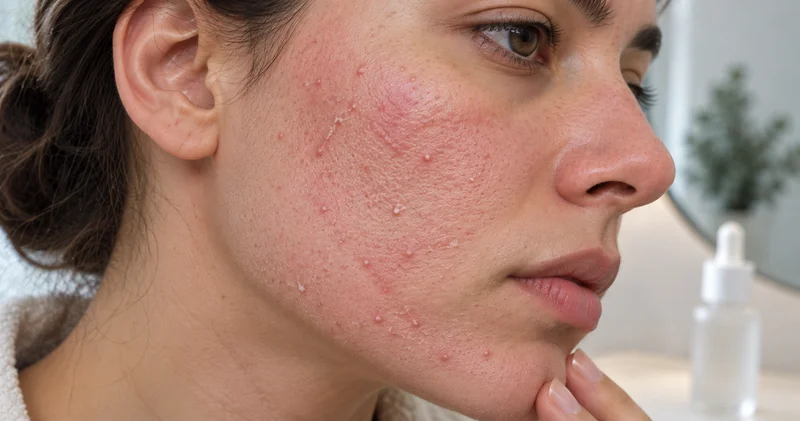
A 5-Step Check Before You Decide It Is Purging
1. Identify the actual active ingredients
Check whether you are using:
- Adapalene.
- Tretinoin.
- Retinol.
- Salicylic acid.
- Glycolic acid.
- Lactic acid.
- Other exfoliating products.
Do not rely only on the product’s marketing name.
2. Look for irritation symptoms
Pay attention to:
- Burning.
- Itching.
- Diffuse redness.
- Peeling.
- Tightness.
- Significant dryness.
These symptoms make simple “purging” a less complete explanation.
3. Compare the bumps with your usual acne
Are they familiar:
- Blackheads?
- Whiteheads?
- Inflamed pimples?
Or do you suddenly have a rash-like collection of tiny, itchy bumps?
That difference is a clue, not a diagnosis.
4. Review everything you recently changed
The niacinamide serum may be getting blamed even though you also started:
- Sunscreen.
- Foundation.
- Moisturizer.
- Retinol.
- Exfoliating toner.
- Hair oil.
For a broader trigger review, see other common reasons a breakout can suddenly appear.
5. Ask whether things are improving or worsening
A mild change that is settling is different from a reaction that becomes:
- More painful.
- More irritated.
- More widespread.
- More swollen.
- More severe each day.
Do not let the word “purging” stop you from paying attention to worsening symptoms.
What Not to Do During a Suspected Niacinamide Purge
Avoid turning one uncertain reaction into a complicated skincare experiment.
Do not:
- Scrub your skin aggressively.
- Increase the niacinamide percentage.
- Add multiple exfoliating acids.
- Layer several spot treatments.
- Pick or squeeze the bumps.
- Start several replacement products at once.
- Assume burning proves effectiveness.
Every extra change makes the original reaction harder to understand.
Keep Your Routine Simple While You Figure It Out
When the cause is unclear, a simple routine makes troubleshooting easier.
A basic routine may look like:
Morning
- Gentle cleanser if needed.
- Simple moisturizer.
- Broad-spectrum sunscreen.
Evening
- Gentle cleanser.
- Established acne treatment if appropriate and tolerated.
- Moisturizer.
Avoid strong exfoliation on already irritated skin.
If you use prescription acne medication, follow its instructions rather than changing the prescription schedule solely because of general skincare advice.
When a “Purge” Needs a Dermatologist
Consider professional evaluation if you develop:
- Deep, painful acne.
- Rapidly worsening lesions.
- Scarring.
- Significant swelling.
- Blistering.
- Widespread rash.
- Persistent burning.
- Severe peeling.
- Signs of infection.
- An eruption unlike your usual acne.
- Symptoms that continue after removing the suspected cosmetic.
- A reaction you cannot confidently identify.
Not every acne-like eruption is acne, and not every reaction after a new product is purging.
Frequently Asked Questions
Does niacinamide cause purging when you first start using it?
Usually, no. Does niacinamide cause purging in the same way topical retinoids can cause apparent early acne worsening? Current evidence does not support that expectation. If bumps appear, consider irritation, other active ingredients, the complete formula, and unrelated acne triggers.
How can I tell niacinamide purging from a breakout?
Start with the active ingredients rather than relying on where the bumps appear. If a retinoid is also involved, early worsening is more plausible. If burning, itching, diffuse redness, or peeling is prominent, irritation deserves more attention. Ordinary acne can also flare independently of a new skincare product.
Does 10% niacinamide cause purging?
There is no evidence-based 10% purging threshold. A stronger niacinamide formula may irritate some people’s skin, but irritation is not purging. More niacinamide also does not automatically provide better acne results.
Can niacinamide cause redness and small bumps?
A niacinamide-containing product can be associated with redness or small bumps if your skin becomes irritated or reacts to another ingredient. Niacinamide itself is generally well tolerated, so the complete product formula and the rest of your skincare routine should also be reviewed.
Should I stop niacinamide if my acne gets worse?
It depends on your symptoms and what else you use. Do not automatically continue worsening skin because you assume it is purging. Significant burning, swelling, persistent redness, rash, or severe irritation deserves stopping the suspected cosmetic trigger and seeking professional advice when necessary.
The Bottom Line
So, does niacinamide cause purging? Niacinamide alone is not generally expected to produce a true purge.
Topical retinoids provide a much better documented example of early acne worsening. If a product containing niacinamide makes your skin worse, identify every active ingredient before deciding what is happening.
Burning, itching, significant redness, and peeling are not proof that your skin is successfully purging. They may point toward irritation instead.
Keep your routine simple, avoid piling more active ingredients onto already stressed skin, and get professional help if the reaction is severe, persistent, painful, scarring, or difficult to identify.
This article is for educational purposes only. It cannot diagnose purging, acne, irritation, allergic contact dermatitis, or another skin condition and is not a substitute for individualized care from a qualified healthcare professional.
References:
- DailyMed — Tretinoin Cream, USP Prescribing Information
Current 2026 labeling recognizes apparent early worsening of inflammatory acne lesions and provides treatment-tolerance information. - DailyMed — Adapalene Gel 0.1% Prescribing Information
Supports the distinction between early apparent acne worsening with adapalene and the longer timeframe required for consistent therapeutic improvement. - DailyMed — Adapalene and Benzoyl Peroxide Gel Prescribing Information
Revised June 2026; verifies retinoid-related local reactions including redness, scaling, dryness, stinging, burning, and contact dermatitis. - American Academy of Dermatology — Acne: Diagnosis and Treatment
Provides current dermatologist guidance on retinoid use and managing skin irritation. - Cochrane Overview — Topical, Light-Based, and Complementary Interventions for Acne
Reviews topical nicotinamide’s anti-inflammatory, barrier-related, sebum-related, and acne evidence while noting generally mild topical irritation. - Clinical, Cosmetic and Investigational Dermatology — Cosmeceuticals in Acne Vulgaris: From Mechanism of Action to Clinical Application
Reviews current topical niacinamide evidence and reported minor reactions including itching, burning, and mild dermatitis.