Glycolic Acid Armpits: Odor, Sweating, Dark Marks and Irritation
If you’ve seen the glycolic acid armpits trend, you may be wondering whether an exfoliating toner can replace deodorant, reduce sweat, or fade dark underarms. Those are different goals, and one acid cannot reliably do all three. The better question is what your underarms actually need—and whether an exfoliating product is worth the irritation risk.
Quick answer: Glycolic acid exfoliates surface skin and may help some people with underarm odor or certain types of discoloration. But evidence for underarm odor control is limited, it does not prevent sweating, and results for dark marks depend on their cause. Products can sting or trigger irritation, especially on recently shaved or sensitive skin.
Table of Contents
What Does Glycolic Acid Actually Do to Underarm Skin?
Glycolic acid belongs to the alpha-hydroxy acid (AHA) family. In skin-care formulas, it loosens bonds between surface skin cells so they shed more easily. This may smooth rough texture and help some surface discoloration become less noticeable over time.
Underarms are not simply another part of your face. They are folds where skin rubs against skin, moisture collects, and shaving, clothing, and deodorants can add friction or irritation. A facial toner that feels comfortable on your cheeks may be too harsh here. Even an underarm-specific formula is not automatically suitable for every person.
The glycolic acid armpits conversation also mixes cosmetic exfoliation with odor control. Glycolic acid is not a medical treatment for excessive sweating, and a skin-care product should not be treated as one just because it contains an active ingredient.
Glycolic Acid Armpits and Odor: What the Evidence Says
Why underarm odor develops
Your body makes sweat to regulate temperature. Fresh sweat is not always strongly scented, but substances in underarm secretions can be broken down by skin microorganisms, producing noticeable odor. How much you sweat and how strong you smell are related, but they are not the same problem.
Why an acid might affect odor
Many deodorants use ingredients that make the skin less hospitable to odor-producing microorganisms. Because glycolic acid changes a formula’s acidity, it has a plausible role in this process. That does not establish how consistently a glycolic toner controls underarm odor in everyday use.
Direct, high-quality clinical evidence for glycolic acid as a standalone underarm deodorant remains limited. There is no verified success percentage or universal number of odor-free hours to promise. The glycolic acid armpits hack may work for one person’s odor concern and disappoint someone else, while irritating another person’s skin.
Can it replace deodorant?
It may be an option for people who want to try a product specifically made for odor care, but it is not a dependable replacement for everyone. If an ordinary deodorant already controls odor comfortably, there is no need to add an exfoliating acid for that purpose.
⭐ Odor-Care Option: Surface Deep Anti-Odorant Pads, 50 Pads in Jar
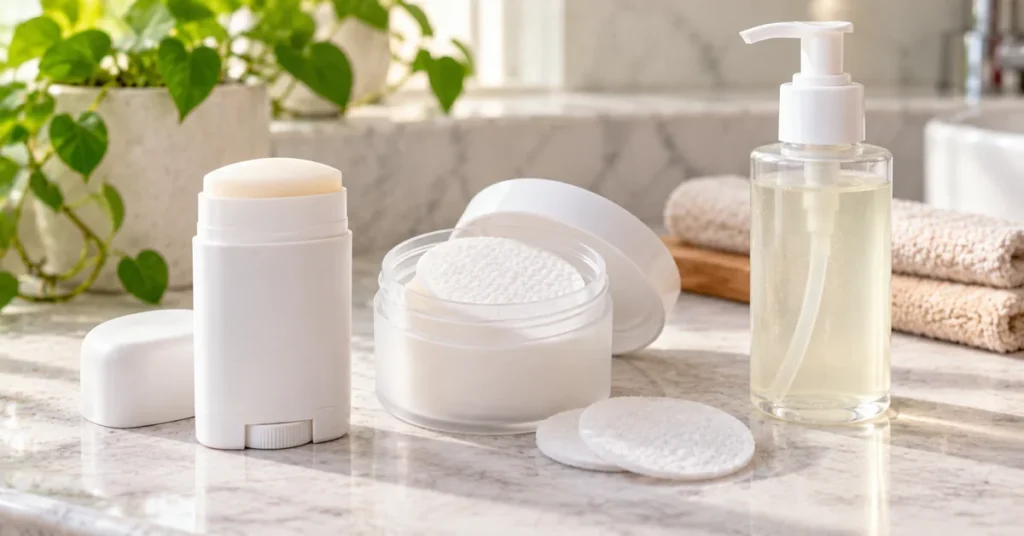
Want a product made for underarms rather than a facial toner pressed into service? Surface Deep’s pads are intended to be swiped across dry underarm skin. Their formula includes glycolic and salicylic acids alongside eucalyptus oil and botanical extracts.
That makes them a focused option to investigate for odor care, not a promise of all-day effectiveness or a fragrance-sensitive-skin recommendation. Follow the current label and skip use on irritated skin.
👀 See Product & Check Current Price ➜
Can Glycolic Acid Armpits Products Reduce Sweating?
No. Glycolic acid is not an antiperspirant. It does not block sweat ducts or reliably reduce the amount of perspiration reaching the skin. Feeling less odor does not mean you are producing less sweat.
Deodorant versus antiperspirant
| Product | Main job | Reduces sweat? |
|---|---|---|
| Glycolic acid cosmetic | Exfoliates; possible odor benefit is less established | No |
| Deodorant | Helps control or mask odor | Usually no |
| Antiperspirant | Reduces sweat reaching the skin, often with aluminum salts | Yes |
If damp clothing or dripping underarms are the problem, swapping antiperspirant for acid may leave that problem unchanged. Many antiperspirants also control odor, so a separate acid step may add complexity without a clear benefit.
When sweat is the main concern
For mild sweating, start with a suitable over-the-counter antiperspirant and follow its directions. An antiperspirant often works best on completely dry skin; some stronger products are directed for bedtime use. Don’t automatically layer it over an exfoliating acid or apply either to skin that is already sore.
If excessive sweating affects work, clothes, daily activities, or comfort despite appropriate products, a clinician can assess possible hyperhidrosis and discuss treatment choices. In a glycolic acid armpits routine, sweat control deserves its own solution rather than more frequent exfoliation.
Glycolic Acid Armpits for Dark Marks: Benefits and Limits
Dark underarms are not one diagnosis. Natural pigmentation, friction, skin inflammation, and certain medical conditions can look similar in a mirror. That difference changes whether exfoliation is likely to help.
Why underarms may look darker
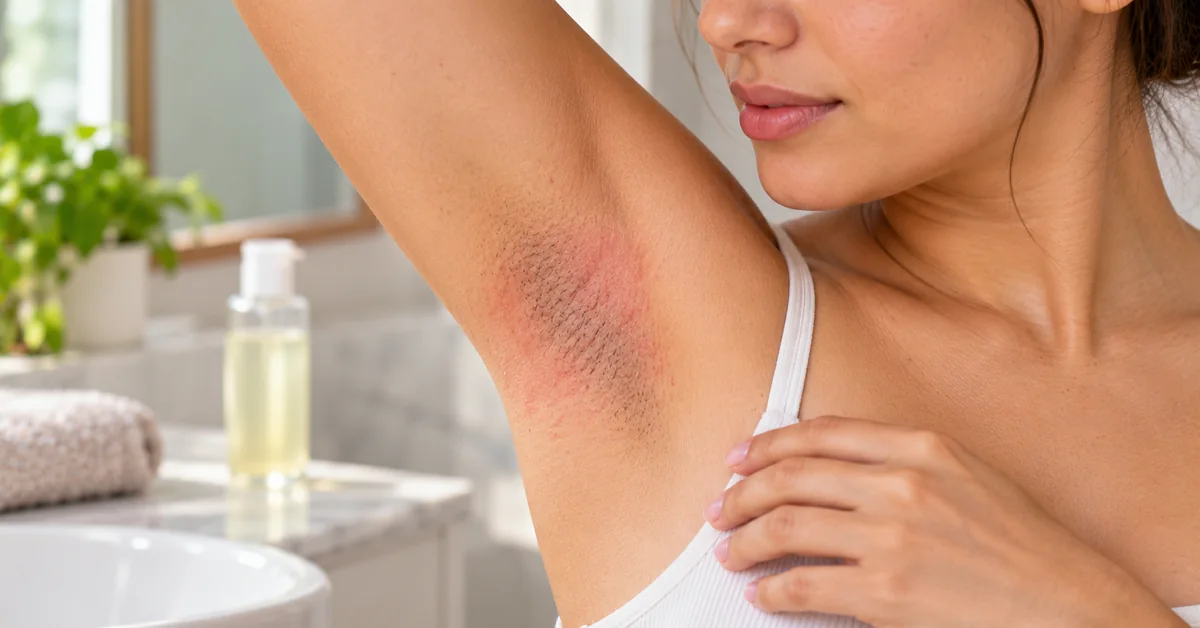
Repeated rubbing, razor irritation, or a reaction to fragranced products can leave post-inflammatory hyperpigmentation—darkening that follows skin inflammation. Skin may also appear uneven because of hair shadow or naturally deeper pigment in folds. These concerns should not all be called damaged skin, and none automatically means poor hygiene.
Another possibility is acanthosis nigricans, which can cause darker, thicker, velvety skin in the underarms or other folds. It can be associated with insulin resistance and other health conditions. An exfoliating cosmetic does not address its underlying cause.
What glycolic acid might improve
By exfoliating surface skin, glycolic acid may improve some roughness and certain superficial pigment changes. But evidence for reliable fading of underarm pigmentation with ordinary consumer products is limited. A product’s claim about faster brightening is not the same as an independent clinical conclusion.
Before trying the glycolic acid armpits trend for dark marks, look for the trigger. If friction or repeated irritation keeps occurring, an acid may struggle to help and could make things worse. Choose realistic expectations: there is no guaranteed number of days until underarms appear lighter.
⭐ Targeted Texture Option: The INKEY List Glycolic Acid Exfoliating Body Stick, 45g
Prefer a stick designed for specific body areas? The INKEY List lists underarm discoloration among this product’s intended uses.
The stick combines 7% glycolic acid and 0.5% salicylic acid, with shea butter. This is a multi-acid approach for some users—not a necessity for ordinary dark skin and not appropriate on broken or irritated areas. The company’s reported results are product-specific claims, not guaranteed outcomes.
👀 View the Body Stick & Check Availability ➜
Why more exfoliation can backfire
Stinging, a rash, and peeling are signs to reassess, not signs that pigmentation is being successfully lifted. Inflamed skin can develop more post-inflammatory darkening, particularly in people prone to pigment changes after irritation.
If discoloration is thick or velvety, develops suddenly, or cannot be explained by surface irritation, seek medical evaluation rather than repeatedly applying acid. Glycolic acid armpits advice online cannot determine the cause from appearance alone.
How to Choose an Underarm Glycolic Acid Product
A useful product choice begins with the format and the official instructions, not the largest printed acid percentage. Compare the full formula and the reason you want it:
- Underarm-targeted pads or sticks: Easier to apply precisely, but leave-on acids may remain in contact with the fold for hours. Check additional exfoliants and fragrance-related ingredients.
- Rinse-off acid wash: A cleansing alternative with a different contact pattern. A rinse-off format is not guaranteed to prevent irritation or manage odor for the day.
- Facial acid toner: May contain glycolic acid but may not carry underarm directions. Don’t assume social-media use makes it appropriate for delicate folds.
In glycolic acid armpits shopping, compare the intended body area, concentration when disclosed, other acids, instructions after hair removal, and the number of applications per container. An undisclosed percentage does not automatically mean a gentle product; a high one does not mean better results.
The safest starting point for a glycolic acid armpits product is the complete label, not a viral recommendation. A product with eucalyptus oil, citrus extracts, or other fragrance-related components may bother reactive skin even when marketed as natural.
Products that contain both glycolic and salicylic acids also increase your total exposure to exfoliating ingredients.
How to Use a Suitable Product Without Unnecessary Irritation
Read the exact directions first
Only use a product on underarms when the instructions support that use. Follow its specified application method, amount, contact time, frequency, and warnings. One stick may provide specific timing guidance that does not apply to a pad or rinse-off cleanser.
Test tolerance and protect the skin barrier
The American Academy of Dermatology advises testing unfamiliar skin-care products on a small area before broader use. If an acid causes an uncomfortable reaction during testing, it is not a good candidate for your underarms just because someone online tolerates it.
Avoid application to broken, inflamed, sunburned, or freshly irritated skin. Shaving and waxing can temporarily leave skin more sensitive. The manufacturer may specify a minimum interval after hair removal, but that number is not universal; wait until your skin has recovered and follow that particular label.
Keep other active products in mind
An underarm routine may already include a scented deodorant, an antiperspirant, a scrub, or a product intended to prevent bumps. Piling additional exfoliants onto this combination makes reactions harder to identify.
If glycolic acid armpits products are new to you, change one item at a time and avoid unnecessary acid layering.
The FDA also warns that cosmetics containing AHAs may increase sensitivity to the sun. Underarms are often covered, but treated skin that is exposed outdoors still needs appropriate sun protection according to the label.
⭐ Rinse-Off Alternative: Surface Deep Anti-Oxidant Moisturizing Glycolic Wash, 6.7 oz Pump
Looking for an in-shower format instead of a leave-on pad? Surface Deep’s glycolic wash is intended for body cleansing, including the underarm area.
The listed product is a glycolic-acid cleanser with additional botanical components. Consider it as an alternative format if the exact label suits your skin; rinsing off doesn’t make a formula risk-free.
The Amazon US listing was unavailable at the latest check, so use the link to verify whether it has returned rather than assuming it can be ordered.
👀 See the Wash & Check Availability ➜
What to do if skin reacts
If you notice persistent burning, increasing redness, itching, swelling, cracking, or a rash, stop applying the product and gently rinse it off when appropriate.
Keep skin care simple while the area settles. Ask a healthcare professional about significant, persistent, or recurrent symptoms; a rash may reflect irritation or a contact allergy rather than the acid doing its job.
For more context on why skin reactions shouldn’t automatically be treated as a useful adjustment, see our guide to skin purging versus irritation. A new underarm rash is not proof of purging.
When Glycolic Acid Is Not the Right Answer
A glycolic acid armpits experiment should never delay care for an unexplained symptom. Consider a dermatologist or another qualified healthcare professional if you notice:
- Dark, thick, velvety patches, particularly if they appear unexpectedly or in more than one body fold.
- Repeated deep, painful armpit lumps, drainage, or scarring. These symptoms can occur with conditions such as hidradenitis suppurativa, which is different from ordinary acne.
- A recurring rash, persistent itch, swelling, cracked skin, or reactions to multiple skin-care products.
- Odor or sweating that changes suddenly, seems unexplained, or disrupts daily life despite routine care.
If none of these is present and a gentle cleanser or familiar deodorant is meeting your needs, choosing not to use an exfoliating acid is a reasonable decision. Glycolic acid armpits products are optional skin care, not a requirement for cleanliness.
Frequently Asked Questions
Is a stronger glycolic acid percentage better for armpits?
Not necessarily. Higher concentration can increase the chance of irritation, while formula pH, supporting ingredients, product format, and application directions also matter.
More acid does not guarantee stronger odor control or faster pigment improvement. Choose a product intended for the area rather than comparing percentages alone.
Can glycolic acid make underarm odor worse?
Some people report that a new product leaves them smelling different or no better. That experience alone does not establish a predictable “odor purge.”
Irritation, changing deodorants, sweating patterns, or product fit may all contribute. If the new product isn’t helping or causes a reaction, it is reasonable to stop experimenting and return to a tolerable odor-control approach.
Should I use glycolic acid if I have underarm eczema or a recurring rash?
Don’t apply glycolic acid to actively inflamed, cracked, or itchy skin. Underarm eczema and recurrent rashes may need a diagnosis and a simpler, tailored care plan.
Ask a healthcare professional before adding exfoliating acids if that area frequently reacts.
Can I treat both underarms if only one has dark marks?
You don’t need to treat unaffected skin merely for symmetry. One-sided or newly changing discoloration may have a local cause such as friction, but appearance alone cannot confirm it.
Check the product label and consider assessment if the mark is unexplained, persistent, or changing.
Do underarms need acid exfoliation if there is no skin concern?
No. Healthy underarm skin does not require a glycolic acid armpits routine.
Gentle washing and deodorant or antiperspirant when wanted may be sufficient. Adding an acid without a clear goal introduces another possible source of irritation, not an essential hygiene step.
Conclusion
The glycolic acid armpits trend makes more sense when you separate the problem you want to solve.
For odor, the evidence is limited; for sweating, an antiperspirant is the more relevant category; for dark marks, the cause determines whether exfoliation is useful. If irritation is already present, address that first.
Choose one appropriate next step rather than layering products to chase several results at once.
This article provides general educational information, not a diagnosis or a substitute for individualized medical care.
References:
- Sweating and Body Odor — Diagnosis and Treatment, Mayo Clinic
- Hyperhidrosis: Diagnosis and Treatment, American Academy of Dermatology
- Acanthosis Nigricans: Signs and Symptoms, American Academy of Dermatology
- How to Get Rid of Dark Armpits, Cleveland Clinic
- Alpha Hydroxy Acids, U.S. Food and Drug Administration
- How to Test Skin Care Products, American Academy of Dermatology
- Hidradenitis Suppurativa: Overview, American Academy of Dermatology
- Anti-Odorant Pads in Jar, Surface Deep
- Glycolic Acid Exfoliating Body Stick, The INKEY List
- pH Balancing Skin Wash, Surface Deep