What Causes Acne Scarring? Everything You Need to Know
If you have ever looked at a healed breakout and wondered why one pimple disappeared while another left a dent, you are not alone. A lot of people deal with acne for years without fully understanding why scars form, what makes them worse, or whether they could have been prevented.
That is why learning the real acne scarring causes matters. When you know what is happening under the skin, it becomes easier to treat acne earlier, avoid habits that raise your risk, and choose the right plan if scars have already formed.
What Is an Acne Scar?
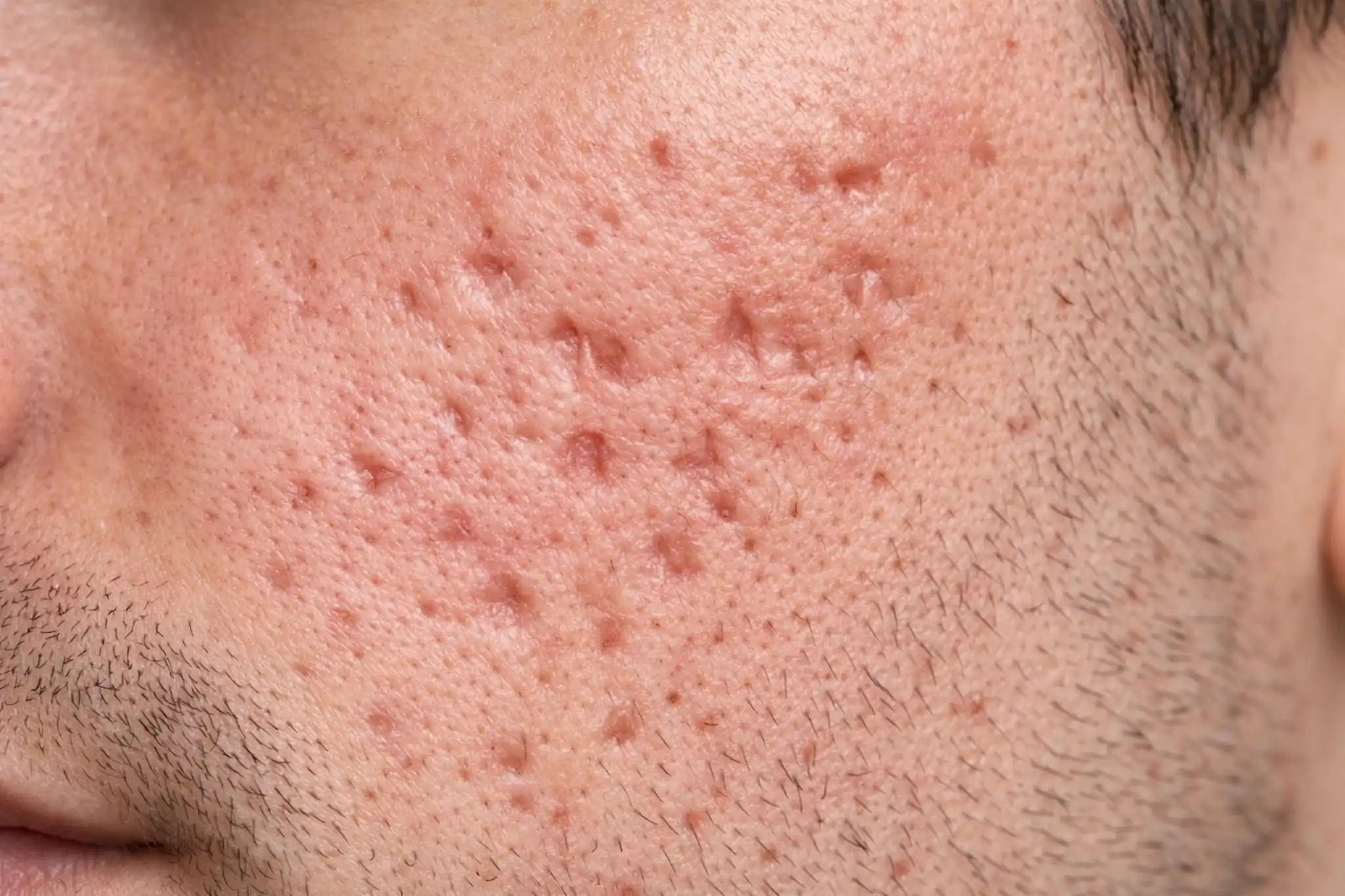
A true acne scar is a lasting change in skin texture after a breakout heals. It may look like a pit, dip, wave, or raised bump. Many people call any leftover mark a scar, but that is not always correct.
True acne scars vs temporary acne marks
One of the most misunderstood acne scarring causes is not a cause at all. It is confusion. Red, brown, or purple marks after acne are often post-inflammatory marks, not true scars. They are changes in color, while a scar is a change in the structure of the skin itself. The American Academy of Dermatology explains that many people with acne are left with either depressed scars or lingering discoloration, and those are not the same problem.
This matters because pimple scars need different treatment from dark marks. A fading cream may help discoloration, but it will not fill in a deep boxcar scar. In the same way, a resurfacing treatment may improve texture but do little for a flat red mark if inflammation is still active.
How a scar forms after a breakout
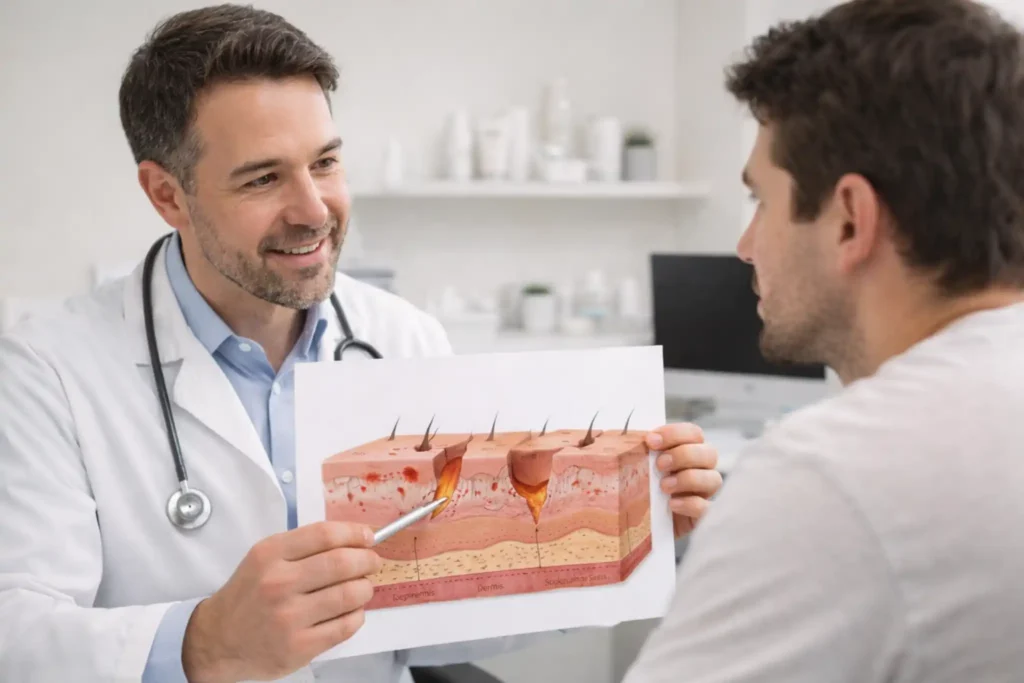
At the center of most acne scarring causes is wound healing. When acne goes deep enough to damage the tissue under the surface, your skin has to repair itself. If the body does not make enough collagen during that repair, you can end up with a depressed scar. If it makes too much collagen, you can get a raised scar. Reviews of acne scarring describe both textural and pigmented sequelae and stress that the inflammatory process drives this damage.

The Main Acne Scarring Causes
Deep inflammation in the skin
The biggest of all acne scarring causes is deep inflammation. Acne cysts and nodules are more likely to scar because they go deeper into the skin and create stronger inflammation than a small surface-level clogged pore. The AAD notes that deep, painful acne such as cysts and nodules is especially likely to lead to scarring, and in general the deeper the acne goes, the higher the risk.
When inflammation reaches deeper layers, the support structure of the skin can break down. That can leave behind permanent unevenness even after the active breakout is gone. This is one reason acne scarring causes are closely tied to the severity of the breakout, not just how many pimples you have.
Picking, popping, and squeezing pimples
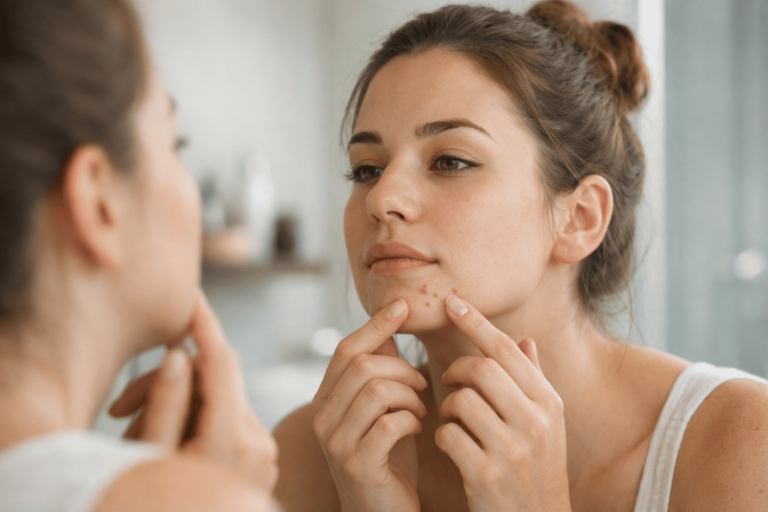
Picking is one of the most common and preventable acne scarring causes. Squeezing a pimple can push inflammation deeper, tear surrounding tissue, and prolong healing. The AAD specifically advises applying acne medicine instead of squeezing, popping, or picking because these actions raise the risk of scars.
Even when a breakout starts small, aggressive picking can turn it into a bigger injury. That extra trauma increases the chance that the skin will heal unevenly, especially if you keep reopening the same spot.
Delayed or poorly controlled acne treatment
Another major factor behind acne scarring causes is simply letting acne stay active for too long. The longer inflamed acne goes untreated, the more chances it has to damage the skin. Mayo Clinic says early treatment lowers the risk of scarring, and Cleveland Clinic also notes that delays can increase the severity of acne scarring.
If you keep getting inflamed breakouts in the same areas, the damage can build up over time. That is why early acne care is about more than clearing pimples. It is also about protecting your skin from long-term texture changes.
Genetics and family history
Some people scar more easily than others, even when their acne seems similar. Genetics likely play a role in how your body responds to inflammation and how your skin heals. Research on acne scar prevalence and risk factors supports an association between acne severity and other risk patterns, while expert guidance also recognizes family history as part of the bigger picture.
So if you have noticed that your parents or siblings scarred from acne, it is worth taking your own breakouts seriously early. Genetics is not destiny, but it can raise your risk.
Severe or long-lasting acne
Severe acne and long-lasting acne sit high on the list of acne scarring causes because repeated inflammation means repeated injury. A single breakout may heal cleanly, but months or years of inflamed lesions can leave cumulative damage, especially on the cheeks, jawline, chest, and back.
Improper handling of inflamed lesions
Harsh scrubs, rough cleansing brushes, strong picking tools, and irritating products can all make inflamed acne worse. They may not be the original trigger, but they can intensify some acne scarring causes by increasing irritation and delaying healing. This is especially important if your skin is already red, sore, or broken from active acne.
Which Types of Acne Are Most Likely to Cause Scars?
Not every breakout carries the same scar risk. Some acne lesions stay fairly close to the surface, while others go deeper and create more tissue damage.
Cystic acne
Cystic acne is one of the clearest examples of high-risk acne scarring causes. These lesions are deep, painful, and inflamed. Because they involve deeper tissue, they are much more likely to leave behind lasting texture changes.
Nodular acne
Nodules are also deep and firm, and they can linger for a long time. Like cysts, they create strong inflammation and are strongly linked to scarring risk.
Papules and pustules
Papules and pustules are usually less likely to scar than cysts and nodules, but they still can. Mild acne can leave scars, especially if the lesions are picked, repeatedly inflamed, or clustered in the same area. That is one reason the list of acne scarring causes should not be limited only to “severe acne.”
Severe acne variants
Some uncommon but severe acne forms, such as acne conglobata, carry a very high risk of scarring because of the extent and intensity of inflammation. These cases need dermatologist care, often early and aggressive.
Why Inflammation Matters So Much
If you want to understand acne scarring causes, focus on inflammation first. Inflammation is the engine that drives the damage.
What inflammation does beneath the skin
When a pore becomes inflamed, the wall around it can rupture. Oil, bacteria, and cellular debris can spill into surrounding skin and trigger a stronger immune response. That deeper injury is what sets the stage for scarring rather than a simple temporary spot. NIAMS describes acne as beginning with clogged hair follicles, while AAD guidance explains that deeper inflammatory lesions are the ones most likely to scar.
Collagen loss and atrophic scars
Most facial acne scars are atrophic, meaning they look sunken or indented. These scars happen when the skin does not replace enough collagen during healing. This is one of the core biological acne scarring causes behind rolling, boxcar, and ice pick scars.
Excess collagen and raised scars
Sometimes healing goes the other way. Instead of losing collagen, the skin makes too much. That can lead to hypertrophic or keloid scars, which are raised rather than depressed. DermNet explains that hypertrophic scars stay within the original wound, while keloids can grow beyond it. Raised acne scars are more common on areas like the chest, shoulders, back, and jawline.
Different Types of Acne Scars and What Causes Each One
Knowing the scar type helps explain how the damage happened and what treatment may help.
| Scar type | What it looks like | How it usually forms |
|---|---|---|
| Ice pick scars | Narrow, deep pits | Deep inflammation that destroys tissue in a small, vertical pattern |
| Boxcar scars | Wider depressions with sharper edges | Inflammatory acne that leaves a clear loss of tissue |
| Rolling scars | Broad, wave-like dips | Damage under the skin plus fibrous tethering |
| Hypertrophic scars | Raised, thick scars | Too much collagen during healing |
| Keloid scars | Raised scars that extend beyond the original area | Overactive scar response, often influenced by personal tendency |
Ice pick scars
Ice pick scars are deep and narrow. They often come from strong inflammatory acne and are among the hardest pimple scars to treat because they extend so far down into the skin.
Boxcar scars
Boxcar scars are wider with more defined edges. They are usually tied to inflammatory lesions that destroy collagen in a broader area. These are a classic result of structural acne scarring causes rather than simple discoloration.
Rolling scars
Rolling scars create an uneven, wavy texture. They often form when the healing process leaves fibrous bands under the skin, pulling the surface downward. That is why they can look more obvious in side lighting.
Hypertrophic and keloid scars
Raised scars are less common on the face than depressed scars, but they do happen. They are linked to excess collagen production during healing and may be more common in certain body areas and in people with a tendency toward abnormal scarring.
Who Is More Likely to Get Acne Scars?
Some people face more risk even before a scar appears. Higher-risk groups include:
- People with deep, inflamed acne
- People who pick or squeeze breakouts
- People who delay treatment
- People with long-lasting or recurring acne
- People with a personal or family tendency toward scarring
These risk patterns line up closely with the best-known acne scarring causes from dermatology guidance and acne literature.
Some skin tones also need special care. The scars themselves can be structural, but the leftover dark marks around them may be more visible or longer-lasting in skin of color. That can make acne seem even more persistent, even when the active breakout is gone.
Common Myths About Acne Scarring Causes
“Only severe acne causes scars”
Not true. Severe acne raises the risk, but mild acne can still scar, especially when there is repeated inflammation or picking. That is why acne scarring causes include behavior and timing, not just acne severity.
“If you leave pimples alone, scars can’t happen”
Leaving acne alone helps, but it does not fully remove the risk. Deep cysts and nodules can scar even if you never touch them because the inflammation itself can damage tissue.
“Dark spots are the same as scars”
They are not. A dark mark is usually a pigment issue. A scar is a texture issue. This is one of the biggest misunderstandings around what gets rid of acne scars because the treatment choice depends on which problem you actually have.
“You can scrub scars away”
Scrubbing does not remove a structural scar. In fact, over-scrubbing can irritate acne and make some acne scarring causes worse by increasing inflammation.
Can Mild Acne Cause Scars?
Yes, it can. Mild acne may not carry the same risk as cystic acne, but it is still possible to develop scars from repeated papules or pustules, especially if you pick them or if breakouts keep returning in the same area. The AAD’s public guidance specifically notes that deep acne is more likely to scar, but not that mild acne is impossible to scar from.
This is important for people who think they do not need treatment because their acne is “not that bad.” Even small breakouts can add up if they are frequent and inflamed.
How to Help Prevent Acne Scars
When it comes to acne scarring causes, prevention is easier than treatment.
Treat acne early
Early treatment lowers the chance of new scars by reducing ongoing inflammation. This is one of the clearest ways to lower your risk.
Do not pick or squeeze pimples
This is one of the easiest prevention steps to say and one of the hardest to follow. But it matters. Picking is one of the most avoidable acne scarring causes.
Use gentle skin care
A mild cleanser, non-comedogenic products, and a routine that does not irritate your skin can help support healing. Rough treatment often backfires.
Protect healing skin from the sun
Sun exposure does not directly create most scars, but it can make leftover marks darker and more noticeable. That can make healing skin look worse for longer.
Know when to see a dermatologist
If your acne is painful, deep, frequent, or starting to leave texture changes, it is smart to get professional help. That step can reduce several of the biggest acne scarring causes before they leave permanent marks.
What Gets Rid of Acne Scars Once They Form?
The answer to what gets rid of acne scars depends on the scar type. There is no one best treatment for every scar.
Why prevention is easier than removal
Once a true scar forms, home care usually cannot erase it. That is why understanding acne scarring causes early is so important. Prevention saves time, money, and frustration.
Common acne scars treatment options
Dermatologists may use one or more of these options for acne scars treatment:
- Microneedling for collagen stimulation
- Laser treatment for resurfacing and texture
- Chemical peels for certain superficial changes
- Subcision for rolling scars
- Fillers for selected depressed scars
- TCA CROSS for ice pick scars
- Minor surgical methods for certain deeper scars
Cleveland Clinic and the AAD both note that the best treatment depends on the scar pattern, and combination treatment is common.
How to remove acne scars depends on scar type
If you are searching how to remove acne scars or how to get rid of pimple scars, the first step is figuring out whether you have ice pick, boxcar, rolling, or raised scars. Different scar shapes respond to different treatments. A treatment that helps rolling scars may do very little for ice pick scars.
When to Talk to a Dermatologist About Acne Scarring
You should consider seeing a dermatologist if:
- Your acne is deep, painful, or keeps coming back
- You are starting to notice dents, pits, or raised areas
- Home care is not preventing new breakouts
- You are not sure whether you have scars or only dark marks
- You want a plan for acne scars treatment that actually fits your scar type
A dermatologist can also tell you which acne scarring causes are most relevant in your case and how to lower the risk of future scars.
Conclusion
The biggest acne scarring causes are deep inflammation, delayed treatment, repeated breakouts, tissue damage during healing, and picking or squeezing acne. In other words, scars usually do not happen by random chance. They happen when inflammation goes deep enough to change the structure of the skin or when healing becomes unbalanced.
The good news is that many scars can be prevented, and many existing pimple scars can be improved. If you are seeing early texture changes, the best next step is to treat active acne sooner rather than later and get a dermatologist’s guidance before small problems turn into lasting scars.
FAQ
What are the most common acne scarring causes?
The most common acne scarring causes are deep inflammation, cysts or nodules, picking or popping pimples, delayed acne treatment, and repeated breakouts over time. Scars form when acne damages deeper skin and healing leads to collagen loss or too much collagen.
Can popping pimples really cause pimple scars?
Yes. Popping can worsen inflammation, damage surrounding tissue, and slow healing. That makes pimple scars more likely, especially if you repeatedly squeeze the same area or pick at inflamed lesions.
Why do some people get acne scars and others do not?
People differ in acne severity, skin healing patterns, family history, and how quickly they treat breakouts. Genetics and inflammation both play a role, which is why two people with similar acne may end up with very different results.
Can mild acne leave scars?
Yes, mild acne can still leave scars, especially if it is picked, keeps returning in the same spots, or causes enough inflammation to damage the skin. Severe acne carries more risk, but mild acne is not risk-free.
What gets rid of acne scars once they have formed?
What gets rid of acne scars depends on the scar type. Acne scars treatment may include microneedling, lasers, chemical peels, subcision, fillers, or TCA CROSS. The best way to choose is to identify whether the scars are rolling, boxcar, ice pick, or raised.