Acne System: How to Choose a Complete Acne Treatment Kit
Buying an acne system can feel easier than building a routine one product at a time. Everything arrives in one box, the steps are numbered, and the brand tells you exactly what to use first. The problem is that more steps do not automatically mean better acne treatment.
A useful kit should have one or more evidence-supported acne treatments that match your breakouts, plus supporting products that make the routine easier to tolerate. This guide shows you how to spot the treatment step, identify unnecessary overlap, compare kit value, and decide whether a complete system is actually worth buying.
Table of Contents
Acne System: The Quick Answer
A good treatment kit should make its treatment logic easy to understand. Look for an evidence-supported active such as benzoyl peroxide, salicylic acid, or adapalene, then check what the cleanser, moisturizer, toner, and other steps contribute. A three-step kit can be more useful than a five-step kit if each product has a clear job and the routine avoids unnecessary irritation.
What Should an Acne System Actually Include?
A complete routine does not need a long list of products. For many people, the most logical structure is cleanser, treatment, moisturizer, and sunscreen during the day.
1. A Cleanser
A cleanser removes oil, sweat, sunscreen, makeup, and debris. It can be gentle and non-medicated, or it can contain an acne active such as salicylic acid or benzoyl peroxide.
A medicated cleanser can be useful, but the cleanser does not have to carry the entire treatment plan. If you already use a strong leave-on acne medication, a simple cleanser may make the routine easier to tolerate.
2. A Clear Treatment Step
This is the part of the kit that deserves the most attention.
Useful OTC acne actives can include:
- Benzoyl peroxide for inflammatory pimples and acne-associated bacteria.
- Salicylic acid for blackheads, whiteheads, and clogged pores.
- Adapalene 0.1%, an OTC topical retinoid that helps prevent clogged pores and treats acne over time.
A branded step name such as “repair,” “renew,” or “clear” tells you less than the Drug Facts panel.
3. Moisturizer
Acne treatments commonly cause dryness, peeling, or irritation. A moisturizer can support the skin barrier and make the active treatment easier to continue.
That makes moisturizer a useful support step rather than filler.
4. Sunscreen
Sunscreen is especially important when a routine includes ingredients that make skin more sun-sensitive or irritated. It may be sold separately from the kit, but it still belongs in a complete daytime routine.
Acne System Ingredients That Matter More Than the Brand
When comparing one treatment kit with another, the active ingredients matter more than the logo on the box.
Benzoyl Peroxide
Benzoyl peroxide is particularly useful for inflammatory acne such as red papules and pustules. It reduces acne-associated bacteria and inflammation.
OTC benzoyl peroxide products can contain 2.5% to 10%. Higher concentration is not automatically better for every person, and irritation can increase as routines become more aggressive.
Benzoyl peroxide can also bleach towels, bedding, clothing, and hair.
Salicylic Acid
Salicylic acid helps exfoliate and unclog follicles, making it particularly relevant to blackheads, whiteheads, and recurring congestion.
OTC acne products can contain 0.5% to 2% salicylic acid. A cleanser and a leave-on treatment with the same percentage can still feel very different because contact time differs.
If you are choosing between the two ingredients, compare benzoyl peroxide and salicylic acid by acne type before buying an entire kit.
Adapalene
Adapalene is a topical retinoid available OTC at 0.1% in the United States. It helps prevent clogged pores and reduces inflammation.
Unlike a quick spot treatment, adapalene is generally applied across the acne-prone area. Early irritation can include dryness, redness, itching, or burning, and acne may appear to worsen during the early weeks before it improves.
The current OTC label states that results can take up to three months of once-daily use.
How to Match an Acne System to Your Breakout Type
The best kit depends on what you are actually trying to treat.
Mostly Blackheads and Whiteheads
A salicylic-acid-centered routine may make sense when clogged pores dominate.
That does not mean you need salicylic acid in the cleanser, toner, serum, and spot treatment. One well-chosen salicylic-acid step may be enough, especially if the rest of the routine is already active.
For more detail, see how salicylic acid helps clogged pores.
Mostly Red Inflammatory Pimples
A benzoyl-peroxide-centered system may be more appropriate when red papules and pustules are the main issue.
Pay attention to both concentration and format. A benzoyl-peroxide cleanser plus a benzoyl-peroxide leave-on lotion can create more cumulative exposure than one treatment alone.
Mixed or Persistent Acne
A retinoid-centered routine can make sense when you have a mix of clogged pores and inflammatory lesions or when acne keeps returning.
The important question is whether supporting products are helping you tolerate the retinoid or simply adding more exfoliation.
Deep, Painful, or Scarring Acne
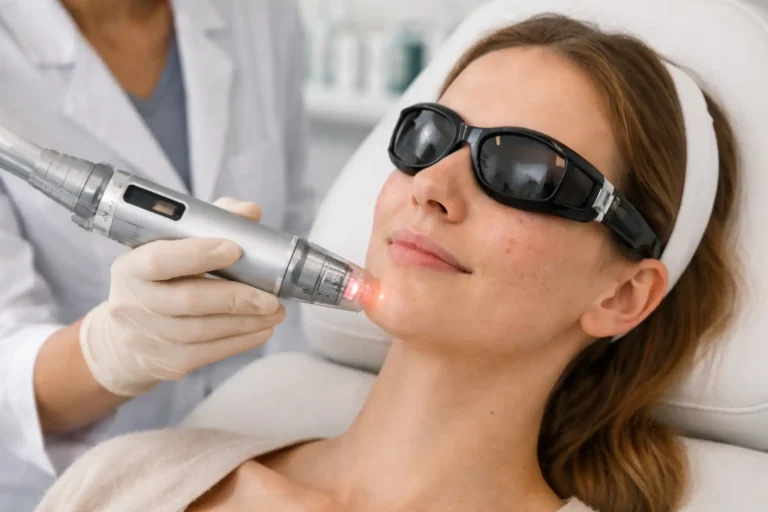
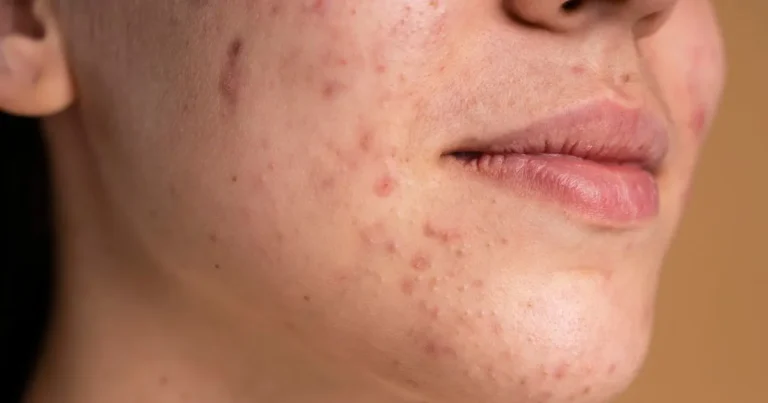
An OTC kit should not delay professional care when acne is nodular, cystic, rapidly worsening, or leaving scars.
A stronger-looking kit is not automatically the next step for severe acne.
Example 1: A Benzoyl Peroxide Kit
The AcneFree Oil Free 24 HR Acne Clearing System is a useful example of a benzoyl-peroxide-centered kit.
Its current three-step structure includes:
- Oil-Free Acne Cleanser with 2.5% benzoyl peroxide.
- Witch Hazel Mattifying Toner.
- Oil-Free Acne Lotion with 5% benzoyl peroxide.
The toner also includes glycolic acid, while the lotion formula includes additional exfoliating and conditioning ingredients.
That means this acne system is not simply “one benzoyl peroxide product plus two neutral support steps.” Benzoyl peroxide appears in both the cleanser and leave-on treatment, so the irritation load deserves attention.
As an Amazon Associate, we earn from qualifying purchases.
Want a complete benzoyl peroxide kit in one box? 🧴
AcneFree Oil Free 24 HR Acne Clearing System packages a medicated cleanser, toner, and leave-on acne lotion into a coordinated three-step routine.
✅ 2.5% benzoyl peroxide cleanser
✅ 5% benzoyl peroxide leave-on lotion
✅ One boxed routine for people who prefer coordinated steps
Because benzoyl peroxide appears in more than one step and the toner adds exfoliating ingredients, this kit may be more drying than a routine with only one medicated step. Follow the current directions and reduce frequency if bothersome peeling develops.
👉 Check AcneFree Oil Free 24 HR Acne Clearing System on Amazon
If you are unsure whether a kit is better than a single benzoyl-peroxide product, compare it with other acne products that contain benzoyl peroxide.
Example 2: A Retinoid-Centered Kit
ProactivMD 3-Step Routine uses a different structure:
- Ultra-Gentle Cleanser.
- Adapalene Gel 0.1%.
- Ultra-Hydrating Moisturizer.
This makes the medicated step easy to identify. Adapalene 0.1% performs the primary acne-treatment role, while the cleanser and moisturizer support cleansing and tolerability.
From a routine-design standpoint, this acne system is a useful contrast with kits that place acne medication in several steps.
Adapalene still requires patience. Its current label states that irritation is more likely during the first few weeks, particularly when more than one topical acne medication is used, and that it may take up to three months of once-daily use to see results.
The exact Amazon listing for the ProactivMD 3-Step Routine is currently verified, but the latest check did not show a featured offer. For that reason, it should remain an editorial example rather than an active affiliate recommendation until availability returns.
Is an Acne System Better Than Building Your Own Routine?
Not automatically.
A branded acne system has real advantages:
- The products are packaged in a clear order.
- You make fewer shopping decisions.
- Supporting cleanser and moisturizer may already be included.
- It can be convenient for a beginner who wants a defined routine.
But a kit also has disadvantages:
- You may not need every step.
- Two or more products may repeat the same active.
- Replacing one product can be inconvenient.
- Subscription plans can change the long-term cost.
- A bundle can encourage you to use more products than your skin needs.
Building your own routine gives you more control. You can select one appropriate active, then choose a cleanser and moisturizer based on your skin rather than a prebuilt package.
The best option is whichever gives you a medically sensible routine you can tolerate and use consistently.
Complete Kit vs. Individual Products
| Question | Branded kit | Build-your-own routine |
|---|---|---|
| Convenience | Usually high | Requires more selection |
| Control over active ingredients | Limited to the kit | High |
| Easy to replace one step | Sometimes harder | Usually easy |
| Risk of repeated actives | Depends on system | You control it |
| Cost | Depends on bundle/subscription | Depends on product choices |
| Best fit | Reader who values coordination | Reader who knows which active they need |
Neither approach is inherently more effective.
The question is whether the treatment active is appropriate and whether the supporting routine helps rather than interferes.
How to Avoid Over-Treating With a Complete Kit
A common problem with a complete kit is that every bottle looks important, so the reader assumes every bottle must be medicated.
Before using the entire kit, check for:
- Salicylic acid in multiple steps.
- Benzoyl peroxide in both cleanser and treatment.
- Retinoid plus several exfoliating acids.
- Physical scrubs.
- Strong toners.
- Extra spot treatments you already own.
For example, the AcneFree system above includes benzoyl peroxide in both cleanser and lotion. That may be suitable for some users when used as directed, but it also means the routine is more active than a simple cleanser plus one treatment.
A good rule is:
Use the minimum number of active steps needed to do distinct jobs.
Dryness, burning, or peeling is not proof that a system is working better.
Does a Complete Acne Kit Need Toner?
No. An acne system does not become incomplete simply because it has no toner.
Toner is a product format, not an essential acne-treatment category.
A toner may have a useful job if it contains a well-chosen active or provides a specific benefit. But ask:
- What ingredient is in it?
- Is that ingredient already in another step?
- Does it make the routine easier or harder to tolerate?
- Would you buy this toner on its own?
If a toner repeats an exfoliating active already present elsewhere, its added value may be smaller than the marketing suggests.
You do not need to fill every possible skincare category to have a complete acne routine.
Is a 4-Step Kit Better Than a 3-Step Kit?
No. Step count is not a measure of medical quality.
A three-step kit with:
- Gentle cleanser.
- Appropriate treatment.
- Moisturizer.
may be more logical than a five-step routine that repeats salicylic acid and adds several exfoliants.
Extra steps can be useful when they perform distinct jobs. Sunscreen, for example, adds something different from a cleanser or acne medication.
But “cleanse, tone, treat, correct, repair” is not automatically superior to “cleanse, treat, moisturize.”
Evaluate what is inside the bottles, not how many numbers are printed on the box.
How to Read an Acne System Label Before Buying
Before purchasing a kit, do this eight-point check:
- Find every Drug Facts panel.
Identify which products are actually OTC acne drugs. - Write down each active ingredient.
Do not rely on branded step names. - Check concentrations.
For OTC acne products, benzoyl peroxide commonly falls within 2.5% to 10%, while salicylic acid falls within 0.5% to 2%. - Separate wash-off from leave-on treatments.
Contact time changes how a product fits the routine. - Look for repeated actives.
Two benzoyl-peroxide products are not the same routine as one benzoyl-peroxide treatment. - Read frequency directions.
More frequent use than the label recommends does not guarantee faster results. - Check irritation warnings.
This is especially important when several medicated products appear in the same system. - Ask whether every step solves a distinct problem.
If you cannot explain why a product is there, reconsider whether you need the entire bundle.
How Long Should You Give a Kit to Work?
A new acne system usually needs more than a few days before you can judge meaningful acne improvement.
The useful timeline depends on the treatment ingredient.
Adapalene, for example, may take up to three months of once-daily use according to its current OTC label. Early irritation and temporary worsening can occur.
Other acne treatments also require consistency, but you should follow the specific Drug Facts rather than forcing every active into one universal timeline.
Do not switch systems every few days because a new breakout appears.
At the same time, “give it time” should not become a reason to tolerate severe irritation or delay care while acne becomes painful or scars.
When an OTC Kit Is Not Enough
An OTC kit is best suited to acne that is appropriate for self-care.
Consider dermatologist evaluation when you have:
- Deep nodules or cysts.
- Acne that is causing scars.
- Extensive facial or body acne.
- Significant pain.
- Rapid worsening.
- Persistent acne despite appropriate OTC treatment.
- A rash or acne-like condition you are not sure is acne.
- Acne that is affecting your quality of life.
Current acne guidelines include prescription topical and oral options for cases that need more than OTC products.
A kit can organize a routine. It cannot replace the right diagnosis or treatment level.
Frequently Asked Questions
What should a good acne system include?
A useful kit should include an evidence-supported treatment that matches your acne and supporting products that have clear roles. A cleanser, one main treatment, and moisturizer can be enough for many routines, with sunscreen used during the day. A toner or extra serum is optional unless it adds a distinct benefit.
Is a 3-step acne system better than using one acne treatment?
Not necessarily. One appropriate acne medication can do most of the treatment work, while cleanser and moisturizer support it. A three-step system can make the routine easier to follow, but the added steps do not automatically make the medication more effective.
Can I use an acne system if I already use adapalene or retinol?
Check every active ingredient first. If the kit already contains adapalene, another retinoid should not be added casually. If the system contains salicylic acid, benzoyl peroxide, or multiple exfoliants, combining them with an existing retinoid can increase irritation. Follow your medication label or clinician’s plan.
Is benzoyl peroxide or salicylic acid better in an acne system?
The answer depends on lesion type. Benzoyl peroxide generally fits inflamed papules and pustules better, while salicylic acid is particularly useful for blackheads, whiteheads, and clogged pores. A system should be chosen around the acne pattern rather than around which ingredient sounds stronger.
How long should I use an acne system before deciding it is not working?
Use the timeline for the main treatment active rather than a generic kit promise. Some treatments need several weeks, and adapalene may take up to three months. Seek help earlier if acne becomes severe, painful, rapidly worsening, or begins to scar.
The Bottom Line
A good acne system is not defined by how many bottles come in the box. Start by finding the actual acne medication, then decide whether the cleanser, moisturizer, toner, and other steps make that treatment easier to use without duplicating unnecessary actives.
A benzoyl-peroxide kit may suit inflammatory acne, while an adapalene-centered routine offers a different mechanism. Neither structure is automatically best for everyone.
Choose the simplest system that matches your breakouts, check every active ingredient, and avoid paying for extra steps that do not add a clear benefit.
If your acne is deep, painful, scarring, or not improving with appropriate OTC care, a dermatologist can help you move beyond trial-and-error kits.
This article is for educational purposes only. It does not diagnose acne or replace individualized care from a dermatologist or another qualified healthcare professional.
References:
- American Academy of Dermatology — Acne Clinical Guideline — Used to verify current recommendations for benzoyl peroxide, topical retinoids, salicylic acid, and combination treatment approaches.
- FDA — OTC Monograph M006: Topical Acne Drug Products for OTC Human Use — Used to verify the U.S. OTC concentration ranges of 2.5%–10% benzoyl peroxide and 0.5%–2% salicylic acid.
- AcneFree — Oil Free 24 HR Acne Clearing System — Used to verify the current three-step kit, 2.5% benzoyl-peroxide cleanser, 5% benzoyl-peroxide lotion, toner ingredients, directions, and manufacturer positioning.
- Proactiv — ProactivMD 3-Step Routine — Used to verify the cleanser, adapalene 0.1%, and moisturizer structure of the current kit.
- DailyMed — Proactiv MD Adapalene Acne Treatment 0.1% — Used to verify adapalene directions, early irritation/worsening information, once-daily use, and the statement that results may take up to three months.