Does Salicylic Acid Help With Acne Scars? Find the Answer Here
Does salicylic acid help with acne scars, or does it mainly treat breakouts? The answer depends on what you call a scar. Salicylic acid may make very mild surface irregularities less noticeable, help some flat post-acne marks fade gradually, and prevent new blemishes. It cannot replace lost collagen, release tethered scars, or flatten raised scars.
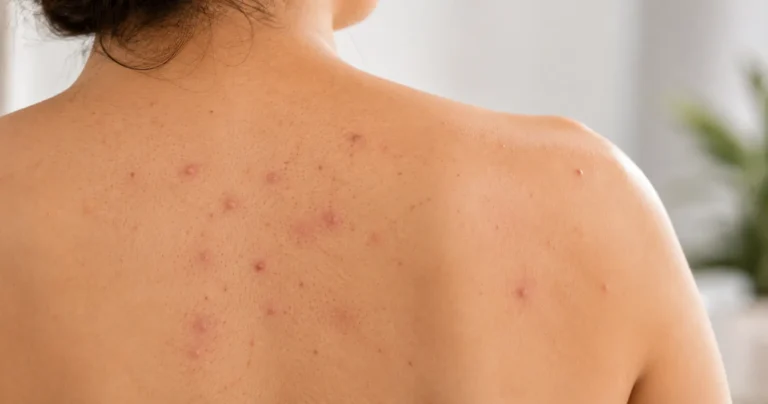
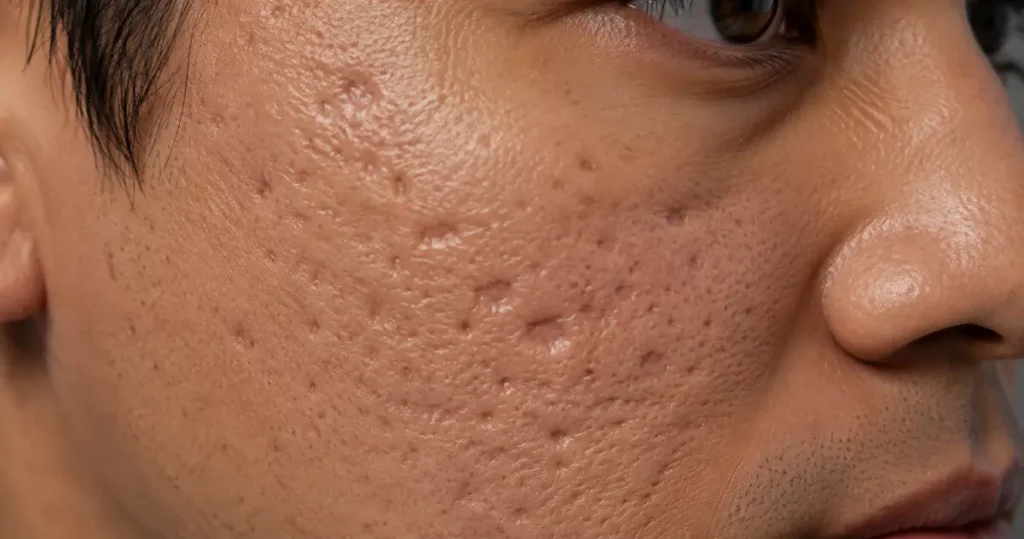
Flat brown, gray, red, or purple spots left after a pimple are often called “scars,” although they do not change the skin’s structure. True scars create indentations or raised tissue and usually need a dermatologist-directed procedure for meaningful improvement.
Table of Contents
Does Salicylic Acid Help With Acne Scars—or Just Acne Marks?
Does salicylic acid help with acne scars? It can improve active acne and exfoliate the skin’s surface, so mild scarring or unevenness may look less noticeable. Its limits are important, however: an over-the-counter product does not rebuild the deeper collagen loss that creates pitted scars, and it does not remove excess tissue from raised scars.
To set realistic expectations, first look at whether the change is flat or alters the skin’s contour.
| What you see | What it may be | Can salicylic acid address it? |
|---|---|---|
| Flat brown, gray, or darker area | Post-inflammatory hyperpigmentation (PIH) | It may support gradual fading by exfoliating surface cells, but results vary and irritation can darken the area |
| Flat pink, red, or purple area | Post-inflammatory erythema (PIE) | Usually not the best-targeted option because the color is related mainly to visible blood-vessel changes, not excess pigment |
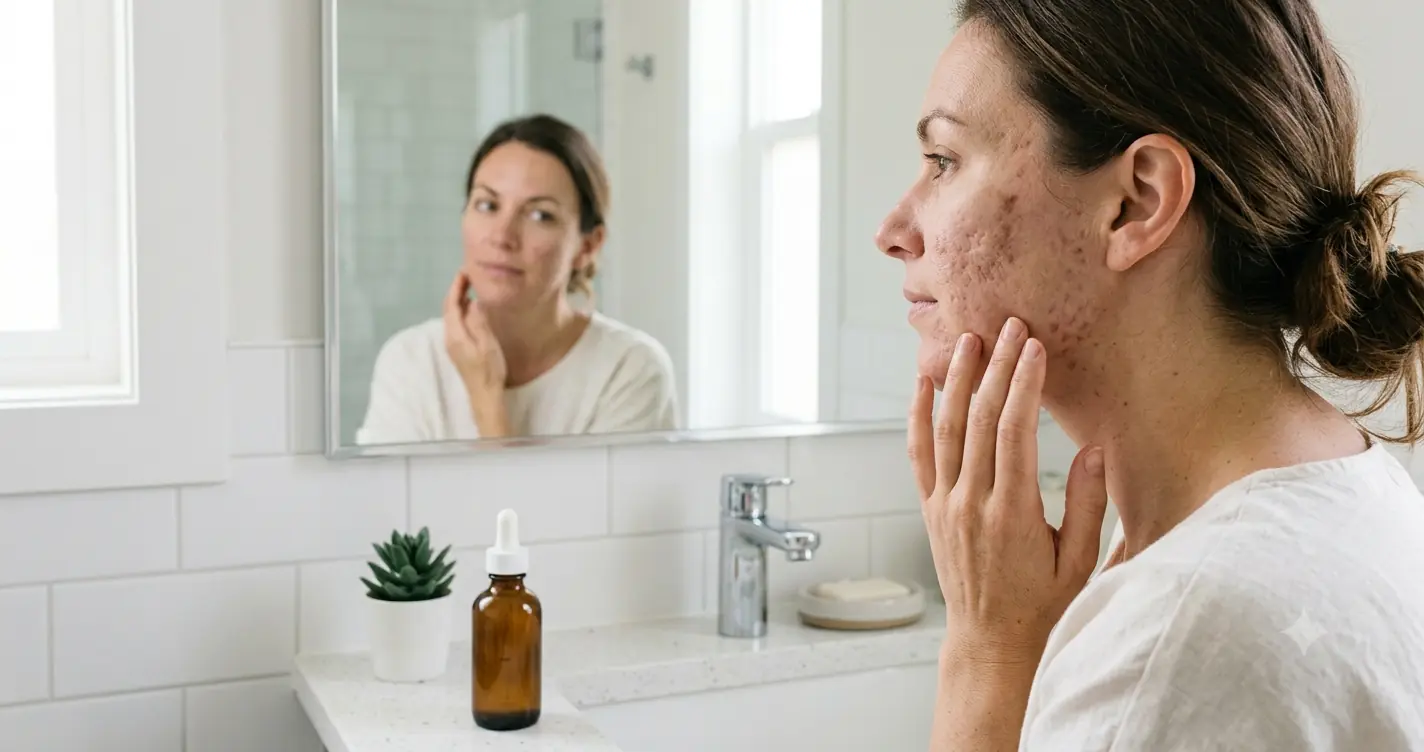
| Broad, shallow depression with sloping edges | Rolling scar | No; it cannot release fibrous bands tethering the skin |
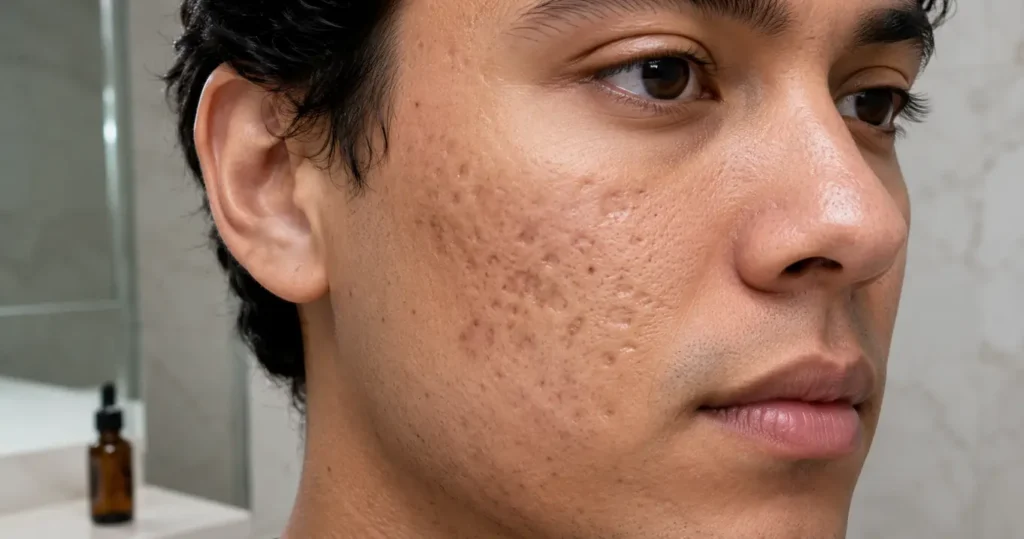
| Round or oval depression with defined edges | Boxcar scar | No; surface exfoliation cannot replace the missing dermal tissue |
| Narrow, deep pit | Ice-pick scar | No; a topical acid does not reach or close the deep tract |
| Firm bump or thickened area | Hypertrophic or keloid scar | No; raised scars require a different medical assessment and treatment approach |
Color changes and structural scars can occur together. A pitted scar may also look brown or red, so reducing its color may make it less obvious without changing the indentation itself.
How Salicylic Acid Works on Acne-Prone Skin
Salicylic acid is an oil-soluble beta hydroxy acid and keratolytic ingredient, meaning it helps loosen surface cells. It can work within oily pores, where dead cells and sebum contribute to blackheads and whiteheads. The American Academy of Dermatology lists it as an ingredient that opens clogged pores and exfoliates skin.
This explains why the question does salicylic acid help with acne scars has two answers. It can help manage the acne process that leads to future marks and scars, while its direct effect on established structural scars is limited. Preventing inflamed breakouts—and avoiding picking or squeezing—reduces new skin injury, but prevention is not the same as repairing an old scar.
Surface exfoliation is not deep collagen repair
Atrophic scars form when healing leaves too little supporting tissue in the dermis; raised scars form when the body produces excess scar tissue. A typical salicylic acid cleanser, serum, or moisturizer acts mainly at or near the surface. It cannot lift a tethered depression or precisely remodel deep tissue.
If you are asking does salicylic acid help with acne scars because a product promises to “erase” pits, that promise goes beyond what a standard topical product can reasonably do.
What the Evidence Actually Supports
The strongest everyday use of salicylic acid is acne control, especially for clogged pores. The AAD notes that it is effective for whiteheads and pimples and that, in people with mild acne scarring, topical salicylic acid or a retinoid may make scarring less noticeable. “Less noticeable” is a modest outcome; it does not mean that deep scars disappear.
So, does salicylic acid help with acne scars according to current guidance? Yes, potentially at the mild end of the spectrum, but not as a stand-alone correction for established pitted or raised scars. Part of the visible benefit may come from smoother surface scaling, fewer new blemishes, or improvement in color rather than restoration of the original skin contour.
Research on clinician-applied salicylic acid peels suggests possible benefits for acne and post-acne pigmentation. Studies vary in strength, schedules, skin tones, and comparison treatments. A systematic review of post-inflammatory hyperpigmentation in skin of color found that salicylic-peel evidence came from very small numbers and had unclear significance—too little to promise scar removal from an over-the-counter product.
Evidence is stronger for prevention than scar removal
Does salicylic acid help with acne scars before they form? Indirectly, it may lower the chance of additional marks by helping control some types of acne. It is most useful for comedonal acne—blackheads and whiteheads—and can be part of a plan for mild pimples. Deep, painful nodules or cysts often require professional treatment because they carry a greater scarring risk.
Salicylic acid cannot guarantee that a breakout will not scar. Acne severity, depth of inflammation, picking, genetics, and the way your skin heals all matter. If acne is already leaving indentations or raised areas, early dermatology care is more useful than repeatedly changing exfoliants.
What Salicylic Acid May Improve
When readers ask does salicylic acid help with acne scars, they may be noticing several different concerns at once. Salicylic acid may have a reasonable role in the following situations:
- Active clogged pores: Keeping pores clearer may reduce blackheads, whiteheads, and some new pimples.
- Rough surface buildup: Gentle, tolerated exfoliation can make the outermost surface feel smoother.
- Very mild scar visibility: Authoritative dermatology guidance recognizes that topical salicylic acid may make mild scarring less noticeable.
- Some flat dark marks: Faster shedding of pigmented surface cells may support gradual improvement, although evidence for salicylic acid alone is limited.
- Oily, breakout-prone skin: An appropriate product can address oil-associated congestion without being a direct scar treatment.
These are gradual, limited changes. Lighting and inflammation can change how texture looks, so judge progress over time rather than after one application.
What Salicylic Acid Cannot Do
Does salicylic acid help with acne scars that cast shadows or remain raised when you run a finger across them? A home-use topical is unlikely to produce meaningful structural correction. It cannot:
- Fill an ice-pick or boxcar depression
- Cut the fibrous bands beneath a rolling scar
- Replace substantial lost collagen in the dermis
- Flatten a hypertrophic scar or keloid safely
- Guarantee permanent removal of discoloration
- Produce an instant or risk-free result
More aggressive exfoliation does not overcome these limits. Applying extra product, using it more often than directed, or combining several acids can cause burning, peeling, and inflammation. That inflammation may leave darker marks, particularly in skin that develops PIH easily.
How the Answer Changes by Scar Type
Rolling scars
Rolling scars create wave-like depressions because fibrous bands pull the skin downward. Does salicylic acid help with acne scars of this type? It may make the surface feel smoother, but it cannot release the tethering. Dermatologists may consider subcision, sometimes combined with fillers, microneedling, radiofrequency, or laser treatment.
Boxcar scars
Boxcar scars have wider depressions and defined edges. Does salicylic acid help with acne scars of this type? It cannot replace missing tissue, though controlling acne or color contrast may make the area look calmer. A dermatologist may consider resurfacing, microneedling, radiofrequency, filler, or surgery.
Ice-pick scars
Ice-pick scars are narrow and extend more deeply into the skin. When the question is does salicylic acid help with acne scars shaped like tiny deep holes, the practical answer is no. Dermatologists may discuss focal chemical reconstruction, punch techniques, or a combined plan; these are not do-it-yourself treatments.
Raised scars
Does salicylic acid help with acne scars that are raised? No. Hypertrophic scars and keloids contain excess tissue. Options may include injections, laser therapy, cryosurgery, or carefully planned surgery. Keloids can regrow, so professional diagnosis matters.
Salicylic Acid for Flat Post-Acne Marks
Flat post-acne marks differ from true scars. PIH results from excess pigment after inflammation and appears brown, gray-brown, or darker than surrounding skin; it is more common and may last longer in medium to deep skin tones. PIE appears pink, red, or purple and reflects vascular change.
Does salicylic acid help with acne scars when “scars” actually means PIH? It may help some superficial dark marks become less noticeable over time, especially while it prevents new clogged pores. Yet salicylic acid is not the only option, and the evidence for it as a pigment treatment is less established than its evidence for acne. Azelaic acid, retinoids, and dermatologist-directed pigment treatments may be considered depending on the person and the cause.
For red or purple PIE, salicylic acid does not directly target blood vessels. Gentle care and time may help; persistent redness may respond better to a dermatologist-guided vascular treatment. Daily broad-spectrum sunscreen matters because light can prolong or intensify pigmentation.
If a product stings persistently or causes visible inflammation, stop assuming that more peeling means faster fading. Irritation can work against your goal.
Over-the-Counter Products vs. Professional Peels
“Salicylic acid treatment” can describe very different exposures, with different benefits and risks.
| Option | Main role | Limits and safety considerations |
|---|---|---|
| Salicylic acid cleanser | Short-contact pore care for acne-prone skin | Washes off; unlikely to change established scar structure |
| Leave-on toner, serum, lotion, or moisturizer | Ongoing exfoliation and acne management when tolerated | Can cause dryness, stinging, or peeling; follow the product label |
| Professional salicylic acid peel | Controlled, stronger exfoliation selected for a specific concern | Requires trained assessment, careful application, and aftercare; still not suitable for every scar type |
| High-strength peel sold for unsupervised use | Marketed for dramatic resurfacing | The FDA warns that chemical peel products can cause chemical burns, infection, color changes, and disfiguring scars without appropriate supervision |
Does salicylic acid help with acne scars more as a professional peel? A clinician can create a stronger, controlled surface effect for selected cases of acne, pigmentation, or mild texture. Even then, treatment must match the scar, skin tone, medications, and PIH risk. A stronger peel is not automatically right for a deep or tethered scar.
Do not copy a clinic procedure with concentrated acid bought online. The FDA advises against using certain chemical-peel products without appropriate professional supervision because the conditions that cause injury may not be obvious from the label.
How to Judge Product Claims
When evaluating a label or advertisement, ask what outcome it actually promises. Does salicylic acid help with acne scars by preventing acne, improving a flat mark, or changing an indentation? Those are not interchangeable claims.
Look for claims about gradual exfoliation, clearer pores, or mild visual improvement. Be skeptical of “scar eraser,” “permanent resurfacing,” guarantees, or claims that an over-the-counter liquid rebuilds deep collagen. Photos can mislead when lighting, angle, makeup, or swelling differs.
A useful product should disclose its active ingredient and provide clear directions. Does salicylic acid help with acne scars more if you stack a cleanser, toner, serum, spot treatment, and moisturizer? No; stacking raises irritation risk.
Safety: Avoid Turning Irritation Into More Marks
Salicylic acid commonly causes dryness, tightness, stinging, redness, or peeling, especially when first introduced or combined with other exfoliants. Does salicylic acid help with acne scars if it continually irritates the skin? No. Ongoing inflammation can make discoloration more noticeable and weaken the skin barrier.
Follow the product label, apply only to intact skin, avoid the eyes and lips, and never use a professional-strength peel at home. Adding a retinoid, benzoyl peroxide, glycolic acid, or scrub at the same time increases irritation and hides its cause. A bland, non-comedogenic moisturizer can limit dryness.
Use broad-spectrum SPF 30 or higher each morning. Seek urgent help for trouble breathing, facial swelling, faintness, or another severe allergic reaction. Stop use and get medical advice for severe pain, blistering, marked swelling, or a suspected chemical burn.
If you are pregnant or breastfeeding, ask your obstetric clinician or dermatologist first. The AAD considers limited use during pregnancy generally safe but recommends clinician guidance; high-dose or widespread use deserves particular caution.
Treatments That Better Match Structural Acne Scars
Once active acne is controlled, a dermatologist can identify the scar types and build a combination plan. Does salicylic acid help with acne scars enough on its own? Usually not; one treatment rarely addresses every feature equally.
| Main concern | Treatments a dermatologist may consider | Why assessment matters |
|---|---|---|
| Tethered rolling scars | Subcision, filler, microneedling, radiofrequency, laser | The bands may need to be released before resurfacing |
| Shallow boxcar scars and broad texture | Microneedling, radiofrequency, fractional laser, chemical peeling | Depth, skin tone, downtime, and PIH risk affect the choice |
| Deep ice-pick scars | Focal chemical reconstruction or punch procedures | Treatment must reach the narrow tract without injuring surrounding skin |
| Selected depressed scars | Filler or minor scar surgery | Individual scars may need lifting, excision, or replacement of volume |
| Raised scars or keloids | Injections, laser, cryosurgery, or other scar-directed therapy | These scars can worsen or recur when treated improperly |
This is why does salicylic acid help with acne scars is only the first decision point. Next, identify the scar type and weigh improvement, downtime, risk, and cost. Laser treatment itself includes ablative, non-ablative, and fractional approaches with different uses.
When to See a Dermatologist
Arrange an evaluation when acne is painful, nodular, cystic, worsening, or leaving indentations or raised scars. Seek care if consistent over-the-counter treatment has not helped, dark marks keep multiplying, or the diagnosis is uncertain.
If you are still asking does salicylic acid help with acne scars after several weeks of tolerated use, compare the correct outcome: fewer clogged pores or calmer surface texture, not disappearance of deep pits. A dermatologist can examine the skin under consistent lighting, distinguish pigment from vascular color and structural scarring, and explain which options are appropriate for your skin tone.
Frequently Asked Questions
Can salicylic acid remove pitted acne scars?
No. Does salicylic acid help with acne scars that are pitted? It may slightly improve surface smoothness or reduce color contrast, but it cannot fill ice-pick, boxcar, or rolling scars. These scars involve changes below the surface and may need subcision, microneedling, laser treatment, focal chemical reconstruction, filler, or minor surgery.
Does salicylic acid fade dark spots after acne?
Does salicylic acid help with acne scars when the concern is a flat dark spot? It may support gradual PIH fading while preventing clogged pores, but pigment evidence is limited compared with acne evidence. Sunscreen, azelaic acid, or a retinoid may be more appropriate depending on your skin and routine.
How long does salicylic acid take to change the look of marks?
There is no dependable scar-removal timeline. Acne improvement may become noticeable after several weeks, while flat pigment changes can take months and vary by depth, skin tone, sun exposure, and irritation. Does salicylic acid help with acne scars quickly? Deep structural scars should not be expected to respond to a topical product at any speed.
Is glycolic acid or salicylic acid better for acne scars?
Does salicylic acid help with acne scars better than glycolic acid? Neither is reliable for deep or tethered scars. Salicylic acid is oil-soluble and useful for clogged pores; glycolic acid is a water-soluble alpha hydroxy acid used for surface exfoliation. Small peel studies are mixed, so the better choice depends on the concern and tolerance.
Is a professional salicylic acid peel the same as an over-the-counter product?
No. Does salicylic acid help with acne scars more in a professional peel? It may provide a stronger surface effect for suitable patients, but it carries burn and pigment-change risks. An over-the-counter cleanser or leave-on product is milder and should never be used to imitate a professional peel.
The Bottom Line
Does salicylic acid help with acne scars? It can make some mild surface changes or flat post-acne marks less noticeable and can help prevent new acne, but it will not rebuild deep collagen loss or correct raised scar tissue. Identify whether the concern is color or altered texture, use home products only as directed, and ask a dermatologist about scars that are indented, raised, persistent, or worsening.
This article is for educational purposes and does not provide a diagnosis or replace care from a qualified healthcare professional.
References:
- American Academy of Dermatology Association. “Acne Scars: Consultation and Treatment.” https://www.aad.org/public/diseases/acne/derm-treat/scars/treatment
- American Academy of Dermatology Association. “Acne: Diagnosis and Treatment.” https://www.aad.org/public/diseases/acne/derm-treat/treat
- American Academy of Dermatology Association. “10 Tips for Clearing Acne in Darker Skin Tones.” https://www.aad.org/public/diseases/acne/diy/skin-color
- American Academy of Dermatology Association. “Is Any Acne Treatment Safe to Use During Pregnancy?” https://www.aad.org/public/diseases/acne/derm-treat/pregnancy
- U.S. Food and Drug Administration. “FDA Warns Against Purchasing or Using Chemical Peel Skin Products Without Professional Supervision.” https://www.fda.gov/drugs/drug-alerts-and-statements/fda-warns-against-purchasing-or-using-chemical-peel-skin-products-without-professional-supervision
- Mar et al. “Treatment of Post-Inflammatory Hyperpigmentation in Skin of Colour: A Systematic Review.” https://pmc.ncbi.nlm.nih.gov/articles/PMC11514325/
- Arif T. “Salicylic Acid as a Peeling Agent: A Comprehensive Review.” https://pmc.ncbi.nlm.nih.gov/articles/PMC4554394/