Japanese Acne Cream Guide: Best Picks for Breakouts and Post-Acne Marks
Dealing with acne is frustrating enough on its own. Dealing with the dark spots it leaves behind afterward makes it even worse. If you’ve been cycling through Western acne products without finding something that truly works for your skin, Japanese acne cream might be the category worth exploring next. Japanese drugstore skincare has a long track record of delivering effective, gentle formulas that treat breakouts without wrecking your skin barrier in the process.
This guide covers the best picks for active breakouts and post-acne marks, how to choose the right product for your skin type, and practical tips for building these products into a routine that actually delivers results.
Table of Contents
What Makes Japanese Acne Cream Different From Western Options?
The J-Beauty Approach to Treating Breakouts
The difference between Japanese acne treatment and most Western approaches comes down to philosophy as much as ingredients. Western acne products often lean toward maximum active concentration — the thinking being that more of a proven ingredient means faster results. Japanese formulas tend to take a different route, emphasizing skin tolerance, barrier health, and consistent long-term use over aggressive short-term treatment.
This doesn’t mean Japanese acne cream is weak. It means the formulas are engineered to work effectively without burning through your skin barrier in the process. Many people who find standard benzoyl peroxide or high-concentration salicylic acid products too harsh discover that switching to a Japanese equivalent gives them comparable results with significantly less irritation and dryness.
The texture philosophy also differs. Japanese skincare for oily skin and acne-prone skin strongly favors lightweight gels, watery lotions, and fast-absorbing creams over thick, occlusive formulations. Products are designed to layer comfortably and absorb quickly — which makes compliance easier and reduces the likelihood of congestion from heavy textures.
Common Active Ingredients in Japanese Acne Creams
Understanding what goes into a quality japanese acne cream helps you read labels and choose products more confidently:
- Isopropylmethylphenol (IPMP) — The most commonly used antibacterial active in Japanese OTC acne products. It targets Cutibacterium acnes directly and is found in most Mentholatum Acnes and Rohto Acnes products.
- Salicylic acid — Used at regulated OTC concentrations in Japan for exfoliating inside pores and reducing comedones.
- Vitamin C derivatives (ascorbic acid glucoside, ascorbyl glucoside) — Commonly used in Japanese brightening products for fading post-acne marks and evening out skin tone.
- Tranexamic acid — A well-studied brightening ingredient that reduces melanin production driven by inflammation — ideal for post-acne hyperpigmentation.
- Niacinamide — A skin-conditioning ingredient that controls sebum, reduces redness, and helps fade discoloration from past breakouts.
- Dipotassium glycyrrhizate — A licorice-derived anti-inflammatory that soothes irritated, breakout-prone skin without clogging pores.
- Allantoin — A soothing ingredient that promotes cell regeneration and calms redness around active blemishes.
How to Choose the Right Japanese Acne Cream for Your Skin
For Oily Skin
If your skin produces excess oil throughout the day and you deal with frequent breakouts in the T-zone, look for a japanese acne cream or spot treatment with IPMP or salicylic acid as the primary active. Pair it with an oil-controlling lotion or toner rather than a heavy moisturizer. Japanese skincare for oily skin works best when the routine stays lightweight across every step — gel textures and water-based formulas will keep your skin balanced without adding unnecessary heaviness.
For Combination Skin
Japanese skincare for combination skin calls for a slightly more nuanced approach. You want acne-fighting actives where you break out — typically the forehead, nose, and chin — without over-drying the cheeks and other areas that tend toward normal or dry. Products that combine gentle actives with barrier-supporting ingredients, like ceramides or hyaluronic acid, work particularly well here. A ceramide-based acne gel or a salicylic acid lotion with added hydration is usually the smartest fit for this skin type.
For Sensitive Skin
Sensitive skin needs acne treatment that doesn’t trigger more redness or irritation than the acne itself. Look for fragrance-free, alcohol-free formulas with soothing ingredients like allantoin, dipotassium glycyrrhizate, or centella asiatica alongside the acne-fighting active. Japanese brands like Curel specialize in exactly this combination — effective treatment with a strong emphasis on skin tolerance.
For Post-Acne Marks and Hyperpigmentation
Post-acne marks are a separate concern from active breakouts and require different ingredients to address. Look for japanese acne treatment products built around tranexamic acid, vitamin C derivatives, or niacinamide. These ingredients target melanin production and the discoloration left behind after inflammation resolves. Brightening serums and essences are the primary product format for this concern in the Japanese skincare market.
Best Japanese Acne Cream Picks for Active Breakouts
Mentholatum Acnes Sealing Jel
The Mentholatum Acnes Sealing Jel is arguably the most iconic pimple cream Japan product on the market. It’s a clear gel spot treatment that uses isopropylmethylphenol and thymol as its antibacterial actives, supported by allantoin for soothing and a film-forming agent that seals the formula over the blemish to maximize contact time.
What makes it particularly useful is its finish. The gel dries down nearly invisible on the skin, which means it can be worn discreetly during the day as well as overnight. Applied consistently to an active pimple, most users see a noticeable reduction in size and redness within two to three days. It’s one of the best starting points for anyone new to japanese acne cream because it’s simple, effective, and widely available.
Best for: Active inflammatory pimples, daytime and overnight spot treatment, all skin types
Rohto Mentholatum Acnes Medicated Cream
The Rohto Mentholatum Acnes Medicated Cream is the cream-format counterpart to the Sealing Jel and another staple in Japan’s drugstore acne category. It uses the same primary active — isopropylmethylphenol — but in a creamier base that’s better suited for nighttime use or for skin that leans drier alongside its breakouts.
The formula includes vitamin E and moisturizing agents that help prevent the excessive dryness that sometimes accompanies antibacterial spot treatments. The slightly richer texture makes it more comfortable for areas of the face where skin is thinner or more reactive, like around the mouth or along the jawline. For mild to moderate acne that involves surface-level redness and inflammation, this is a reliable and well-tolerated option.
Best for: Nighttime spot treatment, mild to moderate acne, skin that experiences dryness alongside breakouts
Oxy Face Wash and Spot Treatment Line
The Oxy line — available in Japan and through international retailers — offers a range of acne-focused products including face washes and spot treatments built around salicylic acid and isopropylmethylphenol. The Oxy spot treatment gel is particularly well-regarded for its quick-drying, non-greasy formula that works on both surface pimples and early-stage blemishes that haven’t fully formed yet.
The face wash in the Oxy line is a useful addition for anyone dealing with consistent daily breakouts, as it delivers salicylic acid during the cleansing step to keep pores clearer over time. Used together, the Oxy cleanser and spot treatment cover both preventative and reactive acne treatment in a simple, streamlined way.
Best for: Consistent daily acne prevention and active spot treatment, oily skin types
Clean-Clear Acne Spot Treatment (Japan Version)
The Japanese version of Clean-Clear — sold as Clean & Clear in Japan — differs from the US version in its formulation approach. The Japan-market version uses isopropylmethylphenol as its primary antibacterial rather than high-concentration benzoyl peroxide, which gives it a gentler profile suitable for everyday use on sensitive and combination skin types.
The lightweight gel formula absorbs quickly and layers comfortably under moisturizer and makeup, making it practical for morning use as well as overnight treatment. It’s widely available through Japanese beauty retailers and online stores that carry Japanese drugstore products.
Best for: Everyday spot treatment, sensitive and combination skin, those sensitive to benzoyl peroxide
Best Japanese Acne Cream Picks for Post-Acne Marks
Transino Whitening Essence EX II
Transino Whitening Essence EX II is one of the most clinically respected brightening products in the Japanese skincare market. Its hero ingredient is tranexamic acid, which works by interrupting the signaling pathway that triggers excess melanin production in response to inflammation. Because post-acne marks form through exactly this process — inflammation from a pimple triggering localized hyperpigmentation — tranexamic acid is particularly well-targeted for this concern.
The essence is lightweight, absorbs quickly, and layers comfortably with other products. It’s not an overnight solution — consistent daily use over six to eight weeks is typically needed to see meaningful fading — but the results are reliable and the formula is well-tolerated even by sensitive skin types. For anyone dealing with stubborn dark spots left behind by past breakouts, this is one of the strongest OTC options available in the japanese acne treatment category.
Best for: Post-acne hyperpigmentation, stubborn dark spots, all skin types including sensitive
Melano CC Intensive Anti-Spot Essence
Melano CC by Rohto is one of the most beloved affordable brightening products in J-beauty, and for good reason. The Intensive Anti-Spot Essence uses a highly stable vitamin C derivative (ascorbic acid 2-glucoside) alongside vitamin E to fade post-acne marks, brighten overall skin tone, and provide antioxidant protection. It also contains isopropylmethylphenol in its formulation, giving it a mild secondary benefit for active breakouts.
The formula comes in a dropper bottle that dispenses precise amounts, making it easy to apply as a serum across the whole face or concentrate it on specific dark spots. The scent is slightly medicinal, which is normal for vitamin C products of this type. Results for fading post-acne marks typically appear within four to six weeks of daily use.
Best for: Post-acne dark spots, overall skin brightening, mild active acne alongside hyperpigmentation concerns
Hada Labo Shirojyun Premium Whitening Lotion
Hada Labo’s Shirojyun Premium Whitening Lotion takes a hydration-first approach to brightening. It combines arbutin — a gentle melanin-inhibiting ingredient — with multiple weights of hyaluronic acid to deliver significant moisture alongside its brightening action. This makes it particularly useful for skin that needs both hydration and post-acne mark treatment simultaneously.
As a lotion-style product — meaning a lightweight liquid toner in Japanese skincare terminology rather than a Western-style body lotion — it’s applied after cleansing and before heavier treatments. It works best as part of a broader brightening routine rather than a standalone solution, layering well beneath serums and moisturizers.
Best for: Post-acne marks combined with dehydration concerns, combination and dry-leaning skin types
Japanese Acne Cream for Oily and Combination Skin: What to Focus On
Oil-Control Without Over-Drying
One of the most common mistakes people with oily, acne-prone skin make is reaching for the most drying product available, assuming that stripping all the oil will clear their skin. It rarely works that way. When skin is over-stripped, it compensates by producing more sebum — making oiliness worse over time rather than better.
The best japanese skincare for oily skin approach uses oil-controlling products that absorb excess sebum without disrupting the skin’s natural moisture balance. Lightweight acne gels, oil-free toners with salicylic acid, and non-comedogenic gel moisturizers are your most useful tools in this category. Consistent use of these lightweight products over several weeks does more for long-term oil control than any single harsh treatment applied sporadically.
Lightweight Textures That Work Under Makeup
For people who wear makeup over their acne treatment products, texture matters a lot. Heavy or occlusive formulas tend to pill under foundation or cause it to break down faster throughout the day. Most japanese acne cream products in the spot treatment category are specifically designed with a fast-absorbing, low-residue texture that sits well under makeup.
Allow any spot treatment to fully absorb — typically two to three minutes — before applying makeup on top. Following with a light, oil-free primer can help extend wear and prevent the treatment from migrating.
How to Use Japanese Acne Cream Correctly
Spot Treatment Application Tips
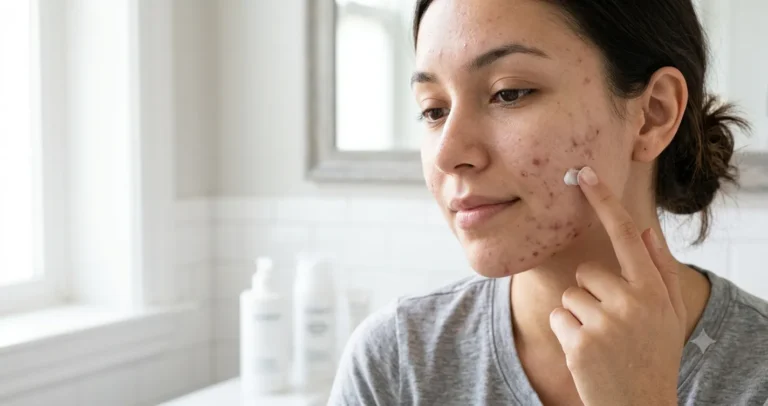
For targeted spot treatment with a japanese acne cream, apply a small amount — roughly the size of a grain of rice — directly onto the blemish using a clean fingertip or a cotton swab. Using a cotton swab for application avoids transferring bacteria from your hands to the treatment area, which can counteract the antibacterial action of the product. Apply after cleansing and before any heavier moisturizer or sleeping mask.
Full-Face Routine Integration
If you’re using a japanese acne treatment product more broadly — like a salicylic acid lotion or an acne-care gel — apply it as part of your layering sequence after cleansing and lighter watery products, but before heavier creams or oils. The general layering rule in Japanese skincare moves from lightest to heaviest texture, which keeps each product able to absorb properly without interference.
Layering With Other Japanese Skincare Products
Most japanese acne cream products are designed to work within a multi-step routine and layer well with other J-beauty products. A practical layering sequence for acne-prone skin looks like this:
- Cleanser — Remove oil, makeup, and environmental buildup
- Lotion or toner — Add lightweight hydration and prep the skin
- Acne spot treatment — Apply directly to blemishes
- Brightening serum — Apply to post-acne marks if relevant
- Gel moisturizer — Seal in hydration with a non-comedogenic formula
- Sunscreen (morning only) — Protect skin and prevent mark darkening
Mistakes to Avoid When Using Japanese Acne Creams
- Layering too many actives at once. Using an IPMP spot treatment, a salicylic acid lotion, and a vitamin C serum all in the same routine sounds thorough, but it often leads to irritation rather than faster results. Introduce one new active at a time.
- Skipping sunscreen. Several key ingredients in japanese acne treatment products — including salicylic acid, vitamin C derivatives, and tranexamic acid — increase sun sensitivity or lose effectiveness when exposed to UV without protection. Daily SPF is essential.
- Applying spot treatment on unwashed skin. Acne cream applied over sunscreen, makeup, or daytime oil buildup won’t absorb or work properly. Always cleanse before treatment application.
- Discontinuing products after one or two weeks. Most japanese acne cream products need four to eight weeks of consistent use to show their full effect. Switching products too early is one of the most common reasons people don’t see results.
- Assuming all Japanese products are interchangeable. Not every product sold in Japan is formulated for acne-prone skin. Check labels for non-comedogenic status and review the ingredient list before adding anything new to a breakout-prone routine.
Where to Buy Japanese Acne Cream in the US
Access to japanese acne cream products in the US has expanded significantly over recent years. Your most reliable options include:
- Amazon — The widest selection, often with fast shipping. Verify seller authenticity before purchasing to ensure you’re getting genuine products.
- YesStyle — A dedicated Asian beauty retailer with a strong Japanese skincare selection and regular promotions
- Stylevana — Another reliable Asian beauty platform with good stock of Japanese drugstore brands
- Riman and Beautylish — Carry select premium Japanese skincare brands for more curated shopping
- Japanese grocery and lifestyle stores — Mitsuwa Marketplace and Marukai locations in cities like Los Angeles, Chicago, and New York often stock authentic Japanese drugstore skincare directly
- Kinokuniya — Select US locations carry a rotating selection of Japanese beauty products alongside their main retail offerings
Most pimple cream Japan products are affordably priced in the $8 to $25 range, making it easy to try multiple options without significant financial commitment.
Japanese Acne Cream vs. Western Acne Treatments: Quick Comparison
| Feature | Japanese Acne Cream | Western Acne Treatment |
|---|---|---|
| Primary antibacterial | IPMP, salicylic acid | Benzoyl peroxide, salicylic acid |
| Typical texture | Lightweight gel, watery cream | Gel, lotion, thick cream |
| Irritation level | Generally lower | Varies — often higher at standard concentrations |
| Barrier support | Commonly included | Less consistent |
| Post-acne mark treatment | Widely integrated | Less common in acne-specific lines |
| Price range | $8–$25 for most drugstore products | $6–$35 depending on brand |
| Availability in US | Online retailers, select stores | Widely available in all drugstores |
Both approaches have real merit. Western acne treatments — particularly those with benzoyl peroxide — are often more aggressive against bacteria and can produce faster results for severe inflammatory acne. Japanese acne cream products tend to be gentler, more barrier-conscious, and better integrated with brightening and prevention steps. For many people, combining elements of both approaches gives the best overall outcome.
Conclusion
Japanese acne cream products offer a well-rounded, thoughtfully formulated approach to breakout care that goes beyond just treating the active pimple. From antibacterial spot treatments like Mentholatum Acnes Sealing Jel to brightening essences like Melano CC and Transino, the Japanese skincare market covers every stage of the acne journey with products that are gentle, effective, and designed for real daily use.
Whether your main concern is active breakouts, post-acne dark spots, or keeping oily and combination skin balanced, there’s a japanese acne treatment on this list worth adding to your routine. Start with one product that matches your most pressing concern, stay consistent for at least four to six weeks, and build from there. The results are worth the patience.
FAQ
1. What is the best Japanese acne cream for sensitive skin? For sensitive skin, the Mentholatum Acnes Sealing Jel and Curel Acne Moisture Gel are among the most well-tolerated options. Both use gentle antibacterial actives alongside soothing ingredients like allantoin and ceramides that protect the skin barrier during treatment. Always patch test before full facial use, even with products marketed as suitable for sensitive skin.
2. Can Japanese acne cream help with cystic acne? Most OTC japanese acne cream products are best suited for mild to moderate acne — surface-level pimples, blackheads, whiteheads, and early-stage blemishes. Deep cystic or nodular acne typically requires prescription-strength treatment under dermatologist supervision. If your breakouts are consistently deep, painful, and don’t respond to OTC products after eight to twelve weeks, booking a dermatology appointment is the right next step.
3. How is Japanese acne cream different from Western spot treatments? The main differences are in the antibacterial ingredient and the overall formula philosophy. Most japanese acne treatment products use isopropylmethylphenol (IPMP) rather than benzoyl peroxide, which tends to be gentler and less likely to bleach fabric or cause significant dryness. Japanese formulas also more consistently include barrier-supportive and soothing ingredients alongside their actives, reflecting the J-beauty emphasis on skin tolerance and long-term use.
4. How long does it take for Japanese acne cream to fade post-acne marks? For brightening-focused products like Transino or Melano CC, most users begin to see noticeable fading of post-acne marks within four to six weeks of consistent daily use. Full results for stubborn hyperpigmentation typically take eight to twelve weeks. Sun protection during this period is essential — UV exposure significantly slows the fading process and can darken existing marks further.
5. Is pimple cream from Japan safe to use every day? Yes — most pimple cream Japan products are formulated for daily use. Spot treatments like Mentholatum Acnes Sealing Jel are designed to be applied directly to blemishes once or twice daily as needed. Broader treatment products like acne care lotions are intended for daily routine use. As with any skincare product, starting with once-daily application and monitoring your skin’s response before increasing frequency is always the safest approach.