Ashwagandha Acne: Understanding the Link Between Ashwagandha and Skin
You start taking ashwagandha because you want better sleep, less stress, or a steadier daily routine. Then your skin starts acting differently. Maybe you notice a few new pimples on your chin, more oil on your forehead, or breakouts that seem harder to calm down than usual. That is usually when the phrase ashwagandha acne starts to feel very real.
The confusing part is that acne is already a messy skin issue. Hormones, stress, skin care, sleep, diet, and genetics can all affect it. So when breakouts show up after a new supplement, it can be hard to tell whether ashwagandha acne is the real problem or just a stressful coincidence.
Direct answer: Ashwagandha acne is not a formal medical diagnosis. It is a phrase people use when they notice breakouts after starting ashwagandha. The link may be real for some people, especially if they are acne-prone or sensitive to hormonal changes, but it is not proven to happen in everyone.
Table of Contents
What People Mean When They Search Ashwagandha Acne
When people search ashwagandha acne, they are usually trying to answer one practical question: “Did this supplement make me break out?” They are not looking for a technical label. They are trying to understand why their skin changed after adding something new to their routine.
In most cases, ashwagandha acne means one of three things. First, a person had clear or mostly calm skin and then noticed new breakouts after starting ashwagandha. Second, a person already had acne, but it got worse soon after using the supplement. Third, a person is not even sure whether it is true acne, irritation, or just bad timing, and wants help sorting it out.
That is why this topic needs a balanced approach. Some people may connect ashwagandha acne to the herb itself. Others may actually be reacting to added ingredients, a dose that does not suit them, or other routine changes happening at the same time.
What Is Ashwagandha and Why Might It Affect Skin?
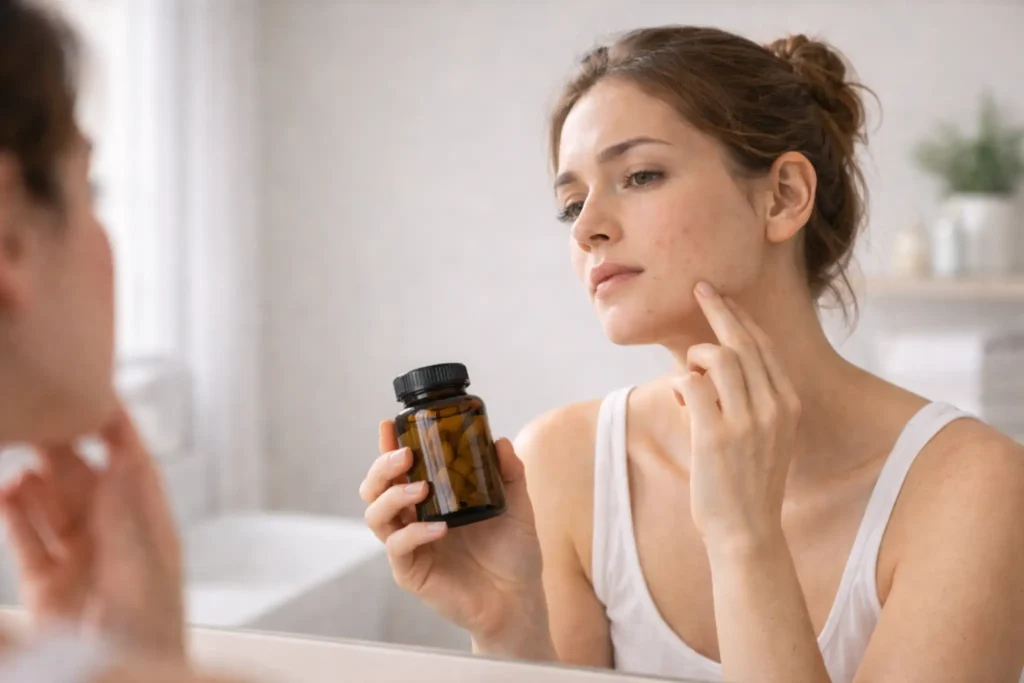
Ashwagandha is an herb used in traditional wellness practices and commonly sold as a supplement for stress support, sleep, and general balance. You can find it in capsules, powders, gummies, drink blends, and combination formulas.
At first glance, that may not seem connected to skin at all. But the body does not separate skin from the rest of your health. Anything that affects stress, hormones, sleep, or inflammation can raise skin questions. That is one reason ashwagandha acne comes up so often.
Another reason is that people do not all take the same type of product. One person might use a simple capsule with a short ingredient list. Another might use a flavored powder with sweeteners, herbs, and other compounds. When someone says they developed ashwagandha acne, the full product matters, not just the main ingredient on the label.
How Acne Forms in the First Place
To understand ashwagandha acne, it helps to step back and look at how acne actually forms. Acne happens when pores get clogged with oil and dead skin cells. Once that pore is blocked, inflammation can build, and bacteria can make the breakout worse.
That is why acne is not usually caused by one thing alone. It is shaped by several factors working together. These often include:
- Oil production
- Hormonal shifts
- Inflammation
- Clogged pores
- Family history
- Stress levels
- Skin care products
- Friction or sweat
- Certain medications or supplements
This matters because when people talk about ashwagandha acne, they often want one clean answer. Real life usually does not work that way. A supplement may play a role, but it can also overlap with other strong acne triggers.
Can Ashwagandha Cause Acne?
This is one of the biggest related questions behind ashwagandha acne. The honest answer is that can ashwagandha cause acne does not have a simple yes or no for everyone.
Some people may notice more breakouts after starting it. That does not mean ashwagandha is a proven acne trigger for all users. It means some people appear to be more sensitive to changes that happen around the time they start taking it.
There are a few possible reasons why ashwagandha acne may happen in some people:
- You may be sensitive to hormone-related changes
- You may already have acne-prone skin
- The product may contain extra ingredients that do not suit you
- You may have started it during a stressful or hormonally active phase
- Your skin care routine may also have changed around the same time
So yes, ashwagandha acne may be a real experience for some users. But that is still different from saying ashwagandha directly causes acne in everyone who takes it.
Does Ashwagandha Cause Acne or Is It a Coincidence?
This is where people often get stuck. You start a new supplement, then you break out, and your brain naturally connects the two. Sometimes that connection is right. Sometimes it is not.
When trying to figure out whether ashwagandha acne is real for you, timing matters. Did the breakouts begin shortly after you started the supplement? Did they get worse after you increased the dose? Did your skin improve when you stopped taking it?
At the same time, you also have to look at what else was happening. Were you under unusual stress? Did your menstrual cycle shift? Did you start using a heavier moisturizer, a new sunscreen, or another supplement? Did your sleep, diet, or workouts change?
That is why ashwagandha acne can be hard to prove. Acne is already influenced by too many variables. A good rule is this: do not assume the supplement is innocent, but do not assume it is guilty either. Look for patterns instead of reacting to one bad skin day.
Ashwagandha and Acne: Why Experiences Differ So Much
The topic of ashwagandha and acne feels confusing because two opposite stories can both happen.
One person may feel calmer, sleep better, and notice that stress-related breakouts seem less intense. Another person may start the same herb and notice clogged pores, oilier skin, or new pimples along the jawline. Both people may honestly believe their experience is caused by ashwagandha.
That is one reason ashwagandha acne gets mixed reviews. A supplement that supports one person’s routine may not fit another person’s body, skin type, or hormone pattern. Personal response matters.
This is also why broader claims about ashwagandha benefits for skin should be treated carefully. Some people may notice indirect skin benefits if they feel more balanced overall. Others may mainly notice breakouts. The same product does not always lead to the same result.
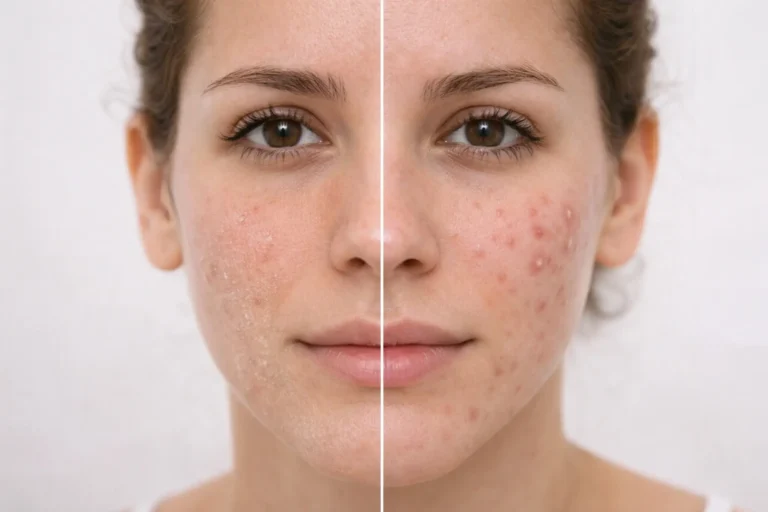
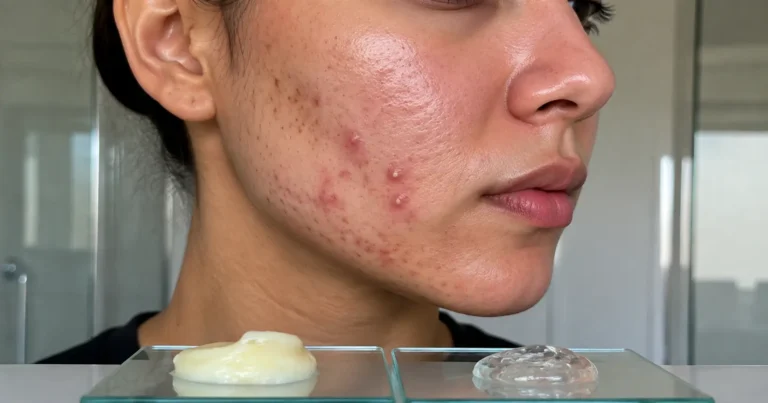
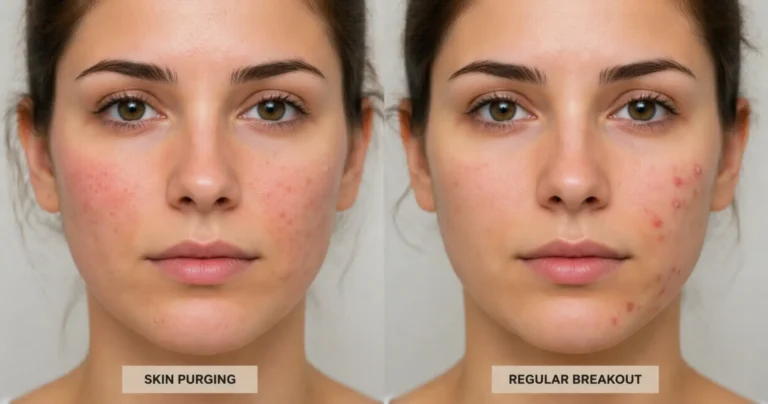
What Ashwagandha Acne Usually Looks Like
There is no one perfect look for ashwagandha acne, but there are some patterns people commonly describe. In many cases, it looks like regular acne rather than something unusual or dramatic.
Common patterns may include:
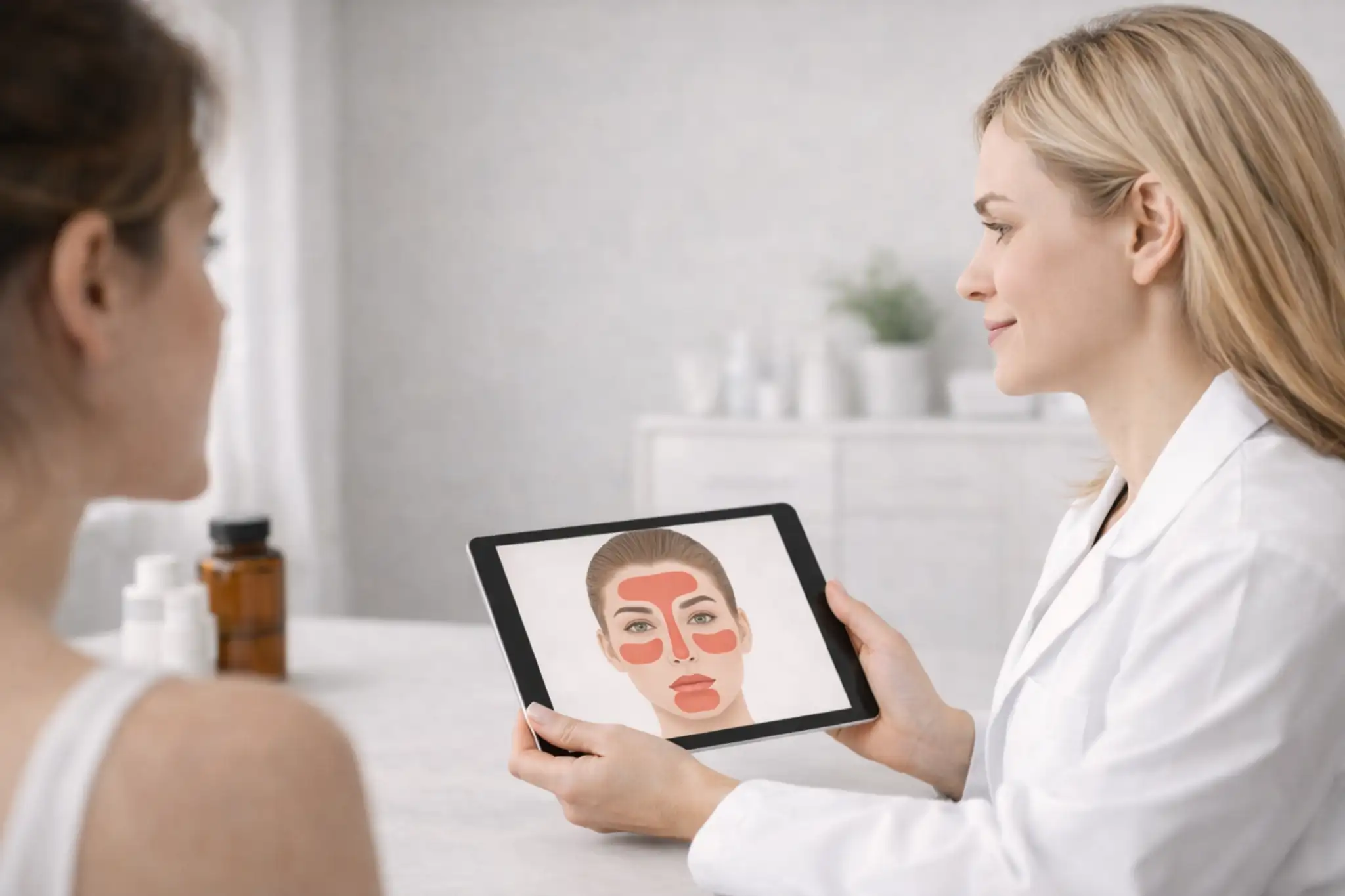
- Chin and jawline breakouts
- Small inflamed pimples around the mouth
- Forehead congestion or increased oiliness
- Whiteheads or clogged pores on the cheeks
- Breakouts on the chest, shoulders, or upper back
For some people, ashwagandha acne is not a completely new type of breakout. It is more like their usual acne pattern suddenly becomes more active. Someone who already gets hormonal breakouts may notice them more often. Someone with oily skin may start clogging more easily.
It is also important to tell acne apart from other reactions. True acne usually involves clogged pores, inflamed bumps, blackheads, whiteheads, or deeper pimples. Irritation may look more like roughness, burning, or redness. An allergic reaction may involve itching, swelling, or a rash. Not every skin change after a supplement is ashwagandha acne.
Could Ashwagandha Help Acne for Some People?
This is the other side of the conversation. While some people worry about ashwagandha acne, others ask does ashwagandha help acne.
The most balanced answer is that it may help some people indirectly, especially if stress plays a major role in their breakouts. If a calmer nervous system helps you sleep better and feel less overwhelmed, your skin may look less reactive over time.
That does not mean ashwagandha is a standard acne treatment. It is not a replacement for proven acne care. If you have persistent or severe acne, you still need to think about skin care, medical treatment, and professional guidance when needed.
Still, this mixed effect helps explain why ashwagandha acne is so hard to discuss in a simple way. A person whose breakouts are heavily tied to stress may feel better on it. A person with strong hormonal sensitivity may feel worse. That difference is why one person talks about ashwagandha benefits for skin while another warns people about ashwagandha acne.
Who May Be More Likely to Experience Ashwagandha Acne?
Not everyone has the same risk of reacting. Some people may be more likely to notice ashwagandha acne than others.
You may be more likely to experience ashwagandha acne if you:
- Already have oily or acne-prone skin
- Tend to get hormonal breakouts
- Often break out along the chin and jawline
- Are sensitive to herbal products or blends
- Started multiple supplements at the same time
- Are going through a stressful life period
- Have frequent cycle-related acne flares
- Use skin care products that clog pores
If your skin is already reactive, it does not always take a huge change to trigger more breakouts. That is why people with a long history of acne may notice ashwagandha acne more quickly than someone whose skin is usually calm.
How Soon Can Ashwagandha Acne Show Up?
There is no exact universal timeline, but most people who suspect ashwagandha acne notice a change within several days to a few weeks after starting the supplement. One single pimple right after your first dose is usually not enough evidence.
A more convincing pattern looks like this:
- You start ashwagandha
- Your skin changes within the next one to four weeks
- Breakouts continue or increase without another clear cause
- Your skin improves after stopping
- The same pattern returns if you reintroduce it
That repeat pattern is often the most useful clue. Without it, ashwagandha acne can be hard to separate from normal acne ups and downs.
If you want clear answers, track the date you started, the brand, the dose, and where the breakouts appear. That small amount of tracking can save you a lot of confusion later.
How to Tell If Ashwagandha Is Really the Trigger
If you think you have ashwagandha acne, the best approach is simple observation, not panic.
Pause and observe
Stop the supplement for a while and watch your skin. Try not to change too many other things at the same time.
Check the ingredient label
Look closely at the full formula. Is it plain ashwagandha, or does it also include sweeteners, other herbs, flavoring, or extra wellness ingredients? Sometimes ashwagandha acne may be more about the formula than the herb itself.
Keep the rest of your routine stable
This step matters more than most people realize. If you also switch cleansers, add strong acids, and start a new protein powder, you will not know what affected your skin.
Watch what happens after stopping
Does your skin settle after a few weeks? Do the same types of pimples stop appearing as often? That does not prove everything, but it gives you useful information.
Notice what happens if you reintroduce it
This step is only for mild situations. If the reaction was severe, do not test it again on your own. But if you reintroduce a simple product later and the same breakout pattern returns, ashwagandha acne becomes a much more likely explanation.
A practical checklist can help:
- Did the breakouts start soon after beginning the supplement?
- Was the product new and different from what you used before?
- Did you change anything else at the same time?
- Did your skin improve when you stopped?
- Did the same issue come back when you tried again?
What to Do If You Think You Have Ashwagandha Acne
If you suspect ashwagandha acne, try not to attack your skin with ten products at once. A calmer plan usually works better.
First, stop the supplement temporarily. Give your body and skin time to settle before deciding what the pattern means.
Second, simplify your skin care. Use a gentle cleanser, a light moisturizer, and sunscreen. Stick with products that are labeled non-comedogenic when possible.
Third, avoid harsh scrubs, picking, and over-exfoliating. When people panic about breakouts, they often make the skin barrier more irritated, which can make the whole face look worse.
Fourth, be patient. Even if ashwagandha acne is the trigger, acne does not vanish overnight. Your skin may need a few weeks to calm down.
If you still want to use ashwagandha later, wait until your skin has settled. Then, if appropriate, consider trying a simpler product with fewer extra ingredients. Do not do that if you had a strong reaction beyond acne.
Supportive Skin Habits While You Figure It Out
While sorting out ashwagandha acne, it helps to keep the rest of your routine steady and skin-friendly.
Gentle cleansing
Wash your face with a mild cleanser once or twice a day. More is not better. Overwashing can irritate the skin and make it harder to read what is happening.
Moisturizing without clogging pores
Use a light moisturizer that works for acne-prone skin. Dry, irritated skin can actually make breakouts feel worse.
Daily sunscreen
If your breakouts leave marks behind, sunscreen matters. It helps protect the skin while it heals and can reduce the chance that leftover spots become more noticeable.
Avoid picking and over-exfoliating
Picking pimples can turn a small breakout into a lingering mark. Over-exfoliating can leave your skin red, tight, and more reactive.
Sleep, hydration, and stress support
These basics still matter, even if ashwagandha acne is the main concern. Better sleep, enough water, and lower stress can make your skin easier to manage overall.
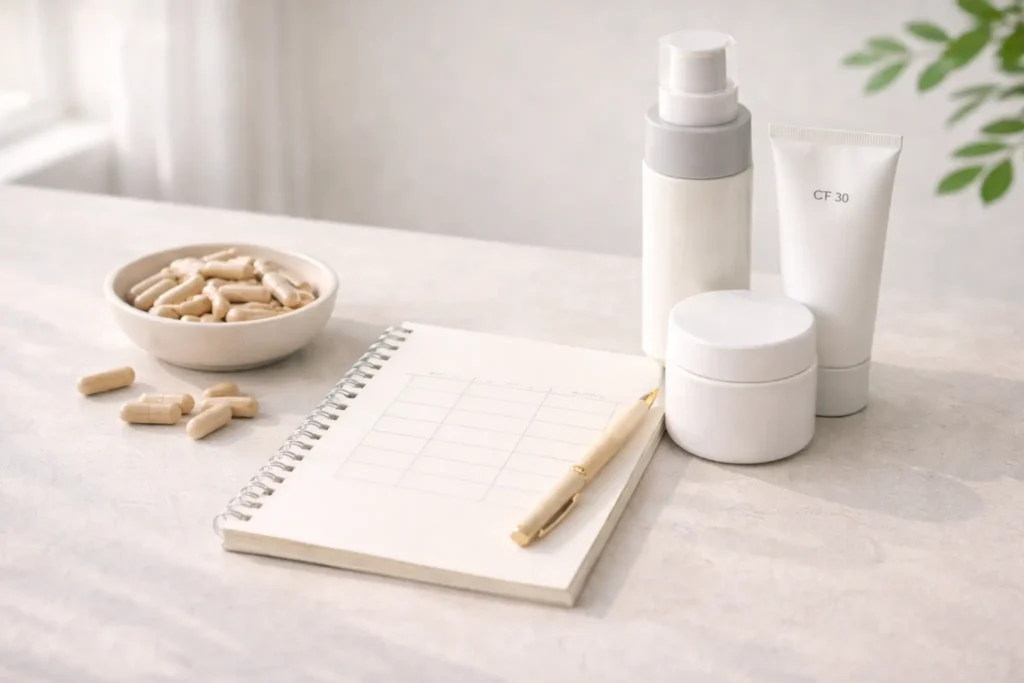
Keep a short skin journal
Write down the date, your dose, your product, and what your skin looked like that week. This can help you see patterns you might otherwise miss.
Common Mistakes People Make
One big mistake is calling every breakout ashwagandha acne without enough evidence. Acne can flare for many reasons, and it is easy to blame the most recent change.
Another mistake is ignoring the extra ingredients in the product. A blend, gummy, or flavored powder may affect you differently than a plain capsule. If you skip the label, you may blame the wrong thing.
Some people also confuse acne with irritation or rash. If your skin is itchy, swollen, or covered in a fine red rash, that is not classic ashwagandha acne.
Changing too many variables at once is another common mistake. If you start and stop several things together, your skin becomes harder to understand.
Finally, many people expect immediate improvement after stopping. Even real ashwagandha acne may take time to settle. Patience matters.
When to Stop and Seek Medical Advice
Sometimes ashwagandha acne may be mild and manageable. Other times, you need help sooner.
Stop the supplement and seek medical advice if you notice:
- Severe or painful breakouts
- Deep cystic acne
- Swelling or hives
- Itching or rash
- Digestive side effects along with the skin reaction
- Dizziness or feeling unwell
- Rapid worsening that feels unusual for your skin
You should also see a dermatologist if your acne is scarring, leaving dark marks, affecting your confidence, or not improving with simple steps. A stubborn breakout does not become easier just because it started around a supplement. If it needs treatment, it needs treatment.
Final Verdict on Ashwagandha Acne
So what is the final take on ashwagandha acne?
It is a real concern for some people, but it is not a formal diagnosis and not a guaranteed effect of taking ashwagandha. Some people may notice breakouts after starting it, especially if they already have acne-prone skin, hormonal sensitivity, or a product formula that does not suit them. Others may notice no skin problems at all.
That is why the topic of ashwagandha acne, can ashwagandha cause acne, and ashwagandha and acne needs a careful, personal approach. The goal is not to assume. The goal is to track patterns, simplify variables, and respond based on what your skin is actually doing.
Conclusion
If you think you are dealing with ashwagandha acne, take a step back and look at the full picture. Check the timing, review the product label, simplify your skin care, and give your skin time to respond. Some people may tolerate ashwagandha just fine, while others may find that it does not work well for their skin. Pay attention to patterns, choose simple products when testing supplements, and get professional help if the breakouts are severe, persistent, or confusing.
FAQ:
1. What does ashwagandha acne mean?
Ashwagandha acne is a non-medical phrase people use when they notice breakouts after starting ashwagandha. It usually refers to pimples, clogged pores, or flare-ups that seem connected to the supplement, even though the link is not proven for every person.
2. Can ashwagandha acne happen even if I never had acne before?
Yes, it is possible. If your skin has never been acne-prone, new breakouts after starting a supplement may stand out more clearly. But before assuming it is ashwagandha acne, look at other factors too, like stress, skin care changes, hormones, and the full ingredient list.
3. How long does ashwagandha acne take to go away?
There is no exact timeline. Mild ashwagandha acne may start calming down over a few weeks after stopping the supplement, but the skin usually does not clear overnight. Your normal acne tendency, skin care routine, and how severe the breakout is all affect recovery time.
4. Does ashwagandha help acne caused by stress?
It may help some people indirectly if stress is a major trigger behind their breakouts. But does ashwagandha help acne does not have a simple yes answer, and it should not replace proven acne treatment if your breakouts are ongoing or severe.
5. Should I stop ashwagandha right away if I break out?
If you strongly suspect ashwagandha acne, it makes sense to pause the supplement and observe your skin, especially if the timing is clear. If the reaction is severe, unusual, or includes swelling, itching, rash, or other symptoms beyond acne, stop using it and get medical advice.