Benzoyl Peroxide vs Salicylic Acid: Which Is Better for Your Acne?
If you are comparing benzoyl peroxide vs salicylic acid, the right choice depends less on which ingredient sounds stronger and more on what kind of acne you are trying to treat. Salicylic acid is usually a better match for blackheads, whiteheads, and clogged pores, while benzoyl peroxide is especially useful for red, inflamed pimples.
Both ingredients can work well, and both can irritate skin when overused. This guide compares how they work, which acne patterns they fit, what strengths to consider, and whether using both makes sense.
Table of Contents
Benzoyl Peroxide vs Salicylic Acid: The Quick Answer
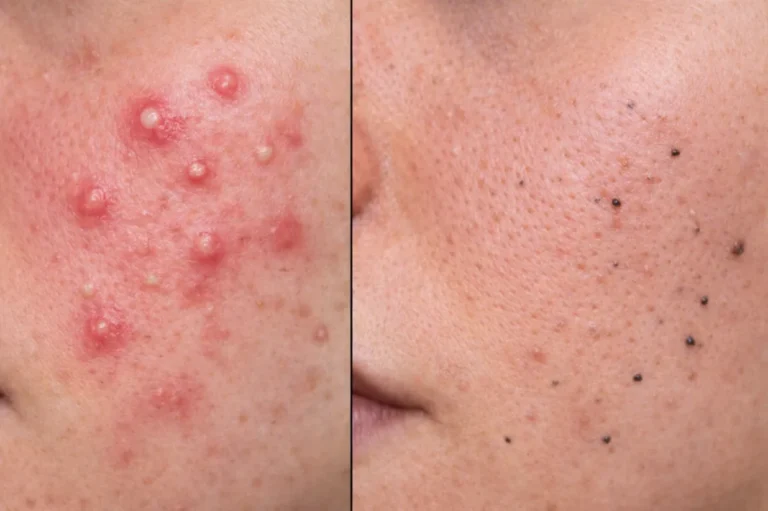
For benzoyl peroxide vs salicylic acid, there is no universal winner. Salicylic acid is usually the more targeted first choice for blackheads, whiteheads, and oily congestion because it helps unclog follicles. Benzoyl peroxide is often the better match for inflamed papules and pustules because it reduces acne-associated bacteria and inflammation.
If you have mixed acne, you may eventually benefit from more than one mechanism, but starting several drying actives at once can make your skin harder to tolerate.
Benzoyl Peroxide vs Salicylic Acid at a Glance
| Feature | Benzoyl peroxide | Salicylic acid |
|---|---|---|
| Main action | Reduces acne-associated bacteria and inflammation | Exfoliates and helps unclog follicles |
| Often best fit | Red, inflamed papules and pustules | Blackheads, whiteheads, clogged pores |
| FDA OTC acne range | 2.5% to 10% | 0.5% to 2% |
| Common downside | Dryness, stinging, peeling, fabric bleaching | Dryness, stinging, peeling |
| Common formats | Washes, gels, creams | Washes, liquids, gels, pads |
| Useful starting question | “Are most of my spots inflamed?” | “Are most of my pores clogged?” |
This table is a starting point, not a diagnosis. Many people have more than one type of acne at the same time.
How Benzoyl Peroxide Works
Benzoyl peroxide is an over-the-counter acne medication that reduces Cutibacterium acnes, a bacterium involved in inflammatory acne. It also has some effect on clogged follicles.
That makes it particularly useful when acne is dominated by red papules and pustules rather than only blackheads.
Over-the-counter benzoyl peroxide products in the United States can contain 2.5% to 10%. Higher strength does not automatically mean better results, and stronger formulas can be harder to tolerate.
The American Academy of Dermatology recommends benzoyl peroxide as an evidence-supported topical acne treatment. If you want a deeper breakdown of formats and concentrations, see which products and strengths contain benzoyl peroxide.
How Salicylic Acid Works
Salicylic acid is a beta hydroxy acid and keratolytic ingredient. It helps loosen and shed skin cells that can combine with oil inside a follicle and form a plug.
That is why it is particularly useful for comedonal acne, including:
- Blackheads.
- Whiteheads.
- Recurring clogged pores.
- Oily areas with visible congestion.
For OTC acne products in the United States, salicylic acid is used at 0.5% to 2%.
It does not primarily work by reducing acne-associated bacteria in the same way benzoyl peroxide does. If clogged pores are your main issue, read more about how salicylic acid works for clogged pores and blackheads.
Benzoyl Peroxide vs Salicylic Acid for Different Acne Types
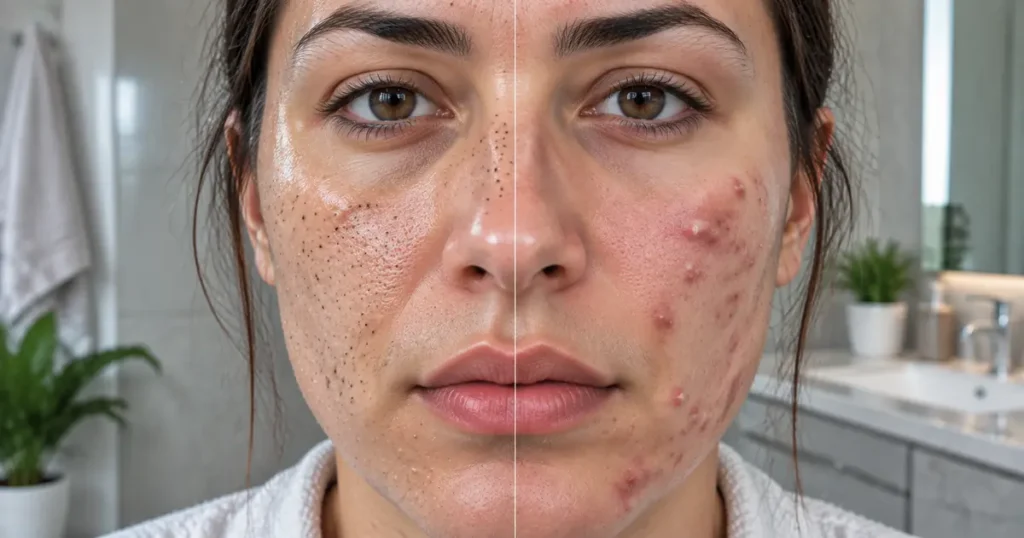
The most practical way to compare benzoyl peroxide vs salicylic acid is to look at the lesions you get most often.
Blackheads and Whiteheads
When blackheads, whiteheads, and recurring clogged pores are the main problem, salicylic acid is usually the more targeted first choice.
A rinse-off salicylic-acid cleanser can be an easier starting point than immediately adding a leave-on acid, especially if your routine already contains another acne treatment.
As an Amazon Associate, we earn from qualifying purchases.
Are clogged pores and blackheads your main problem? 🫧
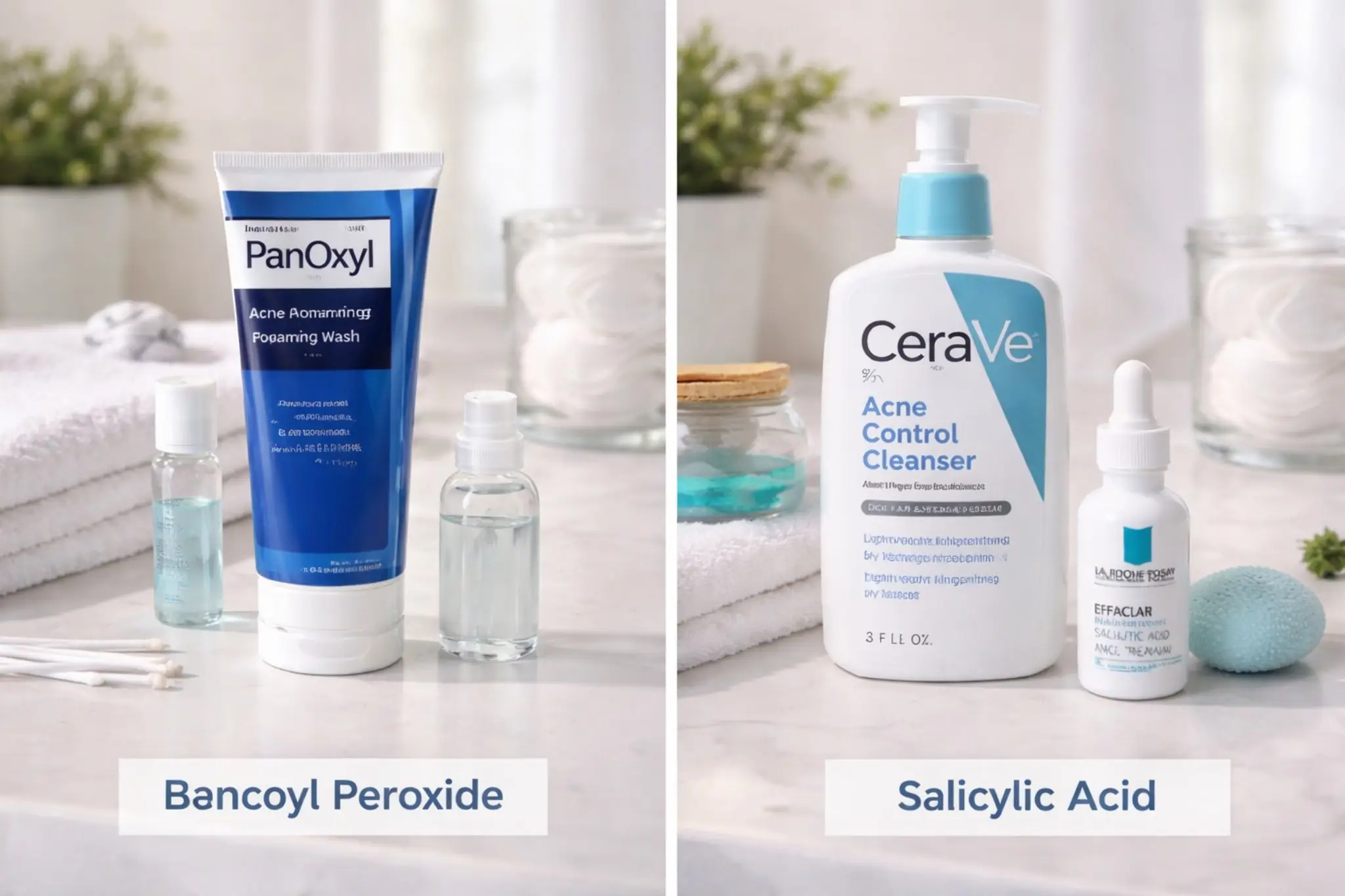
CeraVe Acne Control Cleanser with 2% Salicylic Acid is a rinse-off option designed for oily, acne-prone skin and recurring congestion.
✅ Contains 2% salicylic acid
✅ Helps target blackheads and clogged pores
✅ Includes ceramides and niacinamide in the formula
Salicylic acid can still cause dryness or stinging, especially when combined with other exfoliants or retinoids. Follow the label rather than adding several acne actives at once.
👉 View CeraVe Acne Control Cleanser buying options on Amazon
Red Pimples and Pustules
For mostly red, inflamed papules and pustules, a benzoyl-peroxide product generally matches the problem more directly than an exfoliating acid alone.
Benzoyl peroxide can be used in washes or leave-on products. A wash may be convenient for larger areas such as the chest or back, while a leave-on product gives longer contact with the skin.
Mostly dealing with red, inflamed pimples? 🔴
PanOxyl Antimicrobial Acne Creamy Wash, 4% Benzoyl Peroxide is a rinse-off option for face or body acne when inflammatory breakouts are the main concern.
✅ Contains 4% benzoyl peroxide
✅ Wash-off format for face, chest, and back
✅ Lower strength than maximum-strength 10% benzoyl peroxide options
Benzoyl peroxide can dry or irritate skin and can bleach towels, bedding, clothing, or hair. Follow the current label and introduce it cautiously.
👉 View PanOxyl 4% Benzoyl Peroxide Creamy Wash buying options on Amazon
Mixed Acne
If you have blackheads around your nose plus inflamed pimples on your cheeks or jaw, one ingredient may not address everything.
That does not mean you need to start benzoyl peroxide, salicylic acid, a retinoid, an acid toner, and a scrub at the same time.
Start with the concern that bothers you most or the ingredient that best matches the dominant lesion type. Once you know how your skin responds, a second treatment mechanism can be considered if it is genuinely needed.
Body Acne
Benzoyl-peroxide washes can be particularly practical on the chest, shoulders, and back because they cover a larger area and rinse off.
Salicylic-acid body washes can also help when the body acne is dominated by clogged pores.
If body breakouts are deep, widespread, painful, or leaving scars, an OTC wash should not delay dermatologist evaluation.
Nodules and Cysts
Deep nodules and cysts are different from a few superficial pimples. These lesions develop deeper in the skin and carry a higher risk of scarring.
Neither ingredient should be presented as a complete standalone answer for recurring painful nodules or cysts. Earlier professional treatment can be more appropriate.
Benzoyl Peroxide vs Salicylic Acid: Which Strength Should You Choose?
Strength is another important part of benzoyl peroxide vs salicylic acid, but the highest percentage is not automatically the smartest purchase.
Benzoyl Peroxide Strength
OTC benzoyl peroxide ranges from 2.5% to 10%.
For facial acne, starting toward the lower end can reduce the risk of dryness, burning, and peeling. If a lower-strength product is appropriate and works for your acne, there is no prize for moving immediately to 10%.
Product format also matters. A 4% cleanser that is rinsed away is a different exposure from a 4% leave-on treatment.
Salicylic Acid Strength
OTC salicylic-acid acne products range from 0.5% to 2%.
A 2% cleanser can still be quite different from a 2% leave-on liquid because the cleanser is removed after brief contact.
If you already use a retinoid or another exfoliant, tolerability may matter more than chasing the maximum salicylic-acid percentage.
Cleanser vs Leave-On Treatment
A cleanser and a leave-on treatment can contain the same active ingredient but behave differently in your routine. In practice, benzoyl peroxide vs salicylic acid is often a comparison of product formats as much as active ingredients.
Wash-off products are applied for a short period and rinsed. They can be useful when:
- You want a simpler first step.
- You are treating a larger area.
- You are sensitive to leave-on actives.
- You want benzoyl peroxide without leaving it on fabric-contacting skin for hours.
Leave-on products stay on the skin longer and may be useful for persistent localized acne, but longer contact can also increase irritation.
Do not compare only the number on the front of the package. Concentration, format, frequency, contact time, and the rest of your routine all matter.
Benzoyl Peroxide vs Salicylic Acid: Which Is More Irritating?
Both ingredients can irritate, so benzoyl peroxide vs salicylic acid is not simply a choice between “strong” and “gentle.”
Benzoyl peroxide may cause:
- Dryness.
- Redness.
- Burning or stinging.
- Peeling.
- Fabric bleaching.
Salicylic acid may cause:
- Dryness.
- Stinging.
- Peeling.
- Irritation from excessive exfoliation.
Your skin can also become irritated because of the combination of products rather than one ingredient alone.
If you are using benzoyl peroxide or salicylic acid and your skin becomes dry, a noncomedogenic moisturizer can improve comfort and make an acne routine easier to continue.
Persistent burning, marked swelling, blistering, or a significant rash is not something to “push through.”
Can You Use Benzoyl Peroxide and Salicylic Acid Together?
Yes, benzoyl peroxide and salicylic acid can be part of the same broader acne plan because they target different parts of acne development.
That does not mean everybody should layer them together from day one.
A safer practical approach is to:
- Start one active that matches your main acne concern.
- Follow its label consistently.
- See how your skin tolerates it.
- Add another acne active only if you still need another mechanism.
Some people use the ingredients at different times or on different days. Others use only one. If you are already using a prescription topical, follow your prescriber’s instructions before adding another OTC active.
A Simple Way to Choose Between Them
If the full benzoyl peroxide vs salicylic acid comparison feels complicated, use this decision framework:
Mostly blackheads and whiteheads?
Start by considering salicylic acid.
Mostly red, inflamed pimples or small pustules?
Benzoyl peroxide is usually the closer match.
Both congestion and inflammatory pimples?
Choose the dominant concern first, then reassess whether you need a second mechanism.
Skin already dry, peeling, or reactive?
Simplify before adding another acne active.
Deep, painful, or scarring acne?
Move beyond the OTC ingredient comparison and consider dermatologist care.
This is more useful than choosing whichever bottle has the highest percentage.
Benzoyl Peroxide Safety: Fabric Bleaching and Benzene Questions
Benzoyl peroxide has one practical drawback that salicylic acid does not share: it can bleach towels, pillowcases, clothing, and sometimes hair.
White towels and careful rinsing can reduce unpleasant surprises.
There has also been concern about benzene formation in some benzoyl-peroxide products. In 2025, the FDA tested 95 acne products containing benzoyl peroxide. More than 90% had undetectable or extremely low benzene levels, while six tested products had elevated levels and a limited number of retail-level recalls followed.
The FDA stated that even with daily use of the recalled products for decades, the estimated cancer risk from the detected benzene exposure was very low.
Current practical guidance is to:
- Follow the product’s storage instructions.
- Avoid exposing benzoyl-peroxide products to excessive heat.
- Check current FDA recall information if you are concerned.
- Discard expired products.
This is a product-quality consideration, not a reason to assume every benzoyl-peroxide treatment is unsafe.
How Long Should You Give an Acne Ingredient?
One of the most common mistakes in benzoyl peroxide vs salicylic acid is switching products before either one has had a fair trial.
Acne treatment usually requires consistency. Dermatology guidance commonly advises giving an OTC routine several weeks to show meaningful improvement.
A useful checkpoint is around six to eight weeks for mild acne, provided the treatment is tolerated and the acne is not rapidly worsening.
Do not keep waiting if you develop:
- Deep painful nodules.
- New scarring.
- Rapidly worsening acne.
- Severe irritation.
- A reaction that does not look like your usual acne.
Common Mistakes With Benzoyl Peroxide and Salicylic Acid
Starting Both at the Same Time
If you become dry and irritated, you will not know which product caused the problem.
Buying the Strongest Concentration Automatically
Higher strength can mean more irritation without being the best fit for your skin.
Using Too Much
More product does not force acne to clear faster.
Adding Scrubs and Acid Toners
A medicated cleanser plus a leave-on treatment plus a scrub can overwhelm the skin barrier.
Skipping Moisturizer
Acne-prone skin can still need moisturizer, especially when medicated products are drying.
Treating Peeling as Proof of Effectiveness
A product does not need to make your skin visibly peel to work.
Ignoring Acne Type
A blackhead-heavy routine and a pustule-heavy routine do not always need the same first ingredient.
When Neither Ingredient Is Enough
The decision between benzoyl peroxide vs salicylic acid matters most for mild to moderate acne that is appropriate for OTC care.
Consider a dermatologist if you have:
- Deep nodules or cysts.
- Acne that is leaving scars.
- Extensive chest or back acne.
- Rapid worsening.
- Significant pain.
- Acne that is affecting your quality of life.
- Little improvement after a consistent, appropriate OTC routine.
Prescription treatment can target acne in ways an OTC cleanser alone cannot.
Frequently Asked Questions
Is Benzoyl Peroxide or Salicylic Acid Better for Hormonal Acne?
Neither ingredient corrects the hormonal driver itself. The better topical choice still depends on what the acne looks like. Benzoyl peroxide may fit red inflammatory pimples better, while salicylic acid may help accompanying clogged pores. Persistent hormonally patterned acne may need a broader treatment plan.
Can Benzoyl Peroxide vs Salicylic Acid Be Used Every Day?
Whether benzoyl peroxide vs salicylic acid can be used daily depends on the specific product label, concentration, format, and your skin’s tolerance. A rinse-off cleanser may be easier to use regularly than a leave-on active. Do not increase frequency simply because your skin has not cleared immediately.
Is Benzoyl Peroxide Better Than Salicylic Acid for Blackheads?
Usually not as a first-match ingredient. Salicylic acid is particularly useful for blackheads and whiteheads because it exfoliates and helps clear clogged follicles. Benzoyl peroxide is often more useful when inflammatory pimples are the bigger problem.
Can I Use Salicylic Acid and Benzoyl Peroxide in the Same Routine?
They can be used within the same acne plan, but starting them simultaneously can increase dryness and make irritation harder to troubleshoot. Introduce one first, follow its label, and add the second only if your skin needs and tolerates another treatment mechanism.
Which Works Faster on a Red Pimple?
Benzoyl peroxide is usually the better-matched ingredient for a red inflammatory pimple because of its antibacterial and anti-inflammatory acne effects. That does not mean it can guarantee an overnight result. Consistent treatment across the acne-prone area is generally more useful than repeatedly attacking one lesion with extra product.
The Bottom Line
The best answer to benzoyl peroxide vs salicylic acid depends on your acne pattern.
Choose salicylic acid first when blackheads, whiteheads, and congestion dominate. Consider benzoyl peroxide when red, inflamed pimples and pustules are the main issue. If you have both, start with the dominant concern rather than introducing several strong actives at once.
Keep concentration and format in perspective, moisturize when your skin is dry, and give an appropriate OTC routine enough time to work. Deep, painful, rapidly worsening, or scarring acne deserves professional care rather than a stronger cleanser.
This article is for educational purposes only. It does not diagnose acne or replace individualized advice from a dermatologist or another qualified healthcare professional.
References
- American Academy of Dermatology — Acne Clinical Guideline
Used to verify the role of benzoyl peroxide and salicylic acid in current acne treatment guidance. - American Academy of Dermatology — Adult Acne Treatment Dermatologists Recommend
Used to verify guidance on starting benzoyl peroxide at a lower concentration and the role of salicylic acid for blackheads and whiteheads. - U.S. Food and Drug Administration — OTC Monograph M006: Topical Acne Drug Products for OTC Human Use
Used to verify OTC concentration ranges for benzoyl peroxide and salicylic acid. - American Academy of Dermatology — Moisturizer: Why You May Need It If You Have Acne
Used to verify that benzoyl peroxide and salicylic acid can cause dryness and irritation and that moisturizer can improve tolerability. - U.S. Food and Drug Administration — Limited Number of Voluntary Recalls Initiated After FDA Testing of Acne Products for Benzene
Used for the FDA’s benzene testing results and the limited benzoyl-peroxide product recalls. - American Academy of Dermatology — FAQs: Benzene in Acne Products Containing Benzoyl Peroxide
Used for current storage and replacement guidance for benzoyl-peroxide products. - PanOxyl — Acne Creamy Wash 4% Benzoyl Peroxide
Used to verify the 4% benzoyl-peroxide concentration, wash format, face/body use, and manufacturer directions. - CeraVe — Acne Control Cleanser
Used to verify the 2% salicylic-acid formula, niacinamide, ceramides, and intended use for oily, acne-prone skin.