What Has Benzoyl Peroxide? Common Acne Treatment Options Explained
If you’ve spent any time researching acne treatments, you’ve almost certainly come across benzoyl peroxide. It shows up in face washes, spot treatments, leave-on gels, and combination creams. Dermatologists recommend it constantly, and it’s been a staple of acne care for decades. But with so many different products containing it, it can be hard to know which ones are worth your attention and which concentration actually makes sense for your skin.
This guide breaks down exactly what has benzoyl peroxide, how the ingredient works, and which products and concentrations are worth considering based on your skin type and acne severity.
Table of Contents
What Is Benzoyl Peroxide and How Does It Work?
Benzoyl peroxide is an organic compound that has been used as a topical acne treatment since the 1960s. It’s one of the few OTC acne ingredients with strong clinical evidence behind it, and it remains one of the first-line recommendations from dermatologists for mild to moderate acne.
How Benzoyl Peroxide Kills Acne-Causing Bacteria
The way benzoyl peroxide works is fairly straightforward. When applied to the skin, it breaks down into benzoic acid and oxygen. That release of oxygen inside the hair follicle creates an environment that Cutibacterium acnes — the bacteria most responsible for inflammatory acne — cannot survive in. These bacteria are anaerobic, meaning they thrive in low-oxygen environments. Flooding the pore with oxygen essentially eliminates the conditions they need to multiply.
This mechanism is one reason benzoyl peroxide remains so effective even after decades of use. Because it kills bacteria through a chemical reaction rather than a biological pathway, bacteria cannot develop resistance to it the way they can with topical antibiotics.
Why It Remains One of the Most Recommended Acne Ingredients
Beyond its antibacterial action, benzoyl peroxide also has mild keratolytic properties — meaning it promotes the shedding of dead skin cells that can clog pores. This dual action makes it effective against both inflammatory acne (red, swollen pimples) and comedonal acne (blackheads and whiteheads). Combined with a strong safety record and wide availability, it’s no surprise that it continues to be a go-to recommendation for acne-prone skin.
What Products Have Benzoyl Peroxide?
Benzoyl peroxide appears in several different product formats, each with a slightly different use case and level of contact time with the skin.
Face Washes and Cleansers With Benzoyl Peroxide
Cleansers containing benzoyl peroxide are a popular starting point because they’re easy to incorporate into an existing routine. You apply them during your regular face-washing step and rinse off. Because contact time is short, these products are generally less likely to cause significant irritation — but they’re also less potent than leave-on treatments since the ingredient gets washed away before it can fully absorb.
Popular face washes with benzoyl peroxide include:
- PanOxyl Acne Foaming Wash (4% or 10%) — One of the most widely used benzoyl peroxide cleansers, available at most drugstores
- Neutrogena Clear Pore Cleanser/Mask (3.5%) — A dual-use product that works as both a rinse-off cleanser and a leave-on mask
- CeraVe Acne Foaming Cream Cleanser (4%) — Combines benzoyl peroxide with CeraVe’s ceramide-based formula for a gentler wash
Leave-On Gels and Creams With Benzoyl Peroxide
Leave-on products keep benzoyl peroxide in contact with the skin for hours at a time, making them more effective for active treatment. They’re typically applied after cleansing and left on overnight or throughout the day.
Well-known leave-on products include:
- Clean & Clear Persa-Gel 10 (10%) — A high-concentration gel suited for stubborn, oily-prone breakouts
- Neutrogena On-the-Spot Acne Treatment (2.5%) — A gentler option for mild acne or sensitive skin
- Proactiv Repairing Treatment (2.5%) — Part of the Proactiv system, designed as a leave-on step
- Differin Daily Deep Cleanser — A rinse-off product worth noting, though Differin’s main acne product uses adapalene rather than benzoyl peroxide
Spot Treatments With Benzoyl Peroxide
Spot treatments are designed for targeted application directly on individual pimples rather than across the full face. They tend to have slightly higher concentrations to speed up action on a specific blemish.
The best on the spot treatment for acne with benzoyl peroxide depends on your skin’s tolerance and the type of breakout you’re dealing with. The most commonly recommended options include:
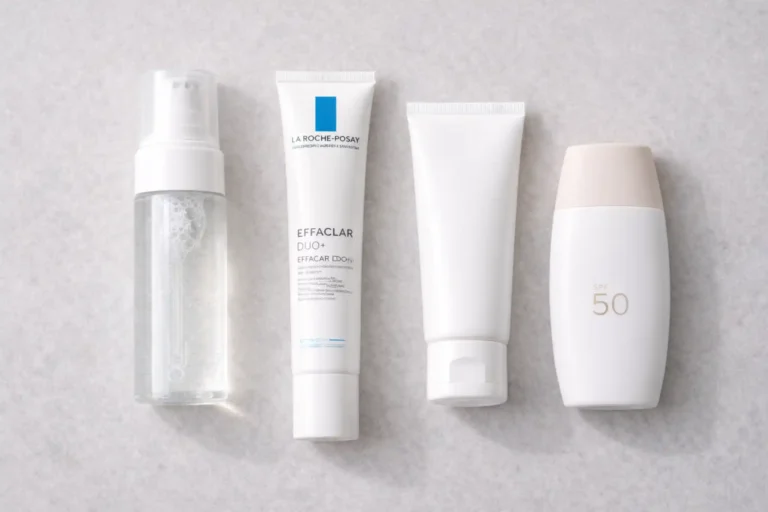
- Effaclar Duo acne spot treatment (5.5%) — A standout option that pairs benzoyl peroxide with lipo-hydroxy acid for dual-action treatment
- Neutrogena Rapid Clear Stubborn Acne Spot Gel (10%) — High-concentration, fast-acting option for tough blemishes
- Kate Somerville EradiKate Acne Treatment (2%) — A lower-concentration option combined with sulfur for a gentler approach
Combination Products With Benzoyl Peroxide
Some products pair benzoyl peroxide with other acne-fighting ingredients to broaden their effectiveness. The Effaclar Duo dual acne treatment with benzoyl peroxide is a prime example — it combines 5.5% benzoyl peroxide with lipo-hydroxy acid to target both bacteria and clogged pores simultaneously.
Prescription-strength combination products also exist, such as clindamycin-benzoyl peroxide gels (like Benzaclin or Duac), which pair the antibacterial power of benzoyl peroxide with an antibiotic to tackle more persistent inflammatory acne.
Benzoyl Peroxide Concentrations: Which Strength Is Right for You?
Not all benzoyl peroxide products are equal. Concentration plays a big role in both effectiveness and the likelihood of side effects.
2.5% Benzoyl Peroxide
The lowest commonly available concentration, 2.5% benzoyl peroxide is a good starting point for people new to the ingredient or those with sensitive, dry, or reactive skin. Research has shown that 2.5% can be nearly as effective as higher concentrations at reducing acne-causing bacteria while causing significantly less dryness and irritation. It’s a smart choice if you want to ease into benzoyl peroxide use without overwhelming your skin.
5% to 5.5% Benzoyl Peroxide
The middle-ground concentration is where many well-formulated products land — including Effaclar Duo acne spot treatment, which uses 5.5%. This level offers meaningfully stronger antibacterial action than 2.5% while remaining tolerable for most skin types. For mild to moderate inflammatory acne, the 5% to 5.5% range tends to deliver the best balance between efficacy and skin comfort.
10% Benzoyl Peroxide
The strongest widely available OTC concentration, 10% benzoyl peroxide is best suited for oily skin types with stubborn, persistent breakouts that haven’t responded to lower concentrations. It works faster on active pimples but carries a significantly higher risk of dryness, redness, and peeling. If you’re considering 10%, start with just spot treatment use rather than applying it broadly across your face.
Does Higher Concentration Mean Better Results?
Not necessarily. Several studies have shown that the difference in effectiveness between 2.5% and 10% benzoyl peroxide is smaller than most people expect — while the difference in irritation is much larger. For most people, starting at 2.5% or 5% and moving up only if needed is the smarter approach.
Effaclar Duo: A Closer Look at a Top Benzoyl Peroxide Spot Treatment
What Makes Effaclar Duo Stand Out
Among the many products containing benzoyl peroxide, Effaclar Duo acne spot treatment from La Roche-Posay stands out for a few specific reasons. First, it uses 5.5% benzoyl peroxide — an effective concentration that sits right in the sweet spot for daily use. Second, it pairs that benzoyl peroxide with lipo-hydroxy acid (LHA), a gentle pore-exfoliating ingredient that works alongside the antibacterial action to prevent new blockages from forming.
The formula also includes La Roche-Posay’s thermal spring water, which has anti-irritant properties that help offset some of the potential harshness of benzoyl peroxide. The result is a product that’s effective enough to treat real breakouts without stripping or damaging sensitive skin.
La Roche-Posay Effaclar Duo Review Summary
Across dermatology forums, skincare communities, and pharmacy review sites, the La Roche-Posay Effaclar Duo review picture is consistently positive. Users frequently highlight its ability to reduce active pimples within one to two days, its comfortable lightweight texture, and its suitability for sensitive skin types that struggle with standard benzoyl peroxide gels.
The main criticism that comes up in reviews is the price — it costs more than basic drugstore benzoyl peroxide products. But for most users, the gentler formulation and dual-action formula justify the difference.
Effaclar Duo Dual Acne Treatment With Benzoyl Peroxide Explained
The term Effaclar Duo dual acne treatment with benzoyl peroxide refers to the product’s two-pronged approach: the benzoyl peroxide handles the bacterial side of acne, and the LHA handles the structural side — clearing and preventing clogged pores. This makes it more versatile than a single-ingredient spot treatment, addressing both active breakouts and their underlying cause at the same time.
Best On the Spot Treatment for Acne With Benzoyl Peroxide
Top Picks Compared
| Product | BP Concentration | Best For | Price Range |
|---|---|---|---|
| Effaclar Duo | 5.5% + LHA | Sensitive, acne-prone skin | $20–$28 |
| Neutrogena On-the-Spot | 2.5% | Mild acne, beginners | $6–$10 |
| Clean & Clear Persa-Gel 10 | 10% | Stubborn, oily-skin breakouts | $7–$10 |
| PanOxyl Acne Foaming Wash | 4% or 10% | Daily cleansing routine | $8–$14 |
| Neutrogena Rapid Clear Gel | 10% | Fast action on tough pimples | $8–$12 |
How to Choose the Right One for Your Skin
- Sensitive or dry skin: Start with 2.5% and consider Effaclar Duo for a gentler 5.5% option with added skin-soothing benefits
- Oily or resilient skin with stubborn acne: A 10% product like Persa-Gel or PanOxyl may be more appropriate
- Balanced approach for daily use: The 5% to 5.5% range — like Effaclar Duo — is the most broadly suitable for consistent everyday treatment
How to Use Benzoyl Peroxide Products Correctly
Application Tips for Face Washes
Use a benzoyl peroxide cleanser once daily, typically in the morning. Wet your face, apply a small amount, lather gently for 30 to 60 seconds, and rinse thoroughly. Avoid scrubbing — the ingredient does the work, not mechanical friction. Pat dry with a clean towel.
Application Tips for Leave-On Treatments
Apply leave-on benzoyl peroxide products to clean, dry skin. A thin layer is all you need — applying more increases dryness without meaningfully improving results. For spot treatment, use a pea-sized amount directly on the blemish. For broader application, spread a thin, even layer across breakout-prone areas only.
Always follow with a non-comedogenic moisturizer to offset the drying effect, and apply broad-spectrum sunscreen every morning since benzoyl peroxide increases sun sensitivity.
Common Mistakes to Avoid
- Using it on wet skin. Damp skin absorbs products faster, which increases the risk of irritation. Always apply to completely dry skin.
- Skipping moisturizer. This is one of the most common mistakes that leads to unnecessary peeling and redness.
- Using too many actives at once. Combining benzoyl peroxide with retinoids or strong exfoliating acids on the same area in the same routine significantly increases irritation risk.
- Touching fabric immediately after application. Benzoyl peroxide bleaches on contact — let it absorb fully before your skin touches pillowcases or clothing.
Side Effects of Benzoyl Peroxide and How to Manage Them
Dryness, Peeling, and Redness
The most common side effects of benzoyl peroxide are dryness, flaking, and mild redness. These are most noticeable during the first two to three weeks of use and tend to improve as the skin adjusts. Managing them is straightforward: use a gentle cleanser, moisturize consistently, and start with a lower concentration or less frequent application if irritation is significant.
Fabric Bleaching Warning
Benzoyl peroxide will bleach fabric. This includes pillowcases, towels, clothing, and even carpet if the product drips. This isn’t a side effect of a poorly made product — it’s a chemical property of the ingredient itself. Protect your bedding by using white pillowcases when using benzoyl peroxide products overnight, and allow the product to fully absorb before contact with any fabric.
Who Should Be Cautious With Benzoyl Peroxide
- People with very dry or eczema-prone skin should proceed carefully and start at the lowest concentration
- Anyone currently using prescription retinoids should check with their dermatologist before adding benzoyl peroxide to the same routine
- Pregnant or breastfeeding individuals should consult a healthcare provider before use
- People with a known allergy to benzoyl peroxide or related compounds should avoid it entirely
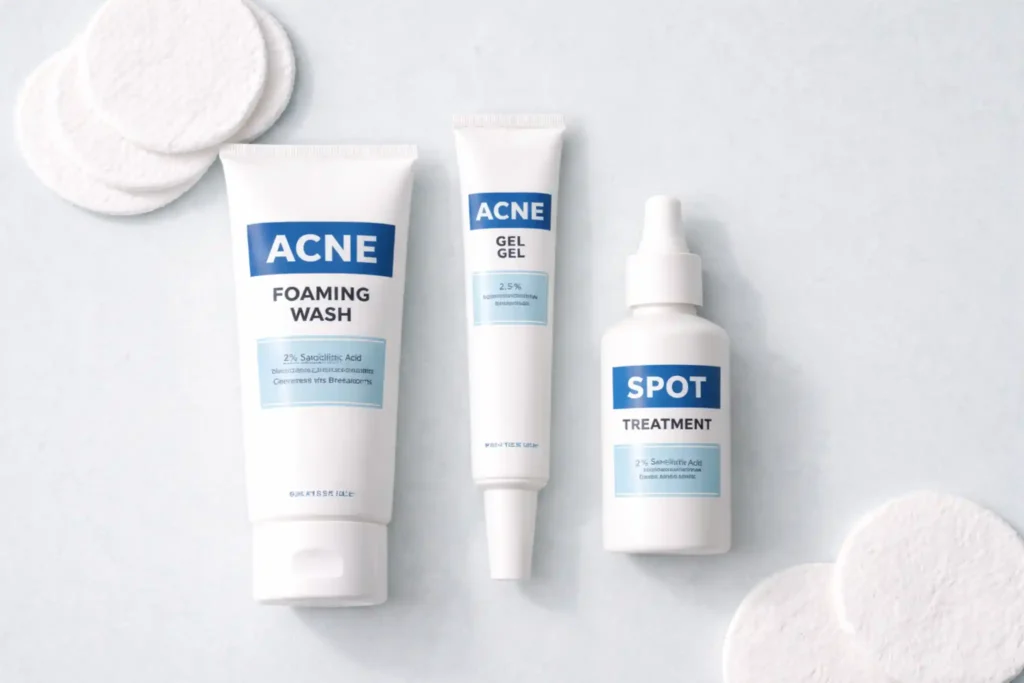
Benzoyl Peroxide vs. Salicylic Acid vs. Sulfur: Quick Comparison
| Ingredient | Primary Action | Best Acne Type | Irritation Level |
|---|---|---|---|
| Benzoyl Peroxide | Kills bacteria, mild exfoliation | Inflammatory acne, papules, pustules | Moderate to high |
| Salicylic Acid | Exfoliates inside pores | Blackheads, whiteheads, congestion | Low to moderate |
| Sulfur | Reduces oil, mild antibacterial | Blackheads, mild breakouts, oily skin | Low |
Each ingredient has its strengths. Benzoyl peroxide is the most powerful antibacterial option of the three. Salicylic acid is better suited for non-inflammatory, congestion-driven acne. Sulfur is the gentlest and works well for oily skin management and mild breakouts. Many people find that combining them strategically — for example, a salicylic acid cleanser in the morning and a benzoyl peroxide spot treatment at night — gives better results than relying on any single ingredient alone.
When to See a Dermatologist
OTC benzoyl peroxide products are effective for mild to moderate acne, but they have limits. If your acne involves deep, painful cysts or nodules, covers a large area of your face or body, has left significant scarring, or hasn’t improved after eight to twelve weeks of consistent OTC treatment, it’s time to see a dermatologist.
A dermatologist can prescribe stronger options — prescription-strength retinoids, combination antibiotic-benzoyl peroxide gels, oral medications, or other treatments that go well beyond what any OTC product can deliver. Getting professional guidance early can also prevent long-term scarring that becomes harder to treat the longer it’s left unaddressed.
Conclusion
Benzoyl peroxide is found in dozens of products across every format — face washes, spot treatments, leave-on gels, and combination formulas. Understanding what has benzoyl peroxide and how different concentrations and product types compare helps you make a smarter choice for your specific skin.
For most people dealing with mild to moderate inflammatory acne, a well-formulated product in the 2.5% to 5.5% range — like Effaclar Duo acne spot treatment — offers the best combination of effectiveness and tolerability for daily use. Start with a lower concentration, build consistency, and give your skin at least four to six weeks to respond before making changes.
If OTC options aren’t cutting it, don’t hesitate to book time with a dermatologist. Effective acne treatment is out there — it’s just about finding the right match for your skin.
FAQ
1. Is benzoyl peroxide safe to use every day? Yes, for most people benzoyl peroxide at 2.5% to 5.5% is safe for daily use when applied correctly and followed by moisturizer. Higher concentrations like 10% may be too drying for everyday full-face application, but they can typically be used daily as a spot treatment on individual blemishes.
2. What common drugstore products have benzoyl peroxide? Some of the most widely available options include PanOxyl Acne Foaming Wash, Neutrogena On-the-Spot Acne Treatment, Clean & Clear Persa-Gel 10, and CeraVe Acne Foaming Cream Cleanser. Effaclar Duo acne spot treatment by La Roche-Posay is also widely available at pharmacies and beauty retailers nationwide.
3. Can I use benzoyl peroxide with other acne treatments? It depends on the combination. Benzoyl peroxide pairs reasonably well with niacinamide and non-exfoliating moisturizers. However, combining it with retinoids, strong acids, or other drying actives on the same area in the same routine significantly increases irritation risk. If you’re using prescription treatments, always check with your dermatologist before adding benzoyl peroxide to your routine.
4. Does benzoyl peroxide help with acne scars? No. Benzoyl peroxide treats active acne but does not directly improve post-inflammatory hyperpigmentation or acne scars. For dark spots and discoloration left by past breakouts, look for products with niacinamide, vitamin C, azelaic acid, or alpha hydroxy acids instead.
5. How is Effaclar Duo different from other benzoyl peroxide spot treatments? Most standard benzoyl peroxide spot treatments use a single active ingredient. Effaclar Duo acne spot treatment pairs 5.5% benzoyl peroxide with lipo-hydroxy acid, which adds a pore-exfoliating action that single-ingredient products lack. It’s also formulated with La Roche-Posay’s thermal spring water to reduce irritation, making it one of the better-tolerated benzoyl peroxide options available for sensitive skin types.