Acne on Back Products: Best Picks for Clearer Skin
If you are comparing acne on back products, the most useful choice depends on the job you need the product to do. Inflamed red pimples often call for a benzoyl peroxide wash, while clogged pores and smaller bumps may respond better to salicylic acid. Hard-to-reach areas can make a spray more practical, and treatment-related dryness may call for moisturizer rather than another acne active.
For mild to moderate back acne, over-the-counter treatment can be reasonable. The American Academy of Dermatology (AAD) specifically discusses benzoyl peroxide wash and adapalene 0.1% for home treatment of appropriate back acne. Deep, painful, or scarring acne is different and should be evaluated by a dermatologist.
Table of Contents
Acne on Back Products: Quick Picks by Concern
| Main concern | Product type | Example pick | Why it fits | Main limitation |
|---|---|---|---|---|
| Red, inflamed pimples | Benzoyl peroxide wash | PanOxyl Acne Creamy Wash 4% | Medicated wash for face, chest, and back | Can dry skin and bleach fabrics |
| Hard-to-reach clogged pores | Salicylic acid spray | Naturium Salicylic Acid Body Spray 2% | 360-degree, alcohol-free, fragrance-free spray | 2% salicylic acid can still irritate |
| Fragrance-sensitive spray users | Salicylic acid spray | Neutrogena Stubborn Body Acne Treatment Spray | Fragrance-free 2% salicylic acid for back, chest, and shoulders | May still sting or dry skin |
| Oily or congested skin wanting more exfoliation | Salicylic + glycolic spray | Differin Acne-Clearing Body Spray | 2% salicylic acid plus 3% glycolic acid | Alcohol and multiple exfoliants may be drying |
| Dryness from acne treatment | Moisturizer | CeraVe Daily Moisturizing Lotion | Fragrance-free, non-comedogenic barrier support | Not an acne medication |
You do not need all five. A better strategy is to choose one main acne treatment that fits your breakout pattern, then add a moisturizer only if your skin needs support.
How to Choose Acne on Back Products by Breakout Type
Red, inflamed pimples
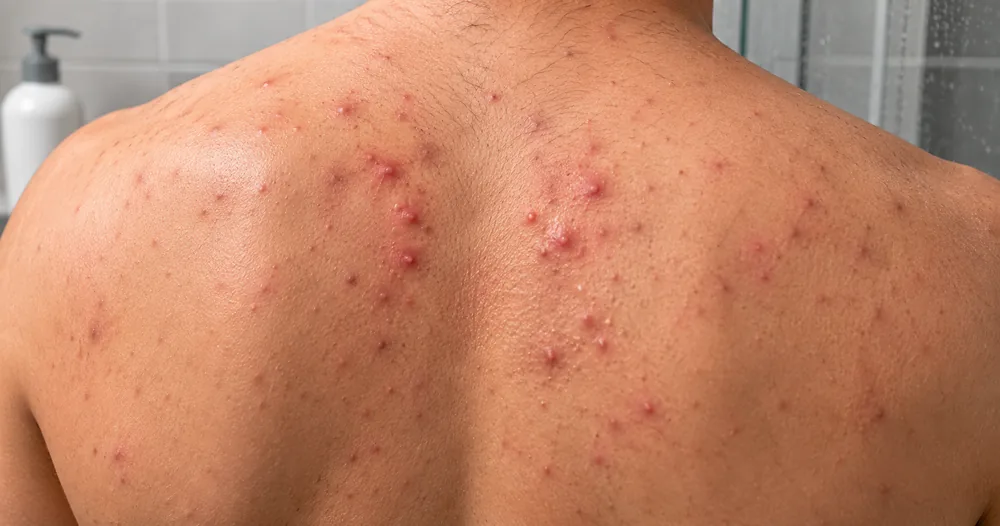
Benzoyl peroxide is one of the topical therapies recommended in the current AAD acne guideline, and the AAD’s back-acne guidance specifically recommends benzoyl peroxide wash for appropriate mild to moderate bacne.
A lower or mid-strength product may be enough. The FDA’s current OTC acne monograph allows benzoyl peroxide from 2.5% to 10%, but a larger percentage is not automatically a better first choice.
Blackheads, whiteheads, and rough clogged bumps
Salicylic acid is also included in the AAD acne guideline and is commonly used to help unclog pores and exfoliate acne-prone skin. The FDA’s OTC acne monograph allows salicylic acid from 0.5% to 2%.
For a large area like the back, a wash can be convenient. For areas you cannot reach easily, a leave-on spray may make more sense.
Hard-to-reach middle back
This is where product format matters almost as much as the ingredient.
A spray that works upside down or from multiple angles can make consistent application easier across the upper and middle back. It does not mean the medicine itself is stronger; it means you are more likely to get it onto the skin you are actually trying to treat.
Dry or easily irritated skin
If your back already feels tight, itchy, or flaky from treatment, adding another acid is not always the right move.
Consider whether you are already using a medicated wash, leave-on spray, retinoid, or exfoliating lotion. Removing unnecessary overlap and adding a lightweight moisturizer can make the routine easier to tolerate.
PanOxyl Acne Creamy Wash 4%: A Practical Benzoyl Peroxide Pick
PanOxyl Acne Creamy Wash currently contains 4% benzoyl peroxide and is labeled for acne on the face, chest, and back. The manufacturer directs users to wet the area, massage the wash for one to two minutes, rinse thoroughly, and start with once-daily use before increasing if needed and tolerated.
The 4% concentration makes it a practical option for readers who want a benzoyl peroxide body wash without immediately choosing the maximum 10% strength.
Why it stands out:
- 4% benzoyl peroxide.
- Designed for face and body acne.
- Rinse-off format is practical for a large area.
- Current formula includes humectant and emollient ingredients intended to help with dryness.
Limitations:
- Benzoyl peroxide can still cause dryness, peeling, or irritation.
- It can bleach towels, clothing, and bedding.
- A 4% product is not automatically appropriate for every breakout.
For a more detailed explanation of benzoyl peroxide use and bacne routines, see our complete back acne treatment guide.
View PanOxyl Acne Creamy Wash 4% on Amazon
Naturium Salicylic Acid Body Spray 2%: Best Fit for a Simpler Hard-to-Reach Spray
Naturium’s current Salicylic Acid Body Spray contains 2% salicylic acid. The company lists it as alcohol-free and fragrance-free and uses a 360-degree continuous spray designed for hard-to-reach areas. Its current ingredient list also includes niacinamide.
That combination makes it one of the more interesting options for someone who wants a leave-on salicylic acid treatment but would prefer to avoid denatured alcohol and added fragrance.
Why it stands out:
- 2% salicylic acid.
- Alcohol-free.
- Fragrance-free.
- 360-degree spray.
- Niacinamide in the current formula.
Limitations:
- 2% is the upper end of the FDA OTC salicylic acid range.
- Alcohol-free does not mean irritation-free.
- It is still an active treatment and may be too much alongside several other exfoliating products.
View Naturium Salicylic Acid Body Spray 2% on Amazon
Neutrogena Stubborn Body Acne Treatment Spray: A Fragrance-Free Drugstore Option
Neutrogena’s current Stubborn Body Acne Treatment Spray contains 2% salicylic acid and is labeled for breakouts on the shoulders, back, and chest. The current U.S. product is also fragrance-free.
This gives it a straightforward role: a leave-on drugstore option for body acne where a spray format is convenient.
Why it stands out:
- 2% salicylic acid.
- Fragrance-free.
- Specifically positioned for shoulder, back, and chest breakouts.
- Spray format for body application.
Limitations:
- Fragrance-free does not remove the usual salicylic acid irritation risk.
- It is not necessarily better than another 2% spray simply because it comes from a familiar brand.
- If your back is already peeling from other treatments, another leave-on acid may not help.
View Neutrogena Stubborn Body Acne Treatment Spray on Amazon
Differin Acne-Clearing Body Spray: When More Exfoliation May Be Useful
Differin Acne-Clearing Body Spray currently combines 2% salicylic acid with 3% glycolic acid and 2.5% witch hazel. The current ingredient list also contains denatured alcohol, and the bottle uses a 360-degree spray.
This formula may appeal to someone whose main problem is oily, congested, rough-feeling body skin and who already knows their skin tolerates leave-on acids.
The important trade-off is that more exfoliating ingredients do not automatically mean better results.
Why it stands out:
- 2% salicylic acid.
- 3% glycolic acid.
- Multi-angle spray.
- Designed for hard-to-reach body acne.
Limitations:
- Contains denatured alcohol.
- Combining salicylic and glycolic acids can be more irritating for some skin.
- Dry or sensitive skin may prefer a simpler formula.
View Differin Acne-Clearing Body Spray on Amazon
Do You Need a Leave-On Retinoid for Back Acne?
Not necessarily, but adapalene is one evidence-supported OTC option worth knowing about.
The AAD’s back-acne guidance notes that adapalene 0.1% gel can be used with benzoyl peroxide and may help unclog pores. That does not mean every reader needs both from day one, and applying a gel evenly across a large back can be inconvenient.
If you are already getting good control from one medicated product, there is no requirement to add a retinoid simply because it appears in acne guidelines.
Pregnancy also changes the decision. The American College of Obstetricians and Gynecologists states that topical retinoids are generally recommended to be avoided during pregnancy. If you are pregnant, trying to become pregnant, or unsure about a treatment, review it with your healthcare professional.
CeraVe Daily Moisturizing Lotion: A Supportive Pick for Treatment Dryness
CeraVe Daily Moisturizing Lotion is not an acne medication, and that is exactly why it fills a different role in this list.
The current formula is lightweight and oil-free, contains three essential ceramides and sodium hyaluronate, and is labeled fragrance-free and non-comedogenic. CeraVe also lists it for both face and body use.
That can be useful if benzoyl peroxide or salicylic acid leaves your back tight or dry.
Why it stands out:
- Fragrance-free.
- Non-comedogenic.
- Lightweight body-friendly lotion.
- Ceramides and hyaluronic acid for hydration support.
Limitations:
- It does not treat acne by itself.
- “Non-comedogenic” does not guarantee that every individual will like the formula.
- If your acne is worsening, moisturizer alone is not the missing treatment.
View CeraVe Daily Moisturizing Lotion on Amazon
Which Products Should You Avoid Combining Too Aggressively?
One of the easiest ways to turn a reasonable routine into an irritating one is to buy several active products at the same time.
Be cautious about combinations such as:
- A salicylic acid wash plus a 2% salicylic acid spray plus an exfoliating acid lotion.
- A high-strength benzoyl peroxide wash plus several leave-on acids started on the same day.
- Differin Body Spray plus another glycolic or salicylic leave-on treatment without a clear reason.
- Multiple new acne products when you do not yet know which one your skin tolerates.
More irritation does not prove the treatment is working.
Persistent burning, marked peeling, cracking, or worsening redness are reasons to simplify the routine and reassess what you are using.
Wash vs. Spray vs. Leave-On Gel
| Format | Main advantage | Main limitation |
|---|---|---|
| Medicated wash | Easy to cover a large area in the shower | Rinsed off and may bleach fabrics if it contains benzoyl peroxide |
| Body spray | Easy to reach the middle of the back | Leave-on acids may irritate or dry skin |
| Leave-on gel | Useful for an evidence-based active such as adapalene | Harder to spread evenly over a large back |
| Moisturizer | Supports the skin barrier and comfort | Does not treat acne by itself |
There is no universally superior format. The useful one is the format that delivers an appropriate active to the area consistently without making the rest of your routine unnecessarily complicated.
What About Chest Acne Products?
Several of the products above are also intended for body breakouts beyond the back.
Neutrogena specifically lists its body spray for the shoulders, back, and chest. PanOxyl’s 4% Creamy Wash is marketed for face, chest, and back acne.
That does not mean every rash or cluster of bumps on the chest is acne. If your bumps are unusually itchy, very uniform, spreading quickly, or not improving with appropriate acne treatment, consider getting the diagnosis checked rather than cycling through stronger products.
How Many Acne on Back Products Do You Actually Need?
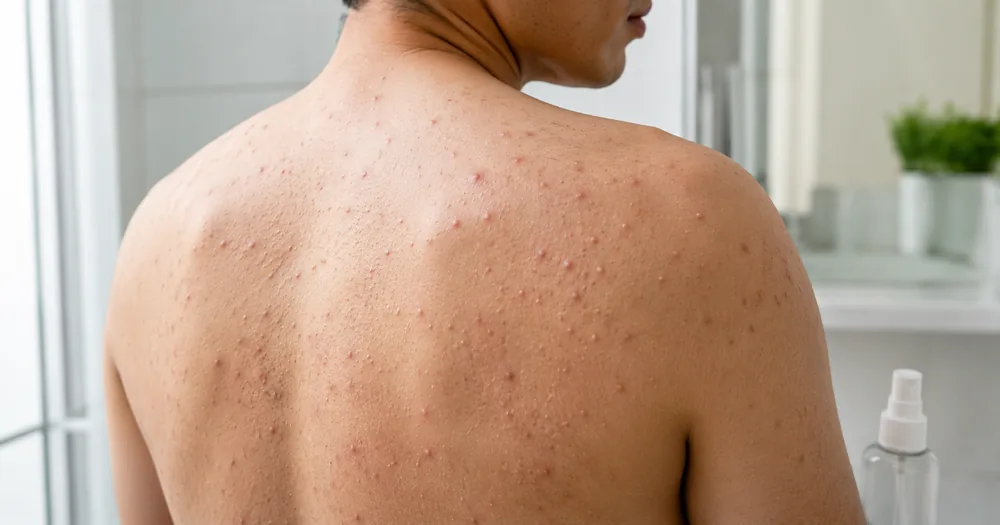
Most people do not need an entire shelf.
For mild or moderate body acne, a reasonable starting framework may be:
- One medicated wash, or
- One salicylic acid spray if that format suits the problem, with
- A moisturizer when treatment causes dryness.
Some people may eventually use more than one treatment mechanism, such as benzoyl peroxide plus adapalene, but that should have a clear purpose.
The goal is not to maximize the number of acne products you own. It is to use enough treatment to improve acne while keeping the routine tolerable enough to follow.
For a broader comparison of product types, see Beyond Breakouts’ best back acne treatment guide.
When Another Back Acne Product Is Not the Answer
The AAD notes that people with deep, painful back acne need a dermatologist’s help. Home treatment is more appropriate for mild or moderate acne without deep painful lesions.
Consider professional care when:
- You have painful nodules or cysts.
- Acne is leaving scars.
- Breakouts are rapidly worsening.
- Large areas stay inflamed despite appropriate OTC care.
- You see no meaningful improvement after consistent treatment.
- The bumps are very itchy or do not behave like acne.
- Acne is causing significant distress.
AAD guidance says that improvement with home back-acne treatment may begin in about six to eight weeks, while complete clearing can take three or four months. If nothing is changing after a consistent trial, the next answer is not always a stronger product.
Frequently Asked Questions
What are the best acne on back products for inflamed pimples?
Among acne on back products, a benzoyl peroxide wash is one of the strongest evidence-supported OTC categories for red, inflamed bacne. A 4% wash such as PanOxyl Acne Creamy Wash can be a practical starting option for some readers without immediately moving to maximum-strength 10% benzoyl peroxide.
What product works best for clogged pores on the back?
A salicylic acid product is often a logical option for blackheads, whiteheads, and smaller clogged bumps. A 2% body spray can be especially practical when the center of the back is difficult to reach, although dry or sensitive skin may need a simpler routine or less frequent use according to the product label.
Are back acne sprays better than body washes?
Not universally. Sprays are better at reaching difficult areas and remain on the skin, while washes are easy to apply over a large area in the shower. The better format is the one that delivers the right active for your acne pattern and that you can use consistently without excessive irritation.
Can I use salicylic acid spray with benzoyl peroxide wash?
Some acne routines use both ingredients, but that does not mean everyone needs the combination. Using a medicated wash plus a leave-on acid can increase dryness or irritation. Start with a clear treatment goal, follow product directions, and add another active only when there is a reason to do so.
How long should I try back acne products before seeing a dermatologist?
AAD guidance says people may begin seeing results from appropriate back-acne treatment in about six to eight weeks, with full clearing sometimes taking three to four months. See a dermatologist sooner for deep, painful, scarring, or rapidly worsening acne, or when you are unsure whether the bumps are actually acne.
The Bottom Line
The most useful acne on back products are the ones that fill a specific role instead of duplicating each other.
For inflamed pimples, a benzoyl peroxide wash such as PanOxyl 4% can be a sensible category to consider. For clogged pores and hard-to-reach skin, a 2% salicylic acid spray may be more practical. Naturium offers an alcohol-free, fragrance-free formula; Neutrogena provides a fragrance-free drugstore option; and Differin adds glycolic acid for readers who tolerate a more exfoliating formula. If treatment is drying your skin, a supportive moisturizer may be more useful than another acne active.
Start with one main treatment, give it enough time to judge the result, and avoid turning irritation into part of the plan. Deep, painful, scarring, or persistent back acne is a reason to move beyond shopping and talk with a dermatologist.
This article is for educational purposes only. It does not provide a diagnosis and is not a substitute for care from a qualified healthcare professional.
References:
- American Academy of Dermatology — Back acne: How to see clearer skin. Covers OTC benzoyl peroxide, adapalene, home-treatment suitability, treatment timelines, and when dermatologist care is needed. AAD back acne guidance
- American Academy of Dermatology — Acne Clinical Guideline. Includes benzoyl peroxide, topical retinoids, and salicylic acid among recommended topical acne therapies. AAD acne guideline
- U.S. Food and Drug Administration — OTC Monograph M006: Topical Acne Drug Products for Over-the-Counter Human Use. Lists benzoyl peroxide at 2.5%–10% and salicylic acid at 0.5%–2%. FDA OTC acne monograph
- American College of Obstetricians and Gynecologists — Skin Conditions During Pregnancy. Includes current pregnancy guidance for topical acne ingredients and advises avoiding topical retinoids during pregnancy. ACOG pregnancy acne guidance
- PanOxyl — Acne Creamy Wash Benzoyl Peroxide 4%. Current active ingredient, body-use information, formula, and directions. PanOxyl 4% Creamy Wash
- Naturium — Salicylic Acid Body Spray 2%. Current active ingredient, alcohol-free and fragrance-free status, 360-degree spray, ingredients, and directions. Naturium Salicylic Acid Body Spray 2%
- Neutrogena — Stubborn Body Acne Treatment Spray. Current 2% salicylic-acid concentration, fragrance-free status, and intended body areas. Neutrogena Stubborn Body Acne Spray
- Differin — Acne-Clearing Body Spray. Current 2% salicylic acid, 3% glycolic acid, witch hazel, alcohol, and spray-format information. Differin Acne-Clearing Body Spray
- CeraVe — Daily Moisturizing Lotion. Current fragrance-free, non-comedogenic formula with ceramides and hyaluronic acid for face and body use. CeraVe Daily Moisturizing Lotion