Acne Laser Treatment: How It Works and What to Expect
Acne laser treatment can mean very different things: reducing active inflammatory breakouts, fading flat red or brown marks, or remodeling indented scars. No single device does all three equally well. The safest starting point is to identify the exact concern, then discuss the evidence, likely downtime, and pigment risks with a dermatologist experienced in laser procedures.
For many people, acne laser treatment is an add-on rather than a replacement for standard acne care. Results vary, several sessions may be needed, and complete clearing or scar removal is not a realistic promise. Understanding those limits can help you compare options without being swayed by a device name or dramatic marketing photos.
Table of Contents
What Is Acne Laser Treatment?
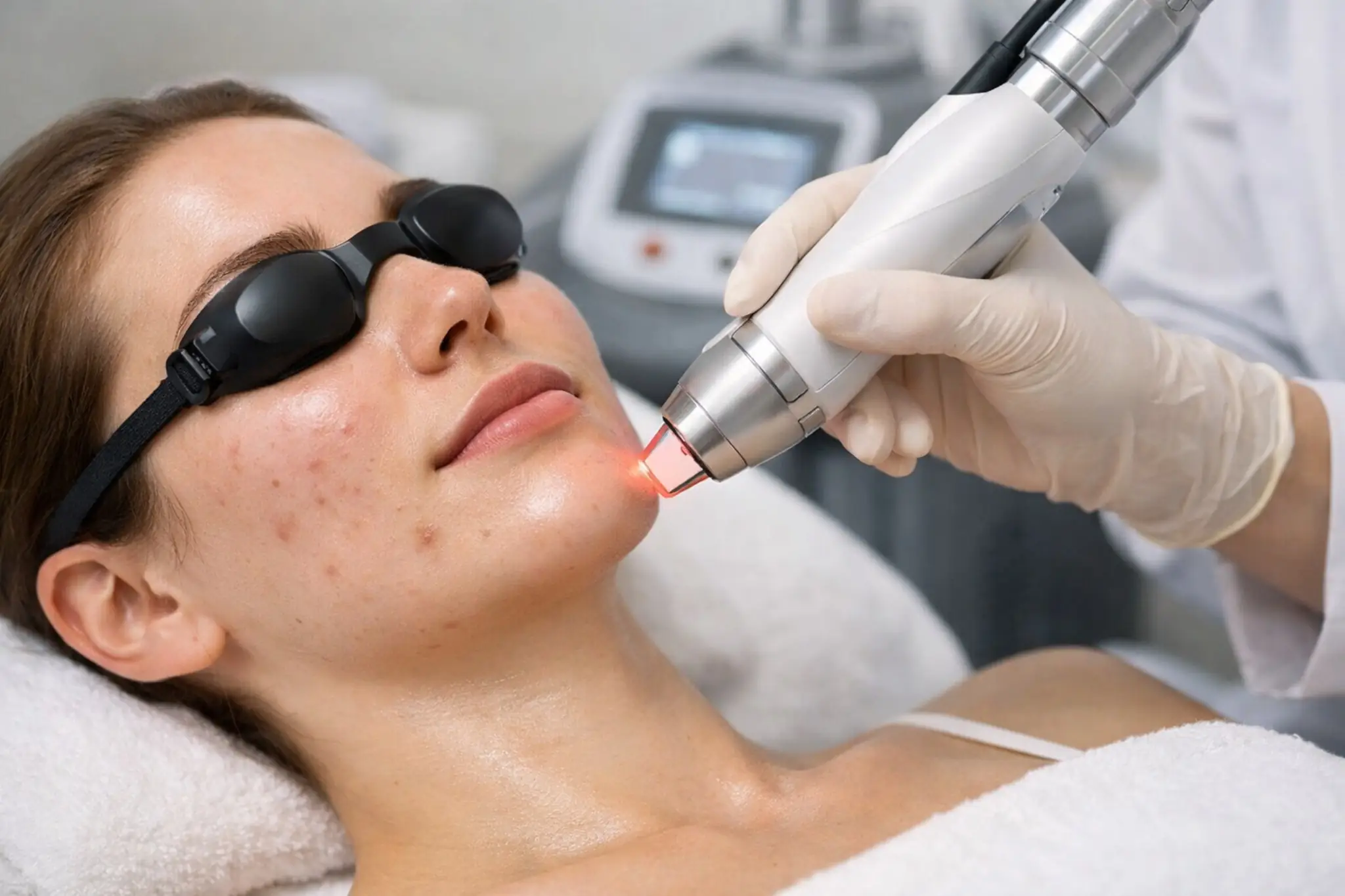
Acne laser treatment uses a focused beam of light to create a controlled effect in selected skin structures. Depending on the wavelength and settings, a device may target redness, influence oil-producing glands, or stimulate repair in scarred skin. Some treatments commonly grouped with lasers—such as LED therapy, intense pulsed light, and photodynamic therapy—are technically different.
That distinction matters because a treatment for inflamed pimples is not automatically useful for a deep ice-pick scar. During a consultation, the clinician should determine whether you have active acne, flat discoloration, structural scarring, or a combination.
Active Acne, Marks, and Scars Are Not the Same
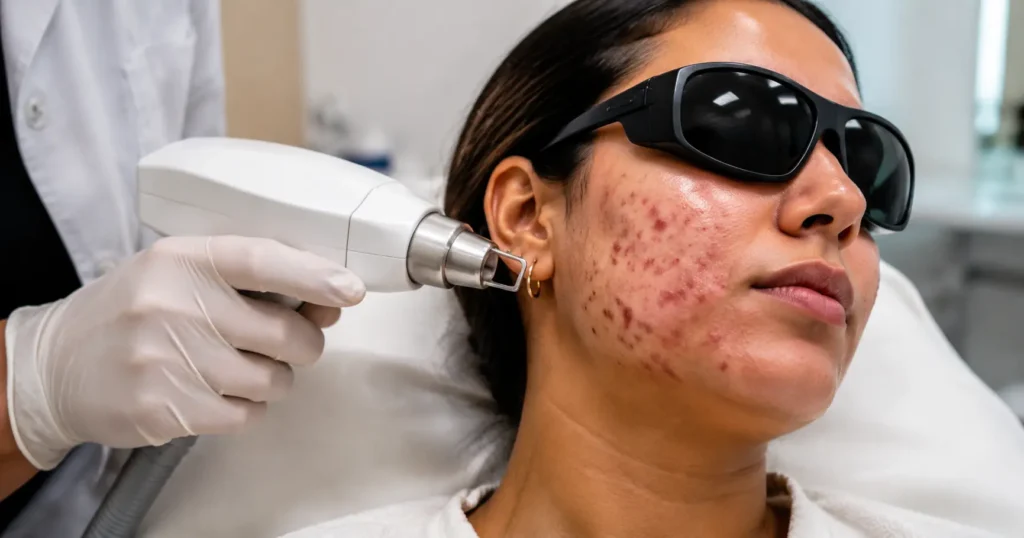
Active acne includes clogged pores, inflamed papules, pustules, nodules, and cysts. Post-acne marks are flat color changes left after a blemish heals. Red or pink marks are often called post-inflammatory erythema; brown or gray marks are usually post-inflammatory hyperpigmentation.
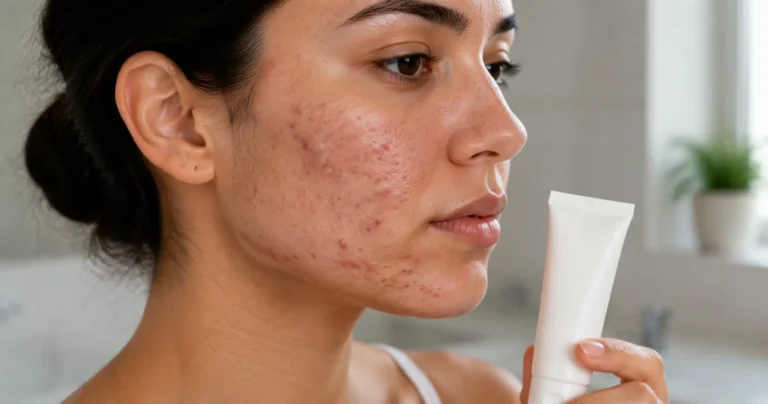
True scars change the skin’s structure. Atrophic scars form depressions and may be described as ice-pick, boxcar, or rolling scars. Hypertrophic scars and keloids are raised. Acne laser treatment for scars must be selected according to scar type, depth, location, and skin tone; a resurfacing procedure intended for depressed scars can be inappropriate for a raised scar.
How Does Acne Laser Treatment Work?
Acne laser treatment works by delivering a controlled amount of energy at a chosen depth. For active acne, selected light or laser devices may reduce inflammation, affect acne-related bacteria, target visible blood vessels, or influence sebaceous glands. For indented scars, fractional resurfacing creates microscopic treatment zones that prompt wound repair and collagen remodeling.
“Fractional” means the device treats narrow columns while leaving intervening skin untreated. This approach can reduce recovery time compared with treating the entire surface, although downtime and risk still depend on the laser and settings. Ablative lasers remove tiny portions of skin; nonablative lasers heat tissue without removing the surface in the same way. Ablative treatment is generally more intensive, while nonablative treatment often involves less downtime but may require more sessions.
Which Lasers and Light Treatments Are Used for Acne?
The best acne laser treatment is not simply the newest or strongest device. A dermatologist considers the treatment target, evidence for that device, your skin tone, current medications, previous reactions, and how much recovery you can manage.
Procedures for Active Acne
Blue and red light devices are not always lasers. Blue light is used in some systems aimed at acne-related bacteria, while red light may have anti-inflammatory effects. Certain vascular, infrared, and newer sebaceous-gland-targeting lasers are also used in selected cases. Evidence and treatment protocols vary, so a brand name alone does not establish how well a procedure will work for you.
Photodynamic therapy adds a light-sensitizing medication before exposure to a light source. It may create a stronger skin reaction and requires careful light-avoidance instructions afterward. The American Academy of Dermatology notes that laser and light procedures can reduce acne, but they rarely clear it by themselves. A clinician may combine acne laser treatment with topical or oral medication.
Devices for Persistent Red Marks
Vascular lasers and some light-based devices target blood vessels that contribute to lingering red marks. They do not treat brown pigment in the same way, and they do not correct every type of scar. Persistent redness can also resemble other skin conditions, so the diagnosis should be confirmed before treatment.
Procedures for Brown or Gray Marks
Pigment-targeting devices may help selected cases of post-inflammatory hyperpigmentation, but irritation from the procedure can also create or worsen discoloration. This is especially relevant for skin that readily develops dark marks. Acne control and daily broad-spectrum sun protection remain important because new breakouts and ultraviolet exposure can undermine progress.
Laser Treatment for Acne Scars
Fractional ablative and nonablative resurfacing can soften some depressed scars by encouraging collagen remodeling. Acne laser treatment cannot erase scars, and improvement is influenced by the scar pattern. Rolling scars tethered below the surface may need subcision; narrow ice-pick scars may respond better to a focal technique; mixed scars often need a staged combination plan.
Raised scars require a different approach and may worsen with an unsuitable procedure. A careful scar examination is therefore more useful than choosing a treatment from a price list.
Who May Be a Good Candidate?
A reasonable candidate has a clearly identified treatment target, realistic expectations, and the ability to follow aftercare. When the goal is scar resurfacing, active breakouts are usually controlled first so that new scars are less likely to form during the treatment course.
Acne laser treatment may be considered when standard care has not provided enough improvement, when a specific scar or mark is suited to an energy-based procedure, or when a dermatologist recommends it as part of a broader plan. Darker skin is not an automatic exclusion. However, device choice, energy settings, treatment density, cooling, and operator experience become particularly important because unwanted pigment changes may be more likely.
When Treatment May Need to Be Delayed
Tell the clinician about all medications, supplements, skin products, and previous procedures. Treatment may need to be postponed or modified if the area is infected, sunburned, recently tanned, wounded, or significantly irritated. A history of keloids, poor wound healing, cold sores, or lasting pigment changes also matters.
If you use or recently used isotretinoin, do not rely on a universal waiting period found online. Evidence and recommendations have changed, and the decision can depend on the procedure’s intensity and your individual risks. Let the prescribing clinician and laser specialist coordinate the timing. Pregnancy or breastfeeding should also be discussed because safety information and treatment components vary.
What to Expect Before, During, and After Treatment
Before the Appointment
A proper consultation should include an acne and scar assessment, medication review, skin-tone evaluation, and discussion of past healing problems. Ask for the exact device name, its intended target, alternatives, likely number of sessions, expected downtime, and the clinician’s experience treating people with your skin tone.
Your instructions may include avoiding tanning and pausing selected irritating products for a limited period. Do not stop a prescription on your own. Follow the treating professional’s instructions, which should take priority over general online advice. Standardized photographs may be taken so changes can be judged under consistent lighting.
During the Procedure
The skin is cleansed, and protective eyewear is essential. Depending on the procedure, the clinician may apply numbing cream, use cooling, or inject local anesthetic. Sensations can include warmth, stinging, or a snapping feeling. Treatment time depends on the size of the area and the device.
Acne laser treatment should be performed with settings selected for the concern and skin characteristics—not copied from another patient. Tell the clinician if pain suddenly becomes severe or feels different from what was explained.
After the Procedure
Mild redness and swelling are common after many laser and light procedures. Depending on intensity, you may also have warmth, tenderness, dryness, crusting, or peeling. More aggressive resurfacing usually requires more wound care and downtime than a low-intensity light session.
Use only the cleanser, moisturizer, dressings, and sun protection your clinician recommends. Avoid picking flakes or crusts. Contact the treating office promptly for increasing pain, spreading redness, pus, fever, extensive blistering, an eye symptom, or another reaction outside the expected recovery plan.
Results, Sessions, and Realistic Timelines
Acne laser treatment usually produces gradual change. Inflammatory lesions may decrease without disappearing completely. After scar resurfacing, visible healing occurs first, while collagen remodeling continues beyond the initial recovery period.
Many procedures are delivered as a series, but there is no responsible universal session count. The number depends on the device, treatment target, scar depth, response, settings, and acceptable downtime. Maintenance or continued acne medication may be needed. Ask how the clinician will define improvement and when photographs will be reviewed.
Risks and Side Effects
Common short-term effects include redness, swelling, stinging, and temporary sensitivity. Less common but important risks include burns, blisters, infection, prolonged redness, acne flares, scarring, and unwanted skin-color changes. The FDA also lists pain, incomplete treatment, infection, scarring, and color changes among potential medical-laser risks.
Post-inflammatory hyperpigmentation means excess pigment develops after irritation; hypopigmentation means pigment is lost. Either can last longer than the initial healing period. Choosing an experienced medical professional reduces avoidable risk but cannot make acne laser treatment risk-free.
Acne Laser Treatment for Darker Skin Tones
Acne laser treatment can be performed on darker skin, but the plan must account for melanin, which can absorb energy from certain wavelengths. Excess heating can lead to burns or pigment changes. The safest choice is not one universal device; it is an appropriate device and conservative settings used by someone experienced with your skin tone.
Ask whether a test spot is appropriate, how the clinician prevents post-inflammatory hyperpigmentation, and what changes should be reported. Recent tanning can change how skin responds, even when your natural skin tone is lighter. Consistent sun protection before and after treatment is part of risk reduction, not merely cosmetic aftercare.
How Much Does Acne Laser Treatment Cost?
Acne laser treatment cost varies with the device, treated area, number of sessions, provider expertise, anesthesia, geographic location, and follow-up care. Scar resurfacing may cost differently from a light procedure for active acne or a vascular treatment for red marks. Combining procedures changes the total as well.
Many treatments for scars or discoloration are considered cosmetic and may not be covered by insurance, but coverage rules differ. Request a written estimate that states what is included, whether follow-up visits cost extra, and how the plan changes if you need additional sessions. A lower advertised price is not a bargain if evaluation, eye protection, aftercare, or qualified supervision is missing.
Is It the Same as Laser Skin Tightening or Wrinkle Treatment?
No. Laser skin tightening, laser treatment for wrinkles, active-acne procedures, and scar resurfacing may use related technologies, but they target different structures and use different settings. A device promoted for facial rejuvenation should not be assumed to control breakouts or improve a particular scar type.
If a clinic bundles several goals into one “laser treatment face” package, ask which concern each step addresses and what evidence supports that use. The procedure should match a defined problem, not a broad promise of better skin.
Alternatives and Complementary Treatments
For active acne, evidence-supported options include topical retinoids, benzoyl peroxide, salicylic acid, azelaic acid, and prescription therapies selected by a clinician. The right choice depends on acne severity, skin tolerance, pregnancy considerations, and other health factors. These treatments generally have a larger role in preventing new lesions than scar-resurfacing lasers do.
Flat marks may improve with time, sun protection, acne control, and selected topical treatments. Structural scars may require microneedling, subcision, focal chemical techniques, fillers, scar surgery, or combinations. Radiofrequency microneedling is not a laser and has its own benefits and risks. A treatment plan should compare these choices rather than presenting acne laser treatment as the only path.
When to See a Dermatologist
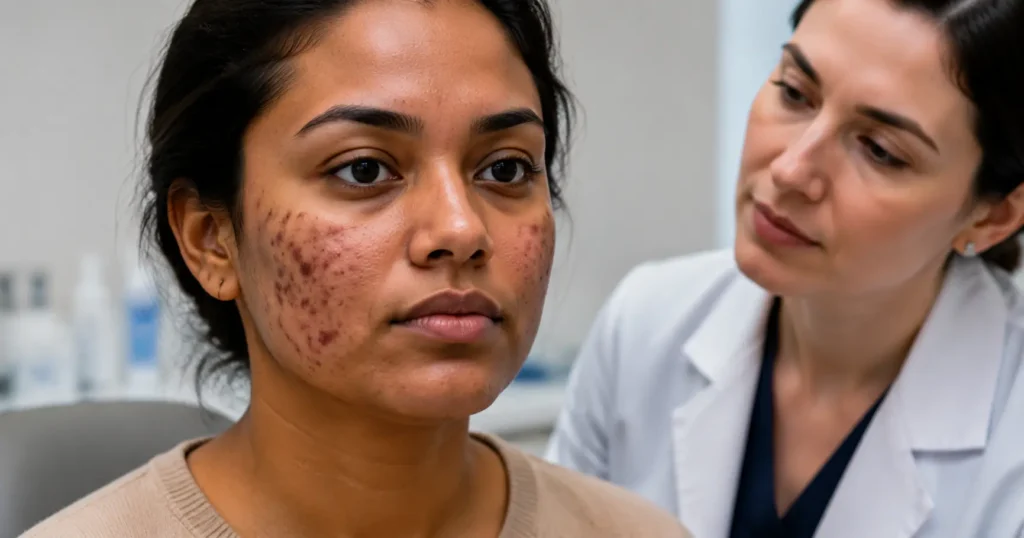
Seek professional care for painful nodules or cysts, rapidly worsening acne, new scars, significant distress, or breakouts that do not improve with appropriate over-the-counter care. A dermatologist can also determine whether a flat mark, depression, raised area, or persistent red patch is actually related to acne.
If you are considering acne laser treatment, bring a medication list and describe previous pigment or healing problems. Choose a clinician who can explain alternatives, expected improvement, aftercare, and risks in specific terms.
Frequently Asked Questions
Can acne laser treatment permanently clear acne?
No procedure can promise permanent clearing. Acne laser treatment may reduce lesions in selected patients, but the AAD notes that lasers and light therapies rarely clear acne on their own. Continued topical or oral treatment may be needed to control the processes that produce new breakouts.
Is laser treatment painful?
Discomfort varies by device and intensity. A low-intensity light procedure may feel warm or mildly sting, while ablative resurfacing can be more painful and require numbing or local anesthesia. Ask what pain control is planned and what sensations should prompt you to alert the clinician.
How many laser sessions are usually needed?
There is no standard number for every patient. Some procedures are planned as a series, while an intensive treatment may follow a different schedule. The target condition, device, response, scar pattern, skin tone, and acceptable downtime all influence the plan. Be cautious of a guaranteed result tied to a fixed package.
Can laser treatment worsen acne or dark marks?
Temporary acne flares can occur after some procedures, and inflammation can trigger darker marks, especially in pigment-prone skin. Burns or incorrect settings can increase that risk. A careful evaluation, appropriate device selection, conservative settings when needed, and proper aftercare help reduce—but do not eliminate—these possibilities.
Is at-home light therapy the same as professional treatment?
No. At-home LED devices generally use different energy levels and protocols from office procedures. An FDA-cleared device should be used only for its labeled indication and according to its instructions; clearance does not make every product effective for scars or severe acne. Eye protection and contraindications still matter.
Practical Takeaway
Acne laser treatment is a category, not one procedure. The useful next step is to identify whether your main concern is active acne, flat discoloration, or a structural scar. Then consult a qualified dermatologist who can compare devices with standard treatments, explain realistic improvement, and plan around your skin tone and medical history.
This article is for educational purposes and does not provide a diagnosis or replace care from a qualified healthcare professional.
References:
- American Academy of Dermatology Association. “Lasers and lights: How well do they treat acne?”
- American Academy of Dermatology Association. “Acne scars: Consultation and treatment.”
- U.S. Food and Drug Administration. “Medical Lasers.”
- Huerth K, et al. “Established and Emerging Laser Treatments for Acne Vulgaris.” PubMed, 2025.
- Teymour S, et al. “Energy-based devices in the treatment of acne scars in skin of color.” PubMed, 2023.