Birth Control Rash: Causes, Warning Signs and What to Do
A birth control rash can mean several different things. You might notice a red, itchy area under a contraceptive patch, hives after starting a new medication, irritation after using a condom or spermicide, or a skin eruption that happens to appear around the same time you change contraception.
These reactions are not all the same.
A small irritated patch of skin where an adhesive touches your body usually raises different concerns from widespread hives, facial swelling, or trouble breathing. Acne can also appear after hormonal changes, but acne is not the same as a rash.
The location, timing, symptoms, and type of birth control can help you decide what to do next. They cannot, however, prove the cause of a rash without proper evaluation.
Table of Contents
Birth Control Rash: What Does It Usually Mean?
A birth control rash may be local skin irritation, contact dermatitis, hives, a medication-related reaction, irritation around an implant or injection site, or a reaction to something else entirely.
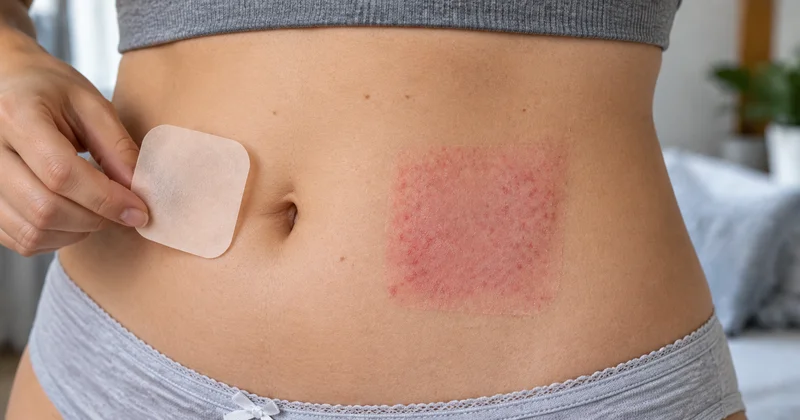
The birth control patch is one of the clearest examples because adhesive and medication remain in direct contact with the skin for days. Redness, irritation, and rash where the patch is applied are recognized side effects.
A rash elsewhere on the body needs a broader look because medications, infections, skincare, detergents, food, other drugs, and allergies can all produce similar symptoms.
First, Look at Where the Rash Appears
Where the reaction starts can provide a useful clue.
Directly under a birth control patch
If redness, itching, dryness, or bumps appear mainly in the same shape and location as your contraceptive patch, a local contact reaction is possible.
That does not automatically mean you are allergic to the hormones in the patch.
The skin may instead be reacting to:
- Adhesive.
- Occlusion.
- Friction.
- Repeated use of the same area.
- Another component of the patch.
- Irritated skin underneath the patch.
Around an implant or injection site
Some redness, tenderness, bruising, or swelling can occur around a recent contraceptive implant insertion or injection.
A reaction that becomes increasingly painful, hot, swollen, draining, or otherwise concerning deserves medical evaluation rather than being assumed to be an ordinary rash.
Across several areas of your body
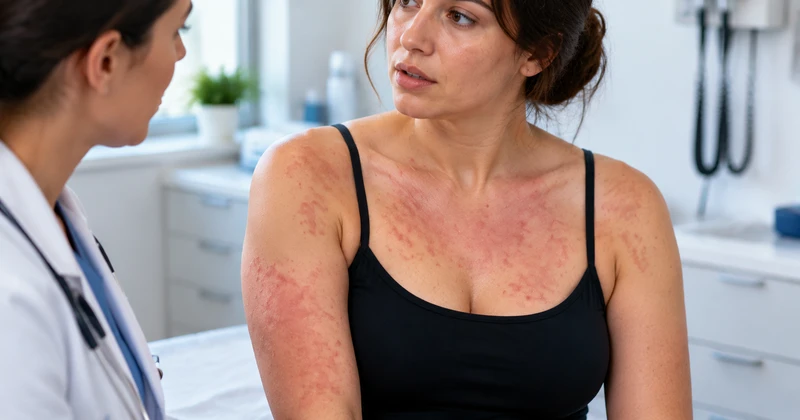
A rash appearing on the arms, chest, abdomen, face, or multiple unrelated areas is different from a small patch-shaped reaction.
Possible causes can include:
- Hives.
- A medication reaction.
- Infection.
- Contact dermatitis from another exposure.
- Another skin condition.
The timing of your contraception change is useful information, but timing alone does not prove the contraceptive is responsible.
Genital irritation after condoms or spermicide
Condoms, lubricants, and spermicides can produce local irritation in susceptible users.
Natural rubber latex can also trigger an allergic reaction in people with latex allergy.
This type of reaction comes from contact exposure, not from hormonal birth control.
Birth Control Patch Rash and Skin Irritation
The contraceptive patch is especially relevant to skin reactions because it stays attached directly to the skin.
Recognized application-site reactions include:
- Redness.
- Itching.
- Irritation.
- Dryness.
- Rash.
- Small bumps.
- Dermatitis.
- Hives or other reactions in some users.
If you use a contraceptive patch, follow the instructions for your specific brand rather than assuming every patch has identical placement rules.
In general, contraceptive patches are placed on clean, dry, intact skin. They should not be placed on skin that is already red, irritated, or damaged.
Using a different approved skin location for a new patch can also help reduce repeated irritation in one area.
If irritation repeatedly returns with every application, tell the prescribing clinician. Persistent reactions may require reviewing how the patch is being used or considering whether a different contraceptive method would make more sense.
Irritant Contact Dermatitis vs. Allergic Contact Dermatitis
Two reactions can look similar while having different causes.
| Feature | Irritant Contact Dermatitis | Allergic Contact Dermatitis |
|---|---|---|
| Cause | Something directly irritates or damages the skin barrier | Immune reaction to a substance touching the skin |
| Common symptoms | Burning, stinging, dryness, redness | Often intense itching, redness, bumps or blisters |
| Location | Usually where exposure occurred | Often starts at contact area but may extend |
| Timing | Can develop relatively quickly after enough irritation | May appear hours or days after exposure |
| Diagnosis | Based on history and examination | Patch testing may sometimes help identify an allergen |
You usually cannot determine from appearance alone which type you have.
A contraceptive patch could potentially irritate skin without producing a true allergy. This distinction matters because seeing a red square under a patch does not automatically mean you are allergic to hormonal contraception.
Can Birth Control Pills Cause a Rash?
A rash or hypersensitivity reaction is possible with medications, including hormonal contraceptives, but identifying the responsible medication is not always simple.
If a rash begins after starting a pill, think about everything else that changed around the same time.
This may include:
- Antibiotics.
- Pain relievers.
- Supplements.
- New skincare.
- Laundry products.
- Foods.
- Illness.
- Other prescription medicines.
Different birth control pills also contain different active and inactive ingredients, so one reaction should not automatically be generalized to every oral contraceptive.
If the timing points toward a new prescription, contact the prescriber or pharmacist and provide the exact product name.
Can an IUD, Implant, or Birth Control Shot Cause Skin Reactions?
Skin reactions can also appear with contraceptive methods that do not use an adhesive patch.
Hormonal IUDs
Current safety information for hormonal IUDs includes reports of hypersensitivity reactions such as rash, hives, and angioedema.
These reports show that such reactions are possible. They do not mean every rash occurring after IUD insertion was caused by the device.
Because postmarketing reports often come from an unknown number of users, they also cannot always tell us how frequently a reaction occurs or prove causation.
Birth control implant
A contraceptive implant can cause local insertion-site effects such as redness, bruising, tenderness, swelling, or pain.
Hypersensitivity reactions are also included in current safety information.
A small insertion-site reaction and a widespread allergic eruption are very different situations, so describe both the location and symptoms when speaking with your healthcare professional.
Birth control injection
Rash and hypersensitivity reactions have also been reported with medroxyprogesterone products.
Again, a reported adverse event does not prove that every rash occurring during use was caused by the contraceptive.
If symptoms appear shortly after an injection, document the timing and contact the prescribing healthcare professional, particularly if the rash is widespread or accompanied by other symptoms.
Can Condoms or Spermicide Cause a Rash?
Hormones are not the only contraception-related trigger for skin irritation.
Latex condoms
Natural rubber latex can cause reactions ranging from local dermatitis to hives and, rarely, a serious allergic reaction.
Possible symptoms include:
- Itching.
- Redness.
- Swelling.
- Hives.
- Respiratory symptoms in a severe allergy.
Latex-free condom options exist for people with confirmed or suspected latex allergy.
Spermicide
Some spermicides, particularly products containing nonoxynol-9, can irritate genital tissue.
Repeated or frequent exposure can increase irritation.
If burning, itching, or redness repeatedly appears after using a condom with spermicide or a separate spermicide, the product itself deserves consideration rather than assuming hormones are responsible.
Birth Control Rash vs. Acne: How to Tell the Difference
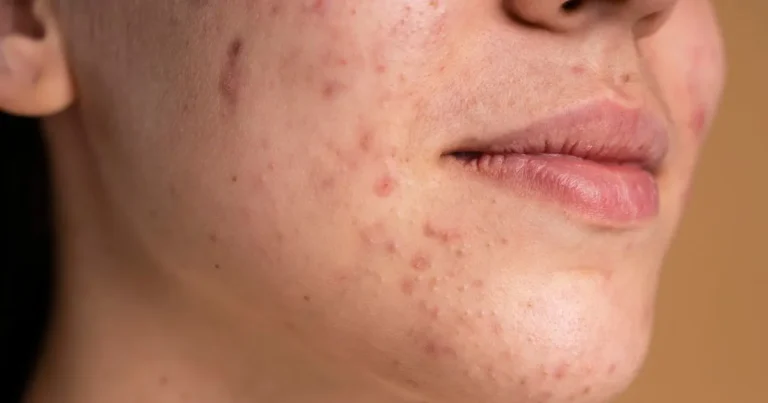
A rash and acne can both involve red bumps, but they usually have different patterns.
| More Consistent With a Rash | More Consistent With Acne |
|---|---|
| Itching | Blackheads |
| Burning or stinging | Whiteheads |
| Patchy redness | Inflamed pimples |
| Hives or welts | Pustules |
| Scaling or dryness | Recurrent clogged pores |
| Rapid spreading | Deeper nodules |
| Reaction matching a patch shape | Typical acne-prone facial areas |
Acne can still itch occasionally, and some rashes can produce acne-like bumps, so this table is not a diagnostic test.
If the skin problem looks more like acne, our guide to other common causes of chin and jawline acne can help you think through other possible triggers.
Does Birth Control Cause Acne Breakouts Too?
Yes, some birth control methods can affect acne—but that is a different issue from a birth control rash.
Certain combined oral contraceptives can help acne, while some progestin-only methods are associated with new or worsening acne in some users.
Acne usually shows up as clogged pores, whiteheads, blackheads, inflamed pimples, or deeper lesions rather than an itchy, spreading rash.
If you are developing acne rather than a rash, your contraceptive method and hormonal changes should be evaluated from that perspective instead.
A Rash After Starting Birth Control Does Not Automatically Prove the Cause
It is natural to suspect the newest medication when a rash appears soon after you start it.
Sometimes that suspicion is correct.
But many other changes can happen at the same time.
Consider whether you recently changed:
- Laundry detergent.
- Fabric softener.
- Soap or body wash.
- Moisturizer.
- Sunscreen.
- Hair products.
- Medication.
- Antibiotics.
- Supplements.
- Food.
- Bedding.
- Clothing.
Also consider recent:
- Illness.
- Heat exposure.
- Heavy sweating.
- Travel.
- Plant exposure.
- Insect bites.
A timeline helps narrow possibilities, but it cannot replace an examination when the diagnosis is uncertain.
What to Write Down Before Contacting a Healthcare Professional
You can make a medical conversation much more useful by documenting what happened.
Write down:
- The exact contraceptive method and brand.
- When you started it.
- When the rash first appeared.
- Where the rash began.
- Whether it itches, burns, hurts, or feels warm.
- Whether it is spreading.
- Whether you have hives.
- Whether swelling is present.
- Any other medications or supplements you started.
- New soaps, skincare, detergents, condoms, or lubricants.
- Whether the reaction returns after each patch, injection, or exposure.
- Any breathing, swallowing, facial-swelling, dizziness, or fainting symptoms.
Photos can also be useful when a rash changes before an appointment.
Try to take them in similar lighting so the clinician can see how the appearance changes.
When a Birth Control Rash Needs Medical Advice
Contact your prescribing clinician, pharmacist, dermatologist, or another appropriate healthcare professional if the rash:
- Keeps returning.
- Persists instead of improving.
- Is spreading.
- Is significantly itchy or painful.
- Develops blisters.
- Has substantial peeling.
- Becomes swollen or warm.
- Appears after each contraceptive exposure.
- Makes you want to discontinue your contraception.
- Is difficult to distinguish from infection or another skin problem.
You do not have to wait until the reaction becomes severe to mention it.
Recurring mild reactions can still matter when they affect your ability to use a contraceptive comfortably.
When a Rash Could Be an Emergency
A severe allergic reaction can progress quickly.
Get emergency medical help if a rash or hives occur with symptoms such as:
- Difficulty breathing.
- Wheezing.
- Trouble swallowing.
- Tightness or swelling in the throat.
- Swelling of the lips, tongue, face, or mouth.
- Severe dizziness.
- Fainting.
- Rapidly worsening widespread hives accompanied by systemic symptoms.
These symptoms can be consistent with anaphylaxis, a potentially life-threatening allergic reaction.
Do not wait for a routine appointment if breathing or airway symptoms are developing.
Should You Stop Birth Control if You Develop a Rash?
There is no single answer that applies to every rash.
If you have symptoms of a severe allergic reaction
Emergency evaluation takes priority.
Do not keep exposing yourself to a suspected trigger while trying to manage severe allergy symptoms at home.
If you have mild patch-site irritation
Follow the instructions supplied with your specific patch.
Some contraceptive-patch guidance allows an irritated patch to be replaced at another approved skin location while keeping the scheduled patch-change day.
Because instructions can differ by product, use the information supplied with your prescription or ask your pharmacist or clinician.
If you have a nonurgent widespread or recurring rash
Contact the prescribing clinician or pharmacist before making a permanent contraception change.
Stopping a contraceptive can affect pregnancy protection, so you may need instructions about:
- When to stop.
- When another method becomes effective.
- Whether backup contraception is needed.
- Which alternative is medically appropriate.
The goal is to address both the skin reaction and continued contraception safely.
If the Birth Control Patch Is Irritating Your Skin
A few practical steps can reduce avoidable irritation.
Use your patch only on an approved location for that specific product.
The skin should generally be:
- Clean.
- Dry.
- Intact.
- Free of existing irritation.
Do not place the patch over:
- Cuts.
- Red skin.
- Damaged skin.
- Areas where tight clothing constantly rubs it.
Avoid applying creams, lotions, powders, or makeup under the patch when the product instructions tell you not to do so.
Use a different approved location when applying a new patch rather than repeatedly using the identical spot.
If significant redness or itching returns every week despite correct use, contact the prescriber.
What If the Rash Keeps Returning?
A recurring rash may require more investigation than simply switching skincare products.
A healthcare professional may review:
- The active hormones.
- Adhesive or device materials.
- Inactive medication ingredients.
- Other medications.
- Personal-care products.
- Latex exposure.
- Previous allergy history.
- Timing of each reaction.
If contact allergy is suspected, a dermatologist or allergy specialist may recommend additional evaluation. Patch testing can sometimes help identify substances responsible for allergic contact dermatitis.
If the reaction occurs specifically because a contraceptive must stay attached to the skin, discussing a non-patch method may make sense.
That does not automatically mean one particular pill, IUD, implant, or injection is the best alternative.
How to Compare Another Birth Control Method if Skin Reactions Are a Problem
When discussing alternatives, think beyond the rash alone.
Questions may include:
- Is skin contact the likely problem?
- Is estrogen medically appropriate for me?
- Would I prefer a hormonal or nonhormonal method?
- Do I want long-acting contraception?
- Am I comfortable taking a daily pill?
- What bleeding changes am I willing to accept?
- What other side effects matter to me?
- How important is reversibility?
- How quickly do I need the new method to become effective?
- Will I need backup pregnancy prevention while switching?
A method that avoids an adhesive may solve repeated patch-site irritation, but the new method has its own benefits, risks, and side-effect profile.
The best choice should be based on your overall medical needs and preferences, not solely on avoiding one possible skin reaction.
Frequently Asked Questions
Can birth control cause a rash?
Yes. A birth control rash can occur with some contraceptive methods, although the type of reaction depends on the product. Contraceptive patches can cause local application-site irritation, while rash, hives, or hypersensitivity reactions have also been reported with some hormonal contraceptives. A rash appearing during birth control use does not automatically prove the contraceptive caused it.
Is a rash under the birth control patch normal?
Mild redness, irritation, or rash at the application site is a recognized side effect of contraceptive patches. Persistent, severe, blistering, or repeatedly worsening irritation should be discussed with the prescriber. Follow the placement and patch-change instructions for your specific product rather than improvising how the patch is used.
What does an allergic reaction to birth control look like?
Possible allergy symptoms can include itching, widespread hives, swelling, or a generalized rash. Swelling of the face, lips, tongue, or throat, difficulty breathing or swallowing, severe dizziness, or fainting can signal a serious allergic reaction and require emergency medical attention.
Is birth control rash the same as hormonal acne?
No. Acne typically produces blackheads, whiteheads, inflamed pimples, pustules, or deeper nodules. A rash is more likely to involve itching, burning, patchy redness, hives, scaling, or swelling. Hormonal contraception can affect acne as well, but acne and rash are separate skin problems.
Should I change birth control because of a rash?
It depends on the reaction. Persistent local irritation or a recurring nonurgent rash should be discussed with your clinician so the suspected cause and alternative contraception can be reviewed. Serious allergic symptoms require urgent care. Do not make an unplanned contraceptive switch without considering continued pregnancy protection.
The Bottom Line
A birth control rash is not one specific diagnosis.
A small red area directly beneath a contraceptive patch is different from widespread hives. Irritant contact dermatitis is different from a true allergy. Acne is different from both.
Start by looking at:
- Where the reaction appeared.
- When it began.
- What it looks and feels like.
- Which contraceptive you use.
- What else changed at the same time.
Persistent or recurring reactions deserve medical review. Difficulty breathing, throat swelling, facial or tongue swelling, fainting, or other signs of a serious allergic reaction require immediate medical attention.
And if the solution involves changing contraception, make that decision with continued pregnancy prevention and your overall health in mind—not just the rash.
This article is for educational purposes only. It cannot diagnose a rash, determine whether contraception caused a reaction, or replace individualized medical advice.
References:
- MedlinePlus — Estrogen and Progestin Transdermal Patch Contraceptives
Current patient guidance covering patch placement, site rotation, local irritation, redness, and rash. - American Academy of Dermatology — Contact Dermatitis Signs and Symptoms
Explains common contact-dermatitis symptoms including itching, burning, redness, swelling, dryness, hives, and blisters. - American Academy of Dermatology — Contact Dermatitis Causes
Distinguishes irritant contact dermatitis from allergic contact dermatitis. - DailyMed — XULANE Prescribing Information
Current labeling includes application-site disorders, itching, contact dermatitis, redness, and skin irritation. - DailyMed — TWIRLA Prescribing Information
Current labeling groups dermatitis, hypersensitivity, rash, irritation, urticaria, redness, dryness, and itching among application-site reactions. - DailyMed — NEXPLANON Prescribing Information
Current labeling includes implant-site reactions and hypersensitivity among reported adverse reactions. - DailyMed — MIRENA Prescribing Information
Current postmarketing safety information includes hypersensitivity reports involving rash, urticaria, and angioedema while noting that frequency and causation cannot always be established. - MedlinePlus — Latex Allergy
Identifies condoms as a potential latex exposure and describes rash through severe allergic reactions. - CDC — How to Use a Condom
Notes that nonoxynol-9 spermicide can cause irritation. - MedlinePlus — Anaphylaxis
Covers emergency warning signs including hives, swelling of the lips or tongue, throat symptoms, difficulty breathing, dizziness, and fainting.