Tretinoin for Acne: Benefits, How to Use It, and Side Effects
When you have acne that keeps coming back, it is easy to feel like nothing is really changing. You try a new cleanser, switch moisturizers, maybe even stop using products out of frustration, and the breakouts still show up. That is one reason tretinoin for acne stays so popular. It is not a quick fix, but it can be one of the most reliable long-term treatments for clearer skin.
If you are thinking about starting tretinoin, the biggest thing to know is this: better skin usually comes from steady use, not fast results. Once you know how it works and how to use it without wrecking your skin barrier, it becomes much easier to stick with it.
Table of Contents
What tretinoin is and why it is used for acne
What tretinoin is
Tretinoin is a prescription retinoid made from vitamin A. It comes in creams, gels, and lotions, and it is often used to treat acne by improving the way your skin sheds dead cells.
How tretinoin works on clogged pores and breakouts
Acne starts when pores get clogged with oil and dead skin cells. Tretinoin helps keep those pores from getting blocked as easily. That makes it especially useful for:
- blackheads
- whiteheads
- small clogged bumps
- inflamed pimples
It also helps speed up skin cell turnover, which is one reason many people notice smoother texture over time.
Who may benefit most from tretinoin for acne
You may be a good candidate for tretinoin if you have:
- mild to moderate acne
- recurring clogged pores
- acne with rough texture
- post-acne dark marks
- early concerns about acne scars
Tretinoin can be used alone or as part of a bigger treatment plan with products like benzoyl peroxide, azelaic acid, topical antibiotics, or oral acne medicine, depending on how severe your acne is.
Benefits of tretinoin for acne
Helps prevent new pimples from forming
One of the best things about tretinoin is that it works on the early stages of acne. Instead of only shrinking pimples after they appear, it helps reduce the clogged pores that lead to new breakouts.
Can improve blackheads, whiteheads, and inflammatory acne
Tretinoin is often strongest against comedonal acne, which means blackheads and whiteheads. But it can also help inflammatory acne when used consistently and, in some cases, when paired with other treatments recommended by a doctor.
May smooth overall skin texture over time
As your skin renews itself more efficiently, you may notice that rough patches feel softer and your skin looks more even. This is one reason people sometimes keep using tretinoin even after their breakouts are better controlled.
Why tretinoin is a long-term treatment, not a quick fix
Tretinoin is not the product you put on for three nights and judge. It usually takes weeks to months to show its full effect. The goal is gradual improvement, not overnight clearing.
How long tretinoin takes to work
What you may notice in the first few weeks
The first few weeks can feel discouraging. Your skin may get:
- dry
- flaky
- a little red
- more sensitive than usual
Some people also notice more visible breakouts at the start.
When clearer skin usually starts to show
Some early improvement may show up within a few weeks, but meaningful acne improvement often takes closer to 8 to 12 weeks. For dark marks and texture, it can take even longer.
Why some people think it is getting worse before it gets better
Tretinoin can speed up the life cycle of clogged pores that were already forming under the skin. That can make existing acne come to the surface faster. It is often called purging, though not everyone gets it.
| Time on tretinoin | What you may notice |
|---|---|
| Weeks 1 to 2 | Dryness, mild peeling, sensitivity, possible increase in visible breakouts |
| Weeks 3 to 6 | Skin may start adjusting, irritation may ease with a good routine |
| Weeks 8 to 12 | Fewer new breakouts, smoother texture, less clogged skin |
| 3 to 6 months | Better overall acne control, gradual fading of post-acne marks |
How to use tretinoin for acne the right way
Start slow to protect your skin barrier
A common mistake is using too much too soon. That usually leads to irritation, not faster results. Many people do best by starting two to three nights a week, then slowly increasing as their skin adjusts.
How much to apply and when to use it
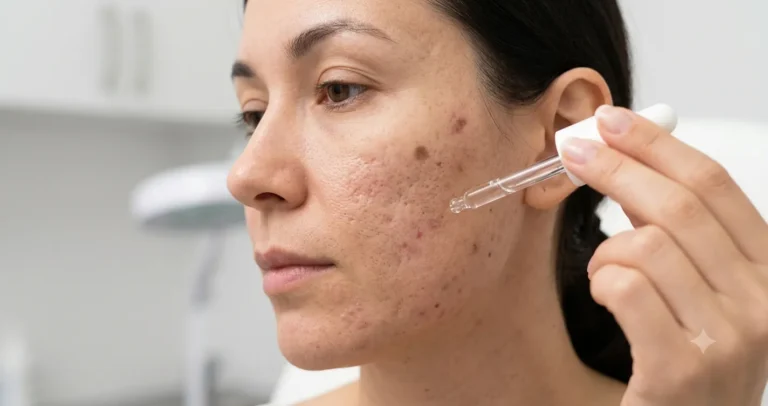
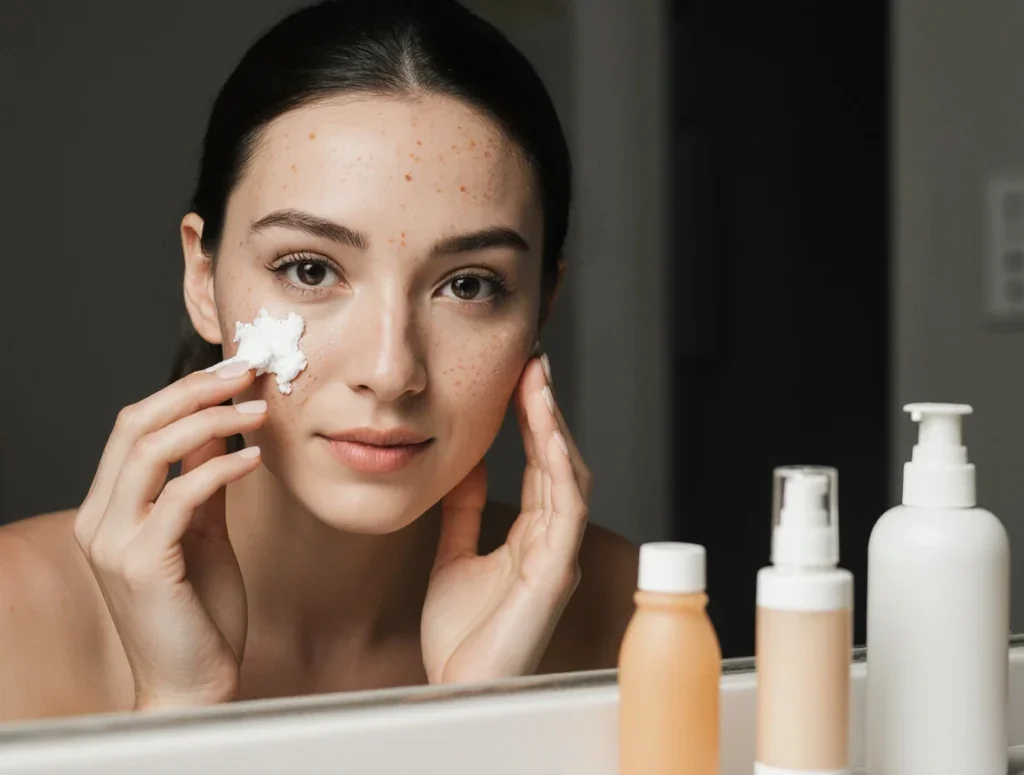
You only need a pea-sized amount for your whole face. More is not better. Tretinoin is usually applied at night to clean, fully dry skin.
Step-by-step nighttime routine
- Wash your face with a gentle cleanser.
- Pat dry and wait a few minutes until your skin is fully dry.
- Apply a thin layer of moisturizer if your skin is sensitive.
- Use a pea-sized amount of tretinoin for the whole face.
- Follow with moisturizer if needed.
Some people prefer the “sandwich” method:
moisturizer, then tretinoin, then another thin layer of moisturizer.
What to do in the morning
In the morning:
- wash with a gentle cleanser if needed
- use a non-comedogenic moisturizer
- apply broad-spectrum sunscreen every day
Sun protection matters because tretinoin can make your skin more sensitive, and sun exposure can make post-acne dark spots hang around longer.
Common mistakes that make irritation worse
Try to avoid these early on:
- using too much product
- applying on damp skin
- starting every night from day one
- layering strong exfoliants right away
- picking at peeling skin
- skipping moisturizer
- forgetting sunscreen
Best skincare routine to use with tretinoin
Gentle cleanser, moisturizer, and sunscreen basics
The best routine is usually the simplest one. You do not need a shelf full of products. A basic routine should include:
- a gentle cleanser
- a fragrance-free moisturizer
- a broad-spectrum sunscreen with SPF 30 or higher
Ingredients that may pair well with tretinoin
Depending on your skin and your dermatologist’s advice, helpful ingredients may include:
- benzoyl peroxide, usually in a separate routine if recommended
- azelaic acid for acne and post-acne marks
- niacinamide for barrier support
- ceramides and glycerin for hydration
Ingredients to be careful with at first
When you are starting tretinoin, be careful with:
- scrubs
- strong acids like glycolic acid or salicylic acid in high amounts
- alcohol-heavy toners
- harsh cleansing brushes
- multiple acne treatments all at once
Internal link opportunity: acne-friendly skincare routine for sensitive skin
If your face burns, stings, or peels easily, it may help to read an acne-friendly skincare routine for sensitive skin before you add more active ingredients.
Side effects of tretinoin
Common side effects you may notice
Most side effects are related to irritation, especially at the beginning. Common ones include:
- dryness
- peeling
- redness
- mild stinging
- tightness
- temporary worsening of acne
Signs your skin may be too irritated
A little dryness is common. But your skin may be too irritated if you have:
- intense burning
- cracking
- swelling
- severe redness
- painful peeling
- rash-like irritation that does not calm down
How to reduce dryness, peeling, redness, and stinging
You can often make tretinoin easier to tolerate by:
- cutting back to every other night or fewer nights
- using moisturizer before and after application
- switching to a gentler cleanser
- avoiding other irritating actives for a while
- protecting your skin from sun and wind
When to call a dermatologist
Talk to a dermatologist if:
- your irritation is severe
- your acne keeps getting worse after several weeks
- you have painful cystic acne
- your skin tone is developing stubborn dark patches
- you are not sure whether the reaction is normal
Tretinoin purge vs regular irritation
What a purge is
A purge usually means breakouts appearing faster in the areas where you already tend to get acne. It happens because tretinoin speeds up turnover in clogged pores that were already on their way up.
How long a purge may last
If it happens, it is usually temporary. For many people, it settles within a few weeks, though timelines vary.
How to tell the difference between purging and a bad reaction
A purge is more likely if:
- the breakouts are in your usual acne zones
- you recently started tretinoin
- the bumps look like your normal acne
Irritation is more likely if:
- you have burning more than breakouts
- your skin is painfully red and raw
- you are breaking out in unusual areas
- the product seems impossible to tolerate even with reduced use
Does tretinoin help with acne scars?
The difference between acne scars and post-acne marks
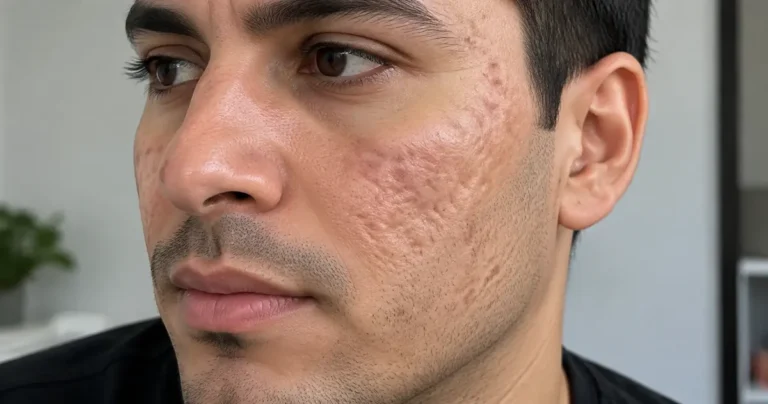
This part confuses a lot of people. True acne scars are changes in the skin’s texture, like indents or raised areas. Post-acne marks are flat spots left behind after a pimple heals. They may look red, brown, or purple depending on your skin tone.
Does tretinoin help with acne scars over time
If you are asking, does tretinoin help with acne scars, the honest answer is: sometimes, but it depends on the type. Tretinoin may help mildly improve shallow textural changes over time by supporting skin renewal and collagen activity, but it is not the best fix for deep indented scars.
What tretinoin can and cannot do for deeper scars
Tretinoin can help with:
- shallow uneven texture
- prevention of new acne that can lead to new scars
- gradual fading of post-acne marks
Tretinoin usually cannot fully remove:
- ice pick scars
- boxcar scars
- deep rolling scars
- thick raised scars
For those, office treatments are often more effective.
Tretinoin for acne scars and dark spots
How tretinoin for acne scars may improve skin turnover
Tretinoin for acne scars can be helpful when scarring is mild and mixed with discoloration or roughness. By increasing turnover, it may help your skin look smoother over time.
How tretinoin for dark spots may help fade post-inflammatory hyperpigmentation
Tretinoin for dark spots can be especially useful for post-inflammatory hyperpigmentation, the flat marks left after acne heals. It does not bleach the skin. Instead, it supports a faster turnover process so uneven pigment can fade more gradually.
When combination treatment may be needed for better results
Sometimes tretinoin works best when paired with other treatments, such as:
- azelaic acid
- chemical peels from a professional
- microneedling
- laser treatments
- prescription combinations chosen by a dermatologist
How to get rid of acne scars at home
Realistic at-home options for mild marks and uneven tone
If you want to know how to get rid of acne scars at home, the most realistic answer is that home care helps most with mild marks and tone issues, not deep scars. Useful at-home options may include:
- tretinoin or another retinoid if prescribed
- daily sunscreen
- azelaic acid
- gentle exfoliating acids if your skin can handle them
- consistent moisturizing to support healing
What helps support healing safely
The simplest habits are often the most helpful:
- treat acne early so new scars do not form
- do not pick or squeeze pimples
- wear sunscreen every day
- stay consistent with treatment instead of switching every week

What to avoid if you want to prevent making scars worse
Avoid:
- digging at pimples
- harsh scrubs
- DIY lemon juice or abrasive home remedies
- overusing peels
- chasing fast fixes that leave your skin inflamed
Internal link opportunity: best ingredients for fading post-acne marks
You may also want to read about the best ingredients for fading post-acne marks if discoloration is bothering you more than texture.
How to get rid of acne scars fast
Why fast results are limited at home
If you are searching how to get rid of acne scars fast, it helps to reset expectations. Real scars usually improve slowly. Home products can support gradual change, but they rarely erase scars quickly.
What “faster” improvement usually means in real life
In real life, faster improvement usually means:
- dark marks fade sooner with sunscreen and the right actives
- mild texture looks a bit smoother after a few months
- fewer new breakouts means fewer new marks
When office treatments may be more effective than creams alone
If you have deeper scars, a dermatologist may suggest treatments such as:
- microneedling
- laser resurfacing
- subcision
- chemical peels
- fillers for some indented scars
These can often do more for true acne scars than creams alone.
Who should not use tretinoin or should ask a doctor first
Pregnancy and breastfeeding considerations
If you are pregnant, trying to become pregnant, or breastfeeding, check with your doctor before using tretinoin. Retinoids are generally approached with caution during pregnancy, so this is not something to guess about on your own.
Very sensitive skin, eczema, or rosacea concerns
If you have eczema, rosacea, or very reactive skin, tretinoin may still be possible, but you may need a gentler approach, a lower strength, or a different treatment altogether.
Using tretinoin with other acne medicines
Tell your doctor about everything else you use on your skin, including over-the-counter acne products. Some combinations are helpful, but too many strong actives at once can leave your skin inflamed and make acne look worse.
What results to expect and how to stay consistent
A realistic timeline for breakouts, texture, and discoloration
Tretinoin works best when you think in phases:
- breakouts: often improve over 8 to 12 weeks
- texture: may improve over several months
- discoloration: can take a few months or longer
That may feel slow, but steady progress matters more than dramatic early change.
Tips for sticking with tretinoin without overdoing it
To stay consistent:
- take clear before photos once a month, not every day
- use only a pea-sized amount
- keep your routine simple
- give each change time
- focus on fewer breakouts over time, not perfect skin overnight
When it may be time to adjust your treatment plan
It may be time to adjust your plan if:
- you see no improvement after a fair trial
- irritation keeps stopping you from using it
- your acne is leaving scars
- you have painful cysts or large inflamed breakouts
Internal link opportunity: when to see a dermatologist for acne
If your acne is affecting your confidence or leaving marks behind, reading about when to see a dermatologist for acne may help you decide on your next step.
Frequently asked questions
Can you use tretinoin for acne every night?
Not always at first. Many people need to start slowly and build up. Once your skin adjusts, nightly use may be possible if your doctor recommends it.
Does tretinoin help with acne scars or only active acne?
Tretinoin mainly treats acne and helps prevent new breakouts. It may also help fade post-acne marks and slightly improve mild texture, but deeper scars usually need more than a cream.
Can tretinoin make acne worse at first?
Yes, it can seem that way early on. Some people go through a temporary purge or irritation phase before their skin starts to improve.
Can you use moisturizer before or after tretinoin?
Yes. In fact, moisturizer often makes tretinoin easier to tolerate. You can use it before tretinoin, after tretinoin, or both.
How long does tretinoin take to fade dark spots?
Tretinoin for dark spots usually takes patience. Some people notice gradual fading within a few months, but stubborn marks may take longer, especially without daily sunscreen.
Final takeaway
Tretinoin for acne can be one of the most effective long-term tools for clearer skin, but it works best when you use it correctly and give it time. Start slowly, protect your skin barrier, wear sunscreen every day, and do not expect instant results. If your acne is severe, scarring, or not improving, a dermatologist can help you build a treatment plan that fits your skin instead of guessing your way through it.
FAQ:
Is tretinoin good for hormonal acne?
Tretinoin can help with the clogged pores and breakouts that come with hormonal acne, but it may not be enough on its own for deeper or recurring hormonal breakouts. Many people need a combination approach.
Can I use tretinoin with benzoyl peroxide?
Sometimes, yes, but they are often used at different times or in a specific routine to reduce irritation and help both products work well. Ask your doctor or pharmacist how to combine them safely.
Does tretinoin help with acne scars fast?
Tretinoin for acne scars is usually a slow treatment. It may help mild texture and post-acne marks over time, but it does not work fast on deep scars.
What should I avoid while using tretinoin for acne?
Avoid harsh scrubs, picking at your skin, overusing acids, skipping sunscreen, and applying more tretinoin than directed.
How do I know if tretinoin is not right for me
If you have severe burning, swelling, cracking, ongoing rash-like irritation, or no improvement after a proper trial, it is a good idea to check in with a dermatologist.