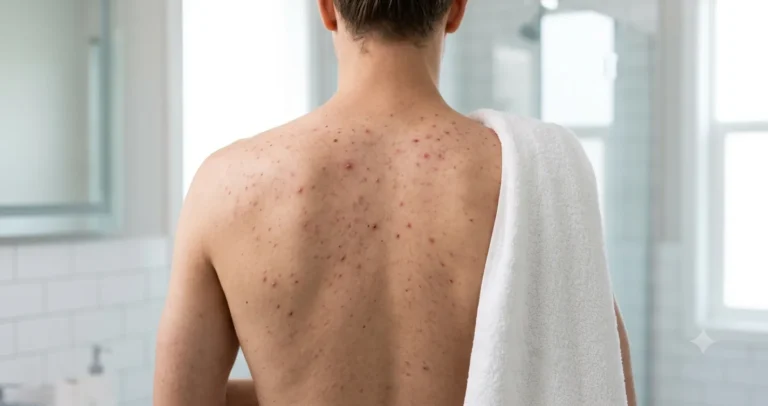
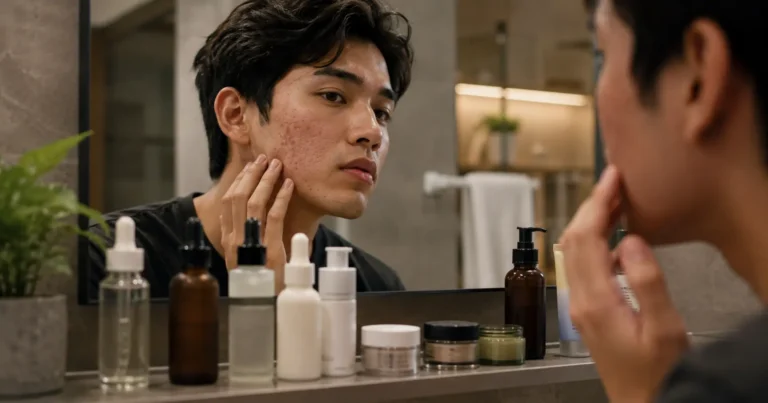
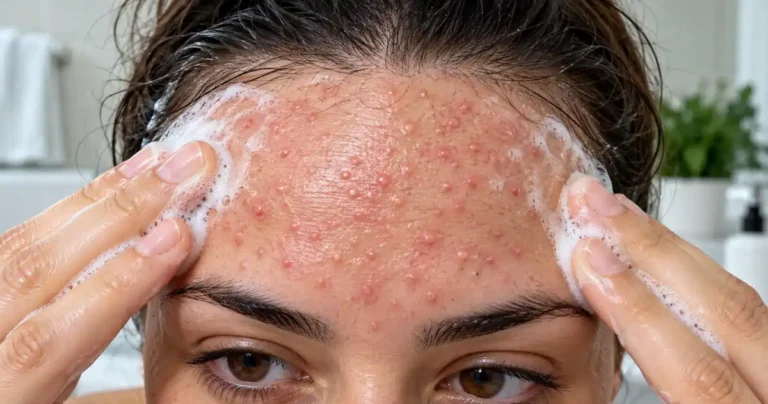
Acne Scar Cream: What to Look for and How It Can Help
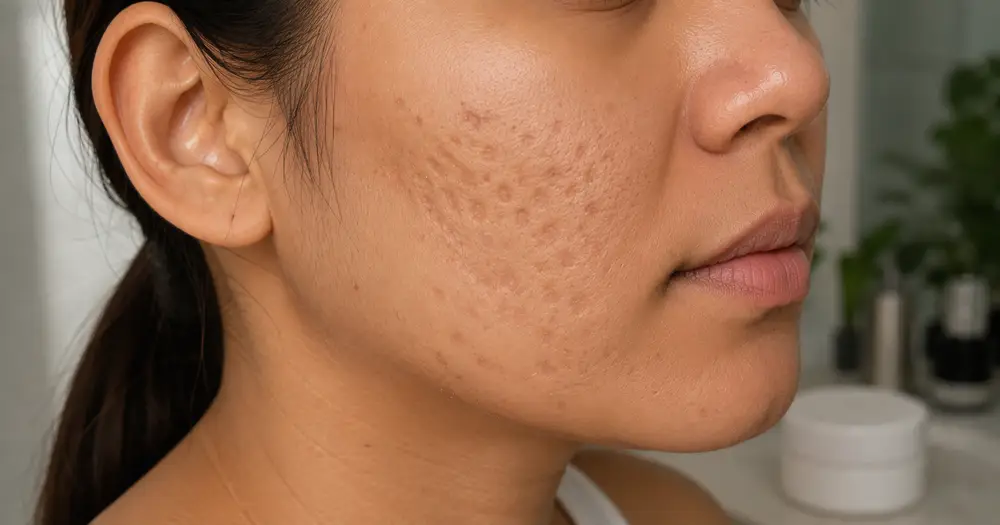
If you are shopping for an acne scar cream, the first question is not which brand sounds most convincing. It is what kind of post-acne change you are trying to treat. Flat brown, gray, red, or pink marks are different from true scars that leave dents or raised tissue, and that difference changes what a topical product can realistically do.
A topical product may help some flat post-acne marks or make mild scarring less noticeable when it contains an appropriate active ingredient and your skin tolerates it. It cannot reliably lift deep pits, release tethered rolling scars, or flatten every raised scar. Those problems often need dermatologist-directed treatment.
Table of Contents
Can Acne Scar Cream Actually Help?
Yes, but only within realistic limits. Topical care may improve discoloration, support acne control, smooth the skin’s surface, or make mild scarring less noticeable. Topical retinoids also have an established role in acne treatment, with newer evidence suggesting a potential role in improving some atrophic acne scars.
“Scar cream” is a marketing category, not a single medical treatment. Two products can have completely different ingredients and purposes. One may target active breakouts, another may focus on discoloration, and another may be designed for raised scars.
Before buying, ask:
- What exactly am I trying to improve?
- Does the active ingredient have a reasonable role for that concern?
If the answer to the second question is unclear, the words “scar repair” on the package are not enough.
First, Is It an Acne Scar or a Post-Acne Mark?
People often use “scar” to describe anything left behind after a breakout. Medically, that can hide an important difference.
Flat brown, gray, red, or pink marks
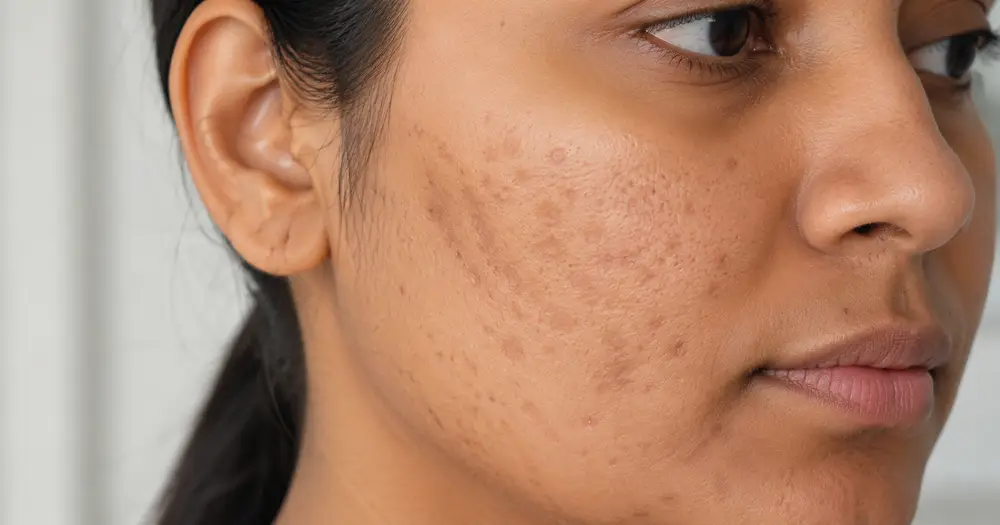
A flat area of color after acne is often not a true scar. The American Academy of Dermatology explains that post-inflammatory hyperpigmentation (PIH) consists of flat pigmented spots that can remain after acne clears. Depending on your skin tone, these marks may appear pink, red, brown, bluish-gray, or darker than the surrounding skin.
These marks can fade over time, although some take months. Topical skincare may help address uneven-looking tone, especially when your routine also helps control new acne.
Product example — The Ordinary Azelaic Acid Suspension 10%: This cream-like formulation contains 10% azelaic acid and is marketed for blemish-prone skin, uneven-looking tone, and visible texture. That makes it more relevant to flat post-acne discoloration than to deep pitted scars. It should not be treated as a product that physically fills or removes deep scars.
View The Ordinary Azelaic Acid Suspension 10% on Amazon
Depressed acne scars
Depressed scars form when healing leaves too little supporting tissue. Common patterns include:
- Ice-pick scars: narrow, deep pits.
- Boxcar scars: round or oval depressions with clearer edges.
- Rolling scars: broader, shallow depressions that can give the skin a wavy appearance.
These are structural changes. A cream may improve surface dryness, color contrast, or some mild textural irregularity, but it cannot physically release a tethered rolling scar or restore all the tissue lost in a deep depression.
Raised acne scars
Raised scars develop when excess scar tissue forms. They need to be approached differently from depressed scars.
Silicone gels and sheets have been studied for hypertrophic and keloid-type scars, but that evidence should not be generalized to pitted acne scars. A 2026 systematic review of randomized trials specifically evaluated silicone gel for hypertrophic scars, with the authors also noting remaining evidence gaps.
What to Look for in an Acne Scar Cream
The ingredient list and the problem you are trying to solve matter more than the product category printed on the front.
An active ingredient that matches the concern
For mild textural changes, topical retinoids have some evidence suggesting they may support skin remodeling, although they should not be presented as substitutes for procedures used to treat substantial atrophic scars. A 2026 review found that topical retinoids have a well-established place in acne treatment and may improve the appearance of some atrophic acne scars.
For flat post-acne dark marks, ingredients aimed at uneven pigmentation may be more useful than products generically labeled “scar cream.”
The Ordinary Azelaic Acid Suspension 10% is one example. Its manufacturer describes it as a cream-like formulation for blemish-prone skin that targets uneven-looking tone and texture.
Check The Ordinary Azelaic Acid Suspension 10% on Amazon
Another option is CeraVe Resurfacing Retinol Serum. CeraVe currently formulates it with encapsulated retinol, niacinamide, ceramides, and licorice root extract and positions it specifically for the appearance of post-acne marks, pores, and uneven skin texture. It is a serum rather than a cream, which is a useful reminder that the relevant active and formulation matter more than having the word “cream” on the label.
View CeraVe Resurfacing Retinol Serum on Amazon
Neither product should be expected to lift a deep ice-pick scar or eliminate a pronounced boxcar scar.
A product also does not need every popular active ingredient. Combining several strong treatments at once can increase irritation without improving the underlying structural scar.
A formula your skin can tolerate
A promising ingredient is not very useful if your routine leaves your skin raw, flaky, or inflamed.
Consider whether your skin is already dry or sensitive, whether you use another retinoid, exfoliating acid, or benzoyl peroxide, and whether a new product causes persistent burning or peeling.
If you are choosing between several options, a simpler formula that you can use consistently may be more practical than layering multiple aggressive products.
Clear, realistic claims
Be cautious with claims such as:
- “Erases scars”
- “Permanent scar removal”
- “Instant repair”
- “Works for every scar”
True acne scars vary substantially in depth and structure. Even professional treatment is individualized, and different scar types can require different approaches.
A more useful product clearly identifies its active ingredients, explains its intended purpose, provides directions, and avoids implying that every scar can disappear with topical treatment.
Compatibility with acne-prone skin
If you still have active breakouts, controlling them matters because new inflammatory lesions can lead to additional marks and scars.
Differin Gel 0.1% Adapalene is a relevant example when active acne is still part of the problem. Differin contains 0.1% adapalene and is an over-the-counter retinoid treatment intended to treat and help prevent acne. Its role here is active acne control—not removing established acne scars.
View Differin Gel 0.1% Adapalene on Amazon
That distinction matters. Preventing future inflammatory breakouts can help reduce the opportunity for new post-acne marks and scars, but it is not the same as rebuilding tissue already lost in a deep scar.
Cream vs. Serum vs. Gel: Does the Product Type Matter?
The vehicle affects how a product feels, spreads, hydrates, and fits into your routine. It does not automatically determine effectiveness.
A richer cream may feel more comfortable if your skin is dry, tight, or irritated by acne treatments. A serum or gel may feel lighter if you prefer less occlusive textures.
What matters more is:
- The active ingredient.
- What the product is designed to address.
- Whether your skin tolerates it.
- Whether it fits with your other treatments.
- Whether your expectations match what topical skincare can realistically accomplish.
This is why choosing an acne scar cream simply because it is a cream can be misleading. A serum containing a relevant active may be more appropriate for one person, while someone with dry or treatment-irritated skin may prefer a creamier formulation.
If you specifically want to compare serum options, see our guide to serums for post-acne concerns.
What an Acne Scar Cream Usually Cannot Do
Topicals are most likely to disappoint when the main problem is a pronounced structural scar.
A cream generally cannot:
- Lift a deep ice-pick scar.
- Release fibrous bands beneath a tethered rolling scar.
- Restore all tissue lost in a pronounced boxcar scar.
- Reliably flatten every raised scar.
- Guarantee permanent removal of discoloration.
- Produce instant, complete, or risk-free scar removal.
For deeper acne scars, dermatologist-directed options may include procedures such as microneedling, laser treatment, chemical peels, fillers, radiofrequency-based treatments, or scar-specific procedures. The right approach depends on scar type, skin characteristics, medical history, and other factors.
For a broader treatment discussion, see our guide to acne-scar treatment options.
How to Use Acne Scar Cream Without Overloading Your Skin
The safest routine is usually simpler than a shelf full of strong products.
Follow the directions provided with the product rather than creating an aggressive schedule yourself. If you are introducing a retinoid or exfoliating ingredient, pay attention to irritation and how it interacts with the rest of your routine.
A simple routine may include:
- A gentle cleanser.
- One targeted treatment.
- A moisturizer that supports the skin barrier.
- Broad-spectrum sunscreen during the day.
For someone who wants moisturizer and sun protection in one step, CeraVe AM Facial Moisturizing Lotion SPF 30 is one practical example. The current formula provides broad-spectrum SPF 30 and contains ceramides, niacinamide, and hyaluronic acid. It is not an acne-scar treatment; its place in this routine is hydration and daytime sun protection.
View CeraVe AM Facial Moisturizing Lotion SPF 30 on Amazon
Avoid introducing several strong exfoliants or retinoids at once. If you use salicylic acid, benzoyl peroxide, adapalene, retinol, or another potentially irritating treatment, consider the combined effect of your entire routine.
Sun protection is particularly relevant when you are trying to improve post-acne discoloration.
Picking, scratching, and squeezing acne can also worsen inflammation and increase the chance that a breakout leaves a lasting mark or scar.
A note about retinoids and pregnancy
If you are pregnant or trying to become pregnant, check the ingredients in acne and scar products carefully.
The American College of Obstetricians and Gynecologists recommends avoiding topical retinoids during pregnancy. ACOG lists azelaic acid, topical salicylic acid, glycolic acid, and topical benzoyl peroxide among OTC acne ingredients that can be used during pregnancy, while advising patients to discuss questions with their obstetric clinician.
This means products containing retinol or adapalene, including the retinoid examples discussed above, should not simply be added to a pregnancy skincare routine without following appropriate medical guidance.
Know the difference between irritation and a serious reaction
Some acne treatments can cause dryness, peeling, burning, or irritation.
Rarely, serious hypersensitivity reactions have also been reported with some OTC topical acne products. FDA safety information advises seeking emergency help for symptoms such as difficulty breathing, throat tightness, feeling faint, or swelling of the eyes, face, lips, or tongue.
How Long Should You Give a Topical Product?
There is no single honest timeline for every scar cream because different products target different concerns.
Flat discoloration can change gradually. Structural scars may respond little or not at all to home skincare.
Instead of judging a product after a few days, define what result you are expecting:
- Are you developing fewer new breakouts?
- Are flat dark marks becoming less noticeable?
- Is your skin tolerating the routine?
- Is mild uneven texture improving?
- Are deep depressions essentially unchanged?
Those observations help you distinguish a topical product that is slowly addressing its intended concern from one being expected to solve a problem it was never capable of treating.
If deep pits or substantial raised scars remain unchanged, repeatedly buying stronger topical products may not be the most useful next step.
When an Acne Scar Cream Is Not Enough
Professional evaluation becomes more useful when the problem is clearly structural or active acne continues to create scars.
Consider seeing a board-certified dermatologist if you have:
- Deep ice-pick, rolling, or boxcar scars.
- Raised, firm, itchy, painful, or enlarging scars.
- Painful nodules or cysts.
- Acne that is rapidly worsening.
- New scars developing despite appropriate OTC care.
- A skin change that you are not sure is acne or an acne scar.
- Scarring that is causing significant distress.
A dermatologist can evaluate the type, depth, location, and pattern of scarring and determine whether topical care, a procedure, treatment of active acne, or a combined strategy makes more sense.
A Simple Checklist Before You Buy
Before spending money on another product, ask:
- Is the problem flat or textured?
- What is the product actually designed to treat?
- Which active ingredient is doing the work?
- Does that ingredient make sense for my concern?
- Can my skin tolerate the formula?
- Am I already using another strong active?
- Does the product make unrealistic scar-removal promises?
- Would professional evaluation be more useful than another topical?
If you have identified your concern and are ready to compare product categories, our guide to products for acne scars provides a more product-focused next step.
If salicylic acid is the ingredient you are considering, read our guide to whether salicylic acid helps acne scars.
Frequently Asked Questions
Can acne scar cream remove pitted acne scars?
No. An acne scar cream cannot reliably remove deep ice-pick, boxcar, or rolling scars because these involve structural changes in the skin. Topical retinoids may improve the appearance of some mild atrophic scarring, but substantial depressions often require dermatologist-directed treatment rather than topical skincare alone.
Is a cream or serum better for acne scars?
Neither format is automatically better. The active ingredient, type of post-acne change, formulation, and how well your skin tolerates the product matter more. A cream may feel more comfortable on dry skin, while a serum or gel can offer a lighter texture.
What should I look for if my “scars” are actually dark marks?
If the area is flat and only its color has changed, you may be dealing with post-inflammatory hyperpigmentation rather than a true scar. In that situation, a product aimed at uneven pigmentation may make more sense than one marketed for structural scars. Azelaic acid and retinoid-based products are examples worth discussing based on your individual circumstances.
Can I use scar treatment while I still have active acne?
Sometimes, but active acne should not be ignored. Preventing new inflamed breakouts can help reduce the chance of developing additional post-acne marks and scars. If you are using an acne treatment such as adapalene, make sure other products in the routine do not create excessive irritation.
How long does acne scar cream take to show results?
There is no universal timeline because different products and post-acne concerns behave differently. Flat marks may fade gradually over months, while deep or raised structural scars may show little meaningful improvement from topical care alone. Judge progress according to the problem the product is actually intended to address.
The Bottom Line
An acne scar cream can be useful when its ingredients match the post-acne concern you actually have, particularly when the issue is flat discoloration, active acne that could create future scars, or relatively mild surface changes. It is much less likely to correct pronounced depressed or raised scars.
Start by determining whether your concern is discoloration or a real change in skin structure. Then choose one reasonable targeted product, keep the rest of your routine manageable, protect your skin from the sun, and consider dermatology care when the type or severity of scarring makes topical treatment unlikely to be enough.
This article is for educational purposes only. It does not provide a diagnosis and is not a substitute for care from a qualified healthcare professional.
References:
CeraVe — AM Facial Moisturizing Lotion SPF 30. Official product information
American Academy of Dermatology — Acne scars: Signs and symptoms. AAD guidance on acne scars and post-acne marks
Tobiasz A, Jankowska-Konsur A, Nowicka D. — Topical Retinoids in Acne Vulgaris and Acne Scars—From Monotherapy to Combining Regimens. Pharmaceuticals, 2026. PubMed record
American College of Obstetricians and Gynecologists — Skin Conditions During Pregnancy. ACOG pregnancy guidance
U.S. Food and Drug Administration — safety information regarding serious hypersensitivity reactions associated with some OTC topical acne products. FDA safety information
Antoniou V, et al. — Fluid silicone gels in the prevention and treatment of hypertrophic scars: a systematic review and meta-analysis of randomised controlled trials. European Journal of Dermatology, 2026. PubMed record
The Ordinary — Azelaic Acid Suspension 10%. Official product information
CeraVe — Resurfacing Retinol Serum. Official product information
Differin — Adapalene Gel Retinoid. Official product information