Salicylic Acid Lotion for Clearer, Smoother Breakout-Prone Skin
Choosing an acne lotion should involve more than grabbing the bottle with the strongest claims. A salicylic acid lotion may help if your breakouts are mainly blackheads, whiteheads, and clogged pores, but the formula still needs to match your skin and routine. The useful details are on the label: the active ingredient, concentration, directions, treatment area, and warnings.
This guide explains how to compare options without pretending that one product is best for everyone. It also shows where a lotion fits among cleansers, moisturizers, spot treatments, and patches.
Table of Contents
What Is Salicylic Acid Lotion?
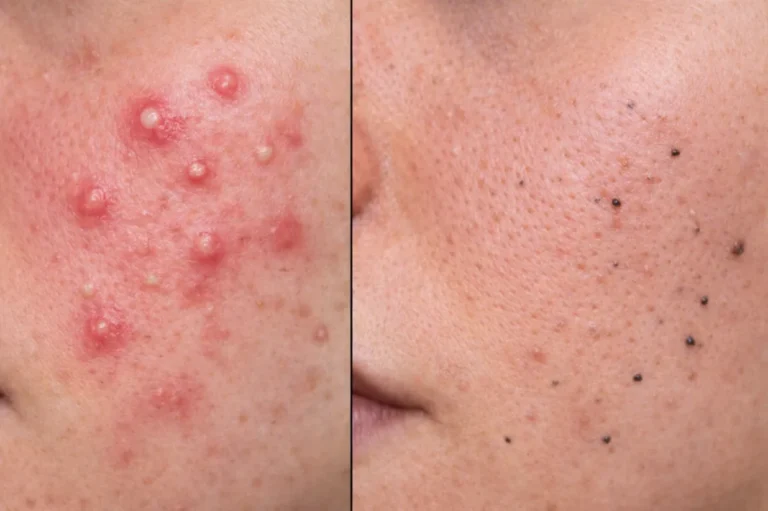
Salicylic acid is a beta hydroxy acid and a keratolytic, meaning it helps loosen and shed skin cells. In acne care, this action helps open clogged pores. The American Academy of Dermatology (AAD) identifies topical salicylic acid as an acne therapy and notes that it is particularly useful for whiteheads and blackheads.
A salicylic acid lotion is a leave-on product in a lotion-like base. That base may feel light and fluid or richer and more moisturizing, depending on the formula. “Lotion” describes the product vehicle; it does not tell you whether the product can replace your usual moisturizer.
In the United States, an over-the-counter product marketed to treat acne should have a Drug Facts panel. Under the FDA’s OTC acne monograph, salicylic acid acne products use concentrations from 0.5% to 2%. A cosmetic product that merely promotes smoother-looking skin may use different labeling, so check whether you are buying an acne drug or a cosmetic exfoliant.
Who May Benefit From a Salicylic Acid Lotion?
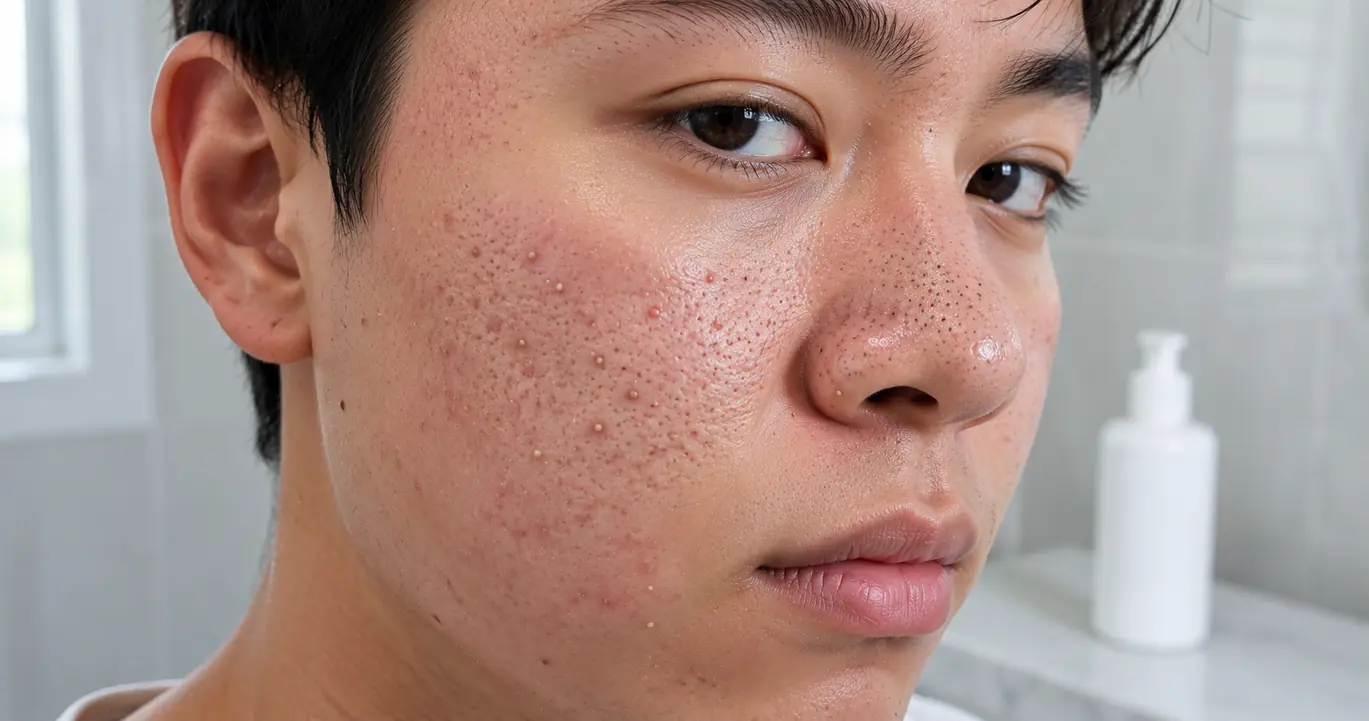
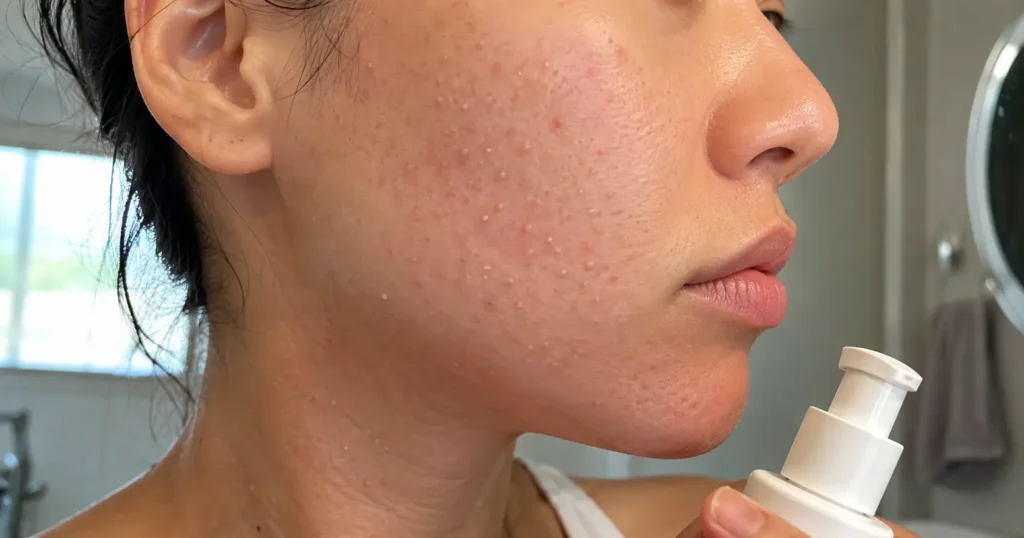
A salicylic acid lotion is most likely to make sense when your acne is mild and dominated by comedones—the medical term for blackheads and whiteheads. It may also suit people who want treatment across an acne-prone area rather than on one isolated blemish.
The ingredient has limits. A salicylic acid lotion is not a complete answer for deep, painful nodules or cysts, rapidly worsening acne, or breakouts that are already causing scars. Those patterns deserve professional assessment because delaying effective treatment can allow more scarring and distress.
Skin type matters, but an oily face does not automatically need the strongest formula. Oily skin can still become dehydrated or irritated. Dry or sensitive skin may tolerate a well-formulated leave-on product, but it often needs a cautious introduction and supportive moisturizer.
How to Choose Salicylic Acid Lotion
Start with the Drug Facts panel
The front of the bottle is advertising space; the Drug Facts panel is the decision tool. Confirm that salicylic acid appears under “Active ingredient,” then read the uses, warnings, and directions. A legal OTC concentration within the 0.5% to 2% range does not tell you how your individual skin will respond.
Higher is not automatically better. A 2% salicylic acid lotion may be appropriate for some shoppers, while another person may do better with a lower concentration or a rinse-off product. The base formula, how often the label directs use, and what else is in your routine all affect tolerability.
Also check where the product is intended to be used. Never substitute a wart, corn, or callus remover for a facial acne product. Those treatments can contain different strengths and are labeled for different conditions and body areas.
Decide whether you need treatment, moisture, or both
A facial moisturizer with salicylic acid has two jobs: delivering an active ingredient and reducing water loss or improving skin comfort. Some products perform both reasonably well; others behave mainly like acne medication. If your skin feels tight or flaky, you may still need a separate fragrance-free, noncomedogenic moisturizer.
Look for terms such as oil-free, noncomedogenic, or “won’t clog pores” when comparing products for acne-prone skin. These labels indicate that a formula is less likely to clog pores for most users, not that it can never trigger a breakout.
Ingredients such as ceramides, glycerin, hyaluronic acid, or dimethicone can support moisture, although their presence does not guarantee that a particular product will suit you. If fragrance has bothered your skin before, a fragrance-free option may be the simpler choice.
Match the texture to the treatment area
A light lotion may spread easily over the face, chest, shoulders, or back, but use it only on areas permitted by its label. Richer formulas may feel comfortable on dry skin yet too occlusive for some shoppers. Packaging also matters: a pump can make full-area application easier to control, while a narrow nozzle may be better for small areas.
When comparing a salicylic acid lotion, calculate value using the usable amount and intended area—not the bottle’s appearance. A small facial product and a larger body lotion are not direct substitutes even if both list the same active ingredient.
Treat brand reviews as context, not proof
If you arrived after searching for a Kiehl’s acne treatment or another named product, check the current official label rather than relying on an old review. Formulas, product names, and availability can change. Customer reviews can describe texture or packaging, but they cannot establish that a product will safely clear your acne.
No responsible comparison should claim personal testing unless testing actually occurred. For a practical purchase, the current Drug Facts, complete ingredient list, directions, expiration information, and return policy are more reliable than a dramatic testimonial.
Salicylic Acid Lotion vs. Other Acne Formats
Different formats can contain similar ingredients while serving different roles.
| Format | Main role | Potential advantage | Important limitation |
|---|---|---|---|
| Leave-on lotion | Treat an acne-prone area | Even coverage and prolonged contact | May cause dryness or irritation |
| Salicylic acid cleanser | Rinse-off pore care | Shorter contact may be easier to tolerate | May be less convenient for targeted leave-on treatment |
| Spot treatment | Treat selected blemishes | Limits application to a small area | Does little to prevent clogs elsewhere |
| Hydrocolloid patch | Cover a superficial pimple | Protects it from touching and picking | Does not treat widespread clogged pores |
| Liquid pimple patch | Forms a clear film over a spot | Discreet physical covering | Formula and active ingredients vary widely |
A “clear liquid pimple” product is usually marketing shorthand for a film-forming spot product, not a standardized medical category. Read its ingredients and directions. It is not automatically equivalent to either a hydrocolloid patch or a salicylic acid lotion.
Choose by job. A cleanser may fit someone who cannot tolerate a leave-on active. A patch may protect one surface-level pimple. A lotion makes more sense when the goal is consistent treatment across a zone of recurring clogged pores.
How to Add Salicylic Acid Lotion to Your Routine
Start with a simple routine so you can tell what is helping and what is irritating your skin:
- Wash gently with a mild cleanser and lukewarm water.
- Pat the skin dry instead of scrubbing it.
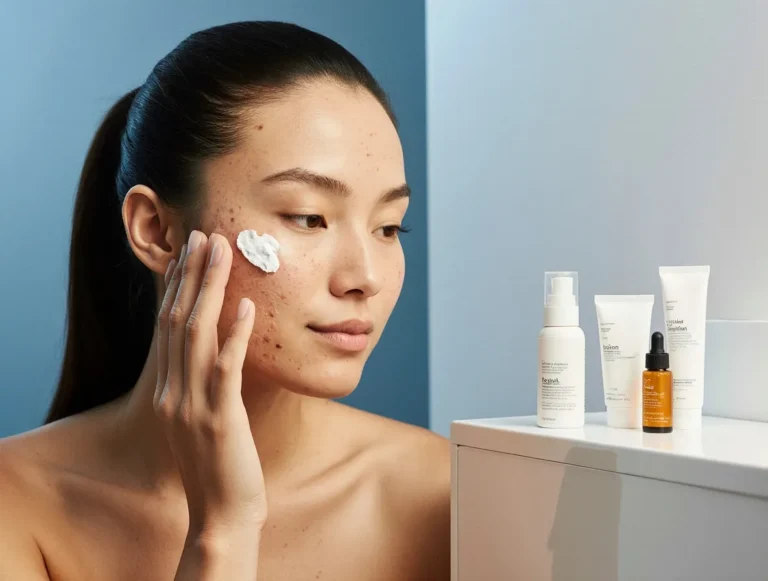
- Apply the salicylic acid lotion exactly as the label directs, keeping it away from the eyes, mouth, and other sensitive areas.
- Follow with a moisturizer if the medicated product does not provide enough comfort.
- Use a broad-spectrum sunscreen during the day and follow its label directions.
Do not assume that “a thin layer” means applying only to visible pimples. Many acne medications are intended for the full affected area to help prevent new lesions, but the package directions control. Do not add extra applications after a missed one.
For a new OTC topical acne product, the FDA advises applying a small amount to one or two small affected areas for three days first. If no discomfort occurs, follow the label. This sensitivity check cannot guarantee that a later reaction will not occur, but it may reveal early irritation.
Avoid stacking several irritating products at once
Check every cleanser, toner, pad, serum, and spot treatment in your routine. You may already be using salicylic acid without realizing it. Duplicating the active can turn a manageable routine into a cycle of stinging, peeling, and more visible inflammation.
Benzoyl peroxide and topical retinoids can be valuable acne treatments, and clinicians sometimes combine treatments with different mechanisms. However, layering them with a salicylic acid lotion can increase irritation. If a clinician has not designed your regimen, introduce products one at a time and ask a dermatologist or pharmacist how to arrange potentially irritating actives.
Avoid abrasive scrubs, harsh cleansing brushes, and alcohol-heavy astringents on treated skin. More exfoliation is not necessarily more acne control. A damaged skin barrier can make it harder to use an otherwise helpful treatment consistently.
What Results Can You Realistically Expect?
Acne treatment is gradual. The AAD advises that it often takes about six to eight weeks of consistent use to see improvement. That is a useful evaluation window, not a guarantee that every salicylic acid lotion will work within a fixed number of days.
Look for trends rather than day-to-day perfection: fewer new clogged pores, less rough congestion, or shorter-lived minor blemishes. Take a photo in similar lighting every few weeks if you want a more objective comparison. Do not use a highly edited image or judge progress from one unusually good or bad day.
Burning, cracking, marked swelling, or persistent peeling does not mean the product is “purging” impurities. Irritation can create redness and bumps that resemble worsening acne. Follow the label’s advice about reducing or stopping use, and seek professional guidance if the reaction is significant or does not settle.
If there is no meaningful improvement after a fair trial with consistent, correct use, reconsider the diagnosis, acne type, and active ingredient instead of automatically buying a stronger lotion. A dermatologist can determine whether another OTC option, prescription treatment, or combination plan is more appropriate.
Side Effects, Warnings, and Limitations
Common problems include dryness, stinging, redness, and peeling. Applying a salicylic acid lotion to broken, sunburned, infected, or severely irritated skin can worsen discomfort and may increase absorption. Stay within the area and frequency described on the label.
Serious allergic reactions to OTC acne products are rare but possible. Stop using the product and get emergency help for trouble breathing, throat tightness, faintness, or swelling of the eyes, face, lips, or tongue. Hives or widespread itching also require prompt medical attention. Do not confuse these symptoms with ordinary mild dryness.
Do not buy high-concentration salicylic acid chemical peels for unsupervised home use. The FDA has warned that certain at-home chemical peel products can cause severe burns, infection, pigment changes, and scars. An everyday acne lotion and a professional-strength peel are not interchangeable.
If you are pregnant, planning pregnancy, or breastfeeding, discuss acne products with your obstetrician or dermatologist. The AAD considers limited topical salicylic acid use generally acceptable during pregnancy, but treatment area, concentration, frequency, and the rest of your regimen still matter.
Children and teenagers should use products appropriate for their age and follow the label. Anyone with extensive affected skin, significant medical conditions, or a prescription acne regimen should check with a qualified clinician before adding another medicated topical.
Five Questions to Ask Before Buying
Use this quick screen before putting a salicylic acid lotion in your cart:
- Does it match the breakout? It is a more logical choice for blackheads, whiteheads, and clogged pores than for deep cysts.
- Is it labeled for the right area? Facial and body products may differ in texture, packaging, and directions.
- Am I duplicating an active ingredient? Check your cleanser, toner, pads, and spot products.
- Can my routine support it? A gentle cleanser, moisturizer, and sunscreen can make consistent treatment more realistic.
- Do I need medical care instead? Painful, deep, widespread, scarring, or emotionally distressing acne should not be managed by endless product shopping.
Frequently Asked Questions
Can salicylic acid lotion replace facial moisturizer?
Sometimes, but not automatically. A salicylic acid lotion may contain moisturizing ingredients, yet its main purpose can still be acne treatment. If your skin remains comfortable without tightness or flaking, one product may be enough. If it feels dry, add a separate noncomedogenic moisturizer instead of applying extra medicated lotion.
Is a salicylic acid lotion better than a cleanser?
Neither format is universally better. A leave-on lotion provides longer contact and may suit widespread clogged pores. A rinse-off cleanser may be easier for sensitive or dry skin to tolerate. Compare the concentration, directions, complete routine, and your response rather than assuming longer contact always produces better results.
Can you use salicylic acid lotion every day?
Some products are labeled for daily use, while others have different directions. Follow the specific package and reduce or stop use as directed if irritation develops. New users should not jump immediately to frequent application simply because their skin is oily. Consistency at a tolerable frequency is more useful than aggressive use followed by a damaged barrier.
Can it be combined with benzoyl peroxide or a retinoid?
These ingredients can appear in dermatologist-designed acne plans, but using several irritating products together may cause excessive dryness, burning, or peeling. Do not invent a combination schedule from general advice. Follow your clinician’s plan, or ask a dermatologist or pharmacist how to introduce and separate the products safely.
How long should you evaluate a salicylic acid lotion?
If the product is tolerated, about six to eight weeks is a reasonable period to look for improvement, based on general AAD acne guidance. Stop sooner for a serious reaction or follow the label if significant irritation occurs. If acne is worsening, painful, or scarring, do not wait out an arbitrary deadline before seeking care.
Conclusion
The right salicylic acid lotion is not necessarily the strongest or most expensive option. It is the one labeled for your treatment area, suited to clogged-pore acne, compatible with your routine, and tolerable enough to use consistently. Compare the Drug Facts panels of one or two appropriate products, then choose a simple next step rather than starting several new treatments together.
This article provides general educational information and is not a diagnosis or a substitute for individualized care from a qualified healthcare professional.
References:
- American Academy of Dermatology. “Acne: Diagnosis and Treatment.” https://www.aad.org/public/diseases/acne/derm-treat/treat
- American Academy of Dermatology. “Acne: Overview.” https://www.aad.org/public/diseases/acne/really-acne/overview
- Reynolds RV, et al. “Guidelines of Care for the Management of Acne Vulgaris.” Journal of the American Academy of Dermatology. https://pubmed.ncbi.nlm.nih.gov/38300170/
- U.S. Food and Drug Administration. “Topical Acne Drug Products for Over-the-Counter Human Use.” https://www.fda.gov/regulatory-information/search-fda-guidance-documents/topical-acne-drug-products-over-counter-human-use-revision-labeling-and-classification-benzoyl
- MedlinePlus. “Salicylic Acid Topical.” https://medlineplus.gov/druginfo/meds/a607072.html
- U.S. Food and Drug Administration. “FDA Warns of Rare but Serious Hypersensitivity Reactions With Certain Over-the-Counter Topical Acne Products.” https://www.fda.gov/drugs/drug-safety-and-availability/fda-drug-safety-communication-fda-warns-rare-serious-hypersensitivity-reactions-certain-over-counter
- U.S. Food and Drug Administration. “FDA Warns Against Purchasing or Using Chemical Peel Skin Products Without Professional Supervision.” https://www.fda.gov/drugs/drug-alerts-and-statements/fda-warns-against-purchasing-or-using-chemical-peel-skin-products-without-professional-supervision
- American Academy of Dermatology. “Is Any Acne Treatment Safe to Use During Pregnancy?” https://www.aad.org/public/diseases/acne/derm-treat/pregnancy