What Causes Back Acne in Females? Common Triggers and What to Know
Back breakouts can be difficult to examine, reach, and connect with a specific trigger. If you are asking what causes back acne in females, hormones may be part of the answer—but they are rarely the whole story. Acne on the back often reflects several internal and external factors acting on oil-producing follicles at the same time.
The short answer: What causes back acne in females is a combination of clogged follicles, excess oil, bacteria, and inflammation. Menstrual changes, pregnancy, contraception, androgen excess, sweat, friction, oily products, and certain medicines can influence that process. Back acne alone does not prove that you have a hormonal imbalance or PCOS.
Table of Contents
How Back Acne Forms
Acne begins when sebum, the oil produced by your skin, and shed skin cells obstruct a hair follicle. Cutibacterium acnes bacteria and the immune response then contribute to inflammation. The upper back and shoulders are common sites because they contain many sebaceous glands attached to follicles.
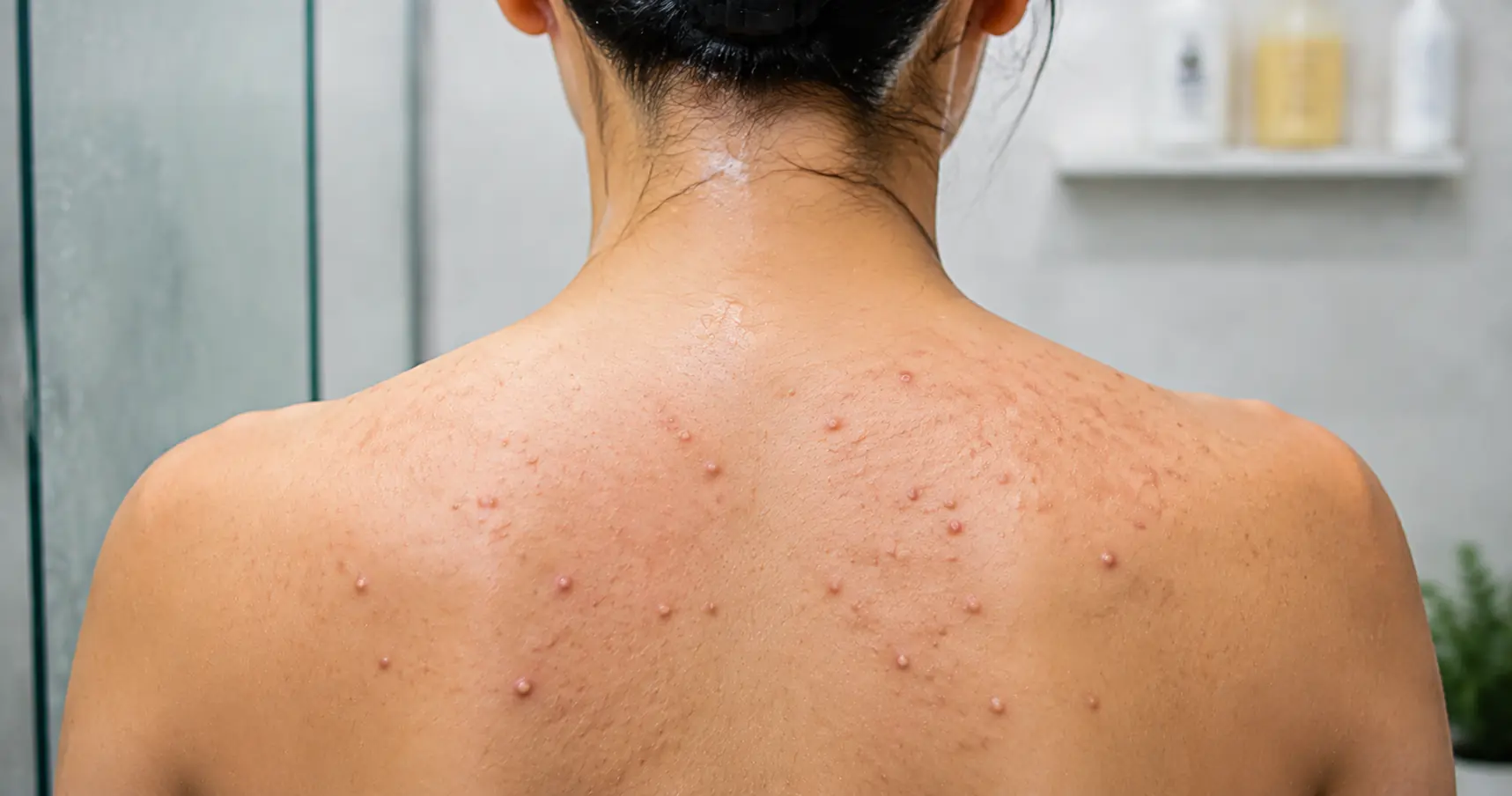
The type of blockage determines what you see. A closed plug forms a whitehead, while an open plug forms a blackhead. Inflamed follicles can become papules or pustules. When inflammation develops deeper in the skin, painful nodules or cyst-like lesions can form and leave scars.
This basic process is central to what causes back acne in females, regardless of age. Hormones, clothing, products, and medications influence one or more parts of it; they do not create a completely different kind of acne. Dirty skin is not a cause, and forceful scrubbing cannot clean out a deep follicular blockage.
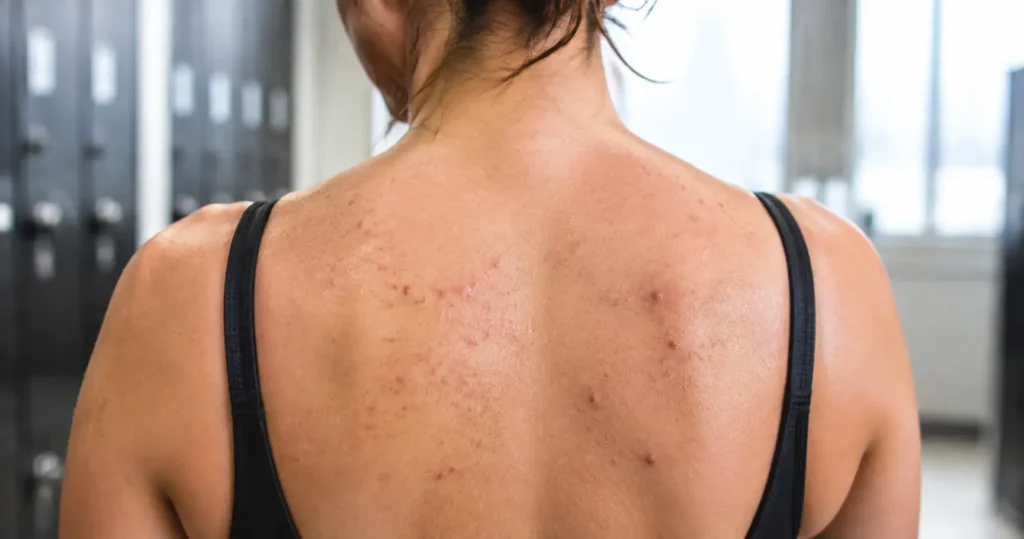
What Causes Back Acne in Females? Eight Common Factors
1. Menstrual Hormone Fluctuations
Androgens are hormones present in everyone. They stimulate sebaceous glands and can increase oil production. The balance and effects of reproductive hormones change across the menstrual cycle, which helps explain why some women experience predictable acne flares before or around their period.
A menstrual pattern can clarify what causes back acne in females when blemishes repeatedly worsen at the same point in several cycles. One premenstrual breakout is not enough to diagnose “hormonal acne,” and normal hormone levels do not rule out skin that is particularly sensitive to androgens.
2. Starting, Stopping, or Changing Hormonal Contraception
Some combined oral contraceptives are FDA-approved for acne and can reduce breakouts in appropriate patients. Other hormonal methods, particularly some progestin-only options, may worsen acne in susceptible people. Individual responses vary, and improvement or worsening may not be immediate.
When investigating what causes back acne in females after a contraceptive change, record when the change and breakouts occurred. Do not start, stop, or switch contraception solely for clearer skin. Pregnancy prevention needs, blood-clot risk, migraine history, blood pressure, smoking, and other health factors can affect which method is safe.
3. Pregnancy, Postpartum Changes, and Perimenopause
Pregnancy can alter acne as hormone levels and sebum production change. Some women worsen early in pregnancy, others improve, and the course can change again after delivery. Hormone fluctuations during perimenopause may also contribute to adult-onset or persistent acne.
These life stages belong in a complete answer to what causes back acne in females because they also change which treatments are appropriate. A product that was reasonable before pregnancy may no longer be suitable. Review every prescription, over-the-counter acne product, and supplement with an obstetrician or dermatologist when pregnant or trying to conceive.
4. PCOS or Another Source of Androgen Excess
Polycystic ovary syndrome (PCOS) can involve higher androgen levels or androgen effects, which may contribute to excess oil and acne. However, PCOS cannot be diagnosed from back pimples, oily skin, or one irregular cycle.
PCOS becomes more relevant to what causes back acne in females when acne occurs with irregular or absent periods, increased facial or body hair, scalp hair thinning, or difficulty becoming pregnant. Sudden severe acne with rapidly developing signs of androgen excess also deserves medical assessment. Many women with persistent acne do not have PCOS, so testing should be based on the complete history.
5. Sweat, Heat, and Delayed Clothing Changes
Sweat is not a toxin and exercise remains healthy. The problem is that perspiration, oil, heat, and dead skin can remain under damp clothing against acne-prone follicles. This environment may aggravate existing acne and can also contribute to folliculitis.
For active women, what causes back acne in females may include hours in a sweaty top or uniform rather than the workout itself. Change into dry clothing when practical, wash workout garments after each use, and shower gently after substantial sweating. If a shower is unavailable, changing clothes still reduces prolonged moisture and occlusion.
6. Friction and Occlusion From Clothing or Equipment
Acne mechanica develops or worsens where heat, pressure, sweat, and repeated rubbing affect acne-prone skin. Sports bras, backpack straps, dancewear, protective padding, rough seams, and tight synthetic uniforms can create a recognizable pattern across the shoulders or upper back.
The position of a strap can help explain what causes back acne in females when new bumps follow its outline. Check fit, keep the item clean, use moisture-wicking or breathable fabric, and place clean soft padding between equipment and skin when appropriate. You usually do not need to stop a sport or abandon necessary protective equipment.
7. Hair, Skin, and Laundry Products
Conditioner, hair oils, styling products, sunscreen, and heavy body creams may reach the back. A formula that remains on acne-prone skin can contribute to follicular blockage in some people. Fragrance, preservatives, detergent, or fabric softener can instead cause an itchy contact reaction that resembles acne.
Product transfer is easy to miss when determining what causes back acne in females with long hair. Rinse conditioner thoroughly, clip hair away from the back, and wash the back after rinsing hair products. Choose products labeled non-comedogenic or oil-free when possible, while recognizing that no label predicts every person’s response.
8. Medications and Hormone-Related Treatments
Medicines containing corticosteroids, testosterone, or lithium can trigger or worsen acne or create an acneiform eruption. Anabolic steroids and some hormone treatments can have similar effects. Medication-related bumps may begin relatively suddenly and appear unusually uniform across the chest, shoulders, or back.
A medication timeline can help a clinician investigate what causes back acne in females, but it is not a reason to stop treatment independently. Corticosteroids, lithium, testosterone, and other prescribed medicines may be medically necessary, and abrupt changes can be harmful. Contact the prescriber when a new eruption follows a dose or medication change.
Factors That May Worsen Acne but Are Not Simple Causes
Some factors are associated with flares but do not provide a complete answer to what causes back acne in females.
Stress and Sleep Disruption
Stress is not a complete answer to what causes back acne in females, but it may worsen established acne. Stress-related hormones, inflammation, disrupted sleep, picking, and inconsistent skin care may all contribute. A flare is not evidence that you failed to manage stress properly.
Diet
Research suggests that a high-glycemic eating pattern may worsen acne in some people. Evidence involving milk varies by product, amount, and population. These findings do not prove that one dessert, dairy serving, greasy meal, chocolate bar, or handful of peanuts caused a breakout.
Diet should not be treated as the default explanation for what causes back acne in females. If you notice a repeatable pattern, document it before removing foods. Avoid highly restrictive diets without medical or registered-dietitian guidance, especially during pregnancy or breastfeeding.
Genetics and Skin Type
Family history can affect sebaceous-gland activity, follicular plugging, and inflammatory responses. Some people also naturally produce more oil. These factors increase susceptibility but are not personal mistakes and cannot be scrubbed or “detoxed” away.
Is It Acne or Folliculitis?
Acne usually creates a mixture of blackheads, whiteheads, inflamed pimples, and sometimes deep lesions. Folliculitis more often produces similar-looking bumps centered on hair follicles and may itch. Bacterial and Malassezia folliculitis can resemble back acne, so uniform itch or poor response to appropriate acne care deserves a closer look.
This distinction matters when answering what causes back acne in females because the same trigger—such as heat or tight clothing—can aggravate different conditions. Contact dermatitis may form itchy or scaly patches after product exposure, while heat rash can create prickly bumps during hot weather. Acne and folliculitis can also coexist.
Do not use an antifungal, antibiotic, or steroid cream simply because online photographs look similar. A clinician may examine the distribution and lesion types and, when needed, test material from a follicle.
A Practical Trigger-Tracking Method
A short record is more reliable than changing everything at once. For six to eight weeks, note:
- Menstrual timing, pregnancy status, or a recent contraceptive change.
- New prescriptions, supplements, or hormone-related treatment.
- Workouts, sweating, sports bras, uniforms, backpacks, and other pressure points.
- Hair, skin, sunscreen, and laundry products touching the back.
- Whether lesions are itchy, uniform, clogged, inflamed, deep, or painful.
- The location and severity of breakouts under similar lighting.
This method can reveal what causes back acne in females in a particular routine without proving a diagnosis. Change one controllable factor at a time when possible. Weekly photographs can document progress, but daily close inspection often makes normal fluctuation look more dramatic.
How to Get Rid of Back Acne Safely
Treatment should address clogged follicles and inflammation while minimizing irritation. The following routine is intended for mild to moderate acne—not deep nodules, widespread scarring, an infection, or an uncertain diagnosis.
Build a Simple Back-Acne Routine
A benzoyl peroxide wash can reduce acne-associated bacteria and inflammatory breakouts. Follow the label, allow it the recommended contact time, rinse thoroughly, and start cautiously if you have sensitive skin. It may cause dryness or peeling and can bleach towels, sheets, or clothing. Store it as directed and away from excessive heat.
Salicylic acid helps unclog pores and may suit mild comedonal acne. Adapalene, an over-the-counter topical retinoid, can help prevent clogged follicles when true acne is present. Apply medicated products to the acne-prone area as directed rather than repeatedly spot-treating only visible pimples.
When treatment adds irritation to what causes back acne in females, simplify. Introduce one active at a time, use a non-comedogenic moisturizer if needed, and avoid loofahs, stiff back brushes, gritty scrubs, antibacterial soap, and astringents. Applying extra medication does not produce faster clearing.
Adjust Exercise, Clothing, and Hair-Care Habits
- Wear a clean sports bra or workout top and wash it after each use.
- Change out of damp clothing when practical.
- Pat sweat with a clean towel instead of rubbing.
- Check the fit and cleanliness of straps and protective equipment.
- Rinse conditioner fully and cleanse the back after washing long hair.
- Keep oily styling products away from the upper back when possible.
- Avoid squeezing lesions you cannot see clearly.
These steps reduce external contributors without implying that hygiene alone determines what causes back acne in females.
Give Treatment Enough Time
When testing what causes back acne in females, give a tolerated treatment time to work. Early improvement may appear after four to six weeks, but meaningful clearing can take two to three months or longer. Use the product consistently unless you develop significant irritation or another reaction. Switching products every few days makes it difficult to determine what works.
If there is no improvement after an appropriate trial, reassess the diagnosis, application technique, and severity. More products are not always the answer; folliculitis, hormonal treatment needs, or prescription-level acne may require a dermatologist.
When Hormonal Treatment May Be Considered
For appropriate women with persistent acne, a clinician may consider certain combined oral contraceptives or spironolactone. These prescription options can help acne on the face, chest, and back when hormonal influence is important.
Hormonal therapy does not identify what causes back acne in females by itself. Oral contraceptives have contraindications, including certain clotting risks, and spironolactone may require health review, laboratory monitoring, and pregnancy prevention. Neither should be borrowed, started, or adjusted without a prescriber.
Pregnancy and Breastfeeding Safety
Acne treatment needs special review during pregnancy, while trying to conceive, and often during breastfeeding. Isotretinoin, spironolactone, and topical retinoids such as adapalene, tretinoin, and tazarotene should not be used during pregnancy. Do not wait for a routine visit if you become pregnant while taking a contraindicated prescription; contact the prescriber promptly.
Azelaic acid is generally considered an option during pregnancy. Clinicians may consider limited benzoyl peroxide or salicylic acid use, but the body area, amount, duration, and individual health matter. Antibiotic choices also change during pregnancy. Ask an obstetrician or dermatologist to review the complete routine rather than assuming an over-the-counter label makes a product suitable.
If you are breastfeeding, discuss medications and application sites with a qualified professional and keep treated skin from direct infant contact. Pregnancy-related safety is a necessary part of understanding what causes back acne in females because hormonal changes and treatment choices occur at the same time.
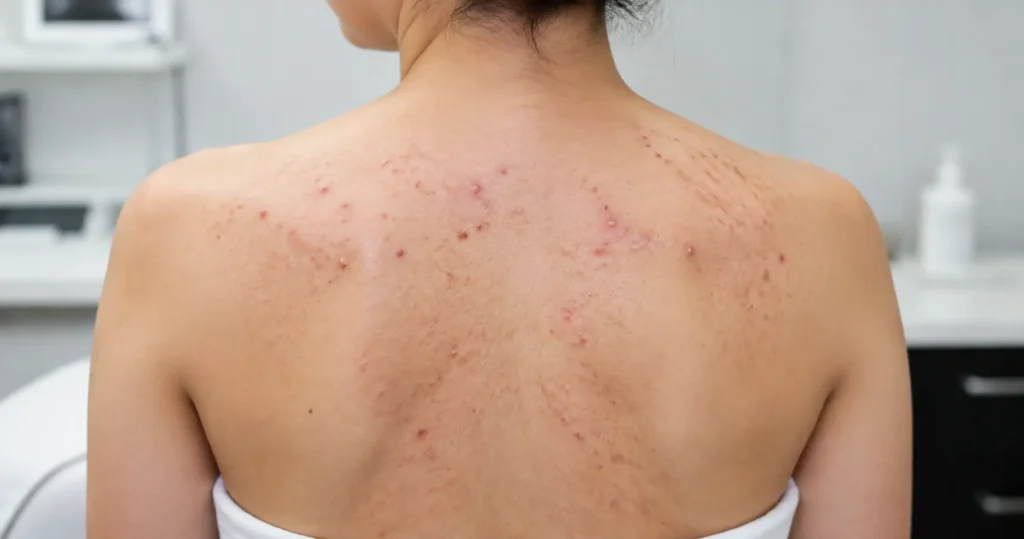
When to See a Dermatologist or Another Healthcare Professional
Seek care for painful nodules, cyst-like lesions, widespread inflammation, scars, or persistent dark marks. An examination is also appropriate when a consistent over-the-counter routine has not helped after several weeks, the diagnosis is uncertain, or acne is causing substantial distress.
Discuss possible hormonal evaluation when back acne occurs with irregular periods, increased facial or body hair, scalp thinning, or fertility concerns. Sudden severe acne in adulthood deserves assessment. These findings may help explain what causes back acne in females, but none confirms PCOS or another endocrine disorder alone.
Prompt care is appropriate for fever, rapidly spreading redness, severe pain, or large draining lesions, which may indicate infection rather than routine acne.
Frequently Asked Questions
Is Back Acne in Women Always Hormonal?
No. Hormones can influence oil production and flares, but what causes back acne in females can also include friction, sweat, occlusive clothing, hair products, medications, genetics, and folliculitis. A predictable menstrual pattern makes hormonal influence more plausible, yet back acne alone cannot diagnose a hormone imbalance.
Why Does My Back Acne Get Worse Before My Period?
Cyclical changes in reproductive hormones and androgen effects can increase sebum production or follicular inflammation in susceptible skin. Track the timing over several cycles. Premenstrual flares are common and do not automatically mean your hormone levels are abnormal or that you have PCOS.
Can a Sports Bra Cause Back Acne?
It can contribute when tight fabric traps heat and sweat or repeatedly rubs the same area. This pattern is called acne mechanica. Check the fit, change damp clothing, wash the garment after use, and consider a breathable fabric. A sports bra is one possible trigger, not the sole explanation for every breakout.
Can Shampoo or Conditioner Cause Back Pimples?
Hair products may leave residue on the upper back or contain a formula that contributes to clogged follicles in some people. Clip hair up, rinse thoroughly, and wash the back after conditioner. If the area is intensely itchy, scaly, or patchy, consider contact dermatitis or folliculitis rather than assuming acne.
When Should a Woman With Back Acne Ask About PCOS?
Ask a healthcare professional when acne occurs with irregular or absent periods, increased facial or body hair, scalp hair thinning, or difficulty becoming pregnant. These clues can guide evaluation, but they are not proof. PCOS is only one potential part of what causes back acne in females.
Conclusion
What causes back acne in females is usually an interaction among acne biology, hormonal influences, friction, sweat, products, medications, and genetic susceptibility. The cause may differ between two women—and several triggers may operate together in one person.
Track patterns, simplify your routine, and address one plausible trigger at a time. Seek professional care when acne is painful, scarring, sudden, persistent, linked with possible androgen-excess signs, or difficult to distinguish from folliculitis.
This article is educational and is not a diagnosis or a substitute for care from a qualified healthcare professional.
References:
- Reynolds RV, et al. “Guidelines of Care for the Management of Acne Vulgaris.” Journal of the American Academy of Dermatology. PubMed
- American Academy of Dermatology. “Back Acne: How to See Clearer Skin.” AAD guidance
- American Academy of Dermatology. “Stubborn Acne? Hormonal Therapy May Help.” AAD guidance
- American Academy of Dermatology. “Is Any Acne Treatment Safe to Use During Pregnancy?” AAD guidance
- American Academy of Dermatology. “Is Your Workout Causing Your Acne?” AAD guidance
- American Academy of Dermatology. “Folliculitis.” AAD guidance
- Mayo Clinic. “Acne: Symptoms and Causes.” Mayo Clinic
- National Institute of Child Health and Human Development. “Polycystic Ovary Syndrome.” NICHD