Foods That Help Spots: What May Support Healthier Skin
If you feel like your skin flares up at the worst time, you are not imagining things. For some people, food seems to play a role. The tricky part is that there is no single best food for spots, and there is no one-size-fits-all acne diet either.
What you eat will not fix every breakout, but it may help support healthier skin if you focus on the right overall pattern. The strongest evidence so far points to lower-glycemic eating patterns, while the link between dairy and acne looks more mixed and personal. Diet can matter, but it is usually one piece of a bigger picture that also includes hormones, stress, skin care, and genetics.
Table of Contents
Why your diet may matter if you get spots
A quick look at the skin-food connection
Your skin is influenced by inflammation, oil production, hormones, and how quickly skin cells shed inside your pores. Some foods can affect blood sugar and insulin levels, and that may influence sebum production and inflammation, which are both tied to acne. That is one reason people search for foods that help spots or ask whether certain foods may be making breakouts worse.
Why food is not the only cause of breakouts
Food is not the whole story. Acne happens when hair follicles become plugged with oil and dead skin cells, and breakouts can be affected by hormones, family history, oily skin, stress, and skin-care habits. In other words, you can eat well and still get acne, and you can have breakouts that have little to do with food.
Spots, pimples, and acne: what is the difference?
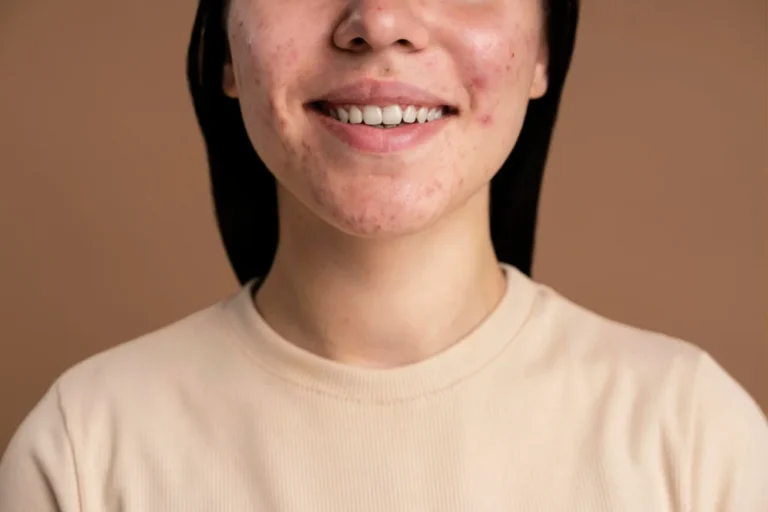
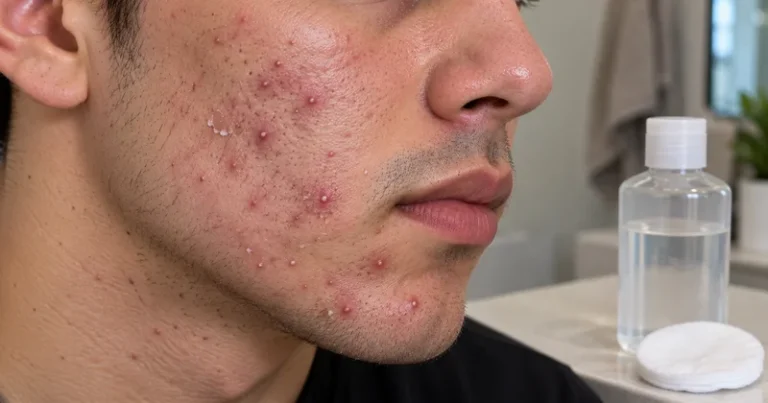
In everyday speech, people often use spots, pimples, and acne to mean the same thing. Usually, “spots” is a broad term for clogged pores and inflamed bumps, while acne is the medical condition behind them. Acne can show up as blackheads, whiteheads, papules, pustules, nodules, or cysts. Deep, painful bumps are more serious and more likely to scar.
What causes spots in the first place?
Extra oil, clogged pores, bacteria, and inflammation
Breakouts start when pores become blocked with oil and dead skin cells. Then inflammation can build, and acne-causing bacteria can become part of the problem. That is why acne is not just a “dirty skin” issue. It is a skin condition with several moving parts.
Hormones, stress, skin care products, and genetics
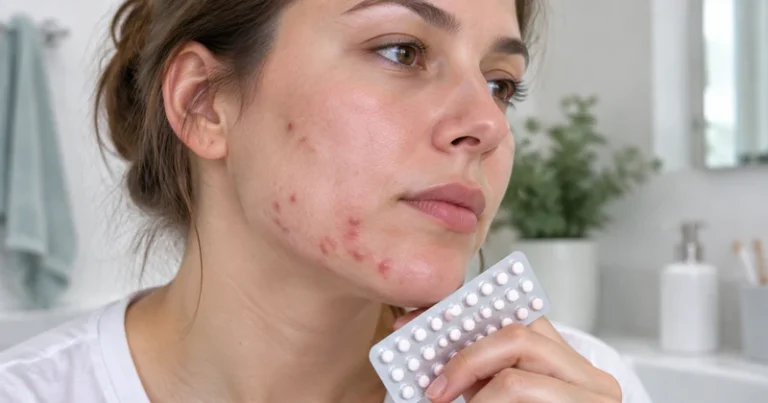
Hormones can raise oil production, especially during puberty, around menstrual cycles, or with some hormone-related conditions. Stress can worsen acne for some people. Oily or pore-clogging products can also make breakouts harder to control, and family history matters too.
Where food may fit into the picture
Food is best thought of as a possible modifier, not the only cause. For some people, a lower-glycemic eating pattern may help. For others, dairy or whey protein may seem to line up with flare-ups. But many people do not notice any strong food trigger at all.
Are there really foods that help spots?
What “help” realistically means for your skin
When people look for foods that help spots, they usually want to know if food can make pimples go away. A more realistic goal is this: food may support calmer skin, fewer flare-ups, and better overall skin health over time. It is less about one magic ingredient and more about a pattern that supports steadier blood sugar, lower inflammation, and good nutrition.
Why results can vary from person to person
Skin is personal. One person may notice breakouts after sugary drinks or skim milk, while someone else sees no change. Acne severity, hormones, sleep, stress, skin type, and treatment routine can all affect what you notice.
How long diet changes may take to show up on your skin
Food changes usually do not work overnight. In small studies on lower-glycemic eating, improvements showed up over about 10 to 12 weeks. That means you need patience if you are testing whether an eating change is helping your skin.
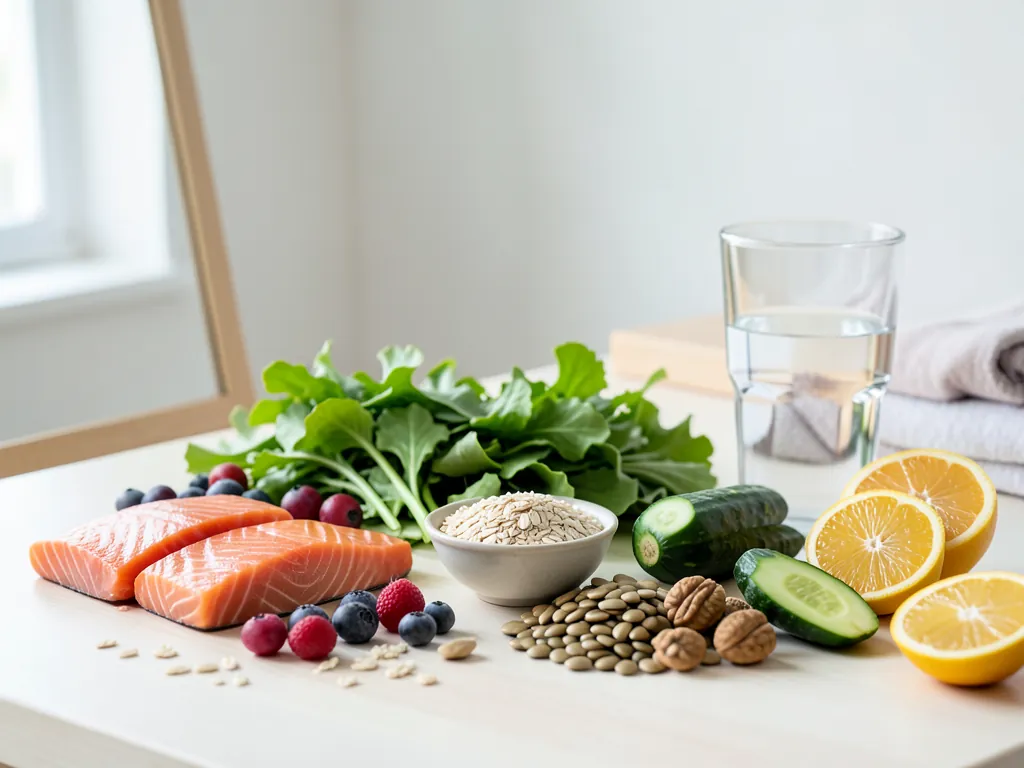
Best food for spots: foods that may support healthier skin
The table below gives a practical view of the kinds of foods most worth building into your routine.
| Food group | Why it may help | Easy examples |
|---|---|---|
| Lower-glycemic carbs | May support steadier blood sugar and insulin levels | Steel-cut oats, beans, lentils, quinoa, brown rice |
| Omega-3-rich foods | May support a calmer inflammatory response | Salmon, sardines, walnuts, chia seeds, flaxseed |
| Colorful produce | Adds antioxidants, fiber, and vitamins | Berries, oranges, leafy greens, carrots, bell peppers |
| Zinc-rich foods | Supports normal cell growth and repair | Pumpkin seeds, beans, chickpeas, beef, shellfish |
| High-fiber foods | Helps create balanced meals and supports gut health | Oats, beans, vegetables, fruit, whole grains |
| Water-rich foods | Can support hydration as part of overall skin care | Cucumbers, melon, oranges, soups |
These food groups are sensible choices for overall health, and the strongest acne-specific support is still around lower-glycemic patterns rather than any single “superfood.”
Low-glycemic foods that may help reduce spikes linked to breakouts
This is the most practical place to start. Try foods that digest more slowly and do not spike blood sugar as quickly, such as beans, lentils, plain yogurt if you tolerate dairy, steel-cut oats, most vegetables, and whole grains. Swapping refined carbs for slower carbs may help some people have fewer breakouts.
Omega-3-rich foods that may support calmer skin
Research on omega-3s and acne is still limited, but these foods fit well into an anti-inflammatory eating pattern and are good for overall health. Think salmon, sardines, walnuts, chia seeds, and ground flaxseed. Keep expectations realistic: they may support skin, but they are not a stand-alone acne treatment.
Colorful fruits and vegetables for antioxidants
Fruits and vegetables bring vitamin C, carotenoids, vitamin E, fiber, and a wide range of plant compounds that support normal skin function. A good rule is to add color to every meal instead of chasing one “perfect” acne food.
High-fiber foods that support overall balance
Fiber helps meals feel more filling and often goes hand in hand with lower-glycemic choices. In real life, that means more beans, vegetables, fruit, oats, and whole grains, and fewer ultra-refined snacks that leave you hungry again fast.
Zinc-rich foods and why zinc matters for skin
Zinc is involved in cell growth, immune function, and wound healing. Food sources include pumpkin seeds, beans, chickpeas, beef, and shellfish. That does not mean more zinc is always better, especially in supplement form, but it is one reason balanced meals may support skin health.
Fermented foods and gut health: what may help and what is still unclear
Fermented foods like kefir, yogurt, kimchi, and sauerkraut are popular in skin conversations because of the gut-skin connection. The idea is interesting, but the acne evidence is still developing. If you enjoy these foods and tolerate them well, they can fit into a balanced diet, but they should not be sold as a guaranteed fix.
Water-rich foods and hydration support
Hydration supports your whole body, including your skin barrier. Water-rich foods such as cucumbers, oranges, melon, broth-based soups, and strawberries can help with fluid intake, even though drinking more water alone is not a cure for acne.
Nutrients your skin needs most
Vitamin A and skin cell turnover
Vitamin A helps support normal cell growth and cellular communication. You can get it from foods like sweet potatoes, carrots, spinach, eggs, and dairy foods. Food first is the safer mindset here, especially because high-dose supplements are not the same as eating vitamin A-rich foods.
Vitamin C and collagen support
Vitamin C helps your body make collagen and acts as an antioxidant. Good sources include citrus fruit, strawberries, kiwi, bell peppers, and broccoli. It is not a direct acne cure, but it supports healthy skin structure and repair.
Vitamin E and antioxidant protection
Vitamin E is an antioxidant found in foods like almonds, sunflower seeds, and avocado. It is another example of why balanced eating may support skin without needing extreme rules.
Zinc, selenium, and skin repair
Zinc supports wound healing and cell division, which matters when skin is inflamed and trying to recover. Selenium also plays a role in antioxidant systems, though the best approach for both is usually a varied diet rather than self-prescribing supplements.
Protein and healthy fats for skin structure
Skin is built and repaired with help from protein, essential fats, vitamins, and minerals. Meals that include protein and healthy fats also tend to be more balanced and satisfying, which can make lower-glycemic eating easier to stick with.
Foods that make you break out: what may be worth watching
Does sugar make you break out?
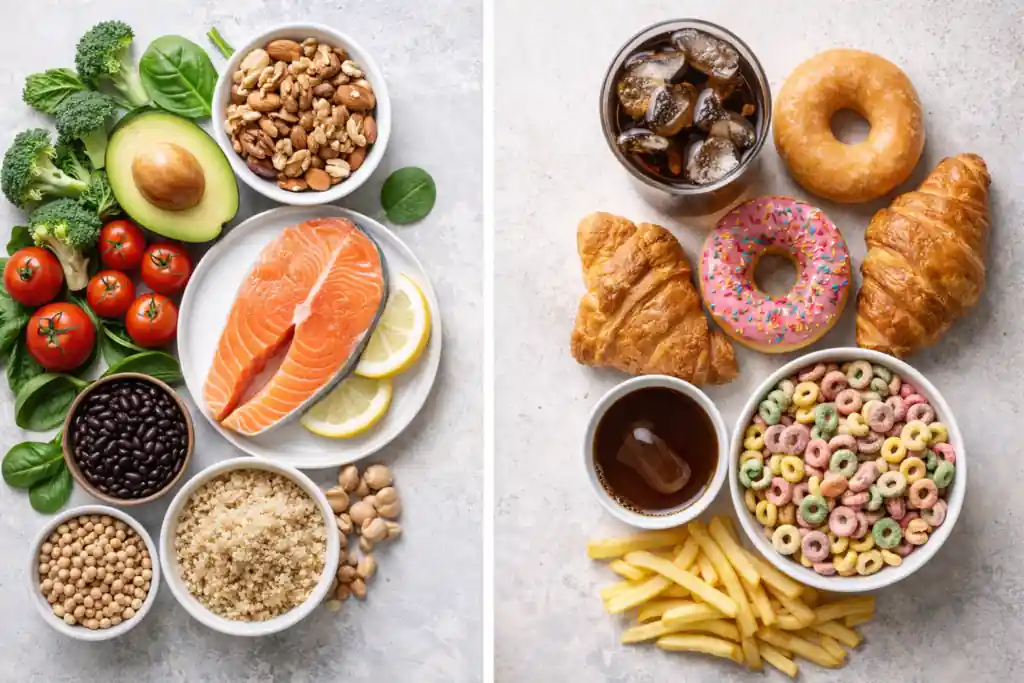
A common question is does sugar make you break out. The better answer is that foods and drinks that raise blood sugar quickly may worsen acne in some people. Sugary drinks, candy, pastries, and heavily refined snack foods are the biggest places to look first.
Refined carbs and high-glycemic foods
White bread, sugary cereals, sweet coffee drinks, fries, white rice, and dessert-heavy eating patterns may be more relevant than one occasional treat. This is why a lower-glycemic pattern usually works better than trying to ban one single food.
Could dairy cause acne?
Another common search is could dairy cause acne. The current evidence suggests that cow’s milk may be linked with acne in some people, but the data are not strong enough to say dairy causes acne in everyone. This is an area where personal response matters.
Can dairy cause spots in some people?
Yes, can dairy cause spots is a fair question, especially if you notice a pattern with milk. Some people seem more sensitive to milk than to yogurt or cheese. That does not mean you need to cut out all dairy forever. It means a careful, time-limited trial may be reasonable if milk seems to line up with flare-ups.
Fast food, greasy patterns, and highly processed meals
It is not as simple as “greasy food causes oily skin.” But a pattern built around fast food, sugary drinks, refined carbs, and highly processed meals may line up with worse breakouts in some people. Usually, it is the overall pattern that matters more than one burger or one slice of pizza.
Why food triggers are not the same for everyone
If you are wondering about foods that make you break out, look for repeat patterns, not random one-off guesses. The same food can be a non-issue for one person and a real trigger for another.
Dairy and acne: what the research seems to suggest
Milk versus yogurt and cheese
The dairy-acne discussion is mostly about cow’s milk, not every dairy food. The AAD notes that studies have linked cow’s milk with acne, while products made from milk, such as yogurt and cheese, have not shown the same consistent link.
Why skim milk may affect some people differently
Skim milk shows up often in acne discussions because some observational studies found stronger links with skim milk than with other milk types. That does not prove skim milk directly causes acne, but it does mean it is a reasonable thing to test if you already suspect it.
When it makes sense to test dairy carefully
If you think milk may be a trigger, try a simple experiment. Remove cow’s milk for 8 to 12 weeks while keeping the rest of your routine as stable as possible. Track what happens to your skin, then decide whether the change felt meaningful.
How to avoid cutting out foods you do not actually react to
Do not cut out multiple foods at once unless a clinician advises it. If you remove dairy, think about what you will use instead for protein, calcium, and convenience. The goal is learning, not making your life harder.
What to eat instead: simple swaps that may support clearer skin
Breakfast ideas
Try oatmeal with chia seeds and berries instead of a sugary pastry. Or choose eggs with whole-grain toast and fruit instead of a sweet cereal that leaves you hungry an hour later.
Lunch and dinner ideas
Build meals around protein, vegetables, and slower carbs. Good examples include salmon with brown rice and broccoli, turkey chili with beans, tofu stir-fry with vegetables, or a grain bowl with chicken, avocado, greens, and black beans.
Snack ideas
Go for apple slices with peanut butter, hummus with carrots, Greek-style yogurt if you tolerate it, roasted chickpeas, pumpkin seeds, or a handful of nuts with fruit.
Dessert ideas when you are trying to cut back on added sugar
Try plain yogurt with cinnamon and berries, dark chocolate with strawberries, baked apples, or chia pudding. The goal is not perfection. It is making the easy choice a little better most days.
A simple eating pattern for acne-prone skin
Build meals around protein, fiber, and healthy fats
This is the easiest way to stop the blood-sugar roller coaster that can leave you chasing snacks. A more balanced plate may do more for your skin than obsessing over one “bad” food.
Choose steady-energy carbs more often
Think beans, lentils, oats, quinoa, brown rice, fruit, and starchy vegetables instead of constant refined carbs and sugary drinks. This is where many people see the most practical benefit.
Include skin-supporting foods through the week
Instead of forcing daily rules, aim for weekly consistency:
- Fatty fish 2 times a week
- Beans or lentils several times a week
- Fruits and vegetables at most meals
- Nuts or seeds most days
- Fewer sugar-heavy drinks and ultra-processed snacks
Keep your approach realistic and sustainable
The best diet for acne-prone skin is the one you can actually live with. Extreme restriction often backfires. A simple, steady routine usually beats a perfect plan you quit in five days.
Sample 1-day meal plan featuring foods that help spots
Breakfast
Steel-cut oats with blueberries, chia seeds, and a spoon of almond butter.
Lunch
Grilled chicken bowl with quinoa, spinach, cucumber, bell peppers, olive oil, and pumpkin seeds.
Snack
Apple slices with peanut butter and a handful of walnuts.
Dinner
Baked salmon with roasted sweet potato and broccoli.
Dessert or evening option
Unsweetened yogurt with cinnamon and sliced strawberries, or a small square of dark chocolate with berries.
Habits that can work with diet to support healthier skin
Gentle cleansing and non-comedogenic skin care
Diet works best alongside smart skin care. Wash gently up to twice a day and after sweating. Use non-abrasive products, and choose makeup, sunscreen, skin care, and hair care labeled non-comedogenic so they are less likely to clog pores.
Sleep, stress, and exercise
Stress can worsen acne, and sleep matters because it affects stress, routines, and overall health. Exercise is helpful too, especially if you shower after sweating and avoid sitting in sweaty clothes for too long.
Why picking at spots can make things worse
Picking slows healing and raises the risk of scarring and dark marks. If this is a habit for you, pimple patches, keeping nails short, and stepping away from magnifying mirrors may help.
Tracking triggers without becoming overly strict
If you want to test foods that help spots, keep it simple. Track sleep, stress, cycle timing, new products, and likely food triggers for a few weeks. Look for patterns, not perfection.
Common mistakes to avoid
Expecting food changes to work overnight
This is one of the biggest mistakes. Skin changes can take weeks. Acne treatments also need time to work, and even good routines usually do not clear everything immediately.
Cutting out too many foods at once
When you remove sugar, dairy, gluten, and processed foods all at once, you cannot tell what actually mattered. Start with one targeted change.
Assuming greasy food on its own causes acne
This idea is too simple. Your skin does not become oily just because a meal was oily. The larger pattern of diet, hormones, inflammation, and pore blockage matters more.
Overusing supplements without guidance
It is tempting to chase zinc, vitamin A, or other supplements for fast results. But more is not always better, and food-based changes are usually a safer place to start.
Ignoring skin care, hormones, or medications
If your breakouts started after a new medication, happen around hormonal shifts, or continue despite diet changes, food may not be the main driver.
When home care may not be enough
Signs your spots may need professional evaluation
Home care may not be enough if you have deep painful bumps, acne on your back or chest that will not clear, scarring, dark marks, or breakouts that keep returning no matter what you try. Early treatment matters because it can lower the risk of scarring and emotional distress.
When breakouts may be hormonal, cystic, or persistent
Cystic or nodular acne is more severe and often needs more than food changes and drugstore products. Adult acne, acne linked to periods, and acne that started after a new medication may also deserve a closer look.
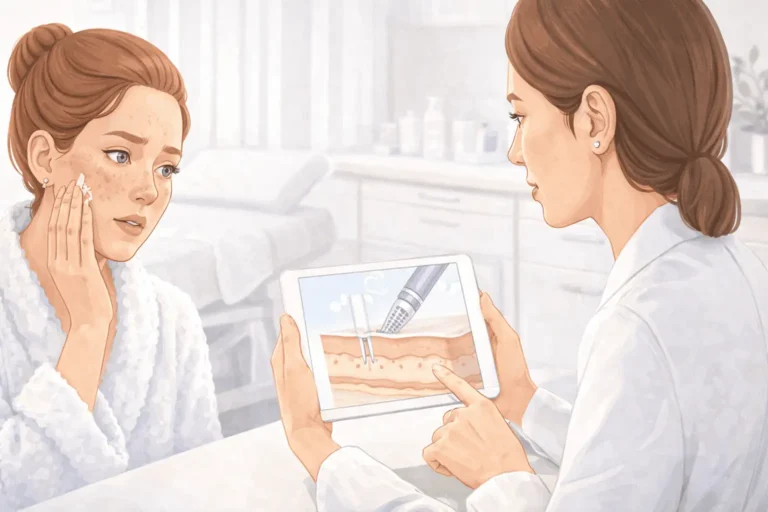
How a doctor or dermatologist can help
A dermatologist can look at the type and severity of your acne and recommend treatments such as topical retinoids, benzoyl peroxide, prescription medicines, hormonal treatment, or other options when needed. Over-the-counter care can help mild acne, but persistent or scarring acne often needs a more complete treatment plan.
Why diet changes can be one part of a bigger treatment plan
The most balanced view is this: food may help support clearer skin, but it is not a substitute for medical care when acne is severe, painful, or scarring. Diet can be one useful layer of a full plan.
Final thoughts: small food changes can support your skin over time
Focus on patterns, not perfection
The most helpful way to think about foods that help spots is not as a miracle fix, but as one part of a calmer, smarter routine. Lower-glycemic meals, more whole foods, and a careful look at possible personal triggers like milk may be worth trying.
A realistic next step you can start this week
Start with one change you can keep. Swap sugary breakfasts for a higher-fiber option, cut back on sweet drinks, or test whether cow’s milk seems to affect your skin. If your acne is painful, scarring, or not improving, make that next step a professional evaluation. Your skin does not need perfection. It needs a plan you can actually follow.
FAQ
How long does it take for foods that help spots to make a difference?
Usually, you need to give diet changes several weeks. Small studies on lower-glycemic eating showed improvements over about 10 to 12 weeks, so judging your skin after only a few days is usually too soon.
Is dairy always bad if you have acne?
No. Some people do fine with dairy, and some seem more sensitive to cow’s milk. The strongest concern is around milk, especially skim milk in some studies, while yogurt and cheese have not shown the same consistent link.
Does sugar make you break out right away?
Not always right away, and not in every person. The bigger concern is an overall eating pattern high in sugary foods and refined carbs, which may worsen acne in some people by affecting blood sugar, inflammation, and oil production.
Should I try supplements instead of changing my diet?
Usually, food first is the better starting point unless a clinician recommends a supplement. Some nutrients like zinc and vitamin A matter for skin health, but supplements are not a guaranteed acne fix and are not risk-free.
When should I see a doctor instead of trying home care?
See a doctor or dermatologist if your acne is deep, painful, scarring, affecting your confidence, spreading to your chest or back, or not improving with self-care and over-the-counter treatment. Early treatment can lower the risk of scarring.