Baby Acne Treatments: Safe Ways to Help Clear Your Baby’s Skin
Seeing bumps on your newborn’s face can be upsetting, especially when you are still getting used to every little change in their skin. Many parents worry they are doing something wrong or that they need to fix the problem right away. In most cases, though, baby acne is common, mild, and temporary.
The safest baby acne treatments are usually the simplest ones. Gentle cleansing, keeping the skin dry but not overwashed, avoiding heavy products, and giving the skin time to settle are often all that is needed. The goal is not to fight the bumps like teen acne. The goal is to protect your baby’s delicate skin while it clears on its own.
Table of Contents
What is baby acne?
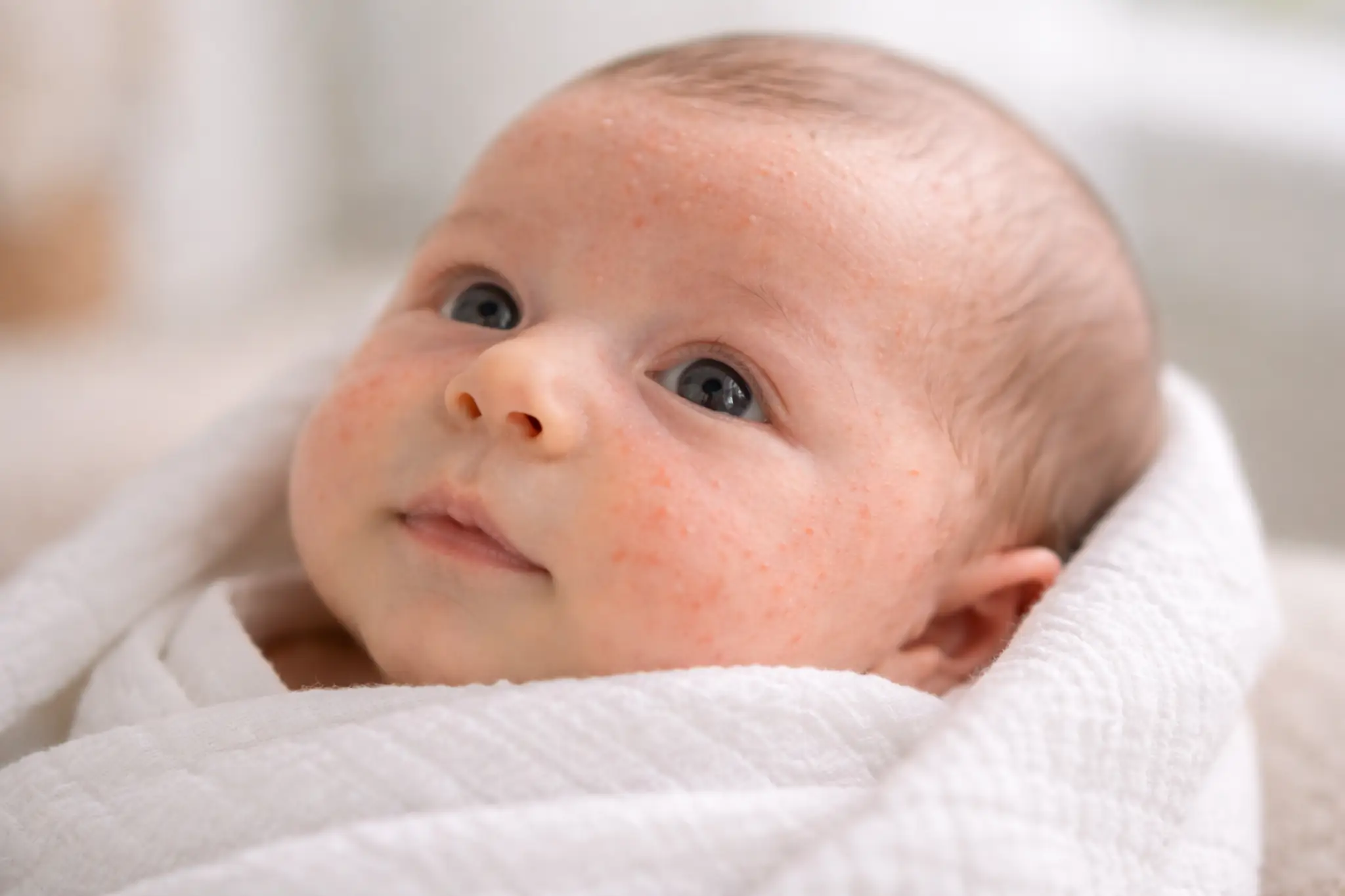
Baby acne is a common skin condition that causes small red or white bumps on a newborn’s skin. It most often appears on the cheeks, forehead, nose, and chin, though some babies also get bumps on the neck, scalp, upper chest, or back. The bumps can look more noticeable when your baby cries, gets warm, or seems irritated.
Many parents first notice it in the first few weeks after birth. Some babies are born with these bumps, while others develop them at around two to four weeks of age. That timing is one reason baby acne treatments often focus more on gentle care than on active treatment. In many cases, the skin improves as your baby adjusts after birth.
It also helps to know that not every bump on a baby’s face is acne. Some babies have milia, which are tiny white bumps that are not inflamed. Others may get heat rash, eczema, drool irritation, or a reaction to skin products. That is why safe baby acne treatments always start with keeping the routine simple and watching the pattern closely.
What causes baby acne?
The exact cause of baby acne is not always completely clear, but hormones seem to play a big role. Babies are exposed to hormonal shifts before birth and after delivery, and those changes may affect the oil glands in the skin. When more oil is produced, pores can become blocked more easily, which can lead to the small inflamed bumps parents notice.
That does not mean your baby’s skin is dirty. It also does not mean you caused the problem by using the wrong washcloth or missing a bath. One of the most important things to understand about baby acne treatments is that baby acne is not a hygiene issue. In fact, too much washing or too many products can make delicate newborn skin more irritated.
Newborn skin is thin, sensitive, and still adjusting to the outside world. That is why baby acne treatments are usually very light-touch. In most cases, the skin simply needs time. As hormone levels settle and the skin matures, the bumps often fade without leaving scars.
What do red bumps on newborn face mean?
When parents notice red bumps on newborn face skin, baby acne is one possible reason, but it is not the only one. Some harmless newborn rashes can look similar at first glance. A baby may also get heat rash if they are overdressed or too warm, especially around the cheeks, neck, or scalp.
Drool or milk residue can sometimes irritate the skin too. If your baby spits up often or milk collects around the mouth and cheeks, the skin can look red, patchy, or bumpy. In that case, the best baby acne treatments may simply involve gentler cleanup and less rubbing rather than a new product.
Eczema is another possibility, especially if the skin is dry, rough, flaky, or itchy-looking. Milia can show up as tiny white bumps without much redness. Contact irritation can happen if a fragranced detergent, lotion, or wipe does not agree with your baby’s skin. This is why the safest baby acne treatments begin with observation. Look at where the bumps are, what they look like, and whether the rest of the skin seems dry, irritated, or warm.
Baby acne is more likely when the bumps are mostly small red or white pimples on the face, especially the cheeks and forehead, and your baby otherwise seems well. If the rash looks very different from that, spreads quickly, or comes with fever or swelling, it is time to call your doctor.
Baby acne treatments that are generally safe
When parents search for baby acne treatments, they often expect a cream, a lotion, or a faster fix. But the safest options are usually the most basic.
Wash with lukewarm water and a mild baby cleanser when needed
A soft, gentle wash once a day is enough for most babies. You do not need to scrub the face or use strong soap. In fact, frequent washing can dry the skin and make the area look more irritated. Some parents do well using plain lukewarm water most of the time and a mild baby cleanser only when needed.
Pat skin dry gently
After washing, gently pat the skin dry with a soft towel. Rubbing can make redness stand out more and may irritate the bumps. One of the golden rules of baby acne treatments is to be as gentle as possible.
Avoid scrubbing, picking, or squeezing
This is important. Baby acne is not like a blackhead you should try to remove. Squeezing or scrubbing can irritate the skin, increase redness, and raise the chance of infection. Safe baby acne treatments keep your hands off the bumps as much as possible.
Skip oily creams and heavy lotions on acne-prone areas
Many parents reach for lotion because they assume all baby skin problems need moisture. But with baby acne, heavy creams, oils, and ointments can sometimes make the bumps look worse. If your baby’s skin is not dry, it is often best to leave the acne-prone area alone.
Let time do most of the work
This may be the hardest advice to follow, but it matters. One of the most effective baby acne treatments is patience. Baby acne often clears on its own over weeks or a few months. Constantly changing products usually causes more stress than benefit.
What to avoid when treating baby acne
Knowing what not to use is a big part of safe baby acne treatments. Newborn skin is much more delicate than adult skin, so products that seem harmless to you can be too strong for your baby.
Adult acne products
Do not use benzoyl peroxide, salicylic acid, retinoids, spot treatments, peels, or acne patches unless a doctor specifically tells you to. These are not routine baby acne treatments and may irritate or damage sensitive infant skin.
Medicated creams unless prescribed
Even over-the-counter creams can be too much for a newborn. Hydrocortisone, antifungal products, and antibiotic creams should only be used if your baby’s healthcare provider recommends them. There are situations where prescription care is needed, but that is not the same as self-treating at home.
Home remedies that may irritate skin
Parents often hear about natural fixes from relatives, online groups, or social media. But “natural” does not always mean gentle or safe. Lemon juice, vinegar, toothpaste, essential oils, and herbal mixes are not appropriate baby acne treatments.
Over-washing the face
It can be tempting to wash your baby’s face after every spit-up, nap, or feeding. But too much cleansing may dry and irritate the skin. A gentle routine works better than constant wiping.
Fragrance-heavy products and harsh wipes
Strong scents, rough wipes, and alcohol-based products can upset already sensitive skin. If you are looking for safe baby acne treatments, simpler is almost always better.
Baby acne breast milk: does it help or not?
A lot of parents hear that baby acne breast milk is a simple home remedy. The idea usually comes from breast milk’s natural protective qualities, and some families say they have tried dabbing a little milk on the skin. Because of that, this topic comes up often when parents look for baby acne treatments.
The problem is that there is not strong evidence showing that breast milk reliably clears baby acne. Some parents may feel it helps, while others notice no change at all. Since baby acne often improves on its own, it can be hard to tell whether any home remedy actually made a difference.
There is also a practical point to remember. Breast milk is food, and any residue left on the skin can mix with warmth, drool, or sweat. For some babies, that may not matter. For others, it could add more moisture or irritation around the mouth and cheeks. That is one reason pediatric advice tends to focus on gentle cleansing and minimal products rather than homemade spot treatments.
So where does that leave you? The safest answer is that baby acne treatments should not rely on breast milk as a proven solution. If you are curious about trying it, talk to your baby’s doctor first. It should never replace simple skin care or delay medical advice if the rash looks unusual. This question is so common that it deserves its own full discussion, which is why the next article naturally looks more closely at baby acne breast milk and whether it really helps.
Baby acne vs other common newborn skin conditions
One reason parents get overwhelmed is that many newborn skin issues can look alike at first. Safe baby acne treatments depend on knowing what you are likely seeing.
Baby acne vs heat rash
Heat rash usually shows up when a baby gets too warm. The bumps may appear in skin folds, around the neck, or under clothing. They often look more rash-like than pimple-like and may come and go quickly.
Baby acne vs eczema
Eczema often looks drier, rougher, and more patchy. The skin may seem flaky or irritated rather than dotted with little pimples. If your baby has dry skin in other areas too, eczema becomes more likely.
Baby acne vs milia
Milia are tiny white bumps, often on the nose or cheeks. They are common and harmless. Unlike baby acne, they usually are not red or inflamed.
Baby acne vs allergic or contact rash
A reaction to detergent, lotion, fabric, or wipes may look more spread out and irritated. The skin may appear red, blotchy, or rough instead of showing small acne-like bumps.
Why the right identification matters
If you treat eczema like acne, or irritation like acne, the skin may not improve. Good baby acne treatments are gentle enough that they usually do not make other mild conditions worse, but if a rash is not improving, it should be checked by a professional.
A simple daily routine for baby acne treatment
Parents often feel better when they have a plan. The good news is that a good plan for baby acne treatments is very simple.
Morning care
Take a look at the skin in natural light. If the face looks clean, you may not need to do much at all. If there is milk, drool, or spit-up residue, gently wipe it away with lukewarm water and a soft cloth.
After feeding clean-up
Milk and drool can sit on the cheeks and chin. Gently blot the skin rather than rubbing. This is one of the easiest baby acne treatments because it lowers irritation without adding products.
Bath time tips
Your baby does not need frequent baths just for acne. A few baths a week is enough for many newborns. At bath time, use a mild cleanser sparingly and keep the face-washing gentle.
Clothing and fabric choices
Soft cotton bibs, clean burp cloths, and breathable fabrics can help reduce irritation. If a rough fabric keeps rubbing the cheeks or forehead, the bumps may look redder.
Keep the routine minimal
This is worth repeating: the best baby acne treatments are often the least dramatic. A simple, repeatable routine is safer than trying a new fix every few days.
How long does baby acne usually last?
Baby acne often begins in the first few weeks of life and may last for several weeks or a few months. In many babies, it fades on its own without leaving scars. Some babies improve quickly, while others take longer.
That timeline is one reason parents need realistic expectations. Safe baby acne treatments do not work overnight because the skin often just needs time to regulate itself. If you keep changing cleansers, cloths, creams, and home remedies every few days, it becomes harder to tell what is helping and easier to irritate the skin.
Patience is a big part of successful baby acne treatments. Slow improvement is still improvement.
When should you call a doctor?
Even though baby acne is usually mild, there are times when it makes sense to check in with your pediatrician.
Call your doctor if:
- The bumps spread far beyond the face
- The rash looks crusty, oozy, swollen, or infected
- Your baby has a fever or seems unwell
- The bumps look more like a widespread rash than acne
- The skin is very irritated or painful-looking
- The acne lasts longer than expected or keeps getting worse
A doctor can tell whether you are really dealing with baby acne, another newborn rash, or something that needs treatment. Safe baby acne treatments always include knowing when home care is enough and when you need help.
Common mistakes parents make
Parents mean well, but a few common mistakes can get in the way of gentle baby acne treatments.
One mistake is trying too many products too soon. When you are worried, it is easy to buy a cleanser, then a cream, then another cream, then a home remedy. That usually gives you more irritation and more confusion.
Another mistake is treating baby acne like teen acne. Newborn skin is not built for strong active ingredients. Baby acne also usually clears on its own, which means aggressive treatment is rarely necessary.
Parents also sometimes rub too hard when cleaning milk or drool from the face. Gentle blotting is usually better. And finally, many families feel pressure to fix the bumps fast because they are visible. But good baby acne treatments are measured by safety, not speed.
How to help protect your baby’s skin while it clears
Supporting the skin while it heals is one of the smartest baby acne treatments you can follow.
Use soft fabrics that do not scratch the cheeks. Change bibs and burp cloths when they get damp. Keep milk and drool from sitting on the skin too long, but clean it gently. Be careful with lotions, detergents, and scented products if you think the skin may be reacting.
It also helps to keep your hands away from the bumps. Picking, rubbing, and checking them all day can make the area look angrier than it is. The more you can protect the skin from friction and product overload, the better.
Parents often feel they need to be active to be helpful. But with newborn skin, sometimes the most helpful baby acne treatments are quiet ones: less rubbing, fewer products, softer fabrics, and more patience.
Conclusion
Baby acne can look alarming at first, but it is usually a normal, temporary part of newborn skin adjustment. Most of the time, the safest baby acne treatments are simple: gentle cleansing, no scrubbing, no squeezing, and no heavy or harsh products. Your baby’s skin often clears with time, not with aggressive treatment.
If the bumps do not look typical, seem to bother your baby, or are getting worse instead of better, call your pediatrician. Otherwise, keep your routine simple, protect the skin from irritation, and let your baby’s skin do what it often does best—settle down on its own.
FAQ
What are the safest baby acne treatments at home?
The safest baby acne treatments at home are gentle washing with lukewarm water, using a mild baby cleanser only when needed, patting the skin dry, and avoiding oils, heavy lotions, scrubbing, or squeezing. In many cases, time is the main treatment.
How long does baby acne last?
Baby acne often shows up in the first few weeks after birth and may last for several weeks or a few months. Some babies clear faster than others, but most improve without strong treatment.
Can breast milk help baby acne?
Some parents try breast milk, but it is not a proven treatment. Because there is not strong evidence that it clears acne, it is better to think of it as an unproven home remedy rather than one of the standard baby acne treatments.
What do red bumps on newborn face usually mean?
Red bumps on newborn face skin can be caused by baby acne, heat rash, drool irritation, eczema, milia, or a reaction to products. If the bumps look like small pimples and your baby otherwise seems well, baby acne is one common reason.
When should I call a doctor about infant bumps on face?
Call your doctor if the bumps are spreading, crusting, oozing, swollen, very irritated, or lasting longer than expected, or if your baby has a fever or seems unwell. It is also smart to call if you are not sure the bumps are really acne.