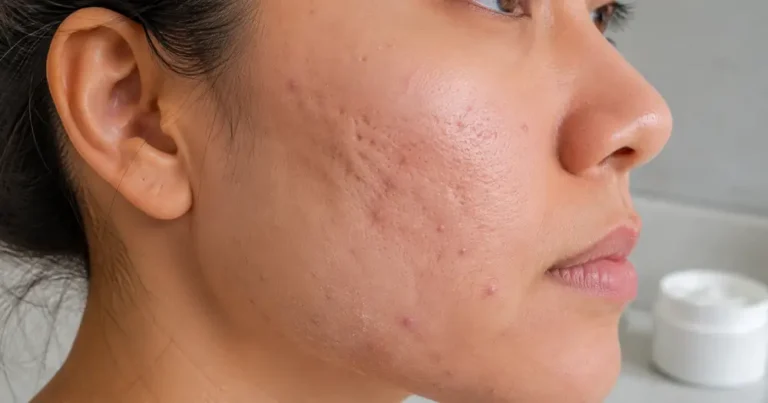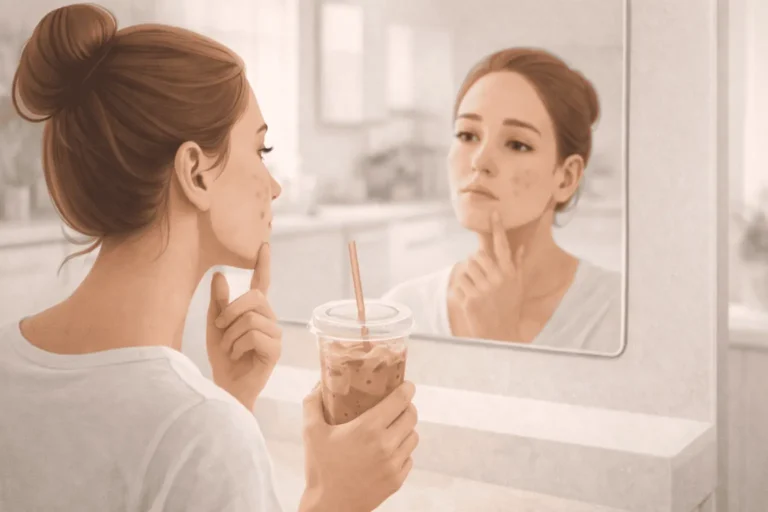
Acne After Going Off Birth Control Pill: What to Expect and When to Seek Help
Acne after going off birth control pill use can be frustrating, especially if your skin was comfortable while you were taking it. Breakouts may appear or return after stopping a pill, but they are not inevitable. There is no reliable universal date when they must begin, peak, or disappear.
The next step depends on the pill you stopped, your acne history, current skin changes, and whether pregnancy is possible or planned. Gentle care can support your skin, but deep, scarring, rapidly worsening, or distressing acne deserves treatment rather than an open-ended wait for your hormones to “balance.”
This guide focuses on stopping oral contraception. Experiences after an implant, injection, patch, ring, or hormonal IUD should not automatically be treated as the same situation.
Table of Contents
Why acne after going off birth control pill use can happen
Some combined oral contraceptives help control acne. When that treatment effect is removed, the tendency toward acne may become noticeable again. Hormonal changes can also coincide with breakouts in adulthood. This does not mean that everyone who stops a pill develops acne or that the pill has permanently damaged their skin.
Combined pills contain estrogen and a progestin. Progestin-only pills are different, and their skin effects cannot simply be inferred from the acne benefits of certain combined pills. If you do not know which type you used, check the prescription name or ask your pharmacist.
Your previous acne pattern is relevant information, but it is not a prediction. Skin can change with age, other medications, products, stress, and medical conditions. Breakouts that begin after stopping contraception are worth noting without assuming timing proves the only cause.
Our overview of contraception and acne differences explains why the specific method matters.
What to expect with acne after going off birth control pill treatment
There is no fixed post-pill acne timeline that applies to every person. Some notice a return of previous acne; others develop a different pattern or no meaningful change. The course depends partly on the underlying acne tendency and what care or treatment is used afterward.
Be cautious with claims that everyone breaks out after a particular number of weeks, reaches a predictable peak, or clears by a named month. A personal account can describe one experience without establishing an expected biological schedule.
Instead of judging progress against someone else’s calendar, track changes you can use: new inflamed lesions, pain, scars, irritation, and whether the eruption is expanding. Occasional photos in similar lighting may help you describe the course to a clinician, but they cannot diagnose a hormonal disorder.
For acne after going off birth control pill use, “wait and see” should have boundaries. Ask when your chosen treatment should be reviewed and what would justify contacting the office sooner. You do not need to develop scars before requesting help.
Does everyone get post-pill breakouts?
No. Acne after going off birth control pill use is a possibility, not an unavoidable stage. There is no reason to start several aggressive treatments preemptively if your skin is doing well. Likewise, people who develop acne have not failed to prepare or cleanse properly.
Avoid assigning yourself a diagnosis based on the phrase “post-birth-control syndrome.” It is not an established diagnosis that explains every symptom after contraception changes. Acne deserves assessment on its own, alongside other symptoms when relevant.
“Detox” teas, restrictive cleanses, and supplement packages are not necessary to remove contraceptive hormones or guarantee clear skin. They can add expense and may introduce side effects or interactions. Tell your clinician about supplements rather than assuming “natural” means suitable for pregnancy.
Basic care for acne after going off birth control pill use
Start with gentle washing, a moisturizer that suits you, and sun protection. Avoid picking and harsh scrubs. If you are changing contraception and skin care at the same time, keep a record so the clinician can see what changed and when.
A familiar routine can also make a new treatment easier to evaluate. Replacing every cleanser, cream, and serum at once makes it difficult to distinguish an acne flare from irritation caused by a new product.
Beyond Breakouts may earn a commission from qualifying purchases at no additional cost to you. As an Amazon Associate, we earn from qualifying purchases. The following optional products support basic care; they do not correct hormone changes or replace acne treatment.
👀 Keep the cleansing step simple
Vanicream Gentle Facial Cleanser, 8 fl oz
Choose a familiar-style basic while treatment decisions are being made. This cleanser removes surface debris; it does not reset hormones.
Check price on AmazonAffiliate link — see the Amazon Associate disclosure above.
You do not need a special “hormonal acne cleanser.” Choose a product based on tolerability and its actual job rather than a promise to reset your hormones through washing.
Acne after going off birth control pill use: treatment depends on pregnancy plans
Pregnancy can become possible quickly after stopping oral contraception. If you do not want to become pregnant, discuss continued prevention and method transition with your contraceptive clinician. Skin treatment is a separate decision and should not leave a gap in the contraception you need.
If pregnancy is possible, planned, or confirmed, say so before choosing acne medication. Do not assume a product is appropriate simply because it is sold without a prescription. Retinoids, including cosmetic retinol, should be avoided during pregnancy; spironolactone is also unsuitable during pregnancy.
Azelaic acid and limited use of some other topical acne options may be considered with professional guidance. Product concentration, treated area, other ingredients, and individual history still matter. A list of potentially suitable ingredients is not permission to use every formula containing them.
If pregnancy is not planned, evidence-supported acne options may include topical treatments and, when appropriate, systemic medicines. Their suitability depends on severity, health history, prior treatment, and the need for pregnancy prevention or monitoring.
Restarting a combined pill can be one option for an eligible person who also wants it, but it is not the only approach. Do not restart contraception solely because an online article implies there is no alternative. A clinician can help separate your contraceptive priorities from your acne-treatment preferences.

Dryness and marks: support skin without overcorrecting
Acne-prone skin can be dry or irritated, especially after adding treatments. A moisturizer can help comfort without needing to contain another acne active. Non-comedogenic labeling is a useful starting point, not a guarantee that a formula suits everyone.
⭐ Support dry skin comfortably
Vanicream Daily Facial Moisturizer, 3 fl oz
Need hydration while reviewing an acne plan? This moisturizer is basic skin care, not a treatment for the cause of post-pill breakouts.
Check price on AmazonAffiliate link — see the Amazon Associate disclosure above.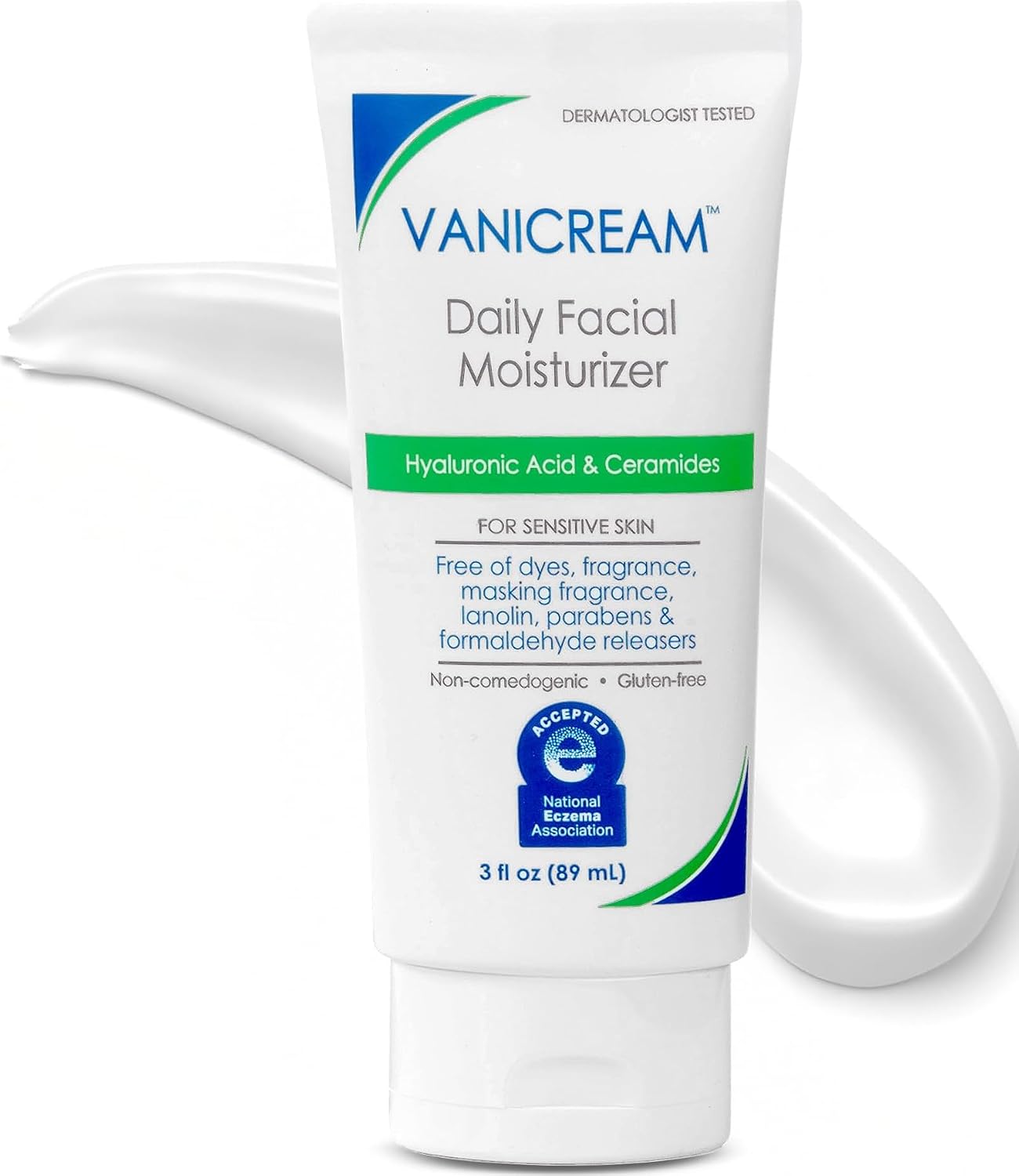
Dark marks and red or pink marks can linger after a pimple settles. Do not use their persistence as proof that every current treatment has failed. First consider whether fewer new lesions are forming and whether the skin is comfortable enough to continue the plan.
Sun protection supports exposed skin while you address acne and its marks. Use a broad-spectrum SPF 30 or higher, shade, and protective clothing; select a water-resistant option for sweating or swimming.
☀️ A practical daytime option
Vanicream Facial Moisturizer Broad Spectrum SPF 30, 2.5 fl oz
This mineral sunscreen offers broad-spectrum SPF 30 when used as directed. It does not treat hormonal acne and is not water resistant.
Check price on AmazonAffiliate link — see the Amazon Associate disclosure above.
If breakouts cluster at the chin or jaw, the location alone does not establish the cause. Our guide to possible causes of chin acne explains why products, friction, and look-alikes also deserve attention.
What about back acne after stopping birth control?
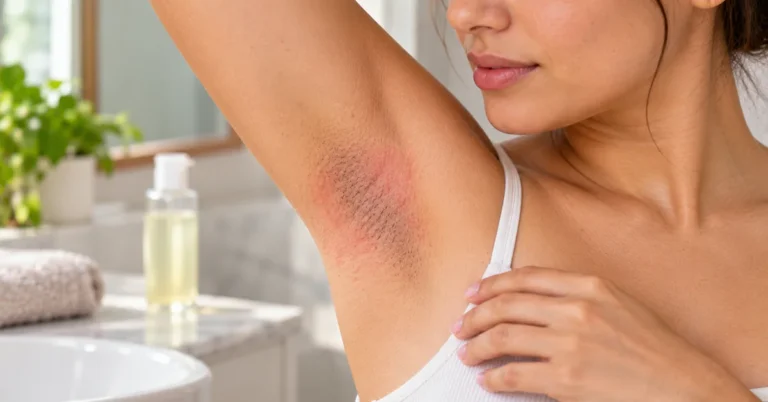
Back or chest breakouts can accompany facial acne, but not every body bump is acne. Itchy, very similar-looking bumps, a sudden spreading eruption, or lesions associated with hair removal may require assessment for another condition.
For acne after going off birth control pill use that involves the back, describe the body areas at your appointment. Application reach, friction from clothing, sweating, and the size of the treatment area can affect the practical plan.
Do not apply a facial product over a large body area without checking directions. Some topical medicines have different considerations for extensive use, especially when pregnancy is possible. A wash can be easier to reach with, but that convenience does not make every medicated wash the right choice.
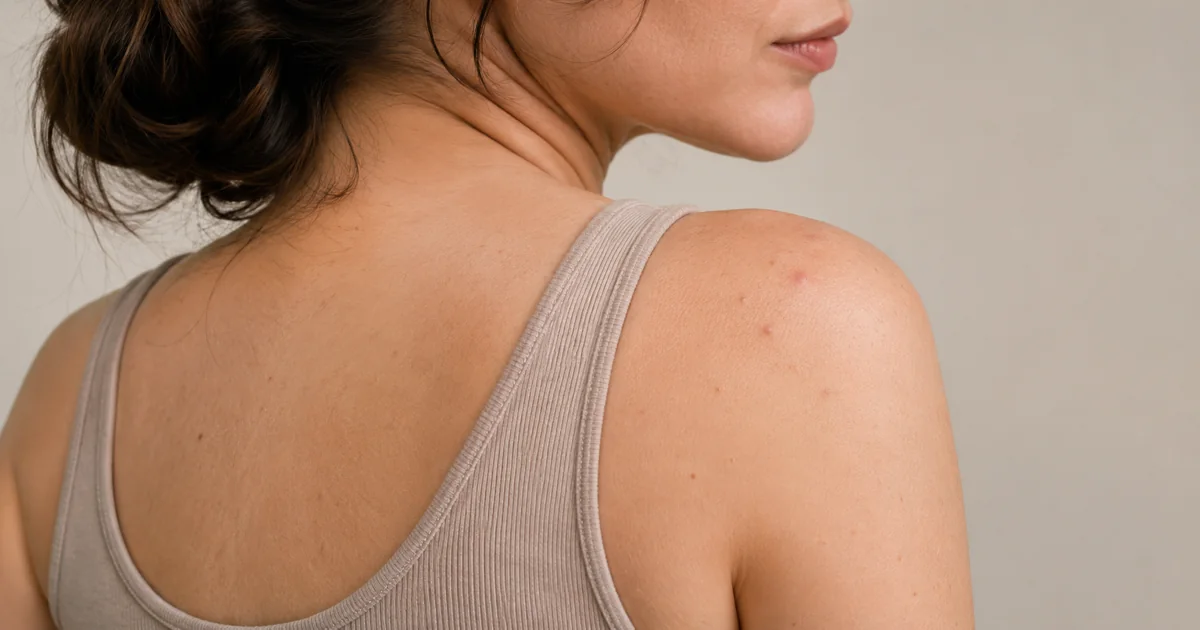
Change out of sweaty, tight clothing when practical and wash gently rather than scrubbing with a rough body brush. For broader context, see our guide to body acne care.
When to seek reassessment
Book a dermatology visit for deep painful bumps, new scars, worsening acne, significant distress, or an uncertain diagnosis. Ask for a treatment review if an appropriate over-the-counter plan is not helping, rather than continually adding more products.
Mention irregular or absent periods, new coarse facial hair, or other notable changes. These do not prove polycystic ovary syndrome or another disorder, but they may change what a clinician needs to evaluate. Acne alone does not establish a hormone imbalance or automatically require hormone tests.
Bring the exact pill name, stop date, previous acne treatments, current medications and supplements, and pregnancy intentions. If the eruption comes and goes, representative photos may help communicate the pattern.
A useful visit ends with a working diagnosis, a tolerable treatment plan, and an agreed review point. Ask which symptoms should trigger an earlier call. That is more helpful than an unsupported promise that acne after going off birth control pill use will resolve by a particular month.
Frequently asked questions
Can acne appear even if I never had teenage acne?
Yes, adult-onset acne is possible. Its timing after stopping a pill is relevant history, but other contributors should still be considered rather than assuming a single cause.
Should I order a hormone panel before seeing a clinician?
Not routinely on your own. Testing should answer a specific clinical question based on symptoms and history; acne location or an online checklist is not enough to choose the right tests.
Does acne after going off birth control pill use mean I need zinc supplements?
No. Breakouts do not establish a deficiency. Supplements are a separate decision with their own risks and pregnancy considerations, not a required post-pill recovery step.
Can I change contraception and acne treatment together?
Sometimes coordinated changes are appropriate. Tell both clinicians what is changing so you have a clear prevention plan, understand treatment restrictions, and can interpret new symptoms.
Is treating acne before trying to conceive possible?
Yes, but plan early with your clinicians. Some medicines require stopping before pregnancy or specific prevention measures. Ask for an individualized transition plan rather than choosing a universal waiting period yourself.
Plan care around your needs
Acne after going off birth control pill use does not have one predictable course. Choose gentle basics, clarify pregnancy plans before adding treatment, and get help early for pain, scars, or distress. Bring your contraception history so the plan addresses both skin and reproductive priorities.
This article is educational and is not a diagnosis or a substitute for care from a qualified healthcare professional.
References
- American Academy of Dermatology — Adult acne
- American Academy of Dermatology — Acne clinical guideline
- American Academy of Dermatology — Is any acne treatment safe to use during pregnancy?
- American Academy of Dermatology — Dermatologist-approved pregnancy skin care
- NHS — What is the combined pill?
- Vanicream — Gentle Facial Cleanser
- Vanicream — Daily Facial Moisturizer
- Vanicream — Facial Moisturizer Broad Spectrum SPF 30