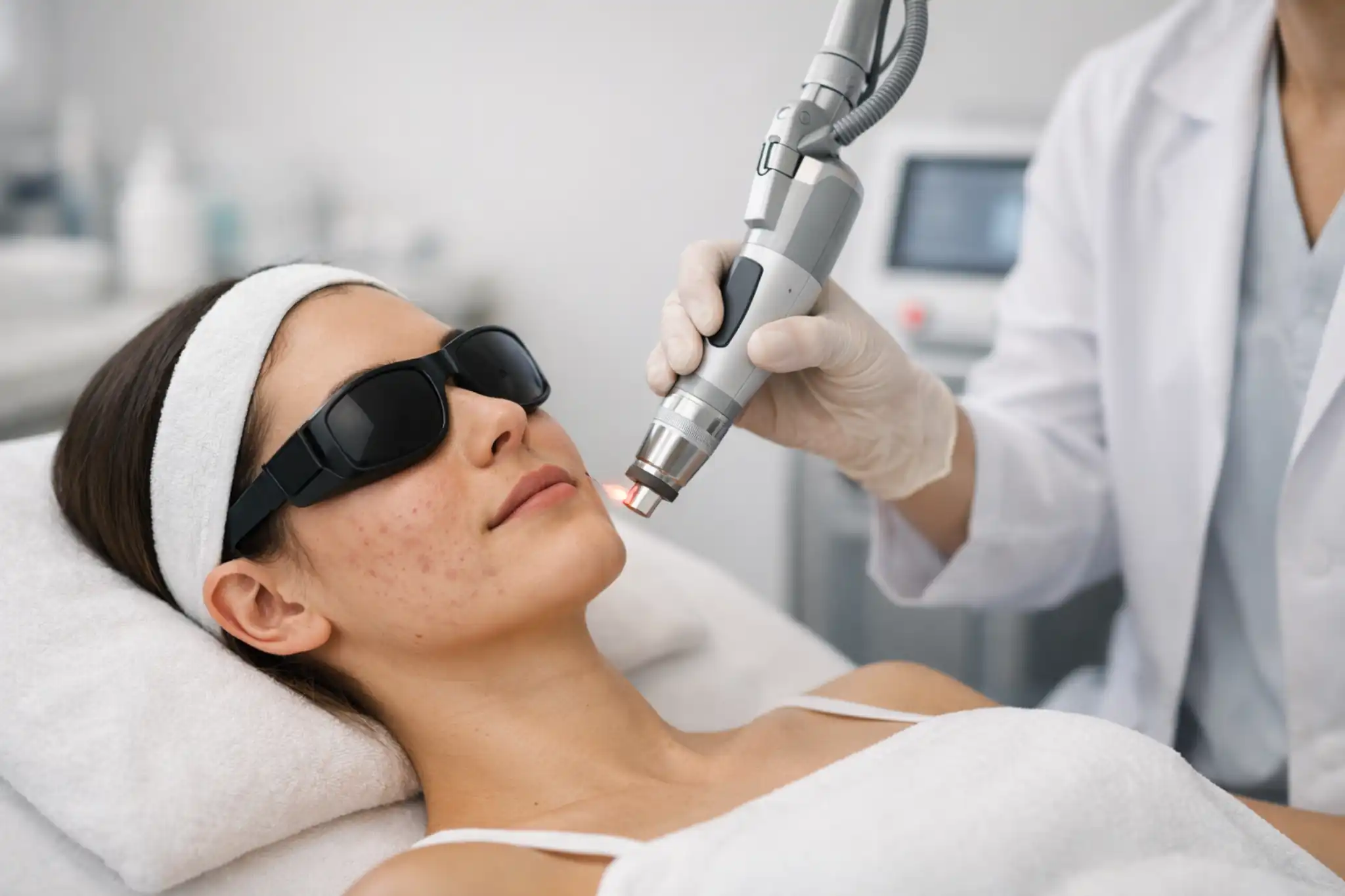
Acne Scar Removal Laser Surgery: What It Is and What to Expect
Acne can finally stop, but the texture it leaves behind can stay for years. That is often the point when creams, serums, and home care start to feel limited. If your skin still has pits, rough areas, or uneven texture, it makes sense to start looking into acne scar removal laser surgery and whether it can actually help.
The short answer is yes, laser treatment can improve many acne scars. But it is not a magic reset button, and it is not right for every scar type. Some scars respond well. Others need a different treatment or a mix of treatments. The biggest improvements usually come from choosing the right laser, the right provider, and the right plan for your specific skin.
If you are considering acne scar removal laser surgery, the most useful thing to know up front is this: laser treatment usually aims for visible improvement, not perfect skin. Many people see smoother texture and softer scar edges, but complete removal is not the usual goal.
Table of Contents
Does Acne Scar Removal Laser Surgery Work?
In many cases, yes. Acne scar removal laser surgery can help improve the appearance of acne scars by resurfacing parts of the skin and triggering new collagen remodeling. That can make certain scars look shallower, smoother, and less noticeable over time.
Still, results depend on a few things:
- the type of scar you have
- how deep the scars are
- your skin tone
- whether you still have active acne
- the kind of laser being used
- the experience of the person treating you
This is why two people can get very different results from what sounds like the same treatment. One person may have shallow boxcar scars and see solid improvement. Another may have deeper ice pick scars and need a different plan.
So yes, acne scar removal laser surgery works for the right person, but it works best when it is matched carefully to the scar type.
What Is Acne Scar Removal Laser Surgery?
The phrase acne scar removal laser surgery sounds more dramatic than the treatment usually is. In most cases, it does not mean traditional surgery with cutting and stitches. It usually refers to laser resurfacing or laser-based scar treatment done in a clinic or dermatology office.
A laser delivers controlled energy into the skin. Depending on the device, it may remove part of the outer skin, heat the deeper layers, or do a bit of both. That controlled injury is what pushes the skin to heal and remodel.
People often use the phrase “laser surgery” because it feels like a bigger step than skincare, but most acne scar laser treatments are office procedures rather than full operating-room surgery. You may still need numbing cream, careful aftercare, and recovery time, but it is usually not the same as surgical scar revision.
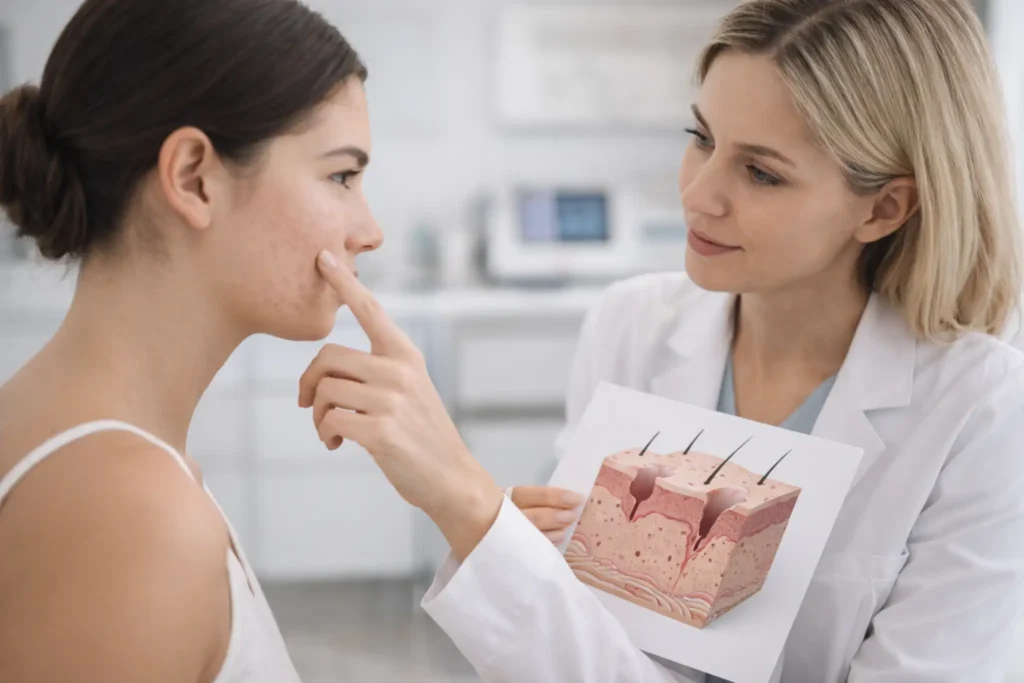
How Laser Treatment for Acne Scars Works
To understand acne scar removal laser surgery, it helps to think about two goals.
The first goal is resurfacing. Some lasers treat the upper layers of skin so rough texture and uneven scar edges can look smoother as the skin heals.
The second goal is collagen remodeling. Laser energy also heats the deeper skin enough to trigger new collagen production. Since many acne scars are depressed because of collagen loss or damage, this rebuilding process can help soften the look of certain scars over time.
This is why results are often gradual. Your skin is not just reacting on the day of treatment. It keeps remodeling for weeks and months after the session.
Laser treatment may help improve:
- skin texture
- shallow depressed scars
- scar edges
- post-acne tone in some cases
- overall skin smoothness
It usually does less for scars that are very deep, sharply narrow, or raised above the skin.
Which Acne Scars Can Laser Treatment Help?
Not all scars respond the same way, and this is one of the most important parts of any acne scar removal laser surgery decision.
Boxcar scars
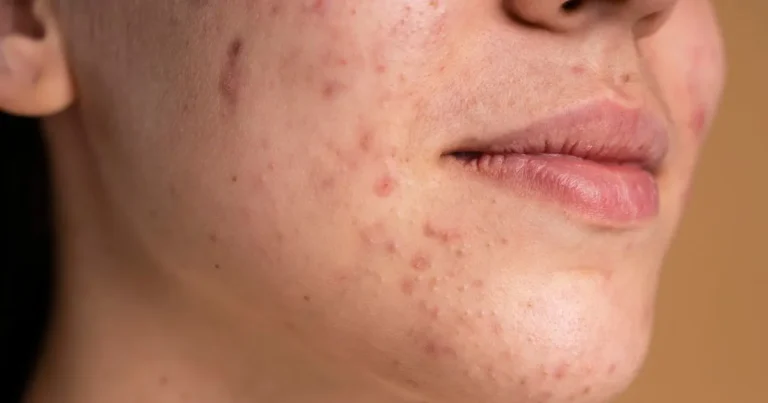
These are indented scars with clearer edges. Shallow to moderate boxcar scars often respond fairly well to laser resurfacing because smoothing the edges and building collagen can make them less obvious.
Rolling scars
Rolling scars create a wavy look in the skin. Laser may help some of these, especially mild ones, but scars that are tethered down beneath the skin often respond better when laser is combined with another treatment such as subcision.
Shallow textural scars
If your skin has a generally uneven, rough look rather than deep individual pits, laser treatment may help improve the overall surface.
Post-acne marks
Some lasers can also help with leftover redness or pigment, but that depends on the specific laser and your skin type.
Scars that may need something else
Deep ice pick scars often do not respond as well to laser alone. Raised scars, hypertrophic scars, and keloid-prone scars usually need a different strategy. That is why a consultation matters so much. The best laser for scars from acne depends on the scar pattern, not just the fact that you have acne scars.
Types of Laser Treatment for Acne Scars
There is no single laser for all acne scars. When people talk about laser treatment for acne scars, they may be talking about a few different categories.
Ablative laser resurfacing
Ablative lasers remove part of the outer skin and also heat deeper tissue. These tend to be stronger and can give more dramatic results, but they also come with more downtime.
Common examples include:
- CO2 laser
- Er:YAG laser
These are often discussed when people want bigger texture improvement and are willing to accept a longer recovery period.
Non-ablative laser treatment
Non-ablative lasers heat the deeper skin without removing the same amount of surface skin. Recovery is usually easier, but the results may be more gradual and less dramatic per session.
These are often chosen when someone wants improvement with less downtime.
Fractional laser treatment
Fractional treatment is very common in acne scar removal laser surgery because it treats tiny columns of skin rather than the entire surface at once. That can help balance results and recovery.
Fractional treatment can be used with ablative or non-ablative methods. In general, fractional approaches are popular because they shorten healing time compared with older full-field resurfacing methods.
Laser vs other light-based devices
Not every energy device is a true resurfacing laser. Some treatments use light or radiofrequency and may still help acne scars, but they work differently. That matters when you are comparing options. A med spa may market many different treatments under similar language, but the actual technology can be very different.
Acne Scar Laser Treatment Before After: What Results Look Like
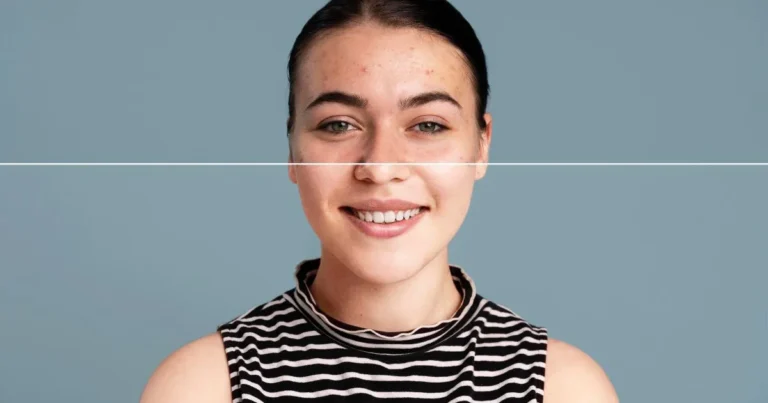
A lot of people search acne scar laser treatment before after because they want a clear idea of what is realistic. That is smart. Before-and-after photos can be useful, but they can also be misleading if the lighting, angle, or timing changes.
Real results usually look like:
- softer scar edges
- smoother texture
- less shadowing in certain pits
- better overall skin quality
- improvement that builds over time
Real results usually do not mean:
- every scar disappears
- one session fixes everything
- the skin returns to how it looked before acne
- every scar improves equally
This is where expectations matter. Good acne scar laser treatment before after results often show a noticeable but not perfect change. Many people see the best outcome from a series of treatments rather than one appointment.
Who Is a Good Candidate for Acne Scar Removal Laser Surgery?
You may be a good candidate for acne scar removal laser surgery if:
- your acne is mostly under control
- your scars are stable rather than newly inflamed
- you want texture improvement more than a total erase
- you can follow aftercare closely
- you understand that several sessions may be needed
A consultation should also look at factors like:
- recent sun exposure
- your skin tone
- a history of keloids
- cold sore history
- medication use
- smoking
- recent isotretinoin use
- pregnancy or breastfeeding status in some cases
If you still have active breakouts, many dermatologists prefer to get the acne under control first. There is little point spending money on scars while new ones are still forming.
When Laser for Scars May Not Be the Best Choice
Laser treatment is useful, but it is not automatically the best answer.
It may not be the best first step if you have:
- deep ice pick scars
- raised or keloid-prone scars
- very dark recent tanning
- a history of healing problems
- active infection or active acne that is not controlled
- skin that is very prone to post-inflammatory hyperpigmentation
For some people, the better plan is combination treatment. A scar that is tethered may need subcision first. A deep narrow scar may respond better to punch-based treatment or chemical reconstruction. Raised scars may need steroid injections or other scar-specific therapy.
So if you are comparing laser treatment for scars with other options, the real question is not “Is laser good?” It is “Is laser the right match for my scars?”
How to Prepare for Laser Treatment for Acne Scars
Preparation can affect both safety and results. Before acne scar removal laser surgery, most providers will review your medical history, current skincare, and recent treatments.
Common prep steps may include:
- avoiding unprotected sun exposure
- pausing irritating skincare products
- stopping certain retinoids for a period if your provider tells you to
- disclosing any cold sore history
- discussing whether you need antiviral medication
- stopping smoking if possible
- arriving with clean skin on treatment day
This is also the time to ask direct questions:
- What type of acne scars do I have?
- Which laser are you recommending and why?
- How many sessions do you think I may need?
- What kind of downtime should I expect?
- What are the risks for my skin tone?
- Do you treat acne scars often?
A good consultation should feel specific, not generic.
What Happens During the Procedure?
Most laser treatment for acne scars sessions are done in an outpatient setting. You usually arrive with clean skin, and a numbing cream may be applied before the procedure. In some cases, a provider may use injected numbing or offer medication to help you relax.
During treatment, you may feel:
- heat
- snapping or prickling
- a stinging or burning sensation
- increased warmth in bony facial areas
How long the session takes depends on the size of the area and the laser type. A small area may be fairly quick. Full-face resurfacing takes longer.
Right after the treatment, your skin may look red, swollen, or feel hot, similar to a strong sunburn. More aggressive resurfacing can also lead to oozing, crusting, or peeling during early healing.
Recovery After Acne Scar Removal Laser Surgery
Recovery is one of the biggest things people underestimate about acne scar removal laser surgery.
After ablative resurfacing
Downtime is longer. Redness, swelling, itching, peeling, and tenderness are common. New skin may cover the treated area within about a week to 10 days, but full recovery often takes longer. Redness can also hang on for weeks.
After non-ablative treatment
Recovery is usually easier. You may have mild swelling or color change for hours to a few days, and many people return to routine activities faster.
General aftercare basics
After laser treatment for acne scars, you may be told to:
- use a gentle cleanser
- keep the skin moist with ointment or moisturizer
- avoid picking or peeling flakes
- avoid harsh products
- stay out of direct sun
- use strict sun protection
- pause intense workouts for a short time if told to
- wait before restarting retinoids or acids
Do not rush back into a strong skincare routine just because your skin looks better on the surface. Healing continues underneath.
Risks and Side Effects of Laser Treatment for Scars
Every procedure has trade-offs, and laser treatment for scars is no exception.
Possible side effects include:
- redness
- swelling
- itching
- temporary discomfort
- crusting or peeling
- infection
- changes in skin color
- delayed healing
- scarring in rare cases
Pigment changes matter especially for deeper skin tones. Some lasers carry a higher risk of hyperpigmentation or hypopigmentation if settings are not chosen carefully. That does not mean people with darker skin cannot have laser treatment. It means provider skill and laser choice matter even more.
This is one reason acne scar removal laser surgery should not be treated like a casual beauty service. It is a real medical procedure.
Acne Marks Laser Treatment Cost: What Affects the Price?
A lot of people want a number when they search acne marks laser treatment cost, but the truth is that price varies a lot. Cost depends on:
- your location
- the provider’s training and reputation
- the laser type
- the size of the area treated
- how many sessions you need
- whether numbing, medications, or follow-up visits are included
- whether you are combining laser with other treatments
In most cases, acne scar laser treatment is considered cosmetic, so insurance usually does not cover it.
It is tempting to shop by price alone, but the cheapest option is not always the safest one. A poor laser choice, rushed consultation, or inexperienced provider can cost more in the long run if you end up with pigment issues or poor results.
Laser Treatment for Acne Scars vs Other Treatments
Laser is important, but it is only one tool.
Laser vs microneedling
Microneedling can also stimulate collagen and is often better tolerated in a wider range of skin tones. Laser may give stronger resurfacing in some cases, while microneedling may be a better starting point for others.
Laser vs chemical peels
Peels may help pigment and surface texture, but they usually do less than laser for deeper scar remodeling.
Laser vs subcision
Subcision works by releasing tethered scars under the skin. If your rolling scars are stuck down, subcision may do something laser cannot do by itself.
Laser vs fillers
Fillers can lift selected depressed scars more directly. They are often temporary but can be useful for the right scar type.
Sometimes the best plan is combination treatment rather than choosing one winner. That is why acne scar removal laser surgery often works best as part of a customized plan.
How Many Sessions Will You Need?
Some people hear “laser resurfacing” and imagine one appointment. Sometimes that happens, but often it does not.
The number of sessions depends on:
- scar depth
- the laser being used
- whether the treatment is fractional
- how much downtime you can accept
- your provider’s approach
- how your skin responds
Milder treatments usually need more sessions. Stronger treatments may need fewer, but they bring more downtime. A realistic plan might involve two to four sessions for some laser types, with treatments spaced over weeks or months.
So if you are researching acne scar laser treatment before after photos, remember that many of the best results come after a series, not after one day.
How to Get the Best Results From Laser for Scars
You can improve your odds of a good outcome by focusing on a few basics.
Choose the right provider
This matters more than almost anything else. Experience with acne scars and skin tone is a big deal.
Treat active acne first
New breakouts can create new scars while you are trying to fix old ones.
Follow aftercare closely
Good aftercare protects healing skin and lowers the risk of complications.
Protect your skin from the sun
Sun exposure before or after treatment can raise the risk of pigment changes and work against your results.
Stay patient
Collagen remodeling takes time. The final result of acne scar removal laser surgery is usually not visible the next week.
Common Mistakes to Avoid
People often get disappointed not because laser never works, but because the setup was wrong.
Common mistakes include:
- choosing treatment without knowing the scar type
- assuming the strongest laser is always the best
- going to someone with limited acne-scar experience
- underestimating downtime
- picking at healing skin
- returning to acids and retinoids too early
- expecting perfect skin after one session
A smart, realistic plan is usually more effective than an aggressive one.
When to See a Dermatologist Instead of a Med Spa
Some med spas offer energy treatments, but acne scars can be complicated. If your scarring is significant, your skin tone raises pigment concerns, or you are not sure what kind of scars you have, a board-certified dermatologist may be the better first stop.
A dermatologist can help answer:
- what type of scars you actually have
- whether laser is the right choice
- which laser is safest for your skin
- whether you need combination treatment
- how to control acne before treating scars
That medical judgment matters. Acne scar removal laser surgery is not just about operating a device. It is about choosing the right device and settings for the right skin.
Conclusion
Acne scar removal laser surgery can be a strong option for the right kind of acne scars, especially when texture and depressed scars are the main problem. It can smooth rough areas, soften certain scar edges, and improve overall skin quality, but it does not erase every scar and it is not the best fit for every scar pattern.
The smartest way to approach acne scar removal laser surgery is to think in terms of improvement, not perfection. Ask what kind of scars you have, what laser is being recommended, what downtime you can handle, and whether a combined treatment plan would make more sense. If laser treatment seems like your next step, book a proper consultation and make sure the plan is built around your skin, not just the machine.
FAQ
1. Is acne scar removal laser surgery permanent?
The improvement from acne scar removal laser surgery can last a long time, especially once collagen remodeling has taken place. But your skin will still keep aging, sun damage can affect results, and some people need maintenance or additional treatments later.
2. Does laser treatment for acne scars hurt?
It can be uncomfortable, but most providers use numbing cream and other comfort measures. Many people describe laser treatment for acne scars as hot, prickly, or stingy rather than unbearable. Stronger lasers usually feel more intense and come with more recovery.
3. How much does acne marks laser treatment cost?
Acne marks laser treatment cost varies widely based on location, provider, laser type, treatment area, and the number of sessions. Because acne scar laser work is usually cosmetic, insurance often does not pay for it.
4. Are acne scar laser treatment before after results worth it?
For many people, yes, especially if the scars are the kind laser can realistically improve. The best acne scar laser treatment before after results usually show smoother texture and less noticeable scars, not perfect skin. Whether it feels worth it depends on your scar type, budget, downtime, and expectations.
5. What is the best laser for scars from acne?
There is no one best laser for scars from acne for everyone. Fractional ablative lasers are often used for stronger resurfacing, while non-ablative options may suit people who want less downtime. The best choice depends on your scar pattern, skin tone, and how much recovery you can handle.