Ashwagandha Benefits for Skin: What to Know About Glow, Calm, and Balance
A lot of people start taking ashwagandha for stress, sleep, or general wellness and only later begin wondering what it might do for their skin. Maybe your face looks a little calmer when you are well-rested. Maybe you are hoping for less stress-related redness or fewer flare-ups. Or maybe you have seen bold claims online and want a more grounded answer.
The truth is that ashwagandha benefits for skin are usually talked about in a way that sounds bigger and more certain than the evidence really supports. There may be real upsides for some people, but most of them are likely indirect. That means the skin may benefit because stress, sleep, or overall balance improves, not because ashwagandha works like a standard skin treatment.
Direct answer: The most realistic ashwagandha benefits for skin are indirect ones. If ashwagandha helps you sleep better or feel less stressed, your skin may look calmer, less tired, or more balanced over time. But it is not a proven treatment for acne, dark spots, or chronic skin conditions, and results can vary a lot from person to person.
Table of Contents
What Is Ashwagandha?
Ashwagandha is an herbal supplement made from Withania somnifera, a plant used in traditional Ayurvedic medicine. Modern supplements often market it for stress support, sleep, athletic performance, mood, and overall wellness. Different products may use the root, the leaf, or a combination extract, and that matters because not all products are the same.
The National Center for Complementary and Integrative Health says some ashwagandha preparations may be effective for stress and insomnia, but the evidence is still mixed or limited in many other areas. That is important because many skin-related claims online go far beyond what has actually been shown. When people search for ashwagandha benefits for skin, they are often seeing wellness marketing mixed with personal stories rather than strong skin-specific evidence.
How Skin Health Is Connected to Stress, Sleep, and Balance
Your skin does not exist on its own. Stress, hormones, sleep, inflammation, and daily habits can all affect how it looks and feels. That is why the idea of ashwagandha benefits for skin sounds appealing in the first place. If a supplement helps you feel more settled overall, it makes sense to ask whether your skin might benefit too.
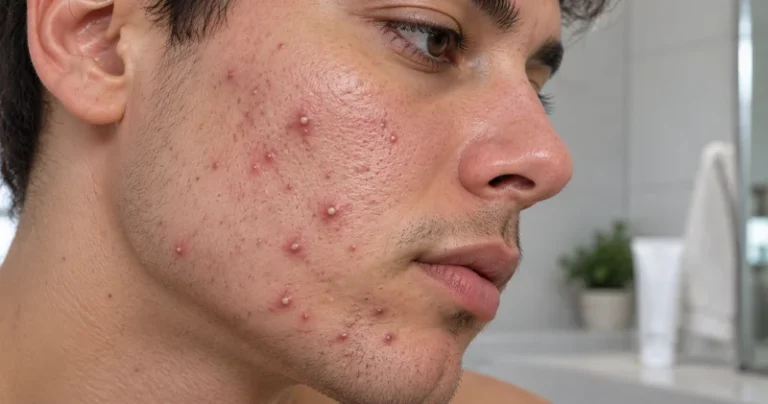
Stress is a big part of that conversation. The American Academy of Dermatology says researchers have found a relationship between stress and acne flare-ups. In response to stress, the body can produce more androgens, and those hormones can stimulate the oil glands and hair follicles in the skin, which can lead to acne.
Sleep matters too, even if the effect is less direct. People who are not sleeping well often notice dullness, puffiness, or a general “off” look in the skin. If ashwagandha helps sleep in some users, that alone can make a person look healthier and more rested. That kind of visible improvement is often what people really mean when they talk about ashwagandha benefits for skin.
At the same time, acne is not caused by stress alone. NIAMS explains that acne happens when hair follicles become clogged with oil and dead skin cells, which can then support bacterial growth and inflammation. So even if stress gets better, acne may still continue if you are also dealing with clogged pores, hormones, family history, or other triggers.
Ashwagandha Benefits for Skin: What May Help in Real Life
When people talk honestly about ashwagandha benefits for skin, the most believable benefits usually look like this:
- Skin that seems less reactive during stressful periods
- A more rested appearance because sleep improves
- Better routine consistency because you feel calmer and less overwhelmed
- Possible improvement in overall balance rather than one dramatic skin change
- Less picking, over-treating, or stress-driven irritation from anxious habits
Those are real-world benefits, but they are not magic. They are more about helping the conditions around your skin than changing the skin directly.
For example, someone whose acne always gets worse during high-stress weeks may notice fewer flare-ups when stress is better managed. Another person may simply look less tired and washed out because they are sleeping more consistently. In both cases, the perceived ashwagandha benefits for skin may be real, but the path is indirect.
That distinction matters. It keeps expectations realistic and helps you avoid using a supplement as a replacement for proven skin care or medical treatment.
Can Ashwagandha Help Acne?
This is one of the most common follow-up questions. People read about ashwagandha benefits for skin and then ask whether it can actually clear breakouts.
The careful answer is that does ashwagandha help acne does not yet have strong proof behind it. Ashwagandha is not listed in standard acne treatment guidance as a proven acne therapy. Current acne care is built around things like benzoyl peroxide, retinoids, salicylic acid, antibiotics in some cases, hormonal therapy for some women, and isotretinoin for severe acne.
That said, stress can worsen acne for some people, and the AAD clearly notes that stress and acne flare-ups are linked. So if stress is one of your major triggers, and ashwagandha helps reduce that stress, then some improvement in your acne is possible. But that is not the same as saying the herb is a direct acne treatment.
So when thinking about ashwagandha benefits for skin, it is more accurate to say this: it may help some stress-related acne situations indirectly, but it should not be treated as a stand-alone acne solution.
Can Ashwagandha Cause Breakouts Instead?
Yes, for some people that seems possible, which is why the topic gets confusing so fast. Even while people search for ashwagandha benefits for skin, others are asking can ashwagandha cause acne or does ashwagandha cause acne.
NCCIH notes that some ashwagandha preparations may increase testosterone levels over two to four months in some study settings. Acne is strongly influenced by androgens, which means that any hormone-related change could matter in people who are acne-prone. That does not prove the supplement causes acne broadly, but it does make the concern understandable.
There are other possible reasons for breakouts too:
- The product may contain more than plain ashwagandha
- The dose may be higher than you realize
- You may already be acne-prone
- Your stress, cycle, or skin care routine may also be changing
- The product could include flavorings, gummies, or blends you do not tolerate well
This is why ashwagandha benefits for skin should always be discussed alongside possible downsides. A supplement can feel helpful in one part of your routine while still not being the right fit for your skin.
Ashwagandha and Acne: Why the Topic Is So Confusing
The conversation around ashwagandha and acne is confusing because both of these experiences can be true at once:
- One person may feel calmer, sleep better, and notice fewer stress-related breakouts.
- Another person may start the same herb in a different formula and notice more pimples.
That does not mean one person is wrong. It usually means acne is a complex condition and supplement products vary.
NIAMS explains that acne develops through oil production, buildup of dead skin cells, bacteria, and inflammation. The AAD adds that stress, fluctuating hormones, family history, some products, and medication side effects can all matter. When you put that together, it becomes clear why ashwagandha benefits for skin are not simple or guaranteed. Skin changes often come from several overlapping causes, not one clean cause-and-effect chain.
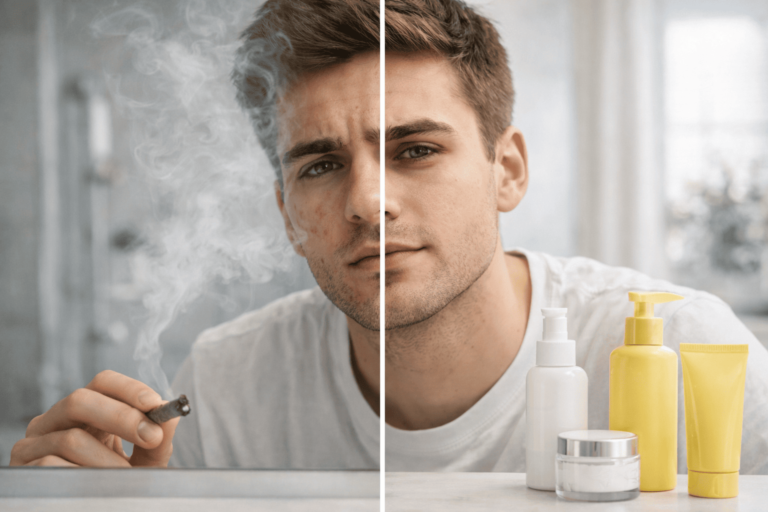
That is also why online before-and-after stories can be misleading. They usually leave out the full routine, the exact supplement formula, the person’s hormonal pattern, or what else was happening in life at the same time.
Possible Skin Areas Ashwagandha May Affect
If you do notice ashwagandha benefits for skin, they will probably show up in one of these broader areas:
Oil balance
Some people feel their skin is less “angry” or greasy when stress is lower. That can make the face look calmer overall. This is not guaranteed, but it is one of the more believable ways ashwagandha benefits for skin may appear.
Redness linked to stress
Stress can make many skin issues feel worse, including redness, irritation, and flare-prone skin. If your nervous system feels steadier, your face may simply look less reactive.
General dullness
Better sleep and better daily rhythm can make skin look fresher, even without changing the underlying skin type. This is one of the most common reasons people feel they are seeing ashwagandha benefits for skin.
Breakout pattern changes
For some users, the biggest question is not glow but acne. Here, the effect can go either way. If stress is the main driver, the skin may settle. If hormonal sensitivity or formula issues are more important, breakouts may get worse instead.
Who May Notice the Most Skin Changes?
Some people are more likely than others to notice skin-related shifts after starting a supplement. That includes:
- People with stress-related breakouts
- People who do not sleep well
- People with sensitive or acne-prone skin
- People already taking several supplements
- People with frequent cycle-related skin changes
- People expecting dramatic cosmetic changes quickly
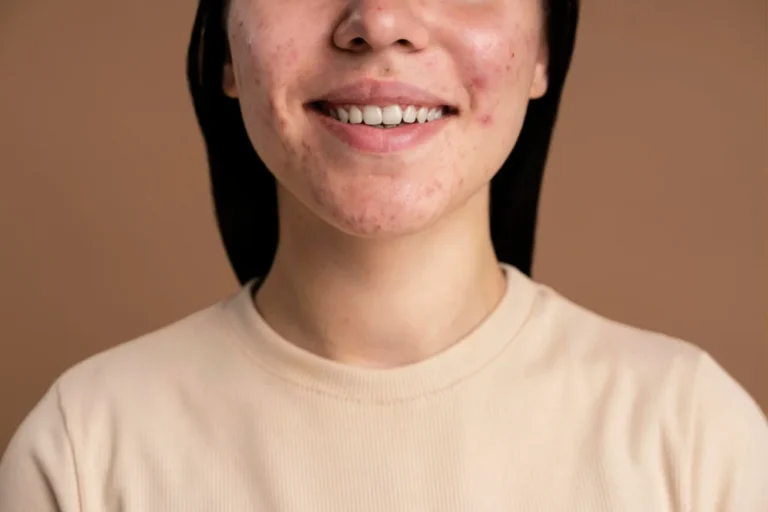
Adult acne is especially common in women, and the AAD notes that fluctuating hormones are a major reason. Stress and family history also matter. That means a person with hormonal acne may notice skin changes more quickly than someone whose skin is usually stable.
So when you evaluate ashwagandha benefits for skin, always consider your starting point. A supplement does not act on blank skin. It acts on your skin, with your history, your hormones, and your routine.

How Long Does It Take to Notice Skin-Related Changes?
Most people hoping for ashwagandha benefits for skin should not expect overnight results. If anything changes, it usually takes time. Stress patterns, sleep quality, and acne cycles do not fully shift in a day or two.
A realistic window is usually a few weeks rather than a few days. You may first notice non-skin changes, such as calmer evenings or more consistent sleep, before you notice anything on your face. And even then, it may be subtle. The earliest visible changes are more likely to be about looking less tired or less reactive than about major acne clearing.
If you want a clearer answer, track a few things for two to four weeks:
- Your sleep
- Your stress level
- Your skin oiliness
- New breakouts
- Redness or irritation
- Product brand and dose
- Any other routine changes
That gives you a more useful picture than relying on memory alone.
What Ashwagandha Cannot Realistically Do for Skin
This is where many articles go off track. They turn possible ashwagandha benefits for skin into promises that the evidence does not support.
Ashwagandha cannot realistically be described as:
- A guaranteed acne cure
- A replacement for dermatologist care
- A fast brightening treatment
- A proven fix for dark spots
- A single answer for chronic skin conditions
- A supplement that works the same for everyone
NCCIH says that evidence for ashwagandha is limited across many conditions and that study quality varies. There is even a current clinical trial evaluating skin and hair health, which itself shows that the question is still being studied rather than settled. The trial listing also notes that scientific evidence for traditional skin claims remains limited.
That does not make the supplement useless. It just means the smart way to discuss ashwagandha benefits for skin is with limits, not hype.
How to Use Ashwagandha More Carefully If Skin Is a Concern
If you are interested in ashwagandha benefits for skin but worried about breakouts, keep your approach simple.
Choose you are interested in ashwagandha benefits for skin but worried about breakouts, keep your approach simple.
Choose a basic product. A plain capsule is easier to evaluate than a complicated gummy or a “beauty blend” loaded with extra ingredients.
Start low if your clinician agrees. Jumping into a large dose makes it harder to tell what your body and skin actually tolerate.
Do not change ten things at once. If you start ashwagandha, switch cleansers, begin a new serum, and add protein powder in the same week, you will not know what caused what.
Keep the rest of your routine stable. This is one of the best ways to judge whether any ashwagandha benefits for skin are real or whether your skin is reacting to something else.
Also remember that NCCIH lists potential side effects and cautions, including drowsiness, stomach upset, diarrhea, vomiting, rare liver injury reports, and possible interactions with diabetes medicines, blood pressure medicines, immunosuppressants, sedatives thyroid hormone medications. It should be avoided in pregnancy and not used while breastfeeding.
Supportive Habits That Matter More Than the Supplement Alone
Even if you are curious about ashwagandha benefits for skin, your daily habits usually matter more than any one supplement.
Sleep
If you sleep badly, everything tends to look worse, including your skin. A steady sleep schedule often does more for a healthy-looking face than people expect.
Stress management
If stress is clearly part of your skin pattern, broader stress care matters. That may include walking, journaling, therapy, exercise, breath work, or simply reducing overload where you can.
Gentle skin care
AAD recommends using products labeled non-comedogenic, **non-acneger won’t clog pores if acne is a concern. That matters whether or not you take any supplement.
Sun protection
If you deal with acne marks or uneven tone, sunscreen matters more than mos notes that sunscreen is especially important when treating and preventing dark spots after acne.
Consistency
A simple routine followed regularly will almost always beat a scattered routine built around hope. This is true even if you do notice mild ashwagandha benefits for skin.
Common Mistakes People Make
One mistake is expecting dramatic changes too fast. Another is assuming every skin improvement comes from the supplement while ignoring better sleep, less stress, or improved routine consistency.
A lot of people also ignore product quality. The ashwagandha market is full of different extracts, blends, flavors, and wellness claims. Two products with “ashwagandha” on the label may behave very differently.
Another common mistake is using ashwagandha instead of proven acne care. If you have persistent acne, a supplement should not replace evidence-based treatment. NIAM therapies that target oil, inflammation, bacteria, and clogged pores directly.
And finally, people often confuse irritation, rash, or sensitivity with acne. If your skin becomes itchy, swollen, or rashy rather than pimply, think beyond breakouts and get proper medical advice.
When to Stop and Get Medical Advice
Stop using the supplement and talk with a clinician if you notice:
- Severe new breakouts
- Hives, swelling, or rash
- Persistent stomach issues
- Dizziness or strong drowsiness
- Any sign that the reaction is more than routine acne
- A flare that keeps getting worse even after stopping
Get professional help sooner if you have painful nodules, scarring, dark marks that linger, or acne that affects your mood and confidence. NIAMS explains that acne treatment aims to heal current lesions,nt scarring. A dermatologist can help when over-the-counter steps are not enough. citeturn145274view3turn145274view2
Final Thoughts on Ashwagandha Benefits for Skin
The most honest way to view ashwagandha benefits for skin is as a possible side effect of improved internal balance, not as a direct skin miracle. If stress and sleep improve, your face may look calmer, fresher, or less flare-prone. If you are acne-prone or sensitive, though, the experience may be neutral or even negative.
That is why ashwagandha benefits for skin should be approached with curiosity, not assumptions. The upside may be real for some people, bin reactions depend on the person, the product, and the full routine around it.
Conclusion
If you are interested in ashwagandha benefits for skin, keep your expectations balanced. Look for gentle, indirect improvements like calmer skin, better rest, or fewer stress-related flare-ups rather than dramatic claims. Choose products carefully, watch how your skin responds, and do not use a supplement in place of proven skin care or medical treatment. If you keep noticing breakouts, irritation, or confusing changes, a dermatologist or clinician can help you sort out what is really going on.
FAQ:
1. What are the main ashwagandha benefits for skin?
The most realistic ashwagandha benefits for skin are indirect ones. Some people may notice calmer-looking skin, a more rested appearance, or fewer stress-related flare-ups ifleep. It is not a proven cure for acne, pigmentation, or chronic skin conditions.
2. Does ashwagandha help acne caused by stress?
It may help indirectly in some cases, because the AAD notes that stress and acne flare-ups are linked. But does ashwagandha help acne is still not a is one of your biggest triggers, some improvement is possible, but results vary.
3. Can ashwagandha cause acne while helping other parts of wellness?
Yes, that is possible. Some people take it for stress or sleep and still wonder can ashwagandha cause acne because they notice new breakouts. Hormonther added ingredients, and existing acne-prone skin can all shape that response.
4. How long does it take to notice ashwagandha benefits for skin?
Most noticeable ashwagandha benefits for skin would likely take a few weeks, not a few days. You may notice improved sleep or a calmer routine first, and then see subtle skin changes later. Tracking stress, sleep, breakouts, and product details can help you judge the effect more clearly.
5. Is ashwagandha better for skin than a regular skincare routine?
No. A solid skin care routine is still more important. If acne is your concern, proven treatments like benzoyl peroxide, retinoids, salicylic acid, and dermatologist-guided care are far more established