Best Powder Foundation for Acne Prone Skin: Pressed vs. Loose
The best powder foundation for acne prone skin depends on what you need to cover and how your skin feels that day. Pressed powder is convenient for controlled application and carrying in a bag. Loose powder lets you start with a small amount and build gradually. Neither format guarantees that it will suit your skin or treat acne.
This guide compares the formats, explains three current product examples, and shows how to avoid turning a coverage problem into repeated layers of powder. The recommendations are based on product information and routine fit, not personal wear testing or a pore-safety score.
Table of Contents
Choosing the Best Powder Foundation for Acne Prone Skin
To identify the best powder foundation for acne prone skin, use five criteria before comparing brands: actual product format, desired coverage and finish, shade and undertone match, tolerance of the complete formula, and how easy the product is to apply and remove. Price and refill costs matter after a product meets those needs.
Start with your skin’s current condition rather than a permanent skin-type label. Acne-prone skin can be oily in one area and dry from treatment in another. A powder that looks useful on the nose may be uncomfortable or visibly flaky on the cheeks.
For powder foundation for oily acne prone skin, a matte finish may help with the appearance of shine. That cosmetic effect does not establish better acne control. If you are dealing with painful, worsening, or scarring breakouts, makeup choice should accompany appropriate care rather than replace it.
The best powder foundation for acne prone skin also needs to match your actual complexion. A shade that is too light can make marks appear gray. One that is too warm can leave a visible border. Check the jaw area in daylight and evaluate the color after the product settles.
Pressed vs Loose Powder Foundation
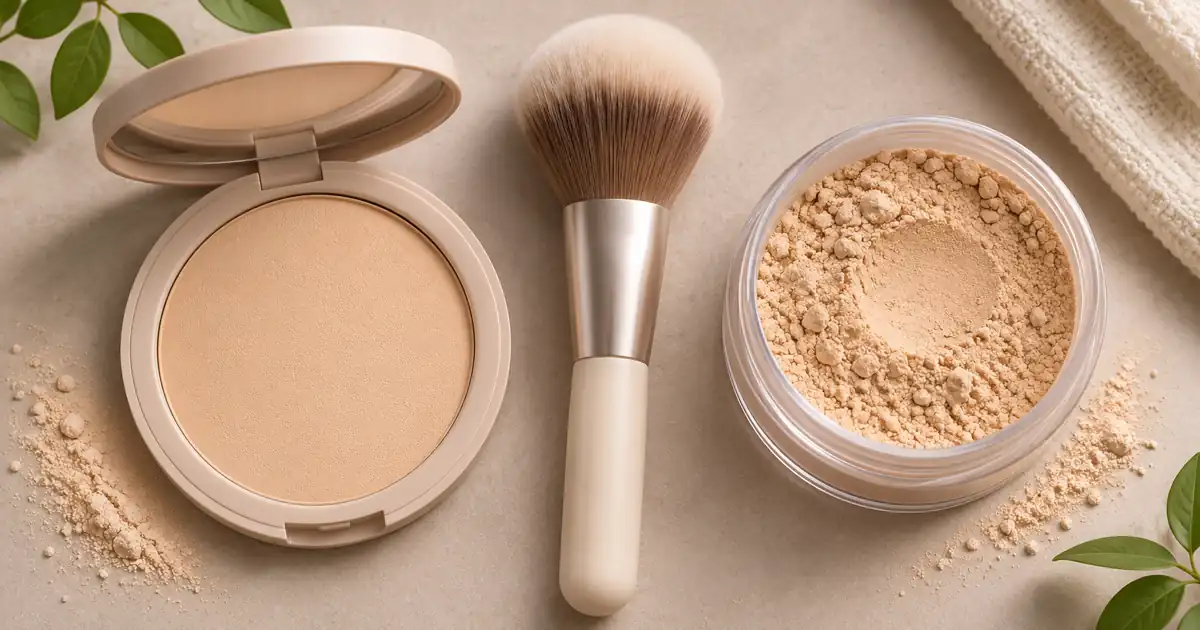
Pressed foundation contains powder held in a pan. It is usually easier to carry and gives you a contained surface from which to pick up product. The amount deposited still depends on the formula, the tool, and how hard you press.
Loose foundation comes as separate particles in a jar, often with a sifter. Dispensing a small amount can help you control the first layer. It can also be messy, particularly if you tip out too much or use it while traveling.
Mineral is a formulation description, not a third physical format. You can buy pressed mineral foundation or loose mineral foundation. The phrase mineral powder foundation for acne prone skin should therefore lead to another question: pressed or loose, with which ingredients, and in which finish?
A compact is not automatically more pore-clogging because it contains binders. Loose powder is not automatically safer because it looks simple. Ingredient-list length alone cannot predict how a finished product will behave on your skin.
When comparing pressed vs loose powder foundation, picture the application you will actually do. A controlled light layer at home and a quick touch-up on an oily T-zone are different jobs. You may not need a second full-coverage layer for the latter.
Best Powder Foundation for Acne Prone Skin: Three Formats to Compare
These are editorial options for distinct preferences, not a clinical ranking. Product details below were checked on the brands’ US pages on November 5, 2026. Formulas, prices, shades, and stock can change; confirm the exact shade and package before purchasing.
Loose, Luminous Coverage: bareMinerals ORIGINAL
bareMinerals ORIGINAL Loose Powder Foundation SPF 15 is a loose mineral foundation with a luminous finish. The brand lists 30 shades and an 8 g size. Its listed formula varies by shade and includes mineral pigments; some shades list bismuth oxychloride.
This is an option to investigate if you prefer loose application and a less flat-looking finish. The trade-off is that luminosity may make some surface texture more noticeable. Mineral ingredients and a short formula are not proof of universal tolerance.
Check the ingredient list for your specific shade, particularly if you already know you react to an ingredient. Its SPF number also does not replace a separate broad-spectrum SPF 30 or higher sunscreen routine.
Beyond Breakouts may earn a commission from qualifying purchases at no additional cost to you. As an Amazon Associate, we earn from qualifying purchases.
💄 bareMinerals ORIGINAL Loose Powder Foundation
This loose foundation offers luminous coverage for readers comparing loose powder with pressed formats. The linked shade is Medium Beige 12, so check your complexion match; a mineral label and luminous finish do not guarantee suitability for every skin texture or sensitivity.
Pressed, Buildable Matte Coverage: MAC Studio Fix
MAC Studio Fix Powder Plus Foundation is a pressed foundation that the brand also positions for setting makeup. The US page lists a 12 g compact at $39 at the time of checking, with medium-to-full buildable coverage and a blur-matte finish described by the manufacturer.
💄 MAC Studio Fix Powder Plus Foundation, NC38, 12 g
This pressed foundation offers buildable coverage with a blur-matte finish in the current 12 g formula. The listing is NC38, so check both the shade and new formula rather than assuming an older MAC match will transfer.
The current formula lists ingredients including synthetic fluorphlogopite, silica, dimethicone, and pigments. It is a finished blend rather than “just minerals.” MAC identifies it as a new formula, so an old review or previous shade match may not apply.
Consider it if you want a compact and more coverage, while recognizing that heavy application can emphasize dryness. Brand wear-time and oil-control claims are not promises about your skin or evidence that the product treats breakouts.
Pressed Mineral Refill: jane iredale PurePressed
💄 jane iredale PurePressed Base Mineral Foundation Refill, Warm Silk, 0.35 oz
This pressed mineral refill offers buildable coverage with a semi-matte finish for readers who prefer a compact format. The listing is Warm Silk and excludes the reusable compact; its makeup SPF does not replace regular sunscreen.
jane iredale PurePressed Base Mineral Foundation Refill SPF 20/15 is a pressed mineral option with a semi-matte finish. The brand lists 26 shades and sells the refill separately from a reusable compact; check what is included in the listing.
Its formula includes mica, boron nitride, dimethicone, and other ingredients, with active sunscreen ingredient amounts varying across shade groups. The refill format can suit someone who already owns a compatible compact, but the first purchase may involve more than the refill price.
For someone seeking the best powder foundation for acne prone skin in a pressed mineral format, this is a comparison candidate rather than a guarantee. Check shade-specific ingredients and remember that a brand’s non-drying claim does not predict its appearance on your dry patches.
Powder Foundation vs Setting Powder
Powder foundation provides skin-tone coverage. Setting powder mainly helps set makeup or adjust shine and finish, often with less coverage. A product may be marketed for both purposes, but many translucent finishing powders are not foundation substitutes.
This distinction matters when choosing the best powder foundation for acne prone skin. If your main goal is to cover brown acne marks, a very sheer setting powder may leave you adding layers without achieving the color correction you wanted.
Conversely, if you already like your base and only need to reduce shine, more pigmented foundation may be unnecessary. Blotting excess oil and using a small amount of the appropriate powder can preserve the existing coverage.
For a broader comparison of base types, see our foundation guide for breakout-prone skin. This powder-specific guide is about choosing and applying the format, not rebuilding a complete makeup kit.
Best Powder Foundation for Acne Prone Skin With Dry Areas
Powder foundation on dry patches can collect around flakes and make them look more pronounced. Before switching brands, consider whether treatment-related dryness or an irritated area is driving the result.
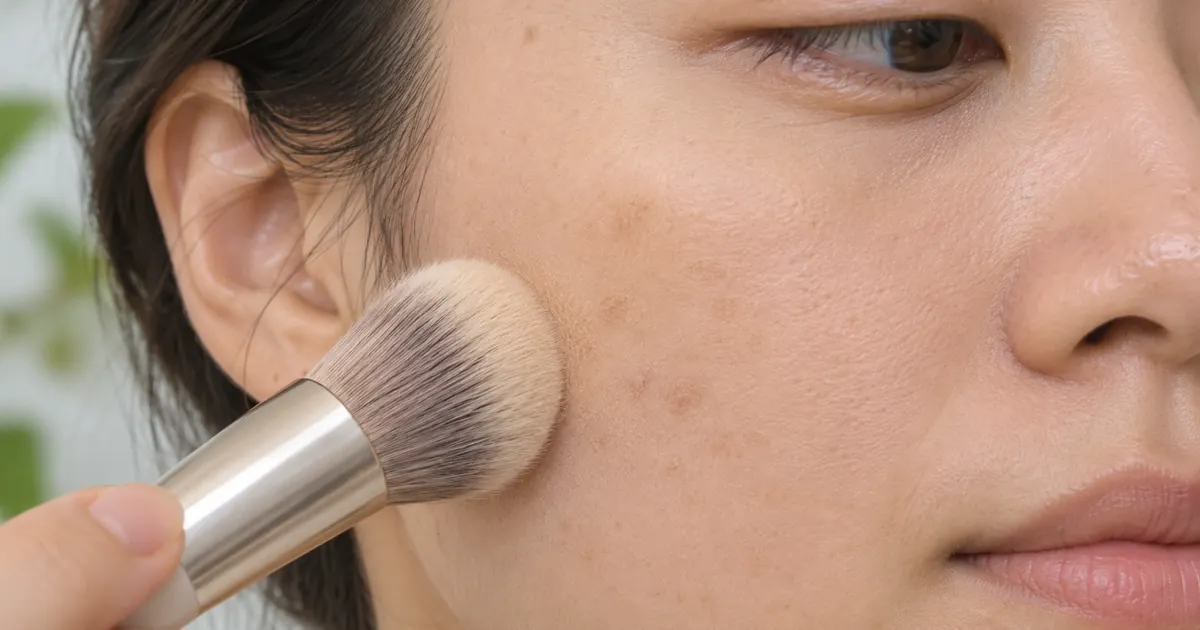
Apply a moisturizer your skin tolerates, allow it and sunscreen to settle, and use less powder over the drier areas. If rubbing to blend causes stinging or lifts flakes, stop working that spot. More buffing is not a solution for already sore skin.
The best powder foundation for acne prone skin may be a powder you use only where it helps. It is reasonable to leave a dry cheek with minimal coverage while applying a little more to an oily area. Uniform product thickness is not necessary for a balanced overall look.
If no powder sits comfortably on your skin, reconsider the format rather than searching for a supposedly guaranteed acne-safe compact. Dryness that is persistent or linked to medication is worth discussing with your clinician.
How to Apply Powder Foundation Without Caking
Begin with clean hands and a clean applicator. Apply skincare and any medication according to their instructions, then let the surface settle. Powder can cling unevenly to wet or tacky areas.
Pick up a small amount and remove excess from the tool before touching the face. Apply gently, then pause and look at the whole face before adding more. A dense sponge can deposit more coverage than a loose brush, but the effect depends on the specific product and tool.
For powder foundation coverage for acne marks, start by evening the surrounding skin tone. Add a little only where a flat mark still shows. Avoid repeatedly covering unaffected skin simply because one mark remains visible.
Raised pimples and indented scars create shadows and changes in surface shape. Foundation can soften color contrast, but it cannot flatten those shapes. Checking the result from normal conversation distance can prevent a cycle of chasing texture in a magnifying mirror.
When refreshing later, remove excess shine gently before deciding whether more foundation is needed. The best powder foundation for acne prone skin will still look heavy if you continually add it over oil, sweat, and earlier layers.
Hygiene, Removal, and Label Claims
The AAD advises choosing products labeled oil-free, noncomedogenic, or won’t clog pores, applying makeup gently, and removing it before bed. A non comedogenic powder foundation remains a useful option to consider, not a guarantee against individual breakouts or irritation.
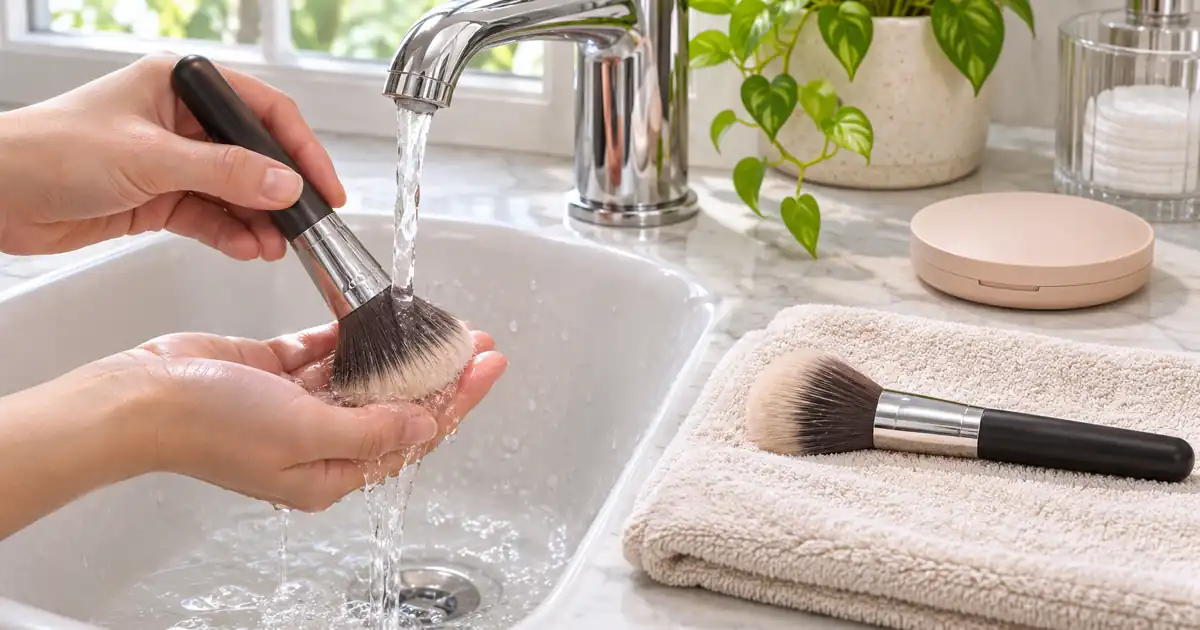
Clean brushes regularly; the AAD’s brush-cleaning guidance recommends every 7 to 10 days. Rinse the bristles without soaking the handle joint, and let brushes dry flat with the tips over a counter edge. Do not share makeup or applicators.
Follow the manufacturer’s instructions for cleaning or replacing sponges. Avoid storing a damp tool directly against a powder pan. Keep loose powder handling tidy rather than shaking it into the air near your face.
At night, remove makeup gently and use a suitable gentle cleanser. Do not scrub harder because the foundation is long-wearing. Our guide to dry acne-prone skin explains why comfort can matter as much as shine control.
If a new product repeatedly coincides with breakouts or irritation, set it aside and reassess. A “mineral,” “clean,” or “oil-free” claim should not overrule what happens on your skin.
Frequently Asked Questions
Is a more expensive powder less likely to cause acne?
Price does not establish acne safety. The best powder foundation for acne prone skin is the one that fits your coverage needs, ingredients you tolerate, shade, and application routine. A costly compact can still be a poor match.
Can I choose a darker shade to hide brown marks?
A darker base across the whole face can create a visible mismatch without solving the mark’s contrast. Match the surrounding complexion first, then use targeted coverage where useful.
Is a sample enough to rule out future breakouts?
A sample can help assess shade, finish, and immediate comfort. It cannot prove that you will never develop irritation or breakouts with repeated use.
Should I cover a picked or bleeding pimple?
Avoid putting ordinary cosmetic powder into broken skin. Focus on appropriate skin care and healing; seek advice if the area looks infected or does not heal as expected.
Can I use the same brush for foundation and blush?
You can, but residual pigment can change the foundation shade and make application less predictable. Keep the tool clean and consider separate brushes when color transfer becomes a problem.
Make the Choice Smaller
Choose the best powder foundation for acne prone skin by deciding between a portable pressed format and a loose formula you can build gradually. Then check shade, finish, and the exact ingredient list. Start with less product, and let comfortable skin guide how much coverage is useful.
This article is educational and does not diagnose acne or replace care from a qualified healthcare professional.
References
American Academy of Dermatology: I Have Acne! Is It Okay to Wear Makeup?
American Academy of Dermatology: How to Clean Your Makeup Brushes
bareMinerals: ORIGINAL Loose Powder Foundation SPF 15