Azelaic Acid for Dark Spots: Evidence, Expectations and Skin Tolerance
Choosing azelaic acid for dark spots makes more sense when you know what kind of mark you are treating. A flat brown patch left by a healed pimple is different from lingering redness, a dent, or a new pigmented spot with no clear link to acne. Those differences change both the evidence and the next step.
Azelaic acid can help some post-acne pigmentation, but studies of a particular prescription-strength gel do not prove that every cosmetic serum produces the same result. This guide explains how to read that evidence, build a tolerable routine, and recognize when continuing a product may be making the problem harder to manage.
Table of Contents
Azelaic Acid for Dark Spots: First Identify the Concern
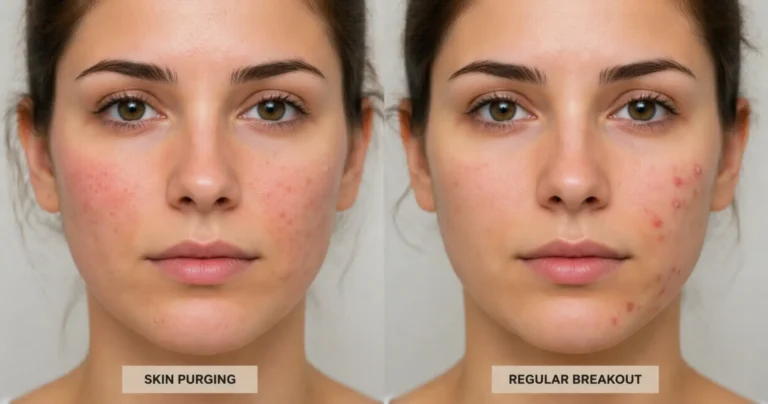
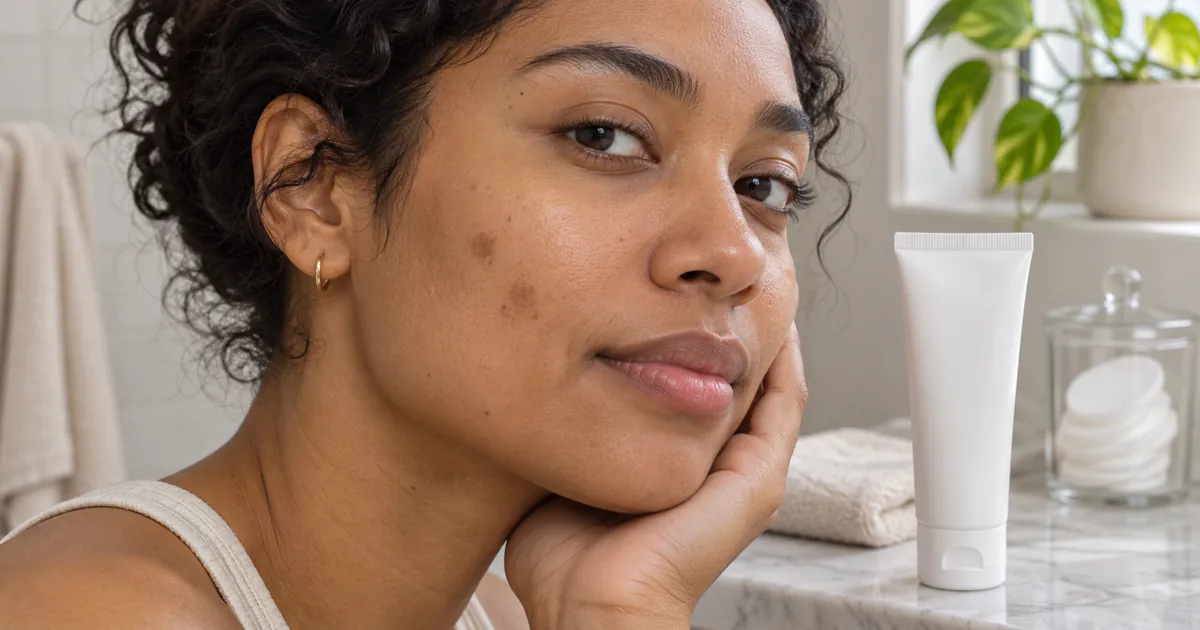
Post-inflammatory hyperpigmentation, often shortened to PIH, is extra pigment that remains after inflammation or an injury. After acne, it commonly looks like a flat brown or darker mark where a pimple used to be. The breakout may have healed even though its color remains.
Using azelaic acid for brown acne marks is therefore a different goal from treating an active pimple. You may have both concerns at the same time, but fewer new breakouts and lighter old marks are separate outcomes. A product that helps one does not automatically deliver the other to the same degree.
The practical distinction in azelaic acid dark spots vs red marks is the type of change. Brown pigmentation involves melanin. Pink, red, or purplish post-inflammatory erythema involves a different process and may coexist with pigment. Color descriptions alone cannot confirm a diagnosis, especially across different skin tones.
Indented or raised scars involve altered skin structure. A brightening product cannot fill a depression or remove raised scar tissue. Our guide to products for acne marks and scars explains why choosing for color and choosing for texture require different expectations.
Melasma often appears as broader patches and needs its own assessment. A changing, bleeding, unusual, or unexplained pigmented lesion should be checked rather than repeatedly treated as an acne mark. Do not use an online photograph to decide that every dark area is PIH.
What the Evidence Says About Azelaic Acid for Dark Spots
Azelaic acid has roles in acne care and pigmentation management. Its effects on pigment production help explain the interest in post-acne marks, while acne control can reduce the stream of new marks. The AAD includes topical azelaic acid among its conditionally recommended acne treatments. That recommendation concerns acne treatment; it is not a promise that all discoloration will disappear.
For azelaic acid pigmentation evidence, look for four details: concentration, vehicle, study population, and duration. “Azelaic acid worked in a study” is incomplete without them. A gel, cream, toner, and serum can deliver the same named ingredient differently.
A 2024 randomized, double-blind, placebo-controlled study enrolled 72 people with mild to moderate acne; 60 completed it. The active group used a specific 15% gel twice daily for 12 weeks. Investigators assessed post-acne red and pigmented lesions as well as acne and other outcomes.
The study reported improvements in several measures, including reduced melanin content in treated pigmented lesions at week 12. Some pigmentation measures also improved in the placebo group. This supports a possible benefit in the studied setting while showing why improvement from baseline alone is not the same as proof of superiority on every measure.
An earlier 16-week pilot study examined 15% azelaic acid gel for acne with associated PIH. Its baseline-controlled design makes it less able to separate treatment effects from natural fading than a well-controlled comparative trial. The two studies add useful information without establishing a universal clearance date.
Neither study means a cosmetic 3%, 4%, or 10% product will reproduce the same outcome. It also does not mean you should copy a trial’s application schedule. Follow your product’s instructions, and use prescription products under the guidance of the prescribing clinician.
When evaluating azelaic acid for dark spots, ask whether a brand’s claim actually refers to its finished formula. Ingredient research, a small brand test, and a blinded clinical trial are different kinds of evidence. A percentage on the front label cannot answer that question by itself.
Choosing a Formula Without Chasing the Highest Number
Selecting azelaic acid for dark spots starts with what your skin already tolerates and what else you use. Check the full ingredient list, not just the azelaic acid percentage. Exfoliating acids, fragrance, or several brightening ingredients can make the total formula more complicated than the product name suggests.
A higher concentration of azelaic acid for dark spots is not automatically the better starting point for every reader. Prescription treatment may be appropriate for some concerns, but cosmetic shopping should not become an attempt to imitate a prescription with several overlapping products.
Consider how the product fits into your day. A comfortable texture you can use as directed may be more practical than one that pills under sunscreen or leaves your skin persistently sore. Texture preferences are personal, and they do not establish clinical effectiveness.
If your main concern is ongoing inflammatory acne, treating marks alone leaves the cause unresolved. A clinician can help choose a plan that addresses both. Our skincare routine for post-acne marks gives additional context on separating pigment care from scar expectations.
Beyond Breakouts may earn a commission from qualifying purchases at no additional cost to you. As an Amazon Associate, we earn from qualifying purchases.
🧴 Paula’s Choice BOOST 10% Azelaic Acid Booster Cream Gel Serum
This cream-gel combines 10% azelaic acid with salicylic acid for a multi-active option when considering care for uneven tone. Count it as an exfoliating step rather than stacking several exfoliants; it is not equivalent to the prescription gels studied above.
Building a Routine Around Azelaic Acid for Dark Spots
Start by keeping the surrounding routine understandable. A gentle cleanser, a suitable moisturizer, and sunscreen provide a clearer baseline than introducing several new actives together. Then assess one new cosmetic at a time according to its label.
An azelaic acid sunscreen routine should treat sun protection as part of pigmentation care, not an optional finishing touch. Choose broad-spectrum SPF 30 or higher and follow the sunscreen’s application and reapplication directions. For pigmentation, a tinted option containing iron oxides can add protection against visible light; shade match and willingness to use it matter.
☀️ EltaMD UV Clear Deep Tinted Broad-Spectrum SPF 46
This oil-free SPF 46 sunscreen offers a daily sun-protection step alongside care for dark spots. Its deep tint will not match every complexion, so check the shade, finish, and activity-specific protection directions before choosing it.
In the morning, organize products so sunscreen remains the final skincare layer before makeup, following any medication-specific instructions. At night, remove makeup gently and use treatment and moisturizer as directed. There is no need to add a scrub to “help the acid penetrate.”
🧴 La Roche-Posay Toleriane Double Repair Face Moisturizer
This fragrance-free cream with glycerin, niacinamide, and ceramide offers a supporting moisture step when an azelaic routine needs more comfort. The non-SPF formula does not replace sunscreen or treat structural scars.
If you already use prescription acne medication, ask how an optional cosmetic fits before adding it. Do not reduce or replace a prescribed plan simply because a serum advertises both brightening and breakout benefits.
A small-area trial may reveal irritation before you use a new cosmetic more widely, but it cannot guarantee that the product will never cause a reaction. Avoid experimenting on skin that is already inflamed, scratched, or freshly irritated.
Choosing azelaic acid for dark spots does not require buying a second brightening active. Keep the next purchase tied to a specific unmet need: treatment, comfort, or sun protection. Three products that all target pigment can create more uncertainty without adding useful benefit.
When Irritation Changes the Plan
Dark spots worsening during skincare deserve reassessment. They are not reliable evidence that pigment is “coming to the surface,” that peeling is necessary, or that a product is working harder.
Irritation itself can contribute to unwanted pigmentation. Persistent burning, new scaling, tenderness, or a widening area of discoloration should prompt a review of the full routine. Look at recent additions, scrubs, other acids, and how often products are being applied.
For an irritating cosmetic, stop using it and seek advice if symptoms persist. For a prescribed treatment, contact the prescriber about the reaction and the appropriate next step. Significant swelling, blistering, or a severe reaction needs prompt medical assessment.
Do not judge skin tolerance only by redness. Depending on skin tone, irritation may be easier to notice through stinging, unusual warmth, roughness, or a change in color. Comfort and function matter alongside appearance.
Azelaic acid for dark spots should not become a test of how much discomfort you can tolerate. A routine that repeatedly damages your skin is working against the reason you started pigment care.

Expectations and When to Ask for Help
In research on azelaic acid for dark spots, study visits at 12 or 16 weeks are research time points, not deadlines for your skin. Mark depth, new acne, irritation, sun exposure, and the actual diagnosis can all affect what you see. Do not promise yourself a fixed number of weeks based on a different person’s result.
Keep the assessment focused on whether the plan is suitable: Is your skin comfortable? Are new breakouts still producing marks? Is the area you are treating behaving like an old acne mark, or is its appearance changing in another way? Detailed before-and-after photography is a separate topic; a single flattering picture is not evidence of treatment success.
For azelaic acid post inflammatory hyperpigmentation research, it helps to distinguish prevention of new discoloration from fading existing discoloration. Controlling the original acne may make the overall picture better even while older marks remain visible.
See a dermatologist when marks are persistent or troubling, when you are unsure what they are, or when acne is painful, scarring, severe, or affecting your well-being. Additional treatment may be useful, but the choice depends on diagnosis and tolerance rather than simply adding more acids.
Frequently Asked Questions
Can I use it only on the darkest mark?
The appropriate treatment area depends on the product and the condition being addressed. A plan for acne across an affected area can differ from cosmetic spot application. Follow the label or your clinician’s instructions instead of assuming that a thicker spot layer will work faster.
Does a tingling feeling mean pigment is breaking down?
No. Sensation is not a measure of pigment reduction. If you are using azelaic acid for dark spots, judge tolerability separately from appearance; ongoing burning or irritation is a reason to reassess the product.
Can I use leftover prescription gel for a new dark patch?
Do not assume a new patch has the same cause as a previously treated concern. Ask your clinician whether the medication and diagnosis still fit, especially if the patch is changing or did not follow a breakout.
Will makeup prevent the treatment from working?
Makeup is not automatically incompatible with a pigment-care plan. Use products your skin tolerates, allow skincare to settle, and remove makeup gently. Follow treatment instructions rather than mixing medication into foundation to save a step.
Is the goal to lighten my whole face?
For post-acne marks, the goal is to address uneven discoloration while protecting healthy skin, not to change your natural complexion. Unexpected lighter patches or other new color changes deserve medical advice.
Your Next Step
Use azelaic acid for dark spots as one part of a plan that matches the mark, controls ongoing acne, and stays comfortable. Before adding another active, check your current formula and sun protection. If the diagnosis or the response is unclear, a dermatologist’s assessment is more useful than a stronger shopping list.
This article is educational and does not provide a diagnosis or replace care from a qualified healthcare professional.
References
American Academy of Dermatology: How to Fade Dark Spots in Darker Skin Tones
Effects of 15% Azelaic Acid Gel on Post-Inflammatory Erythema and Hyperpigmentation in Acne Vulgaris
Efficacy and Safety of Azelaic Acid Gel 15%: A 16-Week, Baseline-Controlled Study
American Academy of Dermatology: Acne Clinical Guideline
Paula’s Choice: 10% Azelaic Acid Booster