does exfoliating help with acne? Benefits, Limits, and Irritation Risks
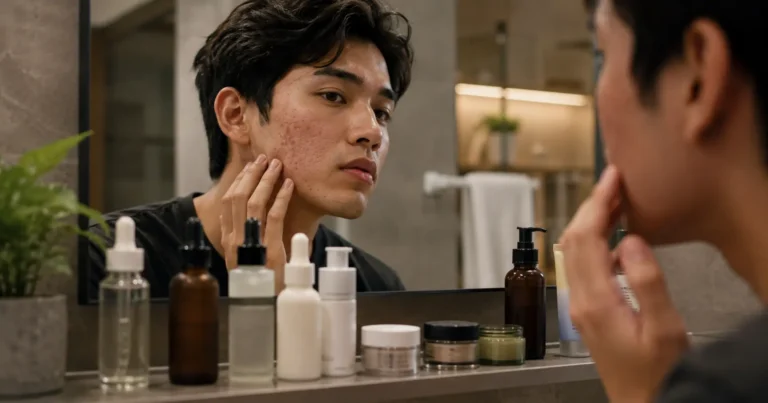
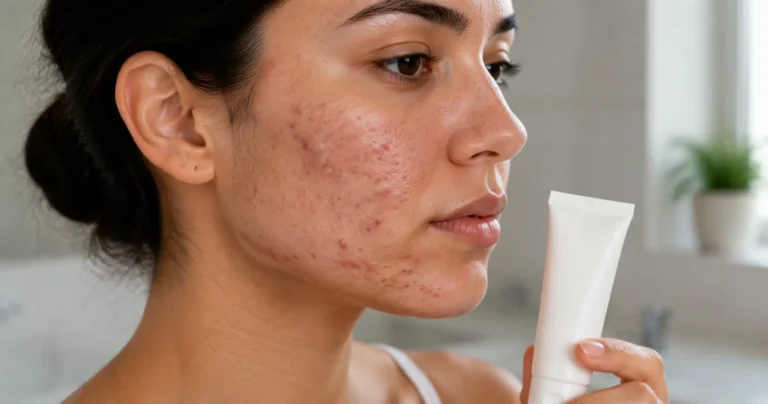
If blackheads keep returning or your skin feels rough, adding a scrub or exfoliating acid can sound like the missing step. But does exfoliating help with acne, or could it leave your skin more irritated?
Short answer: Exfoliation can help some acne-prone skin, especially when a suitable treatment such as salicylic acid addresses clogged pores. However, removing surface skin cells is not the same as treating every type of acne. Aggressive scrubbing or adding exfoliating products to an already irritating routine can make skin feel worse. You may not need a separate exfoliator at all.
The better question is what kind of acne you have, which products you already use, and whether an exfoliant would do a job that is not already being done.
Table of Contents
When does exfoliating help with acne?
Exfoliation removes or loosens cells from the skin’s outer surface. That may improve a rough feel, but its usefulness for acne depends on the ingredient, the formulation, and the type of breakout.
Blackheads and whiteheads
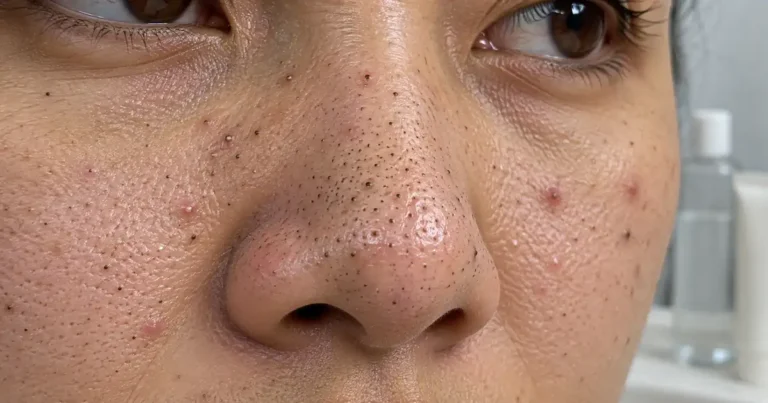
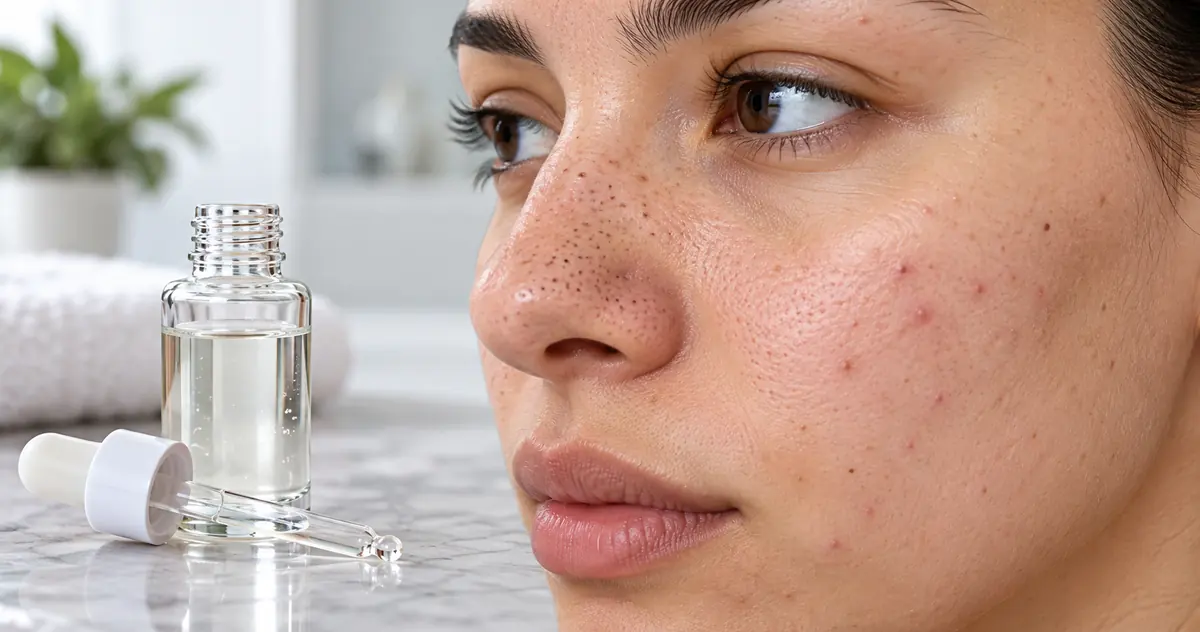
Blackheads and whiteheads are comedones, formed when oil and skin cells accumulate within a hair follicle. A blackhead is not simply dirt that needs scrubbing away. This is where salicylic acid can be especially relevant: it helps loosen buildup associated with clogged pores and is included among acne treatments recommended in American Academy of Dermatology guidelines.
That does not mean any exfoliating product will clear a stubborn blackhead. A gritty scrub mainly works at the surface, whereas a suitably formulated salicylic acid acne product is intended to address pore congestion. For more on this specific active, see how salicylic acid helps acne and clogged pores.
⭐ Neutrogena Oil-Free Acne Wash, Fragrance Free — For Clogged Pores
Dealing with recurring blackheads or whiteheads? Neutrogena Oil-Free Acne Wash offers a rinse-off approach to acne treatment without adding another leave-on exfoliating serum.
Its fragrance-free formula contains 2% salicylic acid, an established acne-treatment ingredient that helps address clogged pores.
Why consider it?
- 2% salicylic acid for acne and clogged pores.
- Oil-free, fragrance-free formula.
- Rinse-off format for a straightforward cleansing routine.
- Includes glycerin and panthenol.
Important: Salicylic acid can cause dryness or irritation, especially alongside other acne treatments. This is an alternative to adding another exfoliant, not an extra step everyone needs. The linked Amazon listing contains two 9.1 fl oz bottles.
👀 See Neutrogena & Check Price on Amazon ➜
Mild bumps and uneven texture
Does exfoliating help with acne when your skin feels bumpy but the bumps are not inflamed? It sometimes can, particularly if the texture comes from comedones. But rough patches might also reflect dryness or irritation, and adding an acid to already-sensitive skin may make those patches worse.
What exfoliation cannot fix
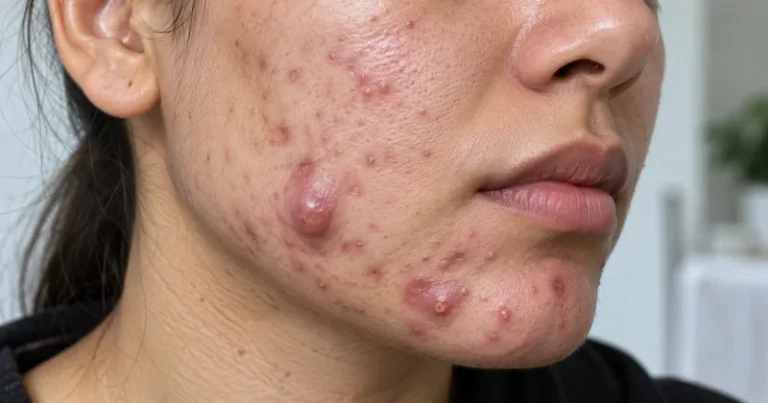
Ordinary at-home exfoliation cannot reliably clear deep nodules or cysts, replace an appropriate treatment plan for inflammatory acne, or erase indented and raised scars. Dark marks left by healed pimples are different from true scars; some ingredients may help discoloration gradually, but removing a layer of surface cells does not rebuild lost skin tissue.
Chemical vs Physical Exfoliation for Acne-Prone Skin
The terms sound technical, but the basic difference is straightforward: chemical exfoliants use active ingredients to loosen skin cells, while physical exfoliants use friction. Neither category is automatically safe or effective for every person with acne. For readers asking does exfoliating help with acne, the method matters because a surface scrub and an acne treatment do not accomplish identical tasks.
| Method | Common examples | Potential advantage | Main trade-off |
|---|---|---|---|
| Chemical | Salicylic acid; glycolic or lactic acid | Certain ingredients can address clogged pores or surface texture | Stinging, peeling, and dryness depend on the formula and use |
| Physical | Scrubs, cleansing brushes, textured cloths | Removes some surface buildup without an exfoliating acid | Friction may aggravate inflamed or sensitive skin |
Chemical exfoliation: not all acids do the same job
Salicylic acid is commonly marketed as a BHA and has evidence supporting its use in acne management. It is particularly relevant when clogged pores dominate. Glycolic and lactic acids, commonly called AHAs, primarily work on surface exfoliation and may be chosen for rough texture or uneven tone. Their presence in a product does not automatically make it an equivalent acne treatment.
Strength, formulation, application area, and whether the product is rinsed off or left on all influence exposure. A wash-off cleanser and a leave-on solution with the same ingredient can behave differently. This is one reason the question does exfoliating help with acne cannot be answered by sorting products into “acid” and “scrub” alone.
⭐ The INKEY List PHA Toner — Gentle Surface Exfoliation Option
Want to improve rough-looking texture without choosing a stronger AHA exfoliant? The INKEY List PHA Toner provides an alternative for readers who want to explore mild surface exfoliation.
Its formula includes 3% PHA (gluconolactone) and 3% niacinamide. The brand positions this product for sensitive skin and uneven texture.
Why consider it?
- 3% PHA for surface exfoliation.
- 3% niacinamide.
- Fragrance-free formulation.
- Lightweight leave-on toner format.
Important: Gentle does not mean irritation-free. This toner is not an established replacement for acne medications, and it may be unnecessary if your current routine already contains an exfoliant.
👀 View The INKEY List PHA Toner on Amazon ➜
Physical exfoliation: friction is the issue
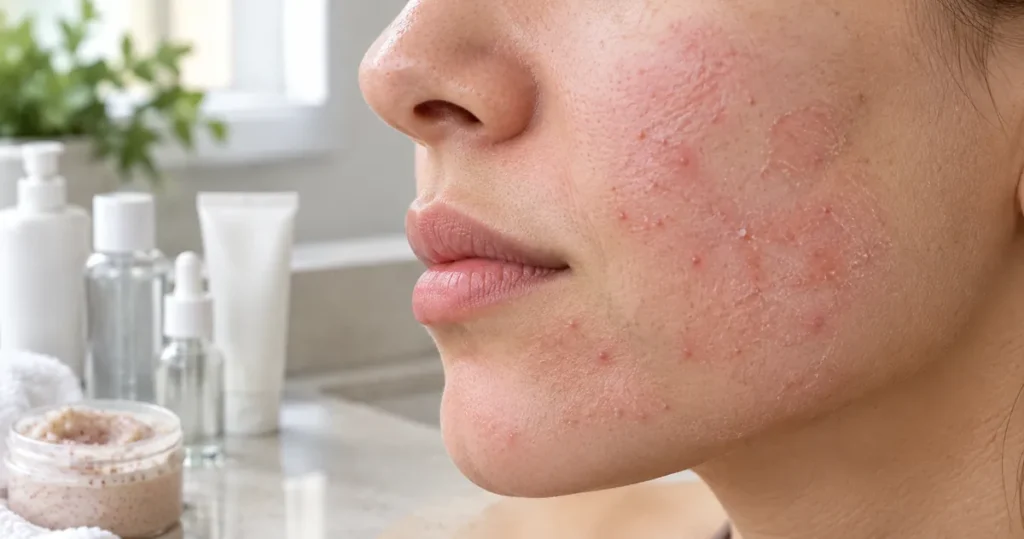
A soft cloth used gently is not the same experience as vigorously rubbing an abrasive scrub over sore pimples. Physical exfoliation may be tolerable for some people, but aggressive scrubbing can irritate the skin and make active breakouts look redder or angrier. If you wonder does exfoliating help with acne when you use a cleansing brush, remember that more friction does not mean more effective pore treatment.
If your skin stings during normal cleansing, that is a reason to avoid adding more friction—not a sign that dead cells need to be scrubbed harder.
does exfoliating help with acne if you already use retinol or benzoyl peroxide?
Often, a separate exfoliating step adds little value if your existing treatment already addresses the main concern. It may instead raise your risk of dryness and irritation. Check what is in your cleanser, toner, and treatment before buying another active.
Retinol and prescription retinoids
Retinol is a cosmetic ingredient; adapalene and tretinoin are retinoid medications used for acne. Retinoids influence the way skin cells behave in follicles, helping prevent clogged pores. They may also cause peeling and dryness, particularly when treatment begins.
Peeling does not mean you must exfoliate the flakes away. Adding an acid or abrasive scrub over irritated skin can compound discomfort. If a prescribed retinoid is causing difficult irritation, ask the prescribing clinician how to manage it rather than adjusting the medication or piling on skincare steps independently.
Benzoyl peroxide and overlapping actives
Benzoyl peroxide is an established acne medication with a different mechanism from salicylic acid, but it can also dry or irritate skin. Pairing it with an exfoliant may be appropriate in some carefully planned routines; it is not automatically better than using either product appropriately.
If you already use these two actives, our guide to combining benzoyl peroxide and salicylic acid explores that specific pairing. Here, the practical point is to look for duplicated work: a salicylic acid cleanser, an acid toner, and a leave-on exfoliant can add up to more exposure than intended.
Does exfoliating help with acne when you already have a working routine? Only if it adds a clear benefit without unacceptable irritation. More active ingredients do not guarantee faster clearance.
Can Over-Exfoliation Make Acne Worse?
Yes. Excessive exfoliation may leave skin dry, inflamed, and less comfortable, and it can make existing breakouts appear worse. The AAD cautions that unsuitable exfoliation may even contribute to acne breakouts. Still, not every pimple appearing after an exfoliant was caused by that product. When evaluating does exfoliating help with acne, how comfortably your skin tolerates the method matters alongside any improvement in clogged pores.
Signs to take seriously
Watch for burning or stinging during ordinary skincare, persistent tightness, flaking, visible redness or discoloration, or sensitivity to products you previously tolerated. New bumps alongside those symptoms may be related to irritation, but their appearance alone cannot confirm a damaged skin barrier or a particular diagnosis.
Over-exfoliation and breakouts can also be confused with an ordinary acne flare. A new product, changes in your usual treatment, and hormonal or environmental factors may overlap in time. Do not assume that continuing through worsening symptoms is necessary to achieve clearer skin.
⭐ CeraVe PM Facial Moisturizing Lotion — When Your Skin Needs Moisture, Not More Exfoliation
Not every breakout-prone routine needs another exfoliating acid. If your skin feels dry or tight while using acne products, CeraVe PM Facial Moisturizing Lotion is a practical moisturizing option to consider.
Its lightweight, oil-free formula combines three essential ceramides, hyaluronic acid, and niacinamide to support skin hydration.
Why consider it?
- Three essential ceramides to support the skin barrier.
- Hyaluronic acid for hydration.
- Niacinamide.
- Oil-free, fragrance-free, non-comedogenic formula.
Important: This is a moisturizer, not an exfoliating acne treatment. It cannot guarantee relief from irritation or treat every cause of skin sensitivity.
👀 See CeraVe PM & Check Current Price ➜
Dark marks and uneven skin tone
People who develop dark marks after acne, burns, or irritation should be especially cautious about aggressive exfoliation. Inflammation can contribute to post-inflammatory hyperpigmentation, and the AAD specifically warns that stronger exfoliation can worsen discoloration for susceptible skin, including many people with darker skin tones.
Avoid trying to erase marks by scrubbing until the skin feels raw. A plan that minimizes new inflammation and protects against sun exposure is more helpful than repeated irritation.
How to Decide Whether You Need an Exfoliator at All
Before asking which acid is strongest, ask whether exfoliation fills an actual gap. This decision is often simpler than a complicated skincare schedule.
| Your situation | Sensible next consideration |
|---|---|
| Mainly blackheads or whiteheads, and no pore-targeting treatment | An appropriately labeled salicylic acid acne treatment may be worth discussing or considering |
| Already tolerating a salicylic acid treatment | Another exfoliant may duplicate its role |
| Current skin is stinging, peeling, or inflamed | Focus on gentler care rather than adding exfoliation |
| Deep, painful, or scarring lesions | Seek effective acne treatment and professional advice, not stronger scrubs |
| Using a retinoid or multiple actives | Review what your routine already does before adding another product |
For someone with blackheads, does exfoliating help with acne enough to justify an extra purchase? It depends on whether the proposed product is an evidence-supported acne treatment or merely offers temporary smoothness.
If you are unsure what an essential routine looks like, start with building a simple acne skincare routine: gentle cleansing, suitable treatment when needed, moisturizer, and daytime sun protection. Exfoliation is optional, not an admission ticket to healthy skin.
How to Exfoliate Acne-Prone Skin Without Overdoing It
If you decide an exfoliant has a purpose, the safest approach is to use the least complicated routine that your skin tolerates. Do not rely on a universal “twice a week” rule: frequency depends on the product, method, skin response, and accompanying medication. Even the question does exfoliating help with acne at a particular frequency has no single answer without that context.
- Read the directions and active ingredients. Check whether an acid is already present in another product and whether the exfoliant is intended to be left on or rinsed off.
- Avoid introducing several new actives together. Otherwise, it becomes harder to tell what helped and what irritated your skin.
- Be gentle. Do not scrub at pimples, use harsh brushes over sore areas, or exfoliate sunburned or broken skin.
- Moisturize and protect against sunlight. A non-comedogenic moisturizer can support comfort. Use broad-spectrum SPF 30 or higher, appropriate sun-protective clothing, and shade. AHAs can increase sun sensitivity during use and for a period after stopping; follow the product’s sunburn warning.
- Reassess if the skin protests. If a cosmetic exfoliant causes persistent stinging, redness, or marked peeling, stop that product and allow your routine to become gentler. For a prescription acne medicine, contact the prescriber about troublesome symptoms rather than independently changing treatment.
Do not confuse ordinary cosmetic exfoliants with high-strength at-home chemical peels. The FDA warns that certain concentrated peel products can cause chemical burns, pigment changes, and scarring without professional supervision.
does exfoliating help with acne on inflamed pimples?
A correctly chosen acne treatment may help inflammatory pimples, but rubbing or peeling active lesions is not a shortcut to healing. Salicylic acid can have a role in acne care, while other medicines, such as benzoyl peroxide and retinoids, are often more central to treatment depending on the lesion type.
For a few mild inflamed spots, focus on a tolerable treatment routine rather than trying to scrub away each bump. Harsh rubbing may increase discomfort, and squeezing or picking adds risk without addressing the underlying process.
When acne includes deep nodules or cysts, does exfoliating help with acne enough to replace medical treatment? No. These lesions develop beneath the surface and can lead to scars. Seek a dermatologist if acne is painful, worsening quickly, leaving marks or scars, causing significant distress, or not responding to appropriate over-the-counter care. Likewise, persistent bumps of uncertain cause deserve evaluation instead of increasingly strong exfoliation.
Frequently Asked Questions
1. Can exfoliating remove acne scars?
Not reliably. Surface exfoliation may affect roughness or some discoloration, but true acne scars involve structural changes such as indentations or raised tissue. Those often require a different professional treatment approach. Do not mistake fading a dark mark for rebuilding scarred skin.
2. Should I exfoliate the flakes caused by my retinoid?
Usually, trying to scrub off treatment-related flakes only adds irritation. Use gentle cleansing and a tolerated moisturizer, and follow your medication’s instructions. If peeling is significant or persistent, discuss it with your prescriber rather than adding an acid or changing a prescription on your own.
3. Does a salicylic acid cleanser already count as exfoliation?
Yes, a cleanser containing salicylic acid can provide some exfoliating activity. Rinse-off exposure differs from leave-on use, and efficacy depends on the specific product. Does exfoliating help with acne more if you add a second acid on top? Not necessarily; duplicated exposure may increase irritation.
4. Can I exfoliate my back if I have body acne?
Some products labeled for body acne may be useful, but the back can also become irritated by abrasive brushes and friction. Choose products intended for the area, follow directions, and avoid rubbing painful lesions. Widespread, deep, or scarring body acne warrants professional care.
5. Can exfoliating make acne purge before it improves?
A new exfoliant may coincide with more visible bumps, but a required “purge” is not established for every acid or scrub. Irritation can resemble worsening acne, while some retinoid medications have documented early worsening. See our explanation of skin purging versus a breakout rather than assuming burning or a new rash proves a product is working.
Conclusion
So, does exfoliating help with acne? Sometimes—especially when an appropriate ingredient addresses clogged pores. It is not a universal requirement, and stronger or more frequent exfoliation can make irritated skin harder to manage. Before adding a scrub or acid, check the treatments you already use and choose one useful next step rather than several new products at once.
This article is educational, not a diagnosis or a substitute for care from a qualified healthcare professional.
References
- American Academy of Dermatology — How to Safely Exfoliate at Home
- American Academy of Dermatology — Acne Clinical Guideline
- American Academy of Dermatology — Acne: Tips for Managing
- U.S. Food and Drug Administration — Alpha Hydroxy Acids
- U.S. Food and Drug Administration — Beta Hydroxy Acids
- U.S. Food and Drug Administration — Warning Against Chemical Peel Products Without Professional Supervision