can hypochlorous acid cause acne: Breakouts, Irritation or Purging?
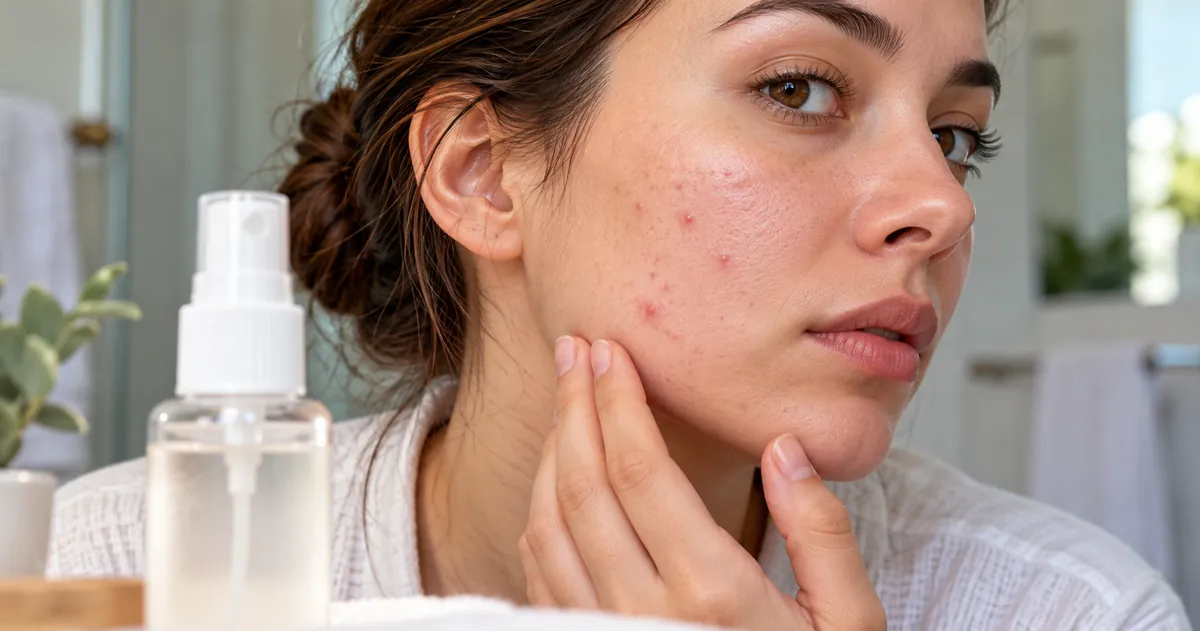
You started a hypochlorous acid face spray because it sounded gentle. Now you are seeing pimples, tiny bumps, or redness that was not there before. Naturally, you are wondering: can hypochlorous acid cause acne, or is something else happening?
Short answer: Hypochlorous acid (HOCl) is not established as a typical acne trigger, and it is not known to cause the kind of early treatment worsening often called skin purging. However, a particular facial spray may irritate your skin, while new bumps could also come from another product or an ordinary acne flare. Timing alone cannot identify the cause.
Here is how to check the clues without assuming every bump is acne or treating discomfort as proof that the spray is working.
Table of Contents
can hypochlorous acid cause acne? What the Evidence Actually Says
Hypochlorous acid is a compound your immune system produces. Specially formulated HOCl solutions are also used for antimicrobial purposes in skin and wound care. When people ask can hypochlorous acid cause acne, it helps to separate what is known about the ingredient from what can happen with one finished cosmetic spray.
HOCl generally has a favorable tolerability profile when used in a product intended for skin. That does not mean no one can feel stinging, dryness, or irritation. Nor does its ability to act against microbes mean every HOCl mist prevents or treats acne.
A 2025 review of hypochlorous acid’s clinical applications describes uses across several medical fields while acknowledging inconsistent findings and the need for better formulation research. An older trial of a particular superoxidized solution for inflammatory acne cannot tell us how every modern facial mist behaves.
There is not strong evidence that cosmetic HOCl sprays routinely cause acne. Equally, research is too limited to promise they never contribute to problems in individual routines. If your question is can hypochlorous acid cause acne after just a few uses, your symptoms and everything else you applied provide more useful clues than a universal yes-or-no claim.
Irritation, Acne, or Purging: What Do New Bumps Suggest?
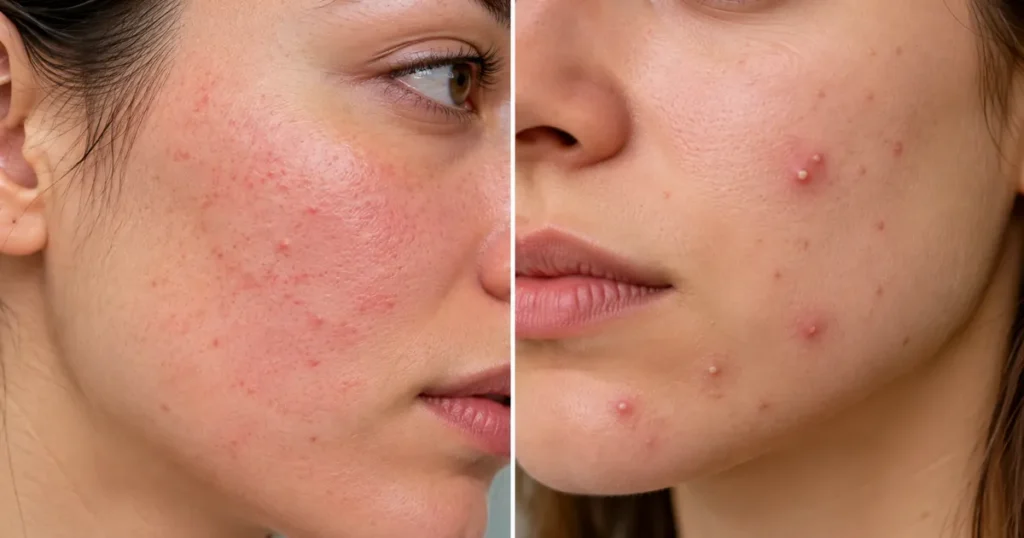
New bumps do not all have the same cause. A contact reaction, existing acne, and an apparent early treatment flare can overlap in appearance. None can be diagnosed reliably from a single photo or the day symptoms began.
| What you notice | Possible contact irritation or reaction | Possible ordinary acne |
|---|---|---|
| Sensation | Burning, stinging, itching, or tightness may stand out | Tender pimples; some acne lesions may also itch |
| Appearance | Redness or discoloration, patchy roughness, tiny bumps, sometimes rash | Whiteheads, blackheads, inflamed papules, or pustules |
| Where it appears | Skin exposed to the product, though patterns vary | Frequently acne-prone areas, but other areas are possible |
| Timing | May start soon after exposure or be delayed | Can flare independently of a new spray |
This is a clue-finding table, not a diagnostic checklist. The American Academy of Dermatology’s contact dermatitis guide notes that itchy, burning, swollen, or blistering skin can occur with a reaction to something touching the skin. If those symptoms accompany your new bumps, simply waiting for a supposed purge may be the wrong response.
Does Hypochlorous Acid Cause Purging?
A predictable HOCl purging phase has not been established. The word purging is often used for acne that appears worse shortly after someone starts certain acne treatments. For example, early apparent worsening is recognized in labeling for some topical retinoids. HOCl is not a retinoid or an exfoliating acid, and there is no comparable established pattern requiring your skin to break out before improving.
When the thought can hypochlorous acid cause acne through purging comes up, do not assume the spray is pushing hidden impurities to the surface. Persistent burning, itching, or rash is not evidence that a product is clearing your pores. For the wider distinction, see how skin purging differs from an ordinary breakout.
What About Small Bumps After Hypochlorous Acid Spray?
Small bumps after hypochlorous acid spray could be new acne lesions, a reaction to a product, or an unrelated eruption. For someone asking can hypochlorous acid cause acne, a cluster of similarly sized bumps is not enough to diagnose their cause. Itch can occur in several conditions, and not every facial bump is a clogged pore.
Notice whether the bumps arrived with diffuse redness or discomfort, whether they are in places you usually break out, and whether you made another routine change. These observations can guide a conversation with a clinician; they do not turn a home photo into a diagnosis.
can hypochlorous acid cause acne because of the spray formula?
The label on the whole bottle matters. HOCl is the featured ingredient, but different sprays may have different concentrations, supporting ingredients, packaging, and instructions. The question can hypochlorous acid cause acne because of what is in this bottle cannot be settled by reading “hypochlorous acid” on the front alone.
Read the Complete Formula
Look for the full ingredient list rather than relying on claims such as “gentle” or “suitable for sensitive skin.” Some facial sprays have short formulas; others include additional ingredients. Fragrance or other components may be relevant if you have known sensitivities, although their presence does not automatically prove they caused your bumps.
A product can also feel irritating even when its list contains few ingredients. Likewise, finding no traditionally pore-clogging ingredients does not establish that a formula cannot bother your skin. If you want to review a skincare product’s ingredient list, use an ingredient checker as a screening tool—not a diagnosis or proof of causation.
Check Intended Use and Storage
Use only a spray explicitly intended for facial skincare, and follow its label. Household HOCl disinfectants, wound products, and cosmetic facial mists are not automatically interchangeable. Cleveland Clinic’s HOCl guidance makes this distinction and also advises avoiding eye exposure.
Follow the manufacturer’s storage and expiration instructions. HOCl solutions can be sensitive to formulation and storage conditions, but an old bottle or an unusual smell does not, by itself, establish that your acne came from product degradation. If packaging is damaged or the product seems compromised, do not keep using it while trying to guess what changed.
can hypochlorous acid cause acne when layered with your routine?
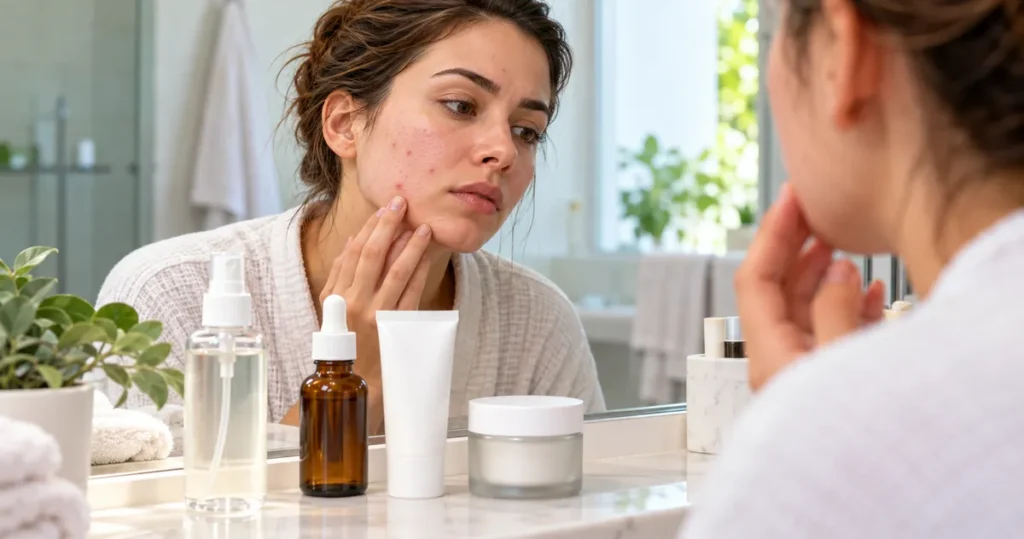
A spray may be the newest step, but the rest of your skincare routine can be part of the story. Asking can hypochlorous acid cause acne when used with other products is sensible; assuming a specific dangerous chemical reaction without evidence is not.
Other Products Started Around the Same Time
Consider whether you recently added or changed any of these:
- A cleanser or makeup remover that leaves your face tight
- A moisturizer, sunscreen, or hair product used near your face
- Salicylic or glycolic acid products
- Retinoids or benzoyl peroxide
- Fragranced cosmetics or a new makeup product
A new active acne treatment may produce dryness or early changes of its own. Several changes introduced together make it difficult to identify which one matters. Keep prescription medicines on the schedule given by your prescriber unless they advise otherwise.
Cumulative Irritation Isn’t the Same as Proven Incompatibility
If your face already feels raw from exfoliation or acne medication, even an otherwise well-tolerated mist may be unpleasant. This is a concern about overall skin tolerance, not proof that HOCl chemically clashes with every retinoid, vitamin C serum, or benzoyl peroxide product.
When you ask can hypochlorous acid cause acne in a complicated routine, also ask whether irritation is making existing pimples look angrier. The AAD’s acne skincare advice cautions against harsh cleansing, scrubbing, and irritating products. A simple routine makes reactions easier to track.
Don’t Overlook Ordinary Breakout Triggers
Acne can fluctuate with hormones, friction from masks or helmets, sweat, or hair products. For example, if bumps appeared after several sweaty workouts and a new spray was introduced that week, the timing alone does not prove which factor mattered. Searching can hypochlorous acid cause acne does not make the spray the proven cause of every new pimple.
What to Do When You Start Breaking Out After Hypochlorous Acid Spray
If you are breaking out after hypochlorous acid spray, choose the next step based on symptoms rather than trying to force a yes-or-no explanation.
- Describe what changed. Are these familiar pimples, or are there new itchy patches, stinging, swelling, and roughness? Note the location and when they appeared.
- Check your timeline. Write down the date you started the spray and any new cleanser, sunscreen, makeup, or acne active. One change is easier to assess than five.
- Stop a suspected irritating cosmetic. If the spray causes persistent stinging, burning, itching, or a visible rash, discontinue it and gently wash it off. Do not keep spraying to “finish the purge.”
- Keep the basics gentle. Cleanse without scrubbing, moisturize with a product you already tolerate, and use suitable daytime sunscreen. Our guide to keeping an acne skincare routine simple explains the essential steps.
- Observe without provoking another reaction. A brief note about symptoms may help. Avoid repeatedly testing a suspected allergen on your face just to prove which product is responsible.
- Get professional advice when the picture is unclear. A dermatologist can evaluate whether you have acne, contact dermatitis, or another condition and whether formal patch testing would help.
The question can hypochlorous acid cause acne is much easier to discuss when you know the exact product, your other skincare steps, and the symptoms that appeared. A symptom diary is useful context, not a replacement for examination.
When to Stop the Spray and Seek Medical Help
A brief sensation that quickly settles is different from persistent or worsening symptoms. Stop using a suspected cosmetic if it causes a significant rash or irritation. Seek medical assessment if you notice increasing swelling, blistering, widespread redness or discoloration, continuing itch, or a painful eruption.
If you develop breathing difficulty or swelling of the lips, tongue, or throat, seek emergency care. These are serious reaction signs, not routine acne symptoms.
Acne that is deep, painful, leaving scars, or getting worse despite appropriate care also deserves professional evaluation. If you cannot tell whether the bumps are acne at all, a clinician can help you avoid treating the wrong condition.
Frequently Asked Questions
1. Can hypochlorous acid cause acne even if the spray is fragrance-free?
A fragrance-free label reduces one potential source of sensitivity but cannot guarantee that a product suits everyone. Can hypochlorous acid cause acne in an individual routine? A temporal link is possible, but it does not prove HOCl or the formula caused true acne. Consider accompanying symptoms and other recent changes.
2. How soon can irritation appear after using a hypochlorous acid spray?
Some irritant reactions appear quickly; allergic contact reactions can be delayed. There is no reliable universal number of hours that identifies the spray as the cause. Timing helps establish a sequence, but diagnosis depends on the type of symptoms, exposure history, and sometimes professional testing.
3. Should I stop hypochlorous acid if the bumps are getting worse?
If worsening bumps come with significant itching, burning, swelling, or a rash, stop the suspected cosmetic and seek advice when needed. If they look like familiar acne without irritation, review other changes rather than assuming the spray is helping or harming you. Do not independently change prescribed acne medications.
4. Can a hypochlorous acid spray replace washing your face after a workout?
No. A face mist does not reliably remove sweat, sunscreen, makeup, and debris the way gentle cleansing does. The AAD recommends washing after sweating. If post-workout bumps concern you, check your cleansing and friction habits instead of treating the spray as a full cleanser replacement.
5. Is it safe to try the spray again after a possible reaction?
Avoid deliberately re-exposing yourself if you experienced a significant reaction or suspect an allergy. A dermatologist can help assess the cause, possibly with patch testing. For other new skincare products, the AAD recommends small-area testing before broader use; that is different from challenging skin with a suspected allergen.
Conclusion
So, can hypochlorous acid cause acne? There is no good evidence that a normal facial HOCl spray must trigger acne or that it causes a predictable purge. Still, new bumps deserve attention, particularly if they come with irritation. Check the formula, review what else changed, and stop the suspected cosmetic when a meaningful reaction occurs. Seek professional guidance for persistent, painful, or unclear symptoms.
This article is educational and does not diagnose a skin condition or replace advice from a qualified healthcare professional.
References
- Cleveland Clinic — Hypochlorous Acid: A Gentle Cleanser That Fights Bacteria
- Haralović et al. — Hypochlorous Acid: Clinical Insights and Experience in Dermatology, Surgery, Dentistry, Ophthalmology, Rhinology, and Other Specialties (2025)
- Tirado-Sánchez et al. — Efficacy and Tolerance of Superoxidized Solution in the Treatment of Mild to Moderate Inflammatory Acne (2009)
- American Academy of Dermatology — Contact Dermatitis Signs and Symptoms
- American Academy of Dermatology — How to Test Skin Care Products
- American Academy of Dermatology — Acne: Tips for Managing