La Roche Acne Treatment: Which Effaclar Option Is Right for You?
Searching for a la roche acne treatment can get confusing fast because Effaclar is not one single acne product. The current U.S. lineup includes salicylic-acid cleansers and leave-on treatments, a multi-acid serum, and a benzoyl-peroxide treatment for more inflamed breakouts.
The useful question is not “Which Effaclar product is best?” It is “Which active ingredient and format fit the acne I actually have?” This guide breaks down the current U.S. options so you can choose without stacking several strong products unnecessarily.
Table of Contents
La Roche Acne Treatment: The Quick Answer
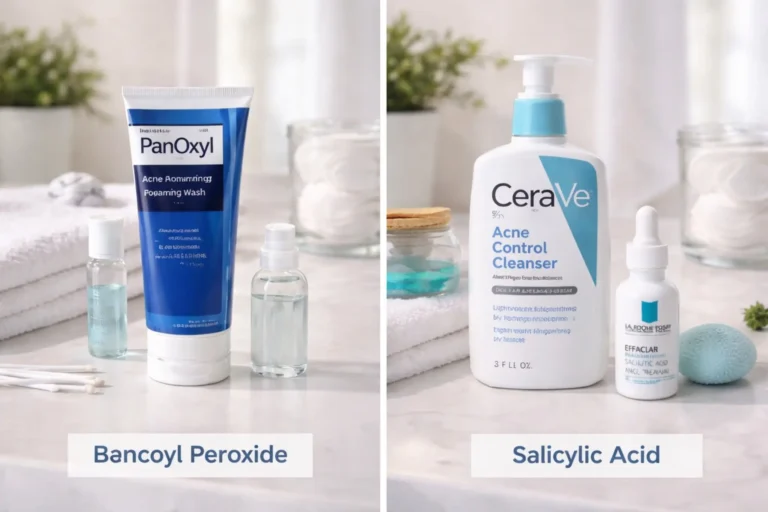
A la roche acne treatment with salicylic acid generally makes more sense when blackheads, whiteheads, clogged pores, and oiliness are the main problem. The Effaclar BPO Multi-Target Acne Treatment is a more direct match for red, inflamed pimples because it contains 5.5% benzoyl peroxide. If you already use another strong acne active, a simpler cleanser may be the better fit.
Deep, painful, rapidly worsening, or scarring acne deserves more than a brand-level product comparison and may need dermatologist care.
La Roche Acne Treatment Options at a Glance
The current U.S. Effaclar line includes several medicated options with different jobs.
| Effaclar option | Main acne active | Best-fit concern | Format | Main limitation |
|---|---|---|---|---|
| Effaclar Medicated Acne Face Wash | 2% salicylic acid | Blackheads, whiteheads, oily congestion | Rinse-off cleanser | Can still dry or sting |
| Effaclar Multi-Target Acne Treatment | 0.5% salicylic acid | Mild-to-moderate breakouts, clogged pores | Leave-on treatment | Another exfoliating step can add irritation |
| Effaclar Salicylic Acid Acne Treatment Serum | 1.5% salicylic acid plus glycolic acid and LHA | Acne plus uneven texture and congestion | Leave-on serum | Higher exfoliating load |
| Effaclar BPO Multi-Target Acne Treatment | 5.5% benzoyl peroxide | Red, inflammatory pimples | Leave-on treatment | Dryness, irritation, fabric bleaching |
The best la roche acne treatment is therefore not automatically the strongest or most expensive product. It is the one whose active ingredient, concentration, and format match your dominant breakout type and the rest of your routine.
What Is the Effaclar Line?
Effaclar is La Roche-Posay’s acne- and oily-skin-focused range. In the United States, it includes medicated cleansers, leave-on acne treatments, exfoliating products, moisturizers, and supporting skincare.
That breadth is useful, but it can also make the line look as if every product belongs in one routine. It does not.
Some Effaclar products contain an OTC acne medication such as salicylic acid or benzoyl peroxide. Others are simply cleansers, moisturizers, or supporting products. When choosing an Effaclar product, check the Drug Facts or active ingredients instead of relying only on the Effaclar name.
La Roche Acne Treatment for Blackheads and Clogged Pores
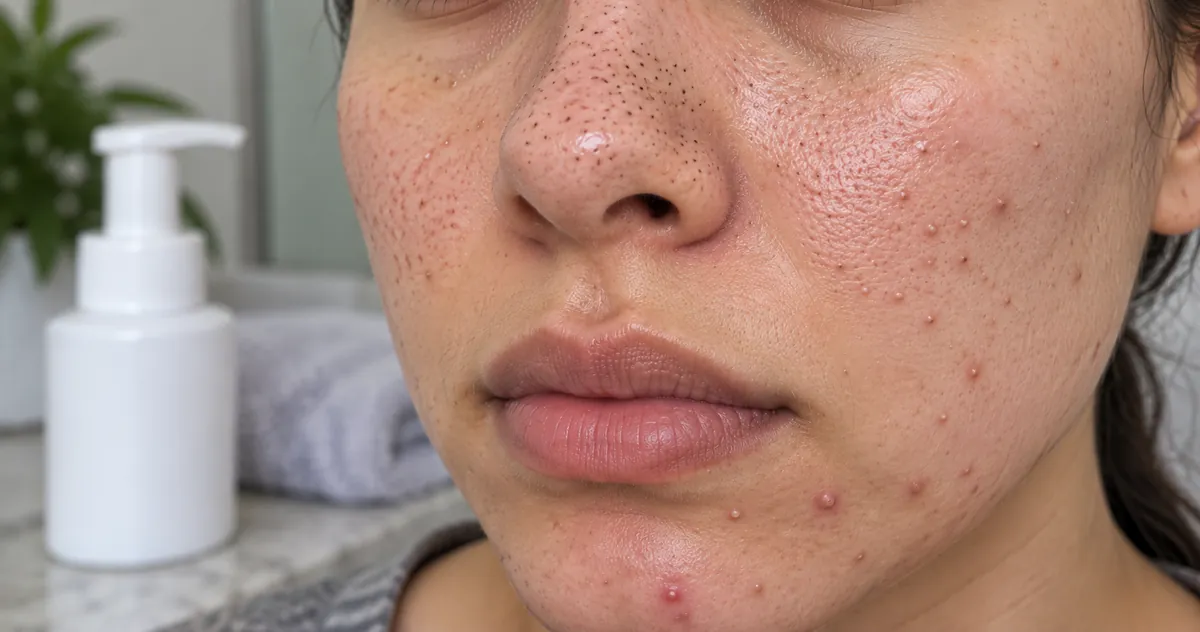
For blackheads, whiteheads, excess oil, and recurring pore congestion, the Effaclar Medicated Acne Face Wash is one of the clearest starting points in the U.S. range.
It contains 2% salicylic acid. Salicylic acid helps exfoliate within clogged follicles, which is why it is particularly useful for comedonal acne such as blackheads and whiteheads.
Because the cleanser is rinsed off, it can be a practical starting point for someone who wants salicylic acid without immediately adding another leave-on exfoliating treatment. If you want a deeper ingredient explanation, read our guide to how salicylic acid works for clogged pores.
As an Amazon Associate, we earn from qualifying purchases.
Mostly dealing with clogged pores and blackheads? 🫧
La Roche-Posay Effaclar Medicated Acne Face Wash with 2% Salicylic Acid is a rinse-off cleanser designed for oily, acne-prone skin.
✅ 2% salicylic acid
✅ Targets blackheads, whiteheads, and clogged pores
✅ Rinse-off format that can fit a simple routine
Salicylic acid can still cause dryness or stinging, especially if you already use retinoids or other exfoliating acids.
👉 Check Effaclar Medicated Acne Face Wash on Amazon
La Roche Acne Treatment for Red, Inflamed Pimples
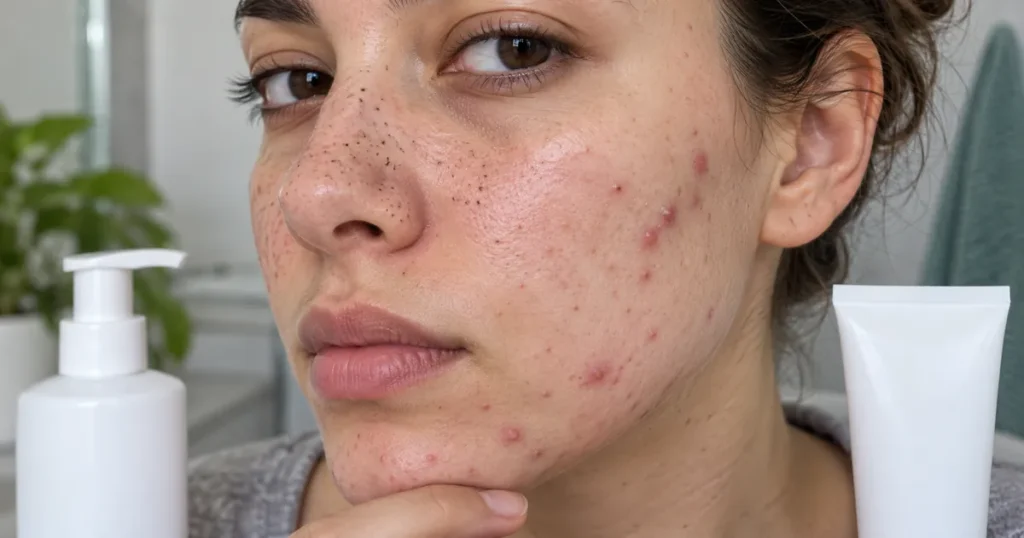
When papules and pustules are the main problem, benzoyl peroxide usually matches the breakout pattern more directly than a pore-focused exfoliant alone.
The current U.S. Effaclar BPO Multi-Target Acne Treatment contains 5.5% micronized benzoyl peroxide in a leave-on formula. Benzoyl peroxide reduces acne-associated bacteria and is a guideline-supported topical acne treatment.
That makes this Effaclar product a more logical option when red inflammatory pimples are the main concern. A higher percentage, however, does not automatically mean it will be better tolerated or more effective for every person.
If you want to compare it with other formats and strengths, see other acne products that contain benzoyl peroxide.
Are red, inflamed pimples your bigger concern? 🔴
La Roche-Posay Effaclar BPO Multi-Target Acne Treatment with 5.5% Benzoyl Peroxide is the current U.S. leave-on Effaclar option aimed at inflammatory breakouts.
✅ 5.5% benzoyl peroxide
✅ Leave-on treatment for acne-prone skin
✅ Fragrance-free current U.S. formula
Benzoyl peroxide can cause dryness, peeling, or irritation and may bleach towels, pillowcases, clothing, or hair.
👉 Check Effaclar BPO Multi-Target Acne Treatment on Amazon
La Roche Acne Treatment for Mild Acne and Recurring Blemishes
A newer U.S. option is Effaclar Multi-Target Acne Treatment with Salicylic Acid, sometimes associated with Duo+M naming.
The current U.S. formula contains 0.5% salicylic acid plus LHA and is positioned by La Roche-Posay for blackheads, whiteheads, acne blemishes, clogged pores, and recurring imperfections.
This product sits between a medicated cleanser and a stronger multi-acid serum in terms of routine role. It is a leave-on treatment, so you should not assume it belongs on top of every other exfoliating Effaclar product.
For someone with mild-to-moderate acne who prefers a leave-on salicylic-acid treatment, this option may make more sense than jumping straight to multiple acid products.
La Roche Acne Treatment for Acne Plus Uneven Texture
The Effaclar Salicylic Acid Acne Treatment Serum is a different product from the 0.5% Multi-Target treatment.
Its current U.S. formula contains:
- 1.5% salicylic acid.
- Glycolic acid.
- LHA.
- Niacinamide.
That combination makes it more of a multi-acid leave-on exfoliating serum rather than a simple cleanser or single-active spot treatment.
This serum may appeal to someone dealing with acne, visible congestion, and uneven skin texture who already understands how their skin tolerates exfoliating acids.
The trade-off is irritation potential. If you already use a salicylic-acid cleanser, retinoid, exfoliating toner, or another strong acid, adding this serum may create more exfoliation than your skin needs.
Do not treat the serum, medicated cleanser, and salicylic-acid spot treatment as three mandatory steps.
Do You Need the Whole Effaclar Acne Routine?
Usually not.
La Roche-Posay publishes multi-step Effaclar routines, but a brand routine is not automatically the best routine for every person. The main treatment decision should come first.
A simpler plan may look like:
- Gentle or medicated cleanser.
- One main acne treatment.
- Moisturizer if needed.
- Broad-spectrum sunscreen during the day.
If you already use adapalene or another prescription acne treatment, adding several Effaclar actives can increase dryness and irritation. In that situation, a non-medicated cleanser may fit better than another acid cleanser.
The most useful la roche acne treatment routine is often the one that gives each product a distinct job rather than repeating the same exfoliating function three times.
La Roche Acne Treatment: Cleanser vs. Leave-On Treatment
A cleanser and leave-on treatment can contain related ingredients but behave very differently.
Choose a medicated cleanser when:
- You want a short-contact treatment.
- Oily congestion and clogged pores are prominent.
- You are trying to keep the routine simple.
- Your skin does not tolerate multiple leave-on actives well.
Consider a leave-on benzoyl-peroxide treatment when:
- Red inflammatory pimples are the main concern.
- You want an active that remains on the affected area.
- Benzoyl peroxide fits your acne pattern.
Consider a leave-on salicylic-acid treatment or serum when:
- Congestion is still prominent.
- You prefer a leave-on format.
- You are not already overloading your routine with exfoliants.
This format question is just as important as the ingredient itself when choosing an Effaclar treatment.
Effaclar Duo, Duo+M, and BPO: Why the Names Get Confusing
Effaclar product names differ by country and can also change over time.
You may see online references to:
- Effaclar Duo.
- Effaclar Duo+.
- Effaclar Duo+M.
- Effaclar Multi-Target Acne Treatment with Salicylic Acid.
- Effaclar BPO Multi-Target Acne Treatment.
These names should not be treated as proof that the formulas are identical.
For a U.S. reader, use the current U.S. La Roche-Posay page and the Drug Facts panel for the exact product you plan to buy. A review written about an international Duo+ formula may not describe the active ingredients in the U.S. product sitting in your cart.
That is especially important when your choice depends on whether the product contains salicylic acid or benzoyl peroxide.
How to Choose a La Roche Acne Treatment Without Overdoing It
Use this seven-step check before buying another Effaclar product.
1. Identify the dominant breakout
Mostly clogged pores and blackheads point toward salicylic acid. Mostly red inflammatory pimples make benzoyl peroxide more relevant.
2. Read the active ingredient
The Effaclar name alone does not tell you what the product does.
3. Check the format
A rinse-off cleanser is not the same experience as a leave-on serum or benzoyl-peroxide treatment.
4. Review your current routine
If you already use adapalene, tretinoin, another acid, or benzoyl peroxide, adding another strong active may simply increase irritation.
5. Pick one main treatment goal
Trying to clear blackheads, reduce inflammatory pimples, exfoliate texture, and fade post-acne marks with several new products at once makes it harder to know what helps.
6. Add support, not duplication
Moisturizer and sunscreen can support an acne routine without adding another acne active.
7. Reassess
Give an appropriate, tolerated routine time to work rather than replacing it every few days.
Following this process makes Effaclar selection much more useful than simply choosing the product with the strongest marketing claim.
What If You Have Sensitive or Dry Skin?
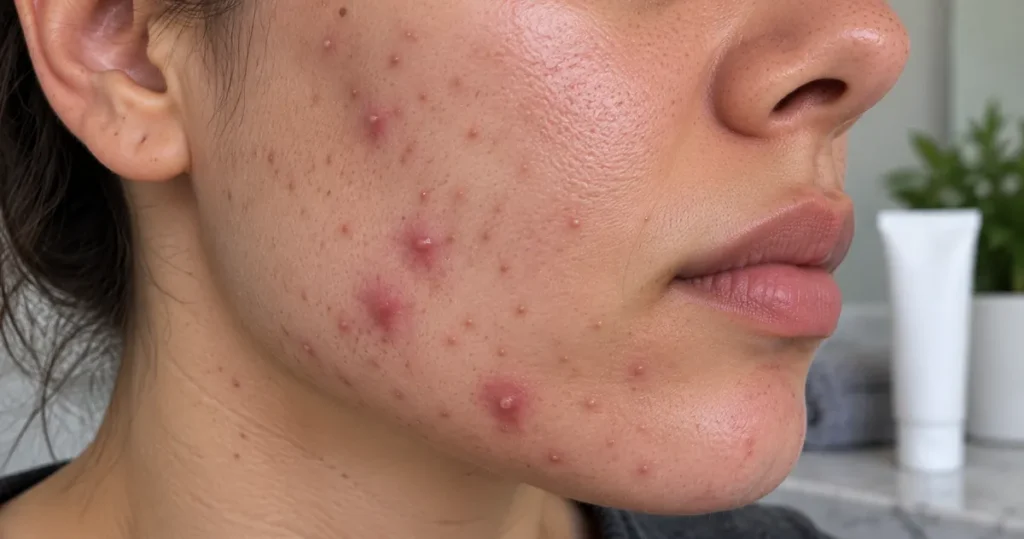
La Roche-Posay markets several Effaclar products as suitable for sensitive or acne-prone skin, but that does not guarantee every active will feel gentle on every person.
Salicylic acid can sting or dry the skin. Benzoyl peroxide can cause dryness, peeling, redness, and irritation. A serum combining several exfoliating acids may be more difficult to tolerate than a basic cleanser.
If your skin is already tight, peeling, burning, or visibly irritated, adding another acne active may make the problem worse.
A gentler approach can include:
- Simplifying the routine.
- Using a mild cleanser.
- Choosing one main acne active.
- Adding a noncomedogenic moisturizer.
- Avoiding scrubs and unnecessary exfoliants.
Persistent or severe irritation is a reason to stop experimenting and get professional guidance rather than assuming discomfort means the product is working.
What Results Can You Realistically Expect?
No la roche acne treatment can guarantee clear skin in a fixed number of days.
La Roche-Posay publishes clinical and consumer-study results for some Effaclar products, including the BPO and salicylic-acid treatments. Those results are manufacturer-reported and should be understood as product-specific testing rather than a guarantee of what every buyer will experience.
Acne improvement usually requires consistency. Switching from cleanser to toner to serum every few days makes it difficult to judge what is actually helping.
A reasonable product should also be tolerable enough to use as directed. Severe irritation is not a sign that the treatment is working faster.
When La Roche Acne Treatment Is Not Enough
OTC Effaclar products can be useful for mild to moderate acne, but there are situations where another store-bought product should not be the main plan.
Consider dermatologist care for:
- Deep, painful nodules.
- Cysts.
- Acne that is leaving scars.
- Rapidly worsening breakouts.
- Extensive face, chest, or back acne.
- Persistent acne despite an appropriate OTC routine.
- Significant distress.
- A rash or bumps that may not actually be acne.
The AAD acne guideline includes prescription options beyond salicylic acid and benzoyl peroxide, so moving beyond an OTC Effaclar product does not mean you failed. It means the acne may need a different level or mechanism of treatment.
Frequently Asked Questions
Which La Roche acne treatment is best for blackheads?
The Effaclar Medicated Acne Face Wash with 2% salicylic acid is a straightforward option when blackheads, whiteheads, oily skin, and clogged pores are the main concerns. A leave-on salicylic-acid option may also fit some routines, but using several exfoliating Effaclar products together is not automatically better.
Which Effaclar product is better for red pimples?
For red inflammatory papules and pustules, the Effaclar BPO Multi-Target Acne Treatment is the more direct ingredient match because it contains 5.5% benzoyl peroxide. Skin tolerance still matters, and painful nodules or cysts may need dermatologist care rather than a stronger OTC product.
Can I use Effaclar salicylic acid and benzoyl peroxide together?
They can be part of the same broader acne plan, but you do not have to start both simultaneously. Combining several drying or exfoliating products can increase irritation. Start with the product that best matches your dominant acne concern and follow current label or clinician instructions.
Is Effaclar Duo the same in every country?
No. Effaclar names and formulas vary by region and can change over time. A U.S. shopper should verify the current U.S. product name, active ingredient, and Drug Facts rather than assuming a Duo, Duo+, or Duo+M review from another country describes the same formula.
Do I need the complete La Roche-Posay Effaclar system?
No. A complete brand system is not required for everyone. A simple routine with one appropriate la roche acne treatment, moisturizer when needed, and sunscreen may be easier to tolerate and troubleshoot than stacking multiple medicated Effaclar products.
The Bottom Line
Choosing a la roche acne treatment is easier when you ignore the brand hierarchy and look first at the active ingredient and product format.
For blackheads, whiteheads, and clogged pores, a salicylic-acid Effaclar option generally makes the most sense. For red inflammatory pimples, the current 5.5% benzoyl-peroxide treatment is a more direct match. The multi-acid serum belongs in a more carefully planned exfoliating routine rather than automatically being layered with every other Effaclar product.
Start with one clear treatment goal, keep the routine tolerable, and seek dermatologist care if acne is deep, painful, scarring, rapidly worsening, or not improving with appropriate OTC treatment.
This article is for educational purposes only. It does not diagnose acne and is not a substitute for individualized care from a dermatologist or another qualified healthcare professional.
References:
- American Academy of Dermatology — Acne Clinical Guideline — Confirms current guideline support for benzoyl peroxide, salicylic acid, topical retinoids, and combination treatment approaches.
- La Roche-Posay — Effaclar Medicated Acne Face Wash — Used to verify the current U.S. 2% salicylic-acid active, cleanser format, directions, and acne-prone/oily-skin positioning.
- La Roche-Posay — Effaclar BPO Multi-Target Acne Treatment — Used to verify the current 5.5% micronized benzoyl-peroxide formula, leave-on use, fragrance-free positioning, and manufacturer-reported testing.
- La Roche-Posay — Effaclar Salicylic Acid Acne Treatment Serum — Used to verify the current 1.5% salicylic acid plus glycolic acid and LHA formula.
- La Roche-Posay — Effaclar Multi-Target Acne Treatment with Salicylic Acid — Used to verify the current U.S. 0.5% salicylic-acid Duo+M/Multi-Target treatment and its intended concerns.