Sulfur Mask for Acne: Spot Treatment, Full-Face Use and What to Expect
A sulfur mask for acne is not an invitation to dry out every part of your face. Some products are intended for affected areas, and their instructions differ on timing, rinsing, and frequency. A small blemish and an oily T-zone do not automatically need the same amount of treatment.
The most useful starting point for a sulfur mask for acne is the exact label on your product. This guide explains spot versus wider-area use, compares current directions for two masks, and separates a temporary less-shiny appearance from a meaningful improvement in acne. It also shows when dryness should change your plan.
Table of Contents
What a Sulfur Mask for Acne Can—and Cannot—Do
Sulfur appears as an active ingredient in over-the-counter acne products. A mask may also contain clay to absorb oil, along with other ingredients that affect texture and tolerance. The complete formula matters as much as the percentage printed on the front.
Do not read a sulfur mask for oily acne prone skin as a guarantee of acne control. Removing some surface oil can change how skin looks and feels immediately. That is different from preventing new blemishes or reducing ongoing inflammatory acne.
Evidence for sulfur is more limited than for several established acne treatments. The AAD’s guideline recommendations include options such as benzoyl peroxide and topical retinoids; a sulfur mask should not be assumed to be equally supported or appropriate for every acne pattern.
A sulfur mask for acne also cannot fill indented scars, remove raised scar tissue, or reliably solve an unexplained rash. Repeated deep painful bumps, worsening acne, or new scars call for professional assessment rather than a stronger mask.
Think of the mask as a specific optional product within an acne-care plan. Its convenience, smell, texture, and rinse-off format may influence whether you want to use it, but none of those features prove clinical superiority.
Sulfur Mask for Acne: Spot Treatment or Full-Face Use?
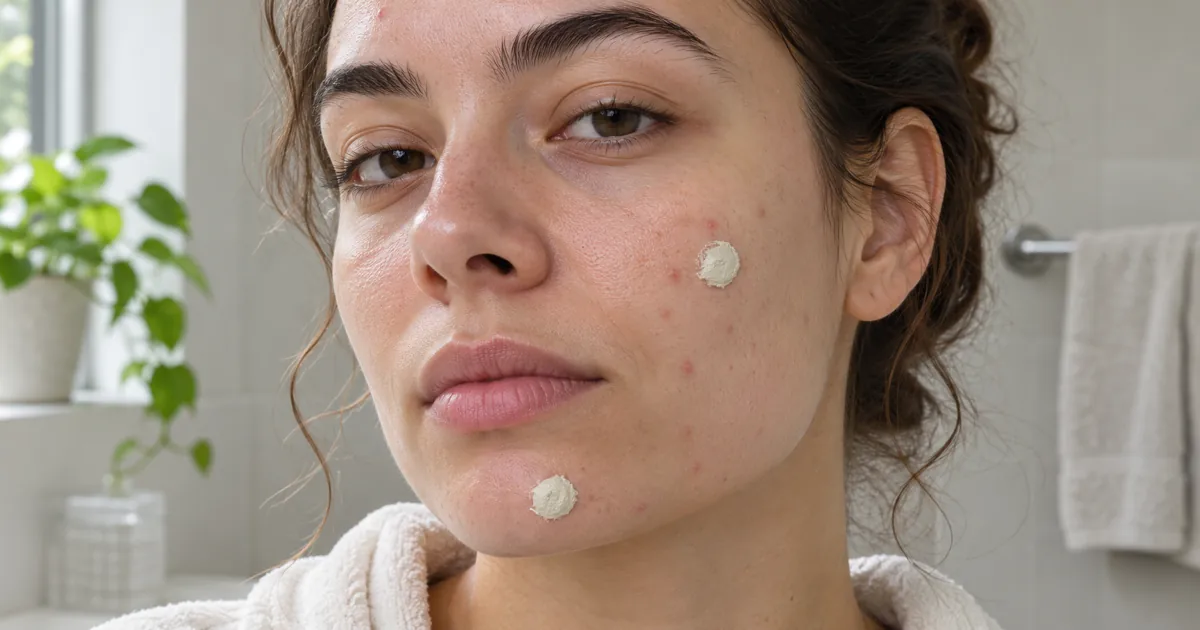
Sulfur mask spot treatment limits application to an affected area when the product’s label permits it. This can avoid exposing an otherwise comfortable cheek to a product you intended for a small breakout elsewhere.
It does not mean covering a pimple with a thicker mound or extending the application time. A concentrated-looking dab is still subject to the same product instructions. Do not put ordinary acne masks on picked, bleeding, or otherwise broken skin.
Wider-area use may be relevant when several blemishes occur together and the label allows that application area. It is not the same as automatically covering the entire face. The skin around your eyes, lips, and nostrils may need to remain clear of product according to the directions.
Before using a sulfur mask for acne over a large area, read the warnings as well as the front label. Some acne-mask drug labels explicitly say to apply only to acne-affected areas and not to large areas of skin. A generic “full-face mask” tutorial should not override that warning.
Mixed skin needs a flexible decision. If your forehead feels oily but your cheeks are flaky from treatment, putting the same drying product everywhere may create a new problem. The goal is an appropriate application area, not a symmetrical layer.
How to Use a Sulfur Mask for Acne: Read These Details First
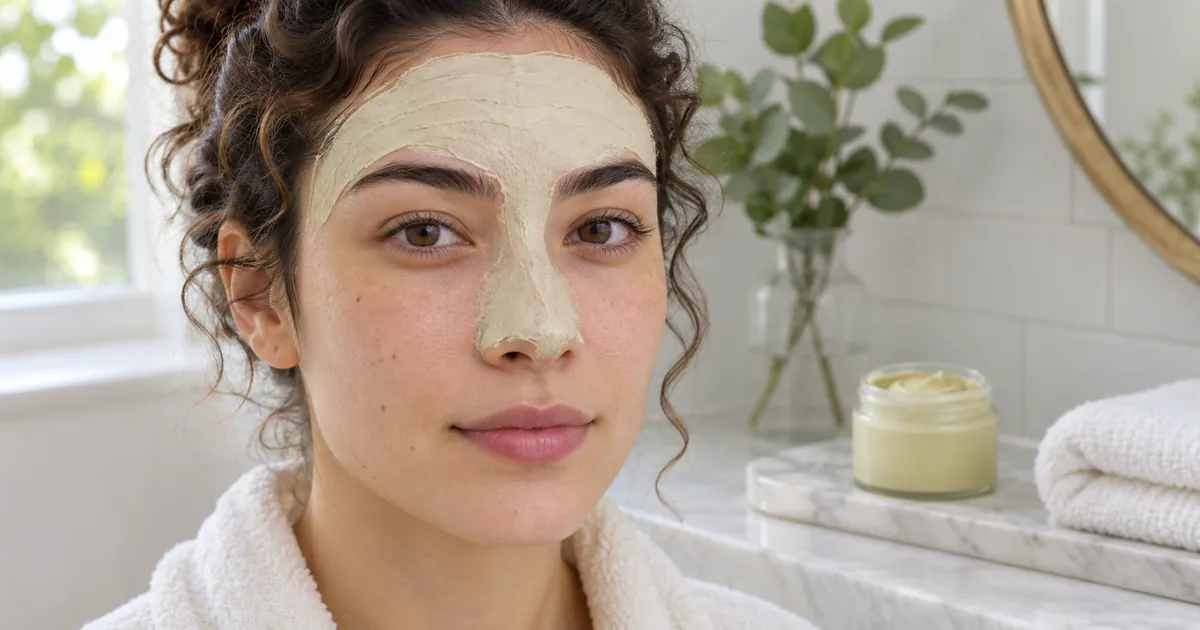
Check four items before opening the jar: the active ingredients, the permitted application area, the contact time, and the frequency. Then check how the product should be removed and whether it is strictly rinse-off.
Start with clean skin as the label directs. Do not add a scrub or a strong peel to make the mask feel more intensive. Use clean hands or an appropriate clean applicator, and apply the amount described by the manufacturer.
Set a timer using the product’s directions rather than waiting for the mask to crack or feel painfully tight. Rinse or remove it as instructed, then pat gently. Follow with a moisturizer your skin tolerates if needed, and maintain sun protection during the day.
This is the practical answer to how to use sulfur acne mask products: the shared format does not create one universal protocol. A familiar brand name is not enough if the product has been reformulated or you are using a different version.
Keep the carton or photograph the directions if they are difficult to read once the jar is in the bathroom. That is more useful than relying on a saved social post that may show another formula.
Timing and Frequency: Two Current Product Examples
The following examples were checked on the brands’ US product pages on November 5, 2026. They demonstrate why instructions should stay attached to the exact product. They are alternatives, not a suggestion to use two sulfur masks together.
Peter Thomas Roth Even Clearer Therapeutic Sulfur Mask
The current Peter Thomas Roth Even Clearer Therapeutic Sulfur Mask page lists 10% sulfur with kaolin and bentonite. Its ingredient list also includes fragrance, which is worth checking if fragranced products are a known problem for you.
The manufacturer directs application to affected areas of the face, chest, and back, allowing the mask to dry for 5 to 10 minutes before rinsing thoroughly. It lists use 2 to 3 times a week, with reduced frequency if bothersome dryness or peeling occurs.
Beyond Breakouts may earn a commission from qualifying purchases at no additional cost to you. As an Amazon Associate, we earn from qualifying purchases.
🧴 Peter Thomas Roth Even Clearer Therapeutic Sulfur Mask, 5.1 oz
This rinse-off mask combines 10% sulfur with oil-absorbing clays, matching the product-specific timing example above. It contains fragrance and may cause dryness, so follow its package’s application areas and contact time rather than treating greater strength as a better fit.
Those are this product’s instructions, not a recommended schedule for every sulfur mask for acne. Check the package you receive, and do not infer that “maximum strength” makes it the best option for your skin.
Murad Rapid Relief Acne Sulfur Mask
The Murad Rapid Relief Acne Sulfur Mask is a different formula. Its drug label identifies 5% sulfur and lists kaolin, bentonite, salicylic acid, and other ingredients. Do not describe it as sulfur alone or assume added salicylic acid is absent because sulfur is the headline.
Murad’s current US page says to apply an even layer to clean skin, leave it on for up to 10 minutes, rinse, and use 2 to 3 times weekly. An older DailyMed label lists a different frequency description, reinforcing the need to check the current package rather than combine instructions from different dates.
If directions on your bottle and the current official page do not agree, ask the manufacturer or a pharmacist which instructions apply to that exact product. Do not average the schedules or choose whichever sounds stronger.
Why These Examples Are Not Interchangeable
How long to leave sulfur mask on is a product-specific question. Even when two examples have overlapping times, that does not establish a rule for all sulfur formulas. Other masks may have different directions or be designed for a different use.
Sulfur mask frequency also depends on the product and your skin’s response. Do not work toward daily use unless your actual label and care plan support it. More applications can mean more irritation without a corresponding gain.
Sulfur Mask Dryness: What Deserves a Change?
Dryness is a possible unwanted effect, not evidence that every pore has been cleaned. Tightness that becomes uncomfortable, peeling, burning, or new tenderness should prompt a review of how you are using the mask and what else is in the routine.
Other topical acne medications can increase the chance of dryness or irritation when used with sulfur products. Read the warnings for each product. If you are using prescription treatment, ask your clinician how an optional mask fits rather than changing the prescribed plan yourself.
A sulfur mask for acne should not make basic moisturizer or washing suddenly painful. Stop using a cosmetic that is causing irritation, and seek advice if the reaction persists. Significant swelling, blistering, or a severe reaction needs prompt medical attention.
When dryness appears, do not counter it by scrubbing off flakes before the next mask. That can create further irritation. Our guide to caring for dry acne-prone skin explains why reducing unnecessary stress on the skin can be more useful than adding another treatment.
🧴 CeraVe Moisturizing Cream
This rich cream with ceramides and petrolatum offers moisture support when a sulfur-mask routine feels drying, and the 19 oz jar is practical for face-and-body use. It may feel too heavy on the face and cannot make an irritating mask suitable.
The answer may be a lower application frequency where the label allows it, a different product, or omitting the mask. There is no requirement to make a sulfur mask fit if your skin is uncomfortable with it.
Sulfur Mask vs Clay Mask
In the sulfur mask vs clay mask comparison, look for an acne active rather than relying on the mask’s color or texture. Clay such as kaolin or bentonite can absorb oil; a clay-only cosmetic is not automatically a medicated acne treatment.
Many sulfur masks contain clay too. The categories overlap, so switching between them may not eliminate the ingredient you find drying. Check the complete formula rather than assuming that the alternative is entirely different.
A sulfur mask for acne may therefore provide both an oil-absorbing cosmetic effect and a medicated treatment step. Keep those roles separate when evaluating it. A matte-looking nose after rinsing does not prove that the medication prevented tomorrow’s breakout.
You also do not need to buy a plain clay mask to use immediately after the sulfur product. Stacking similar oil-absorbing steps can add complexity without solving an unmet need.
Interpreting Sulfur Mask Acne Results
Use the right outcome for the question. Less shine after rinsing is an appearance change. Acne improvement involves the pattern of blemishes over time, not just whether the skin looks more matte on one afternoon.
Manufacturer claims about rapid effects should stay attributed to the brand and its particular test. They cannot promise that a sulfur mask for acne will clear a deep pimple overnight or work for every reader after a set number of uses.
Avoid changing several products while judging the mask. Otherwise, you may not know which change helped or caused a problem. Also avoid repeatedly reapplying to the same stubborn bump; a lesion that remains painful or behaves unusually may need assessment.
If ongoing acne is producing new marks, address the acne rather than relying on oil absorption alone. Our explanation of ingredients used in acne products can help you understand why different treatment categories serve different purposes.
A dermatologist can help when acne is severe, painful, scarring, worsening, or not improving with appropriate over-the-counter care. Significant distress is also a valid reason to ask for help.
Frequently Asked Questions
Can I sleep in a rinse-off mask if I use only a tiny amount?
No. A small application does not turn a rinse-off product into an overnight treatment. Use a sulfur mask for acne overnight only if the exact product’s label specifically permits that use.
Does a stronger sulfur smell mean a higher concentration?
Smell is not a reliable way to calculate strength or judge effectiveness. Read the active-ingredient percentage and the label rather than comparing scents.
Can I use a body sulfur mask on my face?
Only if the product specifically permits facial use. Application areas, added ingredients, and directions can differ. Keep it away from areas excluded by the label.
Should I scrape off a dried layer before rinsing?
No. Remove the product gently according to its instructions. Scraping and forceful rubbing add irritation without proving that the acne treatment works better.
Is sulfur the same thing as a sulfonamide antibiotic?
No; the names do not make them the same substance. If you have a medication-allergy history or have reacted to a sulfur product, ask a pharmacist or clinician about the exact ingredients instead of assuming safety or danger from the name alone.
Choose the Area and Follow the Label
Use a sulfur mask for acne only where the product permits it, for its stated contact time and frequency. Keep oil-control effects separate from acne-treatment expectations, and let irritation change the plan. Before the next application, read the actual package rather than copying another mask’s routine.
This article is educational and does not diagnose acne or replace care from a qualified healthcare professional.
References
Peter Thomas Roth: Even Clearer Therapeutic Sulfur Mask
Murad: Rapid Relief Acne Sulfur Mask
DailyMed: Rapid Relief Acne Sulfur Mask Drug Label
American Academy of Dermatology: Acne Clinical Guideline
Australasian Society of Clinical Immunology and Allergy: Sulfonamide Antibiotic Allergy