Best Topical Treatment Acne Scars: Top Solutions to Consider
Trying to figure out the best topical treatment acne scars plan can feel harder than it should. One product says it fades marks fast. Another promises smoother texture. A third claims to fill dents overnight. When you are standing in front of a shelf full of creams and serums, it is easy to waste money on the wrong thing.
The biggest reason this happens is simple: not every acne scar is the same. Some people have leftover dark spots. Others have red marks, shallow uneven texture, or deeper pitted scars. The best topical treatment acne scars choice depends on what is actually on your skin, not just what a label says. The American Academy of Dermatology notes that acne scars are not one-size-fits-all and that the best results often depend on matching treatment to scar type.
If you want the short answer, the best topical treatment acne scars option is not one single product for everyone. For dark marks and mild uneven tone, retinoids, azelaic acid, vitamin C, and sunscreen often help the most. For shallow texture, retinoids may help somewhat. For deeper pitted scars, topical care can support your skin, but it usually cannot do the full job alone.
Table of Contents
Understanding Acne Scars Before Choosing a Treatment
Before you choose the best topical treatment acne scars routine, it helps to know what you are treating.
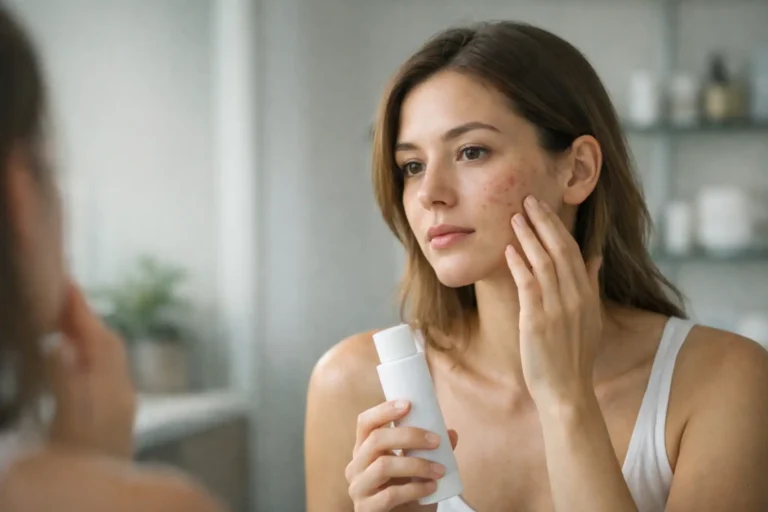
A lot of people call every leftover mark an acne scar, but that is not always correct. Flat brown, gray, or red marks after acne are often post-inflammatory changes rather than true scars. DermNet describes post-inflammatory hyperpigmentation as temporary pigmentation that follows skin inflammation and notes that it is especially common in darker skin tones.
True acne scars usually fall into two bigger groups:
- Pitted or atrophic scars, such as ice pick, boxcar, and rolling scars
- Raised scars, such as hypertrophic scars or keloid-like scars
The difference matters because the best topical treatment acne scars approach for flat discoloration is very different from the best plan for a deep dent or a raised scar. The AAD notes that scars can fade but rarely go away completely on their own, and that not every breakout causes a scar.
If you treat a deep pitted scar like it is only a dark spot, you may see little progress. If you treat flat post-acne marks like they need laser right away, you may be missing simpler options that can help. That is why the best topical treatment acne scars plan starts with getting clear on what type of mark you actually have.

Can Topical Treatments Really Help Acne Scars?
Yes, but there are limits. That is the most honest way to talk about the best topical treatment acne scars question.
Topical products can often help with:
- dark spots after acne
- lingering red marks
- mild rough texture
- overall skin tone
- ongoing acne that may lead to new scars
They may help only a little with:
- shallow boxcar scars
- mild rolling texture
- the look of skin around scars
They usually cannot fully fix:
- deep ice pick scars
- tethered rolling scars
- thick raised scars
The AAD says you can find acne-scar treatments to use at home, but getting the best results often requires knowing which type of scar you have and what treatment works best for that type. That is why even the best topical treatment acne scars routine works better for pigment and mild texture than for deeper structural scarring.
So yes, topical care matters. It just works best when you use it for the right job.
Best Topical Treatment Acne Scars: Top Ingredients to Know
When people ask about the best topical treatment acne scars options, they are usually really asking which ingredients are worth their time. That is the smarter place to focus.
Topical retinoids for acne scars
If there is one category that comes up most often in best topical treatment acne scars discussions, it is retinoids.
Topical retinoids include ingredients such as adapalene, tretinoin, and tazarotene. The NHS explains that topical retinoids work by removing dead skin cells from the surface of the skin, which helps prevent buildup in hair follicles. The AAD also notes that topical retinoids can help lighten dark spots left after acne clears. DermNet adds that topical retinoids may reduce existing scarring severity, help post-inflammatory hyperpigmentation, and often take 12 weeks or longer to show improvement.
Why retinoids are often part of the best topical treatment acne scars plan:
- they help treat acne and prevent new breakouts
- they support cell turnover
- they may help post-acne marks fade
- they may slightly improve mild textural scarring over time
The downside is irritation. Retinoids can cause dryness, peeling, and stinging, especially early on. MedlinePlus advises using tretinoin exactly as directed and not more often than prescribed, since overuse increases irritation without speeding up results.
Azelaic acid
Azelaic acid is one of the most practical choices in a best topical treatment acne scars routine, especially if your biggest issue is dark spots or redness.
The AAD says azelaic acid opens clogged pores, helps keep them open, works on acne-causing bacteria, reduces inflammation, and can also treat the dark spots that appear when acne clears. The NHS notes that it is often used as an alternative when benzoyl peroxide or topical retinoids feel too irritating. DermNet also describes azelaic acid as an effective topical treatment for mild to moderate acne.
That makes azelaic acid one of the strongest answers to the best topical treatment acne scars question if you want something helpful, simple, and often easier to tolerate.
Alpha hydroxy acids
Products with glycolic acid or lactic acid can help remove dead surface cells and improve the look of dull, uneven skin. Cleveland Clinic notes that glycolic acid is an exfoliant that can brighten skin, create a more even tone, lighten mild dark spots from acne, and stimulate collagen production.
In a best topical treatment acne scars routine, alpha hydroxy acids make the most sense for:
- post-acne discoloration
- surface roughness
- mild dullness
They are less impressive for deep true scars. They can also irritate sensitive skin if you pile them on too often.
Salicylic acid
Salicylic acid is not usually the first thing people think of for the best topical treatment acne scars, but it can still matter if you still break out.
AAD guideline highlights recommend salicylic acid among supported topical acne therapies, and AAD public acne guidance describes it as helping unclog pores and exfoliate the skin. That makes it useful when the goal is not only fading old marks but also preventing the new acne that can leave future marks behind.
Salicylic acid helps more with acne control and surface clarity than with deep acne scars themselves.
Vitamin C
Vitamin C is often included in the best topical treatment acne scars conversation because it can help brighten uneven tone and support a more even-looking complexion. It makes the most sense when the main concern is leftover discoloration rather than a true dent in the skin.
It is still worth being selective. Some vitamin C formulas sting or oxidize easily. If your skin is sensitive, you may do better with azelaic acid or niacinamide first.
Niacinamide
Niacinamide is not a major scar-remodeling treatment, but it is a very useful support ingredient in a best topical treatment acne scars routine. It can help strengthen the barrier, reduce the look of redness, and make stronger products easier to tolerate.
Silicone gels and topical acne scar filler products
Some products sold as a topical acne scar filler are designed to blur shallow texture right away. These are usually cosmetic smoothers, not true scar treatments. For raised scars, silicone products may help flatten or soften scar tissue in some cases. The AAD says silicone gel sheets may help flatten a keloid and can also be used after an injury to help prevent one. Cleveland Clinic similarly notes that silicone ointments or gel sheets may make a scar smaller or help prevent it from forming.
That said, DermNet notes that strong evidence for established scar reduction with silicone dressings is limited. So a topical acne scar filler or silicone gel may be worth trying for temporary smoothing or certain raised scars, but it is not the usual answer for pitted acne scars.
Best Topical Treatment by Scar Type
The best topical treatment acne scars answer gets much easier once you match the product to the mark.
Best for dark spots after acne
If you have flat brown or gray marks, the best topical treatment acne scars choice often includes:
- retinoids
- azelaic acid
- vitamin C
- sunscreen
This is where topical care can do the most. The AAD and DermNet both note that retinoids and azelaic acid can help with post-acne dark spots.
Best for lingering red marks
If your “scars” are really lingering redness, the best topical treatment acne scars routine may include gentle retinoid use, azelaic acid, niacinamide, and strict sun protection. These do not work overnight, but they can help calm the overall look of the skin over time.
Best for shallow textural scars
For mild shallow uneven texture, the best topical treatment acne scars approach usually centers on retinoids, with optional support from glycolic acid or lactic acid if your skin tolerates them. Retinoids are one of the few at-home options with some evidence for improving mild texture over time.
Best for raised scars
If the scar is raised, the best topical treatment acne scars plan may sometimes include silicone gel or silicone sheets, but raised scars often need a more targeted medical approach. AAD guidance on keloids notes that silicone gel sheets may help flatten a keloid, but thicker raised scars often need dermatologist-guided treatment.
Best for deep pitted scars
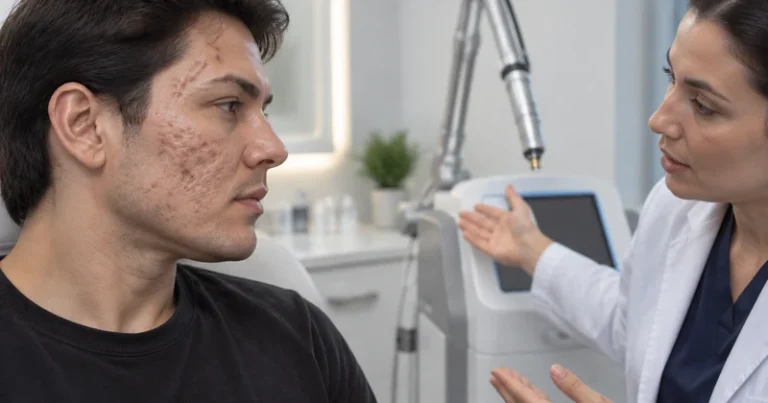
This is where the phrase best topical treatment acne scars has real limits. Deep pitted scars usually do not respond enough to creams alone. Topicals can improve the surrounding skin, but procedures such as microneedling, subcision, lasers, fillers, or chemical peels often do more for the scar itself.
Best Topical Creams for Acne Scars: Product Categories That Make Sense
You do not need every product type. The best topical treatment acne scars routine usually comes down to a few smart categories.
Prescription treatments
Prescription retinoids like tretinoin or tazarotene may be the best topical treatment acne scars option if you still have acne, want stronger treatment, or have mild textural change plus dark marks. MedlinePlus notes that tretinoin is used to treat acne and works by increasing production of new skin cells and unclogging pores.
Over-the-counter treatments
Adapalene, azelaic acid, salicylic acid, niacinamide, and some exfoliating acids can all fit into an over-the-counter best topical treatment acne scars plan, depending on your skin and your actual scar type.
Serums vs creams vs gels
Serums are often lighter and can work well for pigment-focused ingredients. Creams may be better if your skin is dry or irritated. Gels may feel better on oilier skin. The best topical treatment acne scars format is the one you will actually use consistently.
Spot treatment vs full-face routine
If you still get acne, a full-face routine usually makes more sense than dabbing random products only on old spots. The best topical treatment acne scars plan often works better when it treats the whole acne-prone area gently and consistently.
How to Build a Routine Around the Best Topical Treatment for Acne Scars
A simple routine is usually more effective than an overloaded one.
Morning
- Gentle cleanser
- Azelaic acid, niacinamide, or vitamin C if needed
- Moisturizer
- Broad-spectrum sunscreen SPF 30 or higher
AAD sunscreen guidance recommends choosing a broad-spectrum, water-resistant sunscreen with SPF 30 or higher. That matters because sun exposure can keep post-acne marks looking darker for longer.
Evening
- Gentle cleanser
- Retinoid or another treatment product
- Moisturizer
This kind of routine is often the best topical treatment acne scars setup because it is simple enough to keep going for months.
How often to use active ingredients
If you are using a retinoid or acid, start slowly. Several NHS and dermatology sources recommend alternate-day or otherwise gradual introduction to reduce irritation. Too much irritation can worsen discoloration, especially in skin that is more prone to post-inflammatory hyperpigmentation.
How Long Do Topical Acne Scar Treatments Take to Work?
The best topical treatment acne scars routine still takes time.
For discoloration, some people start seeing change in about 6 to 12 weeks. DermNet says improvement from topical retinoids may take 12 weeks or longer. MedlinePlus notes that tretinoin works slowly and that some improvement takes weeks, with fuller visible improvement sometimes taking months.
For mild texture, you usually need longer. For deep scars, you may not see much change at all from topical treatment alone.
Good signs include:
- marks slowly fading
- more even tone
- smoother overall texture
- fewer active breakouts
Bad signs include:
- ongoing burning
- strong peeling
- worsening irritation
- new dark marks after redness
- no progress after a fair trial and good sunscreen use
Common Mistakes People Make When Treating Acne Scars
Many people never find the best topical treatment acne scars option because the routine keeps getting derailed.
Using too many actives at once
Retinoid, acid toner, peel pads, scrub, vitamin C, and spot treatment all together is usually too much.
Picking based on hype
The best topical treatment acne scars choice should be based on your scar type, not the loudest claim on the box.
Skipping sunscreen
This is one of the easiest ways to slow improvement in dark marks.
Picking at acne
NHS and dermatology guidance commonly warn that picking or scratching acne increases the risk of scarring.
Expecting one cream to do everything
Even the best topical treatment acne scars routine cannot act like filler, subcision, and laser all at once.
Are Topical Acne Scar Fillers Worth It?
A topical acne scar filler can be useful, but only if you understand what it does.
These products may:
- temporarily blur shallow dents
- make makeup sit more smoothly
- soften the look of uneven texture for a few hours
They usually do not:
- rebuild lost collagen deeply
- release tethered scars
- permanently fill acne pits
So if you want a short-term cosmetic effect, a topical acne scar filler may be worth trying. If you want real structural change, it is not the same as actual scar revision.
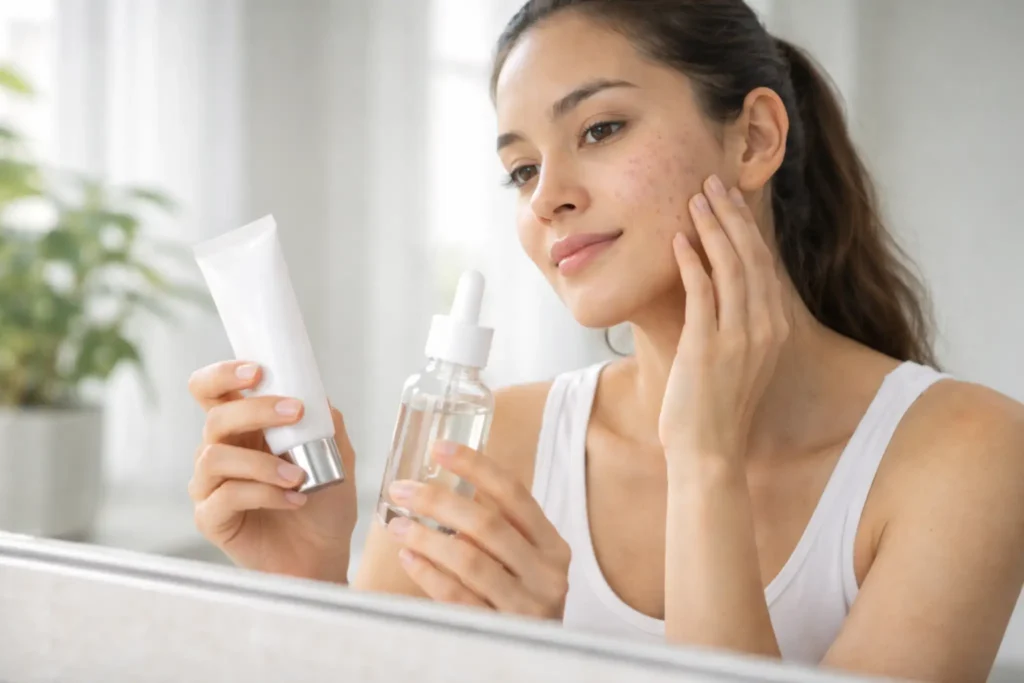
When the Best Topical Treatment for Acne Scars Is Not Enough
Sometimes the best topical treatment acne scars plan is still not enough because the scar needs more than surface care.
It is smart to see a dermatologist if:
- your scars are deep
- the scars are raised
- you still have active acne
- the scarring affects your confidence a lot
- you have tried a careful routine for a few months with little change
AAD acne-scar guidance emphasizes that office procedures are often chosen based on scar type, and Cleveland Clinic notes that dermatologists can recommend the best approach based on the kind of acne scar you have.
Safety Tips for Using Acne Scar Topicals
The best topical treatment acne scars routine should also be a safe one.
- Patch test new products first.
- Start slowly with retinoids and acids.
- Use moisturizer generously if your barrier feels dry or tight.
- Be extra careful if your skin tends to pigment after irritation.
- Ask a clinician before using retinoids if you are pregnant or trying to become pregnant.
AAD pregnancy guidance says most experts recommend stopping adapalene during pregnancy, and DermNet notes that retinoids can worsen eczema and increase photosensitivity.
How to Get the Best Results From Acne Scar Topicals
The best topical treatment acne scars plan is usually not the fanciest one. It is the one you can follow consistently.
Use one or two proven actives. Give them time. Protect your skin from the sun. Take monthly photos instead of checking the mirror every hour. Keep the rest of your routine gentle.
That steady approach is what usually gives the best topical treatment acne scars routine a fair chance to work.
Conclusion
The truth about the best topical treatment acne scars question is that there is no single winner for everyone. Retinoids are often one of the strongest all-around choices, especially if you still have acne and post-acne marks. Azelaic acid is a smart option for dark spots and redness, especially if your skin is sensitive. Exfoliating acids, vitamin C, niacinamide, and silicone-based products may also help in the right situation.
The important part is matching the product to the problem. If your issue is mainly discoloration, the best topical treatment acne scars routine may help a lot. If your scars are deep or raised, topical care can still support your skin, but you may need professional treatment for bigger change. Start with a simple routine, stay patient, and get expert help if your skin needs more than a cream can realistically do.
FAQ
1. What is the best topical treatment acne scars option for dark spots?
For dark spots, the best topical treatment acne scars choice is often a retinoid, azelaic acid, vitamin C, or a combination of one of those with daily sunscreen. These work better for flat discoloration than for deep pitted scars.
2. Are topical retinoids acne scars products better than scar creams?
Often, yes. Topical retinoids acne scars products usually do more than many generic scar creams because they help with cell turnover, acne control, and post-acne dark spots. They are still not a full fix for deep indented scars.
3. Do the best topical creams for acne scars work on pitted scars?
They may help a little if the scars are very mild and shallow, but most best topical creams for acne scars options do not fully correct deeper pitted scars. Those often respond better to dermatologist procedures such as microneedling, subcision, fillers, or lasers.
4. Is a topical acne scar filler worth buying?
A topical acne scar filler may be worth it if you want temporary smoothing under makeup or for a special event. It is not the same as a long-term acne scar treatment and will not permanently fill a dent.
5. When should you stop trying creams and see a dermatologist?
You should think about seeing a dermatologist if your scars are deep, raised, spreading, or not improving after a few months of consistent care. It is also a good idea if you still have active acne, because controlling new breakouts helps prevent new scars.