Acne Scars Topical Treatments: Best Options That Actually Work
Acne can finally calm down, and yet your skin still does not look the way you hoped. That is the part many people find most frustrating. The active breakouts are gone, but the leftover marks, uneven texture, or shallow dents stay around and keep reminding you of old acne.
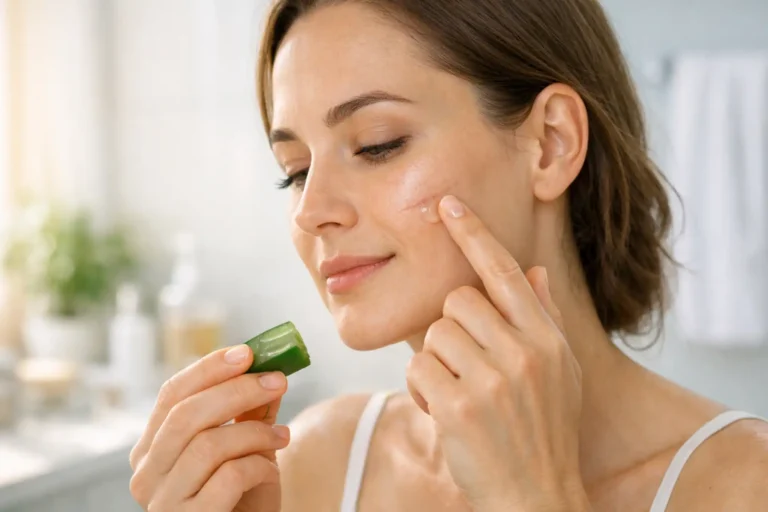
That is why so many people start with acne scars topical products. Creams, gels, serums, and retinoids feel more approachable than office procedures, and in some cases they really can help. The key is knowing what a topical treatment can improve, what it cannot fix on its own, and how to choose ingredients that actually match your kind of scar.
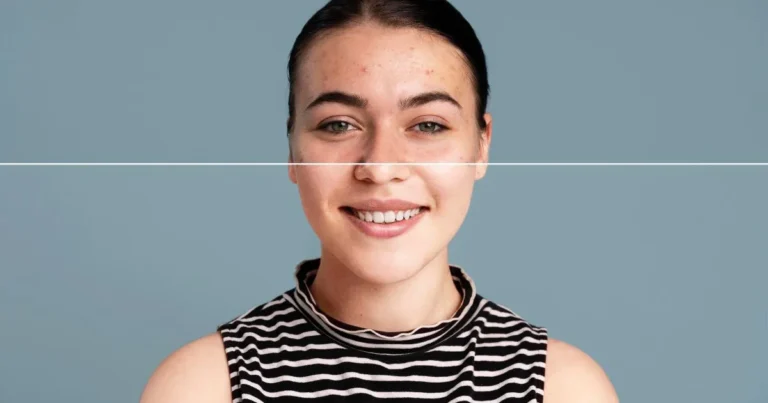
If you want the short version, acne scars topical treatments can help fade dark marks, reduce lingering redness, improve skin tone, and sometimes soften very mild textural changes. They do much less for deep pitted scars or thicker raised scars.
Table of Contents
Do Acne Scars Topical Treatments Really Work?
Yes, but only for certain parts of the problem. A good acne scars topical routine can make skin look clearer, smoother, and more even over time. It may also help support collagen turnover in mild cases, especially when topical retinoids acne scars treatments are used consistently.
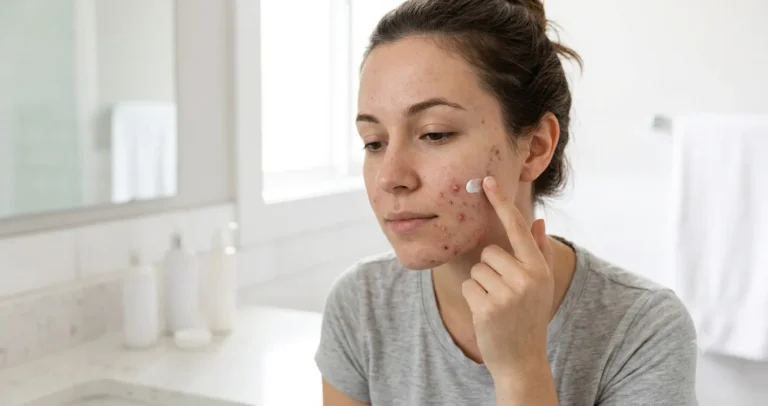
Still, not every mark after acne is a true scar. Some flat red, pink, brown, or gray marks are not scars at all. They are leftover color changes after inflammation, and those often respond much better to topical care than deep dents in the skin.
That is why realistic expectations matter. If you are dealing with discoloration, you may see noticeable improvement with creams and serums. If you have deep ice pick scars or firm raised scars, the best topical treatment acne scars routine may improve overall skin quality, but it will probably not remove the scar fully.
What Counts as an Acne Scar?
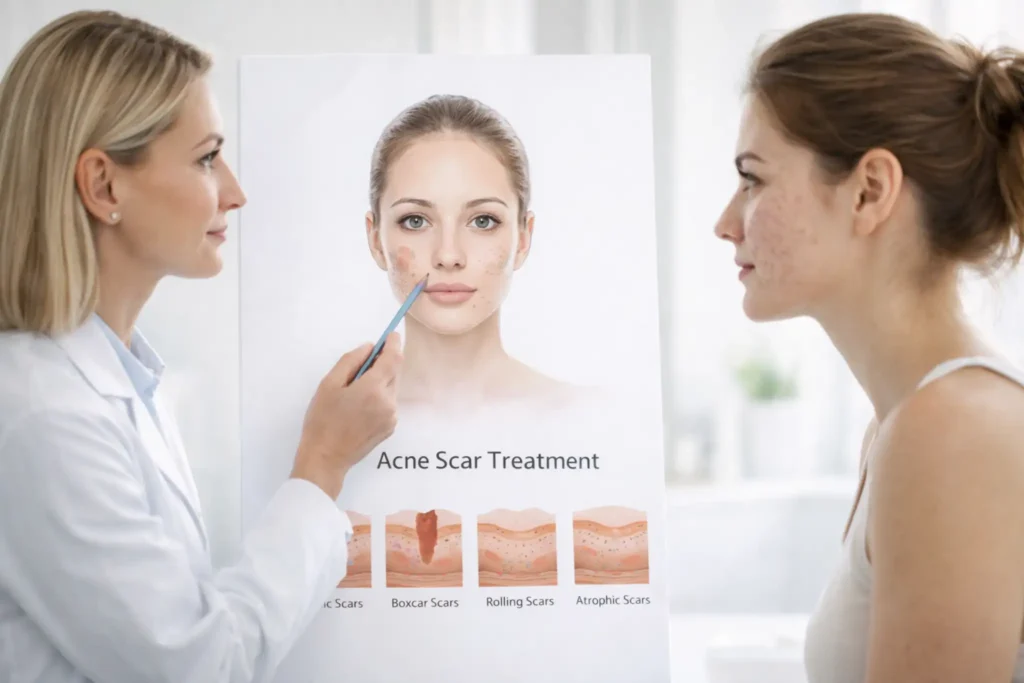
People often use the phrase acne scars for everything left behind after a breakout, but there are a few different categories. Knowing the difference helps you pick acne scars topical products that match the real issue.
Post-acne marks
These are flat spots that stay after a pimple heals. They may look:
- red or pink
- brown
- gray-brown
- purple in some skin tones
These marks are usually not true scars. They are often called post-inflammatory hyperpigmentation or post-inflammatory erythema. They can last for weeks or months, but they often respond well to topical ingredients.
Pitted or atrophic scars
These are the indented scars many people think of first. Common types include:
- ice pick scars, which are narrow and deep
- boxcar scars, which have sharper edges
- rolling scars, which create a wavy uneven look
These form because inflammation damages collagen in the skin. Topicals may help a little if the scarring is very mild, but they usually cannot rebuild deeper lost structure on their own.
Raised scars
Some people develop thick or raised scars instead of indented ones. These may be hypertrophic scars or, in some cases, keloid-like scars. Topical care may support the skin and help with comfort or appearance, but raised scars often need professional treatment.
Knowing which category fits your skin helps you avoid buying the wrong product. The best topical creams for acne scars depend heavily on whether you are treating color, texture, or raised tissue.
🔥 The 3 products dermatologists actually recommend (and yes, they work):
Stop guessing and start with what’s proven. La Roche-Posay Effaclar Duo(+) targets breakouts fast, Paula’s Choice 2% BHA Liquid Exfoliant keeps pores clear with daily use, and Hero Cosmetics Mighty Patch is the overnight fix everyone swears by. ✅ No prescription needed ✅ Affordable ✅ Backed by real clinical evidence.
Can Acne Scars Topical Products Remove Scars Completely?
Usually, no. It is better to think of acne scars topical care as improvement rather than complete removal.
For post-acne marks, improvement can be significant. You may be able to fade discoloration, brighten dull areas, and make your skin tone look much more even. For shallow textural changes, you may also see some smoothing over time.
For deeper scars, however, topical products have limits. A cream sits on the skin surface. Even active ingredients that increase cell turnover and support collagen can only do so much when the scar is deep or tethered below the surface. That is why so many dermatologists combine home care with procedures when acne scars are more noticeable.
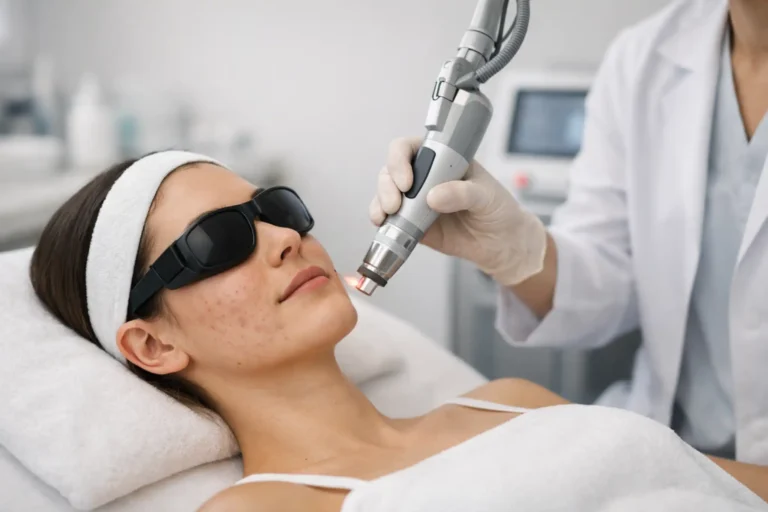
The good news is that home treatment still matters. Even if you later choose microneedling, laser treatment, fillers, or subcision, a smart topical routine can help support better overall skin quality before and after those treatments.
How Acne Scars Topical Treatments Work
A well-designed acne scars topical routine usually works in four main ways.
1. It speeds up cell turnover
Ingredients such as retinoids and exfoliating acids help old surface cells shed more regularly. This can improve dullness and help discoloration fade faster.
2. It supports collagen activity
Retinoids are especially known for this. They do not act like a procedure, but they can encourage healthier skin renewal and may slightly improve very mild textural scarring over time.
3. It targets excess pigment
Ingredients like azelaic acid, vitamin C, and retinoids can help reduce uneven pigment left after breakouts. This matters a lot if your main concern is the dark spot rather than the scar itself.
4. It improves skin barrier health
Healthy skin often looks smoother and less irritated. Moisturizers with ceramides, hyaluronic acid, niacinamide, and similar support ingredients do not erase scars, but they make the skin more resilient and better able to tolerate active treatments.
Best Ingredients to Look for in Acne Scars Topical Treatments
When people search for the best topical treatment acne scars, they often focus on brand names first. That is understandable, but the ingredient list matters more than the label on the front. The strongest acne scars topical routines are usually built around ingredients, not hype.
Topical retinoids for acne scars
If you only remember one category, make it topical retinoids acne scars treatments. Retinoids are some of the most useful topical options because they help speed cell turnover, keep pores clearer, and support collagen remodeling.
Common examples include:
- adapalene
- tretinoin
- tazarotene
- trifarotene
For acne-prone skin, retinoids can pull double duty. They can help treat active breakouts while also supporting improvement in the marks and mild texture changes acne leaves behind.
Retinoids tend to work best if:
- you still get acne and want one product that does more than one job
- your scars are mild or shallow
- your bigger issue is uneven tone plus rough texture
- you are willing to use them consistently for several months
Possible downsides include dryness, stinging, peeling, and irritation, especially if you start too fast. Most people do better when they begin two or three nights a week and build up slowly. Retinoids can also make your skin more sensitive, which makes daily sunscreen even more important.
Alpha hydroxy acids and beta hydroxy acids
Acids can be useful when your skin looks rough or dull and you are also dealing with leftover marks.
Helpful options include:
- glycolic acid
- lactic acid
- salicylic acid
Glycolic acid and lactic acid help exfoliate the skin surface and can brighten uneven tone. Salicylic acid is oil-soluble, so it can also help acne-prone skin stay clearer.
These ingredients may be among the best topical creams for acne scars if your issue is more about post-acne marks and roughness than deep indentations. The main caution is not to combine too many exfoliating products at once. Overdoing it often leads to irritation, which can make skin look worse instead of better.
Azelaic acid
Azelaic acid is a strong option for people who want something helpful but usually gentler than many stronger acids or retinoids. It is often used for acne, post-acne discoloration, and redness.
You may like azelaic acid if:
- your skin gets irritated easily
- your main concern is dark marks
- you also deal with redness
- you want something easy to use in a simple routine
It may not dramatically change deep scars, but it can be very useful for brightening and evening out the skin.
Vitamin C
Vitamin C is popular for a reason. A well-formulated product can help brighten the look of skin and support a more even tone. It is especially useful if acne left you with discoloration rather than obvious pitting.
The downside is that some vitamin C products can sting sensitive skin, and formulas vary a lot in quality. If you choose one, look for a product from a brand known for stable packaging and start slowly.
Niacinamide
Niacinamide is not the star treatment for true scarring, but it is a great support ingredient. It can help calm the skin, improve the barrier, reduce the look of redness, and pair well with stronger actives.
Silicone products and topical acne scar filler
Some products marketed as topical acne scar filler are designed to smooth the look of indented scars right away. These products usually do not fix the scar itself. Instead, they temporarily blur texture by filling uneven areas with silicone-based ingredients or makeup-like smoothing polymers.
A topical acne scar filler may help create a smoother surface under makeup or blur shallow scars for a few hours. But it is important to understand the difference between temporary cosmetic smoothing and actual long-term scar treatment.
Barrier-support ingredients
Do not overlook plain moisturizers and sunscreen. Ceramides, hyaluronic acid, peptides, and glycerin help protect the barrier so you can keep using active treatments without burning out your skin.
And sunscreen is not optional if you want scars and marks to fade well. Sun exposure can make discoloration darker and keep post-acne marks around longer.
Best Topical Treatment for Each Common Type of Acne Scar
There is no single answer for everyone, so it helps to match the treatment to the scar type. The right acne scars topical plan for one person may be the wrong one for another.
For dark marks and red marks
The best options often include:
- topical retinoids acne scars products
- azelaic acid
- vitamin C
- niacinamide
- sunscreen every morning
This is where topical care shines the most. If your so-called scars are mostly color changes, the right routine can make a visible difference.
For shallow textural scars
The most useful options often include:
- retinoids
- glycolic acid or lactic acid
- supportive moisturizers
- sunscreen
These may help the skin look more refined over time, especially if the texture changes are mild.
For deeper pitted scars
Topicals can support the skin, but they are rarely enough by themselves. You may still use retinoids or pigment-fading ingredients, but true improvement often requires in-office treatment.
For raised scars
Silicone-based scar products may be part of the plan in some cases, but raised scars usually need more tailored guidance. This is a good point to involve a dermatologist rather than guessing with over-the-counter products.
How to Choose the Best Acne Scars Topical Creams
The best topical creams for acne scars are not always the most expensive ones. In many cases, simpler formulas do more for your skin than a crowded routine full of trendy actives.
When choosing acne scars topical products, ask yourself:
Do you still have active acne?
If yes, prioritize ingredients that help both acne and the marks it leaves behind. Retinoids, azelaic acid, and salicylic acid can be more useful than products that only focus on brightening.
Is your skin sensitive?
If your skin burns easily, start with fewer actives. Azelaic acid, niacinamide, and a gentle moisturizer may be a safer first step than trying a strong acid, retinoid, and vitamin C all at once.
Are your scars actually dark spots?
If the answer is yes, you may get much better results from pigment-focused skincare than from products sold as scar fillers.
Does the product make unrealistic promises?
Be careful with labels that suggest a cream can erase deep scars in days or work like a professional procedure. That is usually marketing, not reality.
A Simple Routine Using Acne Scars Topical Treatments
The best routine is one you can actually stick with.
Morning routine
- Use a gentle cleanser.
- Apply a brightening or calming product such as vitamin C, niacinamide, or azelaic acid if your skin tolerates it.
- Use a moisturizer.
- Finish with broad-spectrum sunscreen.
Evening routine
- Cleanse gently.
- Apply your treatment product, often a retinoid or an exfoliating product on selected nights.
- Follow with moisturizer.
You do not need a 10-step routine for acne scars topical care to work.
How to layer without overdoing it
A simple plan may look like this:
- morning: azelaic acid + moisturizer + sunscreen
- evening: retinoid + moisturizer
Or:
- morning: vitamin C + moisturizer + sunscreen
- evening: retinoid on some nights, plain moisturizer on the others
Trying to stack retinoids, strong acids, scrubs, and brighteners all at once often leads to irritation, peeling, and setbacks.
How Long Do Acne Scars Topical Treatments Take to Show Results?
This is one of the most common questions about acne scars topical care, and the answer depends on what you are treating.
For dark marks
Some people notice early changes in 6 to 12 weeks, but stubborn marks can take longer.
For texture changes
Texture usually takes more time than pigment. Mild improvements may start showing after a few months, especially with retinoids, but deeper scars often need more than topical care.
Signs your routine is helping
Look for:
- marks fading gradually
- skin tone looking more even
- smoother overall texture
- fewer new breakouts if acne is still active
Signs your routine is not helping
Watch for:
- burning that keeps happening
- peeling that does not settle down
- redness that gets worse instead of better
- new dark marks after irritation
- no improvement after a fair trial of consistent use
Take photos once a month in the same lighting so you can judge progress more fairly.
🔥 The 3 products dermatologists actually recommend (and yes, they work):
Stop guessing and start with what’s proven. La Roche-Posay Effaclar Duo(+) targets breakouts fast, Paula’s Choice 2% BHA Liquid Exfoliant keeps pores clear with daily use, and Hero Cosmetics Mighty Patch is the overnight fix everyone swears by. ✅ No prescription needed ✅ Affordable ✅ Backed by real clinical evidence.
Common Mistakes That Make Acne Scars Look Worse
Picking at acne
This is one of the fastest ways to increase the risk of scars and dark marks. Even a good routine has a harder job if fresh picking keeps creating new damage.
Skipping sunscreen
If you are trying to fade marks without sunscreen, you are making the job harder. Many acne scar treatments also make skin more prone to irritation from light.
Using too many actives
Retinoid, acid toner, scrub, peel pads, vitamin C, spot treatment, and drying cleanser all in one routine is too much for many people.
Expecting creams to fix deep scars
Topicals can improve skin quality, but they cannot always release tethered scars or rebuild lost volume in a major way.
Quitting too early
Many people stop after two or three weeks because they do not see fast change. Skin usually needs more time than that.
Are Topical Acne Scar Fillers Worth Trying?
A topical acne scar filler can be worth trying if you understand what it is for. These products are mostly cosmetic helpers, not real scar revision treatments.
They may be useful when:
- you want smoother-looking skin under makeup
- you have an event and want a temporary blur effect
- your scars are shallow and respond well to surface smoothing
They are less useful if you expect permanent results, have deep scars, or want long-term collagen remodeling. For many people, a topical acne scar filler is more like a primer than a treatment.
When Acne Scars Topical Treatments Are Not Enough
Sometimes the smartest move is to stop expecting acne scars topical care to do a job it cannot do alone.
You may want to see a dermatologist if:
- your scars are deep, widespread, or emotionally distressing
- you are not sure whether you have scars or just post-acne marks
- you still get active acne and new scars keep forming
- over-the-counter products are causing irritation
- you want faster or more dramatic improvement
Professional options may include:
- microneedling
- chemical peels
- subcision
- laser treatments
- dermal fillers for selected scars
- steroid injections for certain raised scars
Even if you choose one of these later, topical care still matters. It can help control acne, maintain results, and keep your skin healthier overall.
Safety Tips Before Starting Any Acne Scars Topical Product
Patch test first
Try new products on a small area before using them all over your face.
Start slowly
This matters most with retinoids and exfoliating acids. Using a product less often at first can help your skin adapt.
Protect your skin barrier
If your face feels raw, tight, or shiny in an irritated way, scale back. You may need more moisturizer and fewer actives for a while.
Be extra careful if you have deeper skin tones
Inflammation can leave behind lingering discoloration more easily in some skin tones, so irritation is especially worth avoiding.
Avoid unsafe use in pregnancy unless a clinician says it is okay
Some acne treatments, especially retinoids, are not appropriate in pregnancy. If that applies to you, check with your doctor before starting anything new.
How to Get Better Results From Acne Scars Topical Products
If you want the most from an acne scars topical routine, focus on consistency rather than intensity.
- Pick one or two proven active ingredients.
- Use them for a fair trial instead of switching every week.
- Wear sunscreen every morning.
- Stop picking active breakouts.
- Keep the rest of your routine gentle.
- Track your progress monthly, not daily.
The truth is that the best topical treatment acne scars plan often looks simple on paper. It is usually a calm, repeatable routine that slowly helps your skin look better over time.
Conclusion
The most effective acne scars topical treatments can absolutely help, but only when you match them to the right problem. If your main issue is dark marks or lingering redness, topical care may make a real difference. If your scars are deep, indented, or raised, skincare still has value, but it usually works best as part of a bigger treatment plan.
Start simple. Look for ingredients with a real track record, especially topical retinoids acne scars products, azelaic acid, exfoliating acids, and supportive barrier care. Stay patient, use sunscreen every day, and let your acne scars topical routine have enough time to work. If your scars are not improving the way you hoped, consider getting a dermatologist’s advice so you can move toward options that fit your skin better.
FAQ
1. What is the best acne scars topical treatment for dark marks?
For dark marks, the most helpful options are often topical retinoids acne scars products, azelaic acid, vitamin C, niacinamide, and daily sunscreen. These work best when the marks are flat discoloration rather than deep pitted scars.
2. Do topical retinoids for acne scars work on pitted scars?
They can help a little with very mild textural changes, but they usually do not remove deeper pitted scars on their own. Retinoids are better for improving skin turnover, supporting collagen, and helping with post-acne marks than for fully correcting deep indentations.
3. How long do the best topical creams for acne scars take to work?
Many people need at least 6 to 12 weeks to notice early changes in discoloration. Texture changes usually take longer. A fair test for the best topical creams for acne scars is often a few months of steady use.
4. Is a topical acne scar filler a real treatment or just temporary?
A topical acne scar filler is usually temporary. It can blur shallow scars and make makeup sit more smoothly, but it does not permanently rebuild the skin or remove a scar.
5. When should you stop trying creams and see a dermatologist?
You should think about professional help if your scars are deep, raised, widespread, or not improving after consistent use of a good routine. It is also smart to see a dermatologist if you still have active acne, because preventing new scars is just as important as treating old ones.