Forehead Acne Causes: What May Be Triggering Your Breakouts
Waking up to a cluster of spots across your forehead can feel unfair, especially when you thought your routine was working. If you have been staring at the mirror wondering what changed, you are not alone. A forehead acne cause is often a mix of everyday habits, skin oil, sweat, irritation, and sometimes hormones.
Your forehead is one of the easiest places for breakouts to show up because it sits in the oily T-zone and comes into contact with hair, hats, makeup, sunscreen, and sweat. That means even small changes in your day can lead to clogged pores, little bumps, or inflamed pimples.
Table of Contents
Why forehead breakouts can feel so frustrating
Forehead acne can be stubborn because it often has more than one trigger. You might have oily skin, but your hair products may also be adding buildup. You may be treating acne, but sweat from workouts or friction from a cap can keep the cycle going.
This area is also highly visible. Even mild bumps can make your skin look uneven, and tiny breakouts along the hairline can be hard to cover without making them worse. That is why it helps to look at the bigger picture instead of blaming one product or one “bad skin day.”
🔥 The 3 products dermatologists actually recommend (and yes, they work):
Stop guessing and start with what’s proven. La Roche-Posay Effaclar Duo(+) targets breakouts fast, Paula’s Choice 2% BHA Liquid Exfoliant keeps pores clear with daily use, and Hero Cosmetics Mighty Patch is the overnight fix everyone swears by. ✅ No prescription needed ✅ Affordable ✅ Backed by real clinical evidence.
What is the most common forehead acne cause?
The most common forehead acne cause is a clogged pore. That happens when oil, dead skin cells, sweat, and surface debris get trapped inside the opening of the pore. Once that pore is blocked, it can turn into a whitehead, blackhead, or an inflamed pimple.
Your forehead often produces more oil than other parts of your face. That extra oil is not “dirty,” but it can mix with dead skin and create the right setup for breakouts. If bacteria and inflammation get involved, those clogged pores can become red, tender, and more noticeable.
There is also a difference between getting a pimple once in a while and having ongoing acne. A random breakout after a sweaty day is common. But if you keep getting bumps in the same forehead area week after week, it usually means something is repeatedly triggering your skin.
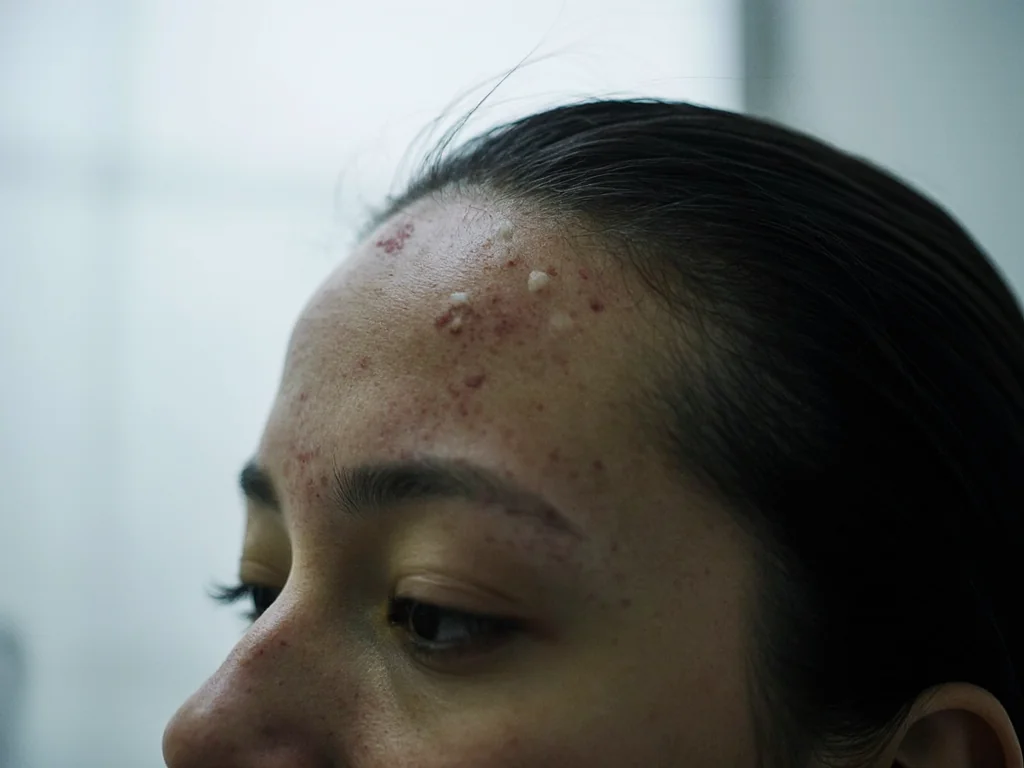
What can trigger acne on your forehead?
A lot of people focus only on skincare, but forehead acne is often connected to what touches your skin all day.
Hair products near the hairline
One of the most overlooked causes is hair product buildup. Pomades, oils, leave-in conditioners, dry shampoo, styling creams, and heat protectants can transfer onto the forehead and clog pores. This is especially common along the hairline.
If your breakouts seem worse after wash day, after styling your bangs, or after using a new product, this may be your clue.
Sweat, heat, hats, and friction
Sweat does not directly “cause” acne, but it can make clogged pores and irritation more likely, especially when it sits on the skin. Tight hats, helmet liners, headbands, and even workout headwear can trap heat, oil, and bacteria against the forehead.
That combination of sweat and friction can trigger breakouts that keep returning in the same spots.
Hormone changes
Hormones can increase oil production, and that can lead to sudden breakouts. If you are asking, why am I breaking out suddenly, think about recent changes such as your menstrual cycle, stress, sleep disruption, puberty, perimenopause, or medication changes.
Hormonal acne is often linked to the jawline and chin, but it can still affect the forehead, especially if your skin is already acne-prone.
Stress
Stress can affect your skin in more than one way. It may increase inflammation, disrupt sleep, and push you toward habits that make breakouts worse, like touching your face more often or skipping your routine. Stress does not cause every pimple, but it can absolutely fuel an existing acne pattern.
Heavy or irritating skincare
A thick moisturizer, greasy sunscreen, or makeup that does not suit your skin can contribute to clogged pores. On the other hand, harsh acne products can strip your skin barrier, leaving you irritated and more inflamed.
Sometimes the problem is not that you are doing too little. It is that you are doing too much.
Not washing after sweating
If you work out, spend time outside in heat, or have a physically active job, leaving sweat, sunscreen, and oil on your forehead for hours can set the stage for breakouts. A gentle cleanse after sweating can make a real difference.
Touching your face and hidden irritants
Your hands, phone screen, pillowcase, hat brim, and even the edge of a hoodie can transfer oil and bacteria. This does not mean you need to sanitize everything constantly, but repeated contact can keep a breakout going.
Diet, sleep, and lifestyle patterns
Food is not the only answer, but it can matter for some people. Diets high in certain processed foods or sugary items may worsen acne in some individuals. Poor sleep can also raise stress levels and affect oil production. These factors are not always the main cause, but they can make a bad breakout harder to calm down.
Are those little bumps on your forehead really acne?
Not every tiny bump is traditional acne, and that matters because different problems need different care.
Little bumps on forehead from clogged pores
Many people get small, flesh-colored bumps called closed comedones. These are clogged pores under the skin surface. They often feel rough, look uniform, and can spread across the forehead.
Could it be fungal acne?
Some people use the term fungal acne for tiny, itchy, uniform bumps that often show up on the forehead, hairline, chest, or back. It is not the same as typical acne, even though it can look similar. These bumps are often more consistent in size and may worsen with heat and sweat.
Other look-alikes
Heat rash, irritation from products, and contact dermatitis can also mimic acne. If your forehead stings, burns, or suddenly becomes bumpy after a new product, irritation may be part of the problem.
When the bumps need a closer look
If you are not sure what you have, or if acne treatment seems to make things worse, it may be time for a professional opinion. Tiny bumps that never come to a head, itch a lot, or do not respond to standard acne care may not be typical acne at all.
Forehead acne vs. acne in other areas
Acne location can offer clues, but it is not a perfect map of what is happening inside your body.
What acne on cheeks may suggest
Acne on cheeks can be linked to makeup, phone contact, pillowcases, shaving products, or friction from masks and hands. It may also show up in people with more inflammatory acne. Cheek breakouts do not always mean something different medically, but the triggers can be less about hair products and more about skin contact.
What people mean by pimples on chin meaning
When people search pimples on chin meaning, they are often wondering whether hormones are involved. Chin and jawline acne is commonly associated with hormonal changes, especially in adults. Still, location alone cannot confirm the cause.
Why location helps but does not diagnose
Forehead acne may point toward oil, sweat, hair products, or friction. Chin breakouts may suggest hormonal influence. Cheek acne may reflect contact or irritation. But real skin is messier than a chart. You can have more than one trigger at once.
Types of forehead acne you might notice
Forehead breakouts can look different depending on what is happening inside the pore.
Whiteheads and blackheads
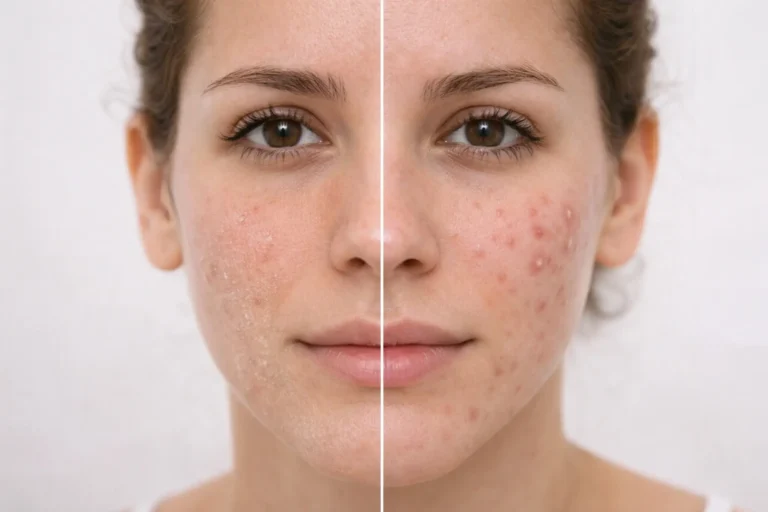
These are forms of comedonal acne. Whiteheads are closed clogged pores. Blackheads are open clogged pores that darken at the surface. They are usually not painful but can make the skin look rough and congested.
Small inflamed pimples
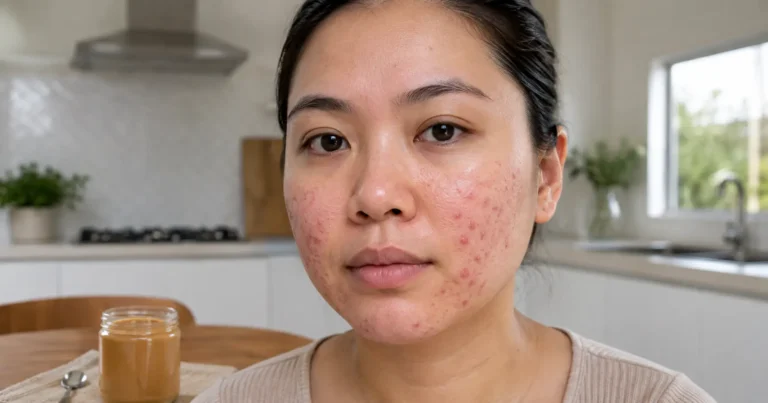
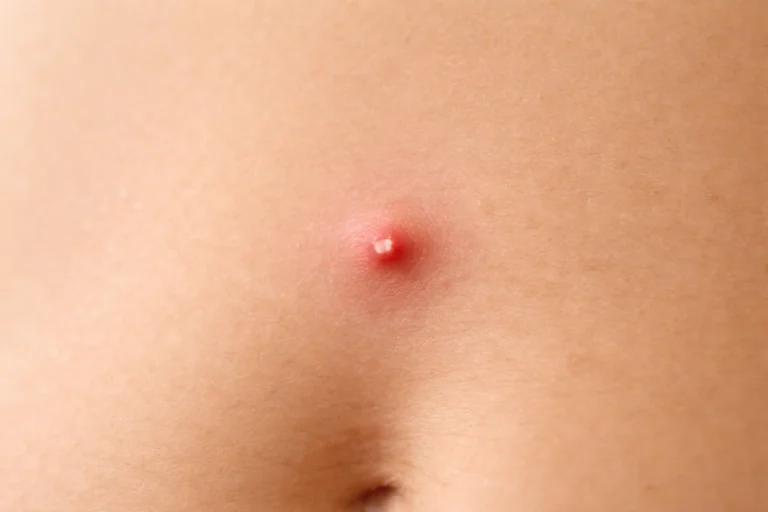
These are red bumps or pustules that form when a clogged pore becomes inflamed. They may be tender and more obvious than whiteheads.
Deeper, painful bumps
If you get large, sore breakouts under the skin, you may be dealing with more severe acne. These lesions are more likely to leave marks or scars and may need stronger treatment.
Tiny uniform bumps
If the bumps are all about the same size, itch, or cluster near the hairline, look closely at sweat, hair products, and the possibility that you are not dealing with standard acne alone.
How to figure out your personal forehead acne cause
Finding your own trigger is often about pattern recognition. Ask yourself what changed before the breakout started.
Questions worth asking
Did you start a new hair product? Have you been sweating more than usual? Are you wearing hats, helmets, or bangs more often? Did your stress level spike? Did you switch sunscreen, cleanser, or makeup?
A simple checklist to spot likely triggers
- Did you start a new styling cream, oil, pomade, or dry shampoo?
- Are your bangs, edges, or hairline touching your forehead more often?
- Have you been wearing hats, helmets, or headbands regularly?
- Are you sweating more from workouts, heat, or stress?
- Did you change your cleanser, sunscreen, makeup, or moisturizer?
- Are you touching your forehead more often during the day?
- Have your sleep, stress, menstrual cycle, or medications changed?
Keeping a short skin log for two to four weeks can help. You do not need anything fancy. Just note breakouts, new products, workouts, and cycle timing. That is often enough to spot a pattern.
How to treat forehead acne at home
If your breakouts are mild to moderate, home care may help a lot.
Start simple
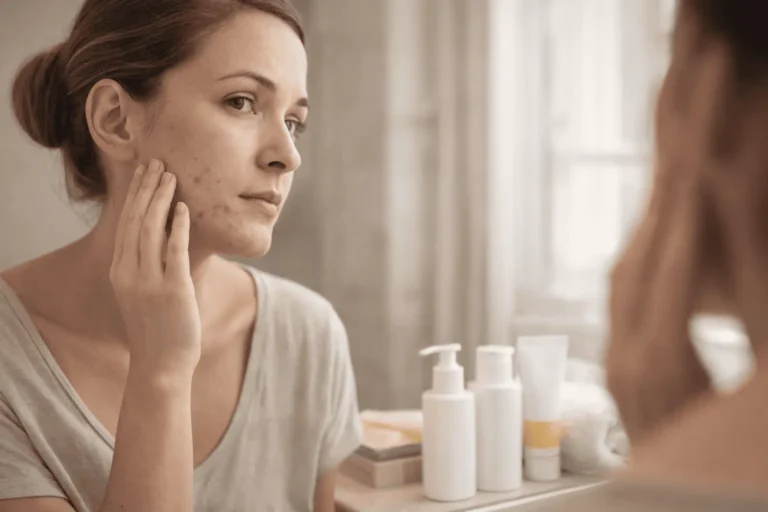
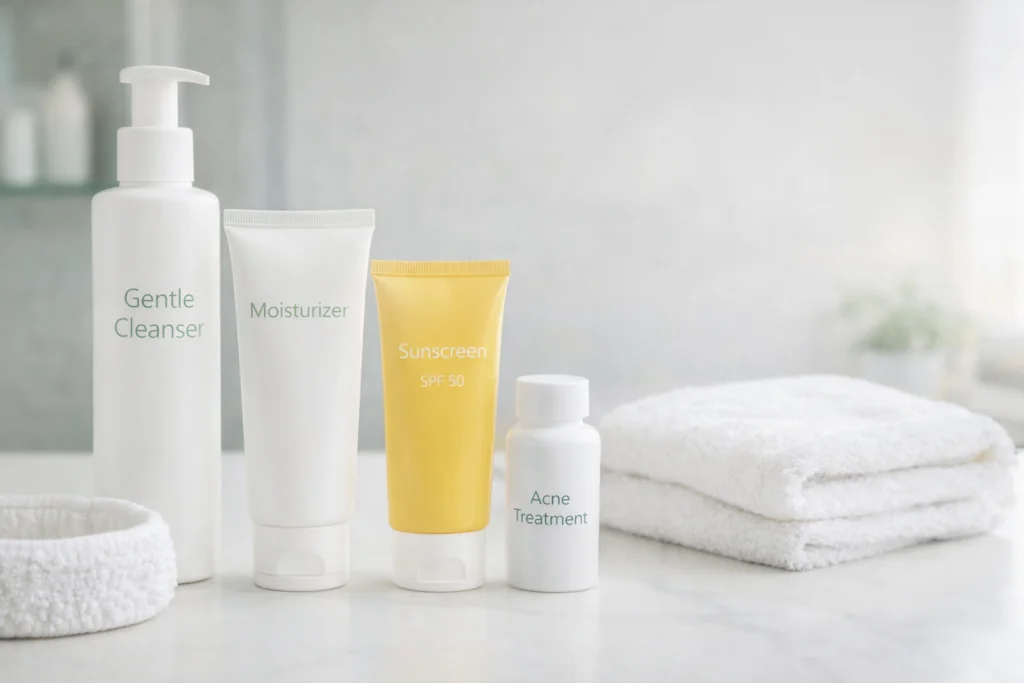
A basic routine is often better than a complicated one. Use a gentle cleanser, a lightweight non-comedogenic moisturizer, and a daily sunscreen that does not feel greasy on your skin.
Helpful over-the-counter ingredients
Salicylic acid
This ingredient helps unclog pores and is often useful for whiteheads, blackheads, and rough forehead texture. It can be especially helpful if your skin feels congested.
Benzoyl peroxide
This can help reduce acne-causing bacteria and calm inflamed pimples. It is usually more helpful for red, angry breakouts than for tiny non-inflamed bumps.
Adapalene
This over-the-counter retinoid helps prevent clogged pores and can improve both comedonal and inflammatory acne over time. It takes patience, but it is one of the more effective long-term options for recurring breakouts.
Go slowly to avoid irritation
Using too many active ingredients at once can backfire. If your forehead becomes dry, red, tight, or flaky, your skin may be irritated rather than healed. Start one new treatment at a time and give it several weeks.
Be careful with product layering
You do not need every acne ingredient in one routine. A simple cleanser, one treatment product, moisturizer, and sunscreen is often enough. Piling on acids, scrubs, masks, and spot treatments can worsen inflammation.
A simple comparison of common forehead acne treatments
| Treatment option | Best for | Main benefit | Possible downside |
|---|---|---|---|
| Salicylic acid | Whiteheads, blackheads, rough texture | Helps clear clogged pores | Can dry or irritate sensitive skin |
| Benzoyl peroxide | Red inflamed pimples | Helps reduce acne-causing bacteria | Can bleach fabric and cause dryness |
| Adapalene | Ongoing clogged pores and mixed acne | Helps prevent new breakouts over time | May cause dryness or purging early on |
| Gentle cleanser + moisturizer | Almost everyone with forehead acne | Supports skin barrier and reduces irritation | May not be enough alone for persistent acne |
🔥 The 3 products dermatologists actually recommend (and yes, they work):
Stop guessing and start with what’s proven. La Roche-Posay Effaclar Duo(+) targets breakouts fast, Paula’s Choice 2% BHA Liquid Exfoliant keeps pores clear with daily use, and Hero Cosmetics Mighty Patch is the overnight fix everyone swears by. ✅ No prescription needed ✅ Affordable ✅ Backed by real clinical evidence.
Daily habits that can help prevent new forehead breakouts
Small daily changes can matter just as much as treatment products.
Keep hair and hair products off your forehead
If possible, avoid heavy styling products near the hairline. Wash residue off your skin after styling, and pin hair back when breakouts are active.
Wash after sweating
Cleanse your face after workouts, hot weather, or long commutes if your skin gets sweaty and oily. You do not need to scrub. A gentle wash is enough.
Choose non-comedogenic products
Look for non-comedogenic sunscreen, moisturizer, and makeup, especially if your forehead breaks out easily. The same idea applies to hair products that may migrate onto the skin.
Do not pick or scrub
Picking can push inflammation deeper and raise the risk of dark marks and scarring. Harsh scrubs can irritate the skin and make little bumps look worse.
Protect your skin barrier
Healthy skin handles acne treatment better. If your routine leaves your forehead raw, burning, or peeling, scale back. Stronger is not always better.
Common mistakes that can make forehead acne worse
Many people accidentally keep their acne going because they are trying too hard to fix it.
Overwashing
Washing too often can strip the skin and leave it more irritated. Twice a day is enough for most people, plus a cleanse after heavy sweating if needed.
Using oily products near the hairline
Heavy pomades and oils can be a major forehead acne cause, especially when you sleep in them or let them sit on the skin all day.
Popping pimples
It is tempting, but squeezing often makes inflammation worse and can leave lingering marks.
Changing products too fast
Acne treatment takes time. If you switch routines every few days, it becomes almost impossible to know what is helping or hurting.
Assuming every bump is hormonal
Hormones are one possible reason, but not every forehead breakout is hormonal acne. Sometimes the answer is much more practical, like sweat, friction, or a leave-in conditioner touching your skin.
When home care may not be enough
Some breakouts need more than a drugstore routine.
You may want professional evaluation if:
- Your acne is painful, deep, or leaving scars
- You have tried over-the-counter care for 8 to 12 weeks without improvement
- Your bumps are very itchy, very uniform, or do not seem like typical pimples
- Your acne is causing emotional distress or affecting your confidence in a big way
- You think medication, hormones, or another skin condition may be involved
A dermatologist can help sort out whether you are dealing with acne vulgaris, irritation, folliculitis, or another skin issue. They can also recommend prescription options if needed. Home care can be helpful, but it is not a substitute for medical care when symptoms are persistent or severe.
What to read next if you want to understand your breakouts better
If you are trying to build a routine that actually fits your skin, a guide on the best skincare routine for acne-prone skin can help you keep things simple.
If your breakouts seem to flare around your cycle or mostly affect your lower face, read more about how to tell the difference between hormonal acne and clogged pores.
And if you suspect your styling products are part of the problem, it is worth learning how to choose non-comedogenic hair and skin products so your routine works with your skin instead of against it.
The bottom line on finding your forehead acne cause
A forehead acne cause is often not one dramatic thing. It is usually a repeat pattern: extra oil, clogged pores, sweat, friction, hair product transfer, stress, or a routine that is either too heavy or too harsh.
The good news is that forehead acne often improves when you simplify your routine, remove likely triggers, and give your skin time to respond. Pay attention to timing. Look at what touches your forehead every day. Treat gently, not aggressively.
If you are still stuck, do not guess forever. Getting the right diagnosis can save you time, money, and frustration. And if this article helped you narrow down your triggers, keep going by exploring more acne-care guides so you can build a routine that truly fits your skin.
FAQ:
How long does it take for forehead acne to improve?
Mild forehead acne may start to improve within a few weeks, but many treatments need 6 to 12 weeks of steady use before you can judge the results. Switching products too quickly can make it harder to see what is working.
Is forehead acne always caused by oily skin?
No. Oily skin can raise the risk of clogged pores, but it is not the only reason. A forehead acne cause can also include hair products, sweat, friction, irritation, hormones, or using acne treatments too aggressively.
What is the difference between little bumps on forehead and regular pimples?
Little bumps on forehead are often clogged pores, also called closed comedones. Regular pimples are usually more inflamed, red, and sometimes painful. If the bumps are itchy and very uniform, they may not be typical acne.
When should I see a dermatologist for forehead acne?
Consider professional help if your acne is painful, scarring, spreading, or not improving after about 8 to 12 weeks of consistent home care. You should also get checked if you are unsure whether the bumps are acne at all.
Can hair products really cause forehead breakouts?
Yes. Styling products, oils, pomades, and leave-in conditioners can transfer to your skin and clog pores, especially near the hairline. This is a very common but often missed forehead acne cause.