damaged skin barrier acne: How to Care for Irritated, Breakout-Prone Skin
When your face is breaking out and your usual products suddenly sting, it is hard to know whether to soothe your skin or treat the pimples harder. Searches for damaged skin barrier acne often come from that exact dilemma. Start by separating changes in skin comfort from changes in acne.
The practical answer: Irritation and acne can occur together, but new pimples do not prove that your barrier is damaged. Use gentle cleansing, moisturizer, and sun protection; review unnecessary irritating products. If acne medication is involved, ask a pharmacist or prescriber how to manage intolerance rather than pushing through burning or changing prescriptions yourself.
Understanding damaged skin barrier acne: symptoms and limits
The skin’s outer layer helps retain water and limit exposure to outside irritants. Disruption can be associated with dryness, flaking, roughness, itching, and stinging. Harsh washing and excessive exfoliation are possible contributors, but an underlying skin condition may also need treatment.
The phrase damaged skin barrier acne is useful shorthand for a concern, not a diagnosis or a distinct acne type. Acne involves follicles and can persist even after surface irritation improves. Likewise, a rash or acne-like bumps may have another cause.
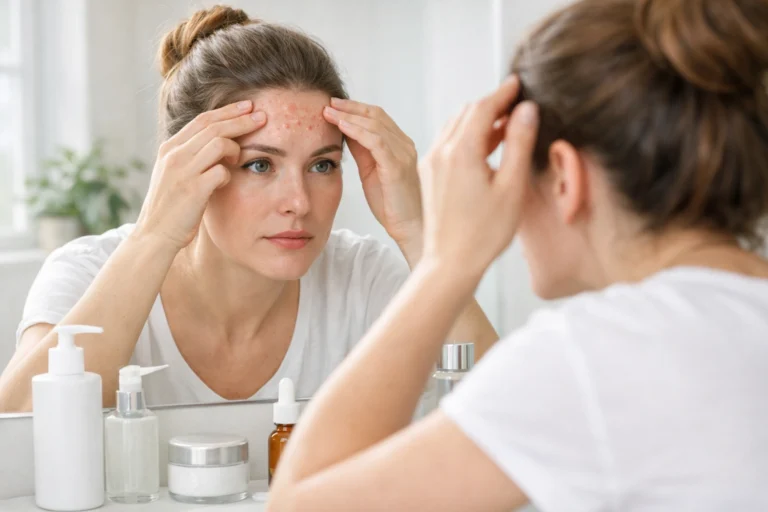
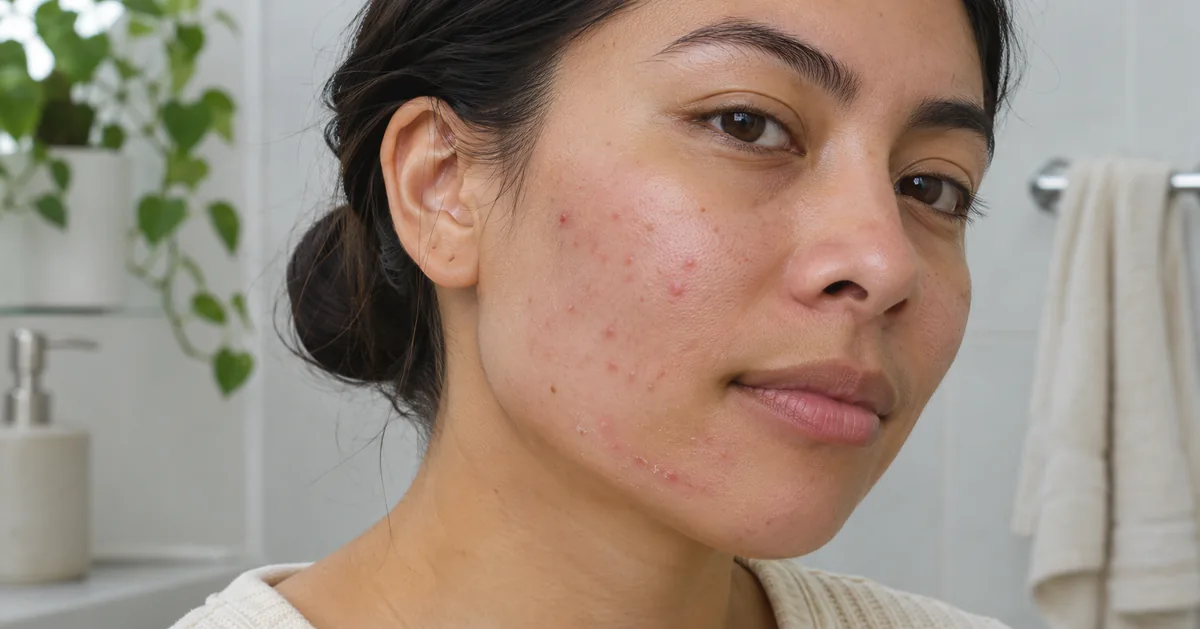
Common damaged skin barrier signs include a tight feeling after cleansing, sensitivity to previously comfortable products, and peeling beyond individual pimples. Redness may be less obvious on darker skin, so discomfort and texture changes also matter.
| What you notice | What it may suggest | Useful next step |
|---|---|---|
| Widespread stinging and flaking after a routine change | Irritation deserves attention; appearance cannot identify the cause | Review recent exposures and get advice if symptoms persist |
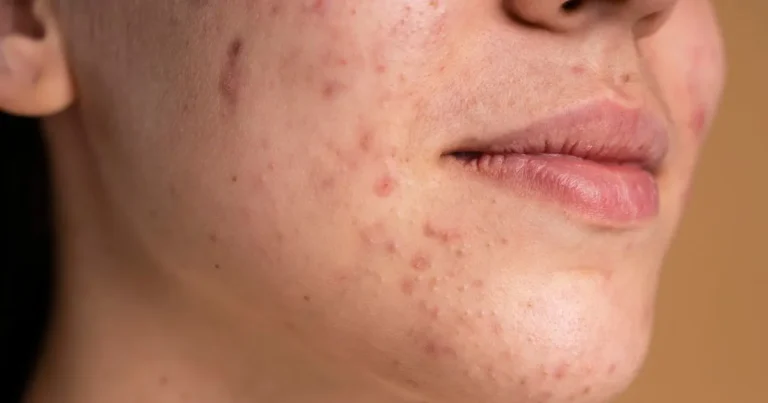
| Blackheads, whiteheads, or individual inflamed pimples without new sensitivity | Acne may be active without obvious surface irritation | Review acne control rather than assuming barrier damage |
| Itchy rash, swelling, or bumps unlike your usual acne | A product reaction or another condition is possible | Seek clinical advice instead of adding stronger treatment |
These are clues for deciding what to discuss, not a home diagnostic test. A clinician can distinguish acne from conditions such as perioral dermatitis or folliculitis when the pattern is unclear.
Review your routine before buying a repair serum
For damaged skin barrier acne concerns, the most useful starting point is often an inventory. Include cleansers and spot treatments, not just serums. Salicylic acid may appear in several steps, while a retinoid and benzoyl peroxide may add separate sources of irritation.
- Write down each product, its active ingredients, and how often you actually use it.
- Mark changes in strength, frequency, application area, or cleansing technique.
- Note when stinging or peeling started and whether it extends beyond the spots.
- Bring this list and the medication packaging to your pharmacist or clinician.
Temporarily set aside optional cosmetic scrubs, exfoliating pads, and other nonessential products that irritate your skin. Keep prescription decisions with your prescriber. A new acid is unlikely to solve a routine that is already difficult to tolerate.
Our guide to whether acne-prone skin needs exfoliation explains why a separate exfoliant may duplicate work your current treatment already does.
A simpler routine for damaged skin barrier acne concerns
The goal is a comfortable foundation that can support an appropriate acne plan. You do not need a whole new collection. Keep familiar basics that you tolerate, and change a problematic step for a clear reason.
Cleanse without chasing a squeaky-clean feeling
Choose a mild, non-abrasive cleanser. Use fingertips, rinse gently with lukewarm water, and pat rather than rub. Avoid cleansing brushes and scrubbing away flakes. AAD guidance recommends gentle washing up to twice daily and after sweating; extra washes are not an acne treatment.
A medicated wash is not required just because you have pimples. In a damaged skin barrier acne routine, a plain cleanser can leave the treatment role to a separately chosen medication.

As an Amazon Associate, we earn from qualifying purchases. Beyond Breakouts may earn a commission at no additional cost to you through the product links below.
Choose moisturizer by comfort and texture
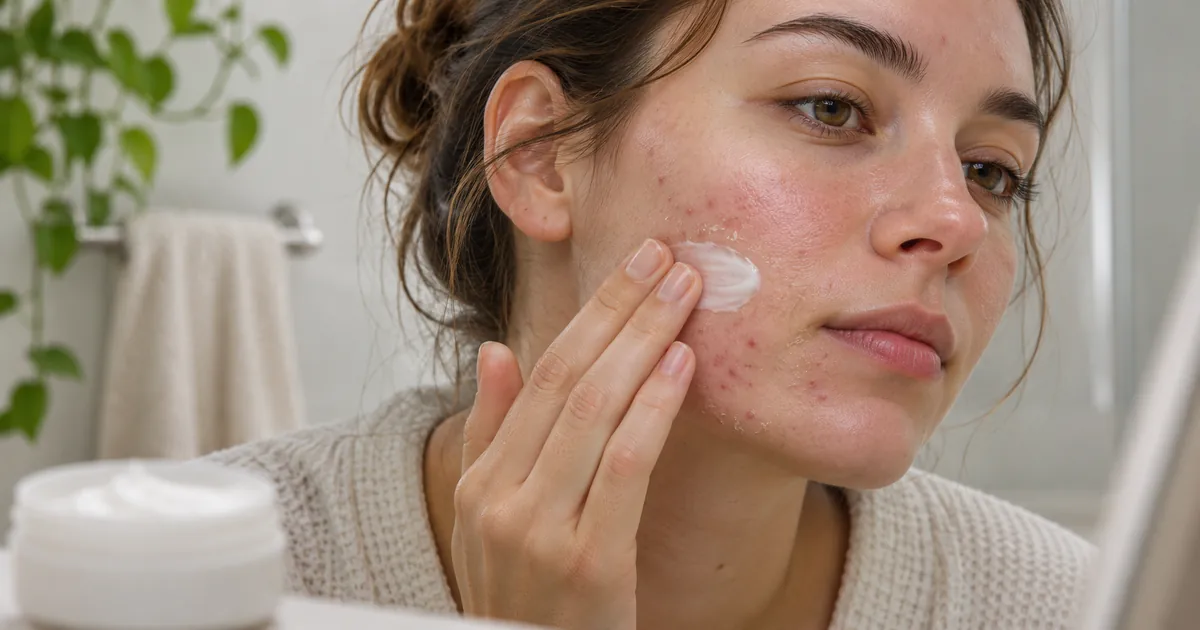
Moisturizer can help skin tolerate drying acne treatments, including benzoyl peroxide, salicylic acid, and retinoids. Look for fragrance-free options and labeling such as non-comedogenic or oil-free. These descriptions help narrow choices; they do not guarantee that every formula will suit you.
For skin barrier repair in acne-prone skin, ingredients are only part of the decision. A lighter lotion may feel better on oily areas, while a cream may suit flaky cheeks. You can moisturize according to the areas that feel dry rather than applying the thickest product everywhere.
When choosing a moisturizer for damaged skin barrier acne concerns, avoid interpreting a long ingredient list or a repair claim as proof of better results. A comfortable formula used consistently is more useful than repeatedly replacing products.
If dryness is your usual skin type rather than a recent reaction, our guide to caring for dry, acne-prone skin covers that longer-term situation.
Keep daytime protection practical
Use broad-spectrum SPF 30 or higher alongside shade and protective clothing. For swimming or sweating, choose suitable water resistance and follow the label. Sunscreen supports sun protection; it is not a treatment for the cause of stinging.
If your current sunscreen burns, do not keep reapplying it to test your tolerance. Ask for help finding a tolerable alternative, and use shade and clothing while you resolve the problem. Mineral formulas are one option, but no sunscreen is irritation-proof.
Restarting actives after damaged skin barrier acne irritation
There is no universal restart day or a fixed barrier-repair countdown. First assess whether ordinary cleansing and moisturizing are comfortable and whether the rash or peeling is settling. These are practical tolerance checks, not proof of complete recovery. Prescription changes should be agreed with the clinician who treats your acne.
For damaged skin barrier acne concerns involving medication, discuss the specific product rather than following a generic social-media schedule. AAD notes that a dermatologist may adjust a retinoid’s amount, frequency, or moisturizer placement to reduce irritation.
NICE guidance also describes alternate-day or short-contact introduction for some irritating topical acne treatments. This is a clinical strategy to discuss, not permission to wash off any prescription or rewrite its directions yourself.
Once a suitable plan is agreed, avoid bringing back every optional active together. Make changes in a way that lets you recognize which step causes problems. Do not compensate for missed applications with extra product; more benzoyl peroxide can increase side effects without speeding results.
If pregnancy, pregnancy planning, or breastfeeding is relevant, review the medication before restarting. Topical retinoids are contraindicated during pregnancy and pregnancy planning; product-specific advice still matters.
Track comfort and breakouts separately
A damaged skin barrier acne diary should record two different outcomes: how your skin feels during basic care and whether new acne lesions are becoming less frequent or severe. Use brief notes about burning, tightness, and product changes; photographs in similar lighting may help you describe a change at an appointment.
Do not treat one comfortable morning as a reason to escalate treatment. Likewise, a few remaining pimples do not mean the moisturizer failed. Acne treatment often takes several weeks to show a benefit, while ongoing troublesome irritation deserves earlier advice.
Avoid labeling burning, a spreading rash, or worsening swelling as a necessary purge. Tolerance and acne response must both be acceptable for a routine to work in practice.
When home care is not enough
Arrange medical assessment for persistent or recurring irritation, painful cracking, bleeding, or a rash you cannot identify. Seek acne care for deep painful nodules, scarring, rapid worsening, substantial distress, or breakouts that are not improving with appropriate over-the-counter treatment.
Bring your product list rather than simply reporting damaged skin barrier acne. Explain which step stings, where symptoms occur, and what changed. That gives the clinician more useful information than an assumed diagnosis.
Get emergency help for trouble breathing or swallowing, faintness, or swelling of the tongue or throat after a product. Stop using the suspected product and call 911 in the United States. These symptoms are different from ordinary dryness.
Frequently asked questions
Can skin look oily and still need moisturizer?
Yes. A shiny surface does not tell you whether skin feels tight or tolerates treatment. Descriptions such as dehydrated oily acne-prone skin can describe that experience, but they do not identify its cause. Choose texture by comfort rather than skipping moisturizer solely because you see oil.
Will drinking more water fix the problem?
Drinking water is not a substitute for reviewing irritating products or treating a skin condition. No fixed water target can be offered as a cure for damaged skin barrier acne. Focus on the exposures and symptoms that actually changed.
Does moisturizer stinging mean I am allergic to it?
Not necessarily. Stinging alone cannot distinguish irritation from allergy. Stop a product that causes persistent discomfort and seek advice if a reaction recurs. A clinician may recommend formal patch testing for suspected contact allergy; experimenting on already inflamed skin cannot establish that diagnosis.
Should I apply a thick ointment over all my acne products?
Do not assume that covering every treatment with an ointment will make it gentler. Product layering needs to fit the medication directions and your skin’s response. Ask your prescriber before adding a heavy covering layer over an irritating medicine.
Do I need all three recommended products?
No. They illustrate different supporting roles: cleansing, moisturizing, and daytime sun protection. Keep products that already work for you. Replace only a step that needs changing, and do not buy the set expecting it to clear acne.
Choose your next step
With damaged skin barrier acne concerns, aim for care you can tolerate and an acne plan that still addresses the breakouts. Start by listing recent routine changes. If medication is causing discomfort or the diagnosis is uncertain, use that list to get specific professional guidance.
This article provides general education, not a diagnosis or an individualized treatment plan.
References
- Moisturizer: Why you may need it if you have acne — AAD
- Acne: Tips for managing — AAD
- Acne: Diagnosis and treatment — AAD
- How to pick the right moisturizer for your skin — AAD
- How To Tell if Your Skin Barrier Is Damaged and What To Do About It — Cleveland Clinic
- Benzoyl peroxide — NHS
- Acne vulgaris: management — NICE guideline NG198
- Allergens in Cosmetics — FDA
- Gentle Facial Cleanser — Vanicream
- Moisturizing Cream — CeraVe
- Facial Moisturizer Broad Spectrum SPF 30 — Vanicream