Salicylic Acid Toner: Do You Need It If Your Cleanser Has BHA?
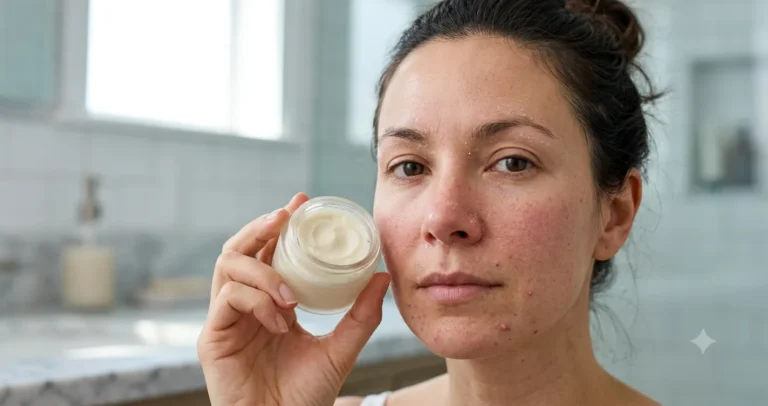
A salicylic acid cleanser is already part of your routine, but blackheads are still hanging around. Would adding a salicylic acid toner help—or simply give your skin another dose of the same exfoliating ingredient? The answer depends on your existing results, your skin’s tolerance, and what the second product is supposed to accomplish.
Quick answer: You usually do not need a salicylic acid toner if your BHA cleanser is working and your skin feels comfortable. A leave-on product may be worth considering for persistent clogged pores, but switching formats often makes more sense than using both automatically. Layering them can increase dryness and irritation without a proven extra benefit.
This guide will help you choose one sensible BHA approach, understand the difference between rinse-off and leave-on formulas, and know when to simplify rather than add products.
Table of Contents
Do You Need a Salicylic Acid Toner If You Already Use a BHA Cleanser?
No—not as a required step. Salicylic acid is a beta hydroxy acid (BHA) used in acne care to help loosen dead cells and clear clogged pores. The American Academy of Dermatology includes it among treatments that can help certain types of acne, particularly congestion involving whiteheads and blackheads. A toner is only one way to deliver the ingredient.
First ask whether your cleanser is actually falling short. If the number of blackheads is gradually declining, your face is not irritated, and you can use the cleanser consistently, a second exfoliant may offer little practical value. A bottle marketed as a “pore-refining toner” is not automatically an essential next step.
If congestion persists despite appropriate use, reassess rather than immediately doubling up. You may need a different treatment format, more time, or a different acne treatment altogether. Blackheads can be stubborn, and what looks like congestion may sometimes be sebaceous filaments or another condition. Product labels cannot settle that distinction.
The useful choice is between keeping one effective BHA cleanser, switching to a gentle cleanser plus one leave-on BHA, or pausing additional exfoliation because your skin is irritated. You do not need an extra purchase to complete a proper skincare routine.
Salicylic Acid Toner vs Cleanser: What Actually Changes?
Both products may contain the same active ingredient, but they are not interchangeable. Their instructions and time on the skin differ, and the rest of the formula matters as well.
| Feature | Salicylic acid cleanser | Salicylic acid toner or leave-on liquid |
|---|---|---|
| Contact with skin | Massaged on, then rinsed off | Applied after cleansing and left on |
| Main practical role | Cleansing with an acne-treatment ingredient | Delivering BHA without a rinse-off step |
| Ease of use | Fits into a wash you already do | Adds a separate treatment step |
| Possible downside | Still may dry or irritate skin | Longer exposure may be harder to tolerate |
| Best reason to choose | You like the cleanser and it helps | You prefer one targeted leave-on treatment |
For someone doing well with a wash, there is no compelling reason to change just because a toner stays on longer. A suitable cleanser can remain your only BHA step. If choosing a rinse-off option, make sure it is actually labeled for acne care rather than assuming all face washes with an exfoliating-sounding name have the same action.
As an Amazon Associate, we earn from qualifying purchases.
🫧 Want a BHA cleanser without adding another exfoliating step?
CeraVe Acne Control Cleanser (2% Salicylic Acid)
✅ Contains 2% salicylic acid for acne-prone skin.
✅ Includes niacinamide and three ceramides in the formula.
✅ Rinses off, so it can serve as your one BHA step.
CeraVe directs users to massage it onto wet skin and rinse thoroughly. Even a rinse-off BHA can cause dryness; take extra care if other acne treatments are part of your routine. This is an alternative to, not a required partner for, a leave-on toner.
👉 Check CeraVe Acne Control Cleanser on Amazon US
Does Longer Contact Mean Better Results?
A leave-on product remains on the skin after application, while a cleanser is rinsed away. Longer contact can change exposure, and this is a reasonable reason to consider a different format. It does not establish that every toner works better than every cleanser. Direct head-to-head evidence for specific products is limited, and effectiveness depends on the complete formulation, correct use, and your acne type.
A salicylic acid toner could also feel stronger simply because it remains in contact with already sensitized skin. More peeling is not a reliable sign of better acne treatment.
Is a 2% Toner Equivalent to a 2% Cleanser?
No. In the United States, salicylic acid concentrations of 0.5% to 2% are permitted for products marketed under the FDA’s over-the-counter acne monograph. But two products with “2%” on the label do not necessarily provide identical exposure or results.
The base formula, acidity, application area, rinse-off time, frequency, and presence of other ingredients all matter. A 2% leave-on salicylic acid toner should not be treated as a guaranteed upgrade, and it should not be layered over a 2% cleanser merely because both individual concentrations fall within the OTC range.
When a Salicylic Acid Toner Might Be Worth Considering
The strongest reason to consider one is a specific, still-unresolved concern—not a belief that every routine requires toner after cleansing.
Persistent Blackheads and Whiteheads
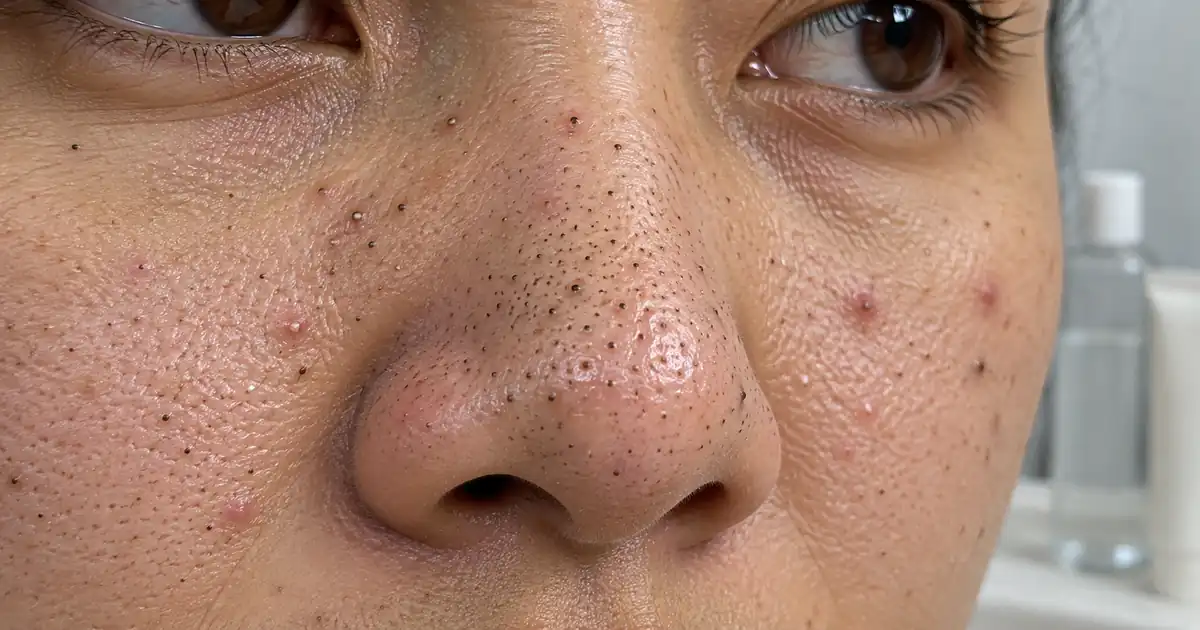
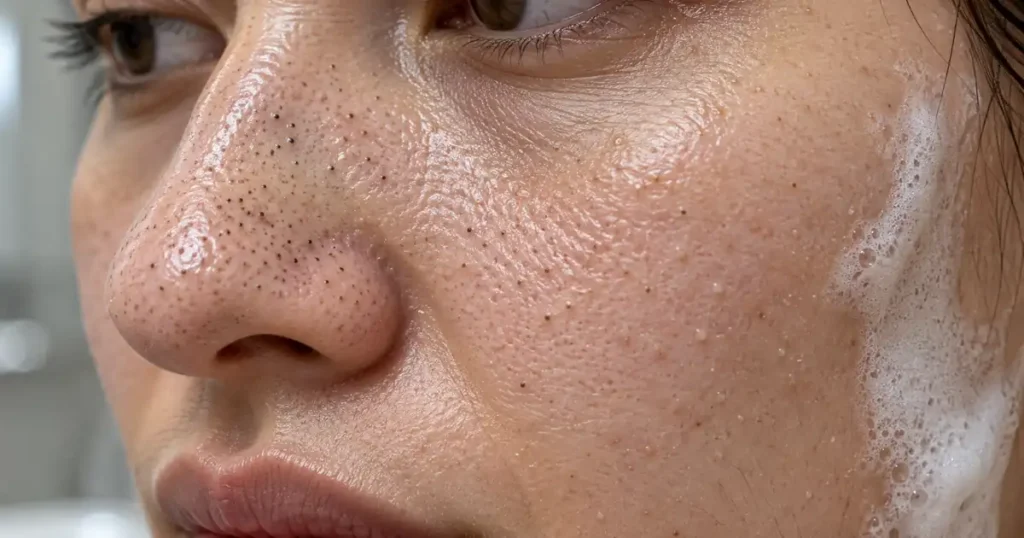
Blackheads are open plugged follicles; whiteheads are closed ones. Salicylic acid is relevant because it helps reduce the buildup of dead cells involved in clogging. For mild comedonal acne, a leave-on BHA may be a reasonable option when your existing routine is not enough and your skin can tolerate it.
However, a salicylic acid toner is not the only possible next treatment. Some stubborn blackheads respond better to a topical retinoid or professional advice. Do not use more acid to compensate for repeated squeezing or picking, which can worsen inflammation and scarring.
When Your Existing Cleanser Is Not Meeting Your Needs
Make sure you have used the cleanser according to its label for a reasonable period. Consider whether your skin is breaking out more, whether there are genuinely new clogged pores, and whether the wash is leaving your face tight or dry.
If it cleans well but irritates your skin, adding a toner is unlikely to solve that problem. A gentler wash may be the first change. If it is comfortable but acne persists, a clinician can help decide whether BHA is the right active ingredient at all.
When a Leave-On Format Fits Better
You may prefer a gentle, nonmedicated cleanser and a separately applied leave-on BHA instead of a medicated wash. This approach lets you keep cleansing constant while evaluating one treatment step. Follow the specific product directions, especially if you are already using prescription acne medication.
A leave-on BHA is best considered as an alternative to your BHA cleanser, not a mandatory second salicylic acid layer. If you choose a toner-like liquid, assess whether its intended use matches your concern rather than its marketing name. You can also compare another format in our guide to choosing a salicylic acid lotion for acne-prone skin.
✨ Prefer one leave-on BHA after a gentle cleanser?
Paula’s Choice Skin Perfecting 2% BHA Liquid Exfoliant
✅ Contains 2% salicylic acid.
✅ No-rinse liquid format for a separate treatment step.
✅ A practical option to consider for blackhead-prone skin.
The brand directs application to clean skin without rinsing and advises avoiding the eye area. Irritation is possible, especially with other exfoliants. Choose this instead of stacking it on a BHA cleanser unless a qualified clinician specifically guides your combination.
👉 Check Paula’s Choice 2% BHA Liquid on Amazon US
How to Use a Salicylic Acid Toner Without Over-Exfoliating
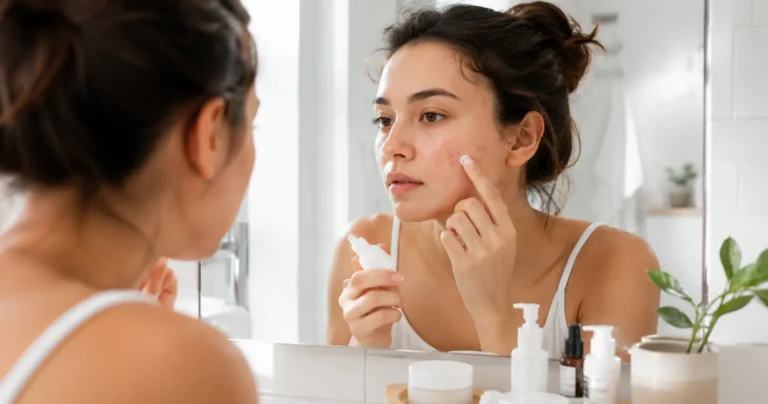
If you decide to try a salicylic acid toner, the safest first step is not applying it—it is reviewing everything already touching your skin. The number of active products matters because dryness and irritation can build across a routine.
Step 1: Check Your Existing Products
Look beyond the toner and cleanser labels. A medicated face wash, exfoliating pad, acne serum, spot treatment, exfoliating mask, or prescription product may already contribute to irritation. Salicylic acid can also be present in moisturizers. Write down each active ingredient before adding anything.
Step 2: Choose One Primary BHA Step
For an uncomplicated over-the-counter routine, use either a BHA cleanser or a leave-on BHA as your starting strategy. If you switch to a leave-on product, replace the medicated wash with a gentle cleanser rather than simply putting one on top of the other. This is a practical way to assess tolerance, not a rule that medically supervised combinations are never appropriate.
Step 3: Follow the Exact Label and Application Order
Cleanse gently, pat dry if the formula requires dry skin, then apply the leave-on treatment as directed and follow with moisturizer. Avoid the eyes, lips, broken skin, and irritated areas. Do not turn a rinse-off cleanser into a leave-on mask or improvise a concentrated peel at home.
For a new product, test a small area first according to the label. If you have a known salicylate allergy, consult a healthcare professional before use. Follow any age or medical warnings given on your product.
Step 4: Start Conservatively, Then Assess Tolerance
Some labels allow frequent use, but that does not mean every beginner should immediately use the product twice daily. If the directions allow a gradual introduction, begin cautiously and increase only if needed and well tolerated. Never override instructions from a prescriber to follow an online schedule.
Check for persistent stinging, visible peeling, dryness, or sensitivity—not whether you can make the skin feel “tingly.” The best frequency for a salicylic acid toner is the one that follows its label without provoking unnecessary irritation.
Step 5: Moisturize and Use Daily Sun Protection
A non-comedogenic moisturizer can support skin comfort during acne treatment. In the morning, use broad-spectrum sunscreen with SPF 30 or higher and reapply as directed, particularly outdoors. Sun protection is part of a responsible skincare routine, not an optional reward for using exfoliating products.
When to Skip a Salicylic Acid Toner
Even a carefully chosen salicylic acid toner may be unnecessary or inappropriate. Skip an additional exfoliant if your cleanser is already producing the desired improvement or if your skin is persistently dry, red, flaky, or burning.
Extra caution is important with eczema flare-ups, sunburn, cuts, and a visibly damaged skin barrier. If you are taking isotretinoin or using a prescription retinoid, ask your prescriber before adding BHA; these regimens may already make skin unusually sensitive. Severe, deep, or scarring acne needs a medical treatment plan rather than another optional toner.
Also ask whether the product is addressing the right concern. A salicylic acid toner is not a treatment for a deep pitted scar, and it is not necessarily the best product for flat dark marks after acne. If that is the issue, our article on salicylic acid for post-acne marks explains the limitations.
Signs Your Salicylic Acid Toner May Be Too Much
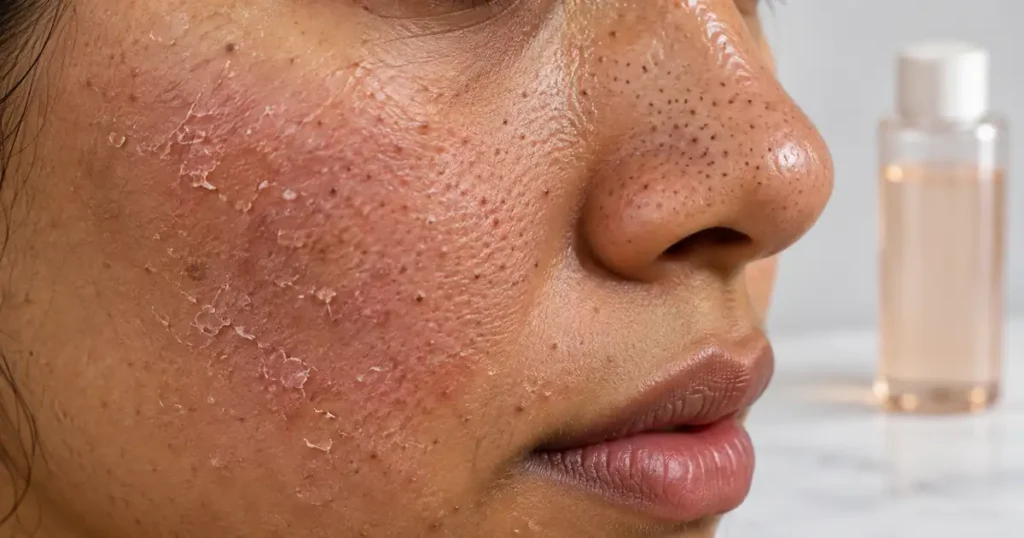
Over-exfoliation is not a formal diagnosis, but repeated irritation is a real reason to reconsider a routine. Watch for burning that continues after application, worsening redness, excessive flaking, tenderness, or tight skin that reacts to products you previously tolerated. In darker skin tones, inflammation can sometimes leave more noticeable discoloration.
If these signs appear after starting a nonprescription toner, stop the new product, use a gentle cleanser and plain moisturizer, and avoid scrubs or additional acids while your skin recovers. If you are also using a prescribed treatment, ask your prescriber what to adjust instead of independently abandoning the prescription plan. Seek professional care for persistent, severe, blistering, or unusually painful reactions.
Can You Combine BHA With Other Acne Treatments?
A BHA toner can be part of some acne plans, but compatibility is not the same as tolerability. Benzoyl peroxide, adapalene, tretinoin, glycolic acid, and other exfoliating products can also contribute to dryness or irritation. Some prescription retinoid labels specifically warn about combining their product with drying OTC acne treatments.
That does not mean every combination is prohibited. Dermatologists sometimes prescribe multiple acne medications that target different processes. The important distinction is between an intentional clinician-directed plan and adding overlapping treatments yourself because a product claims to refine pores.
If your routine already contains benzoyl peroxide, see our guide to combining benzoyl peroxide and salicylic acid. When using adapalene or tretinoin, follow your medication’s directions and ask your prescriber whether a separate BHA is appropriate.
How to Decide Whether Your Current Routine Is Working
Avoid measuring success by how smooth your face feels immediately after washing. Instead, look for a gradual reduction in new blackheads, whiteheads, and inflamed pimples, while also checking whether the skin remains comfortable. A routine that reduces congestion but causes persistent burning is not a good long-term match.
The AAD advises giving acne treatment time; some people begin to see fewer blemishes after six to eight weeks, while clearer skin can take longer. If your acne is unchanged after consistent, correct treatment, changing the medication may be more useful than adding a second exfoliant.
Seek a dermatologist’s advice for deep or painful breakouts, scarring, worsening acne, significant distress, or acne that does not improve with appropriate over-the-counter care. You should not have to keep intensifying exfoliation when the original treatment may not fit the problem.
Frequently Asked Questions
1. Can I Use a Salicylic Acid Cleanser and Toner on Different Days?
Possibly. Using them on different days reduces same-session overlap, but it does not automatically prevent irritation. If both products are medically necessary, check their directions and your other acne treatments. For a simple routine, using one BHA format consistently is often easier to evaluate.
2. Is Salicylic Acid Toner Better for Blackheads Than a Cleanser?
Not universally. A salicylic acid toner stays on the skin longer, but direct comparisons of individual formulas are limited. If your cleanser is working, there may be no practical advantage to switching. Persistent blackheads may need a different acne treatment rather than more salicylic acid.
3. How Often Should Beginners Use a Salicylic Acid Toner?
Follow the specific label. If it permits gradual introduction, start conservatively and increase only if your skin remains comfortable. Do not copy another person’s schedule, especially if you are also using retinoids or benzoyl peroxide. Persistent peeling or stinging is a reason to reconsider use.
4. Can Sensitive Skin Tolerate a Leave-On BHA?
Some people with sensitive skin tolerate a mild, well-formulated product; others do not. If your skin is already irritated, prioritize barrier care before experimenting with another acid. Patch-test when appropriate and avoid applying exfoliants over eczema, sunburn, or damaged skin.
5. Can Salicylic Acid Toner Be Used Alongside Adapalene or Tretinoin?
Sometimes under professional guidance, but both the BHA and retinoid may contribute to dryness and peeling. Ask the clinician managing your prescription about whether a separate BHA is useful and how it should fit your routine. Do not change prescription use based on generic toner instructions.
Conclusion
You do not need a salicylic acid toner simply because your cleanser contains BHA. Keep the cleanser when it is helping, consider switching formats only for a clear reason, and avoid doubling exfoliation on irritated skin. The most useful next step is to review your current active ingredients before buying another product.
Medical disclaimer: This article is for education, not diagnosis or a substitute for personalized advice from a qualified healthcare professional. Consult a clinician about persistent acne, prescription treatment combinations, or significant irritation.
References:
- American Academy of Dermatology — Acne: Diagnosis and Treatment. Guidance on salicylic acid and other established topical acne treatments.
 American Academy of Dermatology
- American Academy of Dermatology — Updated Guidelines for Acne Management (2024). Evidence supporting conditional use of topical salicylic acid. American Academy of Dermatology
- American Academy of Dermatology — How to Safely Exfoliate at Home. Exfoliation precautions and the risk of additional irritation. American Academy of Dermatology
- American Academy of Dermatology — Moisturizer: Why You May Need It if You Have Acne. Moisturizer use with acne treatments. American Academy of Dermatology
- American Academy of Dermatology — How to Treat Different Types of Acne. Blackheads, whiteheads and expected treatment timelines. American Academy of Dermatology
- U.S. FDA — OTC Monograph M006: Topical Acne Drug Products. Permitted OTC salicylic acid concentrations and labeling requirements. FDA Access Data
- U.S. FDA — Beta Hydroxy Acids. Cosmetic BHA safety and sun protection considerations. FDA
- U.S. FDA — RETIN-A MICRO Prescribing Information (2025). Warnings on combining topical tretinoin with irritating acne products. FDA Access Data
- CeraVe — Acne Control Cleanser. Official product ingredients and directions. CeraVe
- Paula’s Choice — Skin Perfecting 2% BHA Liquid Exfoliant. Official product concentration and application directions.